China’s General-Secretary Xi Jinping and Premier Li Qiang have recently declared the Chinese Communist Party is business-friendly. But should businesspeople believe them?

Some months before Xi chaired a highly publicized meeting on February 17 to reassure China’s leading entrepreneurs of the Party’s good will, a provincial agency reported that security forces from another province had dragged a private businessman into a van and deported him across the provincial border. It soon emerged that this quasi-judicial kidnapping was one of tens of thousands of cases of improper asset seizures last year by officials from local governments mired in debt. Police from poorer regions are raiding wealthier provinces, on the pretext of law enforcement, to extort money from businesspeople in a practice known colloquially as ‘deep-sea fishing’.
As China’s state press fills with stories about the leadership’s new-found support for the private sector, these local developments tell us more about likely business confidence than pronouncements from Zhongnanhai.
The resulting predatory practices are a reminder that the competitive system which served the country well in the reform era can end up consuming China’s entrepreneurs as happened in Mao Zedong’s day.
Local security forces ‘go fishing’ for revenue in other parts of China to bolster the finances of local governments facing devastating fiscal deficits and debt. These problems have only worsened since the 2021 property market collapse, which saw local government revenue from land sales plummet around 40 percent. In turn, local government debt now accounts for 70-80 percent of China’s total state debt. By one account from the University of California San Diego, monthly debt servicing exceeds monthly fiscal income for 12 of China’s 31 provinces.
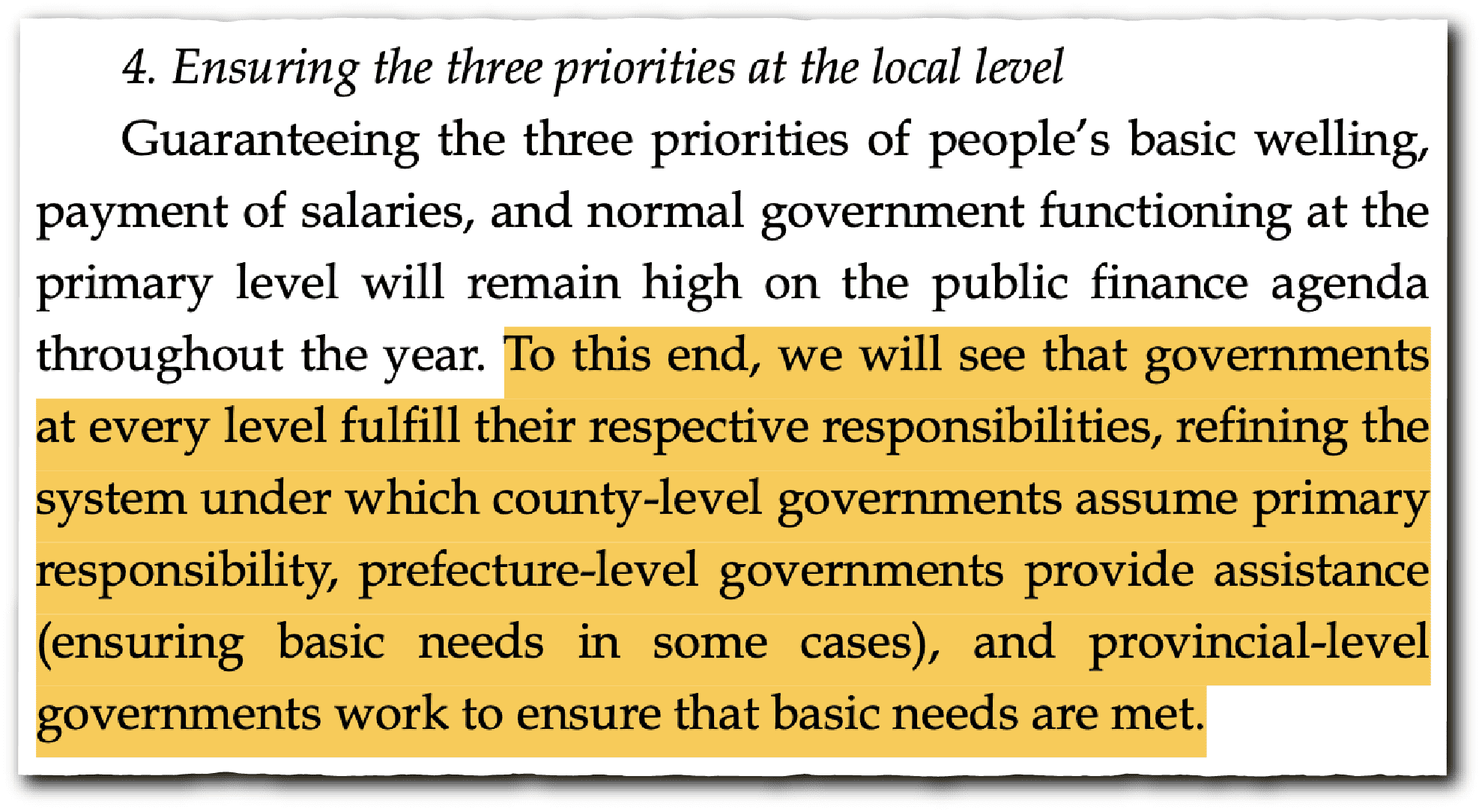
Demands on local governments are huge. County governments provide the bulk of health, education and social services, and are also expected to fund policy initiatives handed down from above. With few approved options for generating sufficient revenue to meet these obligations, local governments are resorting to what Chinese researchers call “fiscally irresponsible behaviors”.
Small local businesses bear the brunt of many of these. All governments tax business but local governments in China go well beyond to levy arbitrary fines, claim so-called back-taxes, limit market access, and in many cases refuse to pay for goods and services rendered. These predatory practices have a dampening effect not just on business but on consumption. Small and micro businesses account for around 400 million owners and employees, and close to two-thirds of China’s people are dependent on their subsistence-level earnings, even as these are systematically whittled away.1Zhang Xiaobo, ‘The state of China’s small and micro companies,’ Pekingology, 2 March 2025. Based on lecture delivered in Beijing, 7 December 2024. https://www.pekingnology.com/cp/158238626
Local Government Competition Drives Shakedowns
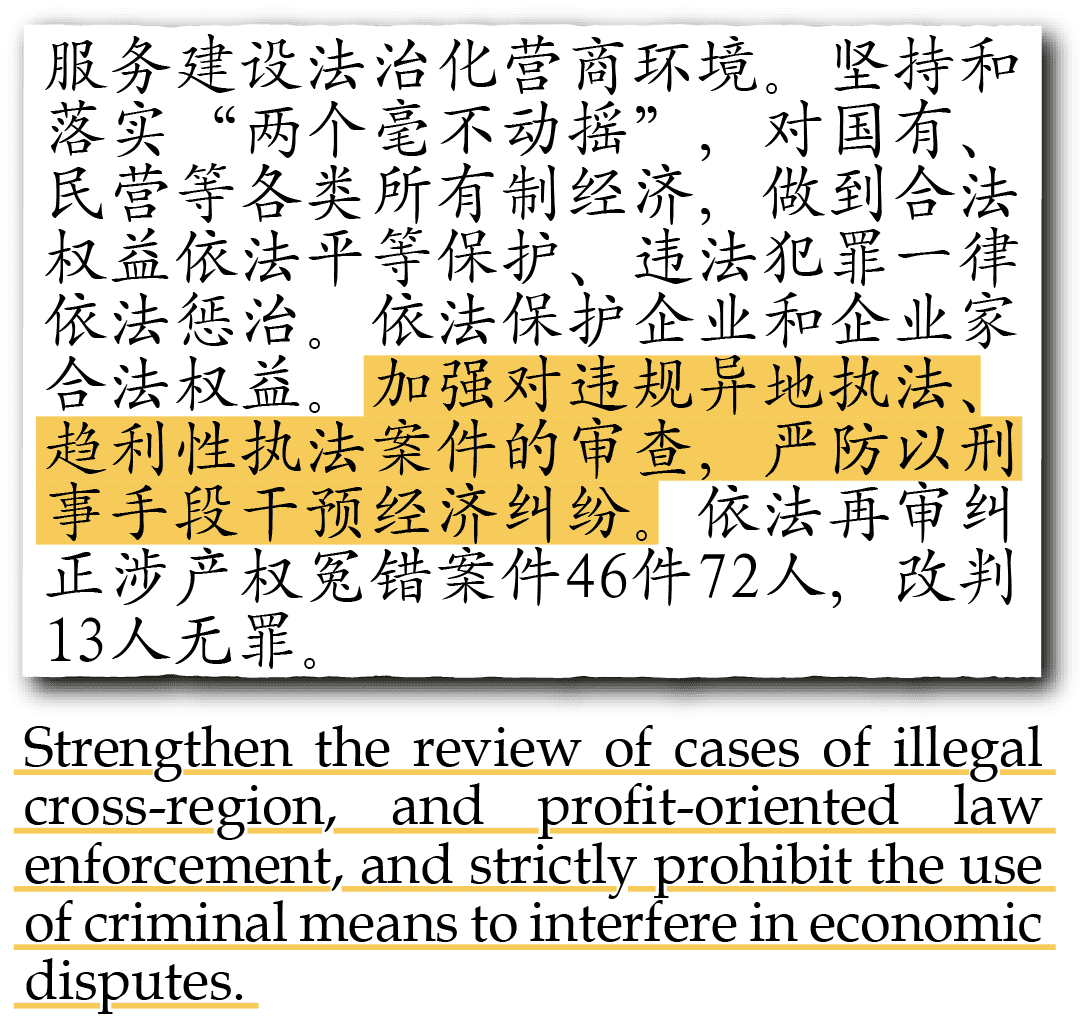
Faced with widening fiscal deficits and heavier debt burdens, local governments have resorted to business shakedowns as a routine revenue-generating strategy. In 2024, prosecutors in the wealthy coastal province of Zhejiang uncovered 17,000 cases of ‘profit-oriented law enforcement’ that had resulted in business assets being frozen for over two years. An additional 10,000 cases occurred in the southern business centre of Guangzhou in one year alone, according to a 30 December investigative report in China’s Caixin magazine.
Some of these asset seizures involve cross-border abductions of private entrepreneurs. In Shanghai, district authorities are rumored to be offering protective custody to local businesspeople fearful of detention by outside police forces.
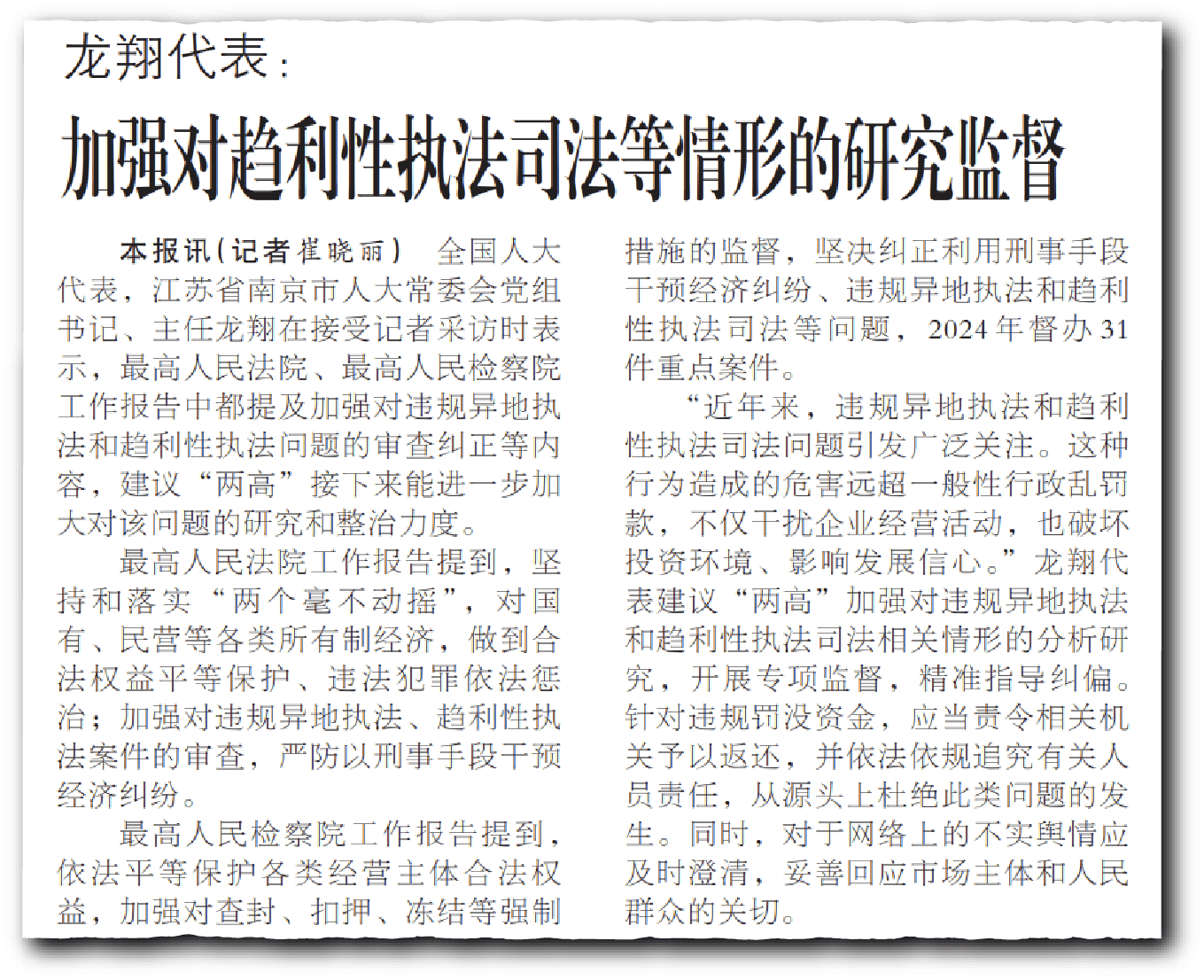
The systemic driver of these kidnappings is a top-down administrative system that sets local governments against one another, as they vie to raise enough revenue to meet central government targets and their own local obligations. Competition for funds at county and municipal levels is intensified by a Party personnel system which rates cadres on their performance in meeting central government targets. The resulting predatory practices are a reminder that the competitive system which served the country well in the reform era can end up consuming China’s entrepreneurs as happened in Mao Zedong’s day.
The competitive dynamics driving local government behavior have not changed under Xi Jinping. What has changed are the centrally imposed mandates shaping the competition. Today these involve competing to meet the Party’s new goals of ‘high quality development’ deploying ‘new productive forces’ and funding all manner of local and national programs under the slogan of ‘Common Prosperity’.
At his 17 February meeting with entrepreneurs, Xi pledged to limit local government abuses to “strengthen law enforcement supervision, focus on rectifying random charges, fines, inspections, and seizures”. But he pivoted to remind entrepreneurs that “our country is a socialist country” and restated the Party’s view that the private sector is obliged to serve the state’s policy goals and share its wealth around (先富促后富).
Xi’s ambivalent approach to the private sector stretches back to the early days of his rule. In 2020 he told private business owners that they would be tolerated only on condition they remained loyal to the Party leadership. The message was clearly spelled out in the ‘Common Prosperity’ rubric that Xi was then converting into policy.
…the most important of the structural issues in the way of restoring business confidence is the absence of rule of law, and of equality before the law, of a kind that would place private businesses and citizens on the same level as state-owned businesses and Party cadres.
At the local level, this mantra provides high-level political cover for low-level extortion of businesspeople. Or as one exiled entrepreneur told the New York Times, once the central government cracked down on the big entrepreneurs “local governments knew that the small guys were easy targets”.
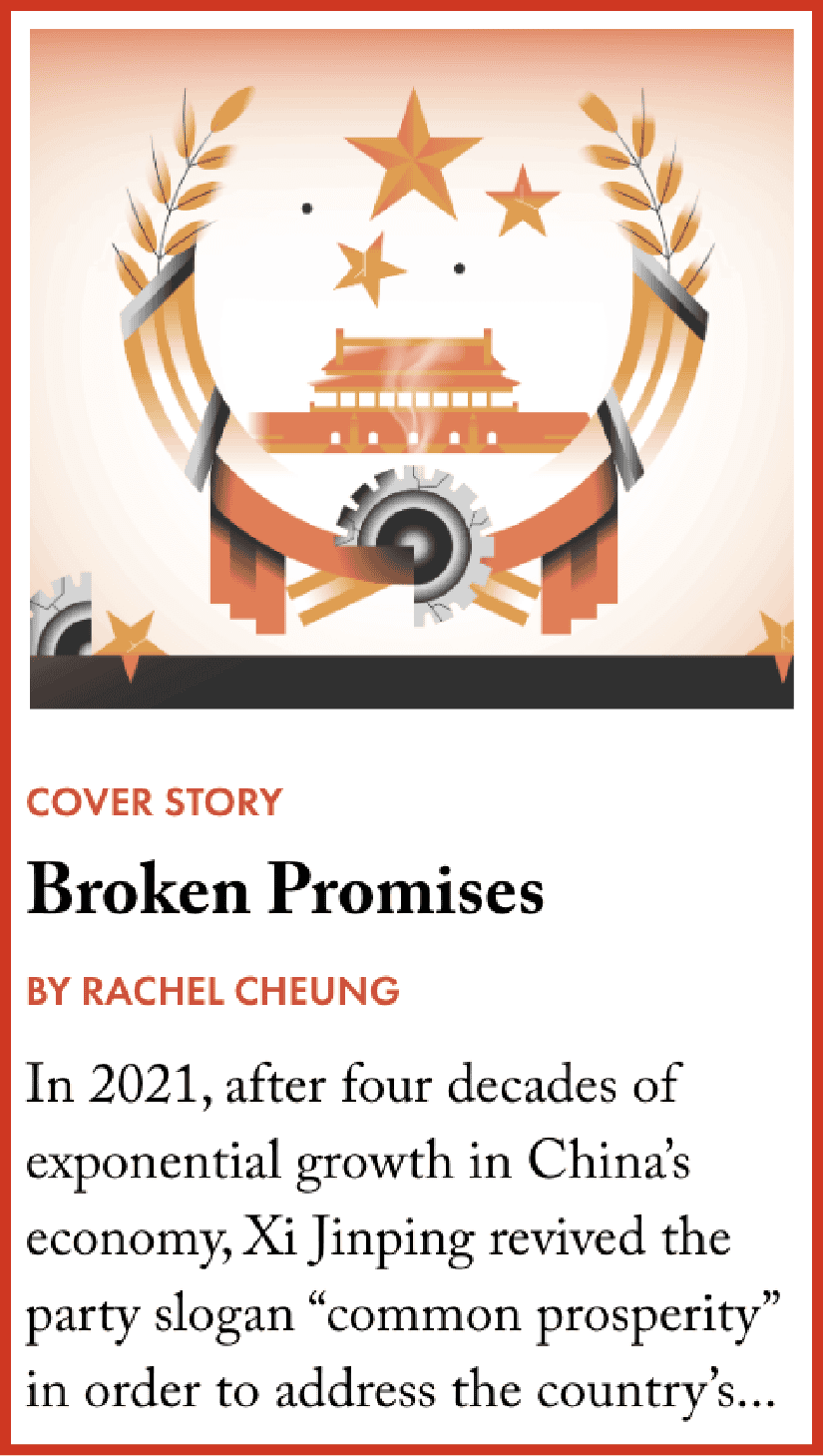
Rebranding ‘Common Prosperity’ as a business-friendly slogan will thus take much more than high-level symposia. Local governments are weighed down with debt and see business people as fair game, and there are more incentives for shaking them down than obstacles.
For example, some provinces now allow 70 percent of funds received from penalties and confiscations to revert to the city where the law enforcers are located. A significant amount is then returned to the local agencies that enforced the penalty, in effect allowing prosecutors to secure operating funds from the fines and confiscations they levy. At these local levels, law enforcement officers may receive promotions and other incentives for shaking down entrepreneurs.
Financial incentives also have a role in determining which firms are targeted for prosecutions and penalties. Judicial authorities favor businesses with substantial turnover that are based elsewhere. Again, competitive local protectionism comes into play. Cadres are loathe to damage key businesses and entrepreneurs in their own jurisdictions for the same reason that parasites generally stop short of killing their hosts.
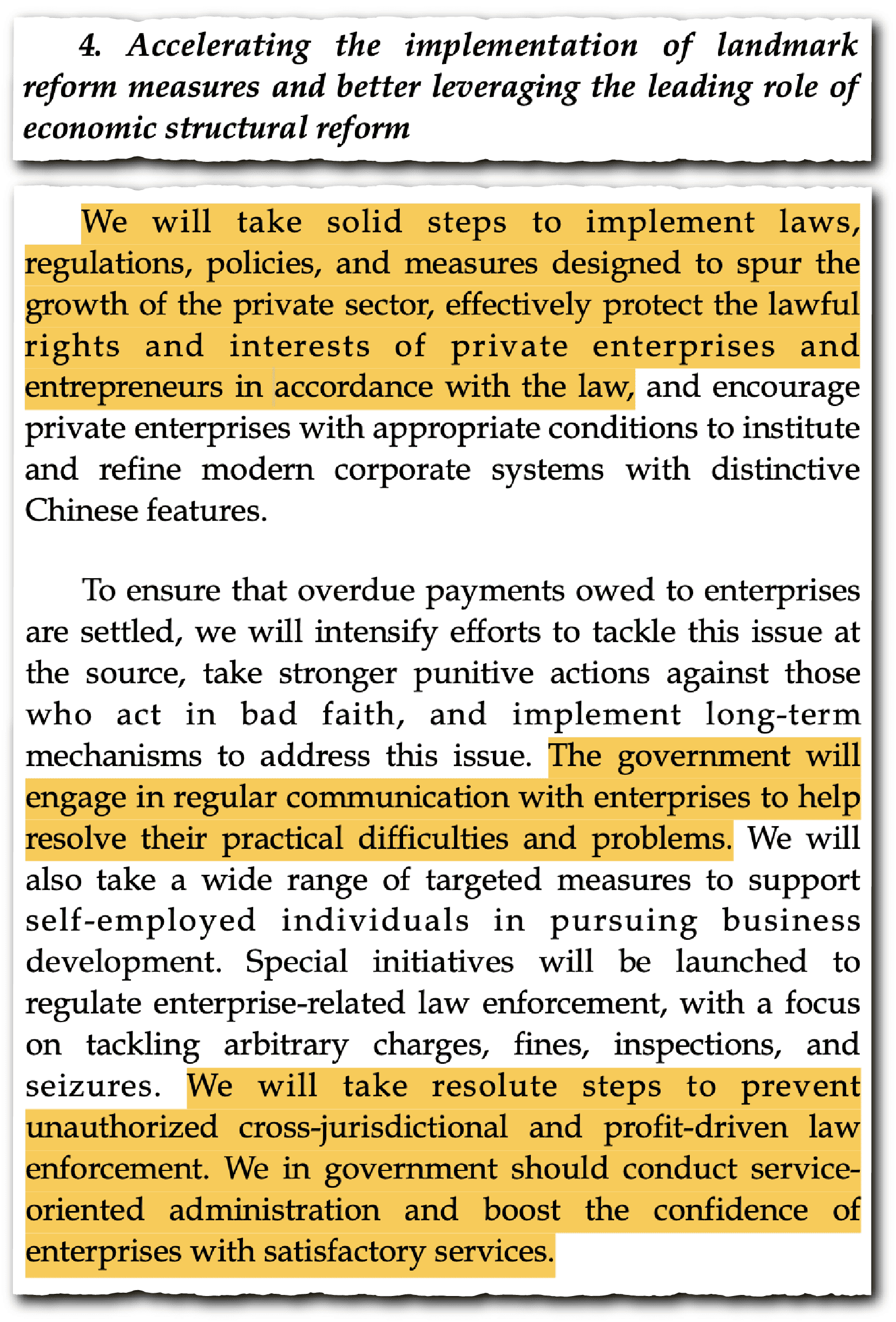
In recent months, the authorities in Beijing have begun to address such problems, issuing directives banning ‘profit-seeking law-enforcement’ by local governments with the aim of ending ‘deep-sea fishing’ and other official extortion rackets. Premier Li Qiang focused on the issue in his Government Work Report to the March National People’s Congress. Beijing is also hinting at policy solutions targeting the deficit and debt issues that trigger predatory practices.
But fiscal deficits and debts are triggers, not causes. The latter are to be found in the underlying structural factors driving competition, rent-seeking, and predatory behaviour among local government officials. Further, there are no institutional mechanisms for dispute resolution between local governments situated in different provinces. China’s administrative architecture is designed to ensure vertical responsibility, not horizontal accountability.
Ultimately, the most important of the structural issues in the way of restoring business confidence is the absence of rule of law, and of equality before the law, of a kind that would place private businesses and citizens on the same level as state-owned businesses and Party cadres. If China’s leaders truly wanted to address the chronic issues that lead to local government misbehaviour, they would start by addressing this fundamental problem.

John Fitzgerald is Emeritus Professor at the Australian Strategic Policy Institute and at Swinburne University, where he taught in the Asia-Pacific philanthropy studies program from 2013 to 2017. Before that he was China Representative of The Ford Foundation in Beijing, from 2008 to 2013. He is the author of Cadre Country: How China became the Chinese Communist Party (2022) and Taking the Low Road: China’s Influence in Australian States and Territories (2022), among others.