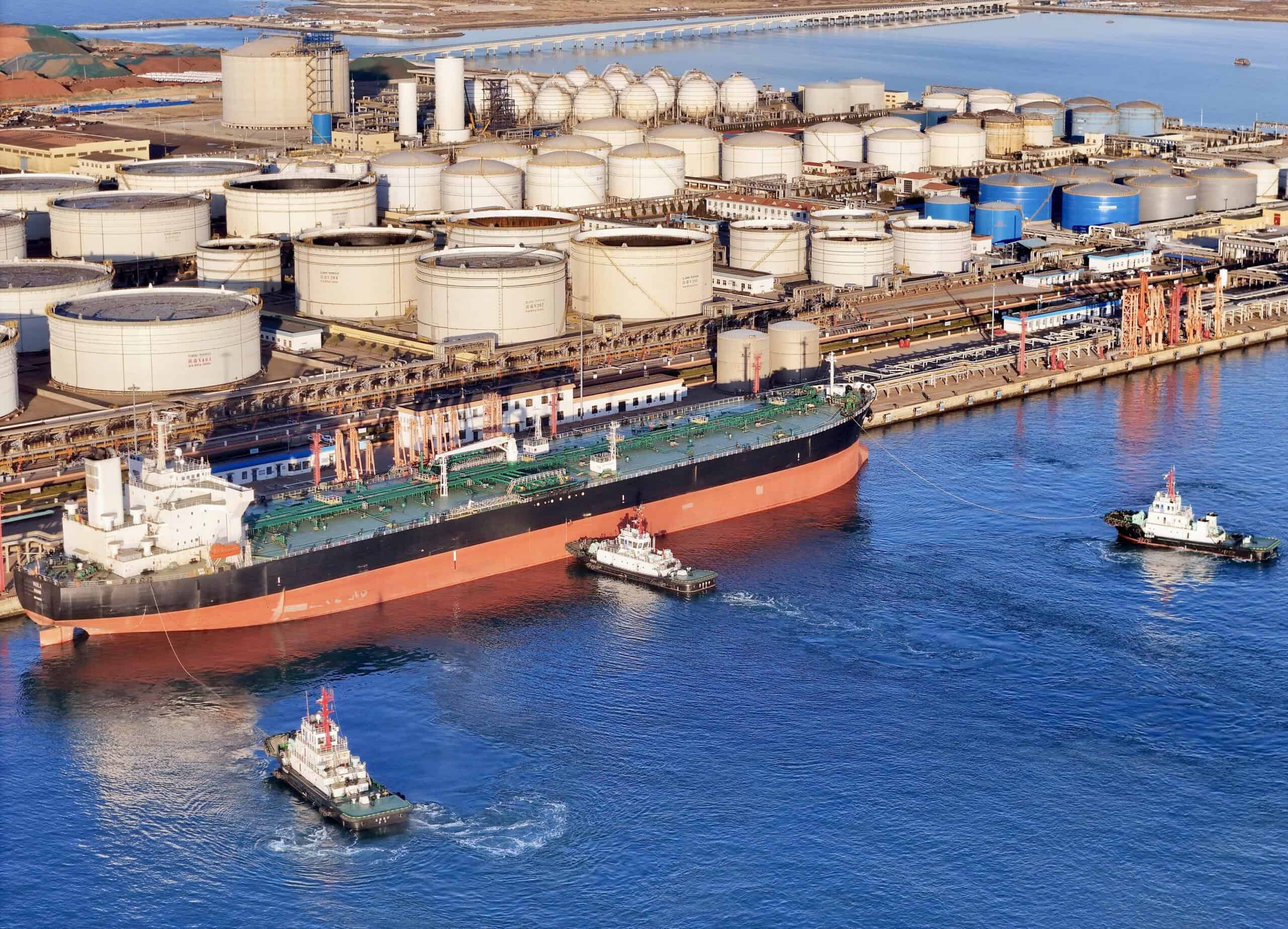
China’s transformation into a global economic power has also seen it become the world’s largest importer of crude oil. But is the country’s thirst for black gold from abroad now in decline?
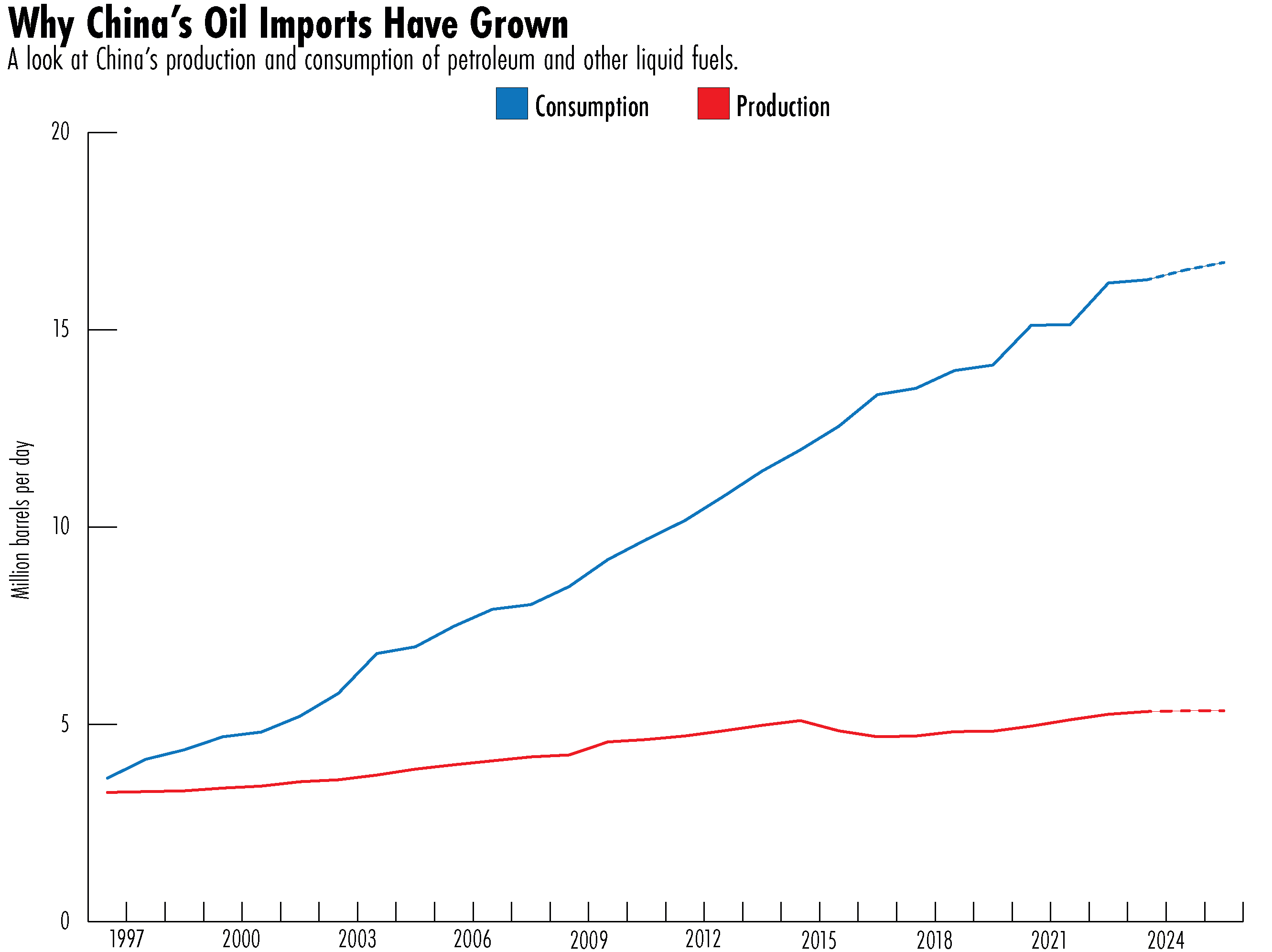
Barring the two years of the Covid-19 pandemic, last year was the first in two decades when China recorded a year-on-year drop in petroleum imports.
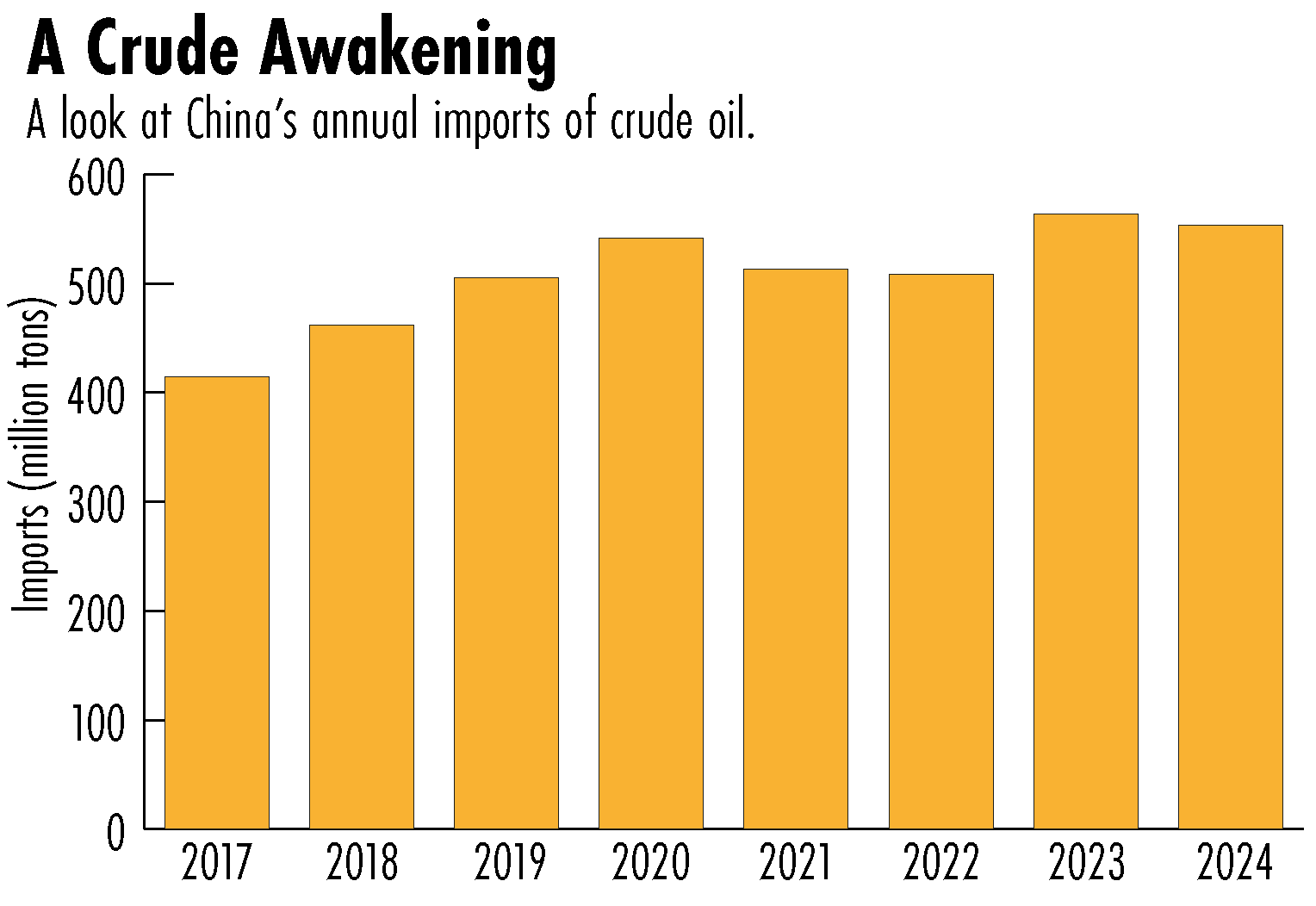
While it may be too soon to be sure that China’s oil demand has peaked, most analysts agree that the country’s imports will crest by the end of the decade. They point to cyclical and structural factors working in tandem: China’s slumping property sector is depressing demand for refined oil products like diesel and gasoil just as non-oil transportation options, such as electric vehicles, trucks powered by liquified natural gas and high-speed trains, are growing in popularity.

“Everything suggests that we are heading for peak oil demand in China sooner rather than later,” says Erica Downs, a Chinese energy markets specialist at the Center on Global Energy Policy at Columbia University.
To be sure, analysts expect China’s oil imports to remain high, even if they are no longer growing rapidly. Some even expect a return to growth. “Net imports in China will grow next year because their consumption will still grow, just at a slower rate than they typically have in the past,” says Jeff Barron, an economist at the U.S. Energy Information Administration.
As long as consumption outpaces domestic production, China will have to look abroad for a big chunk of its oil needs.
But when and if China’s imports start to decline permanently, the countries that sell China the most oil will be at highest risk of disruption.
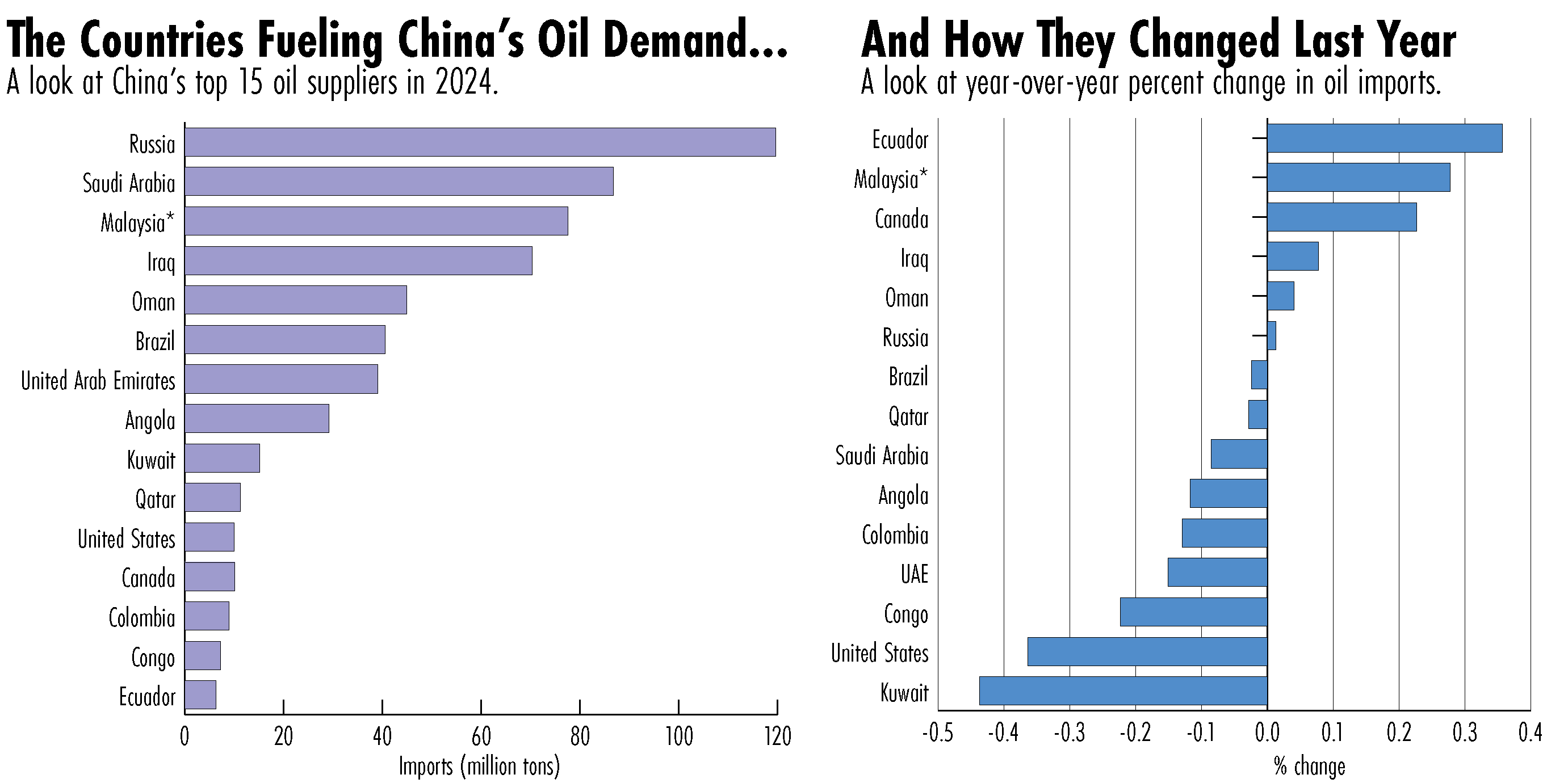
Iran, where hydrocarbons account for more than half of export revenue, sold 95 percent of its oil to China last year, according to data firm Kpler. Because Iranian oil is subject to U.S. sanctions, these sales are often recorded in China as coming from Malaysia, a common transshipment destination. China’s reported imports from Malaysia last year were equivalent to more than double Malaysia’s total domestic oil production.
As demand growth slows on a global basis, in no small part driven by tapering demand growth out of China, that means you’re not going to need U.S. production to continue increasing.
Matt Smith, lead oil analyst for the Americas at Kpler
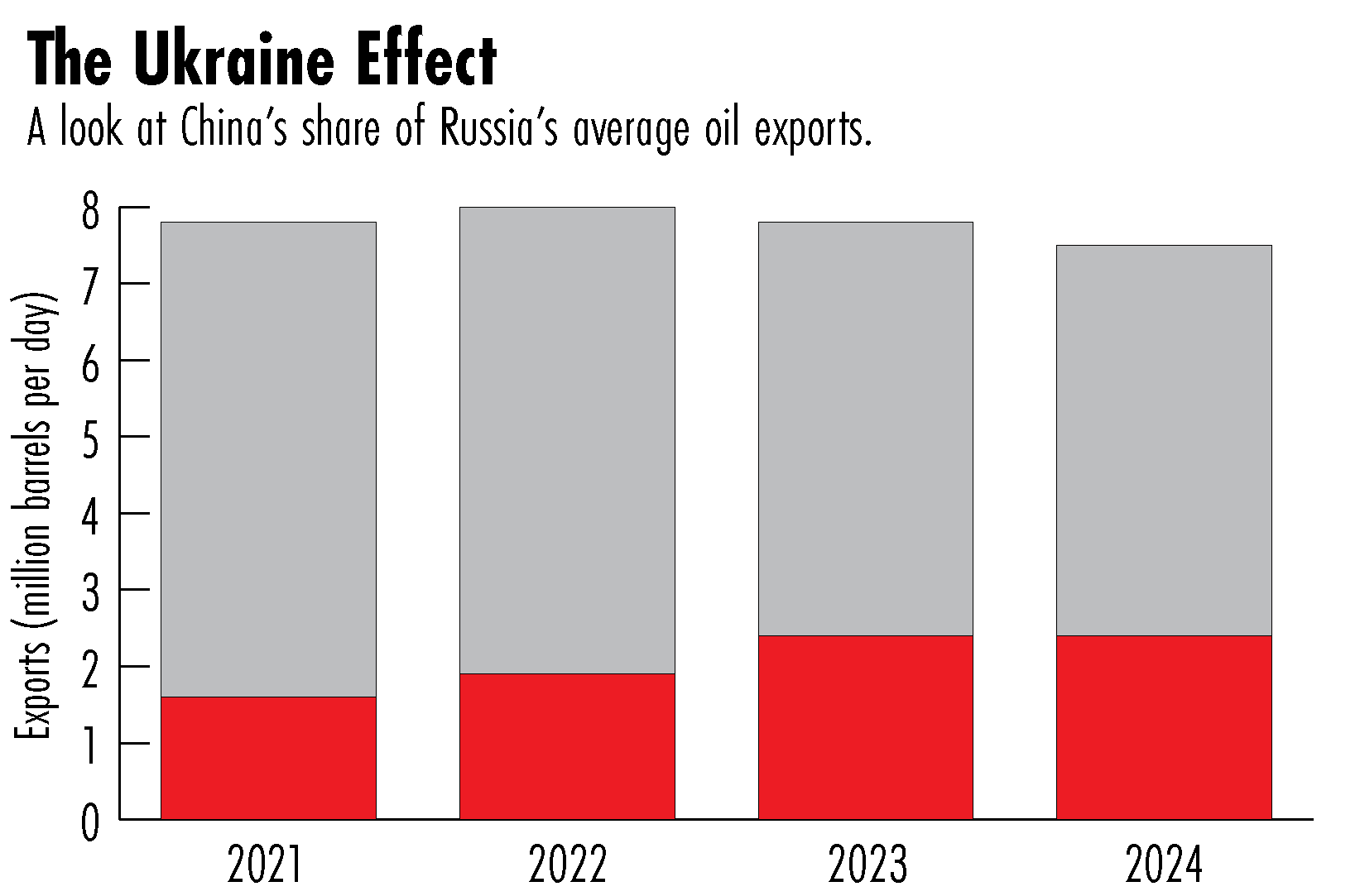
Russia is also increasingly dependent on China as a buyer of its oil. Though Europe was the largest buyer of Russian oil before its invasion of Ukraine in 2022, China has since assumed that mantle. On average, it bought a third of Russian oil exports last year, up from 20 percent in 2021, according to the International Energy Agency.
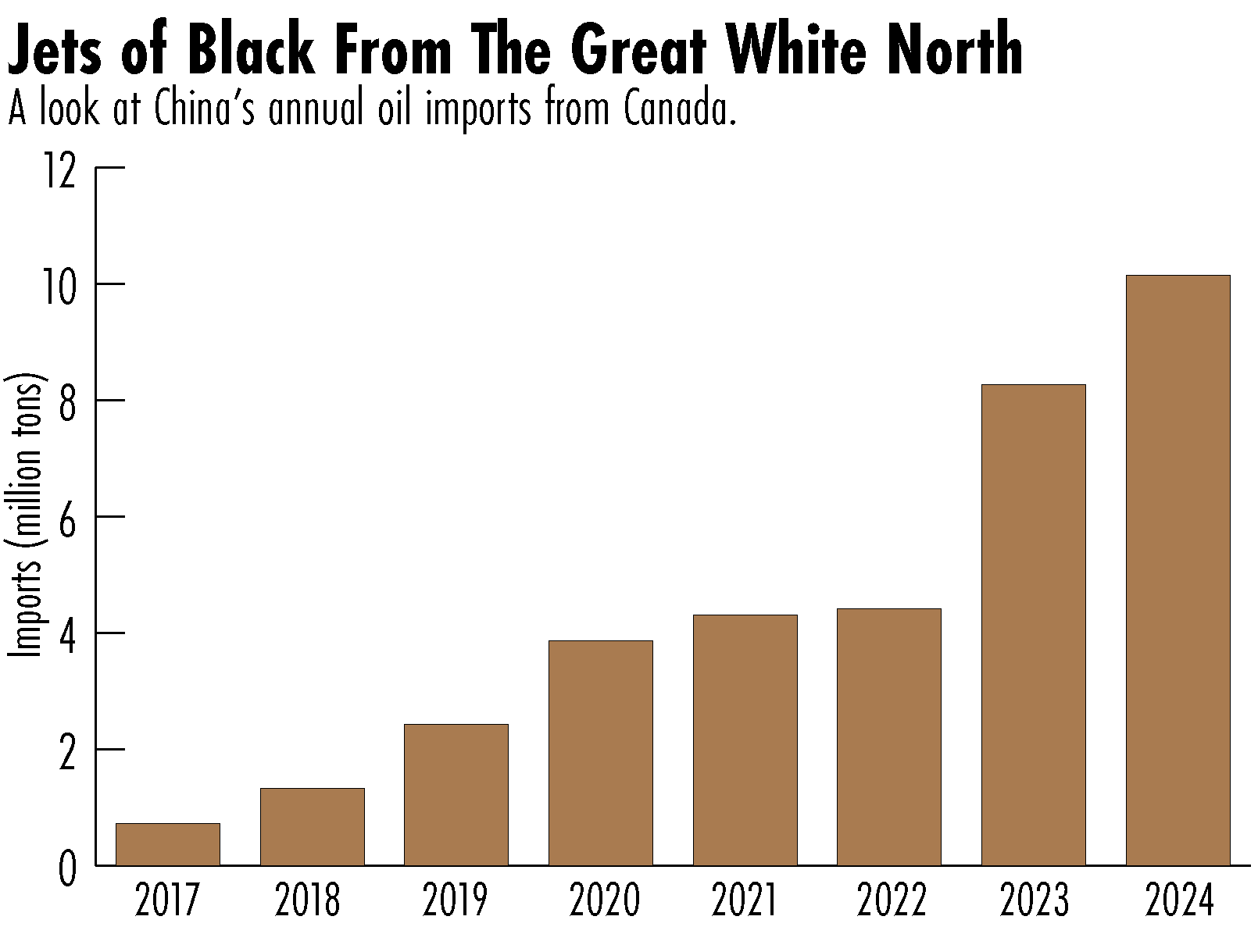
Canada stands out too. China’s oil imports from the country were 14 times greater last year than in 2017, the earliest year with official data available, though they remain a small portion of Canada’s total crude oil exports. That total is up just 20 percent during the same period, Canadian government statistics show.
As Chinese demand weakens, President Donald Trump’s promise to ramp up U.S. oil production could further complicate matters for Russia and other petroeconomies in the so-called OPEC+ bloc, says John Calabrese, a senior fellow at the Middle East Institute, a Washington think tank. For years the Organization of the Petroleum Exporting Countries, which includes 12 countries from Saudi Arabia to Venezuela, has sought to influence global oil prices by controlling its aggregate supply. The group often partners with Russia and other major producers in this effort.

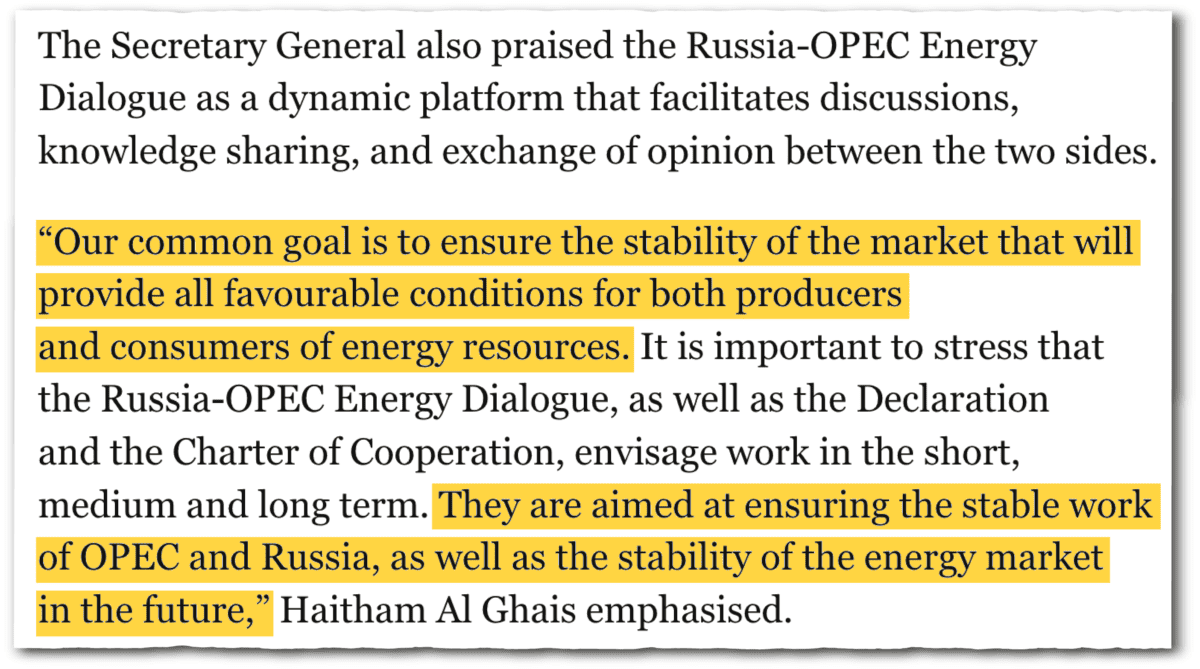
Left: Deputy Prime Minister of Russia, Alexander Novak, and OPEC Secretary General Haitham Al Ghais, at the Russia-OPEC Energy Dialogue, November 22, 2024. Right: Comments from Haitham Al Ghais on the Russia-OPEC Energy Dialogue. Credit: The Russian Government
“As a result, OPEC+ may find it increasingly difficult to use production cuts to stabilize prices,” Calabrese says of the U.S.’s plans. “The balance of power in global oil markets could shift further in favor of buyers.”
President Trump makes remarks on “drill, baby, drill” during his first address to a joint session of Congress, March 4, 2025. Credit: C-SPAN
Still, if falling Chinese oil demand results in global price drops, it could eventually get in the way of Trump’s oil ambitions by reducing the potential returns on drilling investment, even though just a fraction of U.S. oil exports go to China.
“As demand growth slows on a global basis, in no small part driven by tapering demand growth out of China, that means you’re not going to need U.S. production to continue increasing,” says Matt Smith, lead oil analyst for the Americas at Kpler.
Decreasing oil demand could also result in less greenhouse gas emissions, which China produces more of than any other nation. However, any reduction in emissions from decreased oil usage will run up against China’s ongoing dependence on coal, the dirtiest of fossil fuels.


Noah Berman is a staff writer for The Wire based in New York. He previously wrote about economics and technology at the Council on Foreign Relations. His work has appeared in the Boston Globe and PBS News. He graduated from Georgetown University.