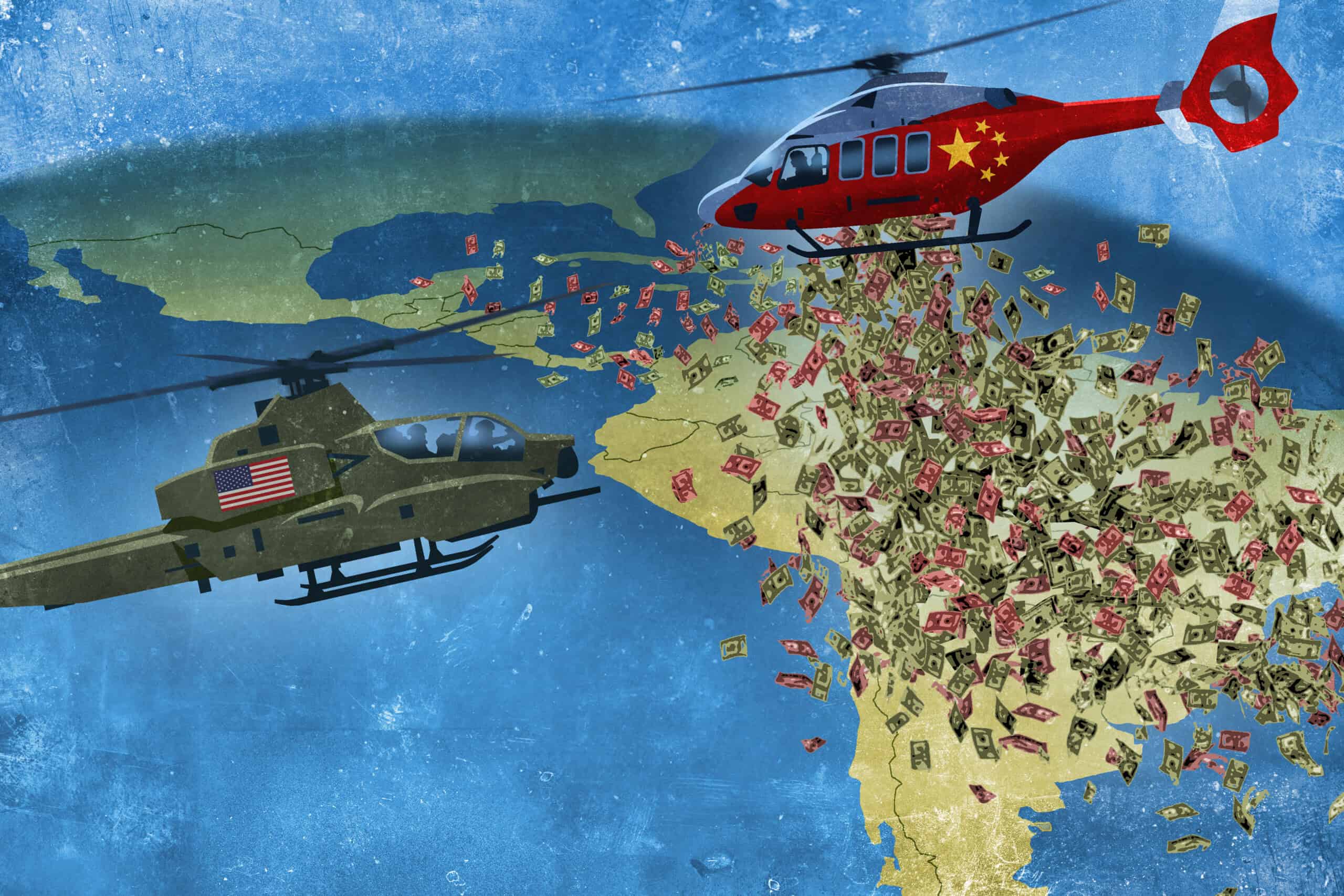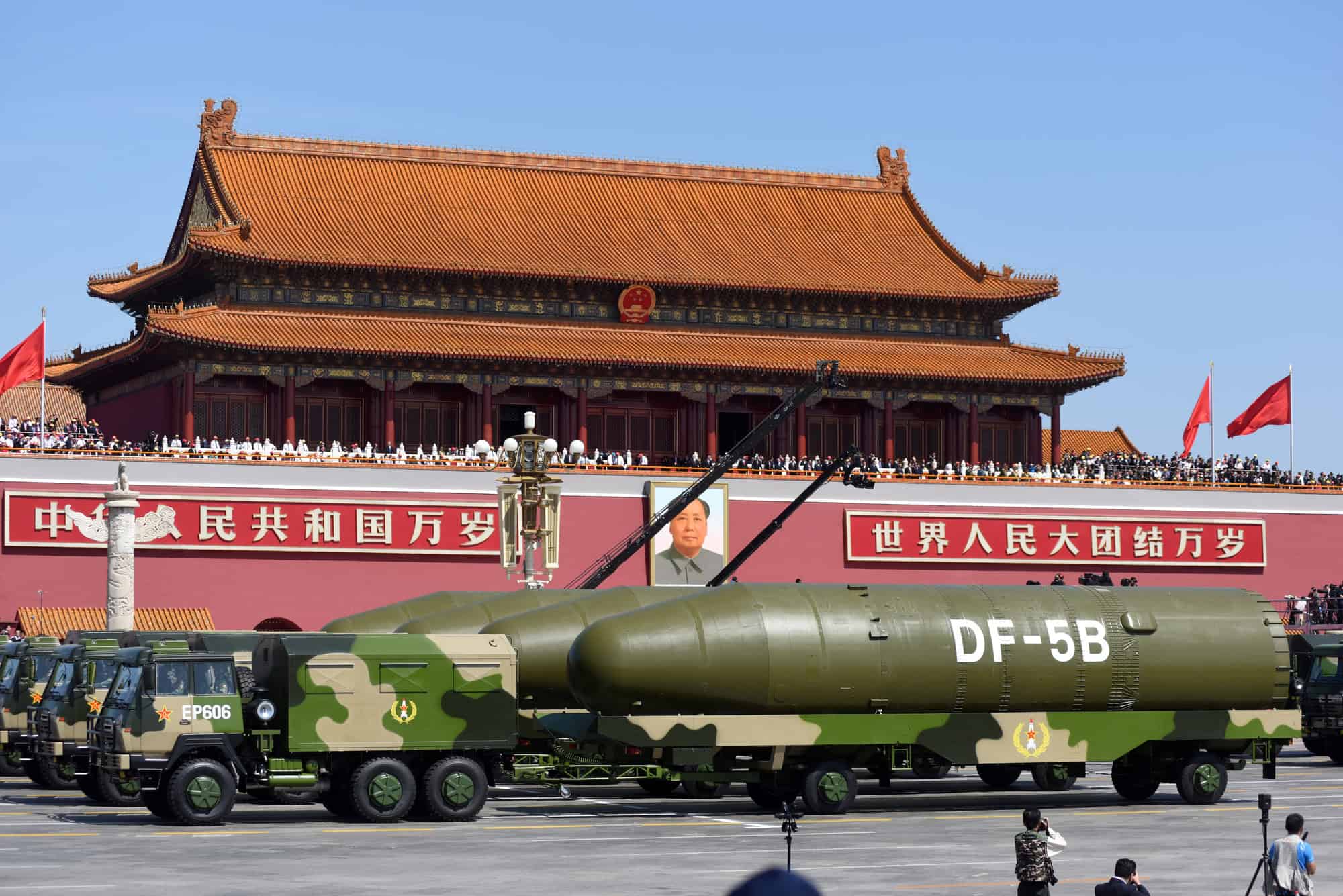
China’s continuing rise to the front ranks of the world’s nuclear powers is attracting greater attention. Early last month, U.S. officials accused China of conducting nuclear tests in violation of its commitments under an international test ban treaty, citing a purported test in 2020.
António Guterres (UN Secretary-General) speaks at the High-Level Segment – Conference on Disarmament 2026. Credit: UN
The Chinese nuclear build-up and alleged testing are one piece of an increasingly unstable landscape for nuclear powers. On February 4, the New START treaty between the United States and Russia, which has limited both countries’ deployed arsenals for the last 15 years, expired. President Donald Trump has said the U.S. will not extend the treaty, and the State Department said China’s buildup renders past models of arms control “obsolete.”
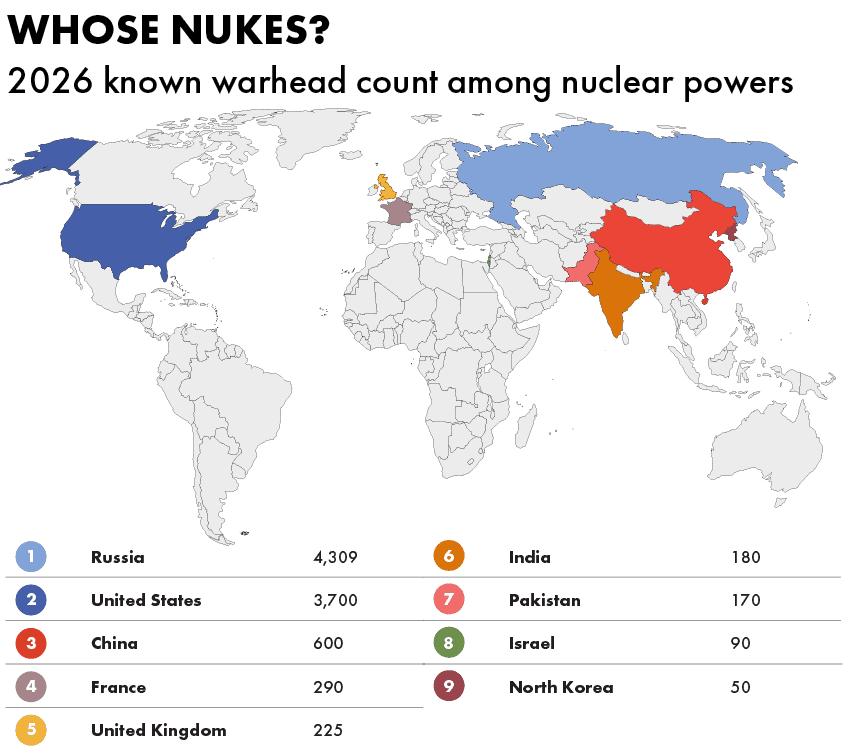
China now has the world’s third largest nuclear arsenal, a stockpile that has nearly tripled in size in the past twenty years and could grow further. The U.S. Department of Defense estimates China is on track to have 1,000 nuclear warheads by 2030.
For its part, China argues it “never has and never will engage in any nuclear arms race with any other country in terms of level of expenditure, quantity, or scale of nuclear weapons.”
This week, The Wire takes a look at China’s nuclear buildup that is taking place amid an increasingly uncertain global geopolitical picture. Elsewhere, French President Emmanuel Macron announced this month that his country would expand its nuclear arsenal, and offered to use it to extend a ‘nuclear umbrella’ over Europe.
The world seems to already be on the path of a fresh multi-peer arms race, says Alexandra Bell, a former diplomat who is now president of the Bulletin of the Atomic Scientists, which was founded after World War II to track man-made threats to humanity.
“That is a more dangerous world, and one in which we might not get so lucky the second time around,” she says.
MAPPING THE ARSENAL
China is one of the five original nuclear states alongside the United States, Russia, France, and Great Britain. Around 2020, China began rapidly increasing its stockpile, according to data tracked by multiple nuclear watchdogs. However, Beijing continues to deny being in an arms race with any other country and does not publicly release information on the size of its stockpile. Today China is estimated to have 600 warheads that it is able to deploy across air, land, and sea.
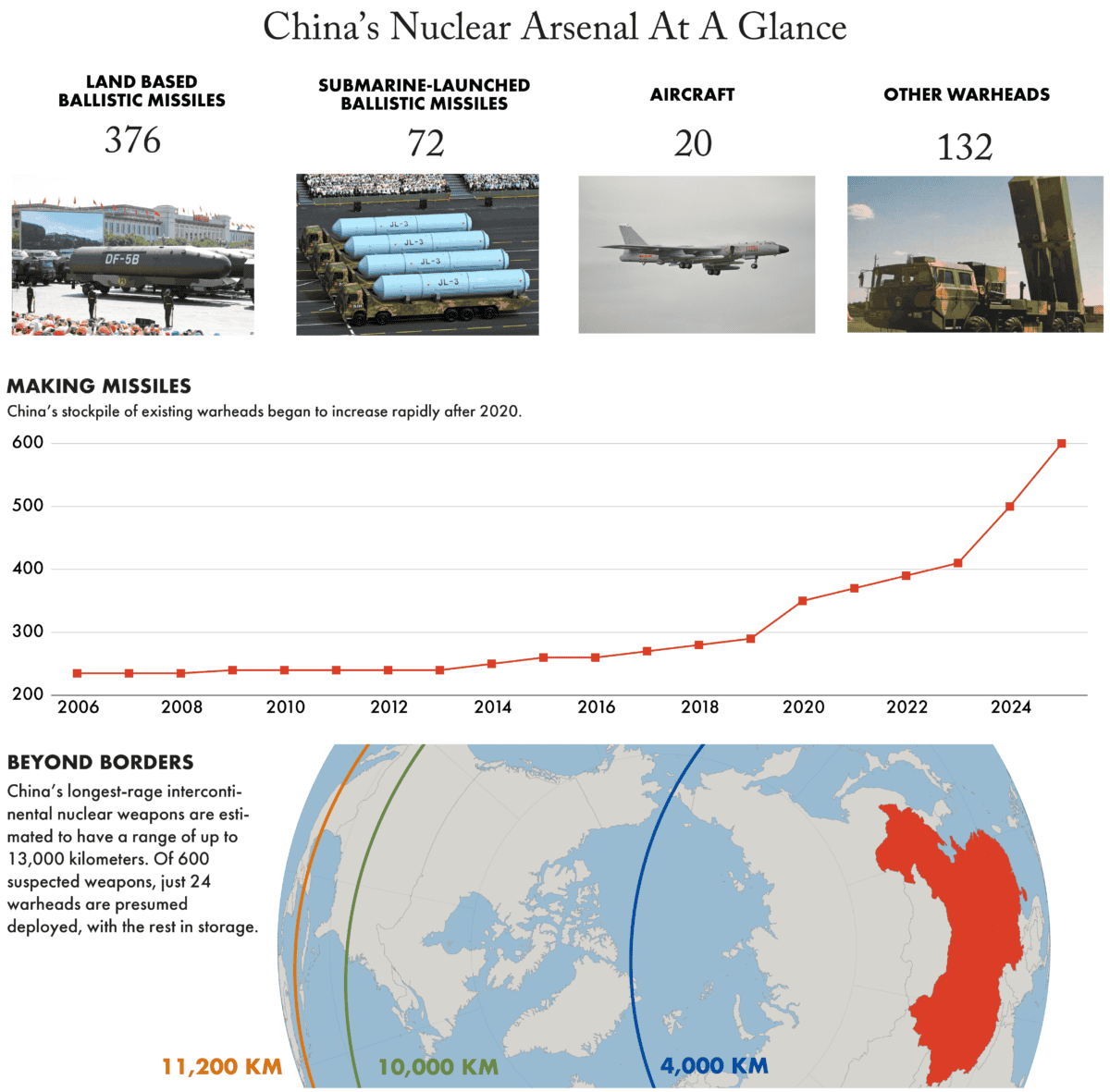
Just as important as having the nuclear warheads themselves is the ‘delivery system’ needed to launch them. China has a broader array of such systems that can deploy weapons across air, land, and sea — collectively known as the “nuclear triad” — than the United States does, according to a Center for Strategic and International Studies (CSIS) analysis. In a sign of its increased deployment capability, China displayed five new delivery systems at its September 2025 military parade. The U.S. has four known delivery systems.
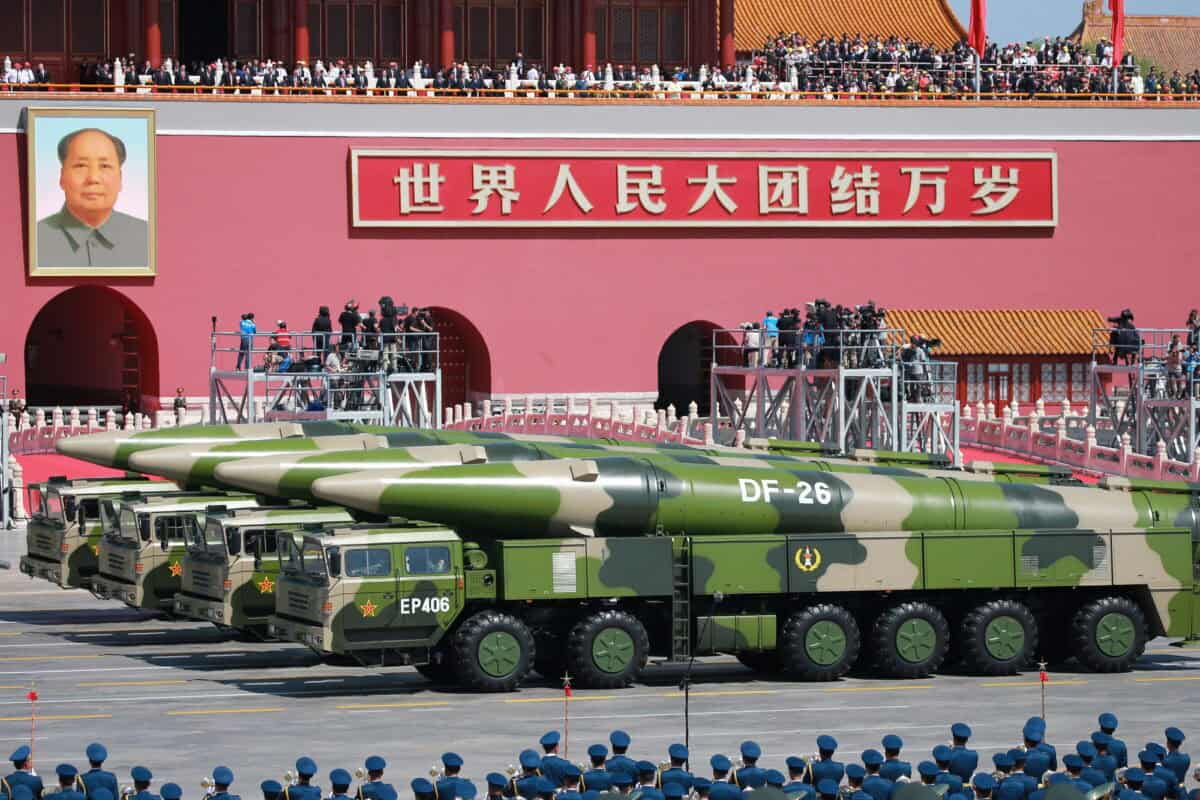
There is still much that remains unknown about Beijing’s nuclear ambitions. In a statement released last November, the country’s State Council said its aim is to maintain a “lean and effective” nuclear arsenal, and that its capabilities would be kept “at the minimum level required for national security.”
The limit on “lean” is unclear, though Bell says China could be trying to reach parity with the 1,550 deployed nuclear warheads Russia and the United States have each individually maintained since 2018 under the New START treaty. China currently has just 24 warheads deployed, according to the Nuclear Threat Initiative, a non-profit security organization based in Washington DC.
TESTING THE LIMITS
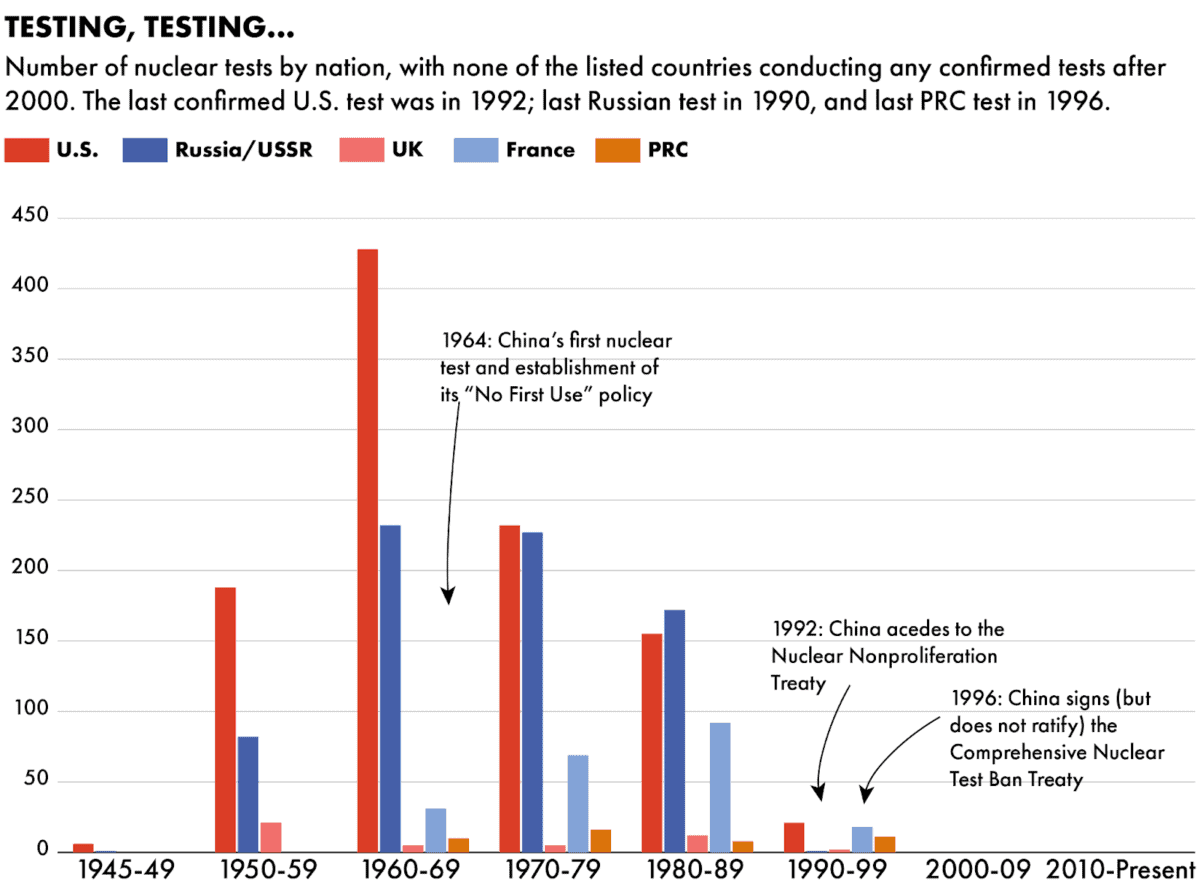
On nuclear issues, China appears to want the best of both worlds: to have a powerfully armed military, while trying to portray itself as a peaceful world power. China ratified the Nuclear Nonproliferation Treaty (NPT) in 1992, which aims to prevent the spread of nuclear weapons and technology, but has baulked at other treaty efforts that would demand commitments to transparency.
It instead prefers to provide assurance over its intentions by promoting its own ‘no-first-use’ policy. China adopted the policy after its first nuclear test in 1964, pledging that it would not be the first country to deploy nuclear missiles in a conflict.
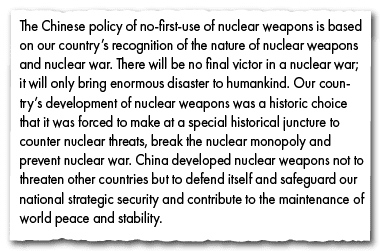
But the policy has loopholes. A proposed no-first-use pledge China submitted to NPT states in 2024 contains a provision that nuclear powers may withdraw if their interests are threatened. The proposal doesn’t mention any binding method to ensure it would be adhered to in a genuine crisis: no other nuclear nation has joined China in supporting the policy.
A ban on nuclear testing is one area of fragile agreement among nuclear powers. China, Russia, and the United States have all signed, but not ratified, the Comprehensive Nuclear-Test-Ban Treaty. None of the three countries have conducted any confirmed tests in the past three decades.
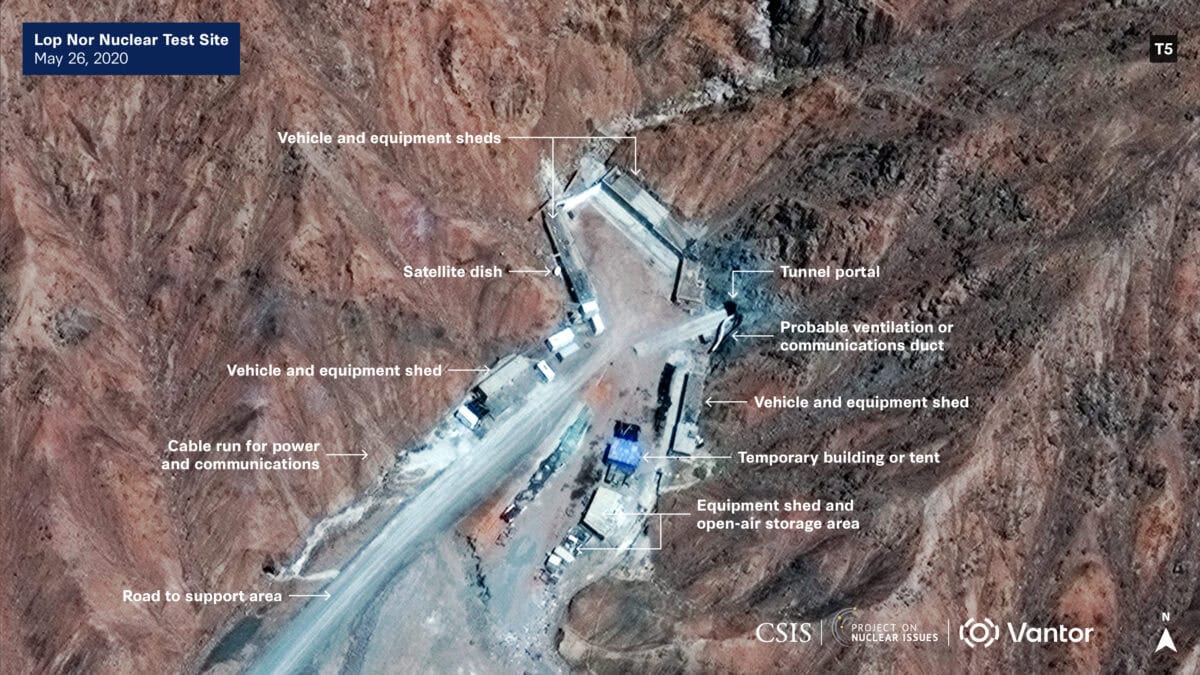
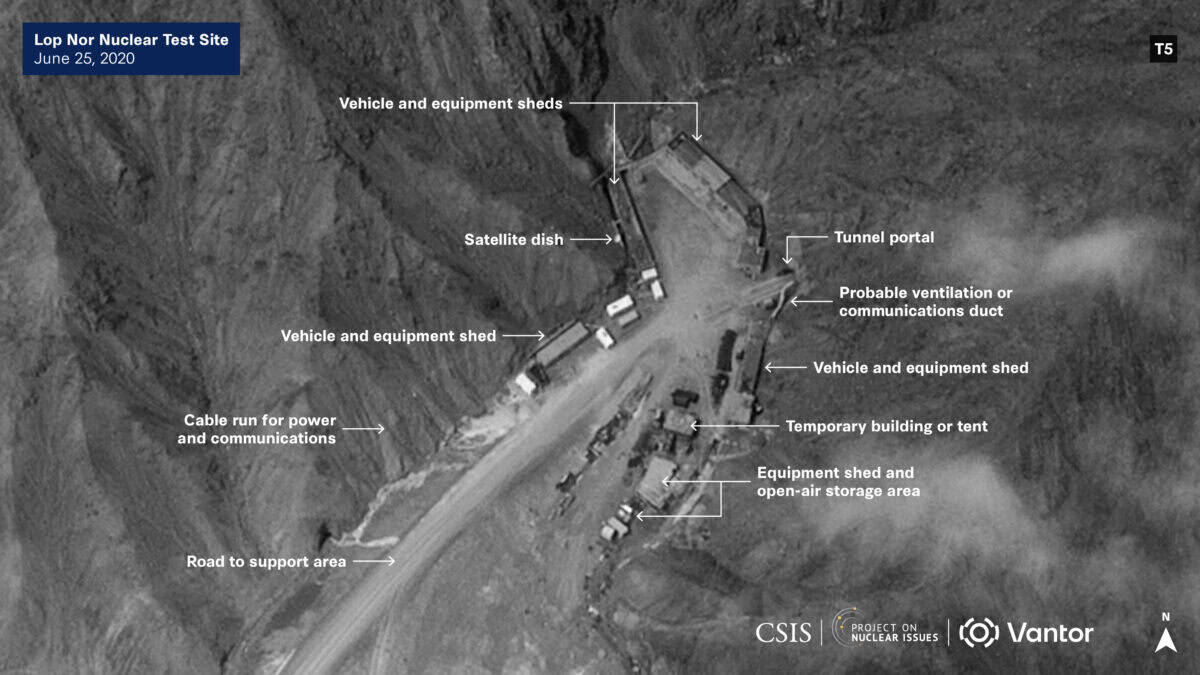
China’s alleged 2020 nuclear test at its testing site at Lop Nur in Xinjiang, and President Trump’s stated wish to restart nuclear testing, could reopen the discussion.
The U.S. claims that China’s test took place underground to reduce the seismic impact of the blast. A CSIS open source analysis of satellite imagery from Lop Nur found no conclusive evidence as to whether a test had occurred in 2020 or not. The Comprehensive Nuclear-Test-Ban Treaty Organization, which operates more than 300 testing facilities to detect nuclear explosions with yields at or above 500 tons of TNT, found that two seismic events detected in Xinjiang in July 2020 were far below that level.
Putting testing back on the table would be a bad move, says Bell.
“There’s really no one who would benefit more from that backslide than China, which is actively engaged in a nuclear buildup and would need that kind of data to advance and improve their arsenal,” she says.

Savannah Billman is a Staff Writer for The Wire China based in NYC. She previously worked at the National Committee on U.S.-China Relations.