The U.S. and Europe need to work together better on China-related issues. Step one: work out the differences in where each side is coming from.
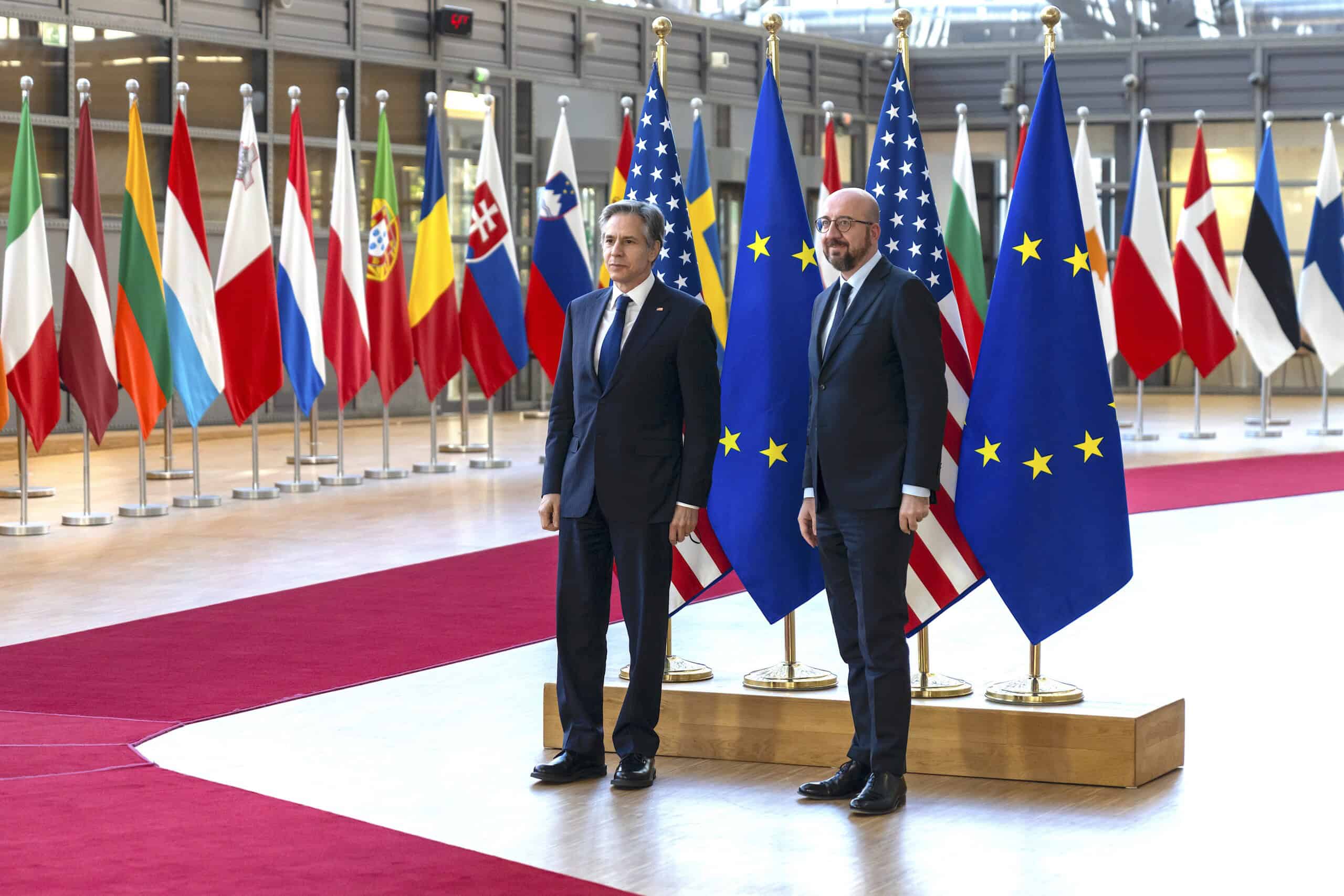
Secretary of State Antony J. Blinken meets with European Council President Charles Michel in Brussels, Belgium, March 4, 2022. Credit: U.S. Department of State via Flickr
Policymakers on both sides of the Atlantic now frame China primarily not as an opportunity but as a challenge or threat. In recent research with colleagues at the U.K.’s leading foreign policy think tanks — Chatham House and the Royal United Services Institute — into transatlantic cooperation on China, we found consensus on the need for de-risking; on the desire to maintain the security status quo in the Indo-Pacific; and on the need to counter China’s actions on the world stage and its
Exclusive longform investigative journalism, Q&As, news and analysis, and data on Chinese business elites and corporations. We publish China scoops you won't find anywhere else.
A weekly curated reading list on China from Andrew Peaple.
A daily roundup of China finance, business and economics headlines.
We offer discounts for groups, institutions and students. Go to our Subscriptions page for details.
Millions of Chinese factory owners have been bequeathed a difficult inheritance. AI offers a way to modernize their parents’ low-margin businesses, but only if they can overcome often deep-rooted resistance to change.
Rebuilding healthy ties between the Indian and Chinese governments is likely to be a long process, with issues from the border to the Dalai Lama’s succession looming.
We use cookies to ensure that we give you the best experience on our website. If you continue to use this site we will assume that you are happy with it.