After college in Canada, Peter Zhou’s passion for numbers — the way injections of money can be used to grow and shape businesses, the complexities and vagaries of the world’s financial cycles — led him not back to China but to the Bank of Montreal. Canada, a nation with a long history of extractive industries, was a hub for mining start‑ups. “That bank is known for resources, fracking, mining, and oil and gas,” he told me when we spoke in 2020. “I got into [mining] according to that wave of M&As, the wave of Chinese companies starting to look overseas for resources.” He explained that you could divide Chinese investment in foreign resources into two distinct “waves,” as he put it. The first wave, he said, was companies and independent businessmen striking out on their own. This began around 2006 and lasted until around 2012. “That was the first wave. Maybe these investments didn’t make money at all. Or got into trouble because they’re not used to the local regulatory regimes, or they were caught in the middle of the social problems nearby,” he said. “But they became more sophisticated starting from 2012.” A chance assignment at the bank plunged Zhou into the world of mining — or, rather, mine finance, where investors line up to acquire projects. “Before I got the assignment, I didn’t know much about mining,” he said. He learned quickly, though. When he joined the bank in 2008, “I mean, that’s the peak of the mining cycle,” he told me. “Especially the Chinese mining companies are waking up to buy resources outside.”
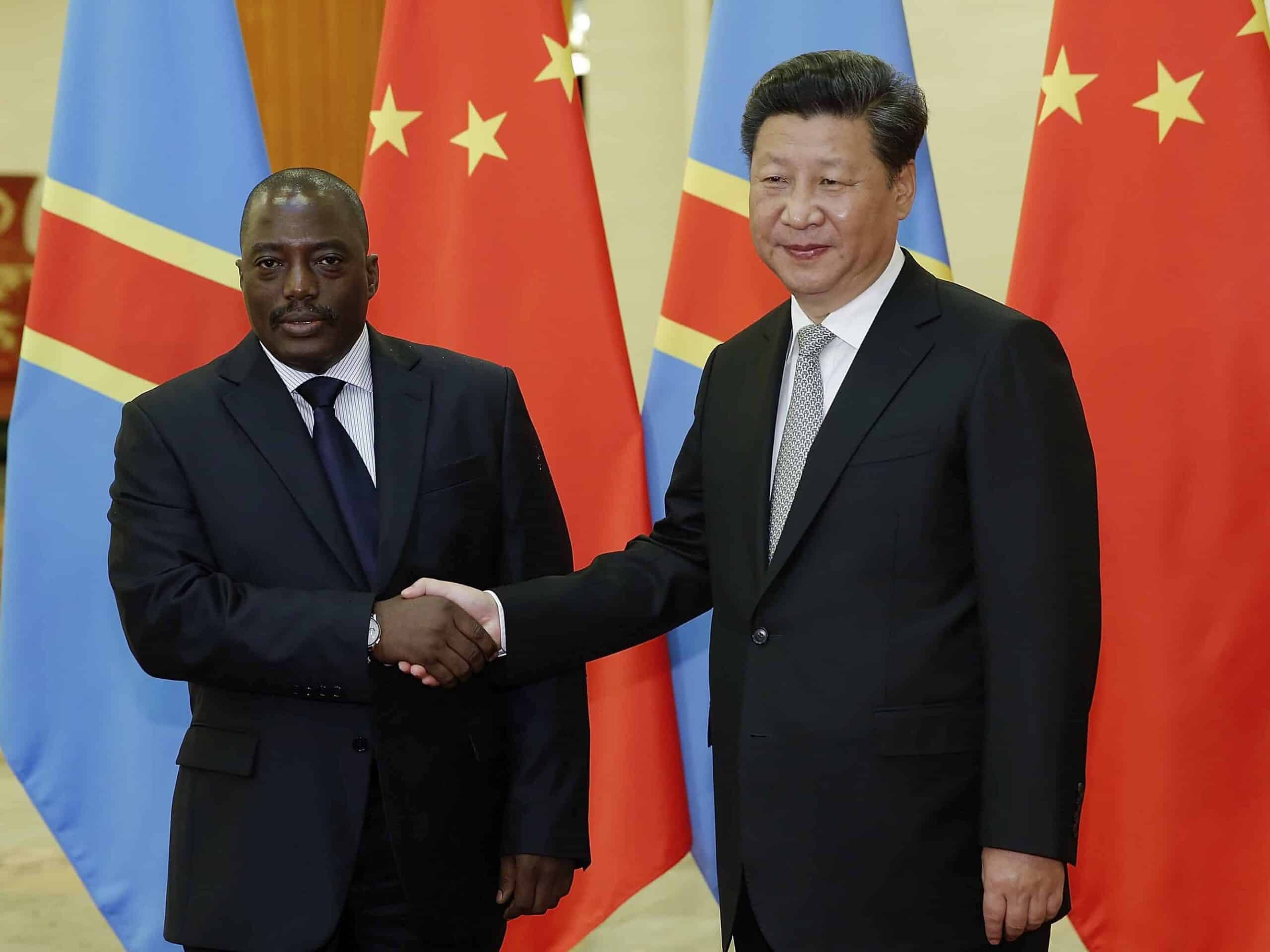
The peak would yield the most ambitious Chinese project in Congo. It was midway into Joseph Kabila’s first elected term in office, and he and his closest adviser, Augustin Katumba, were looking for deals to help the economy grow. (Katumba traveled to China in 2006 as Congo’s itinerant ambassador, for example, with the aim of securing Chinese investment into Congolese oil fields.) The president’s policy rested on what he called the Five Pillars of Progress: infrastructure, job creation, education, water and power, and health care.
After the European Union–funded election, Western donors had pledged $4 billion to rebuild Congo in the wake of the devastating war. “For me, the Congo is the China of tomorrow: from now until 2011, the example for me will come from the Asian countries, which we call the ‘Dragons,’” Kabila told the Belgian journalist Colette Braeckman. “Congo will surprise.”
Western aid was slow to materialize in the aftermath of Kabila’s victory, so he turned to the “Dragons” of the East. “Why not try with new friends, without abandoning our traditional friends?” the president’s logic went, according to the Congolese scholar Jean Mpisi. Kabila had been to China for his military training in 1998. “There he discovered that China was concentrated on itself to escape under‑development in every domain, including the economic one, to the great surprise of the rest of the world,” Mpisi wrote. “Joseph Kabila liked this Chinese experience, and he wanted the DRC to inspire itself from it.” Congo was groaning under the massive debts that Mobutu Sese Seko had aggregated from both the Eastern and Western Blocs during the Cold War. In one of the more unpleasant transactions of the era, this sovereign debt was sold to private investors who would later take Congo to court to ensure repayment — with interest — against shipments of critical metals like cobalt.
HUAYOU WHO?
Negotiations between Congo and China proceeded quickly. In September 2007, politicians in Kinshasa announced that they were finalizing a deal with two leviathan Chinese state enterprises — Sinohydro and the China Railway Group Ltd., or CREC. The “Convention of Collaboration,” which was signed seven months later, in April 2008, initially provided for a $3.2 billion mining investment and a $6 billion infrastructure investment, which was later scaled back to $3 billion. In return for 8 million tons of copper, 200,000 tons of cobalt, and 372 tons of gold, the Chinese companies, it was announced, would build 12 roads, 3 highways, a railway, 32 hospitals, 145 health centers, and 5,000 units of social housing in Congo. According to a report commissioned by Kabila’s successor, only a fraction of the $3 billion was actually spent on infrastructure; in 2023, the Congolese government called for another $17 billion in Chinese investment, commensurate, they said, with the value of the minerals China was extracting.
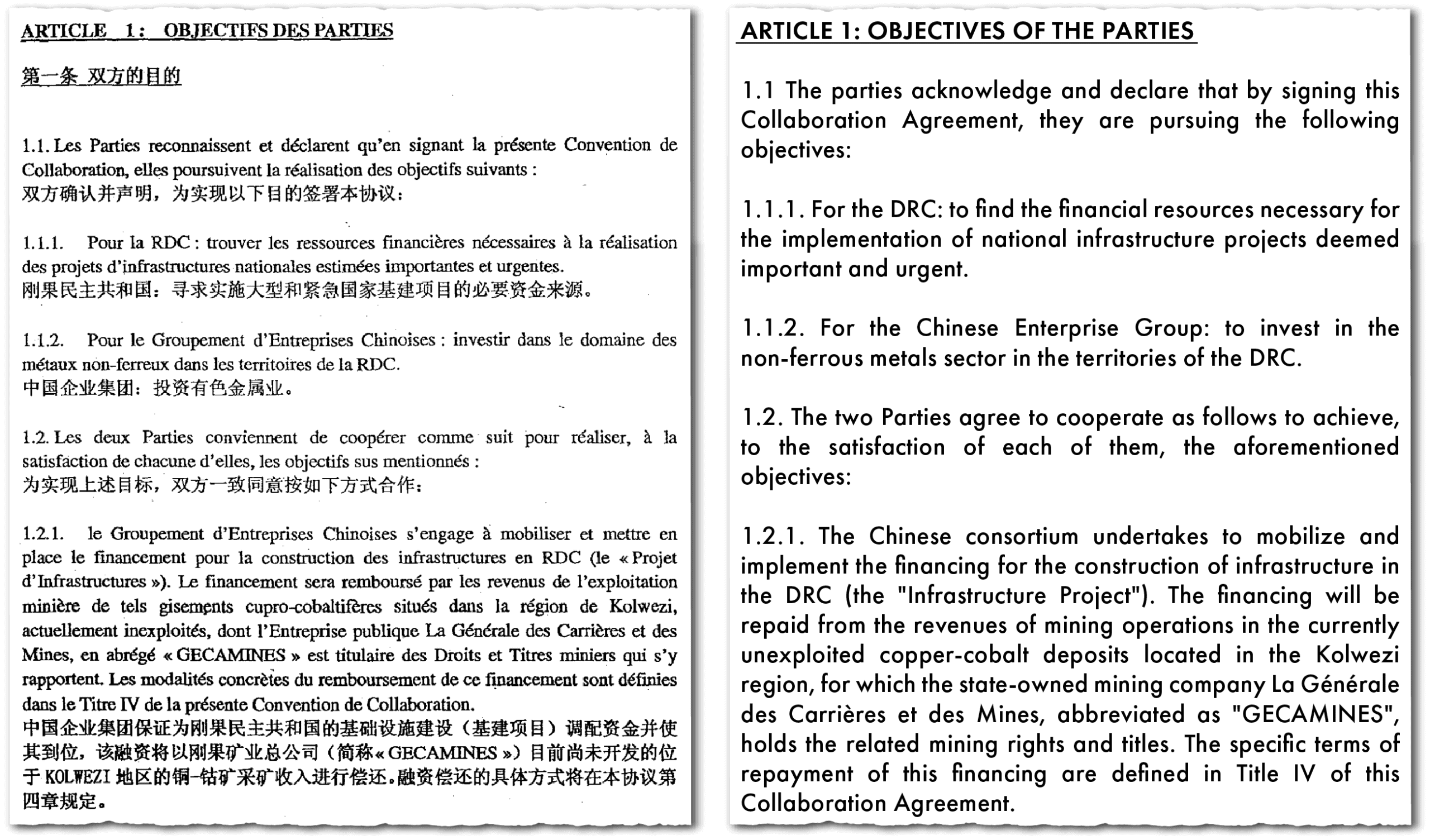
The mining investment provided for a joint venture between Gécamines, which retained 32 percent of the company, and the two Chinese firms. The mining company that arose from the deal would be christened La Sino‑Congolaise des Mines, or Sicomines. Barnabé Kikaya Bin Karubi, one of Kabila’s closest advisers, heralded the deal when we spoke in 2025 — it was, after all, one of the few ways in which Kabila could deliver on his election promise to rebuild the country. But he said the Congolese leadership made a misstep in not okaying it with the U.S. government. “We did not explain it to the master of the world who is the United States of America: We should have come here and do a diplomatic offensive and explain why we are doing this,” Kikaya told me while on a lobbying trip to Washington. “Hence, the American government saw it as us abandoning Western countries and relying on China, and the American ambassador in Kinshasa went berserk, started calling us names and so on.” He said that it was unfair to criticize Congo for turning to the Chinese, who after all build infrastructure in European countries without being critiqued. “You cannot punish the Congo, Kabila, for being a visionary, saying that we want to build infrastructure, basic infrastructure, with what we have as an asset, which is our mines of copper and cobalt,” he continued. “And when China takes over [producing] whatever is the new technology, microchips and so on, they sell it to America and to every single company that can buy it. So it’s a holistic thing.”
Surprisingly for such a big deal, one that involved primarily state actors on both the Chinese and Congolese sides, a private company called Huayou Cobalt was also listed as a minority shareholder of Sicomines. And though Sinohydro and CREC had evolved from their roots in hydropower and railway construction, Huayou was the only company that was exclusively focused on the mining, refining, and processing of critical metals.
The firm’s inclusion was especially surprising because Huayou, by that time, was well known in Congo as a company that had been involved in some of the worst offenses of the artisanal mining trade. “Huayou itself, the company, is very controversial in China as well,” Zhou told me. “There are indeed some companies that are chasing for profit without what I call moral lines.” He even stressed that he had not been to any mines that Huayou operated or bought from.
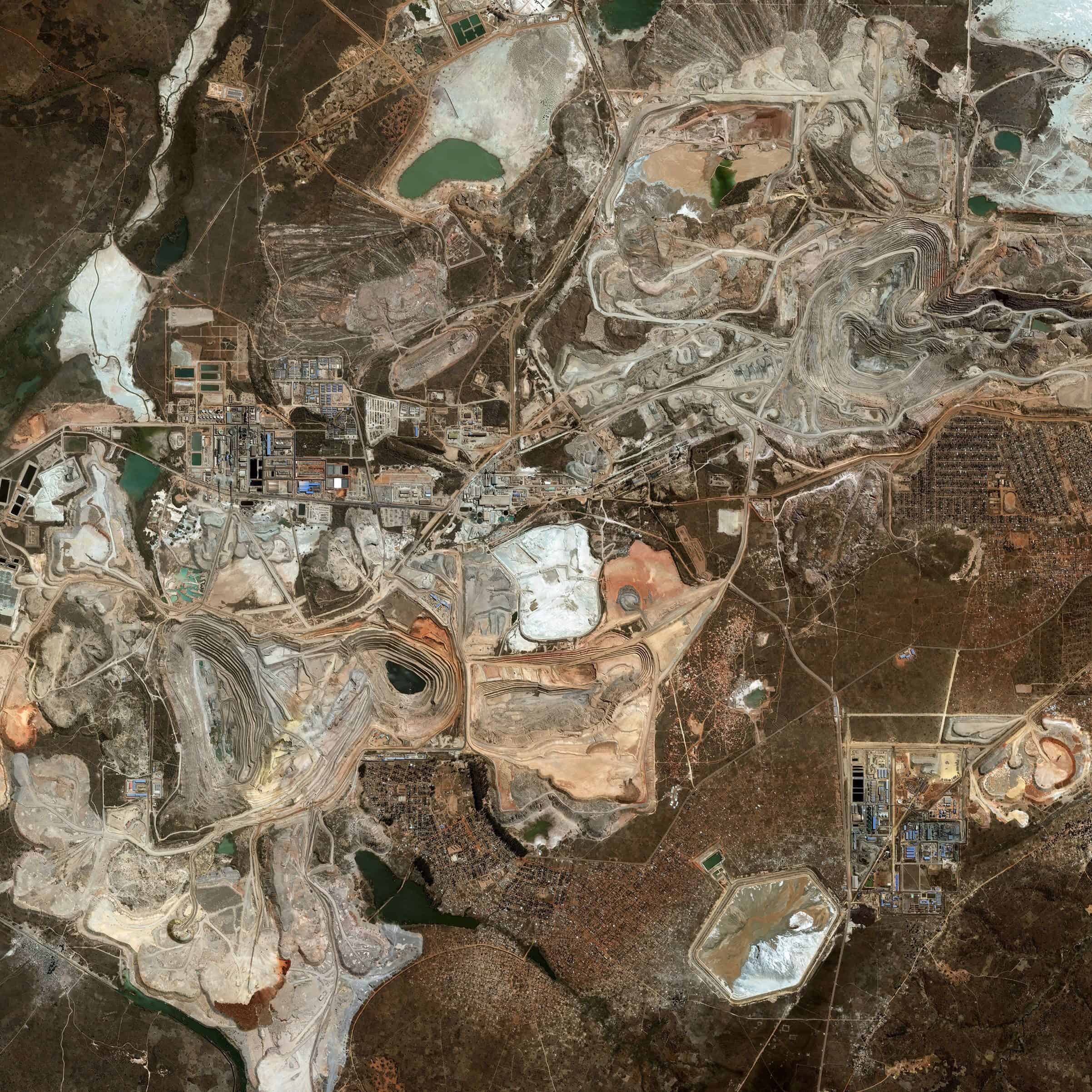
Moïse Katumbi was too politic to mention any companies by name when we discussed his governorship of Katanga. “There are some good Chinese companies, which are lumped in with the bad Chinese companies,” he told me in 2019. “I closed a lot of Chinese companies that were doing things wrong.” But he might as well have been talking about Huayou, or at least its subsidiary, Congo Dongfang International Mining (CDM), which bought from just about anyone in its rush to acquire as much cobalt and copper ore as possible.
As [Huayou founder Chen Xuehua] would later say, it was all about control. “If we do not control the resources, Huayou will not be competitive, and it will not develop sustainably in the long run.”
At the same time, the world was waking up to the types of things that Odilon Kajumba Kilanga was seeing every day at the artisanal mines in Kolwezi: Congolese miners were using dangerous techniques, and the mines were full of children. One article, in Bloomberg, focused on Huayou as one of the worst offenders and suggested that it bought ore from mines with terrible conditions. An official with a UN agency told the journalists that a Huayou subsidiary was involved in “one of the worst forms of child labor.” Yang Youngjian, a CDM representative in Likasi, spoke about the horrific conditions in the mines but said he had never been to them. “I’ve seen pictures,” he said. “The conditions aren’t so good. They are even working with babies on their backs. They are very grueling conditions.” But nobody seemed to be asking why a firm involved in this kind of business was being cut in to one of the world’s biggest commodity deals for two of its most critical metals.
FROM BEAN SPROUTS TO COBALT
Huayou was founded in 2002, only six years before the “deal of the century.” The man behind the company is a former bean‑sprout peddler named Chen Xuehua. According to a company history on the website of Huayou Holding, a company related to Huayou Cobalt, Chen, a well‑built man with a squared‑off chin, “had to sell bean sprout in the bazaar every day before dawn.”
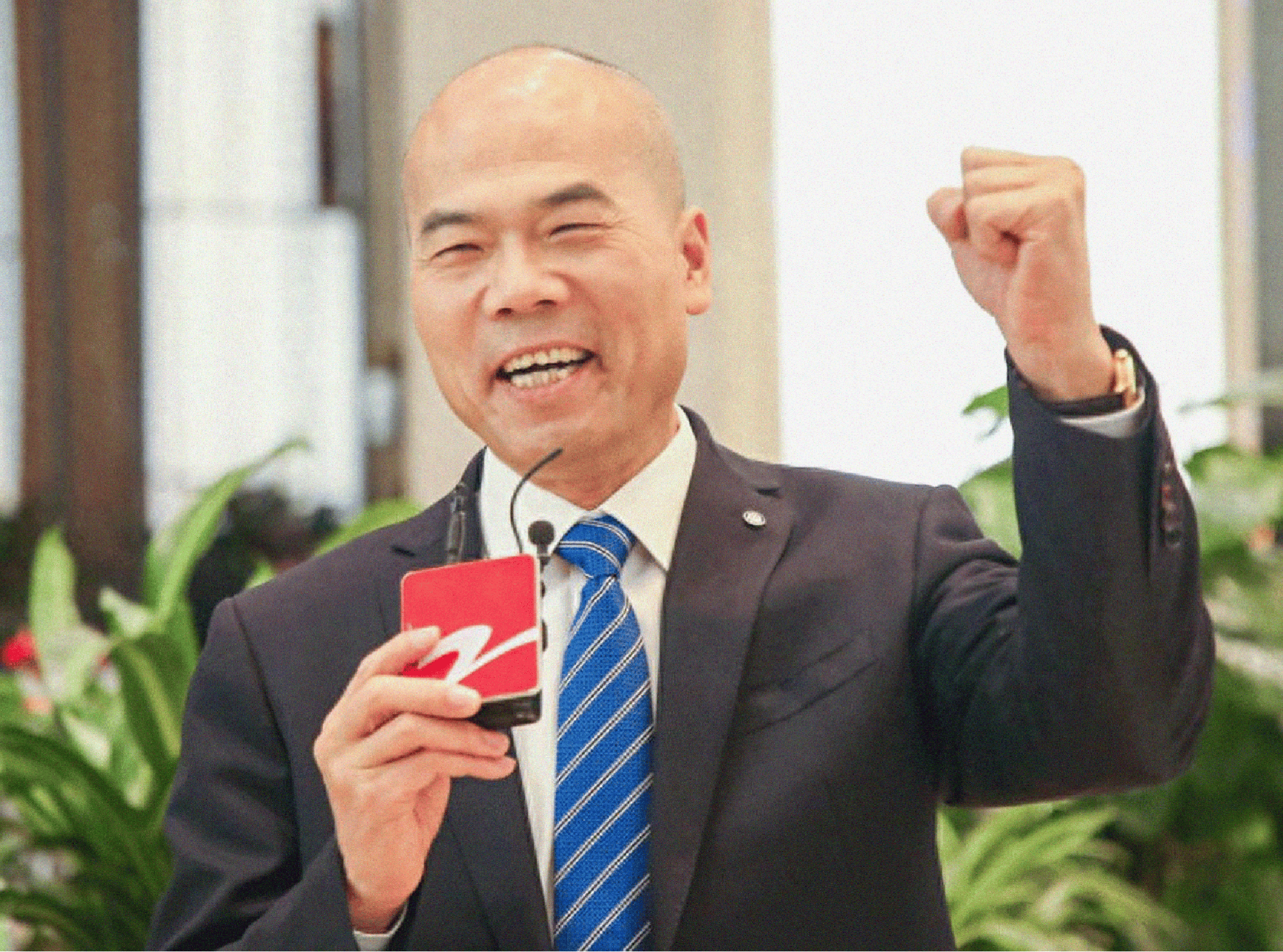
Like Wang Chuanfu and Robin Zeng, Chen was born into rural poverty in China’s Zhejiang Province, although his rags‑to‑riches story doesn’t involve success at school and a high‑flying university education. He started working as a minor, at fifteen, breeding ducks and long‑haired rabbits. He then began his bean sprout business. As the company website explains, “This work lasted for ten years.”
In 1993, the factory where Chen was working closed down. He decided to set up his own plant, but he had no savings. The next year, with funds that he had managed to scrape together, Chen created a factory of sorts in a one‑thousand‑foot bungalow, where he extracted nickel oxide from pharmaceutical catalyst wastes using a few large iron pots. In 2002, with $3.19 million in capital and a partner named Xie Weitong, Chen relocated the firm to an economic development zone that the Chinese state had set up in the city of Tongxiang, in the Yangtze River Delta. The city, with its traditional homes connected by canals, was a place that had been China’s “capital of silk” for thousands of years, and one of the trailheads of the Silk Road.

Through the help of entrepreneurs like Wang, Zeng, and Chen, and through dealmaking with countries like Congo and Indonesia, China was building a new Silk Road, only this time the things that moved along the route were futuristic products of all stripes, including the kinds of hand‑held electronics that were becoming ubiquitous — that is, as long as China could secure the raw materials to make them. “Be nothing or be the first” was one of Chen’s mottoes.
Chen decided to focus on cobalt — a minor metal but one that he had a hunch would be key to powering the future. He built a hydrometallurgical processing plant to extract cobalt oxide from the sacks of cobalt hydroxide that were flowing into China’s ports.
But where was the cobalt coming from? he asked.
Chen’s attention turned to Congo. “The source of raw materials was the top priority, so he set his eyes on the distant African continent,” a corporate video explained. Another one of his mantras was this: “The intelligent have no doubts and the brave fear nothing.” He jumped straight into the country, even though it was in a state of partial civil war and about to go through a violent election.
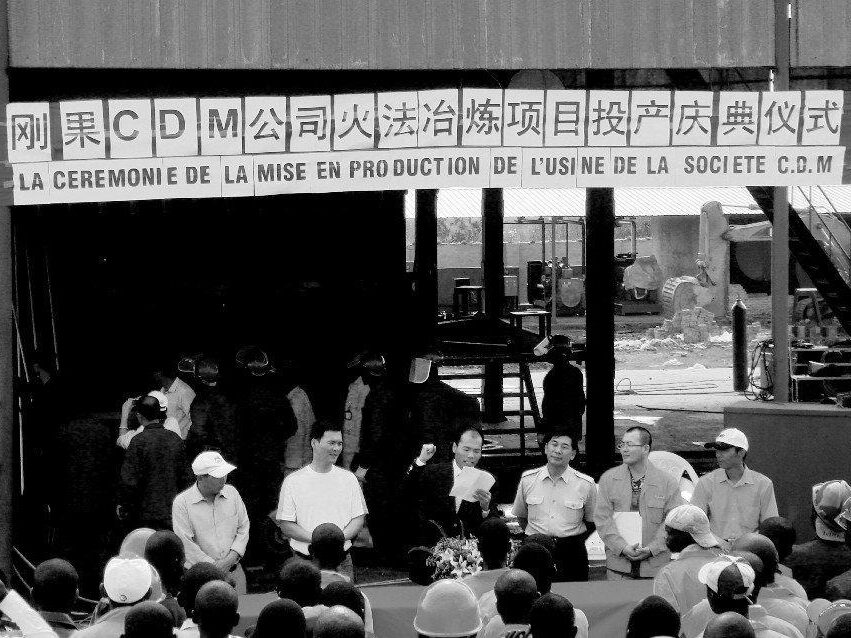
In 2003, Chen first ventured to Congo to engage in mining cobalt ore and its processing; by 2006, under the aegis of Huayou, he had established his mining firm, CDM. He knew how to keep the local government happy. In 2013, for example, his firm provided low‑ and no‑interest loans to Gécamines and other Congolese companies, and beginning in 2017, it issued a $4 million loan to Lualaba Province for road rehabilitation, which would be paid back through levies on road traffic. It also gave charitable donations — $10,000 to a school here, desks and textbooks there — but these seemed small compared with the growth of the company. In 2024, Huayou made almost $8.7 billion in revenue.
Chen’s was a company that managed to go from a small‑time prospector in Africa to a big‑time player. CDM, Huayou would later boast, overcame “many difficulties,” such as “materials shortage, cultural diversity, [and] financial crisis,” but was soon well on its way to its chairman’s goal: creating a “complete industrial chain for cobalt and copper mineral resources.” As Chen would later say, it was all about control. “If we do not control the resources, Huayou will not be competitive, and it will not develop sustainably in the long run.”
HUAYOU GOES GLOBAL

At the beginning, CDM’s workers slept three to a room in cramped conditions in Congo, but the employees “worked day and night.” The subsidiary was soon “a leader in the company’s profitability,” according to Wang Yuchun, Huayou’s deputy general manager. Conditions were harsh, but Wang understood that he was not just a Huayou employee — he was a Chinese pioneer. “Taking the flag over there is a responsibility,” he said. “To be bestowed with great responsibility,” a company video opined, “one must be crucified with ordeal and tribulation.” The chairman led by example, Wang noted: He always left the office later than everyone else. In a few years, Huayou employees were able to live as well as their Belgian forebears: Wang helped build “domestic‑garden‑style residential areas” for the company’s employees in Africa.
Huayou expanded to become a worldwide brand, and Chen set up mines and companies across the supply chain for critical minerals. As the corporate history showed, Wang framed the fight to secure the supply chain in bellicose language, calling it a “battle.” “At this moment, let us pay tribute to all those who are struggling in Africa, fighting on the islands of Indonesia, fighting in Korea, Europe, et cetera,” he said.
“Huayou’s success is inseparable from the efforts of our country, our customers, and our leaders.” Chen understood that, to get ahead in China, you had to do what the state told you to do.
Occasionally, the self‑depictions of the workers who appeared in a 2023 oral history of the company felt more like the expressions of a religion or of an extreme political ideology. Another employee admiringly talked about how the goal of the Huayou-ren — the “Huayou people,” as the company called them — was to “conquer cities and territories.” The ideology was based on ideas about strength and conceptions about what power meant in the twenty‑first century. “If we continue to become stronger,” one of them mused, “we will eventually grow and become stronger.”
The company dug nickel mines in Indonesia, built recycling plants in Korea, and even inaugurated a lithium project in Zimbabwe. In China, the firm opened a huge industrial park in the vicinity of the city of Quzhou. Under Chen’s leadership, Huayou was not just a corporation; it embodied the very essence of its workers’ aspirations. “Huayou has grown from the dream of one man to the dream of many,” the corporate video noted. As one Huayou official who worked on the Zimbabwe project put it: “With the dream of lithium in mind, we will act with determination. Success comes only through hard work, and hard work will lead to steady progress.” In January 2015, after eight and a half years of preparations, Chen, in a red tie, rang a gong to open the Shanghai Stock Exchange, and Huayou listed its stock, proclaiming to be “a global leader in lithium‑ion battery materials.”
Chen also grew deeply intertwined with the Chinese government. He became a deputy in the National People’s Congress, China’s supreme legislative body, and in 2024 gave a speech explaining how Huayou was “vigorously advancing the construction of a modern industrial system” and a “safe, stable, and resilient metal supply chain for energy” based on General Secretary Xi Jinping’s speeches and edicts from the government. As the company video stressed: “Huayou’s success is inseparable from the efforts of our country, our customers, and our leaders.” Chen understood that, to get ahead in China, you had to do what the state told you to do.
His corporate ethos was clear: “God rewards the diligent.”
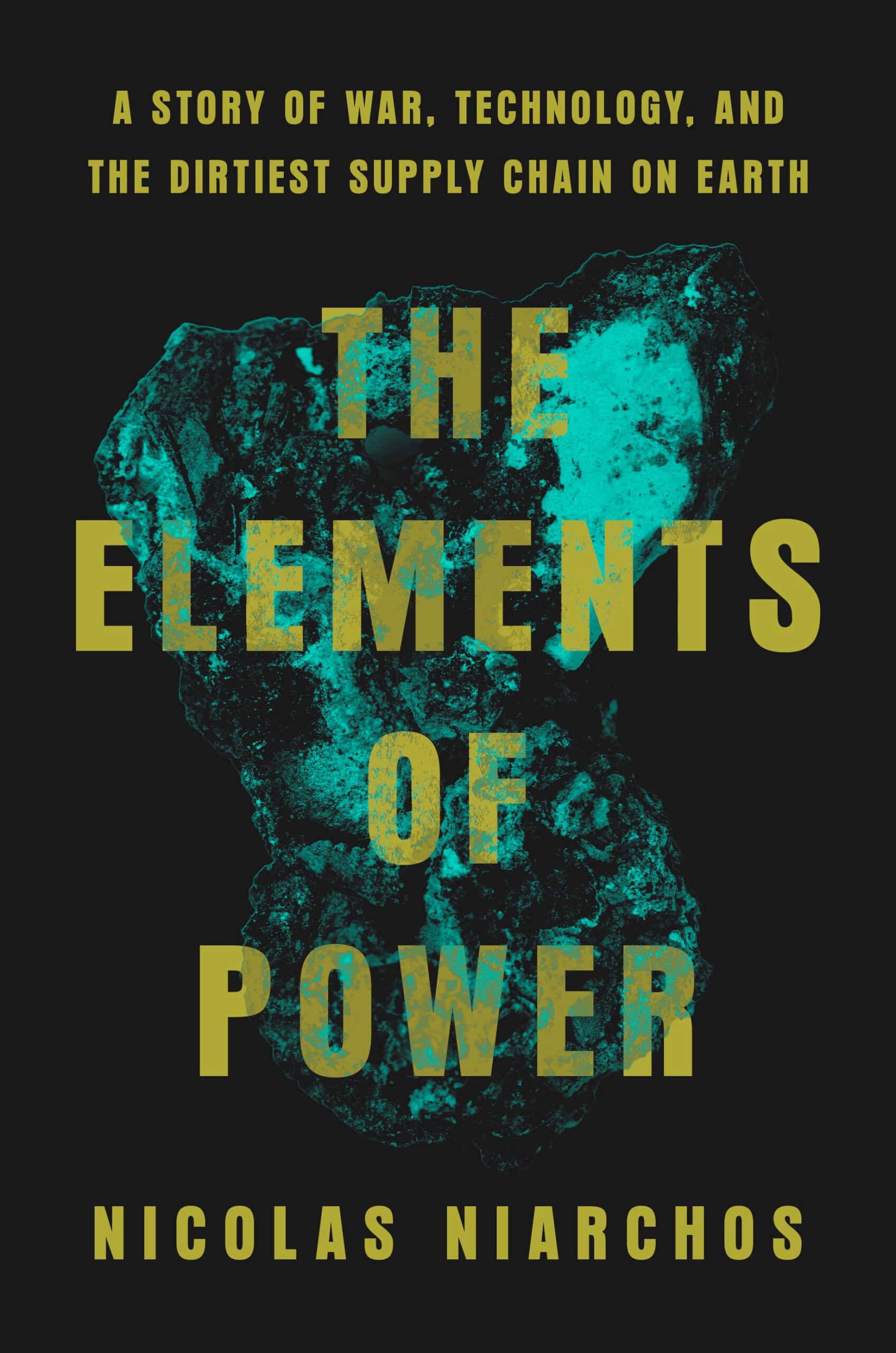
Excerpted from The Elements of Power by S. Nicolas Niarchos. Copyright © 2026. Reprinted with permission of the publisher, Penguin Press, an imprint of Penguin Random House. All rights reserved.
Nicolas Niarchos is a journalist whose work focuses on energy, war and migration. His work has been published in The New Yorker, The Nation and The New York Times. He has testified on the effects of Congolese battery metal mining on Capitol Hill. His work on mining in Indonesia was shortlisted for a 2024 Livingston Award. In 2023, he won an Edward R. Murrow Award for a radio report from Ukraine for The New Yorker and WNYC.