On December 13, 2019, in a cavernous meeting hall in the Chinese seaside city of Xiamen, Richard Selden took the stage to show off his company’s revolutionary technology: rapid DNA testing.
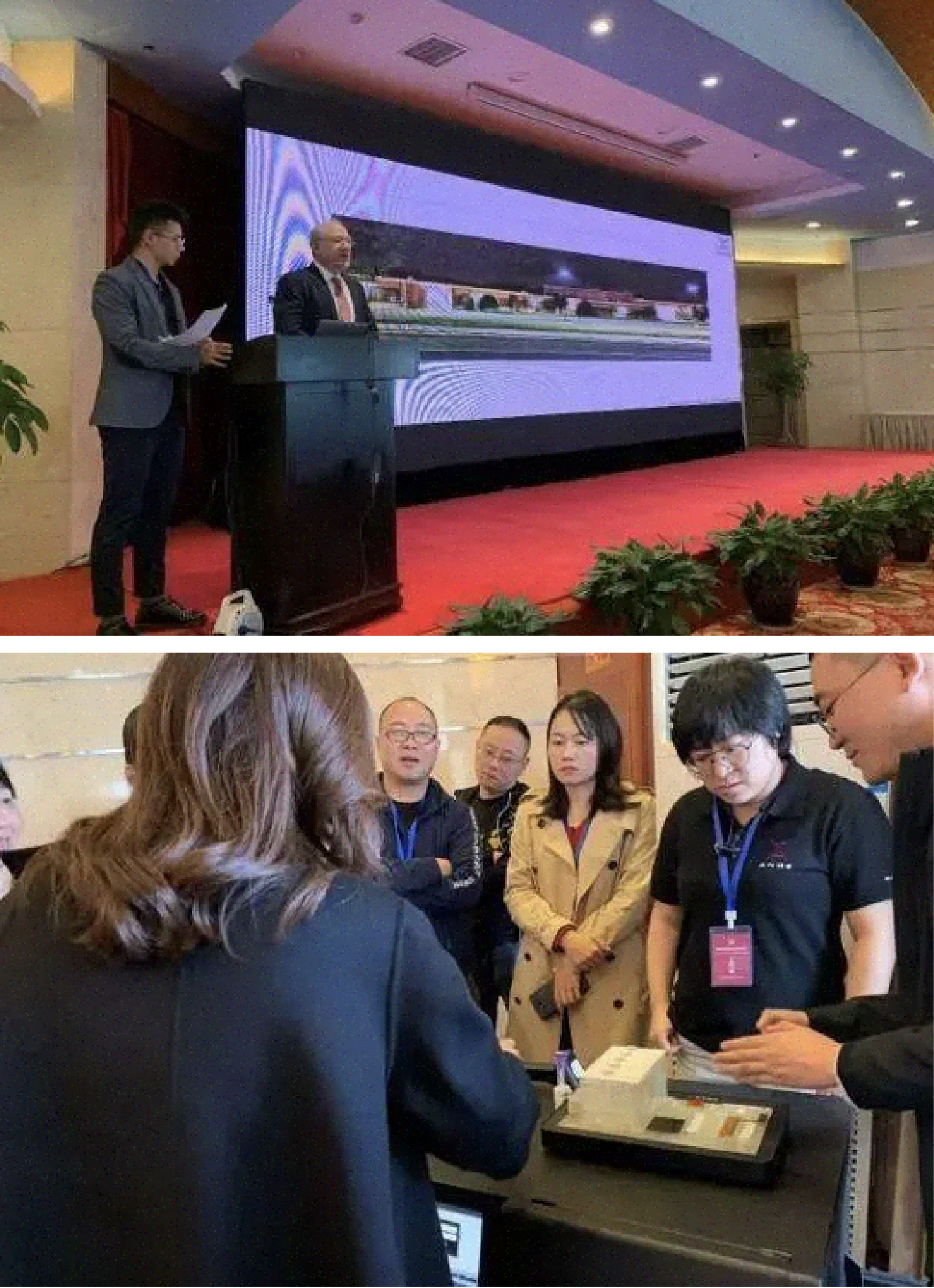
Wearing a red tie that matched the decor, Selden, the founder of ANDE, explained how the large black box can take a single sample and deliver accurate DNA results in less than two hours. The potential applications were huge: identifying human remains after earthquakes, for instance, finding criminal suspects, or even proving the innocence of those held wrongfully accused. Selden and his Colorado-based company promised a “faster way to a safer world,” and for the assembled audience of Chinese police officers and public security officials, the allure was clear. ANDE, which stands for Accelerated Nuclear DNA Equipment, was already selling its machines to American police, military and border patrol, and in a break in the day’s schedule, according to a Chinese article about the conference, attendees crowded around ANDE’s machine to get a closer look at the magic box.
This wasn’t the first time ANDE employees traveled to China to hawk DNA testing devices. Beijing GAC World Trade, a Chinese security equipment purveyor, helped ANDE market and sell its technology to public security bureaus across China and organized demonstrations with ANDE scientists, according to company materials from GAC and its subsidiary. A press release on the GAC website about one such meeting describes how “the foreign scientist enthusiastically answered questions from public security DNA leaders and technicians and exchanged views on the commonalities and differences in forensic DNA applications between China and the United States.”
The commonalities are simple enough: Rapid DNA testing can help law enforcement all over the world. But the differences between how DNA testing is used in the U.S. versus China are vast, raising questions about a U.S. company’s decision to sell to the Chinese state.
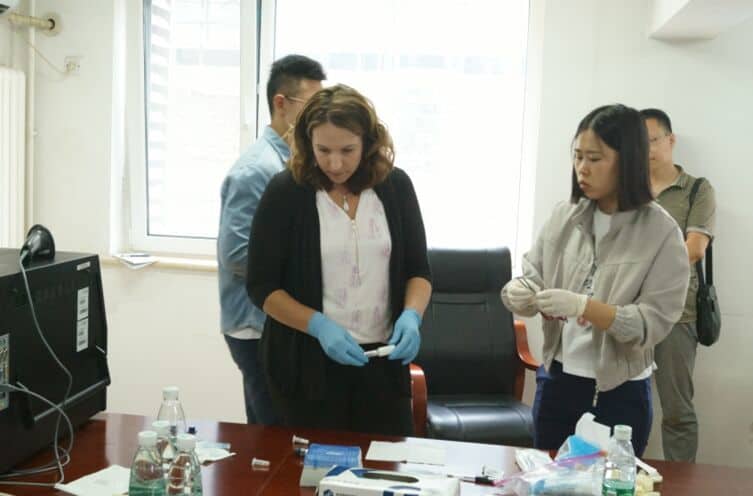
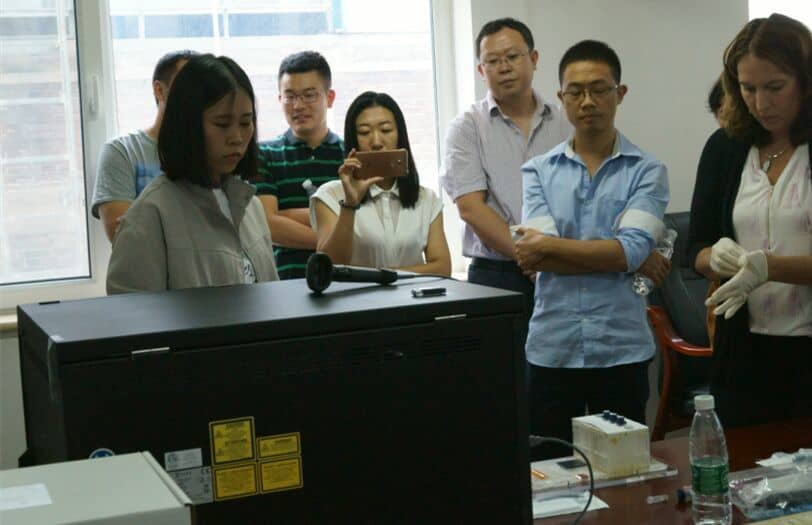
ANDE scientists visit GAC World Trade to give a presentation on the ANDE 6C device, August 30, 2017. Credit: Beijing GAC
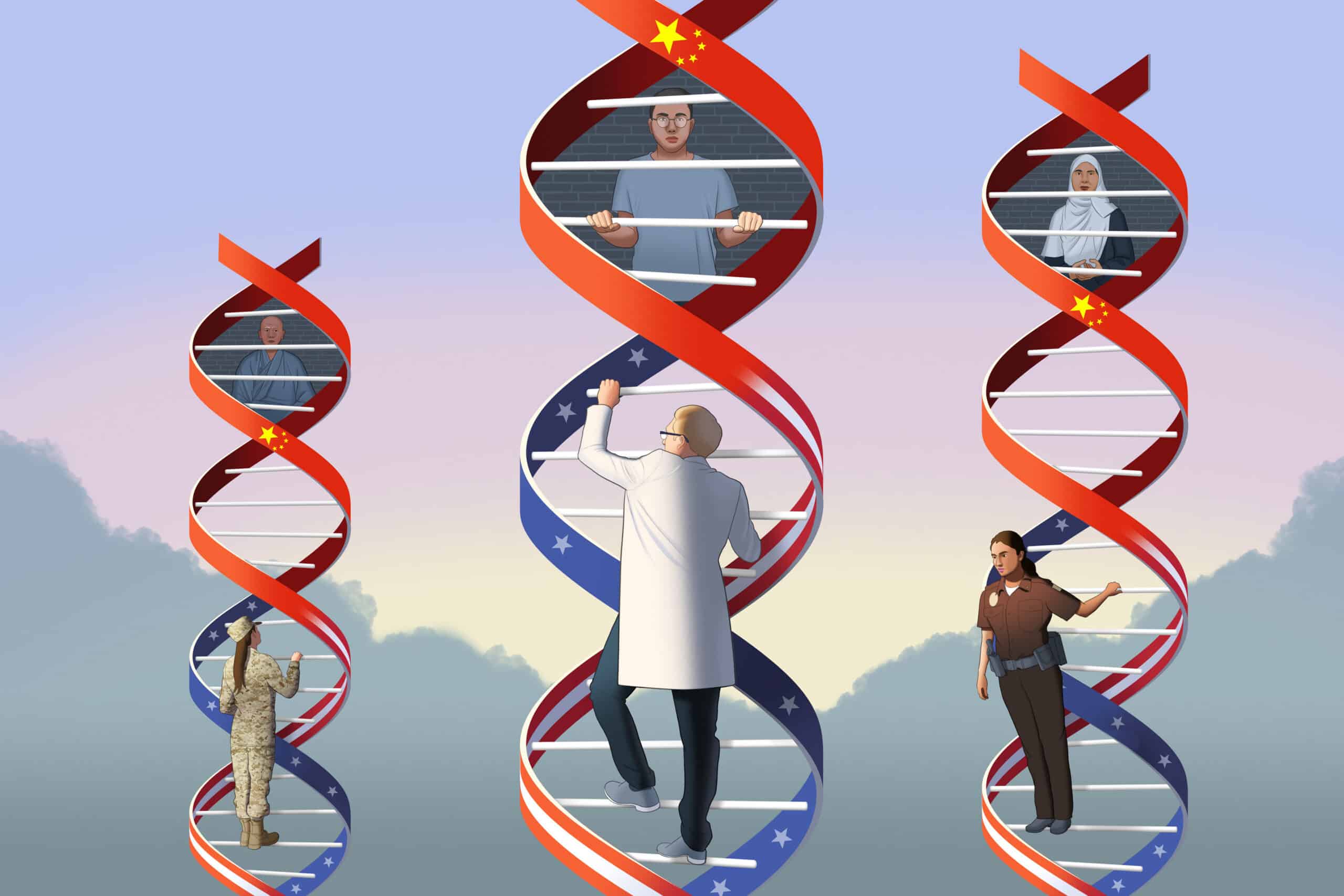
Over the last decade, Chinese authorities have ramped up a massive DNA collection effort, gathering samples from millions of Chinese people, particularly men, many of whom have no criminal history. Chinese authorities have also targeted ethnic minorities in places like Xinjiang and Tibet, where DNA collection is combined with other surveillance methods, such as facial recognition, to thoroughly control regional populations. In an authoritarian country where repression of minority groups is rampant, says Mark Munsterhjelm, a professor at the University of Windsor who researches racism in genetic science, “the worst outcomes of the technology are coming true.”
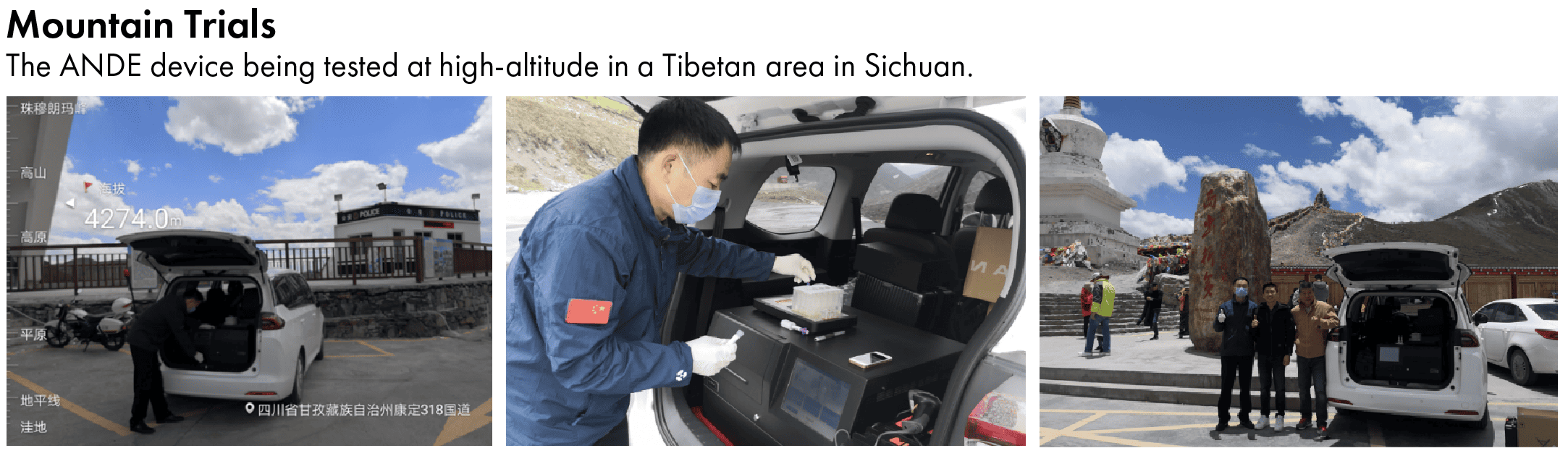
ANDE’s rapid DNA test, which grew out of research at MIT and was funded early on by the U.S. government, adds another genetic technology to the Chinese toolkit. GAC’s website even shows a picture of an ANDE DNA machine being tested in a Tibetan area of Sichuan. GAC has also collaborated, according to its subsidiary’s website, with three research institutes under the Ministry of Public Security (MPS), a department within the Central Military Commission, the most powerful defense body in China, and MPS’s Institute of Forensic Science, which was sanctioned by the U.S. government until November and specializes in developing genomic solutions for the police.
ANDE is not the only U.S. company to be caught up in China’s genetic testing program. Chinese authorities have relied on DNA testing kits and sequencers from Thermo Fisher Scientific, a Massachusetts-based biotechnology company and ANDE’s primary competitor in the rapid DNA field. After Human Rights Watch, the Wall Street Journal, and the New York Times uncovered records showing Thermo Fisher sold technology directly to Xinjiang authorities, the company received intense criticism. In 2019, Thermo Fisher vowed to stop selling genetic equipment to Xinjiang, and just last month, following mounting pressure regarding the company’s continued business in Tibet, Thermo Fisher promised to cut off sales of forensic technology to the sensitive southwestern area. Thermo Fisher did not respond to requests for comment.

ANDE, which regularly talks to the media about how its product is used in the U.S., refused to comment for this story, and several of its former employees told The Wire China they were bound by strict non-disclosure agreements. GAC also did not respond to emails and phone calls. The Wire found no evidence of illegality or that ANDE’s products were being used in Xinjiang. A former ANDE employee says they were informed the company discontinued its China work in 2020 as a result of the COVID-19 pandemic. The former employee also said that ANDE’s rapid DNA tests were mostly used in China for disaster victim analysis and crime scene evidence, not mass testing programs.
GAC was still demonstrating ANDE products and marketing them to China’s public security officials as of 2023, however, and given what is known about China’s use of genetic testing, experts say that ANDE’s cozy relationship with China’s public security apparatus, including previously sanctioned entities, is alarming.
ANDE is a good illustration of the fact that it’s not just Thermo Fisher. This is basically a pervasive problem. It’s a very special moment where there needs to be a political decision.
Yves Moreau, a professor at the Catholic University of Leuven in Belgium and an expert on China’s use of genetic technology
ANDE’s “recklessness was kind of stunning,” says Yves Moreau, a professor at the Catholic University of Leuven in Belgium who is an expert on China’s use of genetic technology and who reviewed GAC company materials for The Wire. “It seems that [GAC] has very close connections with public security,” he says, and the touting of those ties “is absolutely blatant.”
In the wake of the Thermo Fisher scandal, Washington has started to look more closely at the larger U.S.-China biotech relationship. Lawmakers recently introduced legislation to ban the sale of genetic testing equipment to China. And the Commerce Department says it is considering releasing sweeping regulations on U.S.-China biotechnology trade. The U.S. has also put sanctions on several units of BGI, a Chinese genetic analysis company, over allegations of its involvement in surveillance. The Commerce Department declined to comment.

But many say Washington is not moving fast enough. ANDE is a small player compared to Thermo Fisher, but its business with China’s security state underscores that, in the absence of public pressure, government regulation, or a pandemic, many U.S. technology companies will continue to pursue the China market, regardless of what some say are ethical concerns.1Ande has raised $148 million in funding, according to Pitchbook. Thermo Fisher, meanwhile, is a publicly traded company worth $213 billion.
“ANDE is a good illustration of the fact that it’s not just Thermo Fisher. This is basically a pervasive problem,” says Moreau. “It’s a very special moment where there needs to be a political decision. Are we going to do something about this?”
With a GAC subsidiary now marketing its own rapid DNA test, and GAC’s partners at MPS touting similar homegrown technologies, ANDE is also a good illustration of the fact that it might already be too late.
GOOD INTENTIONS
The challenge with many biotechnologies is that they are developed to solve clear and worthwhile problems, but then exploited in new contexts — many of which can be hard to foresee. Rapid DNA testing is no different.
In the mid-2000s, immersed in conflicts in Iraq and Afghanistan, the U.S. military was looking for a way to expedite traditional DNA tests. U.S. forces often needed to determine the identities, for example, of blast-zone victims, but traditional DNA test results had to be sent from a warzone to a lab, and it took days or weeks to get results back.
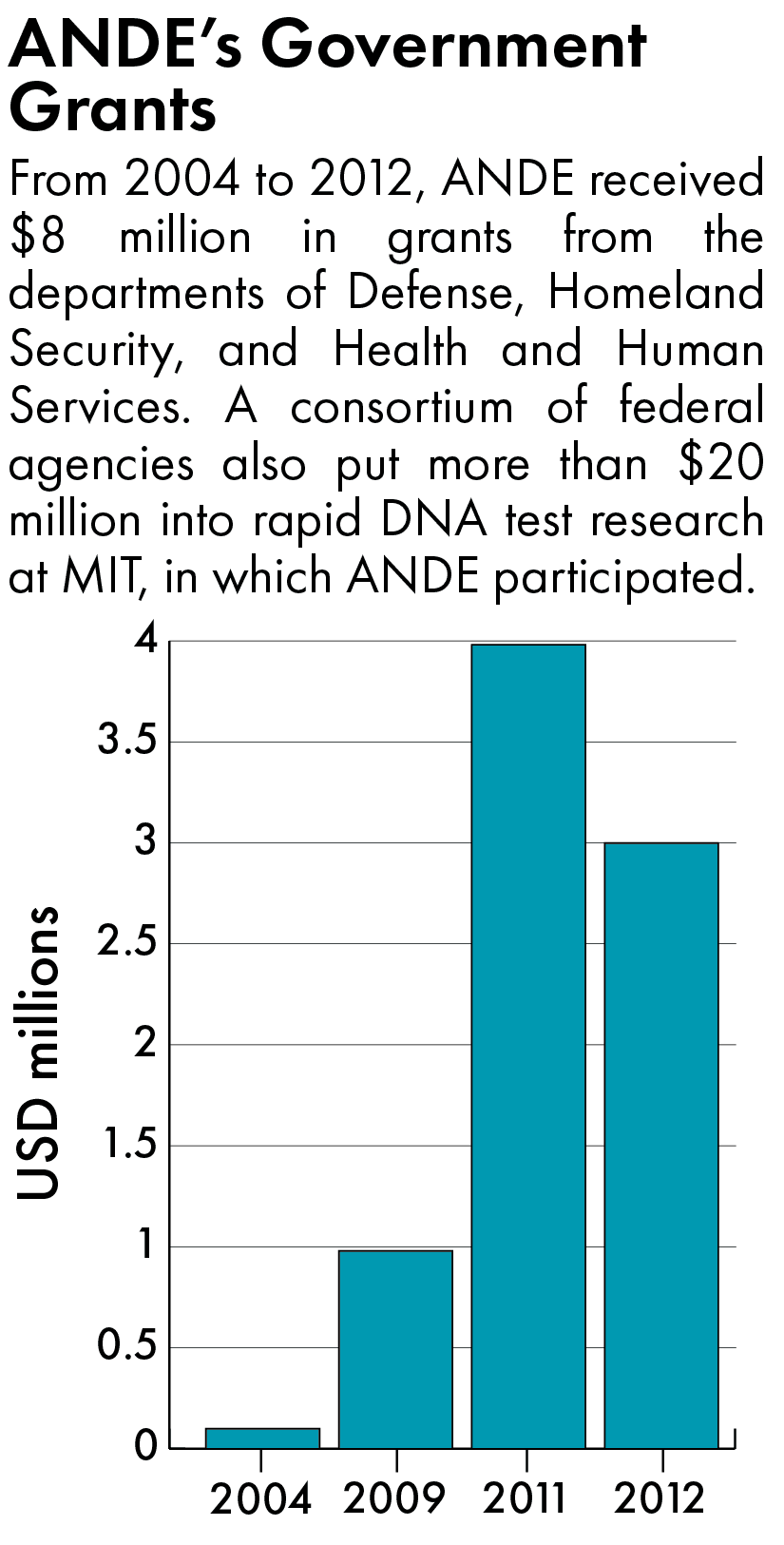
In its quest for an on-site testing device, the U.S. government funded several promising projects, including a tiny startup called NetBio, which was founded in 2004 and based on research at MIT’s Whitehead Institute, a pioneering biomedical center. The founder of NetBio — which would later be renamed ANDE — was Selden, a researcher-turned-entrepreneur who was charged by the Securities and Exchange Commission (SEC) in 2005 for committing securities fraud while he was chief executive officer at another biotech firm, Transkaryotic Therapies. Selden later paid $1.1 million to settle the charges and was barred from serving as an officer or director of a public company for two years.
Despite Selden’s colorful history, ANDE received a series of grants totalling over $8 million between 2004 and 2012 from the departments of Defense, Homeland Security, and Health and Human Services. In addition, a consortium of federal agencies put more than $20 million into a rapid DNA test research at MIT, in which ANDE participated. In a government press release about the grants, ANDE was highlighted as a success story because it could provide DNA results “at the speed of Hollywood.”
“There were lots of challenges along the way in trying to get it to work,” says Jeff Salyards, who ran the Defense Forensic Science Center and was the Defense Department’s point person on the ANDE project. ANDE’s task was to cram several large instruments into a small, portable box — similar to what Elizabeth Holmes’ Theranos was trying to accomplish with a blood testing machine. The five prototypes initially developed by ANDE — which Salyards and his team nicknamed the ‘Jackson Five’ — were finicky and unreliable at first, but he remembers that the project “was very exciting.”
After several years of honing the technology and undergoing intensive testing by the Department of Homeland Security (DHS) and the FBI, ANDE and IntegenX, a company that was later acquired by Thermo Fisher, emerged as the two major players in the rapid DNA field. In 2017, the Rapid DNA Act passed in the U.S., allowing approved police booking stations to use rapid DNA tests on arrestees and then add those results to the national DNA database. ANDE was the first company to receive FBI approval to be used under the new guidelines, beating Thermo Fisher to the mark by two years.

In a 2015 Congressional hearing, then-FBI director James Comey talked about the benefit of the new legislation: It will “help us change the world in a very, very exciting way,” he said, and “allow[s] us, in booking stations around the country, if someone’s arrested, to know instantly, or near instantly, whether that person is the rapist who’s been on the loose.”
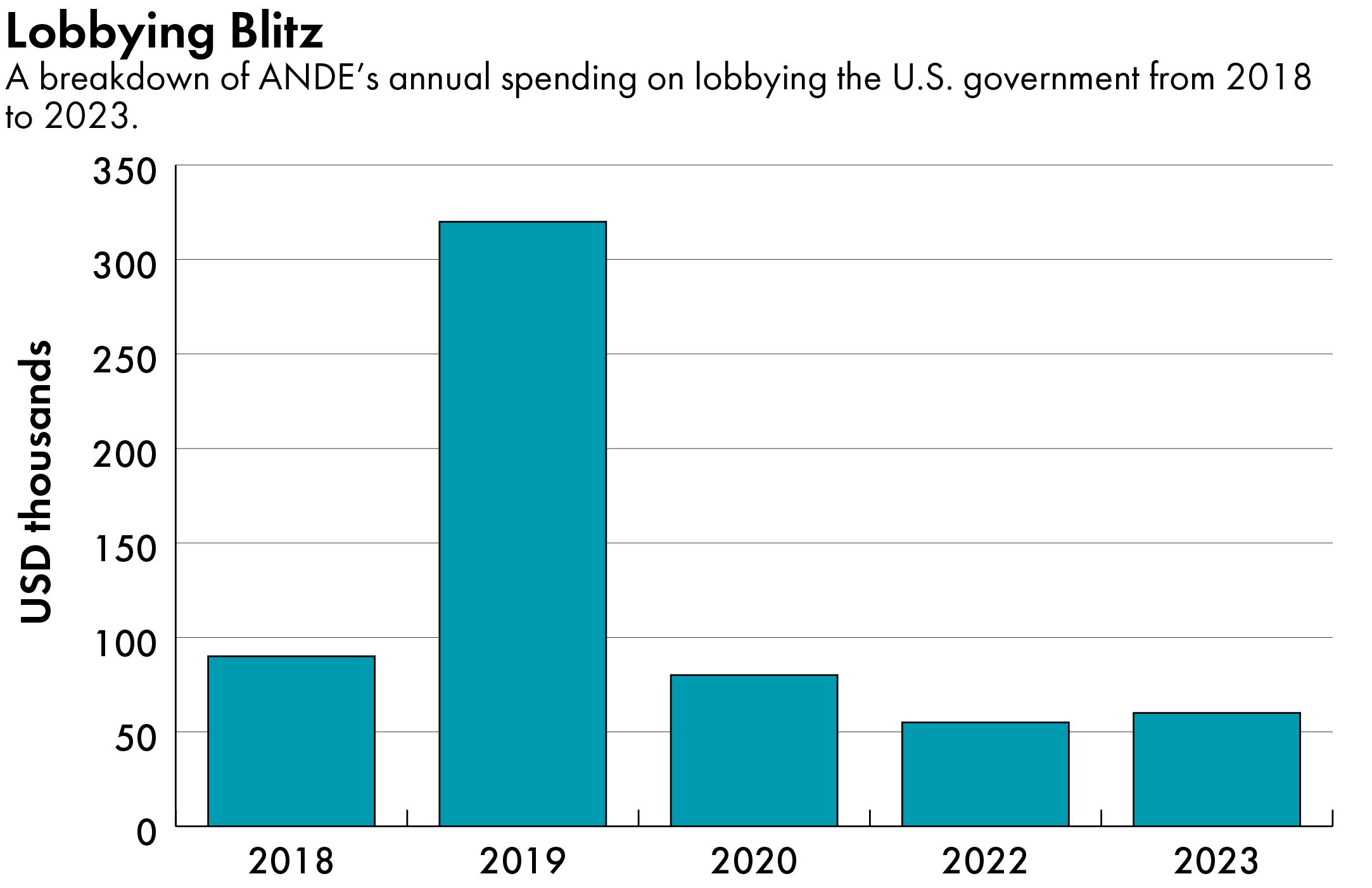
With a new CEO (former law enforcement official George Heinrichs) and an aggressive lobbying campaign, ANDE secured an impressive roster of government clients. In the last five years, according to federal procurement data, ANDE has received millions in contracts from the FBI, DHS, and smaller contracts from the U.S. Army and state governments.
Its work in the U.S. is often lauded: When the disastrous wildfires struck Maui last summer, for example, Hawaii officials used ANDE’s machine to quickly identify victims, and in 2021 when a woman was dragged off a hiking trail near San Francisco and sexually assaulted, the local sheriff’s office used ANDE’s test to find and arrest the suspect.
But DNA testing is not without its critics. There is growing concern about American law enforcement’s overuse of the technology and the privacy implications of adding DNA samples from individuals who may not have a criminal record into local and national databases. The national database today, for instance, has 23 million profiles — up more than 50 percent since 2015.
“As time goes on, there are more and more profiles, and more parts of the genome are analyzed,” says Lawrence Kobilinsky, professor emeritus at John Jay College of Criminal Justice. “It has been pretty dramatic.”
Critics of rapid DNA testing in particular point to the lack of strict procedures, and trained personnel, that are present in traditional DNA testing labs, and say that the tests sometimes struggle to produce accurate results, for example, on samples that contain DNA from multiple people. Moreover, they say, lowering the threshold for use encourages more testing.
“When you make something cheap and easy, it might happen more than it should,” says Andrea Roth, a professor at Berkeley Law School who studies forensic science. “So if it’s really cheap and easy to get reference samples, states might be more likely to require DNA samples of more people. The natural limit on such invasive practices would be gone.”
A video from ANDE demonstrating the rapid DNA identification process. Credit: ANDE
The use of ANDE’s machines on the U.S.-Mexico border illustrates this dynamic. In 2019, in the wake of the uproar about the Trump administration’s family separation policy, DHS awarded ANDE a contract for a pilot project to test migrant families in order to identify and potentially prosecute individuals who were falsely claiming familial relationships. (The permanent contract went to a company selling Thermo Fisher’s rapid DNA test)
“When an immigration officer says, ‘If you want to come into this country, we need to give you a cheek swab,’ they are going to be pressed — it is not voluntary,” says Kobilinsky. “It is a pressure put on them without a legal basis.”
That pressure is only amplified in the Chinese system, where there are few, if any, independent checks on how the technology is used. Emile Dirks, a researcher at The Citizen Lab who has studied China’s genetic surveillance system, says law enforcement’s use of genetic testing across the world should be seen on a continuum, with China’s mass testing programs at the furthest end. China’s mass testing, he says, serves as a reminder that Chinese citizens are under constant surveillance and that “Chinese police are able to intervene into the private lives of Chinese citizens, for whatever purpose they see fit.”
“Any company, be it American or Chinese,” he adds, “needs to be able to explain why they are comfortable working with MPS or local public security bureaus on programs related to DNA collection.”
THE TIES THAT BIND
It’s unclear how widespread the use of ANDE’s machines are in China, but ANDE’s partner in China, Beijing GAC World Trade, has photos or descriptions on its website of the machine being tested or used by public security bureaus in five different provinces across China, including a Tibetan area in Sichuan.

GAC is not a particularly large player, nor does it have any state ownership, but the firm has developed a specialty in selling security equipment to the Chinese government.
Founded in 2005 and owned by Yuan Dong and Yuan Hong, according to records on WireScreen, GAC also advertises two products from Texas-based DetectaChem: a mobile drug test and a portable bomb detector called the “SEEKERe,” which was developed along with the Department of Defense and is now used by “every branch of the U.S. military,” according to DetectaChem’s website. DetectaChem did not respond to requests for comment.
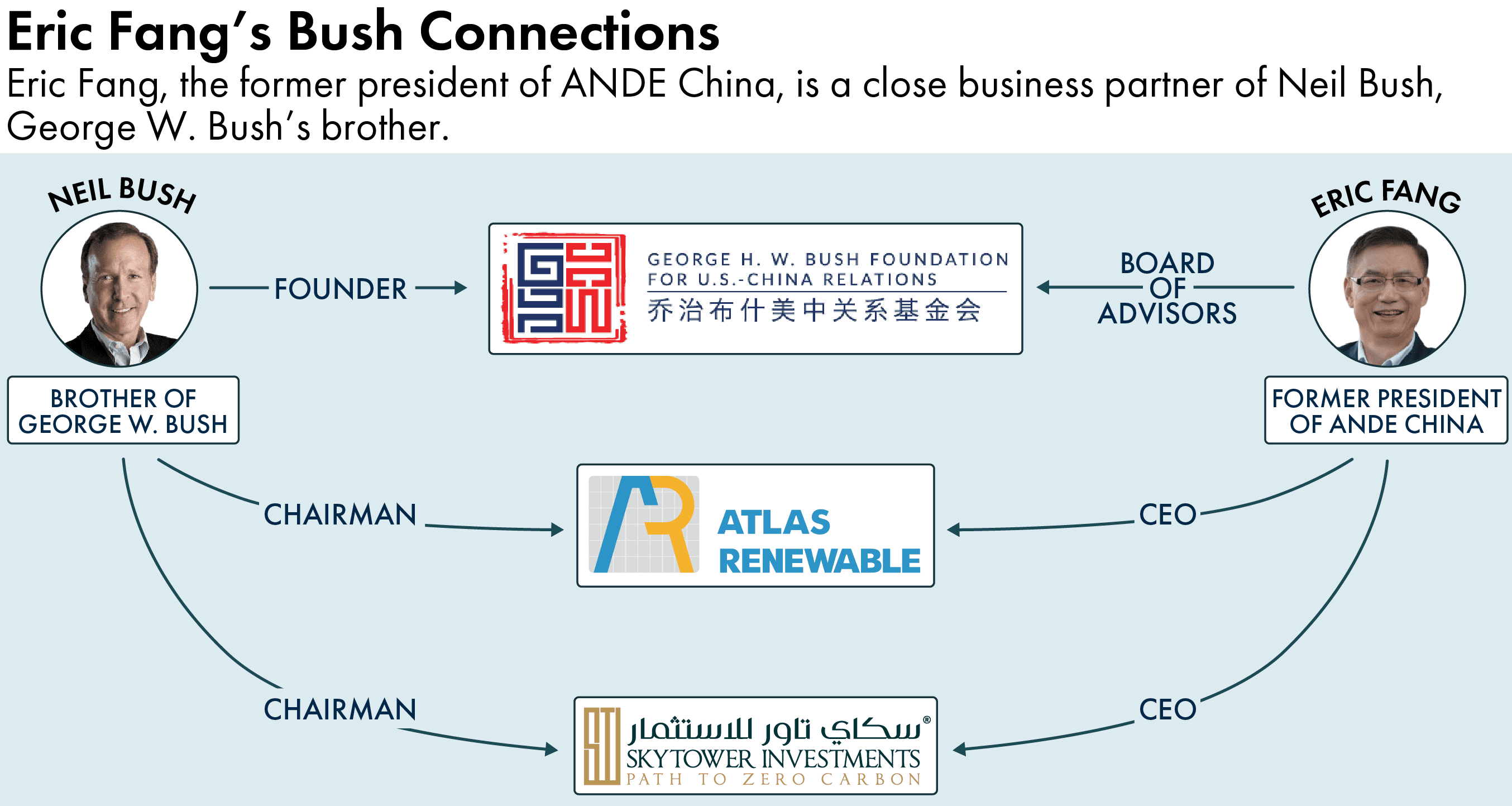
ANDE appears to have started its partnership with GAC around 2014, but it attempted to double down on the China market around the time it received FBI approval in the United States. In 2018, the company hired Eric Fang as president of ANDE China, according to a recently deleted entry on Fang’s LinkedIn. Fang, a China-educated doctor who has spent his career helping businesses straddle the U.S. and China, is a close business partner of Neil Bush, the brother of George W. Bush, and serves on the advisory board of the George H. W. Bush Foundation for U.S.-China Relations. Through a representative, Fang said he has not been involved with ANDE since 2020, and declined to comment further.
It is unlikely that ANDE machines have played a significant role in China’s mass DNA testing initiatives, according to experts, partly because the rapid tests are more expensive than traditional lab tests. Some of ANDE’s tests have certainly been used in China as they were designed — to help resolve legitimate public safety questions. But by partnering with GAC and selling to China’s security state, ANDE seems to have nonetheless helped advance China’s notoriously repressive surveillance apparatus.
This is enabling an authoritarian dictatorship to further repress its own population and enabling them with new tools that they then export to other governments… we know how this ends.
Anna Puglisi, an expert on Chinese biotech at the Center for Security and Emerging Technology
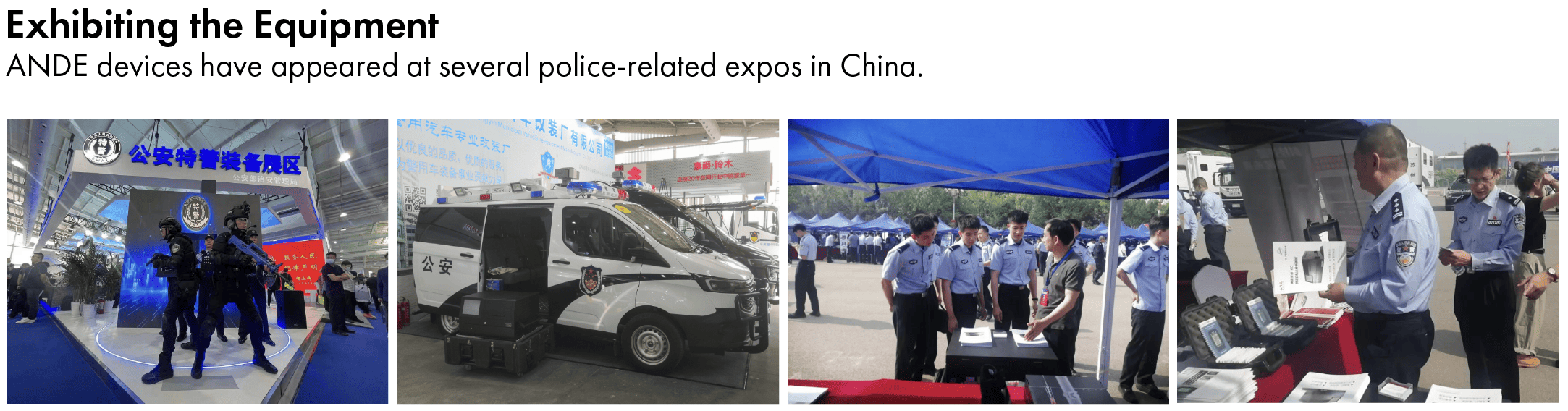
For starters, according to the website of GAC’s subsidiary, it has cooperated with the First, Second and Third Research Institute of MPS, all of which develop policing technology for Chinese authorities. Last May, when GAC participated in the China International Exhibition on Police Equipment, a massive Chinese security conference hosted in Beijing by MPS, it showed off an ANDE device in the back of a police van. The same month, at an expo held at the People’s Police University outside Beijing, GAC passed out packets with detailed information on ANDE technology to young police cadets.
Analysts note that selling any genetic testing technology to Chinese police forces risks abuse. Protestors, for example, could be tested on the spot and then have their indiscretion linked immediately to the genetic profiles of family members across the country. The potential for abuse is especially high in regions like Xinjiang and the Tibetan areas of China.
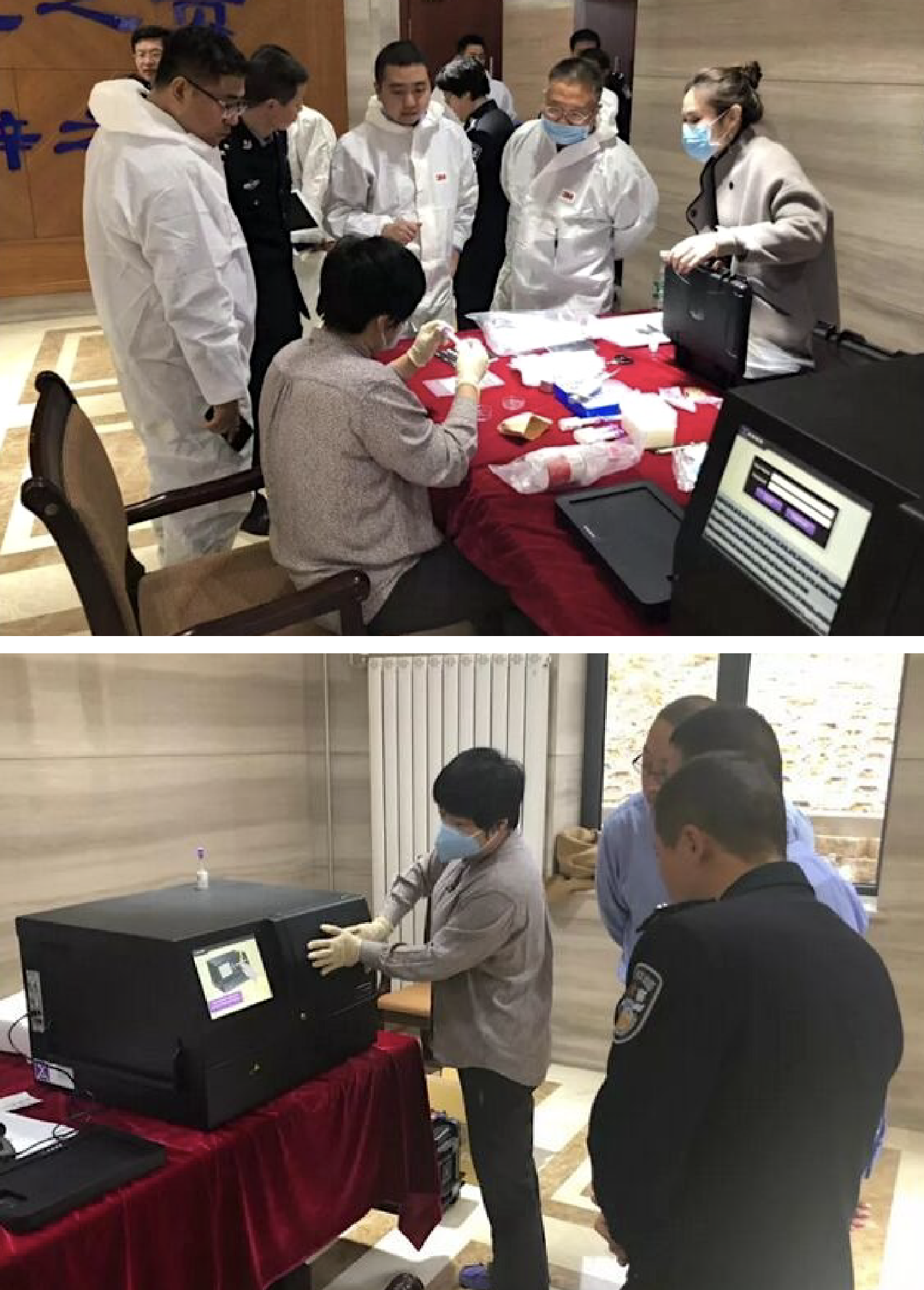
“If we’re looking at U.S.-based companies that are dealing with police in Tibet,” says Dirks, who reviewed GAC materials for The Wire, “we’re looking at companies which are willing to deal with a police force that, even in the Chinese context, is known for more extreme forms of surveillance and political repression.”
For ANDE, the most questionable of GAC’s partners is MPS’s Institute of Forensic Science, which was placed on the U.S. Commerce Department’s entity list in 2020 for alleged involvement in human rights abuses against Uyghurs and other minority groups. ANDE’s products, according to the GAC website, were used in a training course for the institute in 2018 where they tested cigarette butts, bottle mouths, chewing gum and blood stains. GAC’s subsidiary also claims to be creating a DNA testing system for newborns alongside the institute.
The Wire found no evidence that GAC continued doing training courses for the institute once it was sanctioned, but in November, the U.S. removed the Institute of Forensic Science from the entity list. The removal was one part of an effort to ensure more counternarcotics cooperation with China, according to Commerce officials’ congressional testimony, but it elicited concern from those tracking the institute’s human rights record, especially since it has started to develop its own DNA technologies.
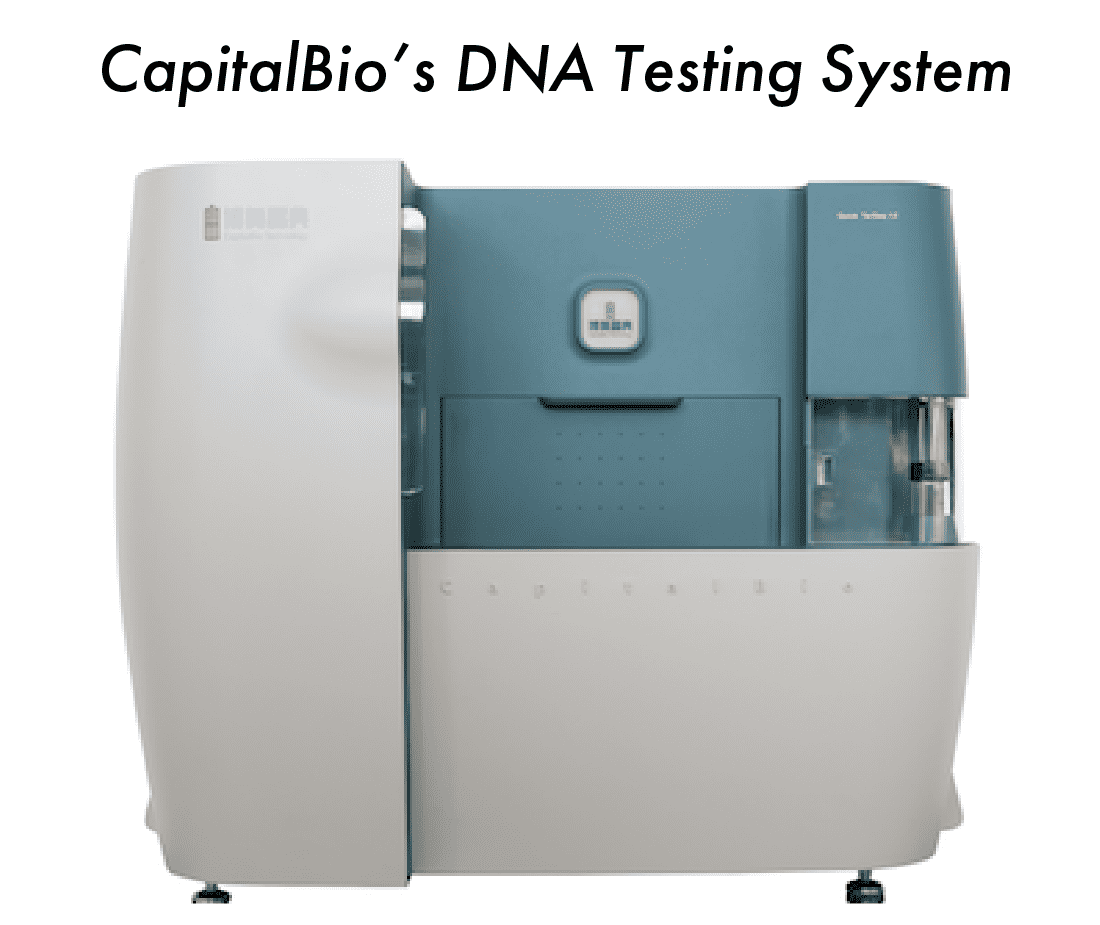
In 2020, the institute announced it had created the first homegrown rapid DNA technology alongside CapitalBio Technology, a state-backed firm, and Tsinghua University. CapitalBio advertises its machine as cheaper than foreign alternatives, thus making it possible to deploy it more widely. The company also says the machine can be used for ethnic identification, and notes that it is used by public security agencies in Xinjiang and is being exported to Russia and Gambia. In 2022, it was the winner of the MPS “major technology breakthrough award.” CapitalBio did not respond to requests for comment.
It’s unclear if GAC contributed to the CapitalBio technology, but academic studies published jointly by CapitalBio and MPS scientists specifically reference ANDE and cite material posted on the GAC website about the U.S. government’s use of rapid DNA testing. One of the articles is co-authored by Li Caixia, the institute’s top forensic scientist who has been at the center of China’s program to use genetic testing to identify ethnicities.
GAC also appears to be marketing a homegrown option: The website for GAC SciTech, a GAC subsidiary, shows what appears to be an ANDE DNA testing device specifically for bone identification, but with a GAC logo. (The Chinese characters for ANDE are still included on the machine.)

These types of partnerships — wherein a U.S. company breeds its own competitors — is commonplace when it comes to U.S. businesses in China, but experts point out that it brings new challenges when it happens with a technology that has nefarious applications that even the U.S. hasn’t fully come to terms with. Anna Puglisi, an expert on Chinese biotech at the Center for Security and Emerging Technology, notes that China’s interest in genetic technology should be considered a national security issue.
“This is enabling an authoritarian dictatorship to further repress its own population and enabling them with new tools that they then export to other governments,” she says. “We have seen this with lots of other surveillance methods, and we know how this ends.”
That is, if the U.S. continues to do nothing to stop it.
THE NEXT INDUSTRIAL REVOLUTION?
Two days before Christmas, in 2022, when President Joe Biden signed into law the National Defense Authorization Act, the Commerce Department was given a broad new authority. A one sentence amendment to the bill provided the Bureau of Industry and Security (BIS) — the part of Commerce responsible for export controls — the ability to stop U.S. people and companies from engaging in activities that support foreign military, security or intelligence services.
“American technology shouldn’t be used to help authoritarians spy on their citizens,” Senator Ron Wyden (D-OR), one of the sponsors of the amendment, said in a statement at the time.
China was not mentioned, but experts say the amendment was clearly designed to stop the sale of technologies like genetic testing equipment to customers like the Chinese government. BIS, however, has yet to flex its new powers.
“ANDE’s work with Chinese police should be wrong,” says Kevin Wolf, a former Commerce Department official who is now a partner at Akin Gump. Although BIS now has the authority to control such activity, Wolf speculates that BIS has not yet implemented it because crafting clear, enforceable controls without unintended impacts is extremely difficult to do. In addition, BIS has been busy crafting controls to respond to Russia’s invasion of Ukraine and against China’s advanced semiconductor industry.
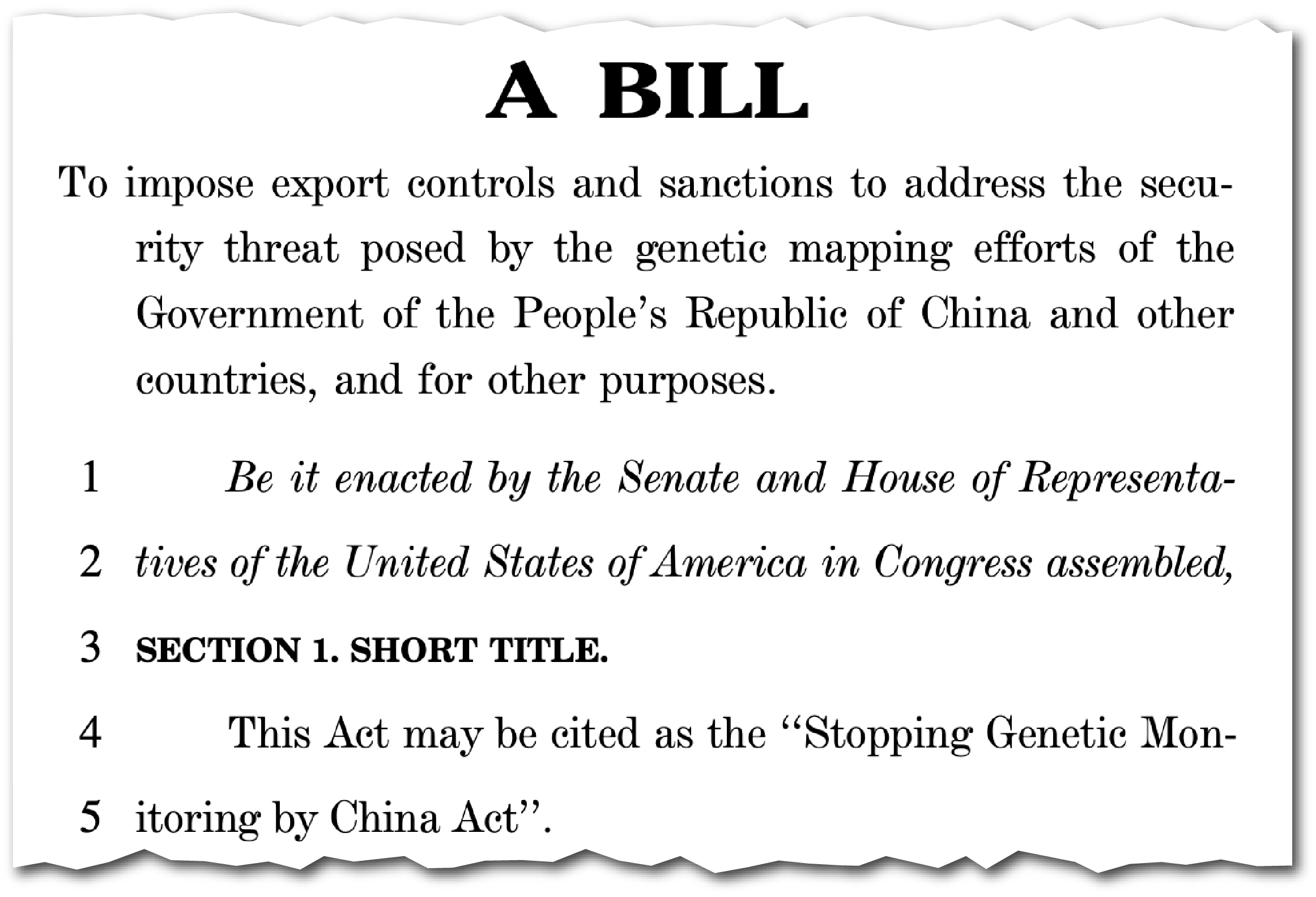
Moreau, meanwhile, argues that the bureau needs to act faster in order to meet the moment. “I am not sure what is holding them up,” he says. “It is not a new issue. They should have done it a long time ago.” Some lawmakers on Capitol Hill seem to agree: Last summer, Senator Marco Rubio (R-FL) introduced the Stopping Genetic Monitoring by China Act, which would compel BIS to take action by placing controls on the sale of genetic testing equipment to foreign adversaries.
One possible explanation for the delay is that the U.S. government is considering more wide-ranging controls on the biotech industry, similar to the revolutionary regulations the Commerce Department enacted in 2022 on the Chinese semiconductor industry. BIS declined to comment on the new authorities and on the possibility of broader biotech controls.
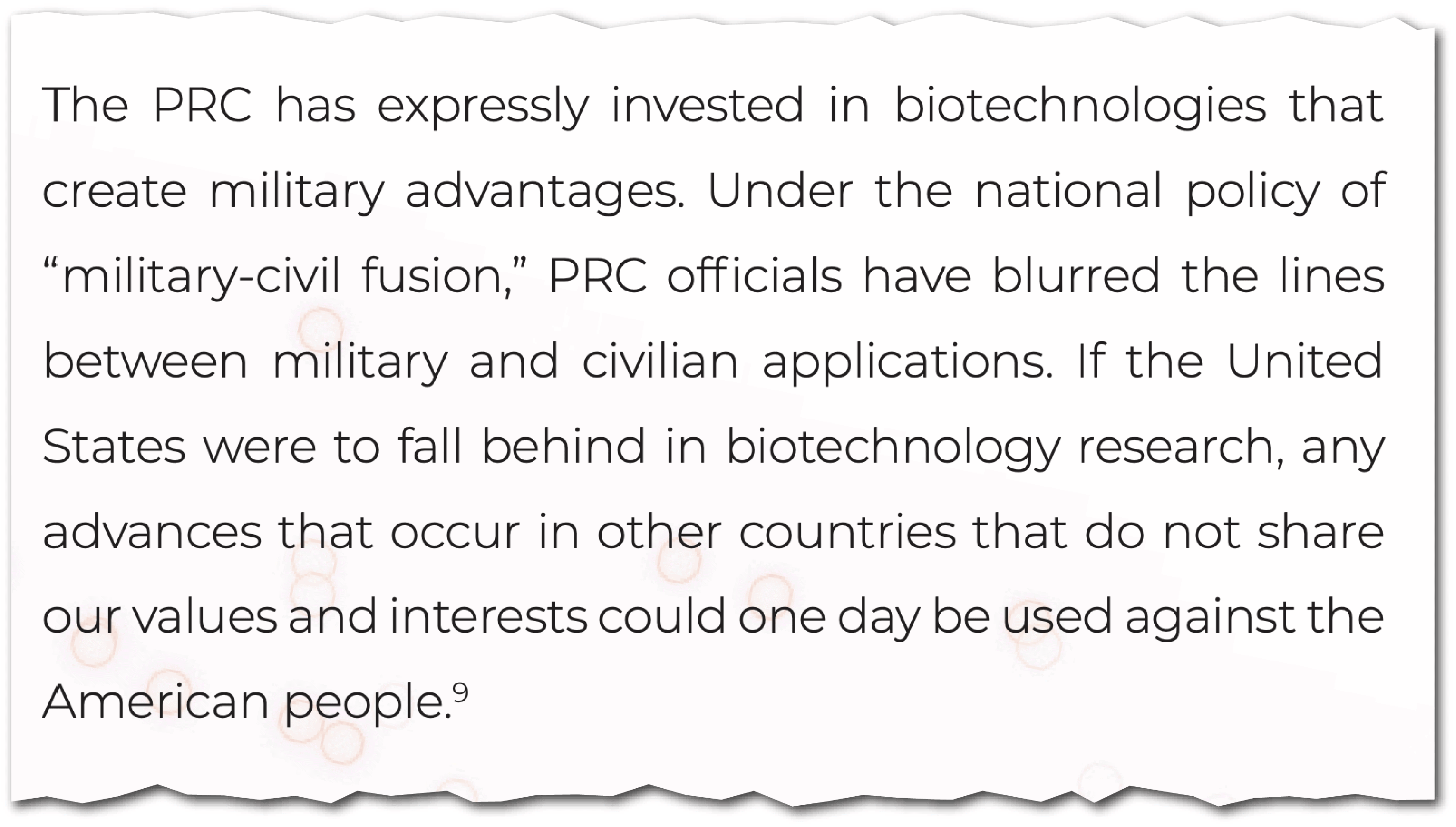
In December, the National Security Commission on Emerging Biotechnology, which was set up by Congress in 2022, released a report saying that China “intends to win the age of biology and is making serious investments and shrewd policy decisions that could put it on track to outpace us. Our failure to seize this moment and act decisively could empower China and others to deploy biotechnologies for the surveillance of vulnerable populations, to develop strangleholds on key supply chains, or to create weapons that could harm Americans.”
The commission is, in many ways, analogous to the National Security Commission on Artificial Intelligence, which was established in 2018 and chaired by former Google CEO Eric Schmidt (Schmidt is also a commissioner of the biotech commission). The AI commission inspired a whole-of-government effort to maintain the U.S. lead in semiconductors, and some observers say the U.S. government is poised to do the same when it comes to biotechnology.

“We are just on the cusp of being able to harness or understand what genes do,” says Puglisi. “The potential applications for this technology will touch on so many different things: human health, animal health, food security, agriculture.” China, she adds, “views genomic technology and biotech as the next industrial revolution.”
The particular challenge with biotechnology, however, is keeping the U.S. controls as narrow as possible so as not to impede beneficial innovation. New advances, after all, can have hugely positive impacts — curing a deadly disease, for example, or developing a better diagnostic system for genetic ailments, or even helping to identify victims in disasters.
“I’m not trying to stop China from curing cancer, or providing healthcare to their citizens, because that’s not the goal here,” Alan Estevez, who oversees BIS, told The Wire last year. “The goal is to stop growth in military capability that can be used against us.”
Given the nature of biotech, it’s entirely possible that restricting China’s access to DNA testing technologies could do more harm than good — that some U.S. contribution to the surveillance state has to be accepted in pursuit of ANDE’s stated goal: “reducing crime, exonerating the innocent, monitoring borders, and reuniting families.” But that remains a difficult trade-off to accept for many, especially those who feel the impacts of genetic surveillance most profoundly.
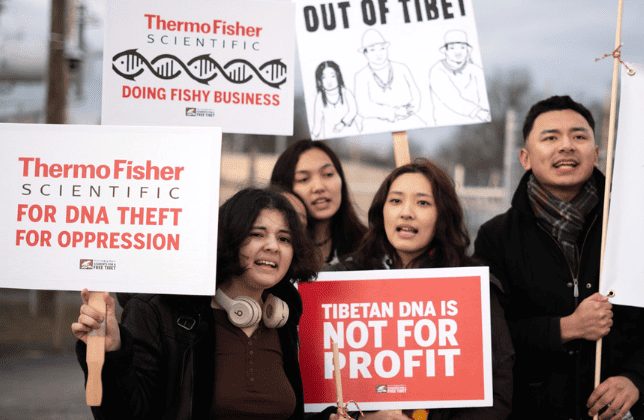
Chemi Lhamo, a Tibetan activist who ran the Students for a Free Tibet campaign to convince Thermo Fisher to pull out of Tibet, says she worries that the prevalence of genetic testing in China will further undermine any sort of civil society or political dissent — what she sees as a lifeline for those living under repressive rule. After Lhamo started speaking out about Tibet as a teenager, she cut off ties with her extended family still in the region because she doesn’t want them to be punished for her advocacy. More widespread genetic testing, however, could make that precaution pointless.
“There are various struggles that immediate family members already face when somebody engages in any political matter,” she says, including losing access to social services and economic opportunities. “Now, with DNA testing and having access to a genetic database, that would subject extended families to this. The challenges would immediately be insurmountable.”

Katrina Northrop is a former staff writer at The Wire China, and joined The Washington Post in August 2024. Her work has been published in The New York Times, The Atlantic, The Providence Journal, and SupChina. In 2023, Katrina won the SOPA Award for Young Journalists for a “standout and impactful body of investigative work on China’s economic influence.” @NorthropKatrina