The Asian nation benefited hugely from closer global economic integration. That is now under threat.
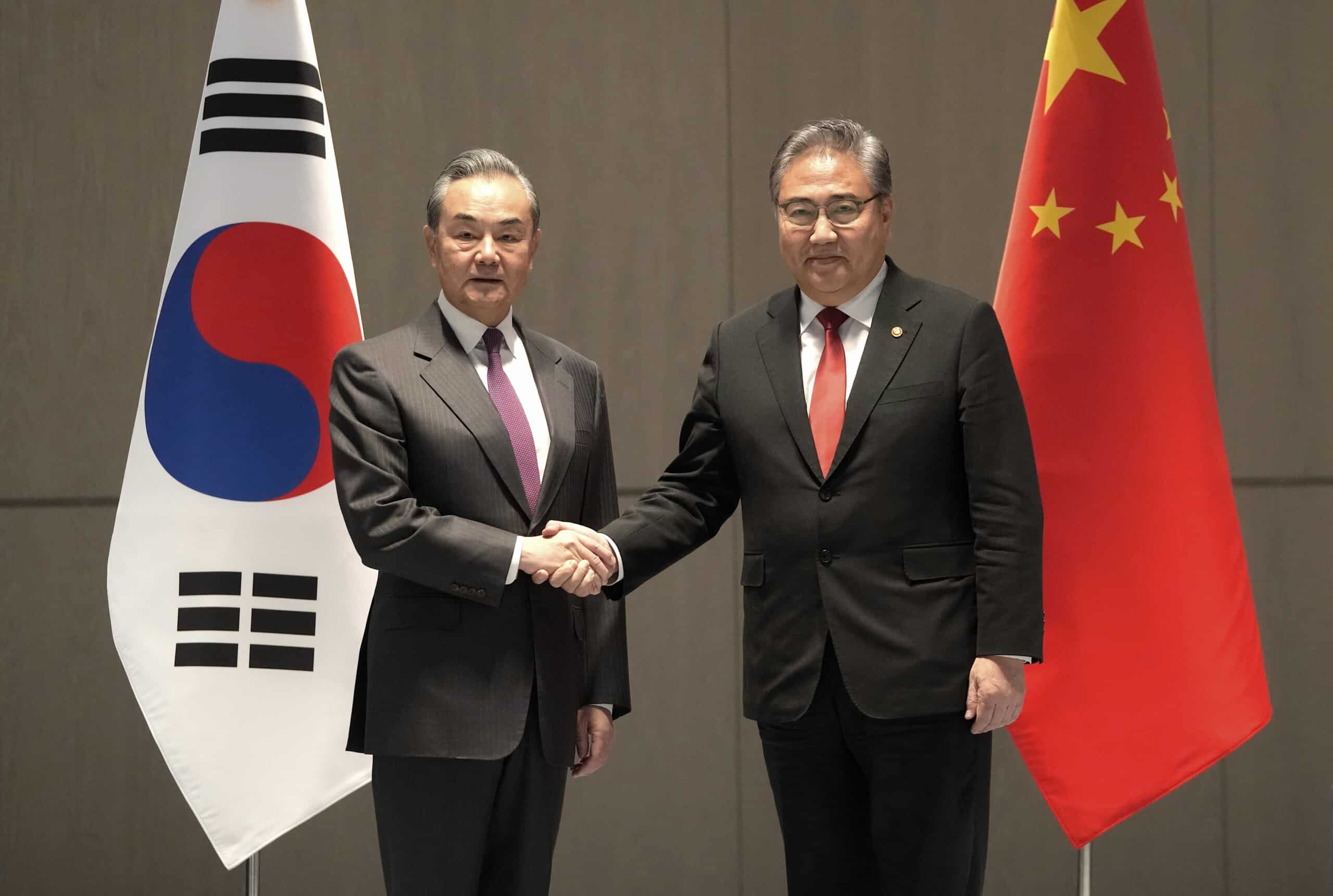
South Korean Foreign Minister Park Jin, right, shakes hands with his Chinese counterpart Wang Yi prior to a meeting in Busan, South Korea, November 26, 2023. Credit: Ahn Young-joon via AP Photos
As 2023 comes to a close, relations between the United States and China are as fraught as ever. But what do tensions between the world’s leading superpowers mean for smaller actors?
The answer depends on the country, sector, and even firm. South Korean companies, for example, appear to be reaping significant benefits from U.S. trade and technology restrictions on China, which have at least slowed – and possibly even reversed – the “China-zation” of manufacturing and global value cha
Exclusive longform investigative journalism, Q&As, news and analysis, and data on Chinese business elites and corporations. We publish China scoops you won't find anywhere else.
A weekly curated reading list on China from Andrew Peaple.
A daily roundup of China finance, business and economics headlines.
We offer discounts for groups, institutions and students. Go to our Subscriptions page for details.
Fish farming in Xinjiang is being sold as proof that technology can overcome geography. The reality is more complicated: a desert seafood boom built on political control, imported feed and a food system that masks its real burdens.
Sanctions and export controls failed to contain the rise of Yangtze Memory Technologies Corp. Now the national champion is riding the AI boom to a record IPO.
We use cookies to ensure that we give you the best experience on our website. If you continue to use this site we will assume that you are happy with it.