How the tables have turned.
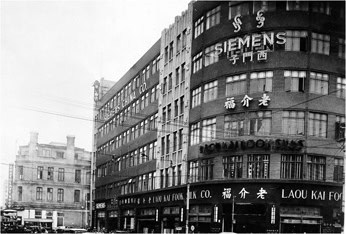
For decades German industrial firms have been the key industrial “Lehrmeister” (teacher) for their counterparts in China. When German giants such as Volkswagen entered the Chinese economy in the wake of Deng Xiaoping’s opening-up reforms in the early 1980s, they were building on an already long history of Sino-German industrial relations. Those had started in the late 19th century, when companies such as Siemens and BASF set up camp in China, far away from their German headquarters.
From the 1980s onwards almost all branches of German industry have invested heavily in joint ventures and subsidiary companies in China, laying the foundations for a true win-win situation. China took advantage of an enormous transfer of know-how, while German companies gained access to one of the world’s biggest and deepest markets, in both consumer and capital goods.
Yet things have changed dramatically in recent years, making a profound impact on the once cordial relationship.
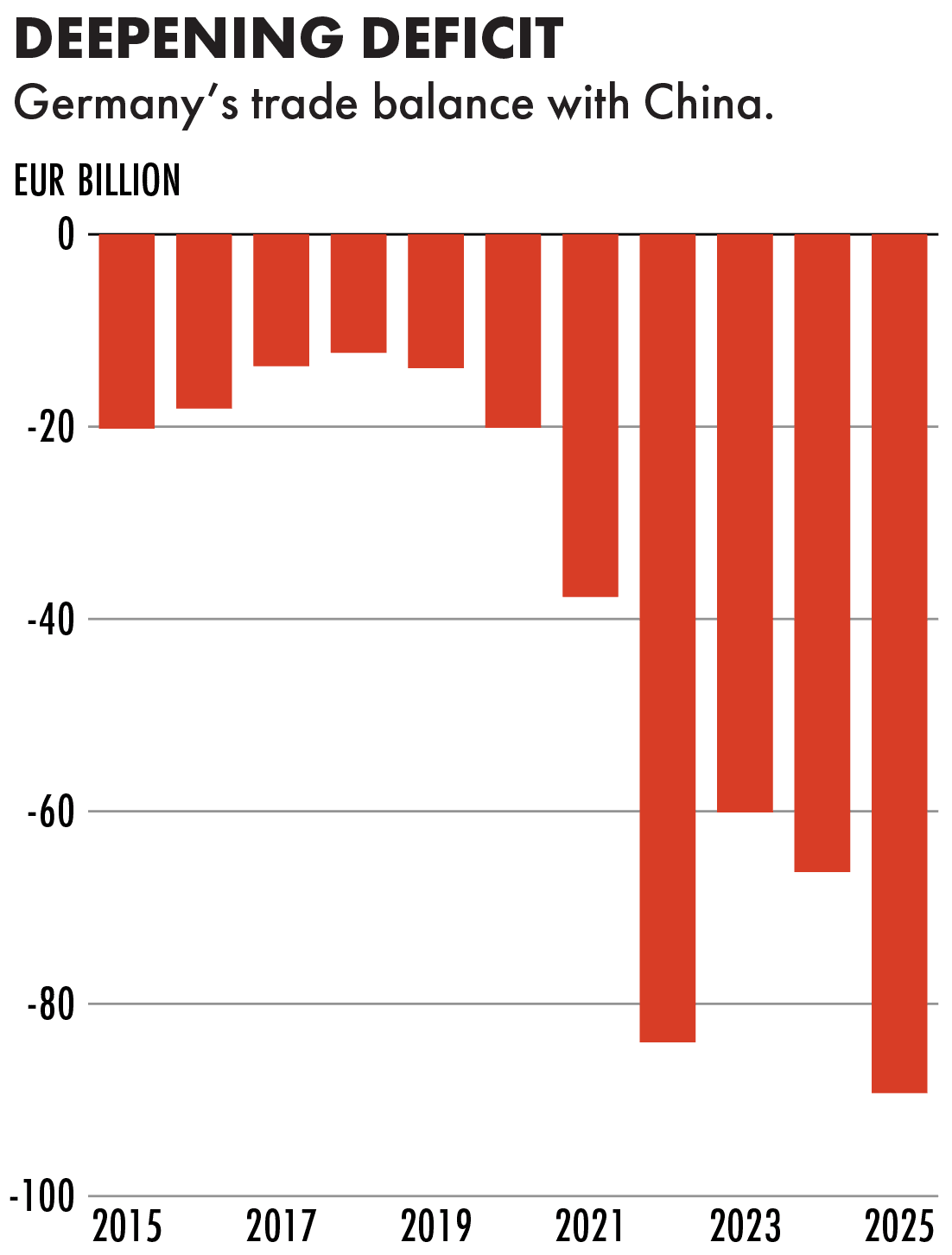
German exports to China have collapsed. In 2025 Europe’s industrial powerhouse sold more goods to neighboring Poland than to the People’s Republic. That has led to a turnaround in the bilateral trade balance: China achieved a stunning trade surplus with Germany of nearly 90 billion euros in 2025.
The reasons are manifold. Clearly, China’s quantum leaps in technologies from batteries and AI to pharmaceuticals and machinery and equipment — ironically often with the help of learnings from German engineering know-how — have helped. But the overarching political mastery of Xi Jinping and his stated goal “to make the world more dependent on China and China more independent from the world” has been a vital factor too.
Following this political guideline China has leveraged both its control over critical resources such as rare earths, as well as its currency, which is pegged to the dollar but which has devalued by more than 43 per cent relative to the euro since 2020.
Despite the EU’s successful efforts to demonstrate the effect of Chinese subsidies in key sectors such as automotives, and to then introduce defensive measures, Germany needs to go further, by offering a separate and totally new win-win offensive strategy.
There is more to come and to digest for Europe and Germany. A glimpse into China’s new Five-Year-Plan heralds an uncomfortable future. The country is on its way to become a global leader in energy transformation goods, from application technologies to molecules such as hydrogen. Furthermore, plans for global electricity grids, data centers, and robotics and automation bear an uneasy undertone for its rivals: China wants to be the world’s leading industrial player. That’s something that, more or less openly, Germany was hoping to become after the country’s reunification back in the 1990s.
Germany and the EU are clearly at loggerheads with China at the moment. Friends and partners have turned into competitors economically, and into adversaries politically.
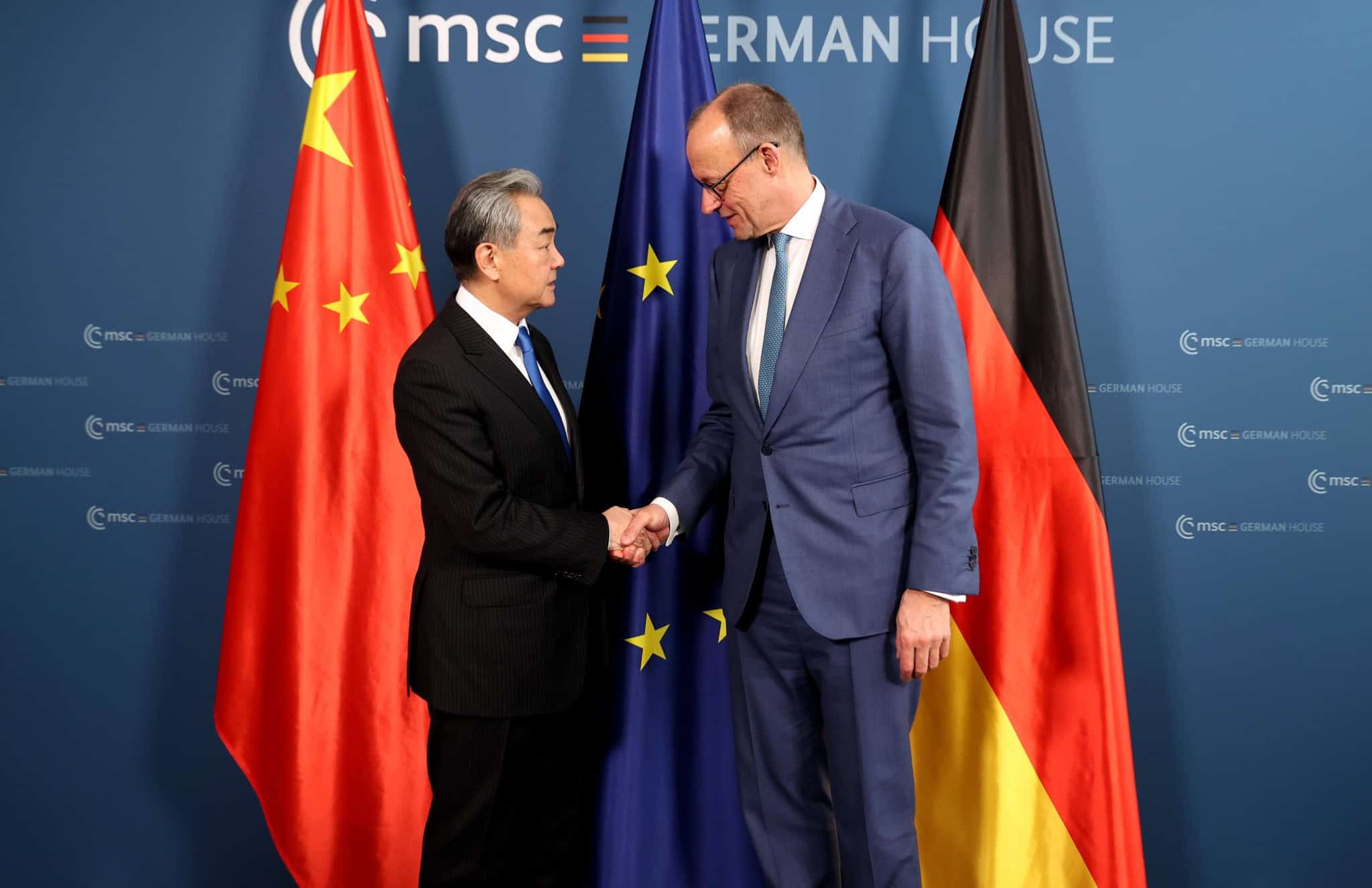
Whilst the EU has a clear stance on this, Germany’s position and its China policy is not so clear. The country’s leadership under Chancellor Friedrich Merz — who is traveling to China this week for talks with Xi — seems to be playing for time. Hence Merz has waited for nine months since his inauguration to travel to China, an unthinkable delay under his recent predecessors.
Despite the EU’s successful efforts to demonstrate the effect of Chinese subsidies in key sectors such as automotives, and to then introduce defensive measures, Germany — as the most affected country in the Sino-European relationship — needs to go further, by offering a separate and totally new win-win offensive strategy.
It should acknowledge and welcome the fact that China is no longer the ‘pupil’, but one of the world’s industrial headmasters; and that China, with its high density of engineering and research excellence, has become a globally unique high-tech manufacturing laboratory — one that, given China’s immense demographic challenges, can teach the world how to replace human labor with technology and still be able to finance a modern state.
Germany’s macroeconomic and socioeconomic model since the middle of the 19th century has always been closely studied by the Communist Party, and there is no reason at all why China should cease learning from Germany and Europe. The flipside of its current trade surplus is the burning need for it to reinvest the euros it has earned. Why not, like the Japanese and Koreans in the 1980s and 1990s, invest heavily in German and European firms, and transfer know-how from the East to the West? China can only benefit from a larger capital-based commitment to balance its economic relationships.
Were this to happen, German industry could in turn learn from technologically integrated supply- and production-chain technologies for 21st century industrial processes. This is why most German companies wish to stay in China, accepting its harsher conditions: they want to increase their own competitiveness under the direct challenge from Chinese engineers.
China will soon learn what Germany had to learn the hard way: continued trade surpluses are neither healthy nor sustainable. If China can increase its economic engagement in Germany and the EU, it may have another positive side effect: China would have a huge interest in a peaceful European order and a prolonged war in Ukraine may not appear quite so beneficial to its interests any longer.
Hopefully, the visit of Chancellor Merz with China’s leadership in Beijing will bring about a u-turn in the currently stressed relationship. In the words of Confucius: A path is created by walking it.
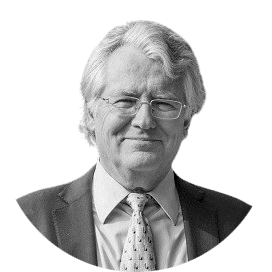
Jörg Wuttke is a Partner with the DGA Group and is based in the Washington DC. Until July 2024 Mr. Wuttke was Vice President of BASF China for 27 years. He was President of the European Union Chamber of Commerce in China from 2007 to 2010, 2014 to 2017 and again from 2019 to 2023. From 2001 to 2004 Mr. Wuttke was the Chairman of the German Chamber of Commerce in China. Since its establishment in 2013, Mr. Wuttke is member of the Advisory Board of Germany’s foremost Think Tank on China, Mercator Institute for China Studies (MERICS), in Berlin. He lived in China for more than 35 years.