James A. Fok is a financial markets veteran who most recently worked as a senior executive at Hong Kong Exchanges and Clearing (HKEx), the company that runs Hong Kong’s stock market. During his time there he worked on establishing share and bond trading links between Hong Kong and mainland China. Fok has worked as an investment banker in Asia and Europe. He holds a BA from the School of Oriental and African Studies of the University of London. In his recently published book, Financial Cold War, he describes the economic and financial background to the current tensions between the U.S. and China. He talked to The Wire about some of the themes underpinning the book in this lightly edited interview.

Illustration by Lauren Crow
Q: In your book you argue that the U.S. and China aren’t engaged in a Cold War, in the same sense as the U.S. and the Soviet Union were, but that a financial Cold War is in progress. Can you explain the argument that you’re making?
A: I find that the Cold War narrative that has come about, and been actively encouraged by some, in relation to the China-U.S. relationship, to be a bit silly at best and, frankly at worst, quite dangerous. The circumstances of the current Sino-U.S. relationship are vastly different from those which existed between the United States and the Soviet Union at the outset of the Cold War in the late 1940s. At that time, the U.S. and Soviet Union had absolutely no economic or trade or financial relationship to speak of, and so the costs for both sides of pursuing the strategy which largely characterized the Cold War, i.e. disengagement, were relatively low.
Today China and the United States are deeply intertwined through trade, and over the last few years, increasingly through financial markets. So the idea of decoupling, which would be the logical inference of a Cold War, would be hugely damaging to both countries. There have been a lot of criticisms leveled at globalization, and I think you can certainly quibble at the deeply inequitable division of the pie. But make no mistake, if you have a decoupling as in the U.S.-Soviet Cold War, it would be hugely damaging not just for the U.S. and China themselves, but also for many other countries around the world. And where you have a shrinking pie, the likelihood is that many of the tensions that you see around the world today are likely to be exacerbated.
| BIO AT A GLANCE | |
|---|---|
| AGE | 42 |
| BIRTHPLACE | Hong Kong |
| MARITAL STATUS | Married to Yeone |
| LAST POSITION | Head of Group Strategy at Hong Kong Exchanges and Clearing |
The other thing that I am particularly concerned with is that for the Americans, in particular, the Cold War had a successful outcome. And that naturally inclines them to pursue the strategy that was successful in the Cold War, that is, of containment. You could contain the Soviet Union without necessarily aggravating conflict, because it was an empire that had a relatively low population, a huge surplus of energy, and huge food surpluses. Even the smaller Russian Federation today — as is being made apparent through the Ukraine conflict — is a huge, self-sufficient energy and agricultural superpower.
China’s situation is somewhat different. Although we think of it as a very large exporter, it is really a re-exporter: most of the input commodities that go into Chinese exports need to be imported into China. And most crucially, China is not self-sufficient in either food or energy. So when you’re sitting in Beijing, in the Chinese leadership, and you have the recollection of the last time that China was cut off from the rest of the world that 40 million people starved to death [during the Great Leap Forward in the 1950s], the idea of containment can become perceived as an existential threat which, if you take it to its logical next step, would draw a response that is commensurate with the level of threat that they feel.
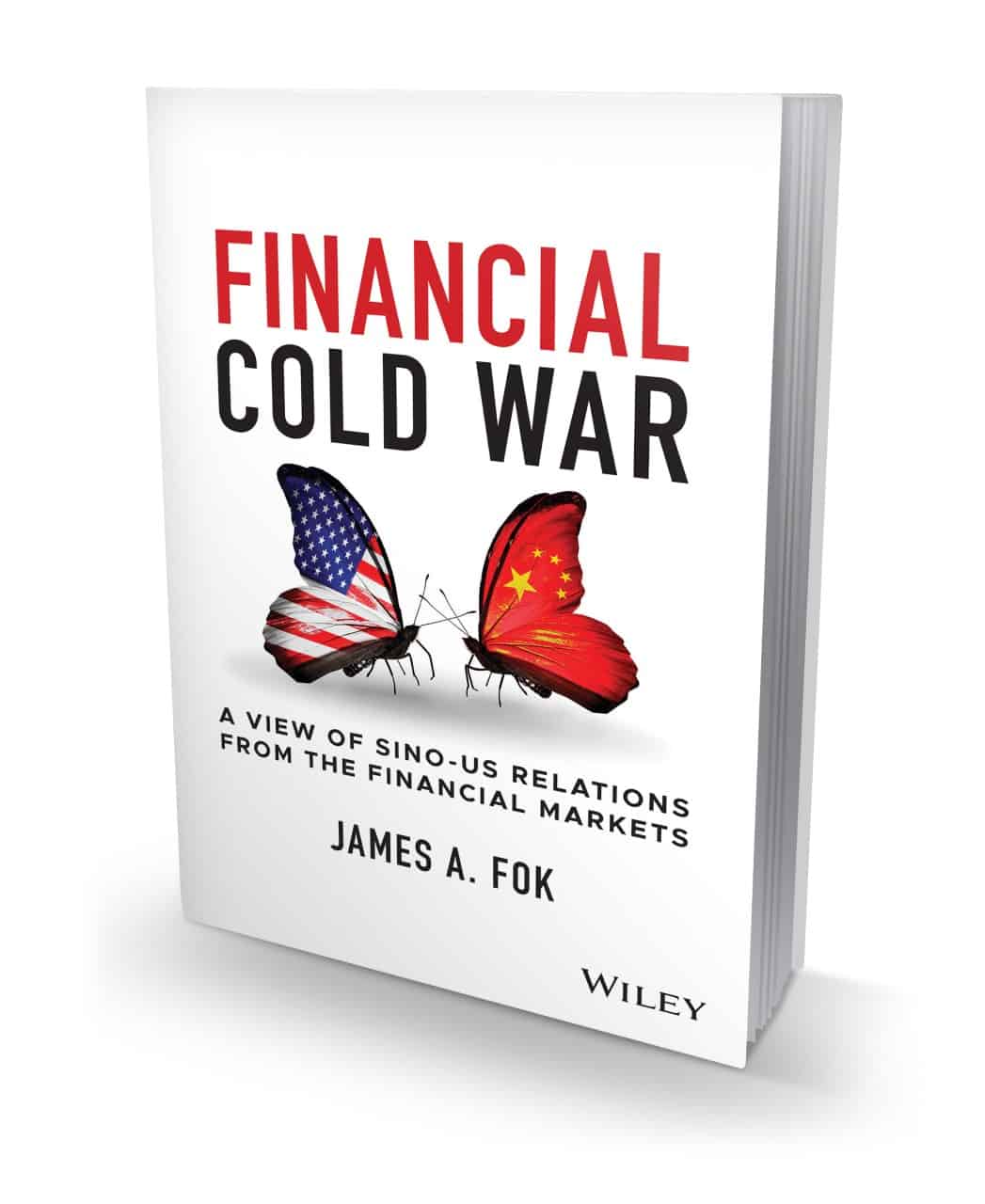
And so the whole Cold War narrative that’s being bandied around is, for those reasons, extremely dangerous. The reality is that both countries, despite the vast differences between them, share very similar challenges.
I’ve used the phrase ‘Financial Cold War’ for the title of my book. Many people, when they hear that term, immediately jump to thinking of sanctions and trade wars and other such things. But what I was trying to explain in the book were all the very small, incremental steps, through the national financial policies of the respective actors, and through the imbalances of the global financial system as it exists today, which have created tensions within both countries, most notably by driving an increasingly inequitable distribution of wealth and income.
Core to that structure that you’re talking about is the system that has evolved of the dollar being the most important currency in the global financial system. Why do you see that as such a big problem and the cause of some of these tensions between the U.S. and China?
The dollar system that was created by Bretton Woods was always flawed. And unfortunately it didn’t become apparent how flawed it was until decades after it was put in place. Very simply, by serving as a global utility in trade and investment around the world, the dollar has had a huge number of benefits. But in order to support that role, the United States, as the issuer of the dollar, has had to export more and more dollars to support the expansion in global trade and finance.
| MISCELLANEA | |
|---|---|
| FAVORITE MUSICIAN | Miles Davis |
| FAVORITE BOOK | The Quiet American by Graham Greene |
| FAVORITE FILM | Anita |
| MOST ADMIRED | Deng Xiaoping |
That was all well and good while the U.S. economy was growing at least as fast as the rest of the world. But for a long time now, the U.S. has been a large, mature economy, and it’s simply not growing faster than the rest of the world. And so that has led to ever higher levels of indebtedness in the United States. That has increased the level of financial fragility. And because of the centrality of the U.S. financial system to that of the rest of the world, it has created a fundamental fragility at the heart of the global financial system, which has manifested itself through the increasing number of financial crises that we’ve seen over recent decades.
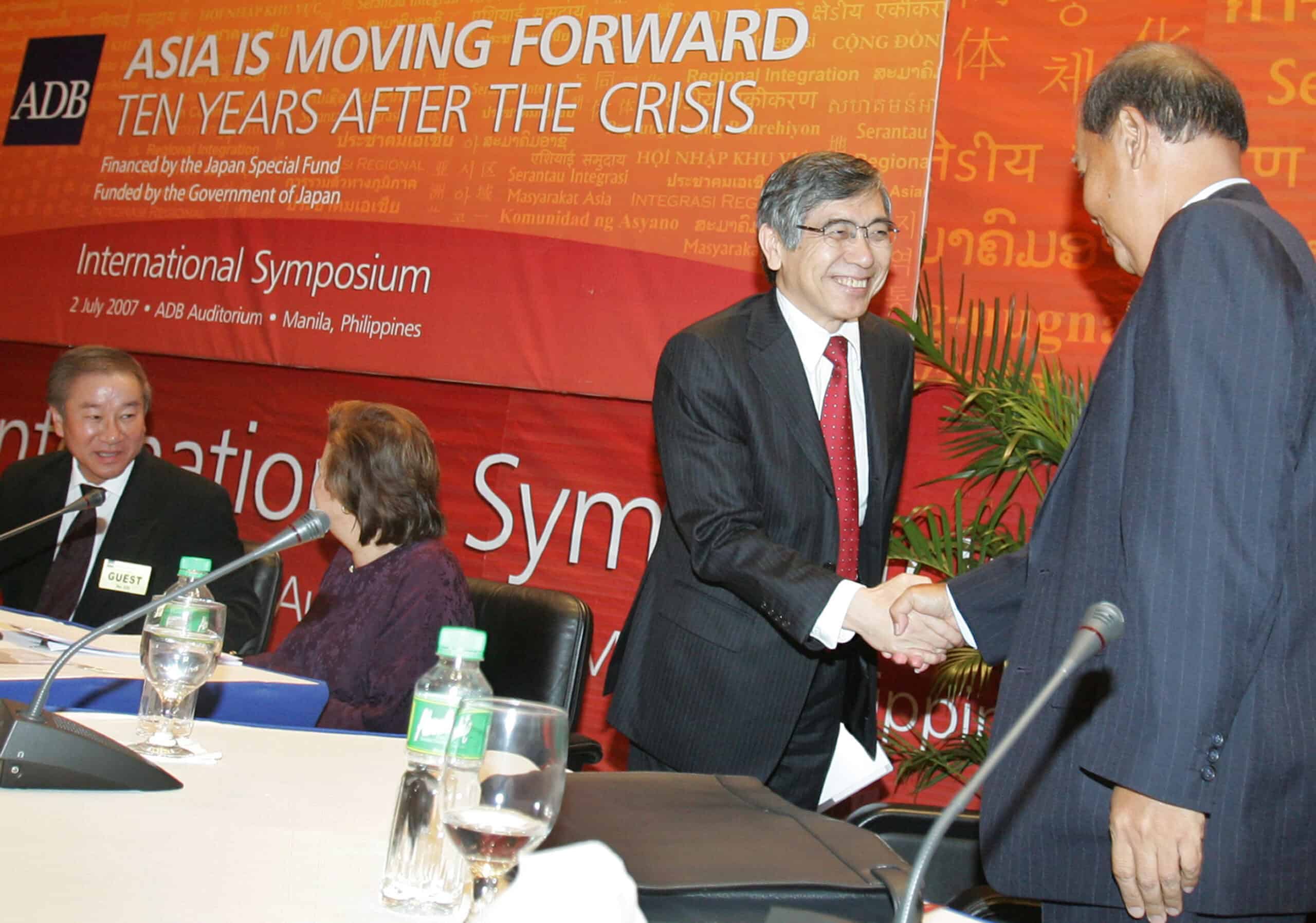
If you remember the Asian financial crisis in the late 90s, that was the classic emerging markets crisis, where a sudden strengthening of the dollar or weakening of the local currency, accompanied by large dollar borrowings, knocked out the ability of many Asian corporates or even governments to repay those debts, causing a huge amount of financial and economic distress right across the region.
The dollar system has also caused problems for the United States. It’s one of the key arguments of my book, that the costs of the dollar system today, even for most people in the United States, far outweigh its benefits. The simple explanation for that is that the structural overvaluation of the dollar that’s been caused by this international demand for dollars has exacerbated the United States’s loss of industrial competitiveness.
It’s not hurt everyone in the States by any means. If you’ve been fortunate enough to be among the group who own shares, and who own financial assets, and the shares of companies that have been able to outsource their production to lower cost centers with undervalued currencies, you’ve done very well over the last 40 years. But if you’ve been a U.S. manufacturing worker over that same period of time, the story hasn’t been so rosy for you.
Could you talk a little bit about how the current system is a problem for China, in terms of the weaponization of the dollar?
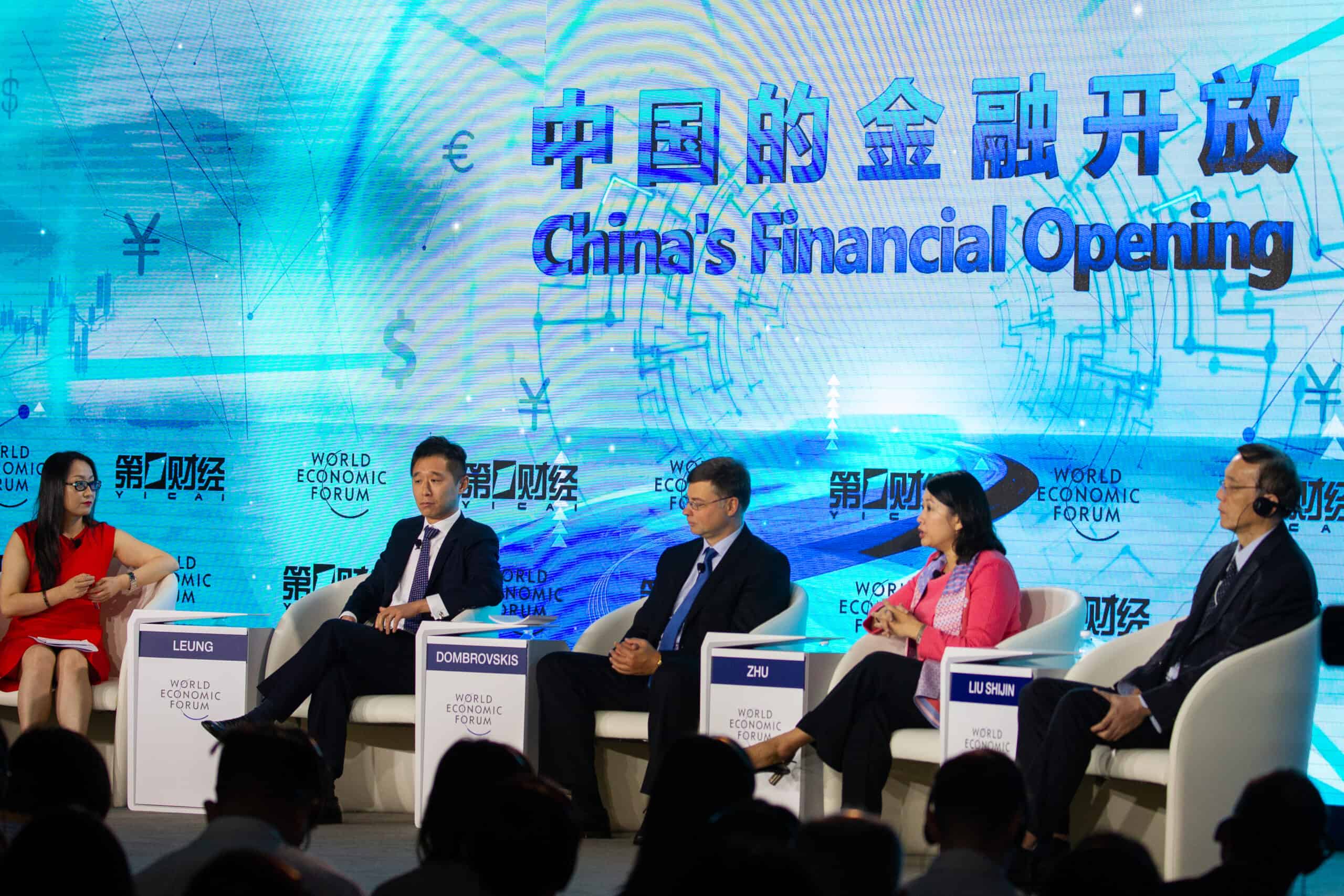
In the grand scheme of things, the weaponization of the dollar has only relatively recently become a major problem for China. For most of the last 40 years, since reform and opening up, the main concern for China was domestic financial and economic stability. And one of the key tenets of that was currency stability. So it’s not the case that China couldn’t have internationalized its currency and reduced its dependence on the dollar. But for most of that time, Chinese policymakers have simply looked at the costs of the dollar system to people in the United States, and they’ve been wary of allowing their currency to serve in the same role. That has driven a very slow and cautious approach towards currency internationalization in Beijing.
The really big steps towards renminbi internationalization have been driven by practical needs. With more Chinese students going to studying abroad, more Chinese tourists going overseas, more Chinese businesses going out into other parts of the world — the steps towards internationalization of the renminbi have really been geared towards supporting that, rather than trying to internationalize the renminbi in a way to make it rival the dollar.
In more recent years, and particularly with the increasing willingness on the part of the United States to weaponize its control over the dollar and the financial infrastructure that supports the global dollar system — most obviously, with countries like Iran and Russia — the Chinese have felt a certain level of threat. And the problem Chinese policymakers face now is that, because of the stunted development of China’s domestic financial markets, and because of the relatively slow and wary approach they’ve taken to the internationalization of their own currency, most of their financial interactions with the rest of the world are still highly dependent on the dollar, and that’s created vulnerability.
The problem that the Chinese government faces is that any Chinese investor investing outside of mainland China beyond Hong Kong today is entirely dependent on a Western controlled financial infrastructure…
When you look at it through the lens of financial markets, which is where I worked all of my career, China has a very rapidly aging population now. That means that the country needs to do two things: It needs to ensure that the population themselves can generate decent returns on their savings in order to keep themselves through what’s likely to be very long retirements. And the second thing is that they’re also inevitably going to face an increase in international borrowing requirements, [to fund] social welfare and other requirements. And so they are going to need to internationalize demand for their sovereign debt, and Chinese securities in general.
When you look at the composition of Chinese savings today, 78 percent of urban household wealth in China is invested in residential real estate. The second largest pool of China’s savings is in cash deposits at banks, which in aggregate totaled around $35 trillion as of the end of last year. That is a massive pool of money that has actually been very low-yielding with the low rates of interest that you’ve got today. And so China would like to see more of that $35 trillion invested in capital markets. China’s capital markets are big, but they’re not anywhere big enough to absorb any significant proportion of that amount of capital. So China needs to find a way of getting its capital into international markets.
The problem that the Chinese government faces is that any Chinese investor investing outside of mainland China beyond Hong Kong today is entirely dependent on a Western controlled financial infrastructure, of international depositories, of global custodians, of payment networks and so forth. Having seen the way in which financial sanctions have been effected on the Russians since 2014, Chinese policymakers have simply held up their hands in despair and said we cannot possibly expose ourselves to these kinds of financial security risks.

So we are now in this rather self defeating stalemate. It’s clearly in the rest of the world’s interest to get access to Chinese capital, the largest untapped capital pool in the world, and it could do a huge amount of good if invested productively around the world. But because of this lack of financial security that China faces, what they [in China] have been stuck with is having to invest through Chinese corporations, and notably through big initiatives like the Belt and Road Initiative.
And understandably, when you have Chinese companies, particularly Chinese state-owned enterprises, going to other countries and buying whole companies or buying large assets, you inevitably have questions or sensitivities that arise over the level of Chinese government influence, the level of Chinese government control, the level of technology transfer, the level of jobs transfer. Whereas if you were able to have 1,000 Mrs. Wangs from Beijing or Shanghai, going and buying a few shares of Glaxo or a few shares of Alphabet, or Amazon, nobody’s going to care.
Isn’t it fair to say that another impediment to the sort of opening up of markets you are talking about has been the fact that Beijing wants to keep control, it doesn’t want to see sudden rushes of capital out of the country?
Yes, that’s absolutely fair.
And also, they don’t want their government bond market becoming hostage to foreign investors in the state in the way that some other emerging markets have?
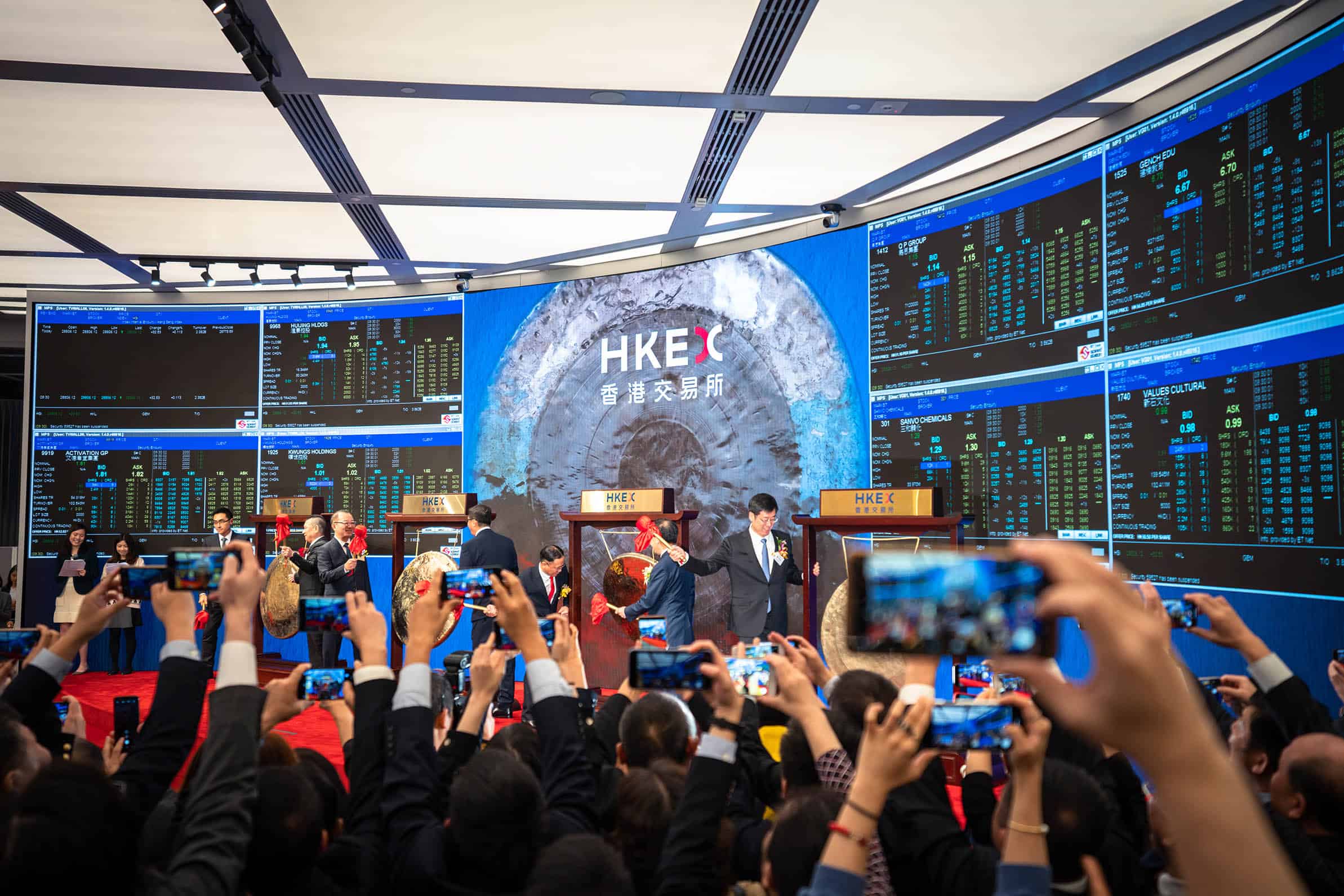
Well, that’s an interesting point. For the last 10 years, I’ve been deeply involved in China’s moves to internationalize its capital markets. And I’m very proud of the achievements of the Hong Kong Stock Exchange, where I worked, in helping that to happen. The consequence of that is that actually, China’s financial markets have become very much integrated into the international financial markets. One useful statistic to look at is that in 2011, the year before we started working on what became the Shanghai-Hong Kong Stock Connect, foreign investment in Chinese domestic liquid securities represented around 14 percent of China’s foreign exchange reserves. Today, that number is above 60 percent, which means that when you talk about China’s integration with the rest of the world, and the amount of foreign capital, and the influence of foreign capital on China’s financial markets and its economy: that’s already there.
In many ways the Chinese are actually in a rather awkward position because there’s certainly no turning back. They’re in a no man’s land because the foreign capital is there, but they haven’t yet internationalized their currency to an extent where they would not be exposed to a rapid shift in the U.S. monetary cycle, as is taking place right now.
But to go back to your question about control: Control was really quite useful for a long time. When you look at the 1980s, and the most of the 1990s, when China was very short of capital, the government’s ability to mobilize Chinese citizens’ savings, through control over the state-owned banking sector, meant that the it could drive investment into infrastructure and other development priorities, and that was what laid the foundations of what became its enormously successful export model.
China has been very wary about allowing its currency to be used as an international utility. Because that necessarily means that it has to start absorbing some of the financial imbalances of the rest of the world.
The alternative strategy for them would have been to follow the example of many other emerging markets, borrowing heavily from international capital markets. We saw the series of Latin American financial crises in the 1980s, and the Asian financial crisis in the 1990s. What Chinese policymakers chose to do, actually, was very clever, and very successful in terms of driving that early development.
The challenge for them now is that this investment-led and top-down economic model has really run its course, because China’s economy is now very large, it’s very complex. And it really defies the ability of even the most competent central planner to efficiently price and allocate capital in the system. Already for the past 10-15 years, the private sector has clearly been the motor of the Chinese economy. And if China’s going to make the next step, and be able to drive the continued innovation and productivity growth that sees China’s prosperity continue to improve, it’s not got anyone to copy. If the system is so complex that it can’t be centrally planned in an efficient way, then they are going to have to relinquish some level of control, in order to create more space for innovation.

Do you see a practical possibility that China can set up its own alternative international financial system — and a danger being that we could end up with a sort of bipolar global financial system?
I don’t think [Chinese payment system] CIPS makes any difference to the prevalence of usage of China’s currency in international trade and finance. China has been very wary about allowing its currency to be used as an international utility. Because that necessarily means that it has to start absorbing some of the financial imbalances of the rest of the world. But ultimately, this is a calculation of pros and cons of that, versus the alternatives. And what you’ve seen recently, with the increase in weaponization of the dollar system, the Chinese have felt a threat. And that they need to find a way of insulating themselves against that threat.
The only way that China can insulate itself from that threat is by allowing its currency to become more international. Events in other parts of the world are probably accelerating that process. With the very tragic events which are occurring in Ukraine, and the Western response in terms of financial sanctions on Russia, that has pushed companies that continue to do business with Russia to settle in currencies other than the dollar or the euro.
I think that in the enlightened self interest of all countries, leaders should look at ways of binding themselves in a way that forces restraint. And in the financial sphere, that really is about increasing mutual dependencies that allow all actors within the global financial system to have security.
Another huge development, which I’ve been surprised by how little it’s been reported, are the moves by the Saudis since March this year to begin accepting renminbi in payment for their oil exports to China. At current levels of export, and current levels of all current oil prices, that means that the Saudi Treasury is going to have somewhere in the region of $75 to $100 billion worth of renminbi each year to reinvest, which means that we’re now at the juncture where you can quite easily see a huge ramp-up in the volume of offshore renminbi that needs to find some investment use in the coming years.
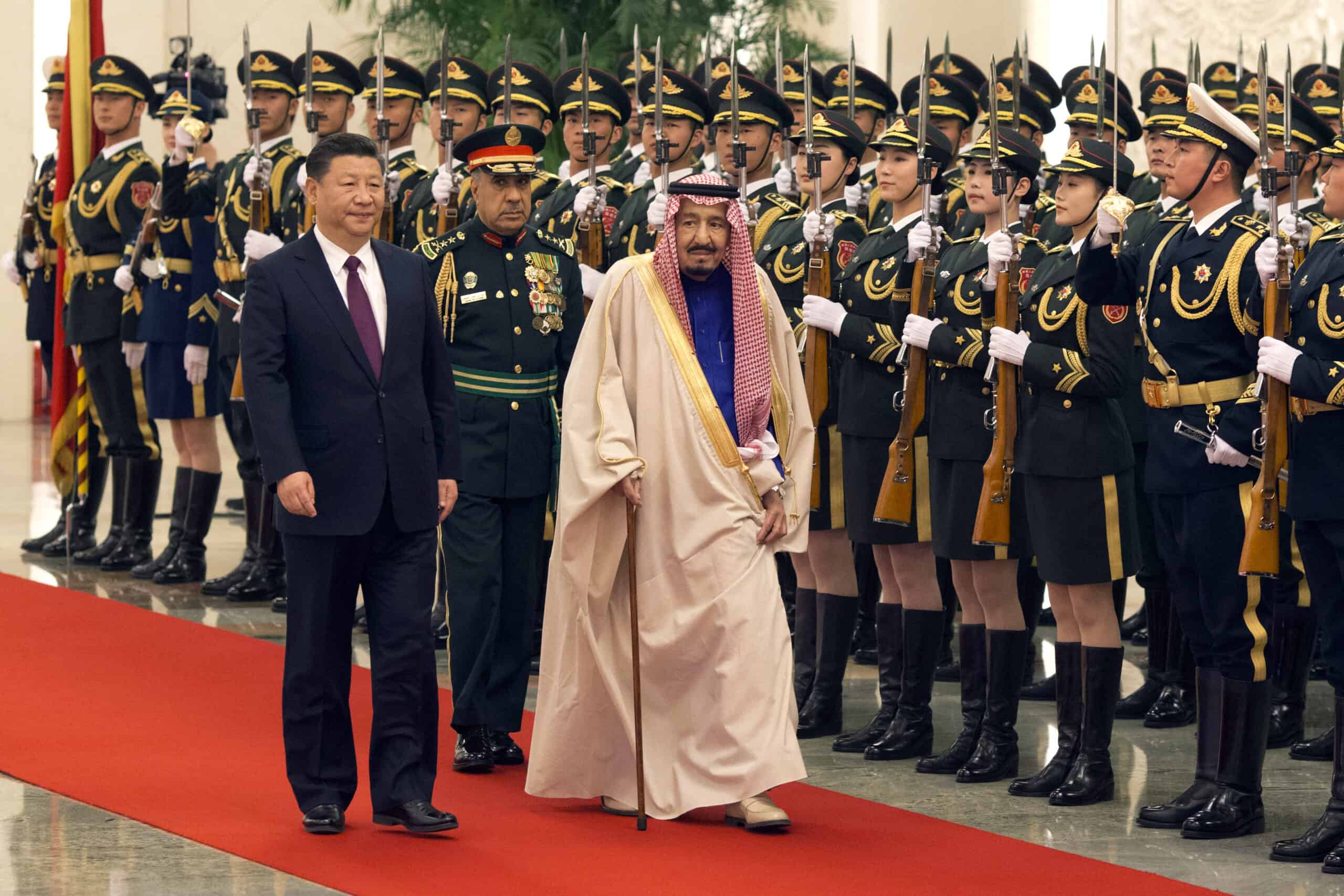
And so, in some ways the Chinese are now under pressure, because the most practical way of driving the offshore issuance of renminbi securities to satisfy that investment demand is to allow Chinese investors to go out, because they have the most renminbi and are natural renminbi-denominated investors. If they were able to go into international capital markets, I can bet you that there will be plenty of issuers who would issue [bonds denominated] in renminbi in order to tap into that capital pool.
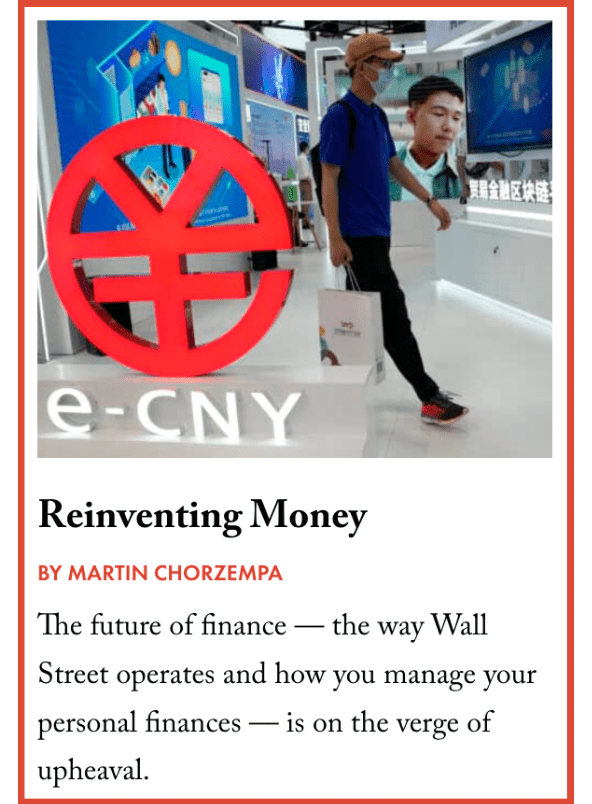
Most financial investors, particularly reserve holders, do look for diversification. And not just diversification in terms of currency, but diversification in terms of the geography of the issuer, the type of industry, and so forth. And if the Chinese don’t support the creation of an offshore renminbi investment ecosystem, and those holders of renminbi have to convert back into dollars or euros in order to reinvest those funds, that’s going to start affecting the renminbi’s offshore exchange rate and also start to challenge the currency stability that Chinese leaders prize so highly.
I don’t think there is a more exciting area in global financial markets anywhere today. Because not only are you at the precipice of a huge amount of capital being internationally deployed for the first time but you’re also going to have to create the infrastructure and pipe work that’s required to support that. This is the most exciting area that you could possibly find in global financial markets, or certainly global financial infrastructure, in at least a generation.
Any reduction in the role of the dollar in the global financial system, that you talk about in your book, would likely take years, or decades potentially. This is going to need some leadership and some farsighted actions by policymakers in countries primarily in the U.S. and China, being the world’s leading economic powers. Given where we are given the tensions between Beijing and Washington, do you see any realistic prospect of that happening?
No. Most of the book was written in 2020, and although the relationship was tense, Ukraine hadn’t yet happened, you hadn’t yet had the increasing fractiousness in the relationship between China and the United States. And, frankly, in the current environment, to come to any grand bargain, not just between the two of them but between the many actors around the world, we need to come together and agree — the circumstances or the conditions for that just simply do not exist today.

That said, the fact is that we are seeing before our eyes the unraveling of a financial system, and of a long financial cycle that’s lasted pretty much for the last 40 years. Throughout that period, we’ve been blessed with relatively low inflation, supported by globalization, the coming online of the labor force in China and so forth. And today, because of COVID, because of disruptions to supply chains, because of China’s rapid demographic aging, we’re now seeing inflation rates hit levels that haven’t been seen for decades. And that necessarily means that central bankers are going to have to respond through higher interest rates. And we are likely to go through a period of lower growth all around the world.
That will have political consequences and will drive political changes. I’m not necessarily able to predict the type of changes, and there are a huge number of vested interests which will try and preserve the status quo. But as we’re all confronted with slower growth and tighter financial conditions than we’ve been used to, there will be impetus for reforms. And that will include political reforms that help drive financial reforms. And in that sense, we’re entering into a period where the world faces quite significant risks — risks, perhaps that haven’t been seen since the 1930s.
My main suggestion, outlined in my book, is that while the conditions of trust don’t necessarily exist for a ‘Grand Bargain’ reform, in the enlightened self interest of all countries, leaders should look at ways of binding themselves in a way that forces restraint. And in the financial sphere that really is about increasing mutual dependencies that allow all actors within the global financial system to have security.

Andrew Peaple is a UK-based editor at The Wire. Previously, Andrew was a reporter and editor at The Wall Street Journal, including stints in Beijing from 2007 to 2010 and in Hong Kong from 2015 to 2019. Among other roles, Andrew was Asia editor for the Heard on the Street column, and the Asia markets editor. @andypeaps