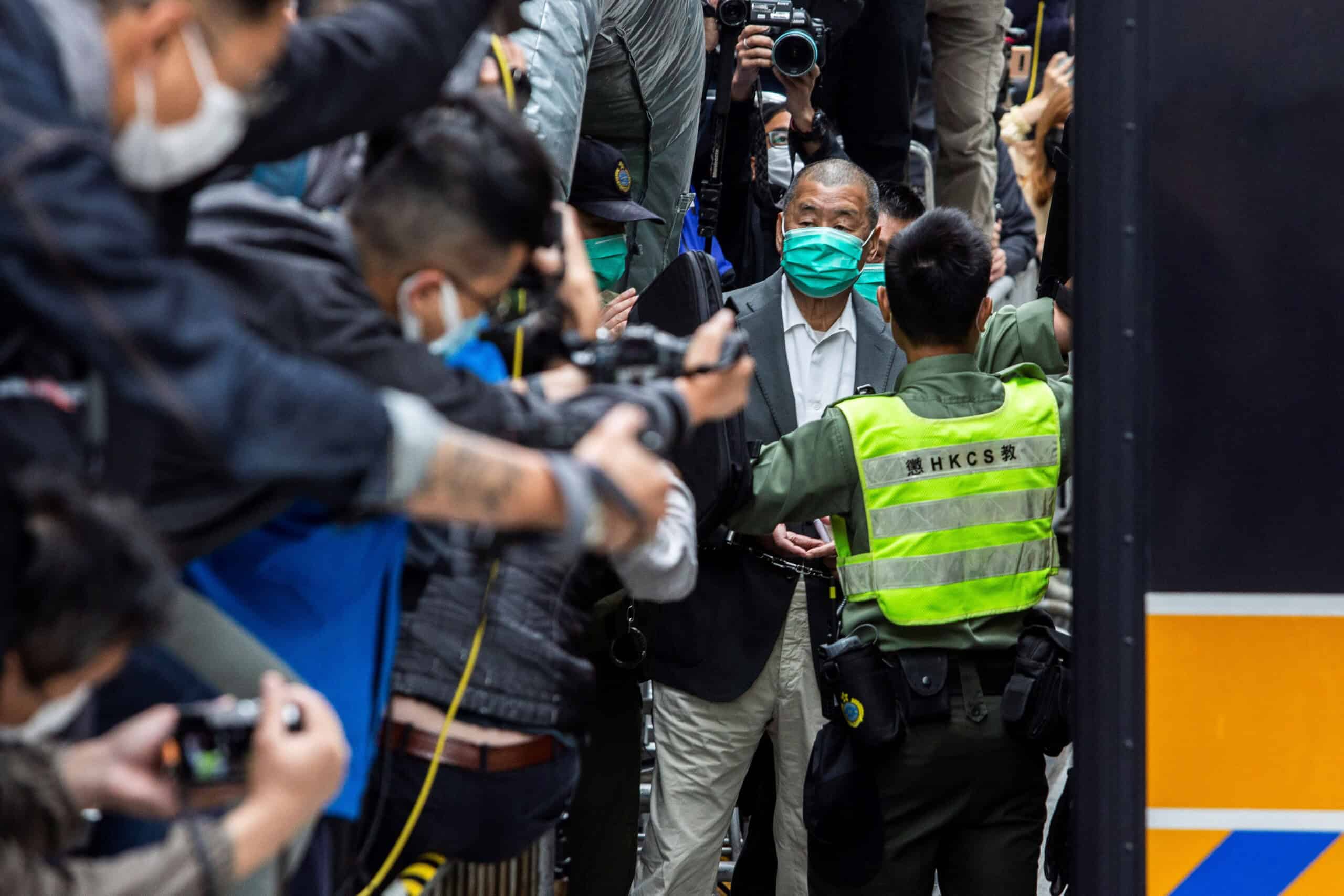
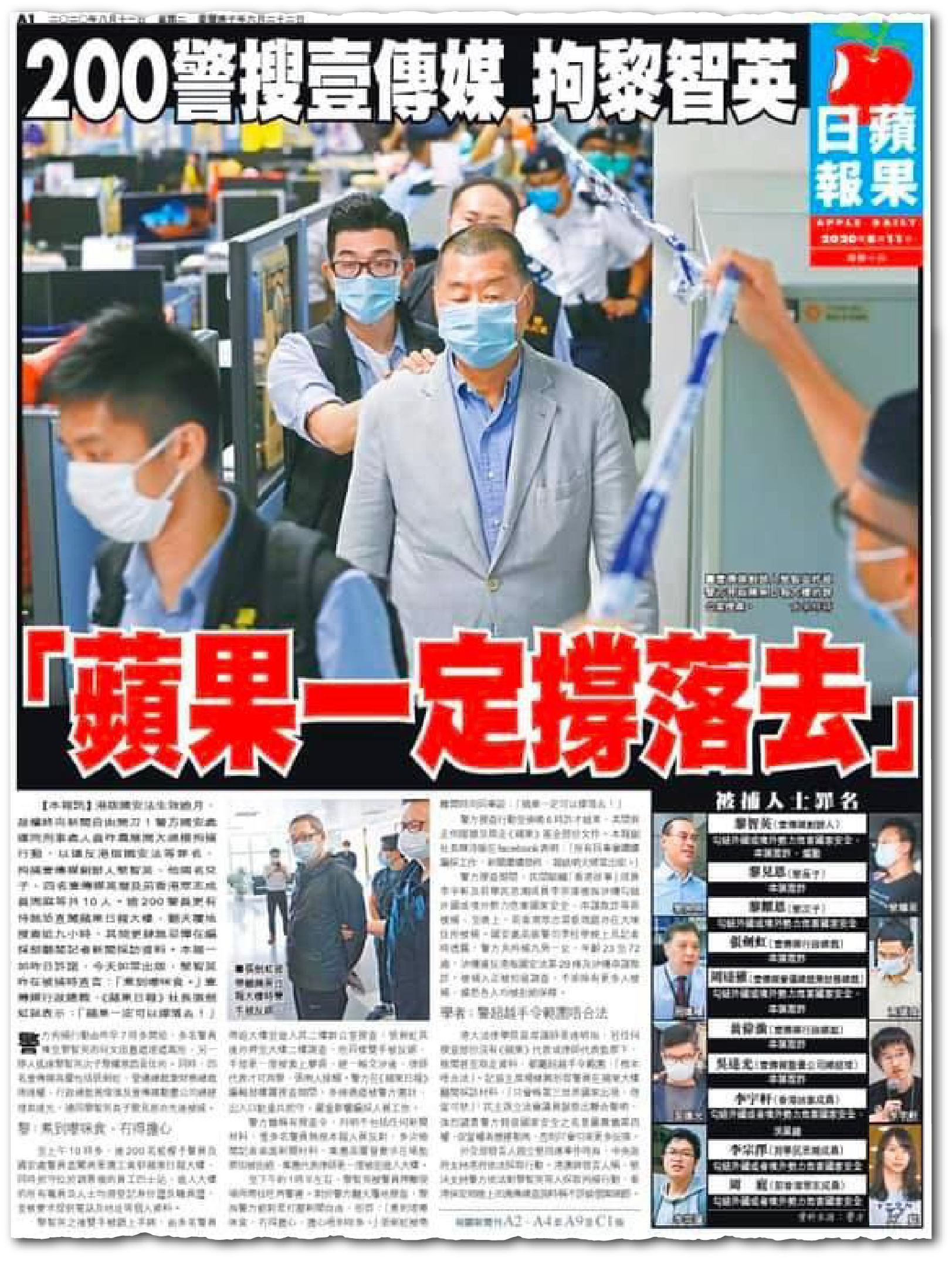
The Chinese Communist Party finally got its man on December 15, when Hong Kong’s High Court found Jimmy Lai guilty of “collusion” with foreign forces and conspiring to publish “seditious articles.”

But the conviction of Lai, the self-made entrepreneur and pro-democracy media publisher, was in fact an anti-climax — a footnote in a long and carefully orchestrated exercise to silence one of the Party’s most stubborn and effective critics in the nominally autonomous special administrative region. His upcoming formal sentencing, possibly to life in jail, will be a footnote to that footnote.
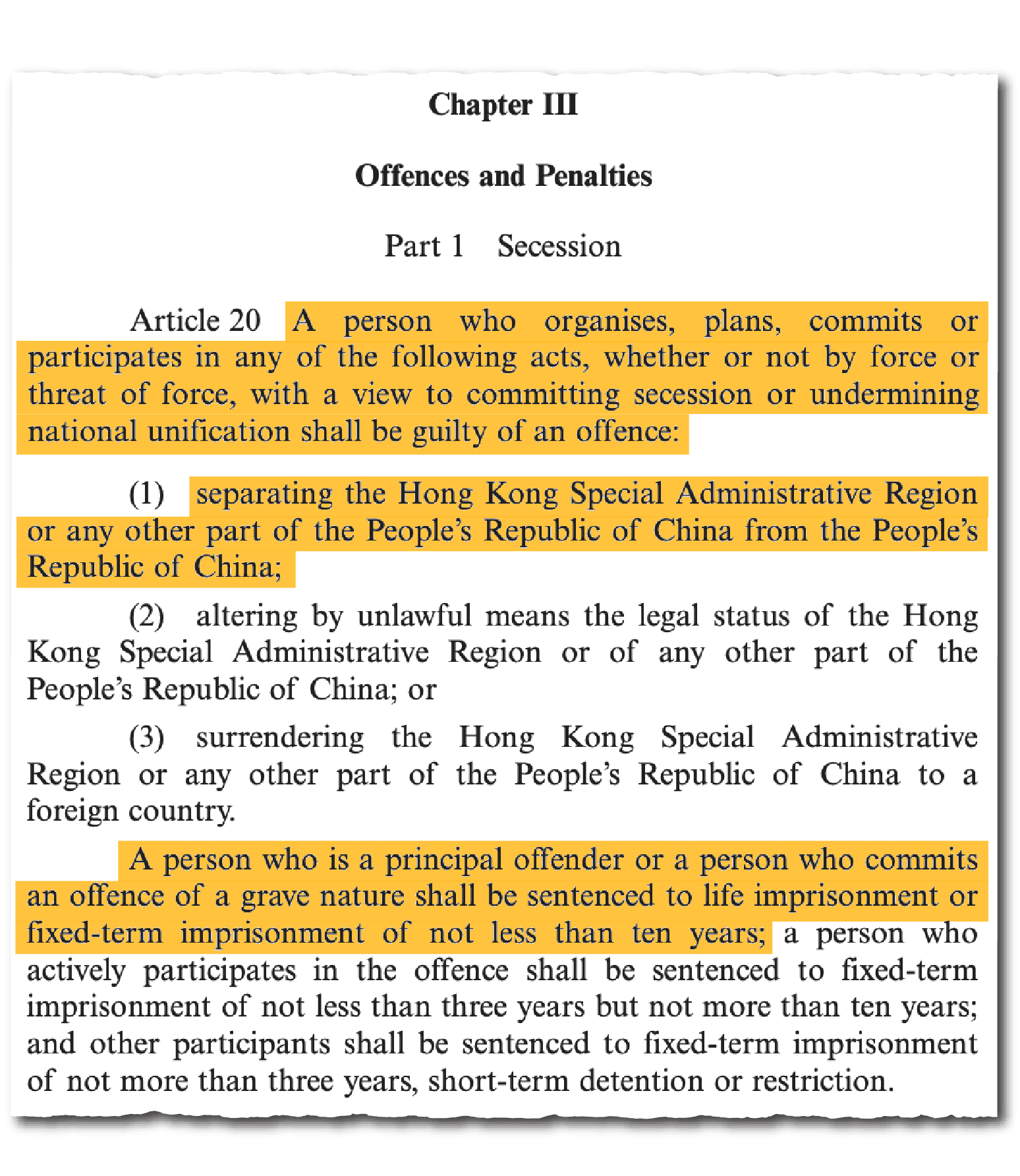
The case, nearing its finale, has illustrated the dramatic changes in Hong Kong’s political environment and legal system since the Chinese Communist Party imposed a national security law (NSL) on Hong Kong in 2020. Critics say the law has marked the death knell of the “one country, two systems” formula that was supposed to guarantee the city’s autonomy over everything except foreign affairs and defense until 2047.
Hong Kong is “being gradually mainland-ized,” says Teng Biao, a veteran Chinese human rights lawyer who now resides in the U.S. “Beijing has destroyed one country, two systems.”
“This single case has collapsed our belief in the robustness of the rule of law in Hong Kong,” adds Eric Yan-ho Lai, an expert on Hong Kong law at Georgetown University’s Center for Asian Law.
A Hong Kong government spokesperson said Lai’s case was “entirely free from any political considerations” and had “nothing to do with freedom of the press.”
“The law never allows anyone, regardless of profession or background, to harm their country and compatriots under the guise of human rights, democracy, and freedom,” the spokesperson added. “The Government will do its utmost to prevent, suppress and impose punishment for acts and activities endangering national security, and bring all offenders to account to fulfil this perfectly justified responsibility.”
“THE AUTHORITARIAN PLAYBOOK”
Prior to last month’s conviction Lai, 78, had been effectively silenced for five years. In December 2020, Hong Kong’s top court revoked his bail — which included strict conditions such as payments of more than $1 million, home confinement and restrictions on speaking with journalists and using social media — reversing a decision made by a lower court only eight days earlier to temporarily release him. The justice who wrote the decision granting him bail, Alex Lee Wan-tang, was also a member of the three-judge panel that convicted him last month of violations of the NSL and an older anti-sedition law.
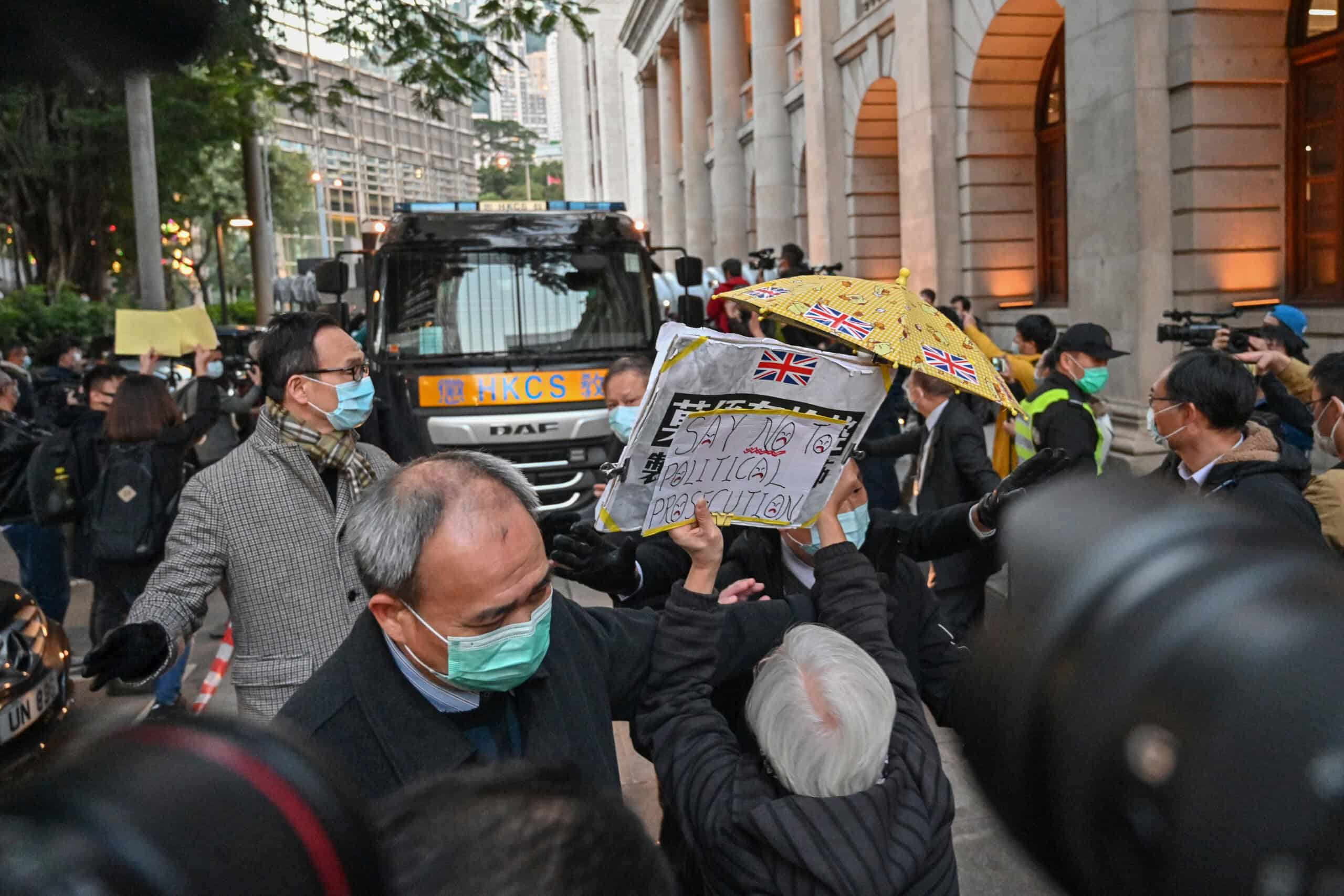
The bail revocation ensured that Lai would be kept behind bars for the entirety of a multi-year trial decided by the government-approved judges — a key feature of the NSL — rather than an unpredictable and likely sympathetic jury.
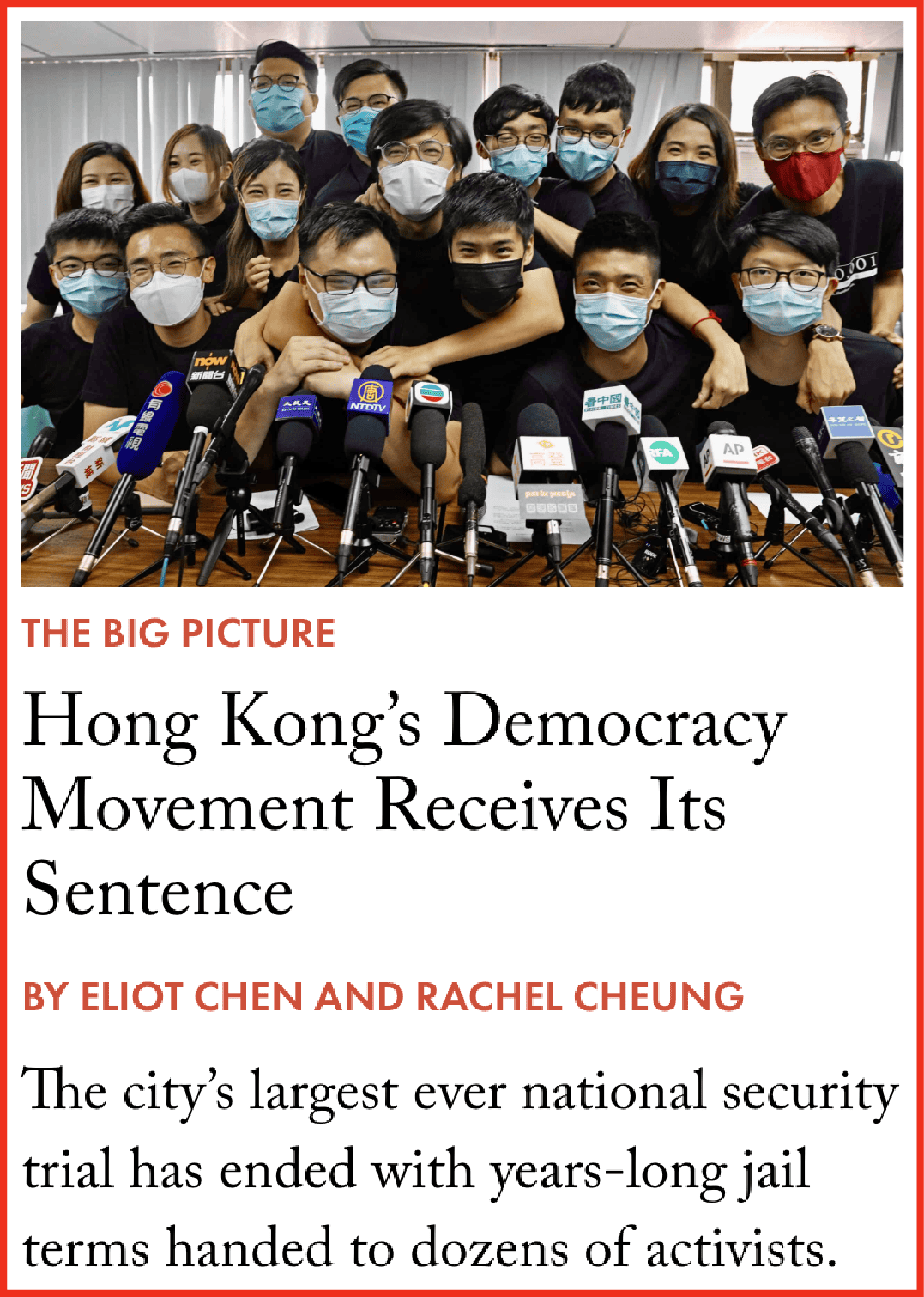
The denial of Lai’s bail sent an important signal to pro-democracy activists in the territory. They didn’t have to be convicted in order to be jailed and silenced; that would happen as soon as they were arrested, with their eventual conviction a foregone conclusion. In trials of the nearly four dozen pro-democracy campaigners known as the Hong Kong 47, the courts acquitted just two defendants. “The idea that speaking against political repression can see you so easily locked away will deter others from speaking out, just as it’s intended to,” says Brendan Clift, a former lecturer in criminal law at the University of Hong Kong now at the University of New South Wales in Sydney.
Prior to the NSL, criminal defendants in the former British colony enjoyed a presumption to bail unless they were violent offenders who posed a clear risk to the public. The reversal of this presumption has been one of the most significant legal changes arising from the NSL and the “mainlandization” of Hong Kong’s Common Law courts. In China bail is almost entirely unheard of, with people suspected of even relatively minor offenses subject to confinement in detention centers while authorities decide whether or not to file formal charges. They normally do, leading to a pro-forma trial and conviction. In a legal system where an arrest is tantamount to a conviction, why bother with bail?
“No matter if it’s a political case or non-political case, [bail in mainland China is] rare,” says Teng. “The trials of dissidents, of political activists, are arbitrary.”
Lai was separately tried and convicted, in October 2022, for alleged fraud related to a minor lease agreement signed between two of his companies. His jail sentence in that case was a remarkable five years and nine months, ensuring that even in the absence of any other charges he would be imprisoned until the summer of 2028, by which time he would be approaching his 81st birthday. The now-pending sentence from last month’s NSL and sedition conviction will likely keep him in jail for far longer than that.
In China and other authoritarian countries, dissidents are often prosecuted for similar alleged fraud or tax offenses — as happened to China’s most famous artist, Ai Weiwei, in 2011.
Jimmy Lai’s fraud case, Clift says, “should never have been prosecuted — this was an opportunistic prosecution of a prominent critic of the government, straight out of the authoritarian playbook.”
For years, Beijing wanted to get Jimmy Lai, and they didn’t have a way to do it. With the NSL, they knew that they could get him.
Thomas Kellogg, executive director of the Georgetown University Center for Asian Law
“It’s very, very easy to frame critics for various violations,” says Eva Pils, an expert on human rights law at the University of Erlangen-Nürnberg in Germany and former lecturer at the Chinese University of Hong Kong. “The practice is common within mainland China.”
A spokesperson for Hong Kong’s judiciary office declined to comment on individual cases or make any officials available for an interview.
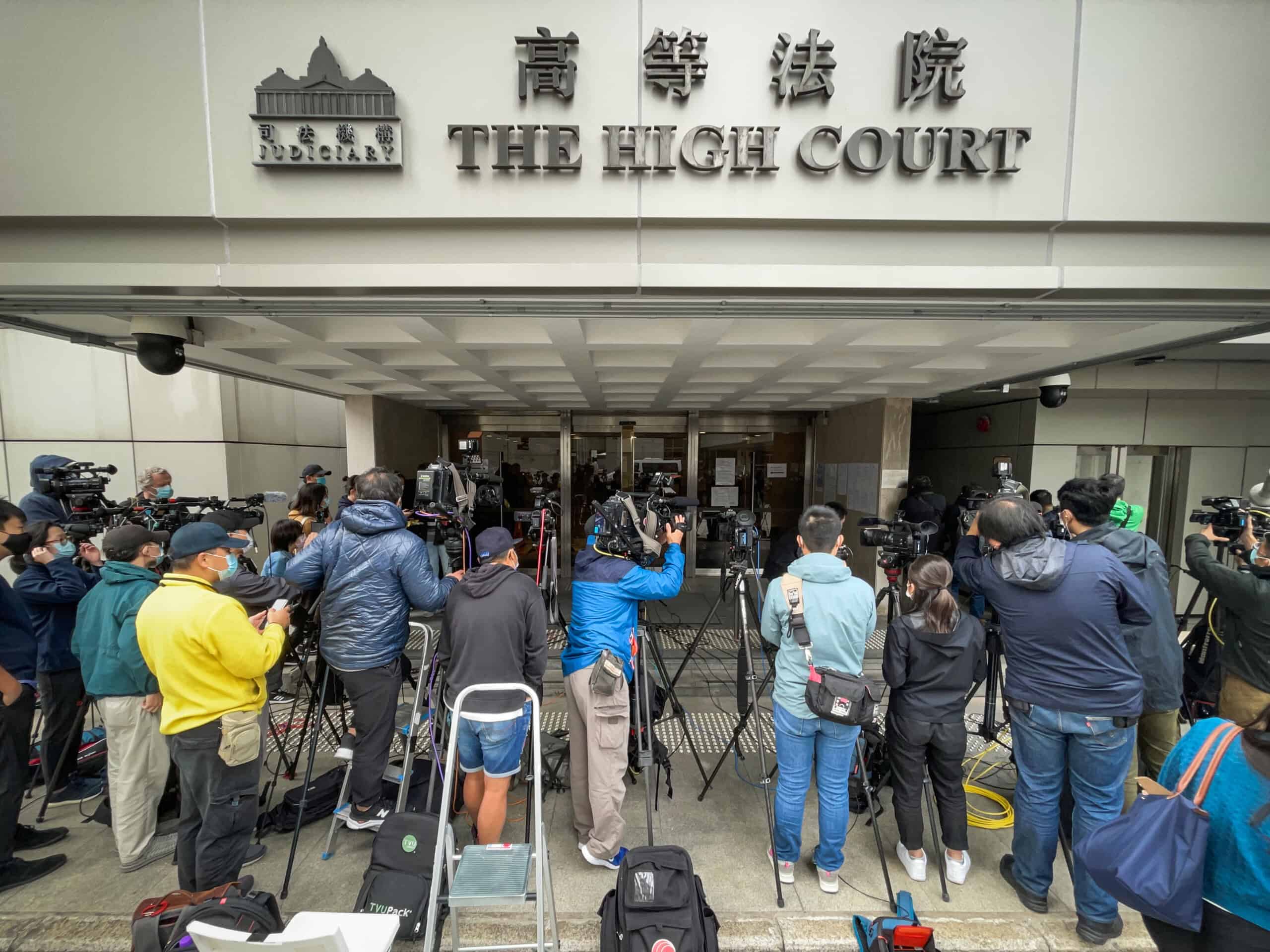
The Judiciary “does not accept sweeping public criticisms that are unaccompanied by specific and serious reference to the judgments in question, alleging that decisions are based on political or other extraneous considerations,” the spokesperson said. “Quite apart from constituting a direct affront to the rule of law in Hong Kong and an unwarranted imputation against the integrity and professionalism of the judges concerned, such assertions merely indicate that the criticisms are themselves motivated by political or other extraneous considerations.”
THE RISE OF A MAGNATE
Born in 1947, towards the tail-end of China’s civil war, Jimmy Lai fled to Hong Kong as a pre-teen stowaway on a fishing boat. Two decades after arriving in the British colony, where he worked as a child laborer at a glove factory, Lai founded Giordano, a casualwear chain. He had visited a pizzeria in New York with the same name and liked it.
Giordano made Lai wealthy, and he settled into a mansion on the Kowloon peninsula. Like many of his self-made peers in the city, Lai had a colorful life. He kept peacocks and an endangered black bear named K.K. in his backyard. He enjoyed day trips on his luxury yacht to the pristine beaches of Sai Kung, in eastern Hong Kong.
But unlike his contemporaries, Lai was not scared to speak his mind about politics. Many of his peers hated the Chinese Communist Party and its policies. In some instances, the Party had confiscated their families’ assets in Shanghai and other cities, forcing them to make a new start in Hong Kong. But they also understood that criticizing Beijing was not in their economic interests, especially as the colony — beginning in the early 1980s — began to prepare for its new future as a Chinese “special administrative region” after the British handover in 1997.
When student-led protests calling for Chinese democracy gained momentum in Beijing in the spring of 1989, only to be brutally crushed weeks later, Giordano sold shirts in Hong Kong with slogans such as “The dynasty is dead.” On other shirts, Lai printed the faces of student protest leaders.
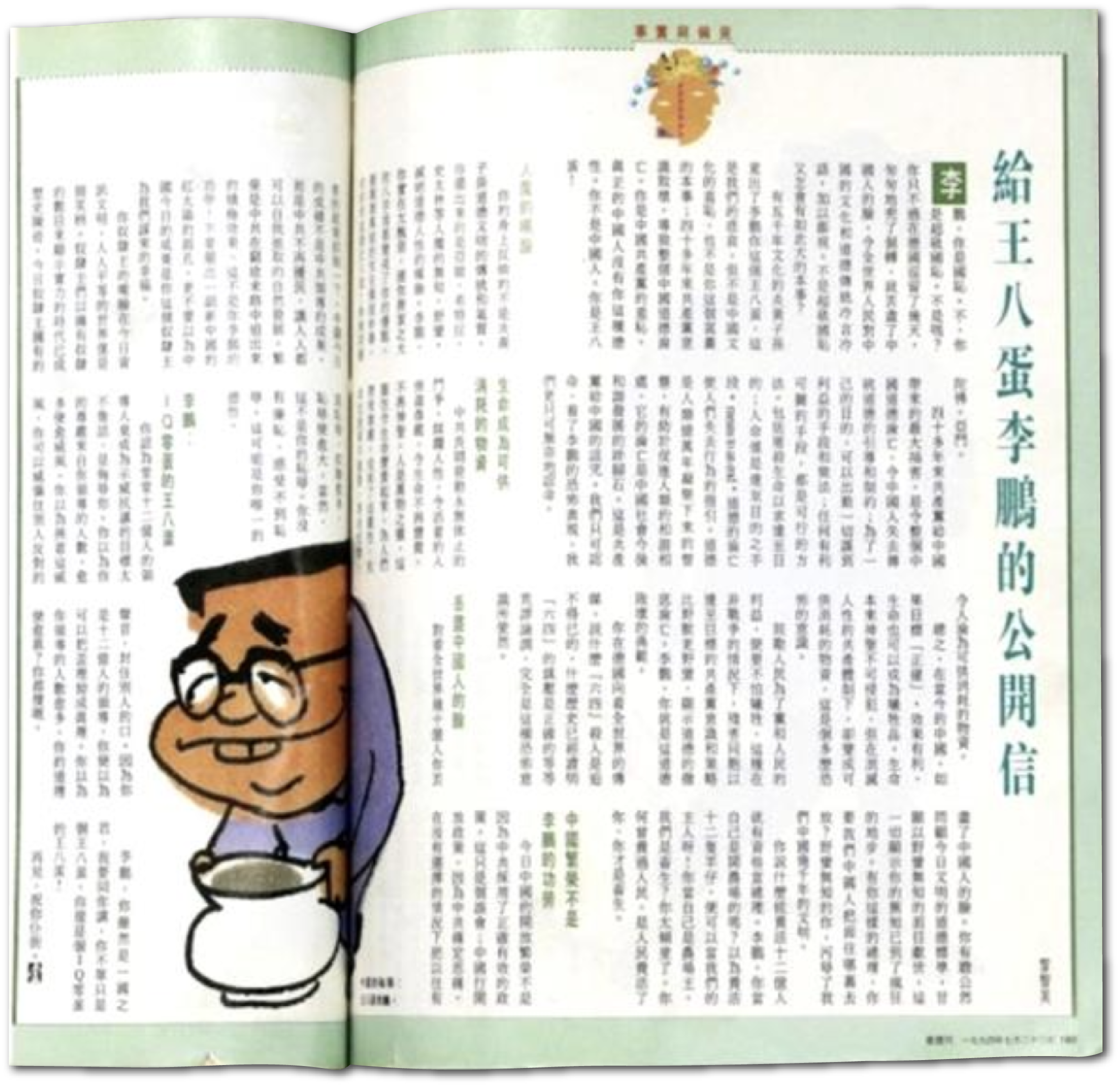
He also poured millions into Next, a hugely popular magazine that he founded in 1990. In its pages, Lai wrote a column savagely critical of the Chinese government. In one open letter, he called Li Peng, the then hardline Premier, “a turtle egg with an IQ of zero.”
“For the past 40 years, the corrupt ideology of the Communist Party has led to a decline of moral standards in China,” he wrote. China eventually closed Giordano’s stores in Beijing and Shanghai, allowing them to reopen only after Lai agreed to step down from the company’s board.
In retrospect that was a mistake by the Party — it gave Lai more time to focus on the expansion of his media empire. He founded Apple Daily in June 1995. Like its sister magazine, the newspaper mixed celebrity gossip with a proudly pro-democracy political slant that it pushed aggressively through, and well after, 1997.
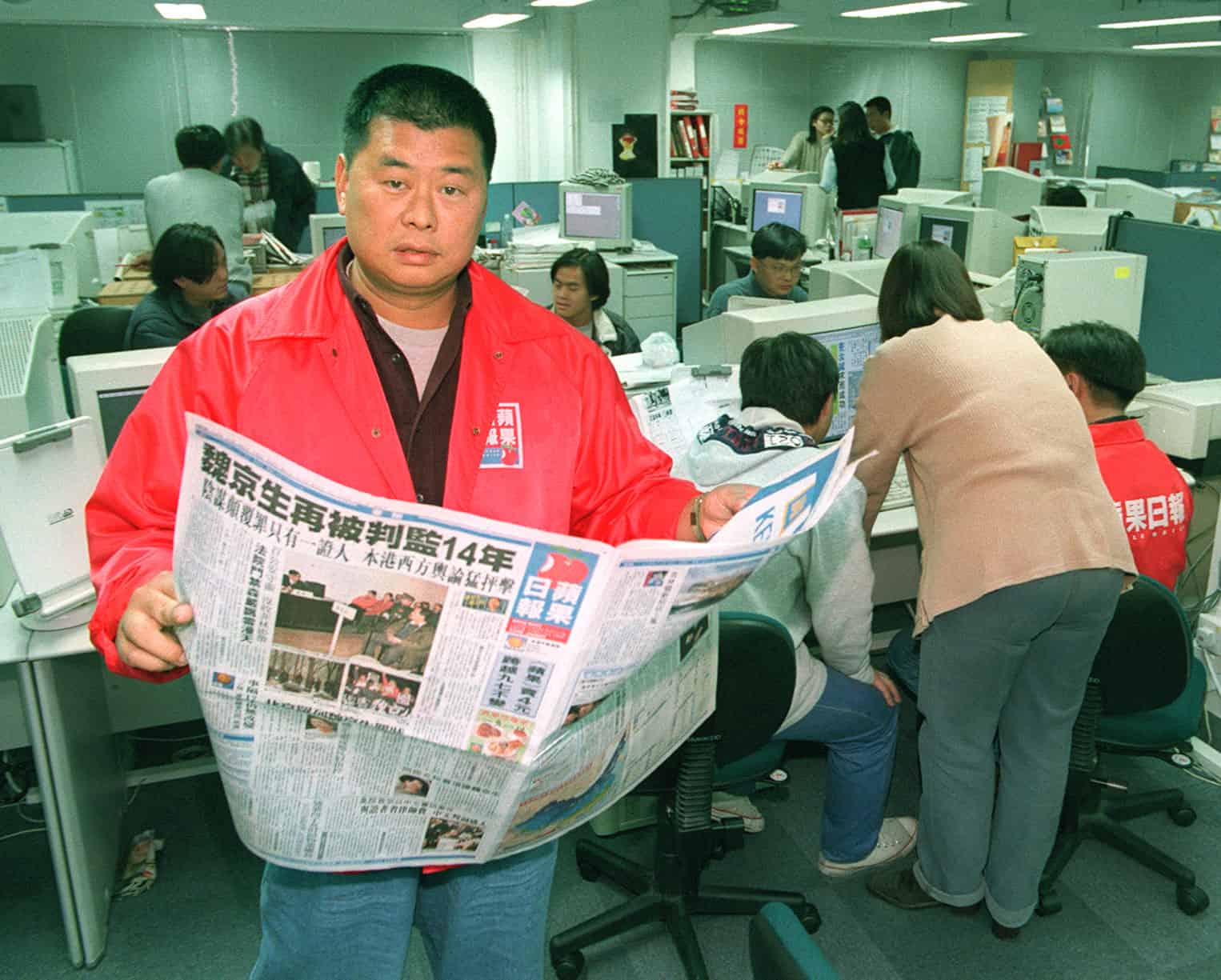
Two decades later, the biggest street protests on Chinese soil since 1989 erupted in Hong Kong, sparked by a bill proposed by the Hong Kong government that would have allowed extraditions to mainland China for some crimes. Apple Daily blared support for protesters on its front pages. China’s response to the protests was the NSL. And with it, Beijing finally had a way to remove a thorn that had been in its side for thirty years.
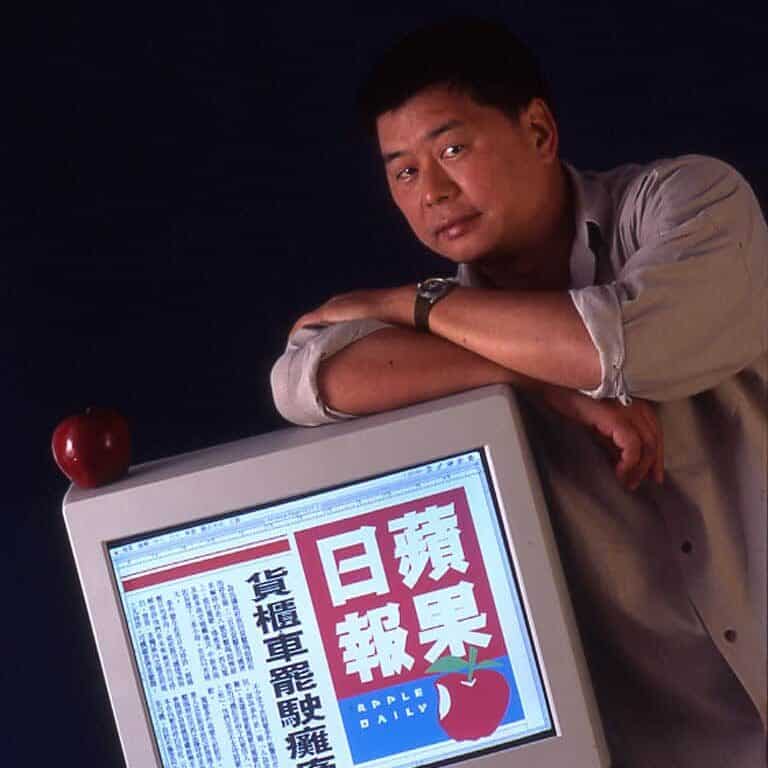
“For years, Beijing wanted to get Jimmy Lai, and they didn’t have a way to do it,” says Thomas Kellogg, executive director of the Georgetown University Center for Asian Law. “With the NSL, they knew that they could get him.”
“NOBODY IS ABLE TO CHALLENGE THEM”
Authoritarian regimes often insist that they are as democratic as any other country, and concoct elaborate constitutions and legal systems.
The Chinese constitution is a classic example of this. It grandly protects rights such as speech, assembly and religion — all of which would, if respected, threaten the Chinese Communist Party’s grip on power. So the Party inserts legal loopholes to justify its violations of constitutional rights.

Critically, the Chinese constitution’s preamble asserts that the country is governed “under the leadership of the Communist Party of China” and, in practice, places this clause above all civil rights. The exercise of any civil right by any individual in any context can therefore be crushed if the Party deems it a threat to its rule — and hence “illegal” under its interpretation of the constitution.
“In theory, the Chinese constitution is the highest law,” says Teng. “The political and legal reality in China is that the Chinese Communist Party has the highest power. The whole country is controlled by the Communist Party, and when the Communist Party or the Communist leaders violate the constitution or violate the laws, nobody is able to challenge them.”
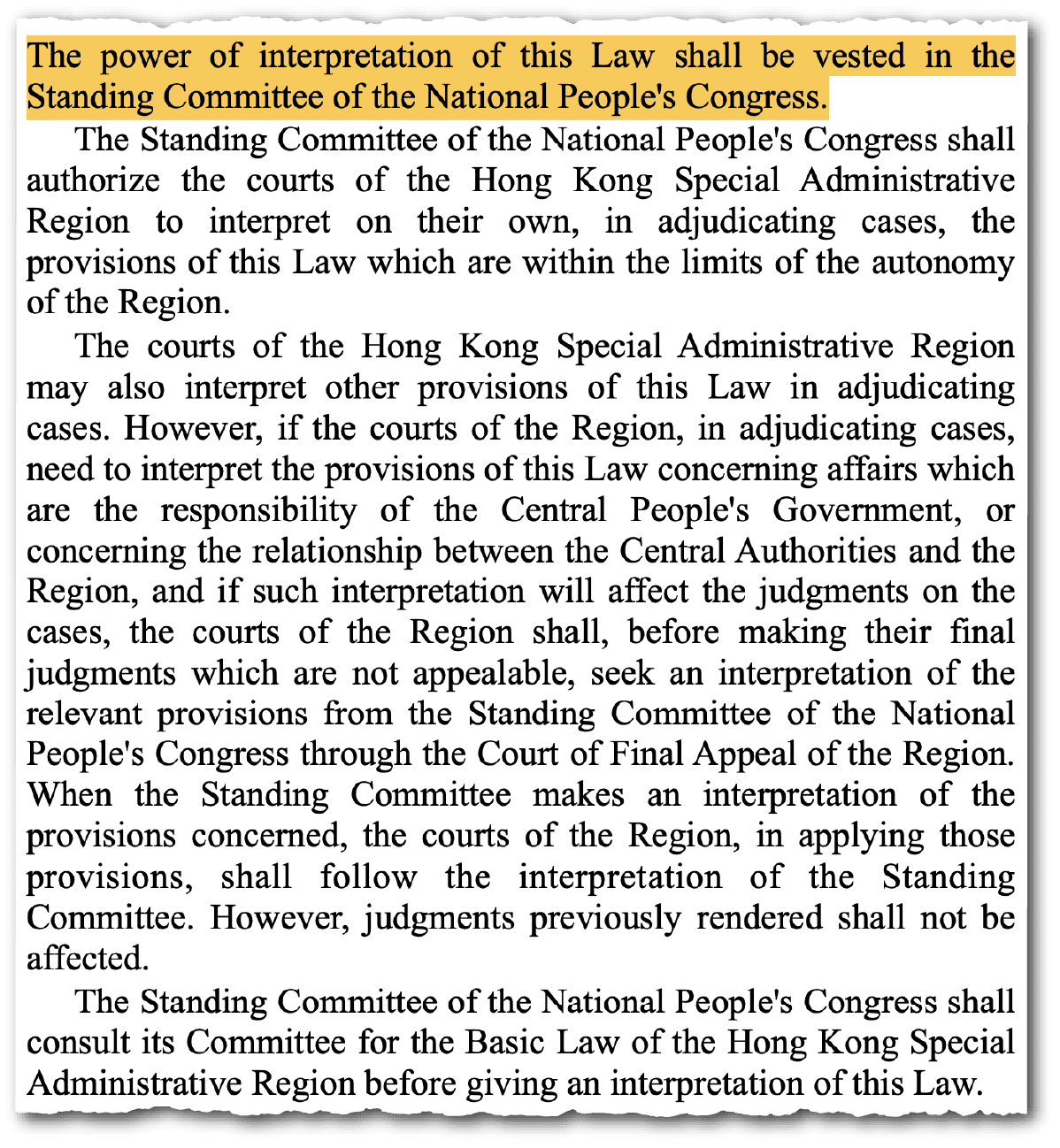
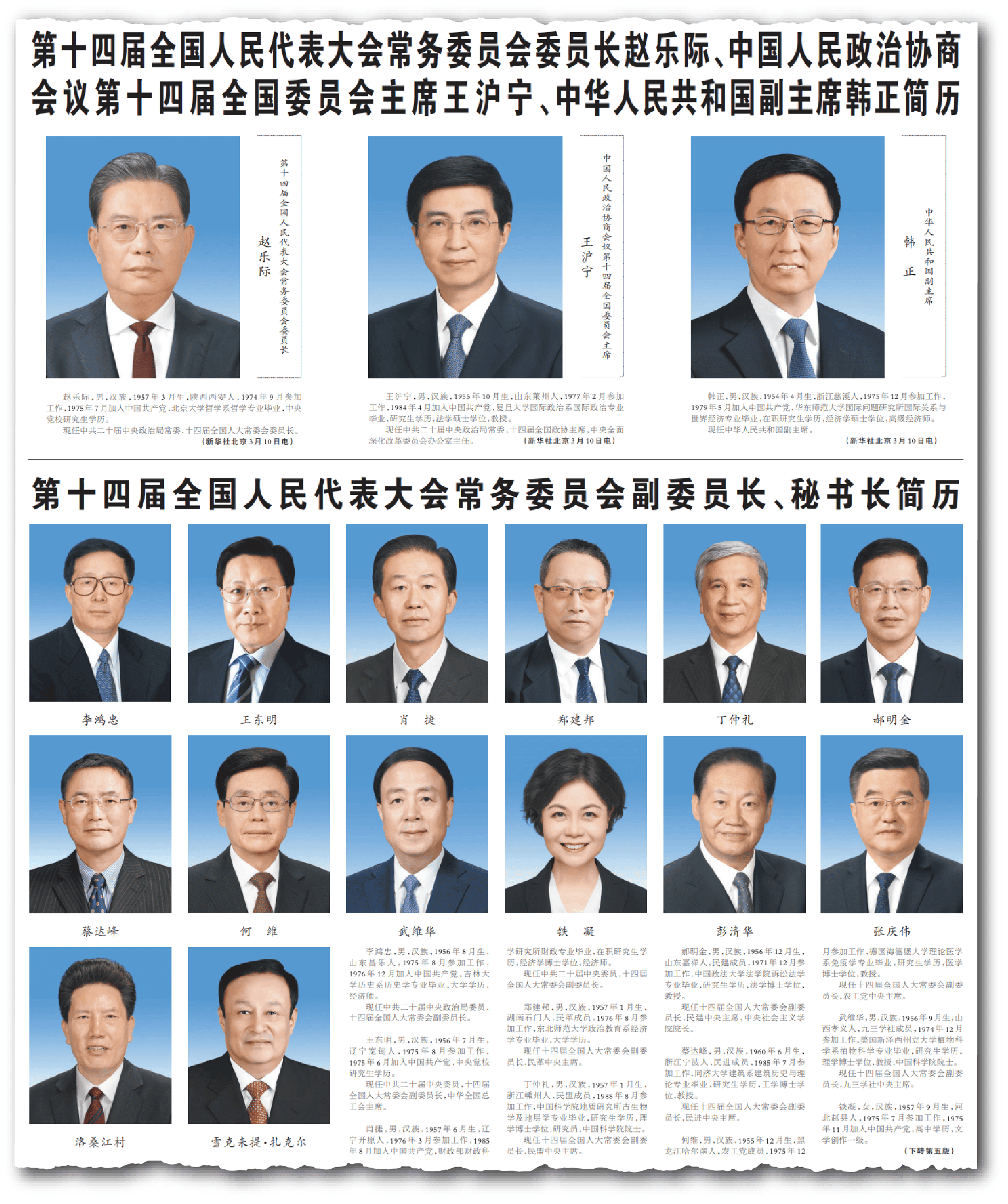
Before the passage of the NSL, the Party could not as easily exercise control over Hong Kong’s Common Law-based justice system. But as a safeguard, the Basic Law, Hong Kong’s mini constitution, granted the “power of interpretation” to the National People’s Congress Standing Committee (NPCSC), which oversees China’s rubber-stamp parliament.
Anthony Mason, a former chief justice of Australia who served as a foreign judge in Hong Kong for almost two decades, once wrote that courts in Hong Kong maintained “the rule of law in the shadow of the giant.”
Hong Kong courts strengthened the NPCSC’s authority in a 1999 case in which they had initially ruled that they had the authority to review mainland decisions for consistency with the Basic Law. But pro-Beijing academics denounced the ruling, and the Hong Kong government appealed to the territory’s top court, the Court of Final Appeal (CFA) for a “clarification.”
A month later, the CFA published a unanimous judgment emphasizing the NPCSC’s power to interpret the Basic Law. “The Court accepts that it cannot question that authority,” the judgment said.
“That decision has come to haunt us,” says Pils. “This surrender to the National People’s Congress means that the Court of Final Appeal really doesn’t have the ability to uphold the principles of the Basic Law against a decision of the NPCSC.”
With regards to the civil rights protected by the Basic Law — such as freedom of speech, assembly and the press — the NSL caveats that those rights “shall be protected in accordance with the law.”
The phrase is a familiar one to those who study China’s legal system. China’s constitution is rife with mentions of rights protected “in accordance with the provisions of law” — it appears 20 times in the latest version of the document, which was last updated in 2018.
“That means there are other legal features, such as legislation, regulations, policies and other prescriptions that can place even more limitations on how rights operate and whether they actually protect what they are enumerated to protect,” says Leigha Crout, a scholar of Chinese law at DePaul College of Law.
The political and legal reality in China is that the Chinese Communist Party has the highest power. The whole country is controlled by the Communist Party, and when the Communist Party or the Communist leaders violate the constitution or violate the laws, nobody is able to challenge them.
Teng Biao, a veteran Chinese human rights lawyer who now resides in the U.S.
When it comes to Basic Law protections like free speech, Georgetown’s Eric Lai says the approach of Hong Kong courts has been to say that the NSL “also appreciates those rights but those rights have limit[s] — they can be restricted on the grounds of safeguarding national security even if it is defined vaguely and overbroadly.”
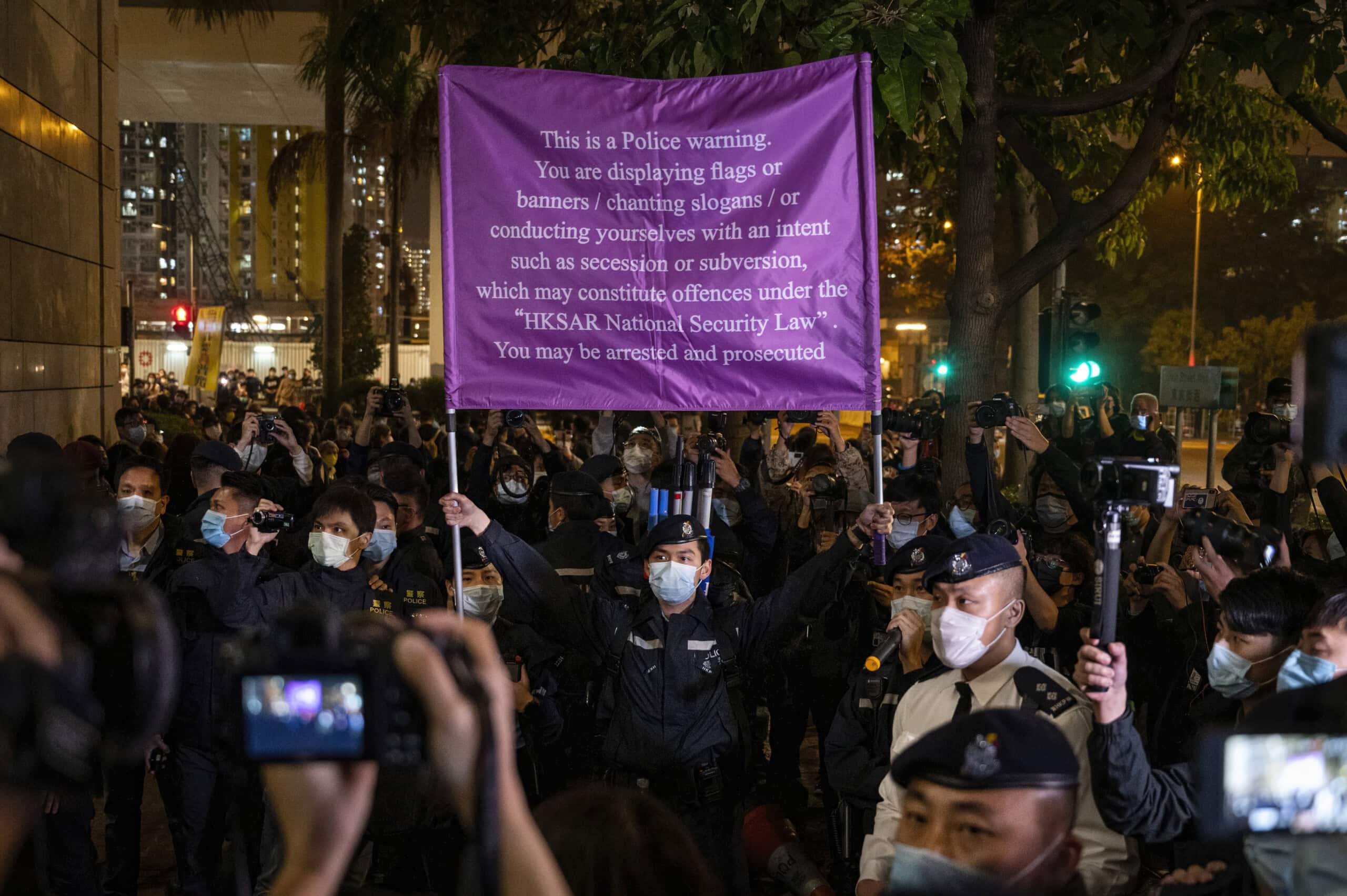
Because the National Security Law emerged from Beijing, legal experts say the Hong Kong courts do not have the jurisdiction to review its constitutionality, even when it is at odds with the Basic Law. The courts in Hong Kong “have the power of judicial review of laws enacted locally, but they don’t have the power to review a law enacted on the mainland,” says Michael Davis, a professor of law at the University of Hong Kong until 2016 and now a research scholar at Columbia University’s Weatherhead East Asia Institute. “The national security law, in effect, became an amendment of the Basic Law.”
“THE HANDLE ON THE PARTY’S KNIFE”
Court trials are a key component of the Party’s legal facade in China, where they are conducted behind closed doors with, in most cases, minimal or zero coverage by the state press.
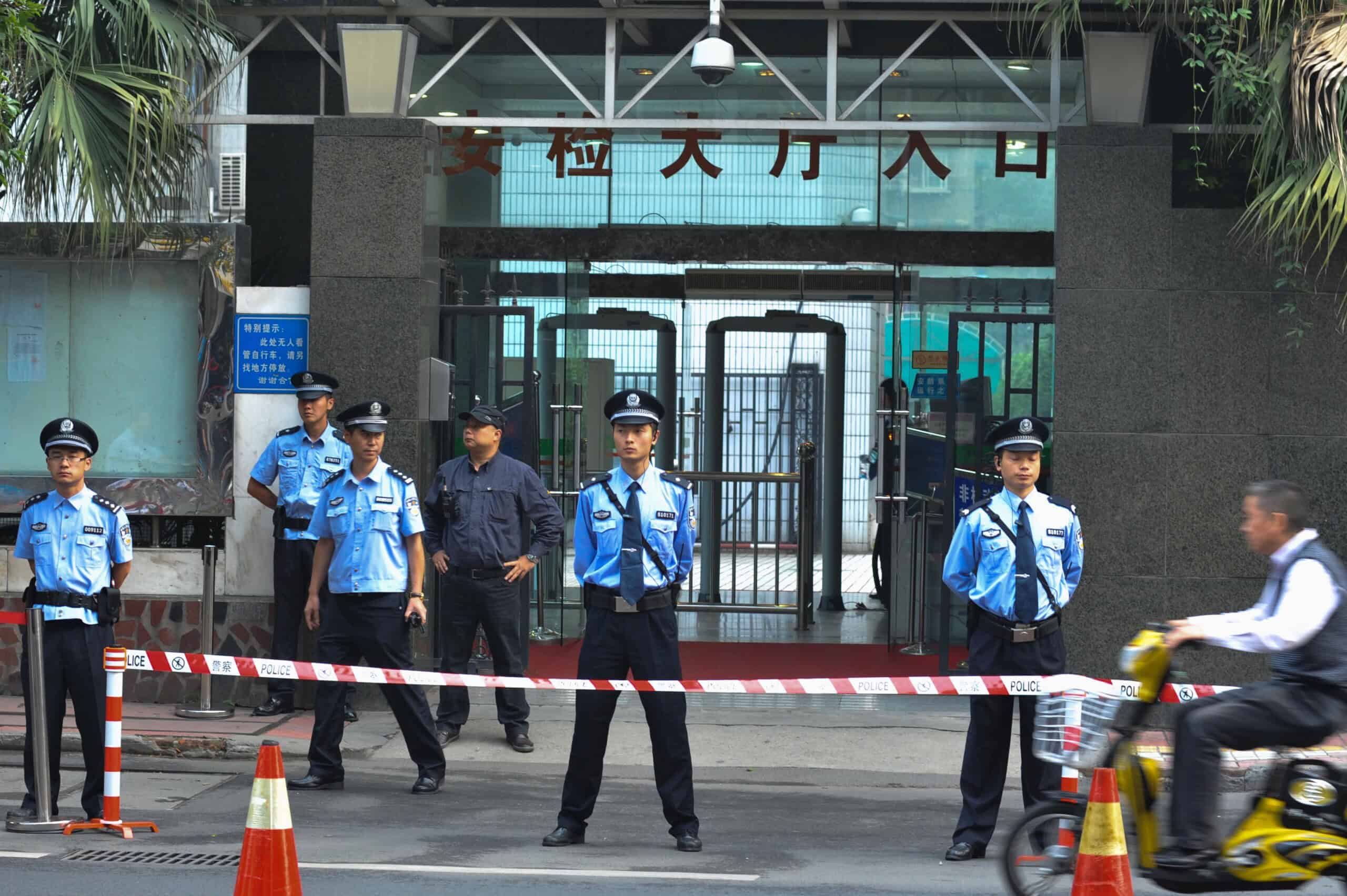
The most the Party may have to contend with, say in the case of a prominent dissident accused of “picking quarrels and provoking trouble” (a useful “crime” generally punishable by up to five years in prison), is a gathering of the defendant’s friends and supporters, foreign journalists and foreign diplomats outside the courthouse during the trial. Police can disperse or detain the crowds as necessary. These “crimes,” says Crout at DePaul, can be used to suppress what are in fact “legitimate expressions of constitutional rights.”
In other cases, such as the trials of former senior party leaders like Zhou Yongkang and Bo Xilai, there may be more extensive state press coverage and even live transcripts of the proceedings made available to foreign reporters in a separate media room in the courthouse.
Imposing such control over court proceedings in Hong Kong is not possible. For President Xi Jinping to accomplish his aims in the territory, he needs local “patriots” who are willing to be “the handle on the party’s knife” — a term used by some Chinese activists to describe their country’s judicial apparatus. The stipulation that only patriots, as defined by Beijing, should exercise power in Hong Kong was first articulated by Deng Xiaoping in the 1980s.

The judges in Lai’s case ultimately found him guilty in a ruling that ran more than 800 pages. In one example they cited, Justice Lee and his peers wrote that an interview Lai conducted in 2020 — in which the magnate compared China’s “international way of conducting business” to Russia’s invasion of Ukraine — “was in fact an implicit request for other foreign countries to join hands with the US in taking action against the PRC.” But in granting Lai bail five years ago, Lee had written that the same interview and another “appear to be comments and criticisms rather than requests, albeit one might find those views disagreeable or even offensive.”
The trial produced “a truly awful verdict, one that may well come to symbolize the decline of the court system in the NSL era,” says Georgetown’s Kellogg. “Sad to say, [it is] a real stain on the reputation of what was once a top-flight judiciary.
“The length itself suggests that the judges lost control of the narrative even as they were writing the verdict,” he adds. “Literally hundreds of pages of extraneous material, and no compelling legal or factual argument that points to an actual crime.”
Jonathan Sumption, a former overseas judge on Hong Kong’s Court of Final Appeal, wrote after the verdict came out: “Reading through this very long judgment, one is constantly struck by the critical references on nearly every page to Lai’s hostility to China and the Chinese Communist Party, his criticisms of Chinese and Hong Kong officials, his objections to the national security law, his support for the pro-democracy movement and his preference for western over Chinese values, as if these things were self-evidently wrong and presumptive evidence of criminality.”

“That is the abyss into which basic political freedoms have fallen in Hong Kong,” Sumption added. “In the end it does not matter whether it is the law or the judges who have suppressed basic political liberties in Hong Kong. The essential point is that those who criticise China or the Hong Kong government or organise themselves to press for a greater measure of democracy are liable to go to jail. These are the hallmarks of the totalitarian state which China has always been and Hong Kong is in the process of becoming.”
For the Hong Kong government, the length of the verdict is evidence of its robustness, and not Orwellian excess. “The court’s reasons for verdict in [Jimmy] Lai Chee-ying’s case are 855 pages long, which are fully open for public inspection, and include the court’s analysis of the relevant legal principles and evidence, as well as the reasons for convicting Lai Chee-ying,” the government spokesperson said.
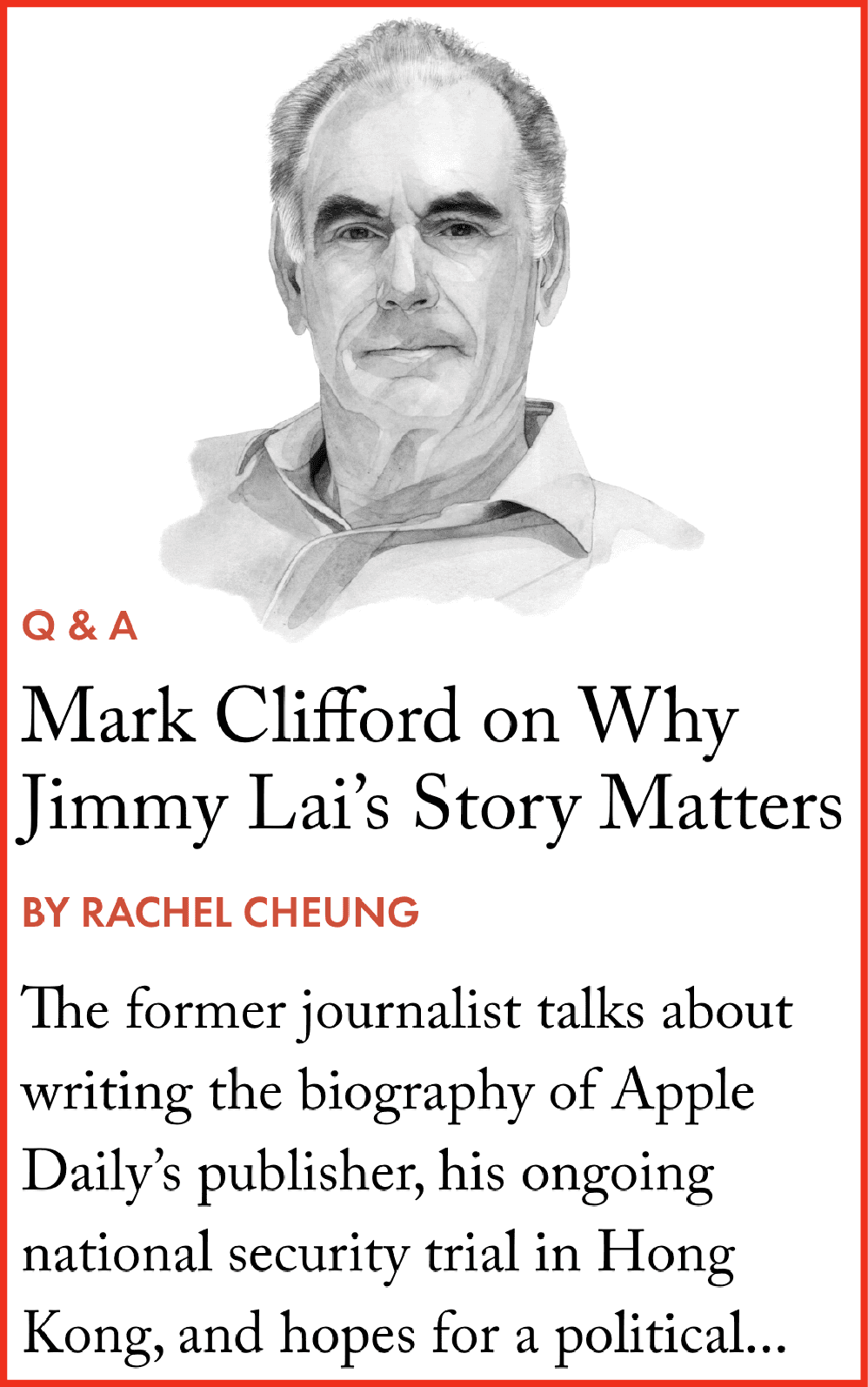
People who know Lai say he has never been afraid to swim against the tide of “patriotism” that so many others in Hong Kong are floating along with. Lai, a British national and late-life convert to Catholicism, could easily have moved to the U.K., U.S. or Taiwan, where he has extensive investments, before the NSL threatened his liberty.
Natan Sharansky, a former Soviet dissident and Israeli politician, joined Lai on a talk show in November 2020, just weeks before his bail was revoked. “When I was in [Lai’s] position, I understood that if my aim was physical survival, I would be destroyed,” Sharansky told The Wire China.
“My aim should be to remain a free person until the last day of my life,” he added. “I think Jimmy understood that already.”

Noah Berman is a staff writer for The Wire based in New York. He previously wrote about economics and technology at the Council on Foreign Relations. His work has appeared in the Boston Globe and PBS News. He graduated from Georgetown University.