From 1955 to 1971, during the height of the Cold War, U.S. diplomats carried on a series of 134 negotiations with their counterparts at the embassy of the People’s Republic of China in Warsaw. Henry Kissinger, who became President Richard Nixon’s National Security Advisor, mocked these efforts as “sterile” and “the longest continual talks that could not point to a single important achievement.”1Many of the quotes in this piece come from Kissinger’s The White House Years and On China, Nicholas Griffin’s Ping-Pong Diplomacy, Margaret MacMillan’s Nixon and Mao, William Burr’s The Kissinger Transcripts and John Delury’s upcoming, Agents of Subversion: The United States and China from Korea to Vietnam.
Indeed, a breakthrough after two decades of steely deadlock between the U.S. and China came not via diplomats persisting in Warsaw, but via insiders in Pakistan. On December 8, 1970, Pakistan’s President, Yahya Khan, who was a close ally of China, had a double-sealed envelope with no identifying marks or letterhead hand-delivered to Kissinger at the White House. Inside was a letter from Premier Zhou Enlai in Beijing announcing that the Chinese were now willing to hold discussions with the U.S. on the basis of an “open agenda.” For the first time since coming to power in 1949 and then promptly going to war against the U.S. in Korea during the early 1950s, “Peking,” as Beijing was then known, was not attaching pre-conditions, such as first resolving the Taiwan problem, to sitting down with the U.S. for official talks.
What had changed?
By the late 1960s, the USSR, which was once viewed by the Chinese Communist Party (CCP) as its “socialist big brother” and as being “close as lips and teeth,” had amassed a million troops along the 4,000-mile-long shared border with China. As an ideological fault line had opened between the two once fraternal Communist leviathans around the question of de-Stalinization and which revolutionary society would achieve “communism” first, things became so acrimonious that clashes broke out, making Mao reassess “the Russian bear” as a greater threat than even the American imperialists. “We should be prepared for a fighting war,” warned Zhou, as fearful Chinese were ordered to begin digging a vast network of underground air-raid tunnels beneath Beijing. So worried had China’s leaders become that Marshal Chen Yi counselled, “It is necessary for us to utilize the contradiction between the U.S. and the Soviet Union in a strategic sense and to pursue a breakthrough in Sino-American relations.”
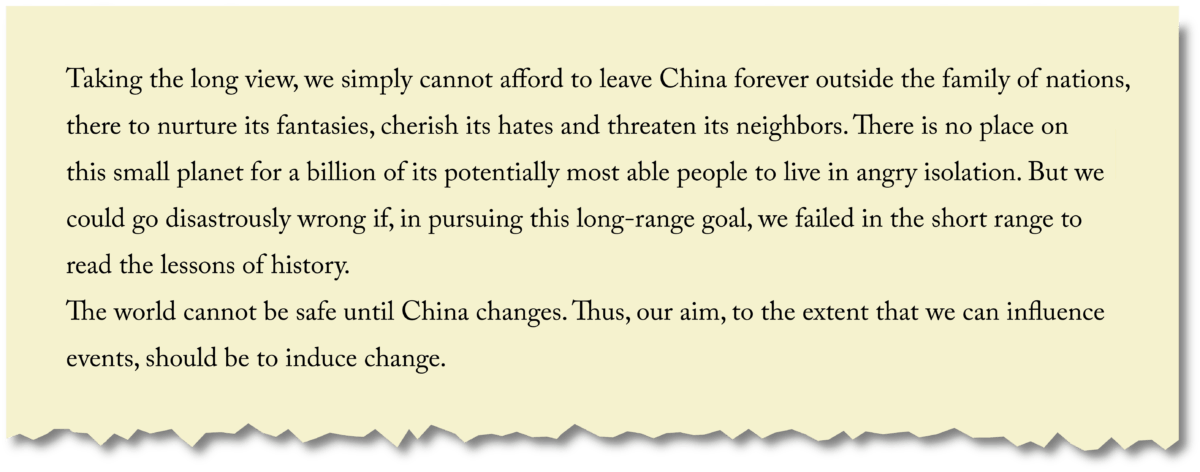
As it happened, Nixon had also wanted to improve relations with China for several years. As early as 1967, he’d written a Foreign Affairs article declaring, “we simply cannot afford to leave China forever outside of the family of nations, there to nurture its fantasies, cherish its hates and threaten its neighbors.” One week after arriving in the White House in 1969, Nixon had messaged Kissinger suggesting he get in touch with China, and the two sides began a series of artful signaling efforts to win each other’s attention. In an October 5, 1970 interview with Time Magazine, Nixon observed, “If there is anything I want to do before I die, it is to go to China.” That November during a visit to the White House by Pakistani President Khan, Nixon had promised that the U.S. “would not participate in a condominium against China” with the Soviet Union and would even be willing to send a high emissary to a “mutually agreeable place” for negotiations with Beijing. Then, while he was an avowed anti-communist who had previously always used “Red China” or “Communist China,” in his second Foreign Policy Report issued on February 25, 1971, Nixon allowed the once forbidden words “The People’s Republic of China” to be used officially for the first time.
So, when the message from Zhou arrived in December of 1970, Nixon and Kissinger were hopeful their efforts were being rewarded. After all, surmised the latter, “to invite the representative of the reviled ‘monopoly capitalists’ to Beijing had to reflect some deeper imperative.” Indeed, something was stirring. Only three months later, in March 1971, Zhou received former Japanese Foreign Minister Aiichirō Fujiyama and told him that “at some point, a sudden dramatic improvement [in relations with the U.S.] is possible.”
Then, into the middle of all this shadow boxing sailed a bizarre chance encounter that centered around a losing American team in an obscure sport whose members knew little about the People’s Republic of China. But it was this American ping-pong team that would finally give “shape to the intangibles of mutual understanding,” as Kissinger later put it, and transformed not only the fraught U.S.-China relationship, but the entire global order.
CLUELESS IN BEIJING
On April 6, 1971 — four months after Zhou’s letter — a rag-tag team of American ping-pong players arrived without fanfare at the 31st World Table Tennis Championship in Nagoya, Japan. Ping-pong had been codified as a “sport” in Britain by Ivor Montagu, the leftist son of the wealthy Baron of Swaythling. The young baron became an enthusiast of the game himself while studying at Cambridge in the 1920s and viewed it as an ideal way to spread friendship and Marxism around the world. After setting up the International Table Tennis Federation, ping-pong began sweeping the USSR.2And Montagu became a Russian spy! With Mao’s victory in 1949, ping-pong became such a popular mass sport in China that the team for the 1971 World Championship included almost 40 professional players.
The Americans, by contrast, sent only a nine-member team to Japan, including a long-haired, Los Angelino hippie named Glenn Cowan. When he accidentally stumbled onto a PRC bus in Nagoya and befriended the Chinese ping-pong champ Zhuang Zedong, the two were photographed together, and the unlikely images of their Sino-U.S. amity were quickly splashed around the world via the international press.
While leaders in both the U.S. and China took notice, it was Zhou who saw opportunity. Judging the atmosphere with the Americans to now be “friendly” enough, he asked the mercurial Mao if he could proffer the U.S. team an invitation to visit Beijing. Mao initially said no, but then — under the influence of his nightly regimen of powerful sleeping pills — he instructed his night nurse to inform Zhou he’d changed his mind.
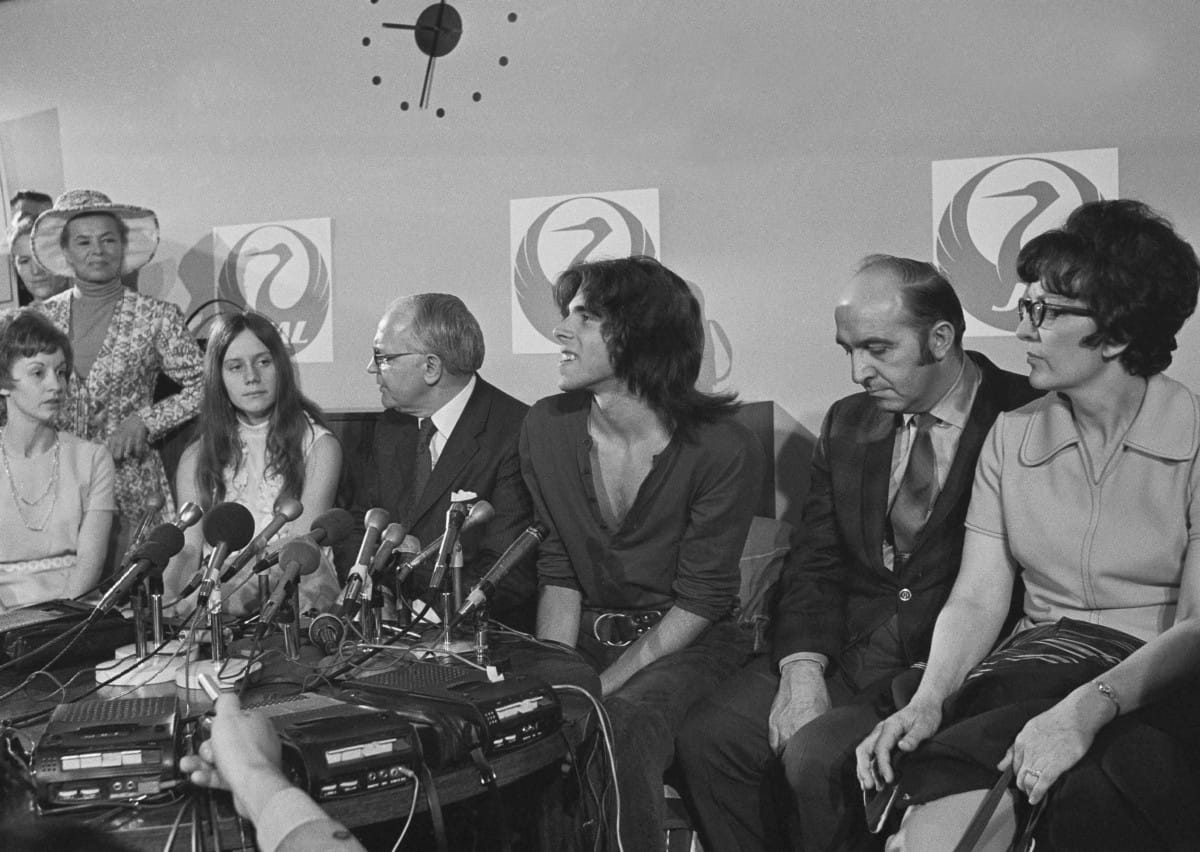
The invitation to the Americans was couched in language designed not to sound overly solicitous of China’s longtime adversary. “Considering the fact that the American team has requested several times to visit China, and that they have expressed warm and friendly feelings,” it declared, “the decision has been made that we will invite them.”
The clueless American ping-pong team was stunned to become the first U.S. delegation admitted to the PRC since China was “liberated” (被解放了) by the Communists.
“None of us knew what the shit we were doing,” remembered Graham Steenhoven, President of the U.S. Table Tennis Association, as an explosion of global media interest erupted around the invitation.
Back in Washington, U.S. officials were equally confused. They didn’t even know who these amateur ping-pongers were. As one diplomat working with Kissinger later laughed, “I mean, were there warrants for their arrest outstanding, [were] some child molesters… Who were these guys?”
It was a good question. Cowan and John Tannehill were still teenagers and outspoken members of the leftist counterculture. Cowan wore headbands and loved to smoke weed. Tannerhill was a self-styled American Maoist who promptly praised Chairman Mao as “the greatest moral and intellectual leader in the world today.”
The irony, of course, was that Zhou was not looking for American Maoist converts, but rather an opening to the very capitalist leaders in Washington that Tannehill liked to impugn.
“I don’t know whether you noticed, incidentally, but the Chinese have invited the American ping-pong team,” Kissinger told President Nixon in breaking the news.
“No!” exclaimed Nixon.
“—to visit China,” continued Kissinger. “Maybe it doesn’t mean a damn thing. On the other hand…”
It means “a lot,” interrupted Nixon.
As with the invitation, every bit of the Americans’ schedule in Beijing was carefully scripted and choreographed by Zhou.Their introduction to the Chinese people involved being presented before 18,000 PLA soldiers lined up in a stadium as the revolutionary anthem, “Sailing the High Seas Depends on the Helmsman,” blared out over the loudspeakers: “Sailing high seas depends on the helmsman, just as life and growth depends on the sun. Rain and dewdrops nourish the crops just as making revolution depends on Mao Zedong Thought.”
Zhou even fêted the team at the Great Hall of the People where Glenn Cowan, resplendent in purple bell-bottom trousers, asked Zhou what he thought of the American hippie movement.
“Youth wants to seek the truth, and out of this search various forms of change are bound to come forth,” Zhou replied evasively before grandly declaring that the American team had “opened a new chapter” in Sino-U.S. relations.
Kissinger and Nixon watched all this from Washington rapt with fascination, the latter jokingly asking visitors to the Oval Office if they’d learned to play ping-pong yet. Because of Zhou’s earlier letter, they too sensed the game-changing implications. As Kissinger recalled, “We knew that something big was about to happen, but we were baffled as to which channel would surface it and precisely what form it would take.
“At the most obvious,” he wrote, “the invitation to the young Americans symbolized China’s commitment to improved relations with the U.S. On a deeper level it reassured — more than any diplomatic communication through any channel — that the emissary who would now surely be invited would step on friendly soil. It was a signal to the White House that our initiatives had been noted.” So, in early January 1971 — just over a year after Zhou’s initial letter — Nixon sent a message back to Zhou, declaring an interest in visiting China.
‘A NEW INTERNATIONAL ORDER’
Not until April 27th did a response — in elegant handwriting — arrive back through Pakistan. “The Chinese government reaffirms its willingness to receive publicly in Peking a special envoy of the President of the U.S. (for instance, Mr. Kissinger) or the U.S. Secretary of State, or even the President of the U.S. himself for direct meetings and discussions,” wrote Zhou.
An excited Kissinger rushed to the White House to convey the news to Nixon.
“So here it was, at last, the end of one road and the beginning of another,” Kissinger later breathlessly remembered. “Zhou Enlai’s warm tone indicated we need to fear no humiliation; the peremptory tone of previous communications had been dropped.”
On May 10, Nixon responded saying he was “prepared to accept” Zhou’s invitation. It was an “extremely courageous” decision, judged Kissinger, because there was no guarantee it would be successful. Then, he and his young aide, Winston Lord, set about preparing for what they foresaw as “the most momentous journey of our lives.” “Operation Polo,” as they dubbed their initiative was done with the greatest secrecy, “so we can meet unencumbered by bureaucracy, free of the past, and with the greatest possible latitude,” explained Kissinger. As he wrote to his deputy, Al Haig, “a leak or even a hint is likely to blow everything.”
By the end of the month, their plans for a secret trip to Beijing to discuss a full presidential visit were set.
When Zhou wrote that he “warmly looks forward to meeting with Dr. Kissinger in China in the near future,” as Kissinger remembered, “it would be difficult to exaggerate the relief I felt.” Again, he rushed back to the White House to find Nixon, who was hosting a state dinner for the Nicaraguan dictator Anastasio Somoza.
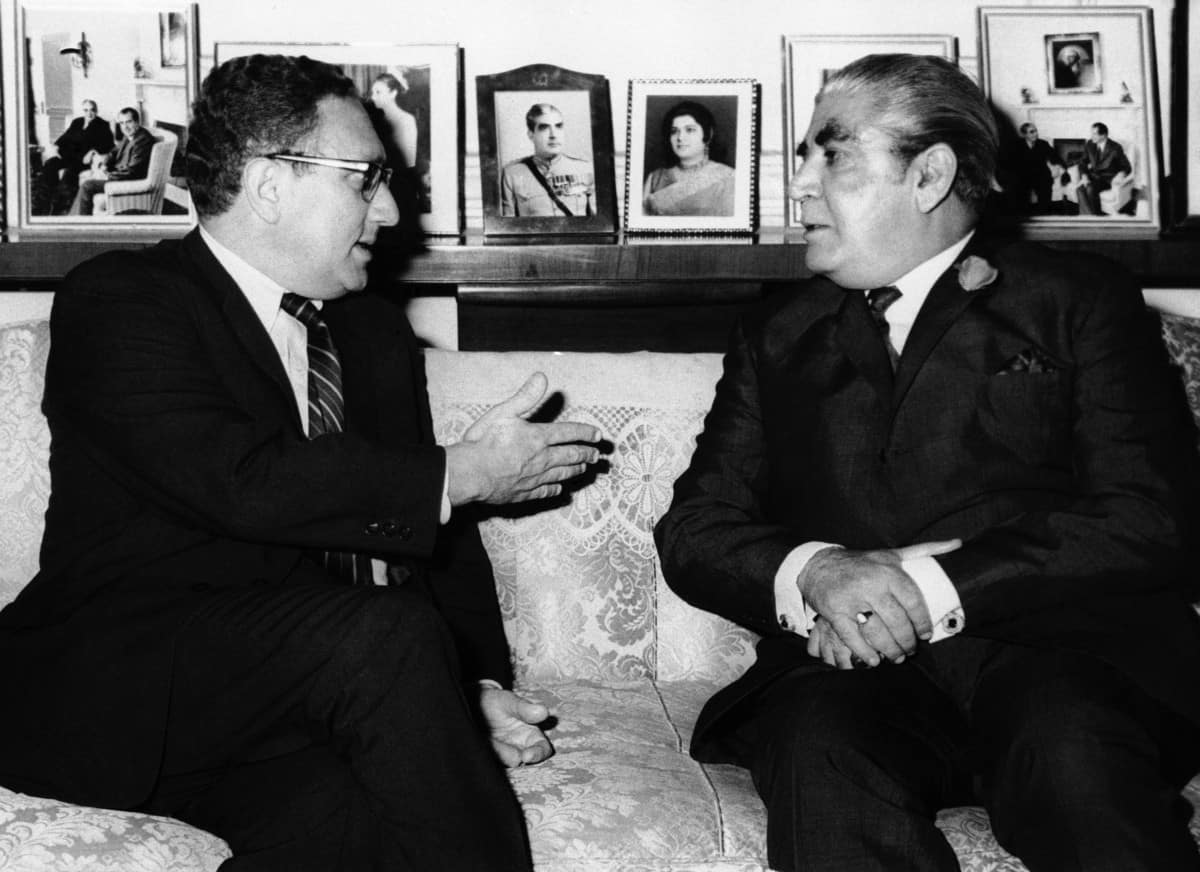
“Buoyantly [Nixon] took me to the Lincoln Sitting Room and found some brandy and two glasses and proposed a toast,” remembered Kissinger, who grandiosely reported that he was “beginning to see the outline of a new international order” emerging.
On July 8, 1971, three months after the U.S. ping-pong team’s trip to Beijing, Henry Kissinger, Winston Lord, and two other NSC officials — John Holdridge and Dick Smyser — plus two Secret Service agents arrived in Pakistan. The night before he left, Kissinger was filled with such a sense of “excitement and anticipation” that for the first time since he’d joined the White House, he had trouble sleeping.
Once in Islamabad, instead of taking a limousine to Yahya Khan’s mountain retreat as he was officially scheduled to do, a decoy was sent in his stead and Kissinger folded himself into a lowly, red VW bug at 4:00 a.m. and drove secretly to a military airport. There he and his team boarded a Pakistani International Airlines jet and took off for Beijing. Their mandate was to “discuss the circumstances which would make a visit by President Nixon most useful, the agenda of such a meeting, the time of such a visit, and to begin a preliminary exchange of views on all subjects of mutual interest.”
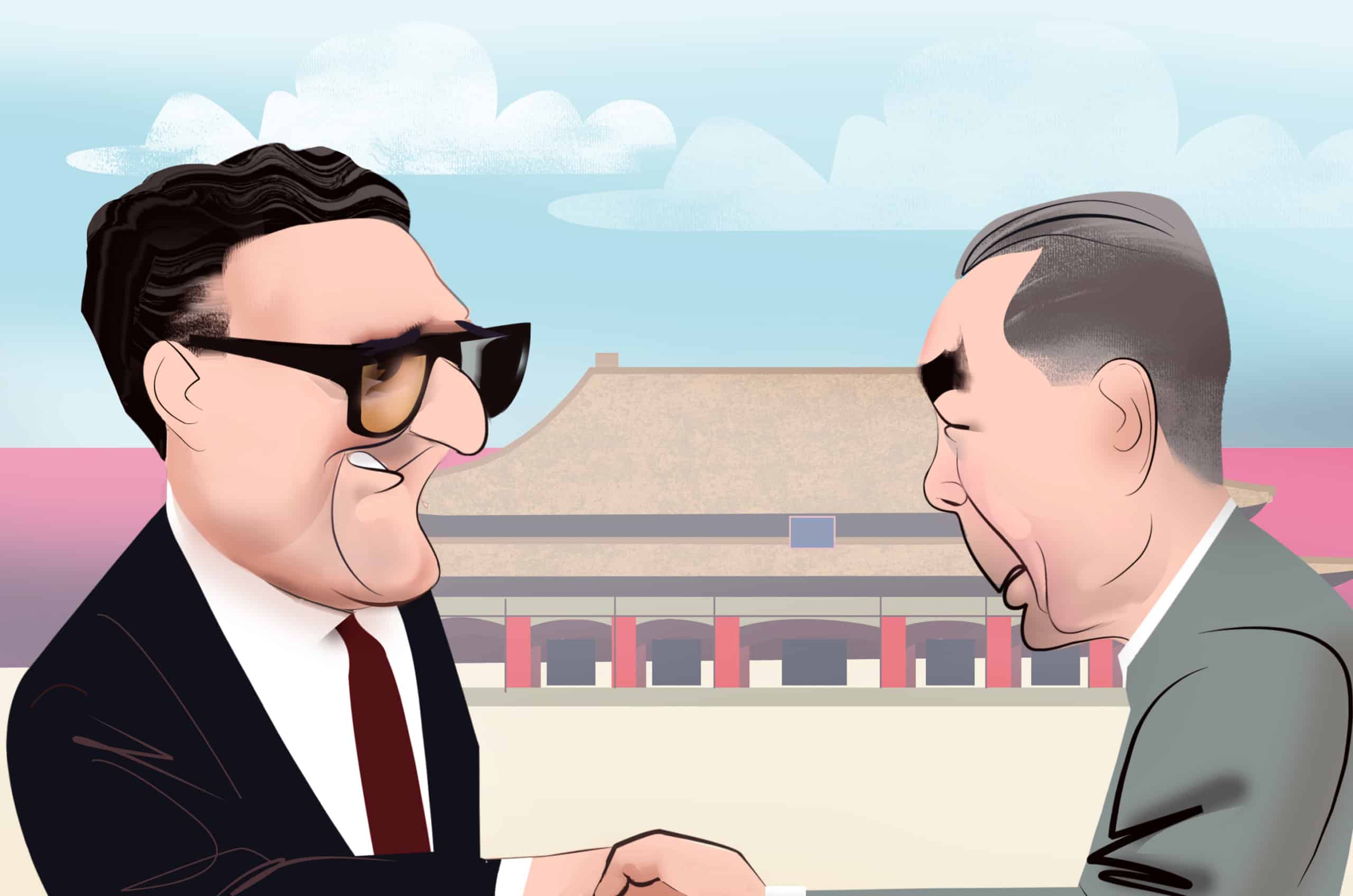
Shortly after arriving in Beijing, they met Zhou Enlai, and soon found themselves across the table from him “in easy conversation, as if there had never been a day’s interruption in contacts between our nations.” What impressed Kissinger most was the lack of “bitter invective that only yesterday had been routine in all our countries’ public discourse about each other.” In a single year, he recalled, “Sino-American diplomacy had moved from irreconcilable conflict to a visit to Beijing by a presidential emissary to prepare a visit by the president himself.” He attributed the success to “sidestepping the rhetoric of two decades and staying focused on the fundamental strategic objective of geopolitical dialogue leading to a recasting of the Cold War international order.”
“You saw just how throwing a ping-pong ball has thrown the Soviet Union into such consternation,” joked Zhou with a jaunty air of self-congratulation. But while it was the Soviet Union that brought the two adversaries together, it was the deft, opportunistic diplomacy of Kissinger and Zhou that brought the breakthrough to term. The issue of Taiwan had always stood in the way of U.S.-China negotiations, but Mao and Zhou now wanted something more immediate: a counterbalance to the threat posed by the USSR. As Mao cavalierly put it to Nixon when they finally met, “I say that we can do without Taiwan for the time being, and let it come after one hundred years.”
Lord has recently written that Mao and Zhou made some “huge concessions by kicking the Taiwan issue down the road.” Why? Because there was now something they wanted even more: ‘security against the ‘Polar Bear’ to their North.” As Lord explained, China was even willing to allow the U.S. “to maintain diplomatic relations with Taiwan; maintain our defense treaty, which Kissinger explicitly reaffirmed on Chinese soil; sell arms to Taiwan; and maintain our troops in Taiwan.” They could not, however, convince Zhou to “renounce the use of force” in the Taiwan Straits, because such a concession was for China the “equivalent to acquiescing to interference in our internal affairs.” Zhou would only promise to “strive for peaceful liberation.”
Nonetheless, Kissinger was thoroughly beguiled by the Chinese Premier, whom he described as having “a gaunt expressive face… dominated by piercing eyes, conveying a mixture of intensity and repose, of wariness and calm self-confidence.” He was, Kissinger wrote, a man who “moved gracefully and with dignity, filling a room not by his physical dominance (as did Mao), but by his air of controlled tension, steely discipline and self-control, as if he were a coiled spring.” Zhou was, concluded Kissinger, “Urbane, infinitely patient, extraordinarily intelligent, subtle,” someone who “moved through our discussions with an easy grace that penetrated to the essence of our new relationship as if there were no sensible alternative.” In Kissinger’s view, Zhou was “one of the two or three most impressive men I have ever met.” He said that his two-day visit “resulted in the most searching, sweeping and significant discussions I have ever had in government.”
Brought together by a “commonly perceived danger,” the two men spent some 17 hours in discussion on this first trip. What Kissinger understood Beijing to be seeking was “a world in which China could find security and progress through a kind of combative co-existence.” But, as he acknowledged, “the challenge of bringing together two societies so estranged by ideology was considerable.” What saved the day, he concluded, was that “neither of us had any illusion about changing the basic convictions of the other.” It was, concluded Kissinger, “precisely the absence of such illusion that facilitated our dialogue.”
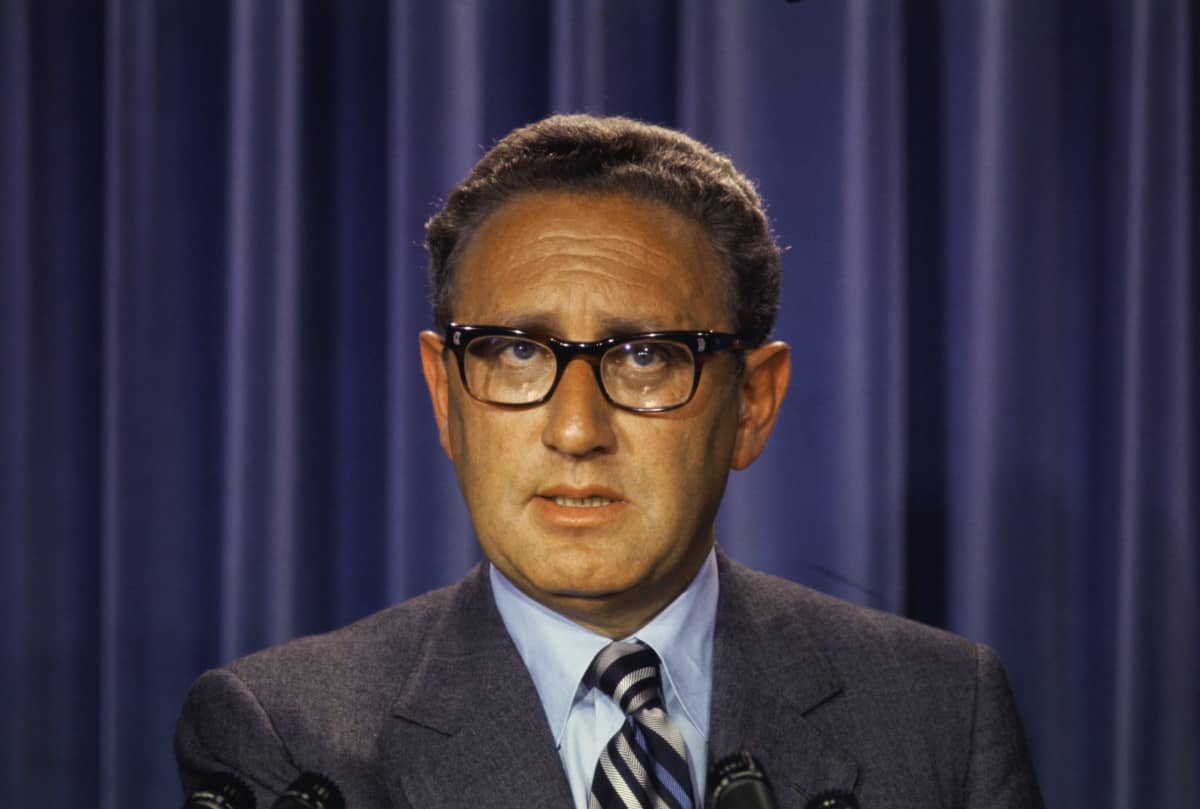
Despite a personal willingness to set political systems, values and ideology aside, however, the gulf that remained was still wide, and made inescapably obvious when, for instance, Kissinger, during a subsequent visit, had to sit through a production of “The Red Detachment of Women,” a “revolutionary ballet” favored by Mao’s ultra-left wife, Jiang Qing. He characterized it as an “art form of stupefying boredom,” in which “a girl fell in love with a tractor.”
When Kissinger later drafted his report to Nixon, “My Talks with Chou Enlai,” he did not ignore these contradictions between the two countries. “My assessment of these people is that they are deeply ideological, close to fanatic in the intensity of their beliefs,” he wrote. “Our dealings, both with the Chinese and others, will require reliability, precision, finesse. If we can master this process, we will have made a revolution.” In the meanwhile, he boasted, “We have laid the ground for you and Mao to turn a page in history.”
As Nicholas Griffin observed in his book Ping-pong Diplomacy (2014), Kissinger was “occasionally in danger of being overwhelmed by his sense of his own place in the American narrative.” And indeed, while flying back to the U.S., Kissinger seemed filled with just such an grandiose sense of his own destiny. “One of the rewards of my public life,” he remembered, “has been that in a moment, however brief in the pitiless measurement of history, I would work with a great man across the barriers of ideology in the endless struggle of statesmen to rescue some permanence from the tenuousness of human foresight.”
On July 15 — four days after Kissinger’s return — Nixon appeared on television to announce that he would visit China himself that February. A joint statement put it rather flatly: “Knowing of President Nixon’s expressed desire to visit the People’s Republic of China,” it said, “Premier Zhou Enlai, on behalf of the government of the PRC, has extended an invitation to President Nixon to visit China at an appropriate date before May, 1972.”
The nation and world were stunned by the news. “If Mr. Nixon had revealed he’d gone to the moon,” wrote The Washington Post, “he could have not shocked people more.” But no one was more surprised than officials at the U.S. State Department who had been told nothing at all about the secret negotiations.
“If Mr. Nixon had revealed he’d gone to the moon… he could have not shocked people more.”
The Washington Post, in response to news of President Nixon’s intention to visit China in 1972.
Of course, all the world now knows what ensued. Nixon went to Beijing, met with Mao, and was able to boast, with the risk of exaggeration, “We are now in the extraordinary situation that, with the exception of the United Kingdom, the PRC might well be closest to us in its global perceptions.”
It was this historic trip that planted the seeds of “engagement,” a policy that, as it evolved over the next few decades, provided an operating system for U.S.-China relations and gave the rest of the world almost half a century of relative equipoise, until China under Xi Jinping began acting with such aggressiveness and belligerence that, this May, Kurt Campbell, President Biden’s top Asia specialist on the National Security Council, officially declared what everyone already knew, “engagement has come to an end.”
“AVOIDING CATASTROPHE”
Upon arriving back in the U.S., Glenn Cowan, the American ping-ponger, had blurted out, “I think I could mediate between Zhou Enlai and Nixon quite easily.” After all, as Cowan’s own hometown paper, The Los Angeles Times had lauded, what Cowan and his teammates accomplished was something “the Paris Peace talks, striped pants and homburg hats, and the State Department couldn’t do in decades — unthaw one quarter of the world.”
Cowan’s off-the cuff boast raises a host of questions still relevant today: How easy was it to negotiate with China to bring about what Kissinger called “a seminal change in international affairs”? Did Mao, Zhou, Nixon and Kissinger discover some secret sauce? And, with Sino-U.S. relations now at another nadir, is it possible that such astute diplomacy might once again be able to create another similar breakthrough?
In reading through the endless volumes that have been written on these epic negotiations, three elements jump out as having been key to success in 1972.
First, there was, in fact, an unusual dramatis personae playing the key roles. On the Chinese side sat Mao Zedong, the volatile tyrant, who believed that “without destruction there can be no construction”(不破不立), constantly took pleasure in upending things, and saw himself as the consummate game changer. At his side was his strategically minded facilitator: the debonair Zhou Enlai who, in the words of historian Margaret MacMillan, had “a deep seated preference for what was practical over what was purely theoretical.”
On the American side sat the boundlessly insecure Richard Nixon who pined for global respect, even if it meant throwing the core of his earlier political being — anti-communism — to the winds. Then, there was his brilliant, if self-absorbed and transactional aide, Henry Kissinger, whose grandiose dreams of changing “the world order” were born from a PhD thesis done at Harvard on how the “Concert of Europe” transformed Europe and ushered forth a century of peace in 1815. While both Zhou and Kissinger were in ways superior to their bosses in intellect and cunning, both also were skilled in how to be deferential before autocratic power, sometimes even to the point of obsequiousness. Theirs was a winning and effective combination.
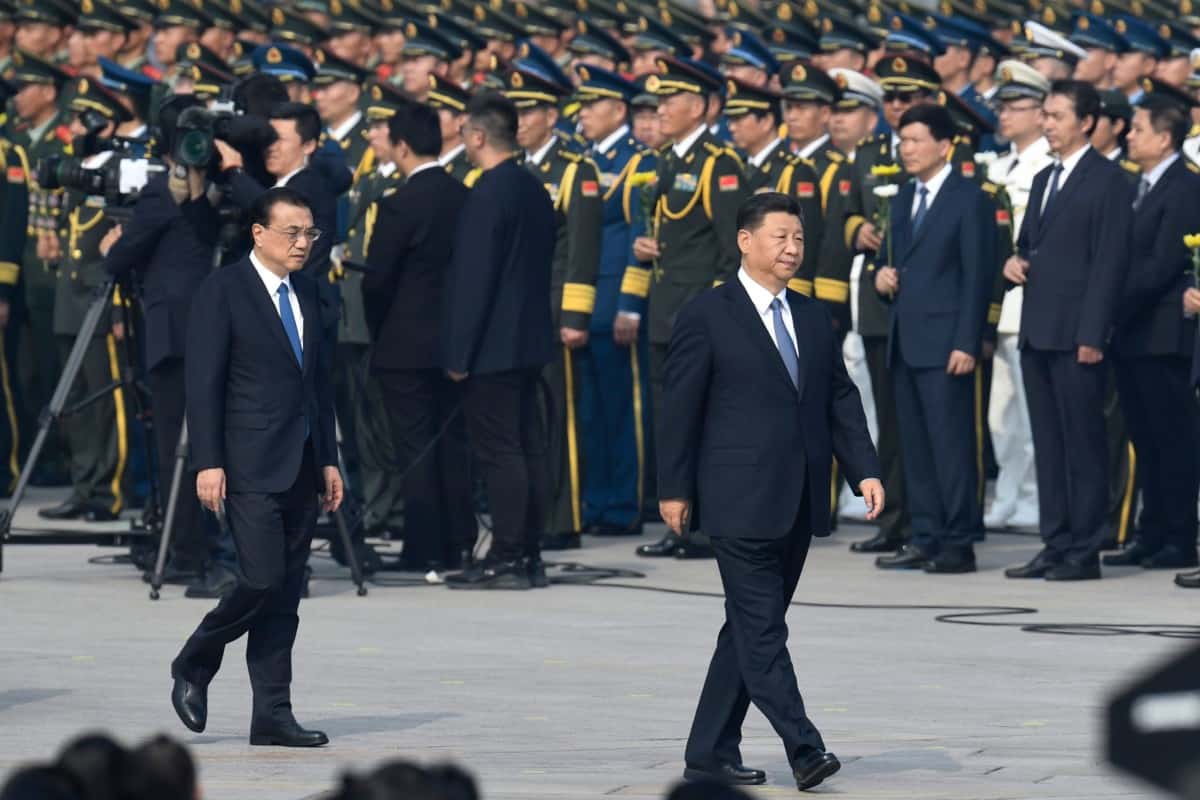
Today, we confront a very different situation in the Sino-U.S. rostrum of leaders. Xi Jinping may aspire to a Mao Zedong-scale “big leader” title, but with some Chinese netizens unflatteringly comparing his physiognomy and portliness to Winnie the Pooh, he has none of “Chairman” Mao’s heroic revolutionary credentials and little of his commanding presence. Moreover, having defoliated China’s leadership ranks of peers and emasculated even his own premier, Xi has no veteran of comparable status to Zhou Enlai upon whom he can call. Zhou once observed to Kissinger, “You probably thought the CCP has three heads and three arms. But, lo and behold, I am like you. Someone you can talk reason with and talk honestly.” Xi could not easily make such a boast.
Second, although President Biden is skilled in foreign affairs, he has become so dedicated to centering his foreign policy proscriptions — especially in U.S.-China relations — around competition between “autocracy and democracy” rather than just trade, it is difficult to imagine him being willing, or able, to set values and ideology aside and proclaiming, as Kissinger had, “It’s not our policy to subvert the government of the People’s Republic of China or its policy.” But this was perhaps the most important element that allowed the 1972 negotiations to succeed: all four men were willing to overlook the profound political and ideological differences that had fueled the Cold War. As Kissinger would patronizingly declare, no such deal could have been accomplished by liberal democrats, because they “would not have been able to bring themselves to base the relationship so explicitly on unsentimental strategic and geo-political considerations.”
Third, it is very doubtful that a new value-free “grand bargain” would ever win bipartisan support in today’s Washington or Beijing. Both American political parties now openly embrace the values and ideological differences that Nixon, Kissinger, Mao, and Zhou were so proud of being able to set aside. And we should not forget, because Beijing will certainly not, that during his first seven months in office, Biden called Xi Jinping a “thug”; reaffirmed the U.S.’s commitment to Taiwan as “rock solid;” decried Beijing’s takeover of Hong Kong and the arrests of dissenters under the draconian new National Security Law; denounced the CCP’s policies in Xinjiang as genocide; added new Chinese companies to the U.S. Entity List; and called for a more thorough investigation of the Covid virus’s origin in China.
Fourth, Xi, too, has been jousting with the U.S. over both values and political systems. In his confrontational 100th anniversary speech, he warned “foreign countries that dare to bully China will see their heads bashed bloody against the Great Wall of Steel forged by over 1.4 billion people.” At the heart of his current “wolf warrior” (狼战外交) diplomacy lies a defiant and unrepentant defense of China’s so-called “core interests” (核心利益) that include Tibet, Xinjiang, Hong Kong, Taiwan, the disputed territories on its borders with India and Bhutan, the South China Sea, and the Senkaku/Diaoyu Islands in the East China Sea. And, by proclaiming the virtues of the so-called “China option” (中国方案), Xi has, in effect, put China’s governance model forward as more effective in delivering a “good life” than liberal democracy.
Zhou once observed to Kissinger, “You probably thought the CCP has three heads and three arms. But, lo and behold, I am like you. Someone you can talk reason with and talk honestly.” Xi could not easily make such a boast.
Zhou was also able to soothe and assure Kissinger and Nixon by pledging that China “would absolutely not become a super-power.”But, under Xi, China has not only become a “superpower,” but one that is aggressively stretching its economic — and even military — tentacles around the world, launching new overseas propaganda campaigns to “tell China’s story better” (讲好中国的故事)and seeking to gain new influence of every kind. Beijing is now even seeking to silence foreign critics abroad in a punitive, extra-territorial manner. It is not an exaggeration to say that Xi’s global ambitions now far exceed even those of Mao’s. The wealth and power that China has accrued on his watch have also been impressive enough to make him believe he no longer needs to compromise with the outside world, especially with countries in the censorious “West.”
Thus, it is difficult to imagine either China or the U.S. now being able vault over their current differences to confect a latter-day version of a Zhou/Kissinger deal in which “neither side asked the other to do what its values or interests prohibited.”
The 1972 breakthrough’s other main ingredient for success was the common identification of a strategic goal both sides wanted: the isolation of the Soviet Union. With Xi now forging an autocratic alliance with the likes of Putin, Orban, Maduro, the generals in Myanmar and the mullahs in Iran, any hope of arresting the downward spiral in U.S.-China relations by ganging up against the Russians again is unlikely. Alternatively, it is equally as unlikely that the U.S. could be successful in playing the Russia card against China. And while climate change and global pandemics are truly critical challenges confronting both countries, because they lack immediacy and cannot be personified as one nation directly menacing the other, they lack the kind of nationalistic punch necessary to become galvanic, at least right now.
So, what’s left? Possibly the simple fact that our eroding relationship now threatens not only China’s immense developmental prowess and position in the world, but also the regeneration of America and the health of the entire global economic fabric. Sadly, we find ourselves once more facing a new adversarial stand-off and again, in Kissinger’s words, confronted by a “mystery to be overcome.” It is one “all people share: how divergent historical experiences and values can be shaped into a common order.” Kissinger went on to observe that “China has not forgotten that it was originally forced to engage with the existing international order in a manner utterly at odds with its historical image of itself” and that “they expect — and sooner or later will act on this expectation — the international order to evolve in a way that enables China to become centrally involved in further international rule making, even to the point of revising some of the rules that prevail.”
Now, that moment has arrived, and Xi Jinping is in no mood to make compromises that are the essence of diplomacy. Instead, he is pioneering a new kind of one-party Leninist imperium fortified by a dynamic and successful crypto capitalist economy. Once again, we find ourselves at loggerheads, in what Kissinger himself recently described as the “foothills of a new cold war.” And, as the situation becomes increasingly urgent, no one seems to have a plan of action.
Once again, we find ourselves at loggerheads, in what Kissinger himself recently described as the “foothills of a new cold war.” And, as the situation becomes increasingly urgent, no one seems to have a plan of action.
When asked recently what alarmed him most in the Asian region, Adm. Scott Swift, former Commander of the U.S. Pacific Fleet, said he feared a maritime accident that, because the two sides do not have the necessary bi-lateral mechanisms in place, could quickly escalate into a larger military conflict. An accident could readily happen as the U.S. and its allies conduct more Freedom of Navigation Operations (FONOPS) in international waters claimed by China in the South and East China seas and as China steps up air and maritime patrols and builds more island bases to defend its vast, and illegal, territorial claims in the region. Earlier this year Beijing moored more than 200 ships off Julian Felipe Reef within the Republic of the Philippines’s Exclusive Economic Zone (EEZ) and provocatively left them there for weeks. In June, the PLA flew the largest formation yet of advanced fighter jets, nuclear capable long-range bombers, and anti-submarine aircraft across the Taiwan Straits and into the island’s Air Defense Identification Zone (ADIZ). And, in the East China Sea, the Chinese Navy, Coast Guard and other maritime force vessels have significantly increased their intrusions into the waters around the Japanese administered Senkaku Islands, part of Okinawa Prefecture.
These flirtations with live conflict are precisely why we urgently need some new diplomatic efforts. Nixon’s decision to meet with Mao in 1972 did not seek to convert China’s leaders to American principles of democracy or free enterprise, because as Kissinger had judged such an exercise “to be useless.” What he and Nixon sought instead was “avoiding catastrophe.” They had been accustomed to allowing ideology to “drive the two sides toward confrontation,” but in 1972 the threat of the Soviet Union had moved the discussion from ideology to realpolitik.
President Biden has repeatedly declared that “the U.S. is back at the table.” If that is true, then even as it pushes back against China’s provocations, as it should, the U.S. must also avail itself of whatever opportunities it can to create off-ramps from the runaway erosion that now marks U.S.-China relations. Without waiting for a theatrical ping-pong moment, Biden should secretly (to avoid having domestic politics distort the process) contact Xi and declare his willingness to appoint two high-level, out-of-office, U.S. plenipotentiaries to meet with two similar Chinese counterparts of Xi’s own choosing in a third country — possibly Singapore or Switzerland. There they would be collectively deputized to spend several days exploring workable alternative scenarios for re-ordering the terms of the current Sino-American interaction.
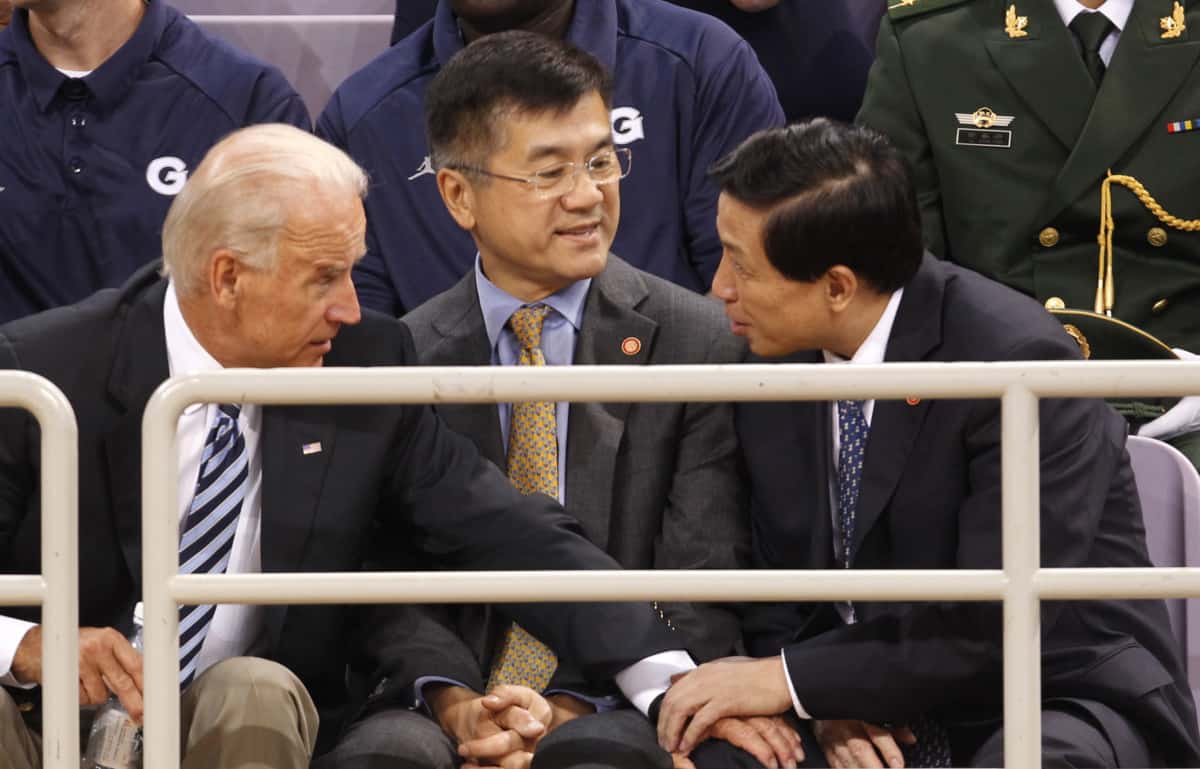
On the U.S. side, one could imagine an able team composed of former Secretary of State Condoleezza Rice and former President Bill Clinton, along with former Premier Zhu Rongji and Zhang Yesui, China’s former ambassador to both the U.S. and the UN, on the Chinese side. Once the four had met and formulated two or three new possible scenarios, they would submit them to Biden and Xi who, if they felt they had merit, would arrange a summit themselves to see if they could not arrive at some new understanding and agreement. Here, Biden has some unique assets. As vice president, he has spent considerable time with Xi on two separate trips to China. Moreover, Biden’s friendly, garrulous, just-plain-folk manner is the perfect antidote to Xi’s stiff aloofness that seeks refuge in ritual and ceremony. And finally, Biden’s conviviality may be just the thing needed to remove any suggestion of the U.S. imperiously depriving Xi of the kind of “face” that high office in China seems to uniquely demand.
Would a reprise of such Kissinger-esque negotiations work again? For reasons already discussed, they are unlikely to be successful. However, before one despairs, it is worth pointing out that the situation today is no more fraught than it was in 1972. And, if such an effort did fail this time, it would, at least, serve as a demonstration to wavering U.S. allies — who are addicted to standing in the middle, but who we need on our side — that, while the U.S. believes the China threat is real, it is also still dedicated to seeking peaceful solutions through diplomacy wherever and whenever possible. And, not to be forgotten, it almost always behooves a nation that has pretensions to global leadership to seek peaceful pathways rather than to sit idly by until a military accident cascades into a full-blown conflict.
“Any trivial event, as long as it could trigger an alliance, was likely to produce a general war,” Kissinger recently observed of the inadvertent way World War I started. “None of the leaders, who if they had foreseen the world in 1917, would have gone to war.”
And yet they did.
We would be foolish not to recognize how easily the same kind of inadvertent tragedy could happen again today, this time in Asia.

Orville Schell is the Arthur Ross Director of the Center on U.S.-China Relations at Asia Society in New York. He is a former professor and Dean at the University of California, Berkeley Graduate School of Journalism. His debut novel, My Old Home: A Novel of Exile, was published in March 2021.