As in other parts of the world, the onslaught of artificial intelligence is fueling anxiety about job security among workers in China.
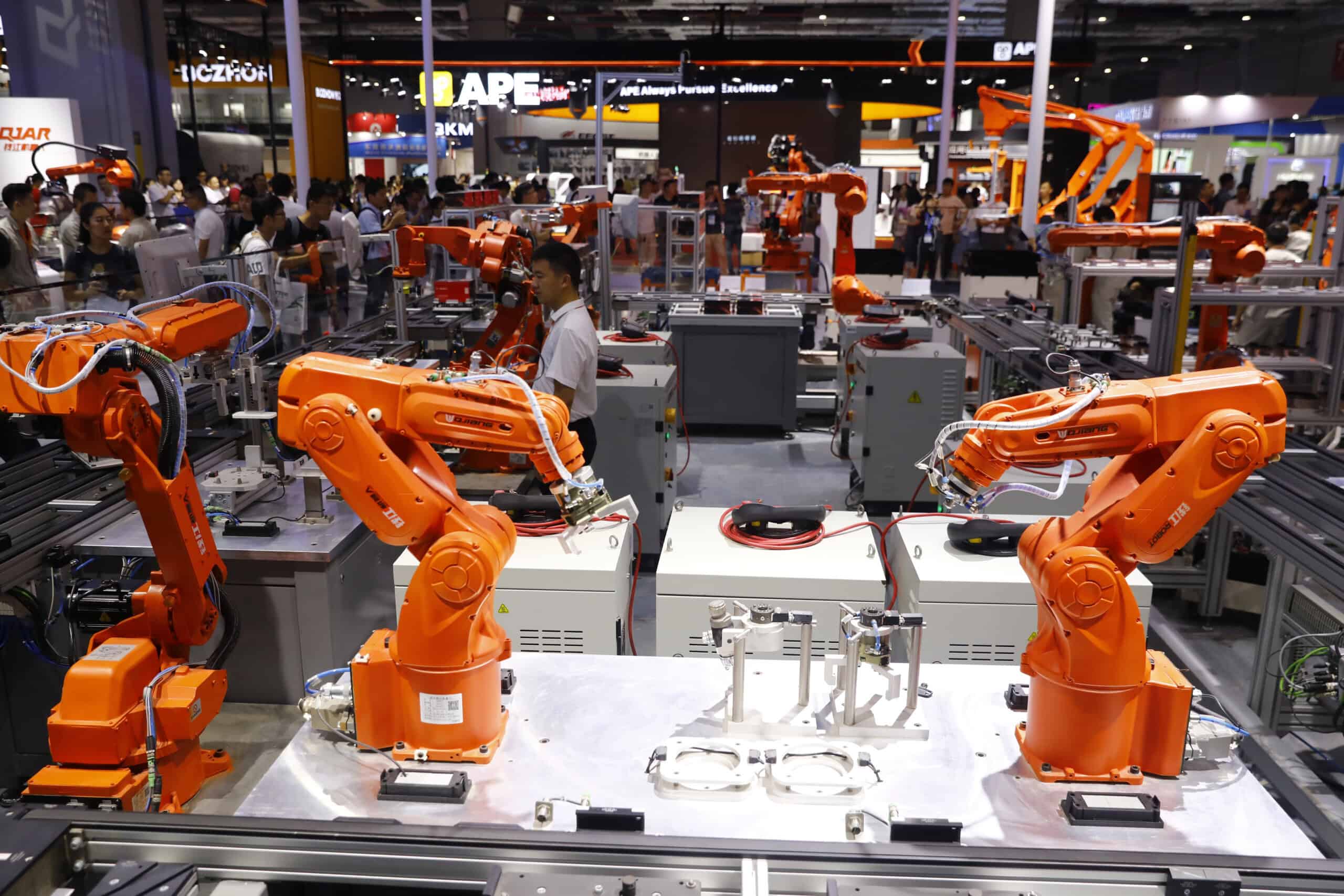
Chatbots are already substituting customer service representatives and clerks, while autonomous vehicles, drones, and intelligent machines are threatening to supplant drivers, deliverymen, and factory workers.

Some 40 percent of Chinese respondents to a survey carried out by Tencent Research Institute in September said they are concerned about their roles being replaced by AI. Tech industry bigwigs are hardly easing their anxiety: speaking at a conference in November, a senior researcher from AI startup DeepSeek warned that the technology may eliminate most jobs in the next decade.
The Chinese government’s hope is that AI will power emerging industries such as autonomous vehicles and advanced robotics, eventually producing more new jobs than the ones it replaces. The crux is how well it can manage the transition and prepare tens of millions of workers to step into new roles.
“AI may substitute some jobs, but it will also create new ones,” says Sun Zhongwei, a professor at South China Normal University in Guangzhou who studies China’s labour markets. “The key is whether the upgrading of our workforce — improving its quality and transforming people’s skill sets — can keep pace with the technological changes.”
A lot of research points to how generative AI threatens early career jobs and roles [in the service sector]. This is a challenge we see across different societies, not just China.
Nicole Wu, an assistant professor at the University of Hong Kong
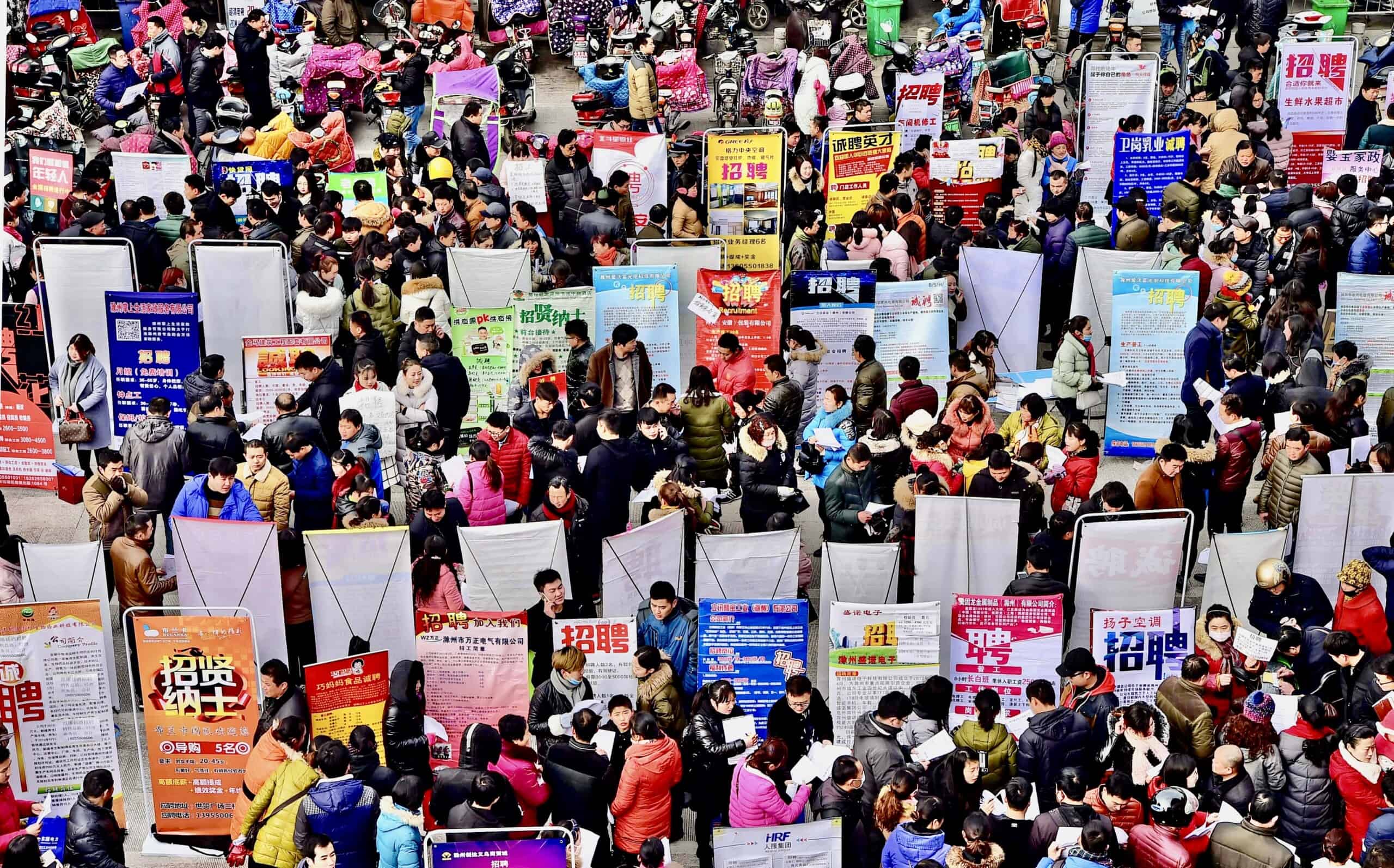
China has good reason to be concerned about AI disrupting employment. The aggressive adoption of the technology may compound what is already a brutal job market. The unemployment rate among youth aged between 16 to 24 — at 16.9 percent in November — has stayed persistently high as China’s economic growth slows, while jobs in traditional sectors such as construction are dwindling amid a prolonged property market slump.

The additional challenge for China is the sheer scale of its workforce. The country will see 12.7 million university graduates alone next year, according to the Ministry of Education — nearly three times that of America.

Ensuring high levels of employment is important for any government, but it has always been a particular concern for the Chinese Communist Party, which bases its legitimacy in large part on being able to guarantee prosperity and improving livelihoods for the Chinese people. The party is all too aware of the consequences if it fails to live up to its promise: large-scale job losses, for instance, could fuel protests and social discontent.
For now, the impact of AI on employment in China’s manufacturing sector has been limited, Sun says. Factories, he observes, are automating and looking to use AI mostly out of necessity, as young workers shun the tedious work and China’s overall workforce shrinks due to demographic factors.
Sun’s latest study, which surveyed 2,400 manufacturing workers in southern China, found that only 2 percent had been reassigned or laid off because of technological changes in the past two years.
Still, anxiety about the looming impact of AI is high. Nearly half of the workers Sun surveyed believe that their jobs could be automated in the next five to ten years. “Further automation in the coming decade will likely begin to substitute existing workers. The impact on labor will be far more substantial,” Sun says.
In 2020, even before the arrival of generative AI, a group of researchers from Peking University, Renmin University of China in Beijing and other institutions estimated that the technology could displace up to 278 million Chinese workers by 2049, equivalent to around a third of those currently employed in the country. Agriculture, manufacturing, construction, and transport would be among sectors most affected, their report concluded.
Another study, published by scholars from Central University of Finance and Economics in Beijing in 2023, estimated that 54 percent of jobs are at high risk of being substituted in the coming decades. First to go would be jobs involving routine processing work.

White collar workers may be even more vulnerable.
“A lot of research points to how generative AI threatens early career jobs and roles [in the service sector],” says Nicole Wu, an assistant professor at the University of Hong Kong. “This is a challenge we see across different societies, not just China.”
A recent study by Peking University scholars analyzed millions of job postings from 2018 to 2024 on a popular Chinese online platform and found a decline in vacancies for occupations with “high exposure to AI”. Most at risk are knowledge-based workers in professions that involve a lot of text and data processing, including accountants, editors, and programmers.
The finding “suggests that some of the job positions in such occupations are being replaced by AI, so that firms could cut new hiring,” says Li Lixing, a professor at Peking University’s National School of Development who took part in the study. He predicts that AI will lead to “a net loss of full-time, formal job positions.”
Several Chinese companies are quietly downsizing already. After a disappointing year, the search engine giant Baidu began a round of layoffs in November, cutting the size of some departments by up to 40 percent, Chinese outlets reported. Last month, Infrastructure Solutions Group, a unit of computer making giant Lenovo, axed its Shanghai unit amid a global restructuring, letting hundreds of Chinese employees go, according to Chinese media reports.
The tradeoff that the Chinese government will face is how to encourage investment in AI to compete with other global powers, but at the same time, protect the workforce, including providing a safety net to those who may fall through the cracks.
Osea Giuntella, an associate professor of economics at the University of Pittsburgh
So where else will people turn to for employment? One option is the service sector, which includes industries like banking, retail and education. It is already becoming more important as a source of jobs, providing employment for nearly half of China’s workforce in 2024, up from 42 percent a decade ago. The growing importance chimes with the experience of other countries as their economies mature: In the U.S., the service sector accounts for roughly four-fifths of all jobs.

China’s service sector has plenty of room to absorb more workers, Sun says, citing the rise of industries such as domestic tourism, beauty, and personal care.
AI is also creating entirely new roles.
“Historical experience from previous waves of technological innovation shows that when productivity rises, new tasks, jobs, occupations, and industries tend to emerge at the same time,” says Weize Huang, an associate professor at Xi’an Jiaotong-Liverpool University in Suzhou. “[For example] demand continues to grow for AI-related positions such as data analysts, algorithm maintenance engineers, and digital supply chain managers.”

Indeed, by the Chinese government’s estimate, the country is short of 5 million AI talents. In other words, China’s dilemma isn’t just finding employment for workers in its tech-driven future, but also developing enough workers with the skill sets it needs to realize its tech ambitions. The Chinese media often sums up the problem of there being “jobs without workers and workers without jobs.”
China’s State Council, its top policymaking body, acknowledged the challenge in August, noting a “structural contradiction” in the labor market and calling for measures to help people move into new roles and forms of employment. In recent weeks, the authorities have also begun stressing the need to “invest in human capital,” including more emphasis on education to produce more leading scientists.
But retraining the world’s largest workforce will take time and the transition may be painful.
“The tradeoff that the Chinese government will face,” says Osea Giuntella, an associate professor of economics at the University of Pittsburgh, “is how to encourage investment in AI to compete with other global powers, but at the same time, protect the workforce, including providing a safety net to those who may fall through the cracks.”

Rachel Cheung is a staff writer for The Wire China based in Hong Kong. She previously worked at VICE World News and South China Morning Post, where she won a SOPA Award for Excellence in Arts and Culture Reporting. Her work has appeared in The Washington Post, Los Angeles Times, Columbia Journalism Review and The Atlantic, among other outlets.