American academic Laura Murphy has become known as one of the world’s leading experts on the way goods produced in Xinjiang using forced labor enter global markets, despite U.S. and other countries’ sanctions efforts.
On Monday, the BBC and The Guardian reported that Sheffield Hallam University, the British institution where she is professor of human rights and contemporary slavery, had halted her research on supply chains and forced labor in February this year — a move she says came as a result of pressure placed on the university by the Chinese government. Sheffield Hallam last month lifted its ban on Murphy’s research and apologized to her.
In this follow up to our recent Q&A with Professor Murphy, Eliot Chen spoke to her about the circumstances around the months-long ban on her work, the potential link to her work with the U.S. government and what should be done to protect academic freedom against Chinese interference.
At the time of publishing, Sheffield Hallam had not responded to a request for comment.
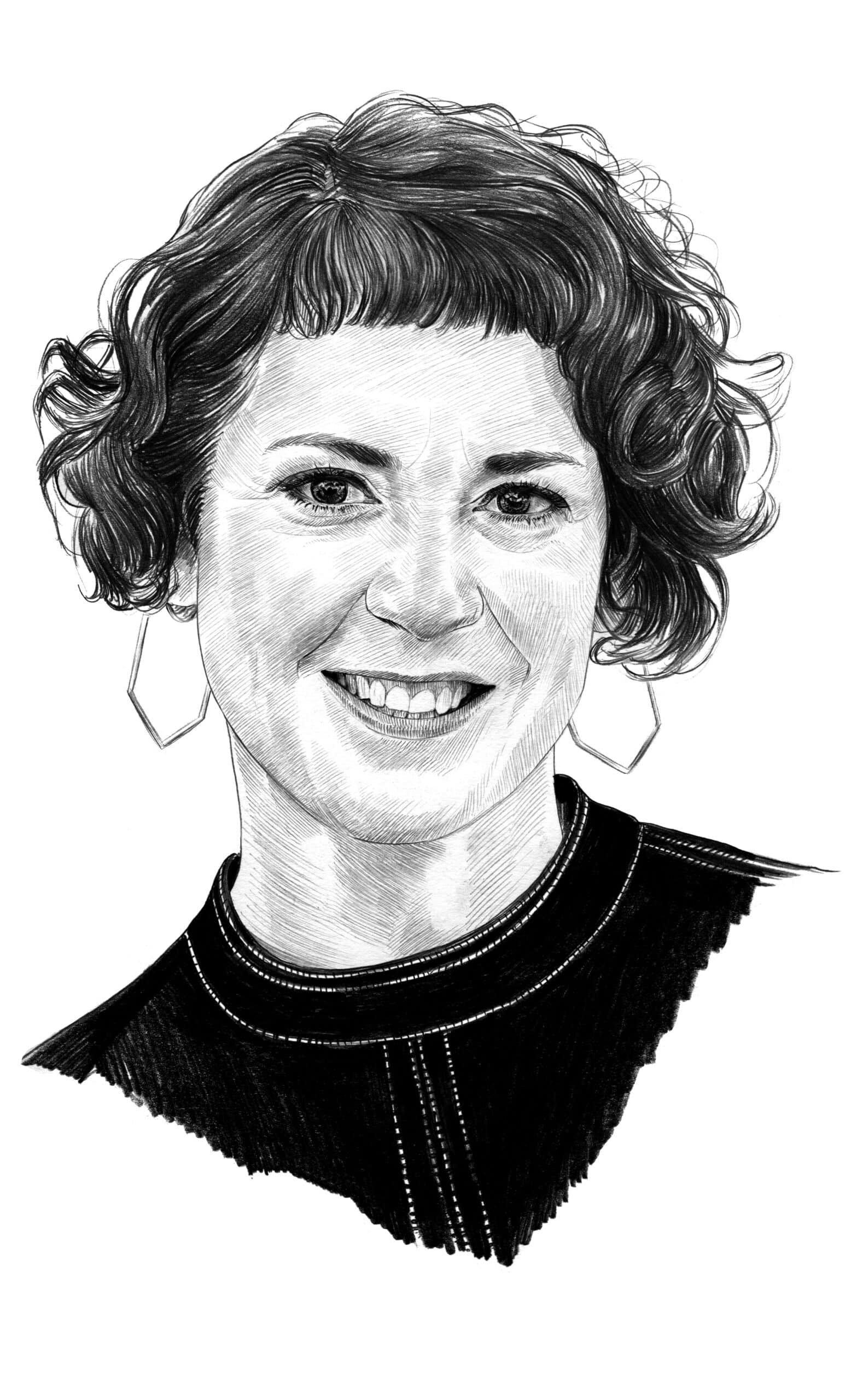
Illustration by Lauren Crow
Q: When did you first learn that the university wanted to halt your research?
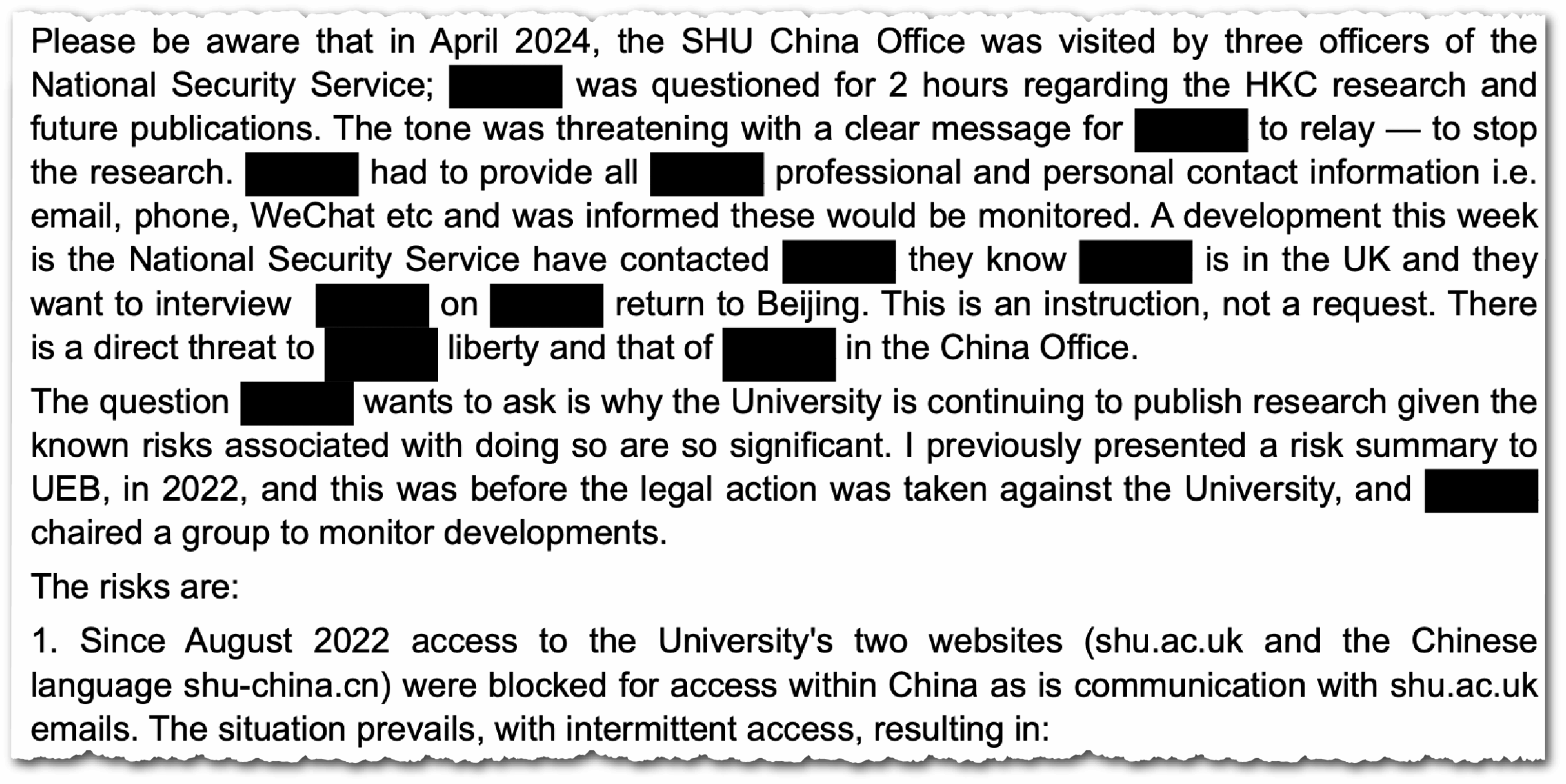
A: It wasn’t until about July or August of 2024 that the university started saying that they were going to shut down the entire forced labor lab [the research team Murphy headed]. Since the summer of 2022 Sheffield Hallam’s student recruitment office in Beijing had started to be visited by Chinese police or state security. Sheffield Hallam had rebuffed their efforts to try to silence the work of my research team for years; the university didn’t put any pressure on me to change what I was doing. They didn’t even tell me about what was going on in terms of the pressure from the Chinese government, which I think was the right thing to do; because the minute they start telling you that there’s some pressure on the university, that can have a chilling effect.
But then in April 2024, when I was still working for the U.S. government, I got word from a colleague that there had been an escalation of intimidation and interrogation at the Beijing student recruitment office [Murphy served as a senior policy adviser at the Department of Homeland Security from 2023 to 2025]. One interrogation involved a ton of questions about me personally, and about my work at DHS, and about the particular research that my team was continuing to do. That set off a series of events where the university became increasingly concerned about the continuation of our research.
Do you think it had to do with the fact that you had entered the U.S. government by then?
I really don’t know. In order to know that, I’d have to know what’s going on in the minds of Chinese officials — but it’s hard for me to imagine it’s a coincidence.
I went to work for the U.S. government in November 2023. Shortly thereafter, a Chinese company brought a lawsuit against the university. A few months later, alongside the interrogation of our student recruitment office, and [Chinese government] threats that they would cut off the university’s access to the student market if they didn’t comply with demands to silence me, there was a cyber attack on our team’s platform. Then the university’s insurance company, a couple months after the defamation suit, dropped its coverage.
All of these things happened within the course of a few months of me joining the U.S. government. I can’t say that it was necessarily because I joined the U.S. government, or whether it was perhaps because I was no longer there to bolster the university’s defenses. But it does seem an unusual coincidence that there were a number of attacks all at once.
What did the university tell you was the reason why they had stopped your research?
The university gave different reasons. They talked about the lack of insurance coverage for defamation, and a duty of care to their staff on the ground in Beijing. I’m extremely sympathetic to both of these things. These are hard to deal with, and are unfair assaults on the university’s ability to protect my academic freedom.
I went to great lengths in my spare time after work to canvas all the human rights researchers I knew — groups like Human Rights Watch — and asked them: who is your insurer? How do you protect people? I canvassed the UK Government’s different agencies that would be able to support the university; and I provided all of this to the university in a brief about the ways it could continue to protect my academic freedom, while answering the problems related to insurance and their duty of care.
Later on people [at the university] would tell me it was really hard for them to manage all of this while I was not there, which I’m also sympathetic to. And so while a lot of people were asking me at that time to go public with the fact that the university had shut down the research program, I said I wanted to wait until I was out of government — at which point I would be able to to come back and make sure we were able to continue the work.
But now that I’ve received information that I got through a subject access request [essentially a freedom of information request], I’ve learned a couple things. There are letters in the materials that suggest that administrators at the university said, ‘Oh, Laura is going to come back and try to answer the insurance problem. We need to help her understand that that’s not really all that’s up.’
…I think it’s great for them to be recruiting international students, especially from China. A diverse student body is at the heart of good learning. But we can’t have universities that are dependent on that income in a way that makes them vulnerable to foreign influence and pressure.
The documents also revealed that the university’s administrators were holding internal conversations, and doing internal reports, about the Chinese government’s blockage of the university’s website in China. Those reports consistently explained what the potential loss could be to the university’s finances because they were losing Chinese students, and that they were also concerned that the university would lose its licenses to teach classes in China. This was the context that they were discussing when they talked about the university’s engagement with China’s foreign intelligence service.
So it became clear that what I had been defending the university against was not the full picture. It really was a situation where the Chinese government told them, we will not let you advertise your services or contact your students in this country until you take her work down. There was a point where they actually said having my research on the Helena Kennedy Center’s website was the main barrier to recovering the market. Now they [the university] are trying to say that that’s not the case, but it’s right there in their own documents.
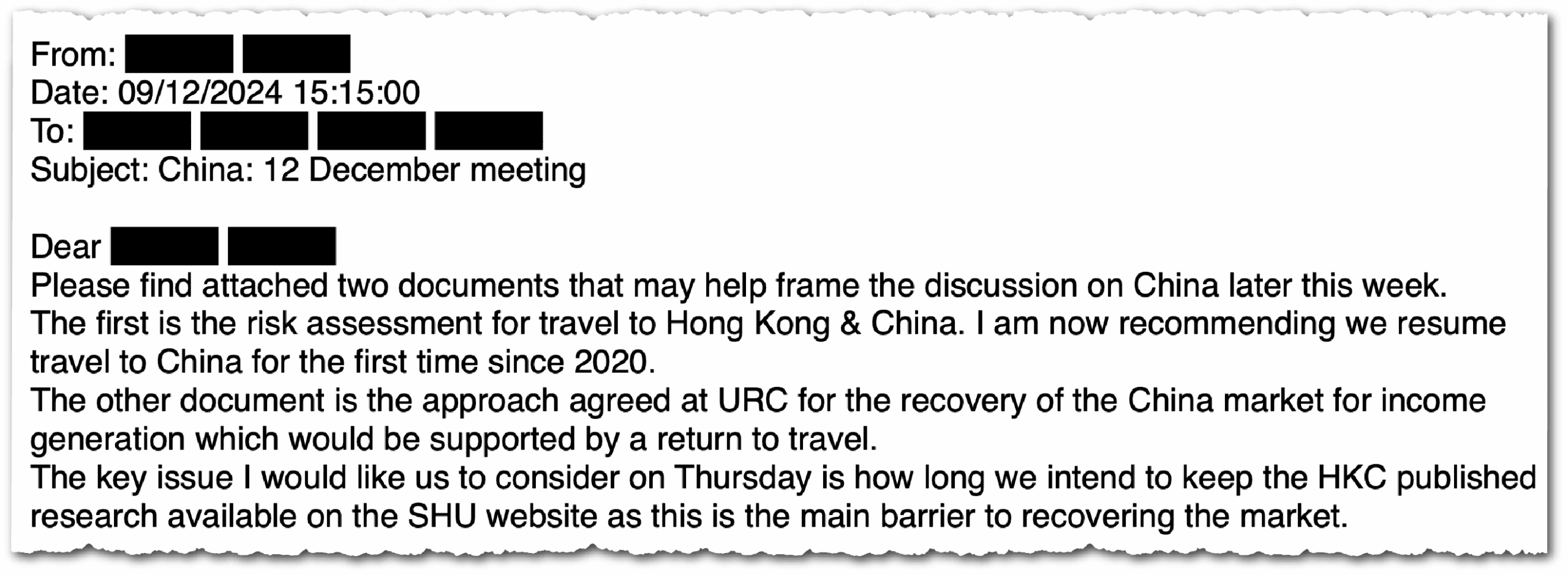
An except from internal emails at Sheffield Hallam obtained by Laura Murphy, provided to The Wire China.
It seems like the university has sought to reverse course in the last month. It has apologized to you and said you can continue to do your research. What changed in the last few weeks?
For one, I hired a law firm, and they told the university they were going to bring a lawsuit on the grounds of breach of my academic freedom. That seemed to move the university to want to change their minds.
But I think it was also in part because when the lawyers wrote to the university, they pointed to some new guidance from the UK Government about universities protecting academic freedom, which included explicit examples that were quite close to my own situation, as well as clear directives for universities to protect academic freedom in the face of foreign government interference. I think that really struck them, because a new law came into force in the UK in August this year that carries much greater penalties and includes policies on what universities are required to do to protect academic freedom.
Will you remain at Sheffield Hallam and continue doing research on Xinjiang from there?
I am right now. My intent is to pursue some research projects on forced labor in the Uyghur region that are of utmost national security importance, including on advanced and green technology. I’m glad to learn from the university that they’re ready to support that work, but I am cautious. I guess I’m a little nervous about what they’re going to do if the Chinese government comes back and complains again.
What are your takeaways from this experience on the state of academic freedom in the UK?
I know that I’m not alone. I’ve heard from people all over the UK, who work on China in particular, that they are suffering maybe subtler versions of this kind of pressure, but certainly feeling the pressure and a chilling effect on their work.
I am optimistic that the UK Government is very serious about trying to get a handle on this. The Department of Education has issued guidance on what to do to protect academic freedom and they’ve been actively trying to figure out how to best support universities. What they need to do, first of all, is to make it absolutely clear that it is prohibited for a university to engage directly with a foreign intelligence service or police. And there should be a confidential mechanism for universities to report this kind of interference and influence to the government, so that they don’t have to be public about it, and so they don’t have to run into any problems with the Chinese or other governments and can hand off the responsibility to the UK Government to intervene directly on their behalf. That would protect the entire sector and put universities in a situation where they’re not able to be picked off one by one.
The real crux of the problem is that the UK higher education sector is wildly underfunded. Universities like Sheffield Hallam are in a deep financial crisis, and are looking around to figure out how they can raise revenue. To be clear, I think it’s great for them to be recruiting international students, especially from China. A diverse student body is at the heart of good learning. But we can’t have universities that are dependent on that income in a way that makes them vulnerable to foreign influence and pressure.
Eliot Chen is a former staff writer at The Wire. Previously, he was a researcher at the Center for Strategic and International Studies’ Human Rights Initiative and MacroPolo. @eliotcxchen