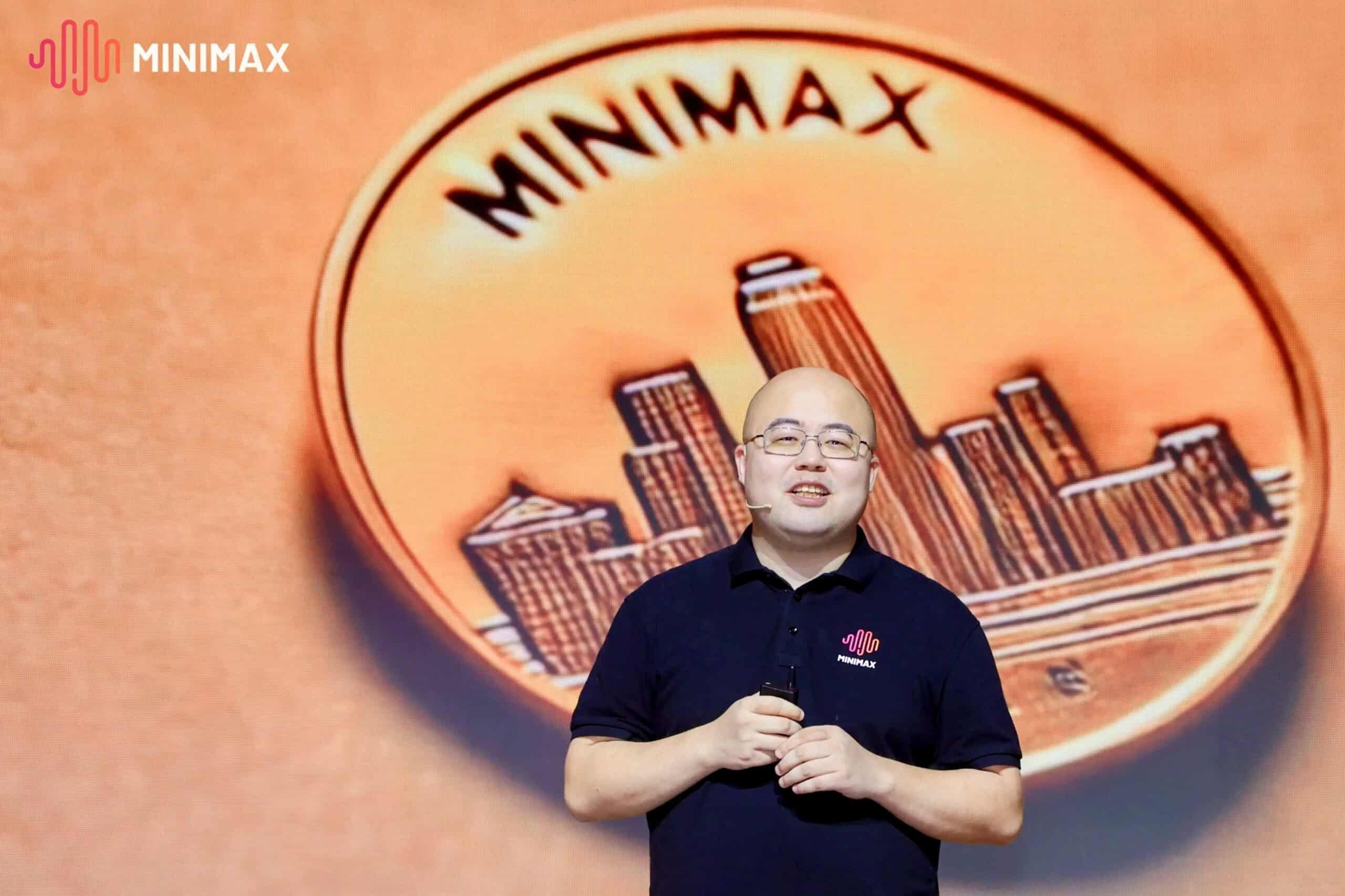
For a brief moment in January, a new wave of start-ups seemed to hold the future of Chinese artificial intelligence in their hands. The DeepSeek splash sparked a wave of interest in these so-called AI tigers — seven privately-held firms then worth over $1 billion.
In the months since, China’s established internet giants such as Alibaba, Bytedance and Tencent have doubled down on AI and their own large-language models. Many smaller firms have meanwhile reduced their ambitions to focus on specific industries.
Not all of the so-called tigers have given up their LLM dreams. Last month Minimax, a Shanghai-based start-up best known for its apps, snuck into the top tier of Chinese AI models on international benchmark LMArena.

Source: LMArena
In a June online event the company dubbed “Minimax week,” it debuted several new products, including a reasoning model — trained on 512 Nvidia chips — that it says rivals the DeepSeek model that shook U.S. notions of AI leadership. Minimax is now set to capitalize by filing to go public in Hong Kong later this year, the Wall Street Journal reported on Wednesday, citing unnamed sources.
The Wire is periodically highlighting China’s AI unicorns. We’ve previously looked at Zhipu AI, Baichuan, and StepFun. This week: Minimax.
SOURCING FROM SENSETIME
Yan Junjie, a former executive at software firm SenseTime, spent 2021 raising money for a new venture, founding Minimax in December of that year. That same month, the United States sanctioned his former company for its ownership of a subsidiary that used facial recognition software to identify ethnic Uyghurs, a persecuted Muslim group in western China. (SenseTime denies wrongdoing.)

Yan had joined SenseTime shortly after receiving his PhD from the Chinese Academy of Sciences Institute of Automation in 2015, eventually rising to vice president of research and development. He brought several SenseTime colleagues with him to Minimax, including algorithms guru Zhou Yucong and operations executive Yun Yeyi.
“We were founded before ChatGPT came out [in November 2022], and most companies were founded after that. This is the core difference [between Minimax and other Chinese AI firms],” Yan said in an interview last year with LatePost, a Chinese financial media site.
One of the company’s first products was an app called Glow, released in October 2022, which let users in China chat with virtual characters. Chinese regulators excised it from app stores the following March; industry players speculated the removal was due to the proliferation of sexually explicit material on the platform. An official reason has never been given.
Minimax bounced back in June 2023 when it launched Talkie, another virtual conversation app. It targets a global audience with AI versions of celebrities like Taylor Swift and Elon Musk. The app has garnered some 16 million downloads worldwide, according to market intelligence firm Sensor Tower.
Talkie is likely the main driver behind Minimax’s turnover, which Pitchbook estimates at $70 million last year. The app brings in revenue from advertisements, in-app purchases, and paid subscriptions. Its global number of monthly active users nearly doubled year-over-year through June to about 11 million, though growth has since tapered, Sensor Tower data shows. The firm estimates that the United States makes up a quarter of Talkie’s audience, but that the number of U.S. users fell 5 percent year-over-year through June.

Hailuo AI, Minimax’s video generation platform, has also won many fans in the United States. In April it hosted a film hackathon at New York University. More than 220 applicants submitted 2-minute movies made with the tool over the course of 24 hours. Many focused on “cyberpunk” futures, says Gabriel Barcia-Colombo, an artist and NYU professor who judged the competition.
Barcia-Colombo says Hailuo is on par with rival platforms like Runway ML and Google’s Veo. “We’re at a stage where they’re all very similar,” he adds. “It really comes down to the person using it rather than the tool.”
But like many products developed by Chinese companies, Hailuo is cheaper. “They’re the most cost-effective tool on the market,” says Kavan Cardoza, a Los Angeles-based director of AI films. “Their 2.0 model has blown my mind.”
Minimax’s other offerings include a chatbot and the newly released deep reasoning model, which can answer more complex prompts. The company began releasing its models as open-source, or with their codes freely accessible, after DeepSeek popularized the approach. “If we had to start over, we would have gone open-source on day one,” Yan said in February.
At a time when many of his domestic competitors seem more focused on technological advancement, Yan stands out for his simultaneous focus on the bottom line. “I think the most important thing in the short term is the progress of AI technology,” he told China Entrepreneur last year. “But it is useless to have good technology alone.”
CAYMAN CONNECTION
Minimax’s most recent funding round last week valued the company at around $4.2 billion, according to data provider S&P Capital IQ. The $300 million round included the State-owned Assets Supervision and Administration Commission of the Shanghai Municipal Government. The company previously raised backing from Alibaba, Tencent, and several prominent venture capital firms.

The exact stake each investor holds, however, is unclear. Minimax controls its mainland operations through a Hong Kong holding company, which in turn is owned by an entity in the Cayman Islands, an offshore finance haven.


Noah Berman is a staff writer for The Wire based in New York. He previously wrote about economics and technology at the Council on Foreign Relations. His work has appeared in the Boston Globe and PBS News. He graduated from Georgetown University.