Germany’s New China Strategy: Ambitious Language, Ambiguous Course
Germany is still struggling to find the right balance between business and politics — and between national and European interests — in its approach to China.
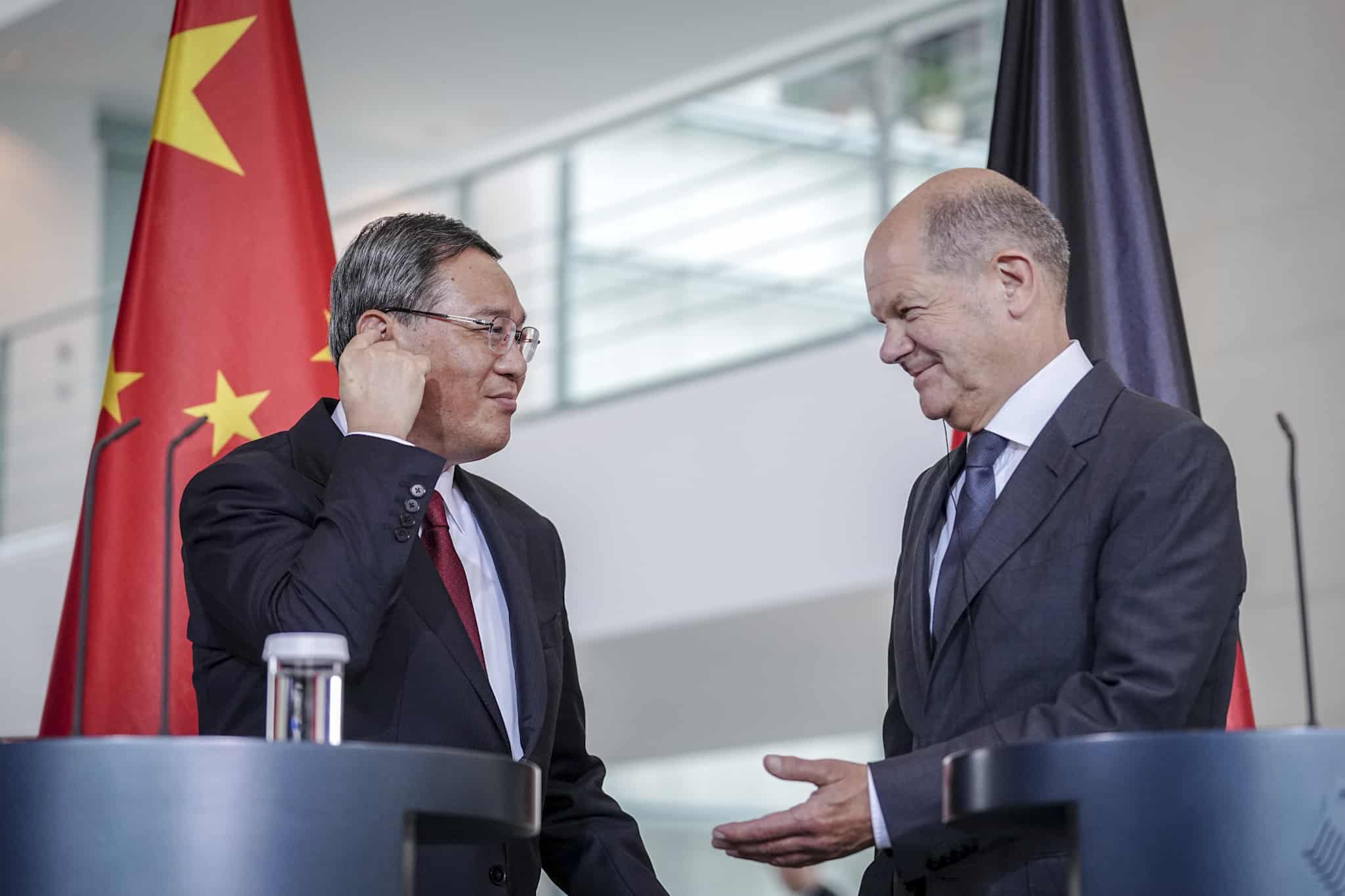
Li Qiang, Premier of China, and German Chancellor Olaf Scholz, at the end of their press statement at the German Chancellery, Berlin. June 20, 2023. Credit: Kay Nietfeld/picture-alliance/dpa via AP Images
Germany’s policy towards China has always been strongly driven by business interests. That has resulted in some impressive figures. More than 5,000 German companies operate in China, employing more than one million staff, while for German carmakers like BMW, Volkswagen and Mercedes Benz, the country is the most important market, with roughly every third of the cars they produce being sold there. Other industries, including electrical engineering and chemicals have major interests in the worldâ
Exclusive longform investigative journalism, Q&As, news and analysis, and data on Chinese business elites and corporations. We publish China scoops you won't find anywhere else.
A weekly curated reading list on China from Andrew Peaple.
A daily roundup of China finance, business and economics headlines.
We offer discounts for groups, institutions and students. Go to our Subscriptions page for details.
Fish farming in Xinjiang is being sold as proof that technology can overcome geography. The reality is more complicated: a desert seafood boom built on political control, imported feed and a food system that masks its real burdens.
The foreign correspondent describes meeting with the Uyghurs from Xinjiang who played a key role in the Syrian civil war, but who now find themselves potentially stateless.
Corporate Risk Intelligence for National Security, Compliance & Due Diligence
We use cookies to ensure that we give you the best experience on our website. If you continue to use this site we will assume that you are happy with it.