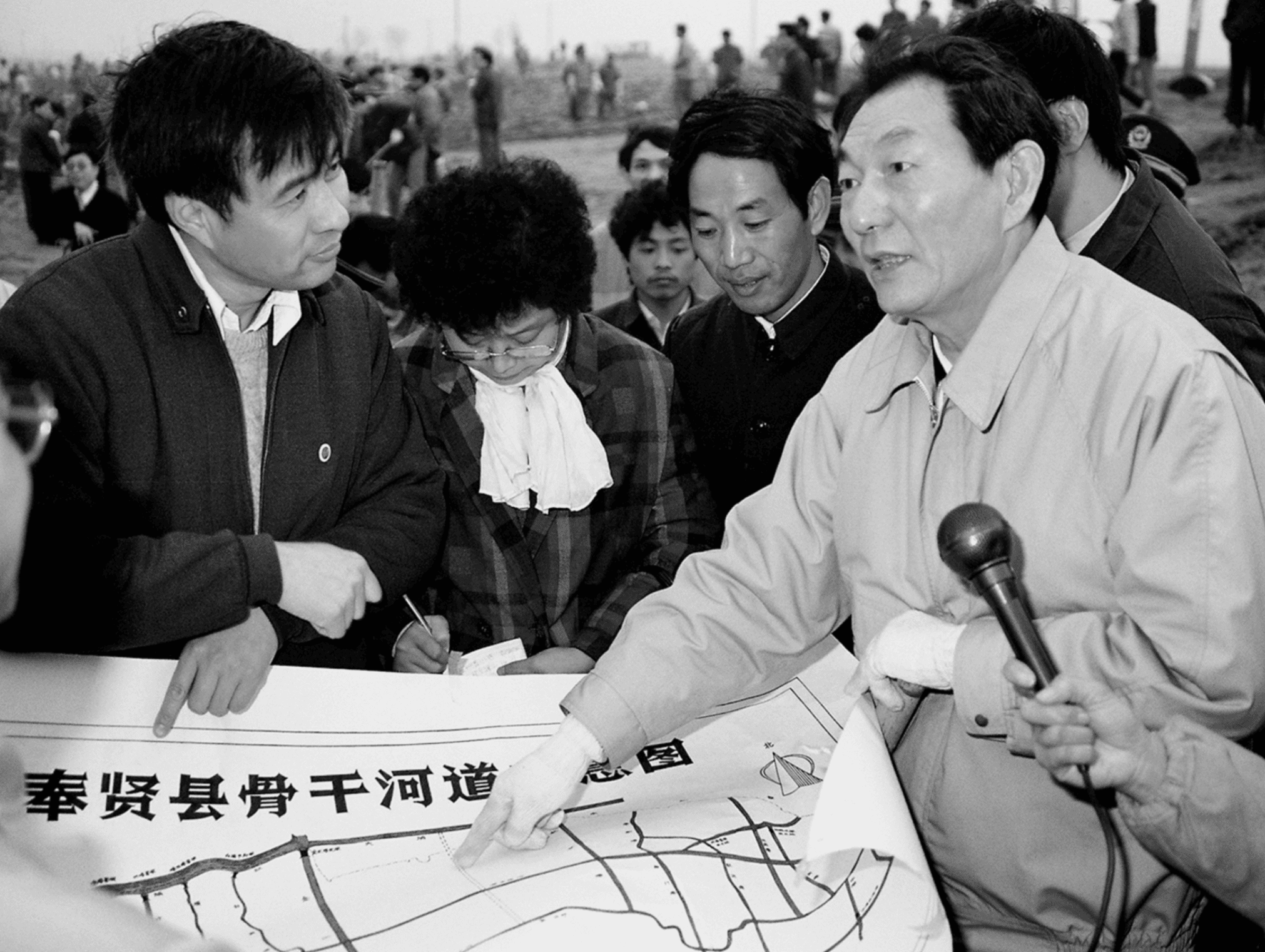
In early 2022, when people in Shanghai experienced the unexpected ordeal of a draconian COVID-19 lockdown, a number of articles about Zhu Rongji went viral on Chinese social media. Most of these reminisced about the “good old days” when Zhu was the city mayor in the late 1980s and how effective he had been at solving local problems. But Zhu was more than a capable local Communist Party official. He was China’s economic tsar, a statesman, somebody who knew how to get things done. Deng Xiaoping was prescient enough to include him in the central leadership in 1992 and put him in charge of managing some of the hardest and most important economic reforms. Looking back at these reforms in the 1990s that catapulted China to global center stage, we should recognize Zhu as their master architect.
Of all the reforms Zhu oversaw, the most critical was fiscal recentralization. Without it, Beijing would not have been prepared to pursue other, even more challenging, changes such as the SOE reform and to withstand the 1997 Asian financial crisis. As vice premier in the early 1990s, Zhu was acutely aware of the fiscal challenge facing the central government and what it meant for the country’s long-term economic and political stability. In his own words in 1993, “The central government’s finances are in very poor shape, to the point of being unsustainable… If we don’t suitably centralize revenues… we won’t be able to get by.”
We know that, in the end, Beijing did get by. It successfully recentralized over taxes. The center’s share of government revenue increased from just 22 percent in 1993 to well over 56 percent in 1994. Fiscal recentralization also halted a seventeen-year decline in China’s revenue-to-GDP ratio, caused in large part by the localities maximizing their fiscal surpluses. Overall, the reform greatly strengthened the center’s as well as the country’s fiscal capacity.
When we consider just the budgetary revenue and expenditure part of the story, recentralization inevitably made localities worse off. Not only did their revenue share experience a blow, but localities even saw their share of total expenditures continue to grow. Also unabated was the practice of the center issuing unfunded mandates, for example, central construction blueprints that localities were required to fulfill without central budgets.
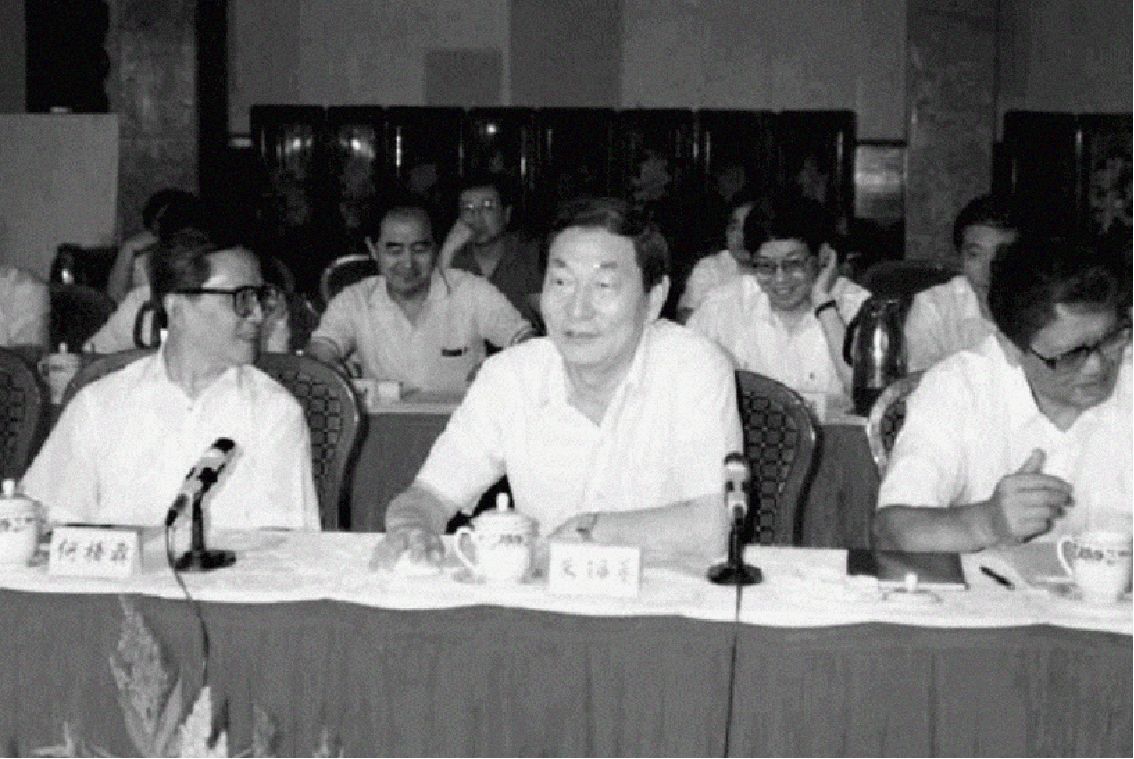
But Zhu Rongji did not simply come up with a new revenue division target and go ahead with just that. Instead, before pulling the recentralization trigger, he planned carefully and bargained hard. After the politburo passed on the initial proposal for fiscal recentralization, Zhu embarked on a long work trip. Leading a team of seventy central bureaucrats from the State Council, he visited seventeen provinces in ten weeks, explaining to the provinces one by one why the reform was imperative for the country. But exhortations would hardly be enough; he also laid out a new central-local pact that would compensate localities for their tax losses.
Localities initially still resisted fiercely, regardless of what Zhu promised. Some even explicitly warned the vice premier that fiscal recentralization would dampen “local enthusiasm” for growth. The most vehement resistance came from the rich provinces that had benefited the most from the old fiscal arrangement. Guangdong, the poster province for Chinese reform, was the best case in point. It was also Zhu’s first stop, where he “crossed swords” with local officials at three meetings. In Zhu’s own words, initially the Guangdong government “wouldn’t give an inch.” Did Zhu fire the local officials? No, he did not. That would have been a clumsy exercise of authoritarian power. Instead, he cajoled and appeased.
In addition to promising using fiscal transfers to help localities close the revenue-to-expenditure gap, Zhu offered much more. First, he promised localities that Beijing would not inquire into their overall revenues and expenditures; Zhu called these “private secrets” (yin si) and stated explicitly that the center cared only about its own revenue. Second, after fiscal recentralization, local governments could spend their money “however they saw fit,” giving them total spending autonomy. This explains why Beijing did not start to audit the localities until 2013, when local government debt became an increasingly prominent economic challenge.
…giving localities new resources to tap after fiscal recentralization made political sense at the time. Any pact is a trade-off, be it fiscal or not, and nothing was more urgent back then for Beijing than getting the fiscal system fixed.
Most importantly, Zhu gave local governments the green light to set up their own banks. This lay at the heart of the new central-local pact. The proposal first appeared during the 1993 national conference on economic work, held after Zhu’s seventy-day cross-country tour. With all provincial and municipal party heads in attendance, Zhu further defended the fiscal recentralization plan. He argued that the center was only “clearing up and rectifying some things that [had been] decentralized against the rules” and “reclaiming the fiscal powers of the center that had been chipped away by the localities.” Zhu’s concern was well founded. For example, from January to September of 1993, local revenues grew by 18 percent, in sharp contrast to only 0.9 percent growth in central revenues. “Without reform, there will be no way to ensure the central government’s tax revenues,” stated Zhu. Zhu played the banking card:
We [the center] haven’t altered the local’s ability to exert economic control… we are currently planning to set up urban cooperative banks, and this is also intended to promote local economic growth… We must align our thinking… draw up reasonable lines of demarcation for [the] economic management powers of the central government and the locals, and give full play to the enthusiasm of both the central government and the locals… we [central government] must give the locals the necessary power… so that they can fully utilize local resources to promote economic and social development in their own regions [after the 1994 fiscal reform].
Those who study banking and Socialist economies will immediately raise their eyebrows: Surely, letting local governments enter banking is a terrible idea because local officials will abuse the banks for their own interests. This is a legitimate concern, but it misses the point. Zhu knew this, too. Nevertheless, giving localities new resources to tap after fiscal recentralization made political sense at the time. Any pact is a trade-off, be it fiscal or not, and nothing was more urgent back then for Beijing than getting the fiscal system fixed.
Not only did Zhu have to placate local officials, but he also needed to convince the central monetary bureaucrats that it was all right for localities to enter banking. At the time, Zhu was also the president of the central bank. On August 15, 1994, the same year of fiscal recentralization, Zhu told central bankers that they need not “fear” local governments running their own banks: “It is not the same as allowing them to intervene [in] these new banks freely… they [the new banks must still operate according to [the] regulations of the central bank.” Zhu concluded by saying, “I’ve been hinting at a ‘big move’ in our banking reform — that is, setting up local banks.”
Zhu kept his word. Banks proliferated in China right after 1994. As we will see, the center’s appeasement strategy accidentally gave rise to a much more diversified and competitive banking market, albeit a market still within institutional bounds of the party-state. The new banks, with local governments at their helms, became ferocious competitors with the Big 4, forever changing the industrial landscape of Chinese banking and generating hitherto understudied but important downstream consequences.
More Centralization, More Local State Banks
Beyond 1994, other centralizing reforms further necessitated and facilitated China’s banking market diversification. The two most noteworthy were the 1996 reform of extrabudgetary revenues and the 1998 Big 4 bank reform. Both continued to harden local budget constraints.
The 1994 fiscal reform did not entirely end the local extrabudgetary revenue problem — that is, the money local governments could keep to themselves. Such revenue continued to grow after 1994 and became the target of further central control. This time, the center focused on the profits remitted and the fees paid by collective enterprises and classified as townships’ “self-raised funds.” In some localities where collective enterprises dominated the local economy, such funds could account for at least half of local revenue. In 1996, Beijing issued a directive asserting unprecedented control over local extrabudgetary revenues: All such funds became public and were no longer proprietary resources at the discretion of local governments. Now, it would be illegal for local governments to draw levies freely from their enterprises without central or provincial governments’ knowledge.
Another big blow to local finance was the 1998 reform of the Big 4’s personnel management system. Why was this the case if the big banks were centrally owned? Before 1998, localities had the power to veto the appointment of local Big 4 managers and were thus able to substantially influence their lending decisions. But Beijing took this institutional privilege away in 1998. It transferred local Big 4 managers’ personal dossiers (ge’ren dang’an) — institutionalized personal résumés maintained by the party-state that track and evaluate people’s careers from cradle to grave — from local party organization departments to the Big 4’s headquarters.
The Big 4 reform was a big success. Local influence over the banks ended. For example, when the Xi administration began to push for reducing investment in sectors with excess capacity, local Big 4 branches immediately reacted by cutting loans to them. Rather than ordering the Big 4 to keep lending, because they couldn’t, provincial leaders flocked to Beijing to persuade the banks’ bosses not to abruptly stifle lending (chou dai). Of course, this might be hardly surprising in a new era when political centralization has reached a new zenith. But even as early as 2008, when Beijing introduced the RMB 4 trillion stimulus package — to which localities had to contribute a big portion — some local Big 4 managers showed clear defiance and refused to lend to local government projects that the managers deemed too risky.
The center needs to maintain economic control and discipline but also simultaneously sustain local incentives and wherewithal for development. These two objectives are clearly in tension.
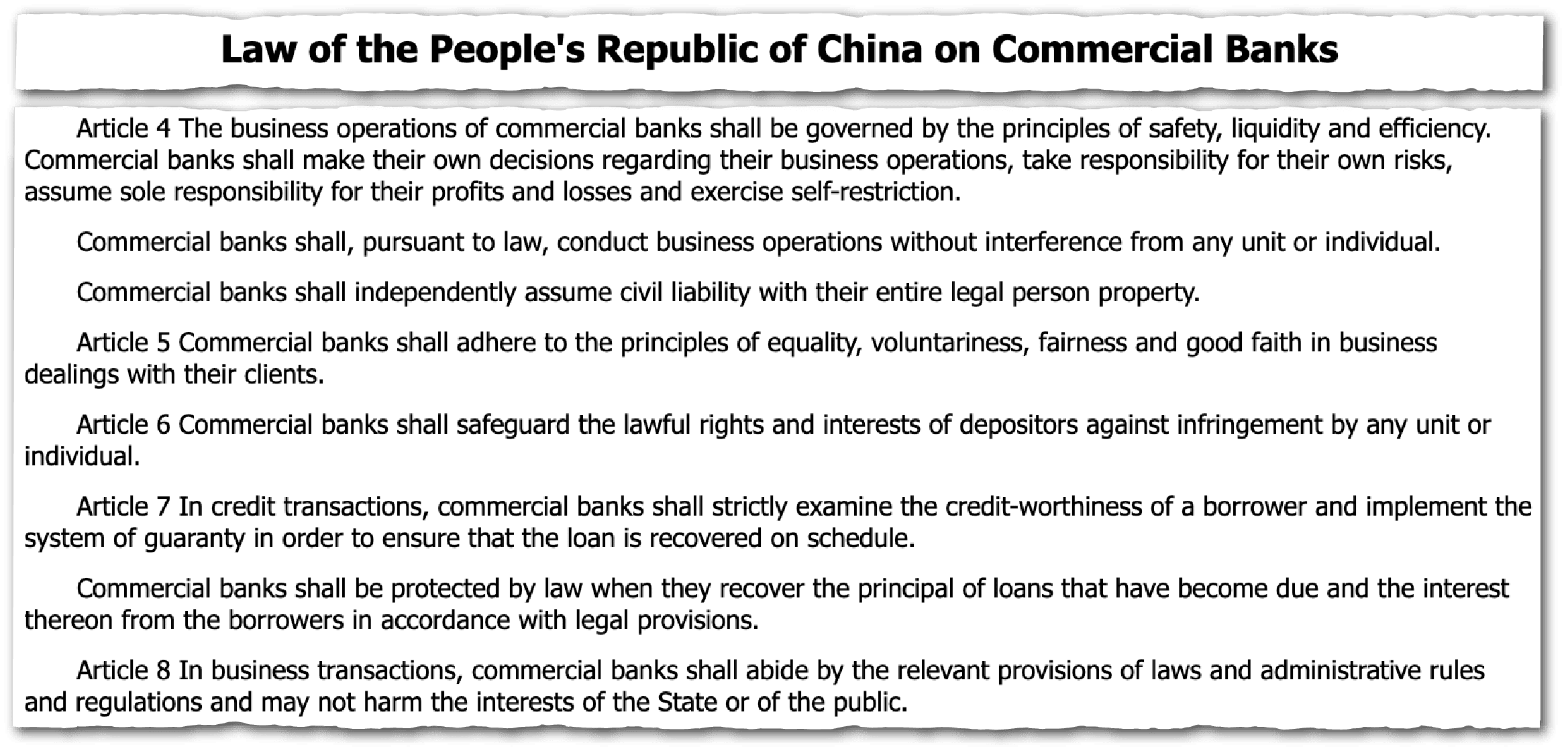
However, the Big 4 reform did not come as a complete surprise to the localities. Again, the center planned it well ahead of time and provided credible signals that the reform was on its way. The first signal was de jure. In 1995, one year after fiscal recentralization, Beijing passed the country’s first Commercial Banking Law. This was meant to make clear that the Big 4 would later cease to fulfill policy missions of the local state and would start to act as genuine commercial banking institutions.
The second signal was de facto and more concrete. In 1994, while centralizing the fiscal system, Beijing also created all three of China’s policy banks in one fell swoop: the China Development Bank, the Agricultural Development Bank of China, and the Export-Import Bank of China. While each was to carry out central directives in specific domains, together they were to replace the Big 4 in making policy loans. The message to the localities was clear: They could no longer expect the Big 4 to implement local policies.
It might still seem to readers that Beijing was attempting to strangle its local agents. Indeed, some local governments felt the same way at the time, as they threatened the center that they would not be able to encourage growth and meet modernization targets without sufficient financial resources. Beijing prepared for this. As with fiscal recentralization in 1994, the center did not reform the Big 4 with a simple administrative fiat. It appeased again.
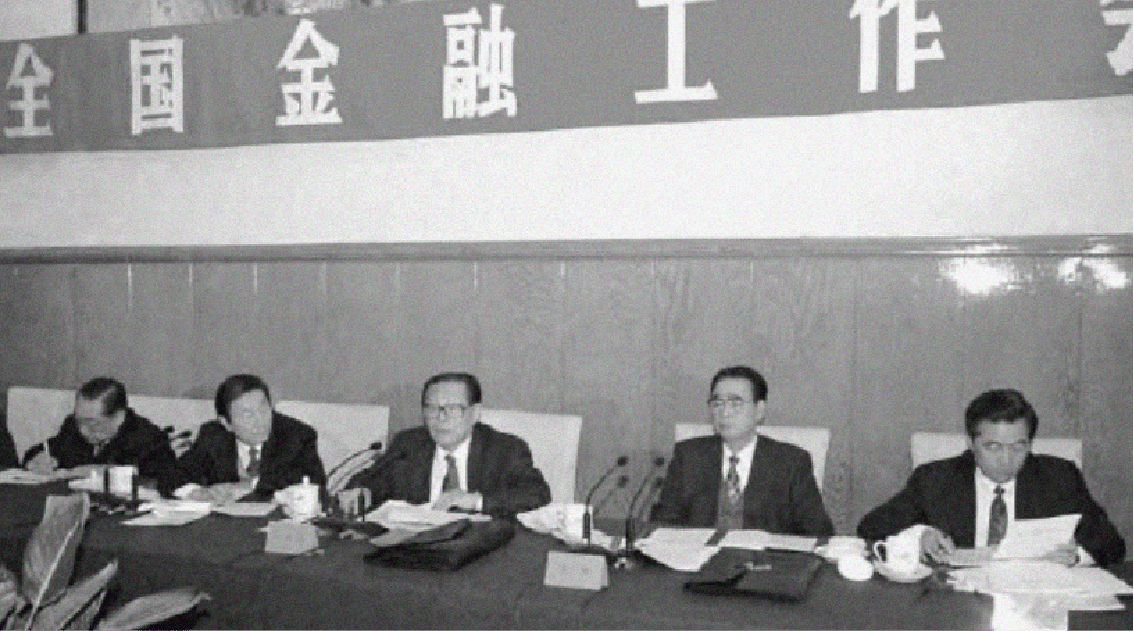
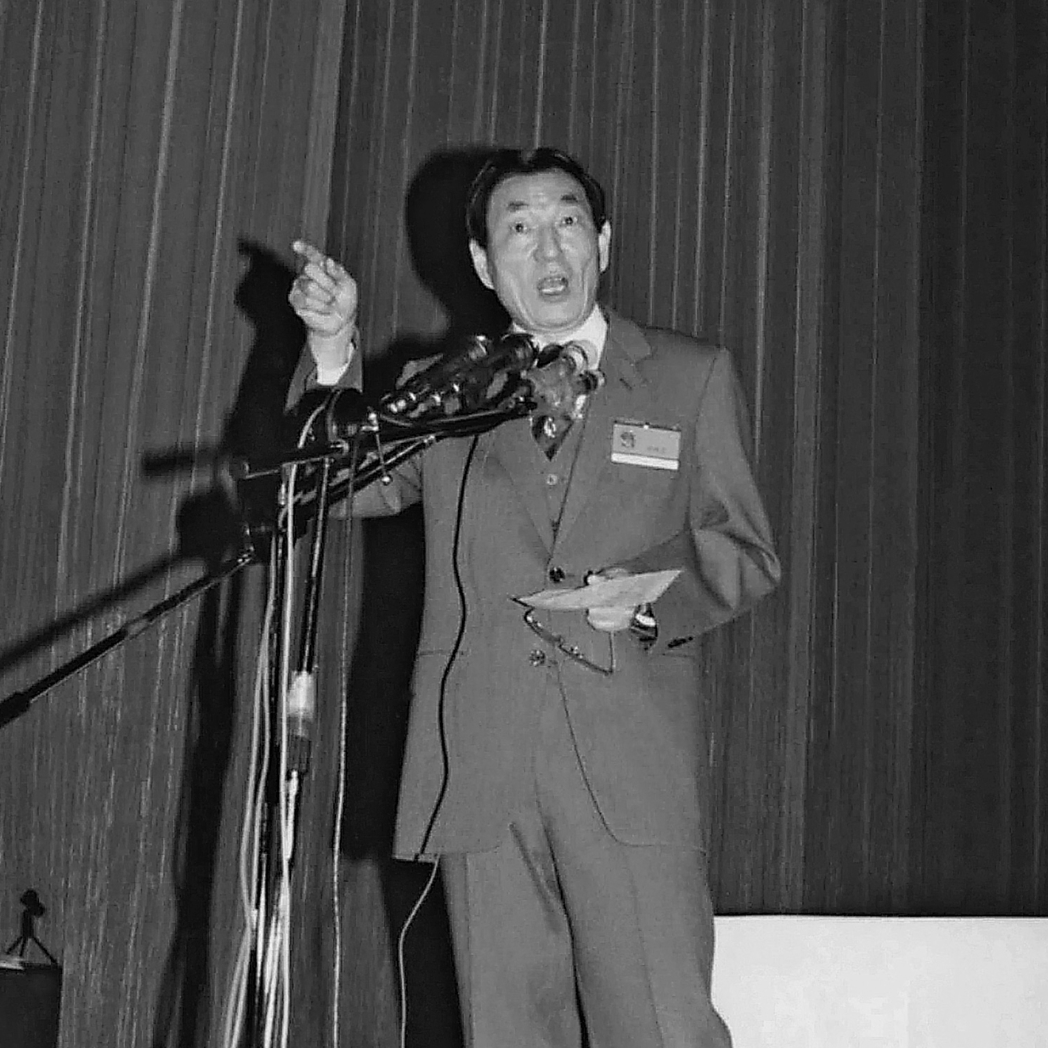
At a central meeting on financial reform in 1997, one year before the Big 4 reform, Zhu Rongji pacified local officials: “In reforming banking institutions… the issue is not whether or not we trust local party committees and local governments, nor are we saying that the locals are all responsible for the problems that have occurred in the financial sector [insolvencies of the Big 4]… we are merely strengthening oversight of banks [the Big 4].” Zhu’s subsequent remarks are yet another smoking gun for the idea that he used bank licenses as bargaining chips:
Some people say if the governor [provincial and municipal] isn’t in charge of finance, how can he be in charge of the economy? It’s not that the governor can’t be in charge; it’s a question of how he will be in charge. The “Notice” spells it out very clearly — at the same time that we deepen reforms of the bank management system [of the Big 4], we must speed up the establishment of local banks. In the future, local banks will be able to develop branch agencies… The commercial banks in municipalities, counties will all be joint-equity commercial banks, and there will also be cooperative urban credit unions and rural credit unions. These are all local financial institutions, and their Party organizations will all be local — that alone will be plenty for local Party and government leaders to be in charge of.
Few know that Zhu used bank licenses for appeasement. One reason is that these internal discussions only became publicly available after Zhu’s memoir was published in 2013, but more importantly, people often thought of Zhu as a “centralizer” who adopted clearheaded centralizing and economically rational policies. Even most of my interviewees who had worked in the banking industry for decades had been utterly unaware of Zhu’s grand bargain. They had been deeply convinced that the local state banks were entirely local initiatives. For example, one city-level Big 4 manager stated, “I don’t know the exact history, but it simply cannot be possible that Zhu Rongji allowed these banks to exist in the first place… Don’t you know that in the 1990s, he was doing everything he could to get local governments out of the financial system? That’s why he took away local governments’ power to veto local Big 4 managers. How could he on the one hand kick local governments out of the financial system while on the other hand invite them back in? Isn’t that contradictory?”
This contradiction is precisely China’s development dilemma that I underscore throughout. The center needs to maintain economic control and discipline but also simultaneously sustain local incentives and wherewithal for development. These two objectives are clearly in tension. Declining central revenue must reverse, and local influence over the Big 4 must end. But achieving these goals inevitably undermines local interests. Those who doubt the importance of incentivizing local officials can simply look back at the Maoist period; often the same set of Communist officials who spearheaded local economic reforms in the Deng era, under an entirely different incentive structure, failed — and, in fact, did not bother — to engender the kind of economic dynamism characterizing the reform era.
Excerpted from Authoritarian Markets, The Politics of China’s Banking Explosion by Adam Y. Liu. Copyright © 2026. Reprinted with permission of the publisher, Cornell University Press. All rights reserved.

Adam Y. Liu is an Assistant Professor in the Lee Kuan Yew School of Public Policy at the National University of Singapore.