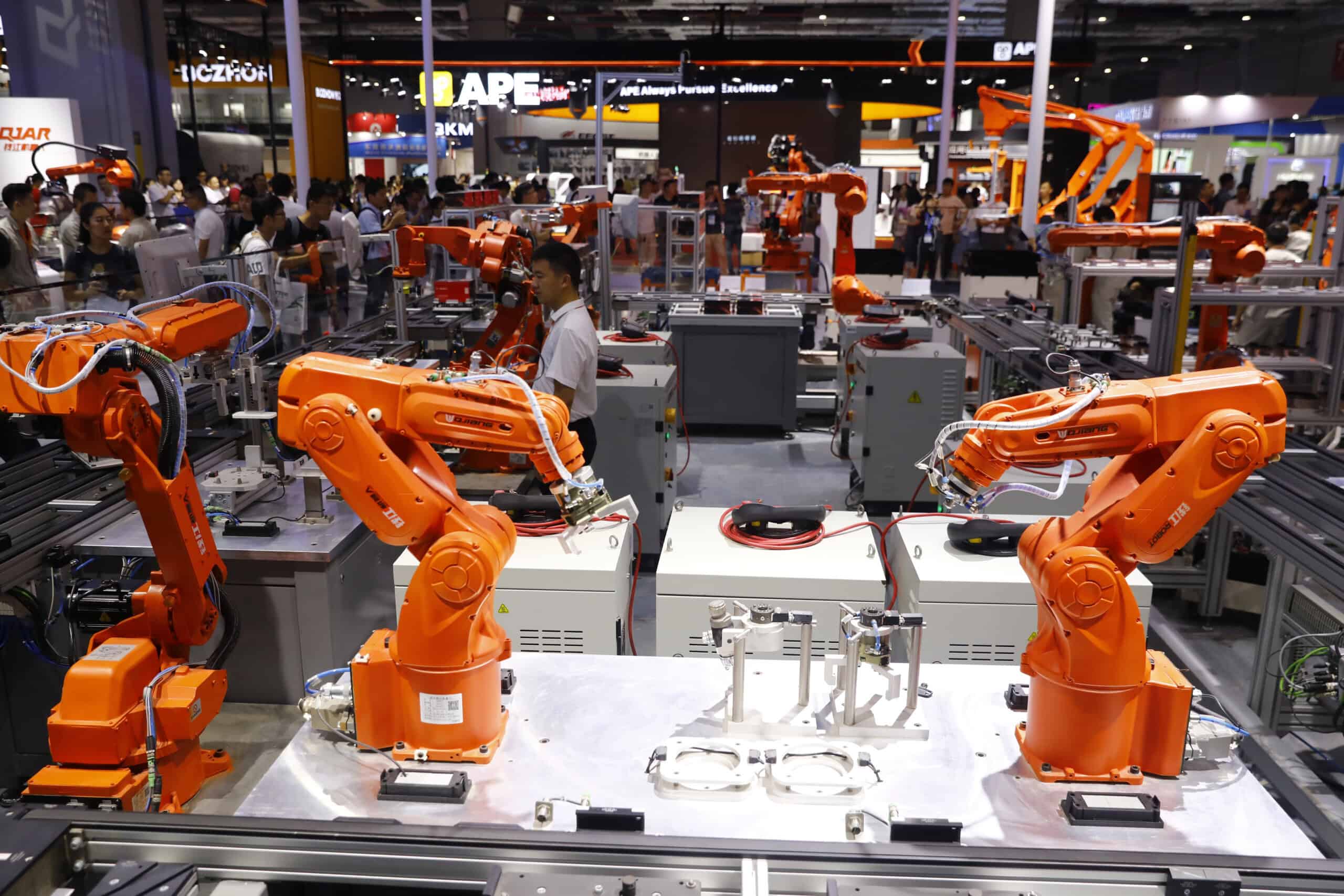
Good evening America and Good Morning China. In the world’s manufacturing powerhouse, it is the BYDs, the Xiaomi’s and the Huawei’s that hog the limelight, with their vast workforces and space-age production facilities. But don’t forget the many more small and medium-sized enterprises that were the foundation of China’s modern manufacturing miracle, and still account for 50 percent or more of economic output, employment and tax revenues. A new generation of factory owners, or chang er dai, are taking over their family businesses and trying to revitalize them through artificial intelligence. To do this they often turn to — or themselves become — forward-deployed engineers or FDEs, a relatively new but increasingly critical segment of China’s industrial workforce. In this week’s cover story, Peiyue Wu looks at the AI successes, failures and ambitions of China’s chang er dai and FDEs.
Also in this week’s issue: A Google thief is cleared of espionage charges; a report from Taiwan Semicon; BGI, Company in the News; a conversation with Susan Shirk; and Jimmy Goodrich and Johanna Costigan on China’s pursuit of AGI.
Shell games. In this week’s Wire China podcast, Noah Berman talks to Tom Mitchell about how Chinese entities are using Hong Kong shell companies to dodge American sanctions.
Want this emailed directly to your inbox? Sign up to receive our free newsletter.

AI and the Chang Er Dai
Liu Dan’ni has gone far in her career, from her father’s bead factory in Hebei province, to a U.S. MBA and a job in New York, and then back to the family factory in central China, which she is intent on modernising. Like more and more of her fellow second-generation factory managers (or chang er dai) across the country, one of Liu’s first innovations was hiring a “forward-deployed engineer” to develop an AI-powered quality control system. Now she hopes an AI agent can be built to run procurement. Peiyue Wu talks to younger factory managers and FDEs about the promises and challenges of adopting AI in the small and medium-sized enterprises that remain the backbone of China’s manufacturing sector.

A Thief but not a Spy
Eliot Chen writes about the remarkable twist in the case of Ding Linwei, the China-born former Google engineer convicted by a San Francisco jury of theft and economic espionage. The judge in the case has thrown out the latter charge — a reprieve resulting in a much shorter jail term for Ding.
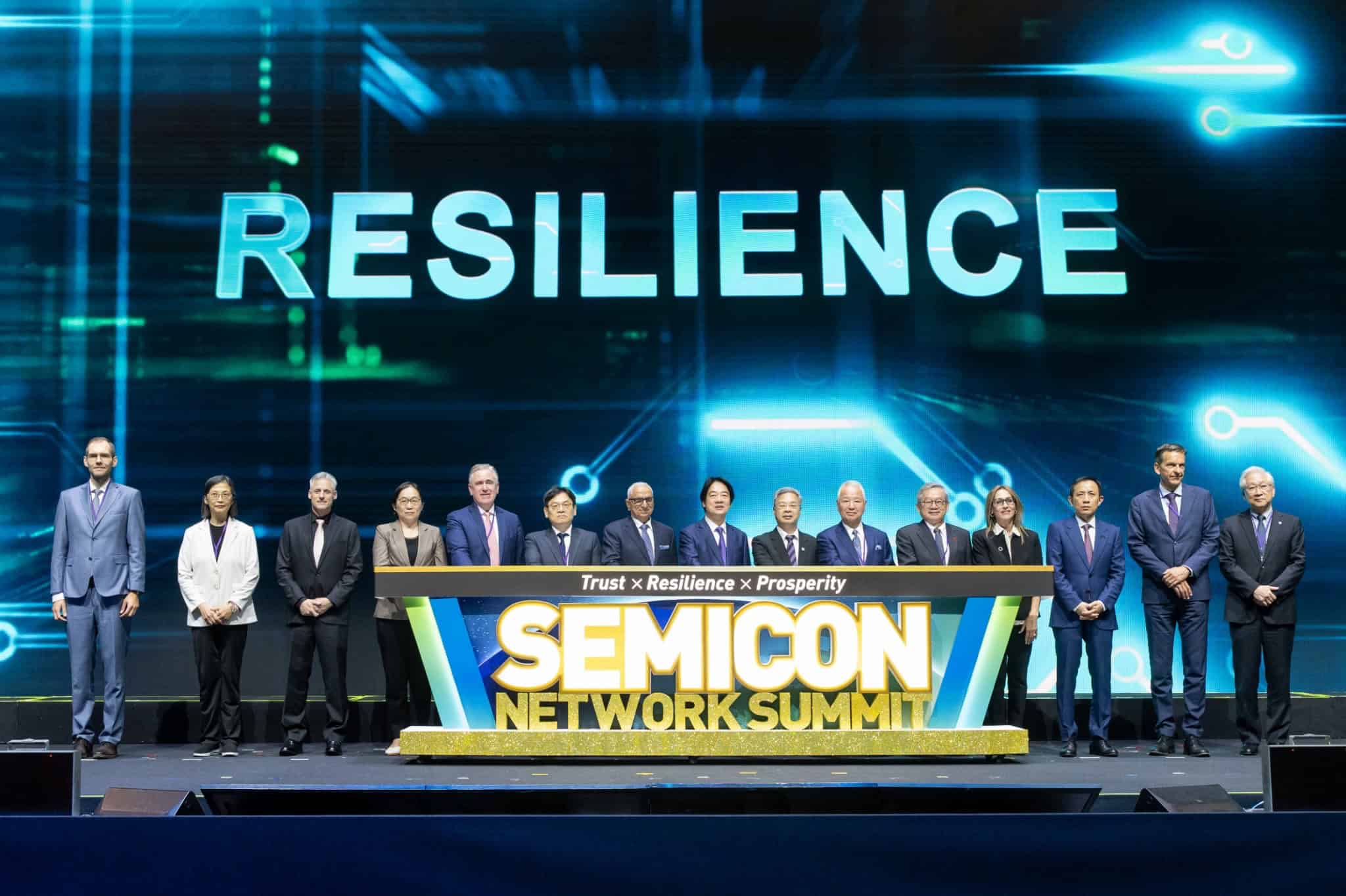
From Made in Taiwan to Made with Taiwan
Last week’s Semicon Taiwan trade show was attended by 130,000 people and highlighted the strengths of the island’s chip industry, Rachel Cheung writes from Taipei. Its economic benefits have been big: Taiwan’s economy is projected to grow 11 percent this year and its August exports were a record high $82.4 billion. Taiwan government officials hope the industry will pay diplomatic dividends as well, by strengthening its ties with the many countries that cannot officially recognise it.

Company in the News, BGI
Nature magazine recently ranked BGI as the world’s number one company in biological sciences, despite U.S. sanctions that have stymied the company’s global growth for years. In The Big Picture’s Company in the News feature, Savannah Billman looks at BGI’s network and leadership.
A Q&A with Susan Shirk

Susan Shirk is a Sinologist at the University of California, San Diego and served as Deputy Assistant Secretary of State for East Asia during the Clinton administration. In an interview with Brent Crane, she talks about Xi Jinping and Vladimir Putin’s affinity for one another, why Donald Trump is a boon for China and the similarities between current geopolitics and the years leading to World War One.
“The U.S. has been making the mistake of fixating on primacy, and has been reluctant to make any compromises with China, instead focusing entirely on deterrence,” she says. “Deterrence is essential but the hawks’ approach to China is too deterrence-heavy.”
Susan Shirk
Illustration by Lauren Crow

No Prize for Second Place
In the quest for Artificial General Intelligence, second place was never going to be good enough for China, write Jimmy Goodrich and Johanna Costigan. “Chinese officials have empowered labs to pursue breakthroughs in AI research — and to use AI to enable research breakthroughs in other critical fields,” they write. “Chinese AI founders likely recognize this is the closest thing to a permission slip as they will ever get. Accordingly, like their American counterparts, they are chasing AGI.”
The Wire China, Issue No. 301
Subscribe today for unlimited access, starting at only $25 a month.