When the Trump administration announced its latest raft of sanctions against companies it accuses of supporting Iran last month, there was one notable feature: several of the Chinese firms it included are, on paper, based at the same addresses in Hong Kong as companies the U.S. has already targeted.
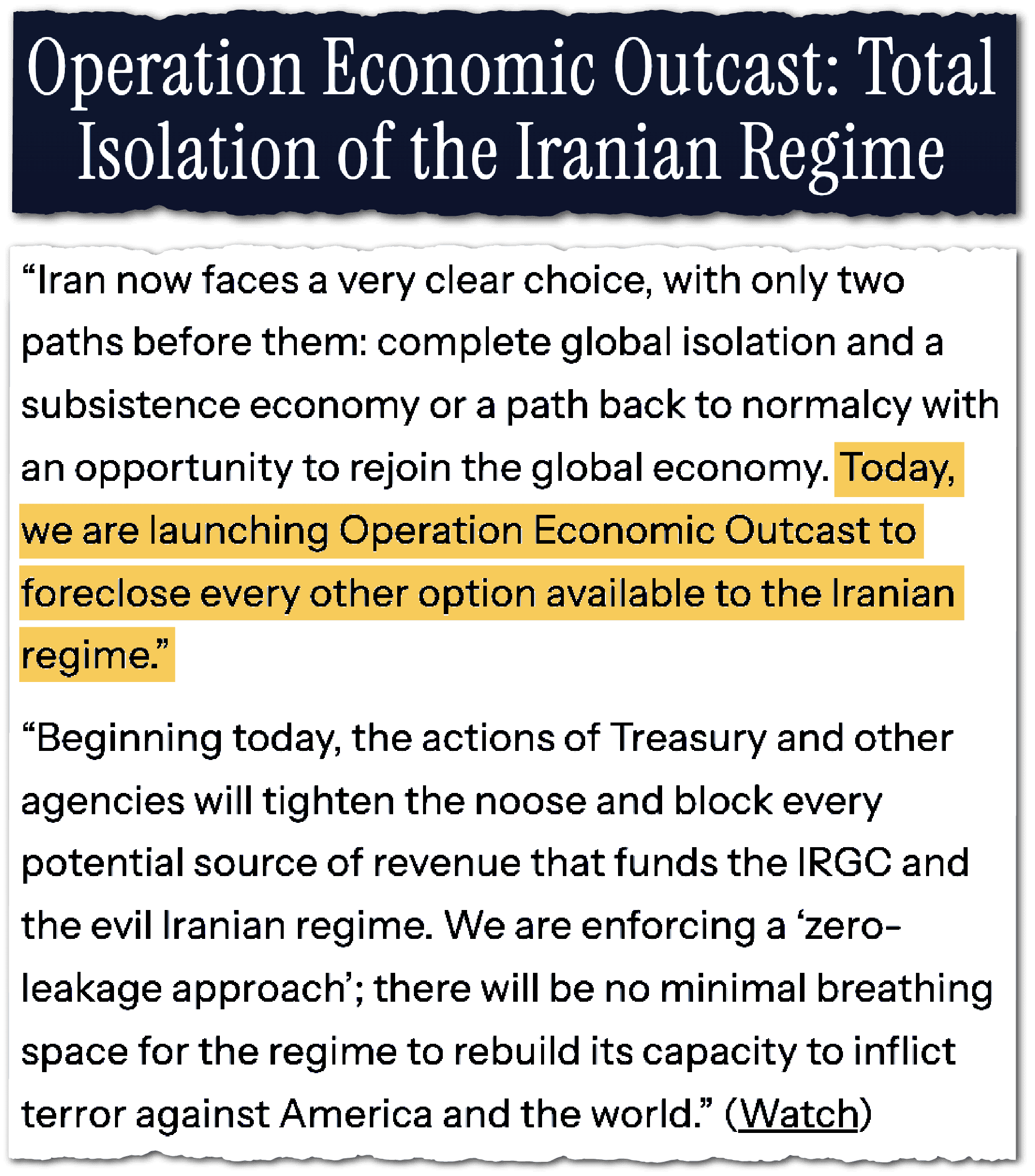
On August 24, the Treasury Department unveiled sanctions on almost 60 companies, vessels and people based in more than a dozen countries, part of an operation known as Economic Outcast that Treasury Secretary Scott Bessent described as “the single greatest financial offensive ever marshaled against an adversary.”
Around half of the firms the U.S. targeted are headquartered in China or Hong Kong, illustrating how the Trump administration is trying to balance its desire to punish Chinese companies for supporting Iran, with its hope of keeping its relationship with Beijing on steady ground. President Trump and Chinese leader Xi Jinping are due to meet in Washington later this month.
A review of Treasury Department sanctions notices shows that a third of the 22 Chinese firms sanctioned on August 24 are based at addresses in Hong Kong where a previously sanctioned company is also listed.
Most parts and components come from China. That’s Iran’s lifeline for its weapons program.
Kerri Bitsoff, a former Treasury Department official
Such use of shared addresses highlights the role Hong Kong shell companies play in obscuring the ultimate sources of China’s support for Iran. It also illustrates how difficult it can be to use sanctions to stem the flow of technology from the world’s second largest economy to the Islamic Republic.
“Hong Kong is one of the primary diversion locations in the world,” says Treston Chandler, a researcher at the Wisconsin Project on Nuclear Arms Control. “We’re attempting to tackle this problem, but not necessarily very effectively.”
Since the outbreak of the U.S. and Israeli war with Iran in February, the U.S. has sanctioned dozens of Chinese companies over their alleged exports of so-called dual-use components — products that can be used for both civilian and military purposes — as well as their purchases of Iranian oil. More than 60 list addresses in Hong Kong.
The Treasury said the Chinese firms in its August sanctions package formed “a sprawling system of front companies” that had allowed Iran to acquire “highly sensitive dual‑use technology.” At the top of the list, the department said, is Sweet Ocean Industrial Limited, a contract manufacturer of electronics with an address in an industrial corner of Hong Kong. The U.S. also sanctioned an additional 11 firms that it said were involved in Sweet Ocean’s network.
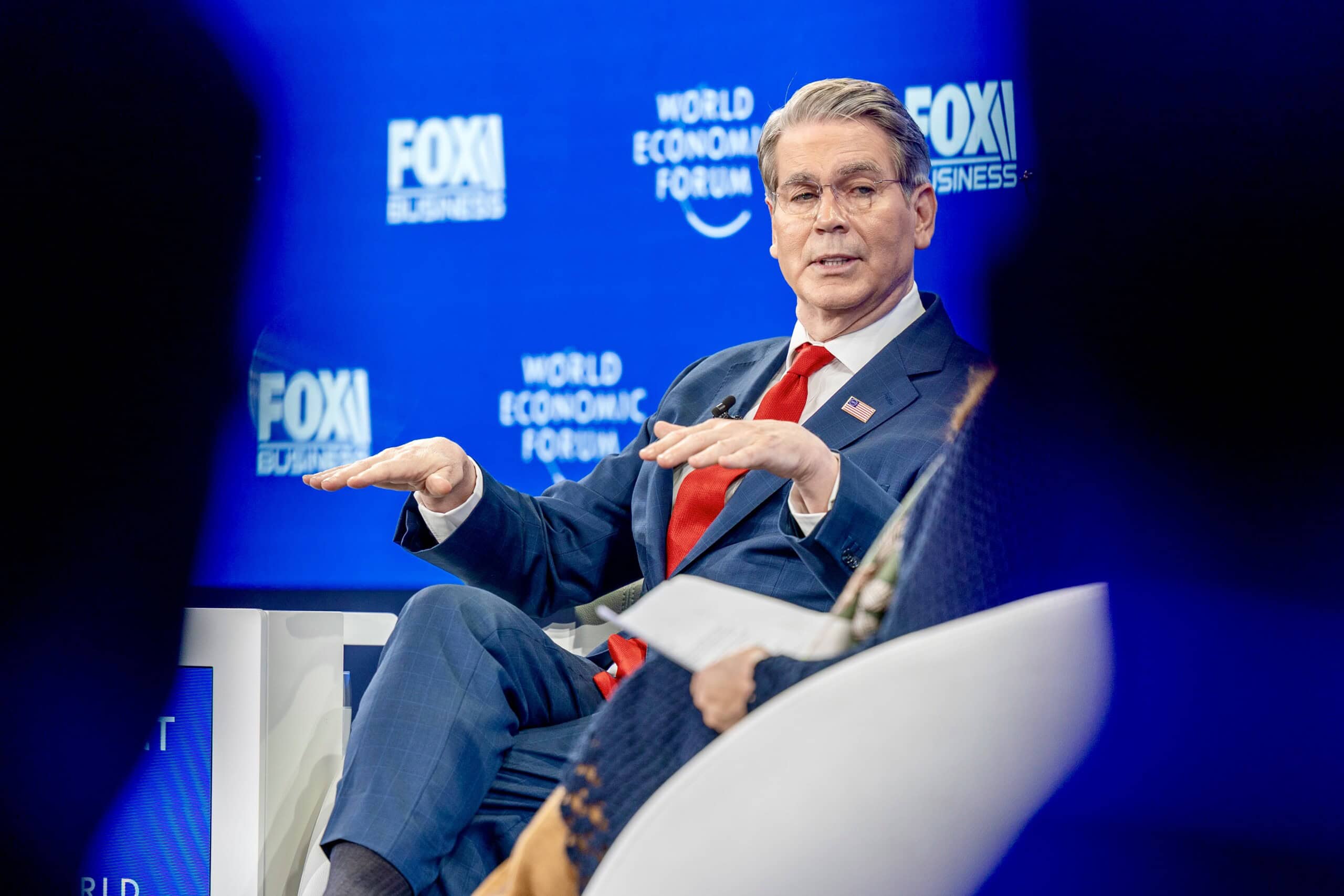
Treasury Secretary Bessent responds to a question on sanctions and the China trade truce. Credit: C-SPAN
China is a major producer of electronic components such those sold by Sweet Ocean and rejects what it views as unilateral U.S. sanctions, making its many thousands of smaller firms compelling suppliers for companies in Iran and other U.S. adversaries.
“Most parts and components come from China,” says Kerri Bitsoff, a former Treasury Department official. “That’s Iran’s lifeline for its weapons program.”
According to the Treasury Department, Sweet Ocean has helped procure laser technology for Malek Ashtar University of Technology, which has campuses in Tehran and Isfahan. The United Nations, European Union and United States have each sanctioned the school over concern about its ties to Iran’s nuclear program.
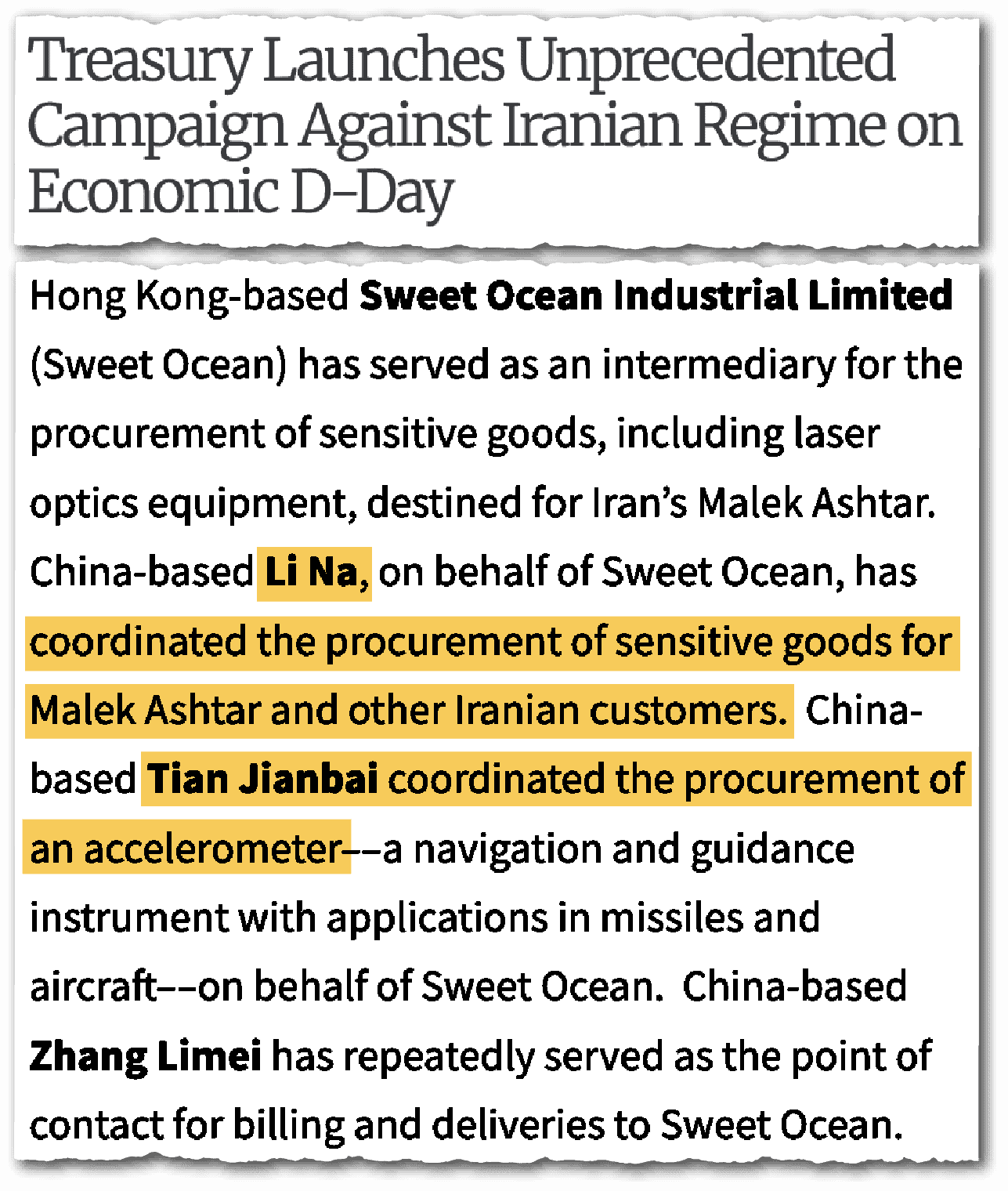
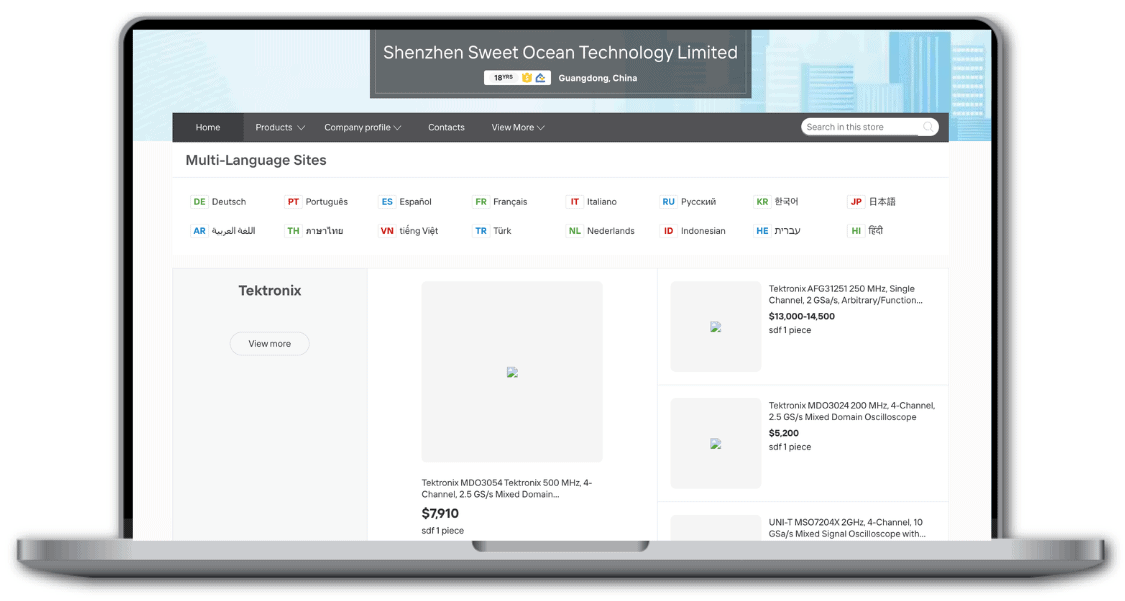
The Treasury Department said a woman named Li Na, 45, had “coordinated the procurement of sensitive goods for Malek Ashtar and other Iranian customers” on behalf of Sweet Ocean. Li also owns half of a mainland company called Shenzhen Sweet Ocean Technology Limited, according to WireScreen. The other half is owned by a man named Tian Jianbai, WireScreen shows.
Tian is the sole director of Hong Kong-based Sweet Ocean, according to corporate records filed in the city. The Treasury Department said Tian, 47, had helped the company procure an accelerometer — an electronic component that can be used in missiles or drones for navigation purposes.
On its website, which was deactivated last week, Shenzhen Sweet Ocean offered a variety of equipment used to measure electronic signals. It said that it generated between $5 and $10 million in annual revenue, with 15 percent of that coming from the Middle East. The firm had just 3 employees as of 2024, according to Chinese corporate data provider Tianyancha.
Li and Tian did not respond to requests for comment.
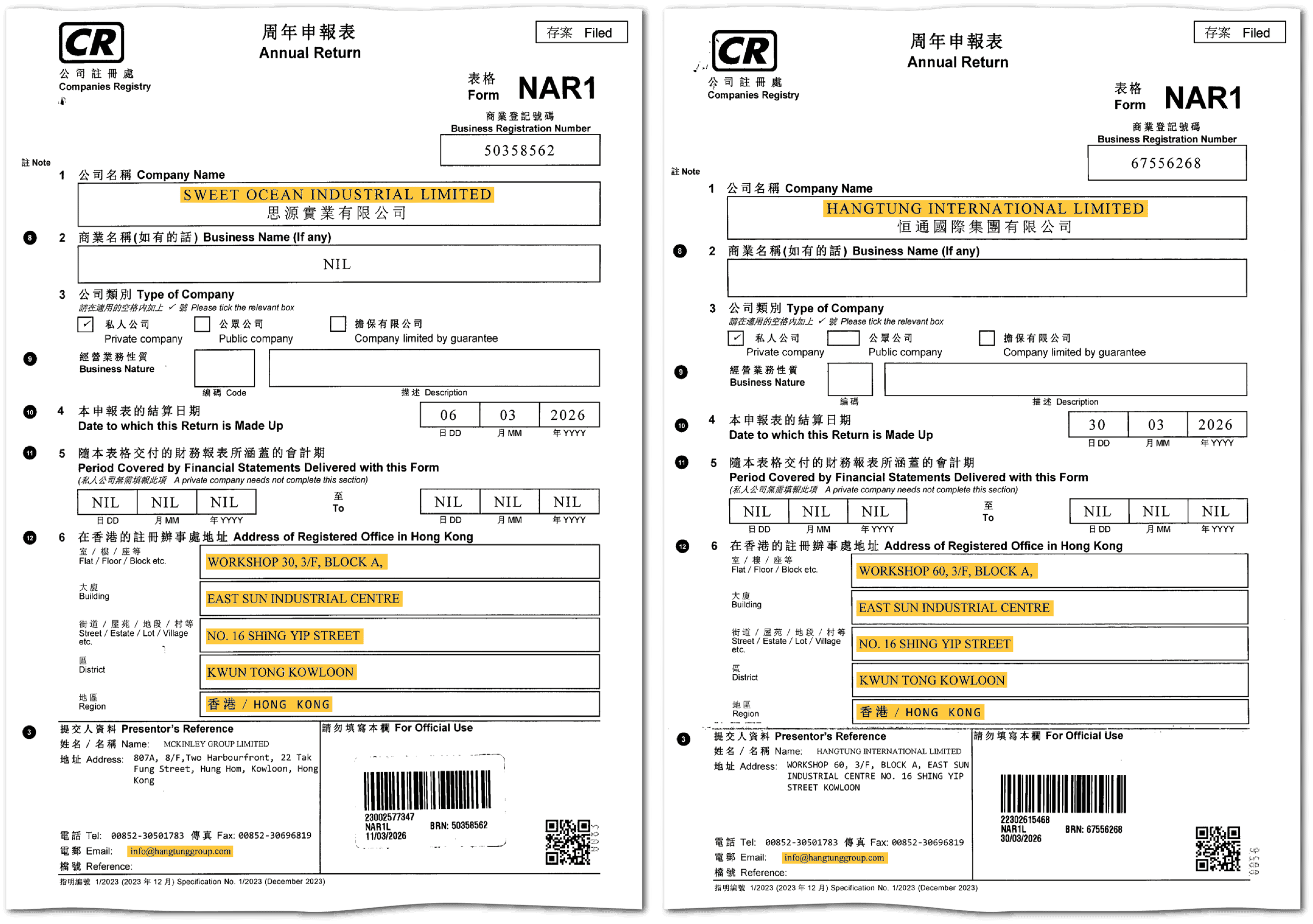
Sweet Ocean is one of a dozen U.S.-blacklisted firms that give an address at East Sun Industrial Center in eastern Kowloon in Hong Kong. Since 2023, the Treasury Department has sanctioned seven firms with addresses there, citing their diversion of technology to Iran and Russia, while the Commerce Department has added an additional five to its export control list.
The building, according to Hong Kong corporate records, is linked to secretarial firm Hangtung International, which helps incorporate companies and gives them an address. On its website, Hangtung advertises services including Hong Kong company registration, and offers 163-square foot office rentals at the East Sun Industrial Center. Sweet Ocean’s most recent annual report shows that its corporate secretary has an email address associated with Hangtung International. Hangtung also listed its own registered address at East Sun in its most recent annual report.
Hangtung did not respond to a request for comment.
It is easy and cheap to establish a company in Hong Kong, as it is in Delaware and some other U.S. states: companies do not need to have local operations in the city or fully disclose their ownership. That allows Chinese firms to get around trade restrictions by creating front companies through which they can channel sales to Iran and other U.S.-sanctioned countries.
The reason that the same Hong Kong addresses tend to re-appear in sanctions notices, former U.S. officials say, is because they belong to secretarial firms, which loan their addresses to foreign companies, including those from mainland China. Companies that come under scrutiny can move easily to a different address.
“All of this diversion runs through shell companies,” says Bitsoff. “As soon as you sanction something, they can reconstitute [elsewhere].”
In a bid to restrict these Hong Kong-based secretarial firms from helping blacklisted companies set up a new company in the city, the Commerce Department’s Bureau of Industry and Security (BIS) has added commonly used addresses themselves to its export control list.
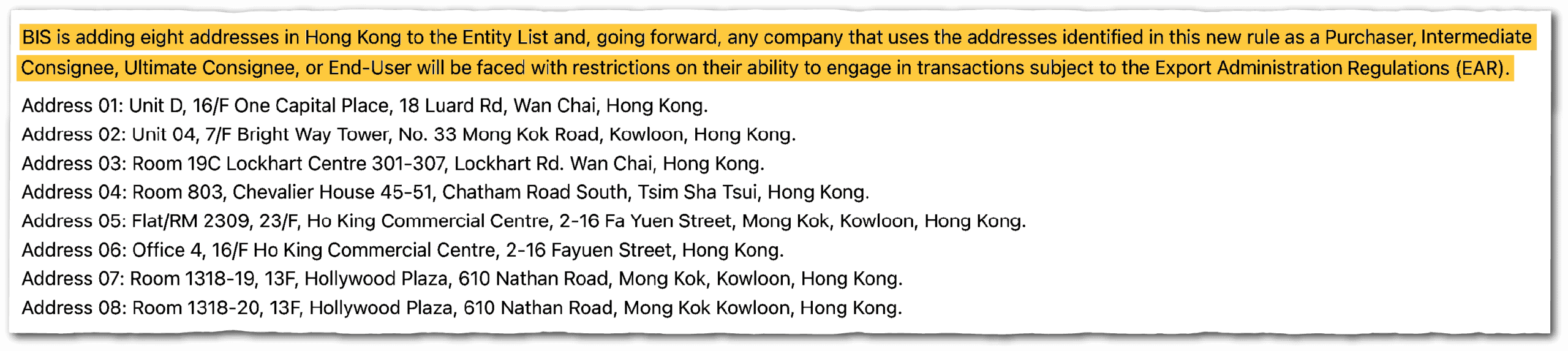
“This will make it harder for shell companies, who can easily change their names or use multiple corporate identities, to find a corporate services provider willing to lend the use of their address for unlawful trade,” BIS said when announcing the policy in 2024.
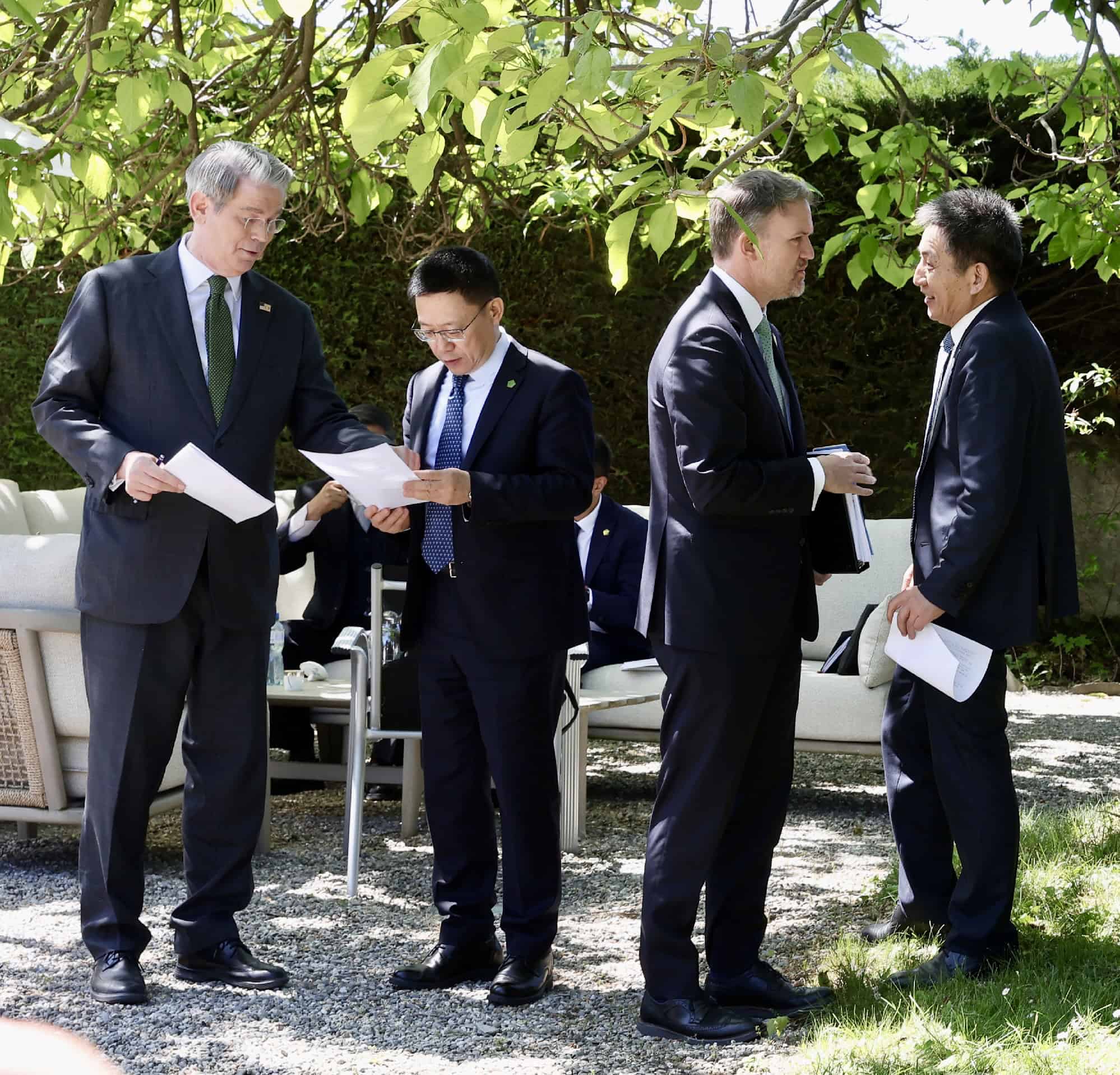
However, BIS has not added any addresses — or companies — to its export control list since October of last year, when the Trump administration reached a truce in its trade war with Beijing. Firms must obtain a license from the U.S. government before exporting certain American technology to companies on the list.
That lack of additions to the list has surprised former officials such as Matt Axelrod, the BIS export enforcement chief under President Joe Biden. “It’s an important and powerful tool,” he says. “I’m not sure why BIS seems to have paused its use, particularly when it could be used in conjunction with the tools that Treasury is using.”
BIS has paused a range of restrictions on Chinese technology since last October, including on drones and routers, The Wire has reported. Internal discussions on adding Chinese AI companies to the export control list at the beginning of the Trump administration have similarly not resulted in any blacklistings, according to a person familiar with the matter.
While Beijing may have set certain lines for its support to Russia and Iran, the bigger picture is very clear: it is very comfortable being a source of support, and a lifeline, to countries that are overtly antagonists of the United States.
Julian Gewirtz, a former Biden administration national security official
BIS didn’t respond to a request for comment. The Treasury Department did not comment.
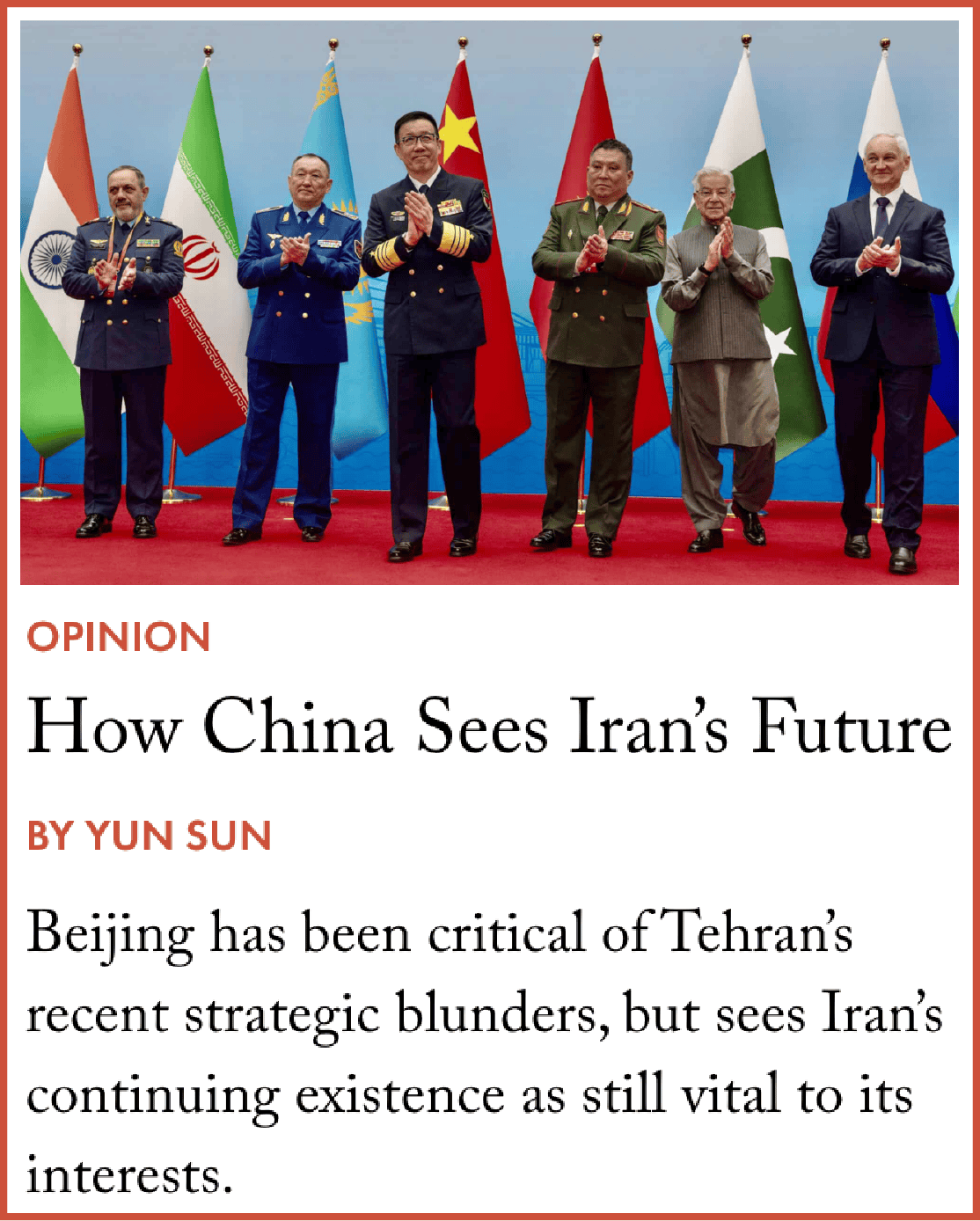
The continued export of dual-use components from Chinese companies to Iran highlights Beijing’s delicate balancing act: while it has long sought to support Iran, it does not want to draw crippling punishments from the U.S. or its allies.
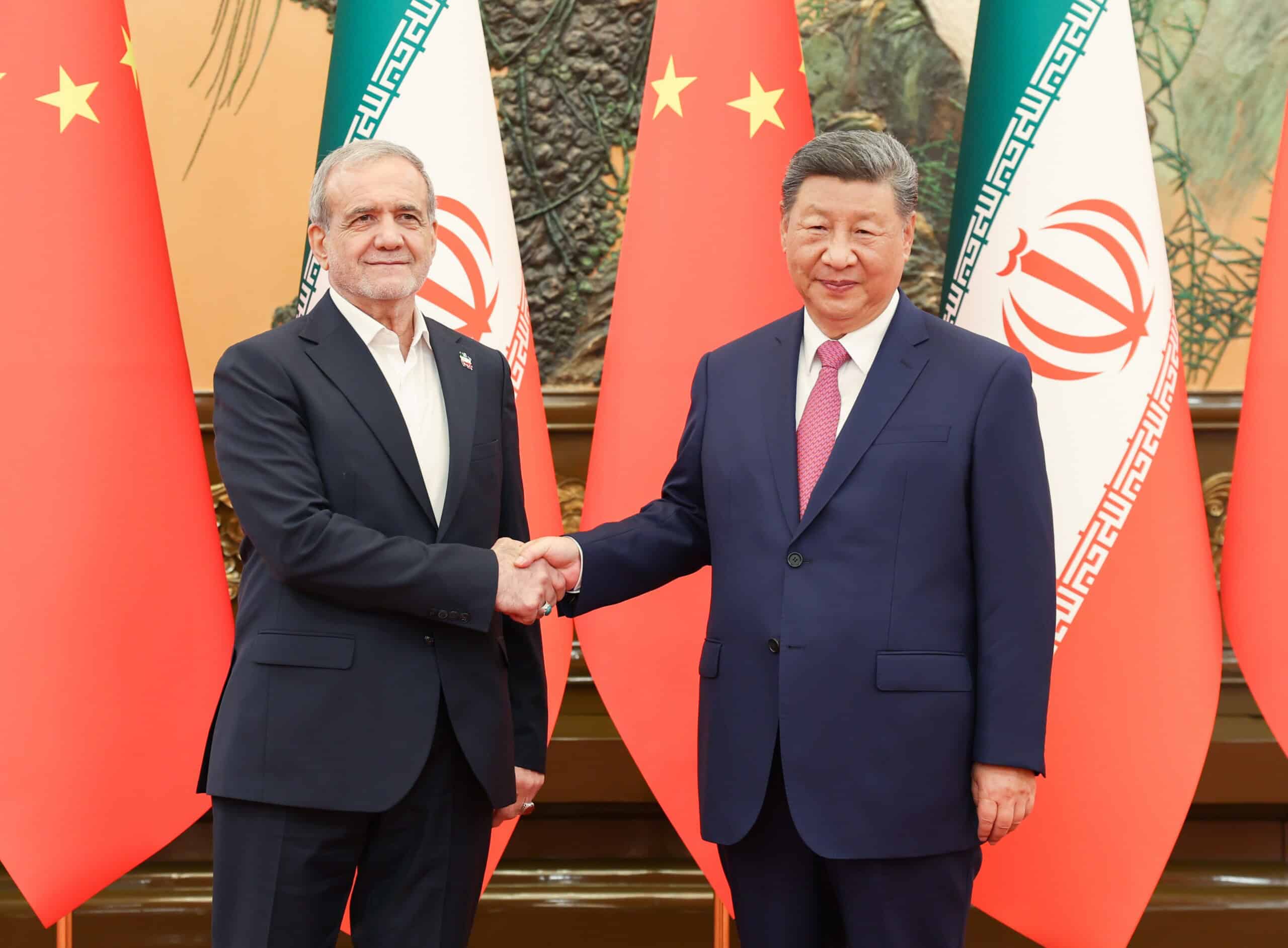
Indeed, Chinese leaders have previously told Iranian officials that China will continue to “maintain and develop its relations with Iran,” Muhammad Keshavarzzadeh, a former Iranian ambassador to China, told The Wire.
“While Beijing may have set certain lines for its support to Russia and Iran, the bigger picture is very clear: it is very comfortable being a source of support, and a lifeline, to countries that are overtly antagonists of the United States,” says Julian Gewirtz, a former Biden administration national security official.
In the meantime, the United States could make its sanctions more effective and address the issue of shell companies by requiring banks to screen transactions for patterns associated with Iranian sanctions evasion, rather than list-based screening of individual firms, says Max Meizlish, a former Treasury official who focused on sanctions.
“If the U.S. wanted to step up the pressure, it could,” Meizlish adds. “This is a long overdue problem to solve.”

Noah Berman is a staff writer for The Wire based in New York. He previously wrote about economics and technology at the Council on Foreign Relations. His work has appeared in the Boston Globe and PBS News. He graduated from Georgetown University.