The 12-day War on Iran by Israel and U.S. has come to an end after what President Trump has defined as the “total obliteration” of Iran’s nuclear facilities. Despite the Iranian supreme leader Ali Khamenei’s claim of “victory”, the general observation in China is that Iran lost in a most humiliating way. The war has revealed a lot about Iran’s strengths, but more so about its weaknesses. Moreover, the brief conflict has told the world much about China’s role, or lack thereof, in supporting Iran. Now that a ceasefire appears to be in place, it begs the question as to what China will do with Iran down the road.
The common view of the so-called CRINK countries (China, Russia, Iran, North Korea), or “Axis of Evil”, is that their coalition is based on a shared threat perception of the U.S., and a presumption that there will be mutual support (although not mutual defense) when a member is in distress. That notion needs to be reassessed, at least when it comes to China. Since the Israeli attack on Iran, the only support China has rendered has been diplomatic and rhetorical. Material support, such as that which China has provided to Russia in the form of dual-use products and technologies, has not been observed. Military support, such as the Chinese weapons systems adeptly utilized by Pakistan in its recent conflict with India, is nowhere to be seen.
The Chinese narrative since the beginning of the Israeli strike on Iran has not only been unsympathetic to Iran, but also harsh in its criticism. Surprisingly, most analysis in China directly points to the political system of Iran as the core of its problem, blaming Khamanei and his theocracy for its failure to reconcile with both the inevitable modernization of Iranian society and with the wider world. In the Chinese view, the more educated and modernized the Iranian people become, the more they will clash with the existing political system of Iran. The Chinese see the Iranian theocracy as corrupt and chaotic, relying on an “Axis of Resistance” (including Hamas and Hezbollah) to stir up instability in order to prove its revolutionary credentials and support its continued legitimization. In addition, it sees the internal division between the Revolutionary Guard and the civilian government as having compromised the possibility of a coherent or unified position in Iran’s external relations.

China also sees Iran’s external strategies as naïve and opportunistic, and that it has committed many blunders. In the Chinese view, the Iranian agreement to negotiate with the U.S. over nuclear weapons that it does not have attests to its lack of resolve to struggle. To China, Iran’s capitulationist tendency is overt: that is problematic for Beijing because it suggests Iran’s goal lies in the improvement of its relations with the U.S., rather than its coalition with China.
China senses that Iran treats China as a secondary choice and as a form of leverage Tehran uses to influence the position of the West. Despite the two countries on paper having a 25-year, $400 billion economic cooperation agreement signed in 2021, Beijing has not seen Iran as genuinely pursuing its opportunity with China. Actual Chinese investment has been minimal, reaching merely $3.9 billion by the end of 2023.

Iran’s regional alignment strategy is also questionable in Beijing’s eyes. Iran has rejected working with Pakistan through the China-Pakistan Economic Corridor under the Belt and Road Initiative framework. Instead, it has been pursuing close cooperation with India in the development of the Chabahar port, which is a direct competitor to the Gwadar port supported by China. To China’s great disappointment, during the most recent India-Pakistan crisis, Iran’s foreign minister visited New Delhi to “affirm strategic ties at all levels” with India. When India refused to join condemnation of the Israeli attack on Iran from the Shanghai Cooperation Organization [the SCO, of which China, India and Iran are among the members], the Chinese couldn’t help but see Iran as a fool for its strategic misjudgment.
Will China Support Iran Now?
China’s strategy in the Middle East is focused on balancing diplomacy among regional powers. Its economic relations with the Gulf countries have long surpassed the scale and scope of its relationship with Iran. But even with the significant weakening of Iran and the destruction of its “Axis of Resistance” in the region, China still has some incentive to support Iran and keep it from further decline. After all, from the Chinese vantage point, Iran has been a useful member of the anti-U.S. coalition, because at the minimum, it has acted as a distraction to bog down U.S. attention and resources. And that utility is independent from whether Iran deepens economic cooperation with China. In brief, the very existence of Iran is in China’s strategic interest.

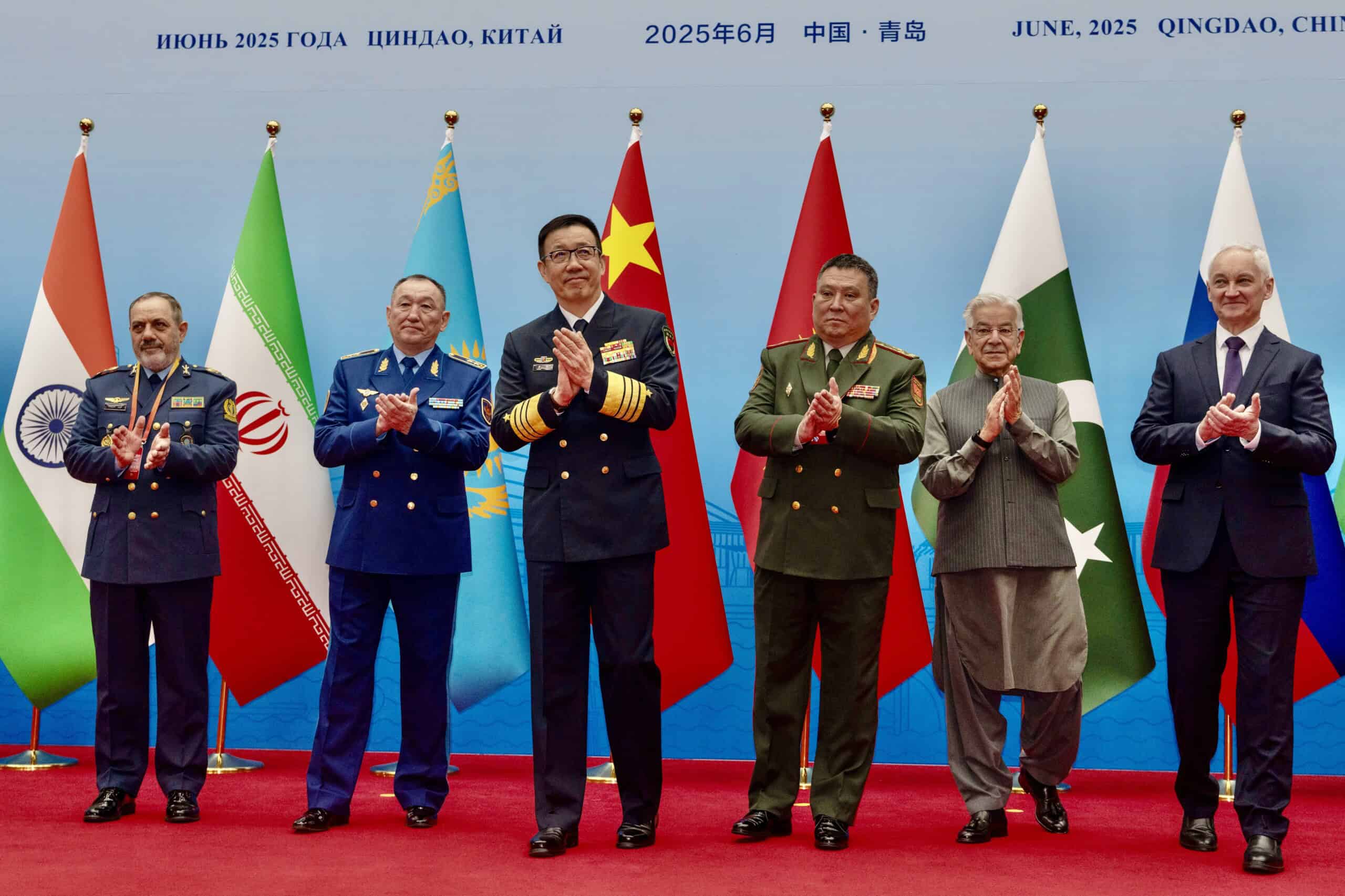
This is precisely the reason why the Chinese Foreign Ministry committed on June 25 to maintaining the country’s friendly cooperation with Iran. The Iranian Defense Minister also visited Qingdao to attend the SCO Defense Ministers Meeting, right after the ‘12-day’ war was over. That raises questions as to whether Iran will be seeking Chinese military support, including arms sales, given the poor performance of its military systems throughout the Israeli and U.S. strikes, a sharp contrast to the performance of Chinese weapon systems during the India-Pakistan conflict in May.
For China, the issue is multifaceted. The first and biggest question is how Iran will pursue its external alignment strategy from now on. If China believes that Iran will continue to prioritize improvement of relations with not only the U.S., but also with Europe, and that it will half-heartedly work with China in economic and regional affairs, Beijing will be much less incentivized to significantly increase its investment in this relationship. This is particularly true in the energy sector.
The ‘12-day’ war on Iran has not posed a significant challenge to China’s interests in the country. But it has created some hope in China that Iran will readjust the priorities of its external strategy and deepen its cooperation with China down the road.
Second is the question of international sanctions on Iran, which remains unresolved. Iran’s main nuclear facilities may have been destroyed, but it is much less clear whether it still maintains some highly enriched uranium, or, indeed, whether it will continue to pursue its nuclear weapons program. In turn, it’s unclear whether some of the sanctions on Iran will be eased, something President Trump hinted at on June 26 as a way to help Iran rebuild. Sanctions have hindered Chinese cooperation with Iran primarily through driving up the cost of Chinese engagement with Iranian actors. If that cost is removed or eased, China could be more incentivized to work with Iran.

The third factor relates to how regional politics will evolve. China’s balanced approach in the Middle East means it has to factor the reaction from the Gulf countries, among others, to avoid upsetting the delicate balance of power in the region and the relationships China has maintained with everyone. This partially depends on whether Iran will continue to pursue a revolutionary policy and proxy warfare that targets its neighbors. If it does, China will have to be careful and avoid association with it.
Few Chinese see the current ceasefire as the end of Israel-Iran tensions in the region. In their view, the ceasefire will prove to be only a brief period of truce before this tension flares up again. China’s relationship with Iran is much more complicated than a simple anti-U.S. alignment. Under the surface of a coalition lies many layers of disagreement, discontent and grievances. The ‘12-day’ war on Iran has not posed a significant challenge to China’s interests in the country. But it has created some hope in China that Iran will readjust the priorities of its external strategy and deepen its cooperation with China down the road.

Yun Sun is a Senior Fellow and Co-Director of the East Asia Program and Director of the China Program at the Stimson Center.