For years, the United States has tried to stop China from getting its most advanced chips out of concern the technology could bolster the People’s Liberation Army’s capabilities. But the web of export controls it has imposed has not stopped the Chinese military from trying to get Nvidia’s products.
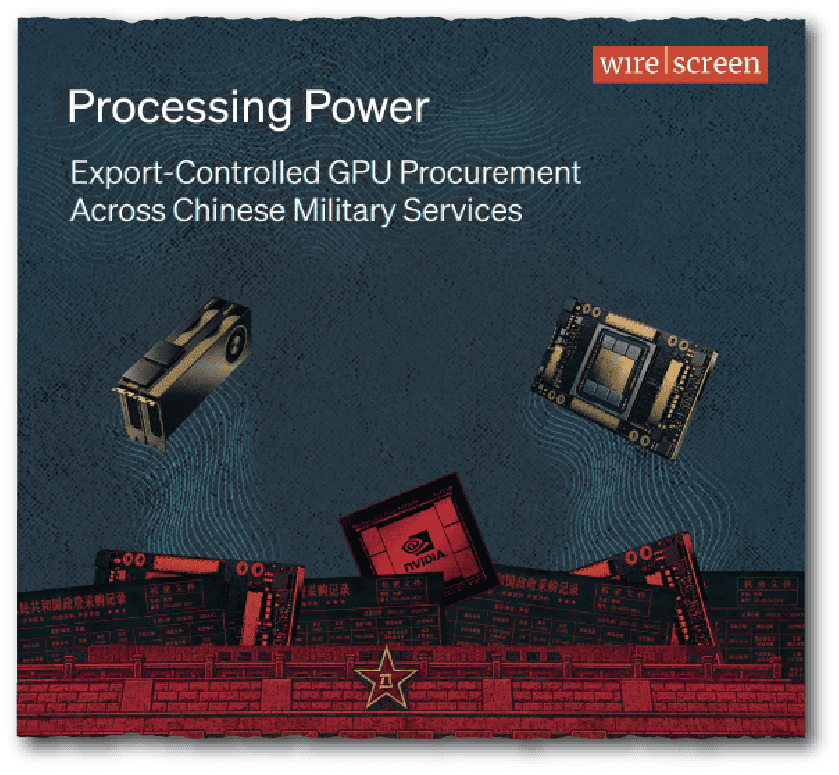
Between 2019 and 2025, the PLA sought advanced AI chips and computing equipment through a network of institutions and commercial firms, according to a recent WireScreen report that analyzed over 3,800 military procurement tenders.
PLA units and military academies sought out specific models 540 times over the six-year timeframe, with nearly half of the requests for Nvidia’s export-controlled A100 and A800 AI chips.
After the implementation of U.S. export controls, the PLA broadened its sourcing network and sought new avenues for obtaining advanced hardware. A wide variety of companies identified by WireScreen have bid to supply both controlled and non-controlled items, ranging from traditional defense industry suppliers to single-employee firms.
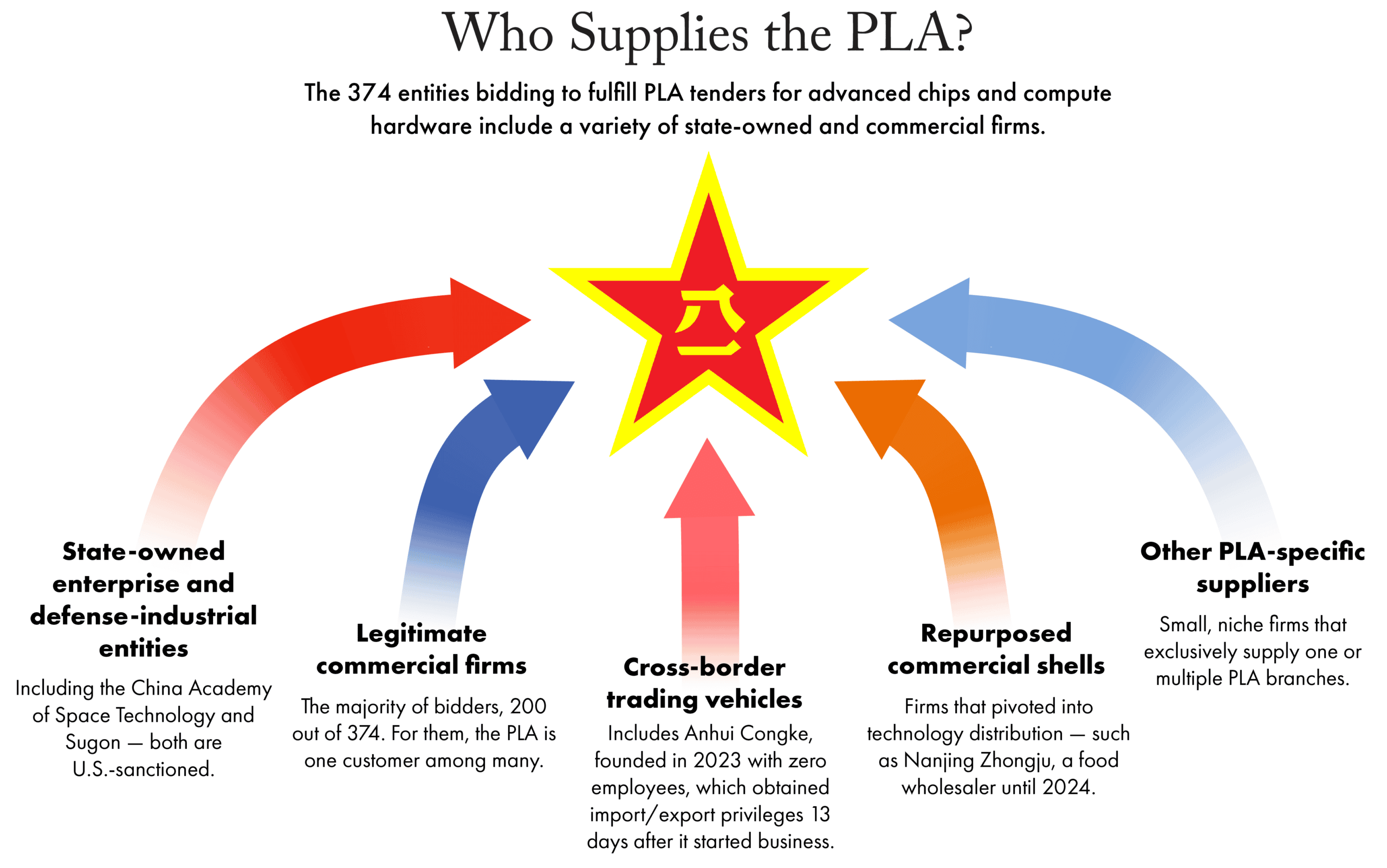
The records do not indicate whether export-controlled items ultimately reached the military. They do show PLA units and academies consistently seeking advanced hardware through a broad network of suppliers.
One attempt to source Nvidia hardware was tacked onto a larger contract. In late 2022, a PLA Cyberspace Force (CSF) signals intelligence unit in Nanjing awarded a 2.56 million RMB ($354,000) facility construction contract to Liaoning Post and Telecom Planning and Design Institute. Included among the required deliverables were four Nvidia workstations.

Another Chinese firm that aimed to sell Nvidia products to the PLA was Sitonholy (Tianjin) Technology. In 2022, it won a bid to supply high-speed data processing accelerators to a unit of the CSF in Guangdong province. At the time, Sitonholy was a Nvidia elite partner, reflecting a proven ability to deploy Nvidia technology: it still lists the title on its website. The contract was worth 780,000 RMB (about $117,000).

Records do not show whether or not Sitonholy was able to fulfil the contract. But in 2024, the U.S. Department of Commerce sanctioned it for acquiring U.S.-origin items to support the PLA’s modernization drive.
A Nvidia spokesperson said the company does not have any ongoing business with Sitonholy and haven’t for several years.
“The suggestion that the PLA ‘relies on’ a few dozen second-hand GPUs is as silly as it is untrue — China has more than enough domestic chips for all of its military applications, with millions to spare,” a Nvidia spokesperson told The Wire in an emailed statement.
“Just like it would be nonsensical for the American military to use Chinese technology, it makes no sense for the Chinese military to depend on American technology,” the person said.
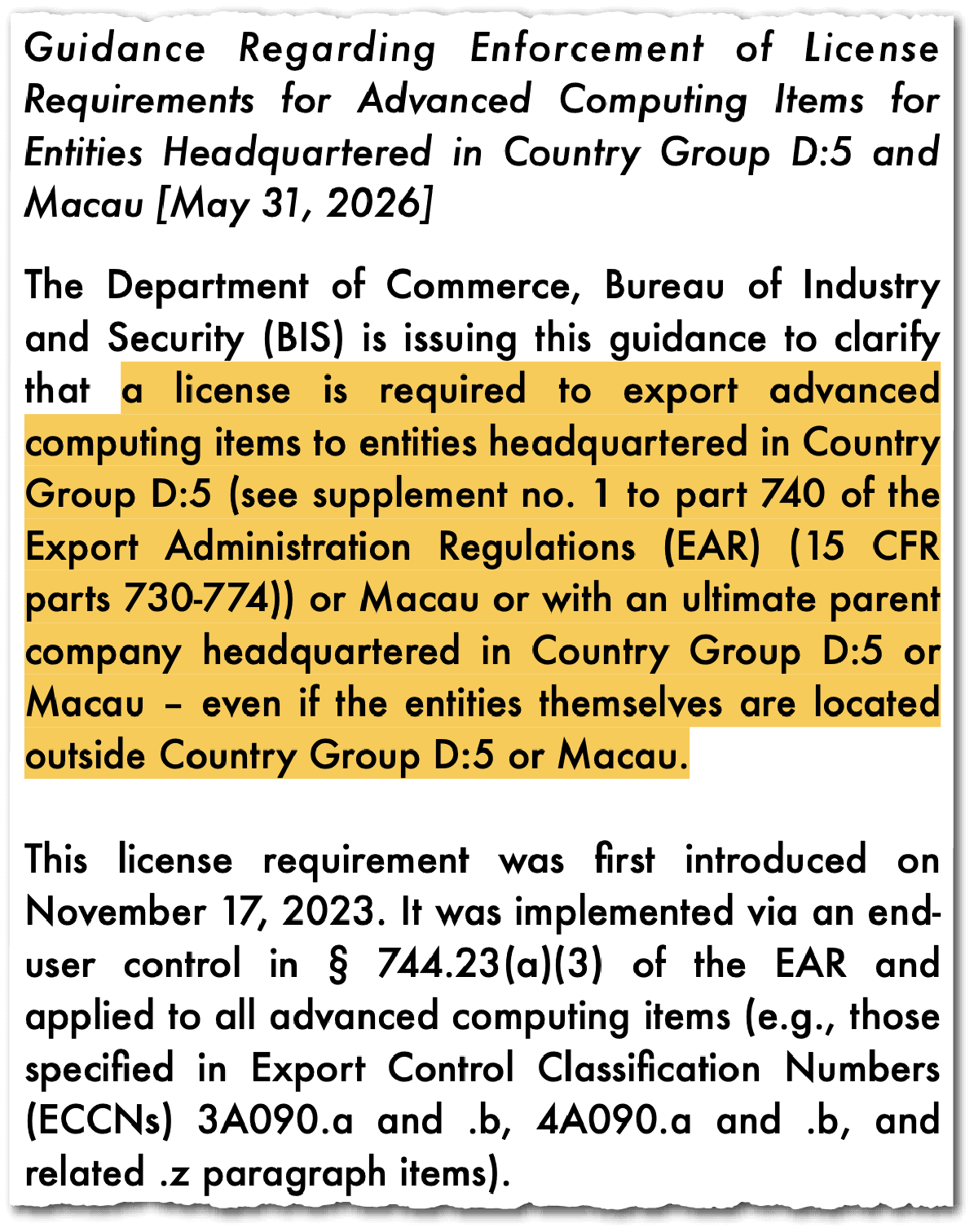
The Department of Commerce has continued to tighten up restrictions. On Sunday, the Bureau of Industry and Security released new guidance confirming the 2023 export controls are still in force for Chinese-headquartered firms and their international subsidiaries.
Other analysts have been monitoring the flow of chips from Nvidia and others to China. The Washington DC-based Center for a New American Security has estimated that around 140,000 U.S.-made chips were smuggled into China in 2024, comprising up to 40 percent of the compute used in training AI models.
Click here to read Eliot Chen’s News and Analysis piece on ‘Chasing the Chip Smugglers’.
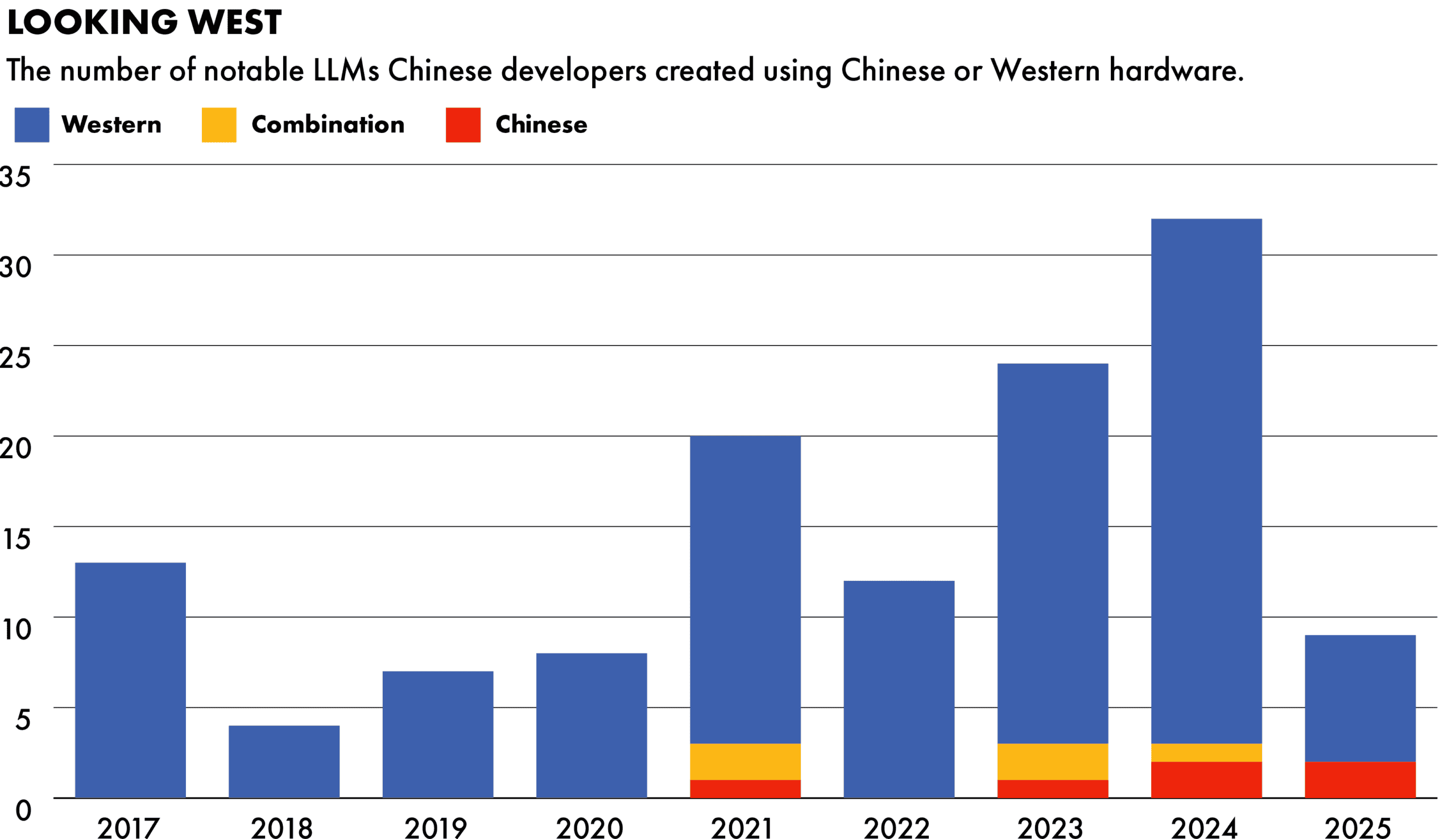
Though domestic hardware is catching up, over 90 percent of the 130 language models released in China between 2017 and 2024 were trained on Western hardware, according to research from Epoch AI.

Savannah Billman is a Staff Writer for The Wire China based in NYC. She previously worked at the National Committee on U.S.-China Relations.