As war in Iran disrupts global trade and sends fuel prices soaring, China’s electric vehicle makers have emerged as one of the conflict’s winners.
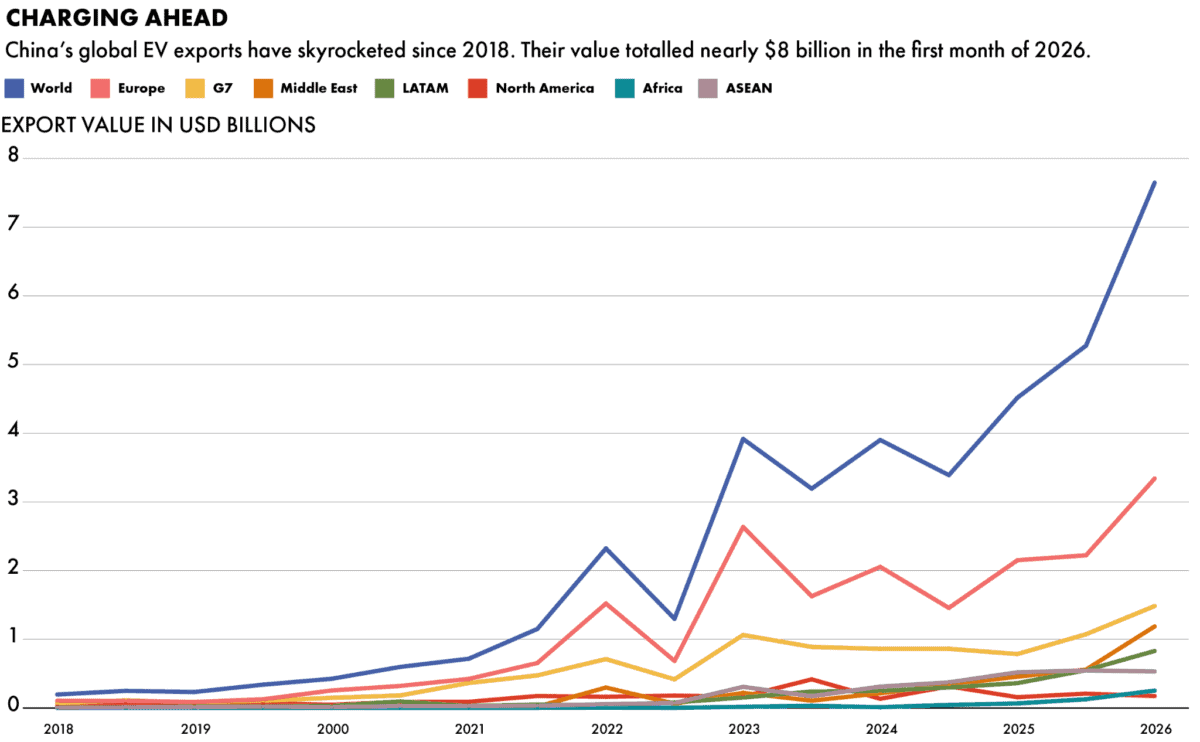
Chinese manufacturers exported 350,000 EVs in March alone, a 30 percent increase from February and a 140 percent increase from March last year, data from the Chinese Passenger Car Association (CPCA) shows. Over the whole first quarter China’s EV exports grew by 77.5 percent from the year before, according to China’s customs administration.
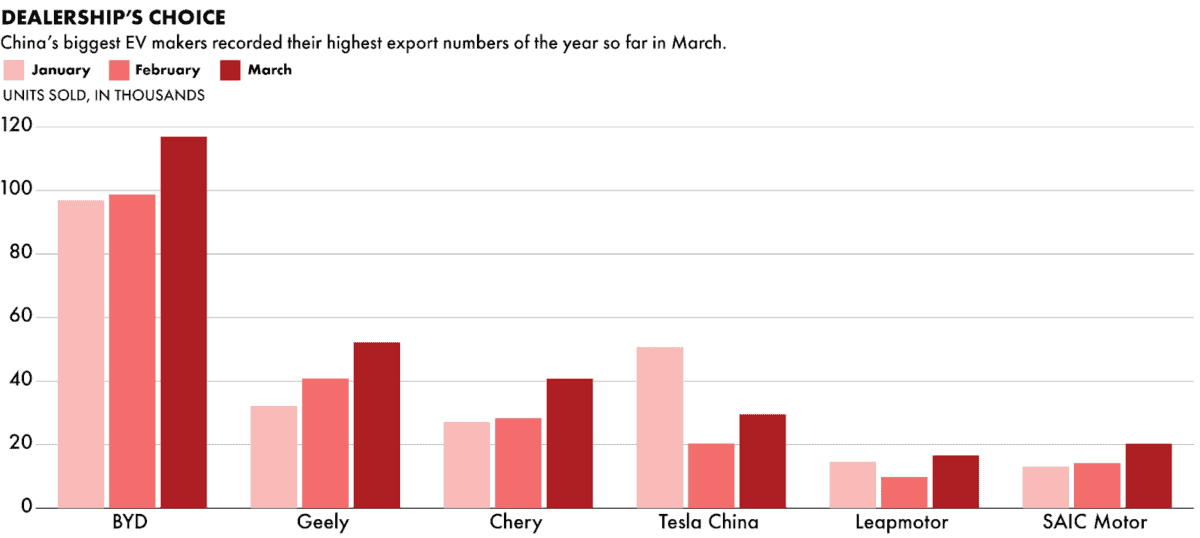
After a slow start to the year due to the Chinese new year holiday, leading EV manufacturers all made export gains last month.
EV penetration in China is already around the highest globally, with EVs accounting for over half of all car sales last year, according to Ember Energy. With so many battery-powered vehicles already on the streets, domestic sales are slowing. Chinese domestic EV sales in the first three months of 2026 were down 21 percent from last year, according to the CPCA.
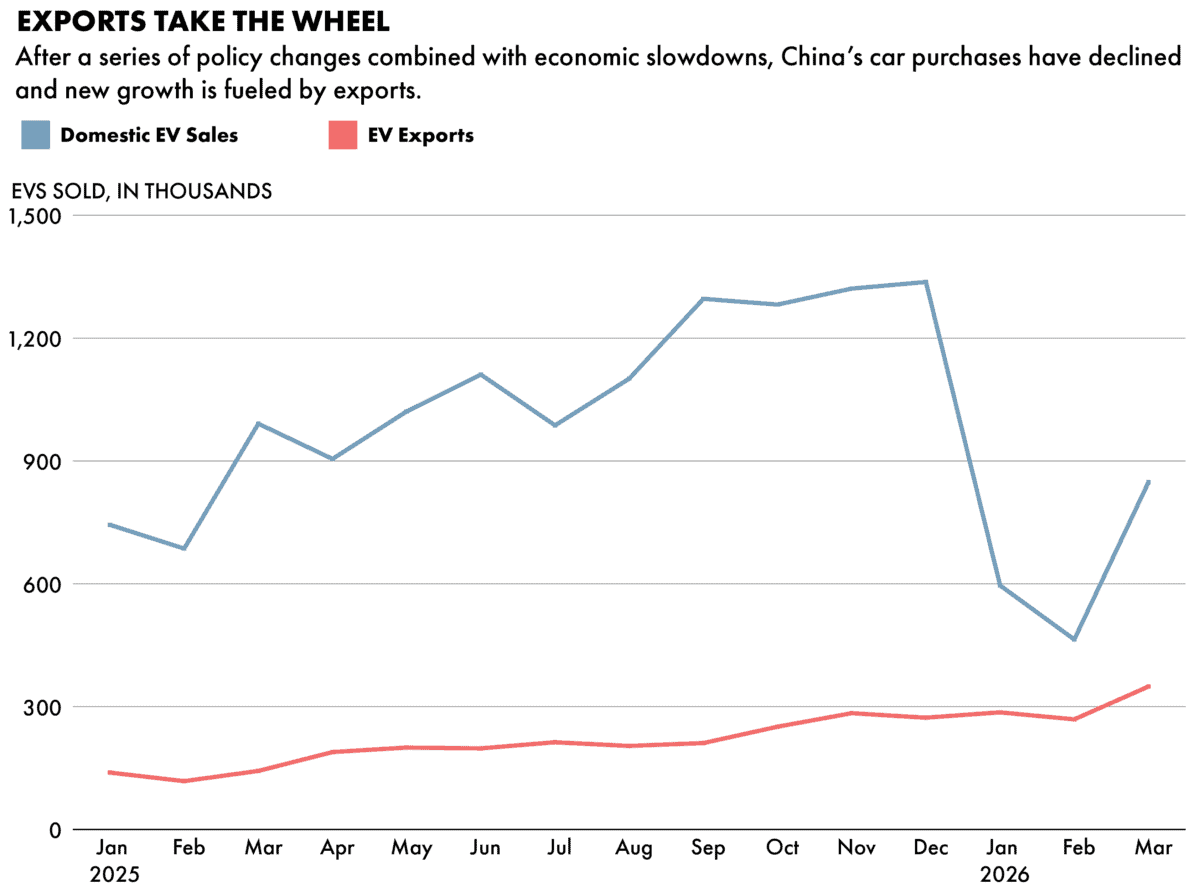
In turn, China’s carmakers are increasingly leaning on sales to overseas markets as local demand stalls.
“The domestic market has been feeling the pressure,” says Lei Xing, co-host and producer of the China EVs & More podcast. “It’s just a natural evolution now that a lot of these companies are becoming global.”
Those exports are helped along by astronomical prices of gasoline and diesel around the world, which is encouraging drivers to switch to electric. Diesel costs in some Southeast Asian nations have surged by over 100 percent since the war began at the end of February, according to price monitor Global Petrol Prices.
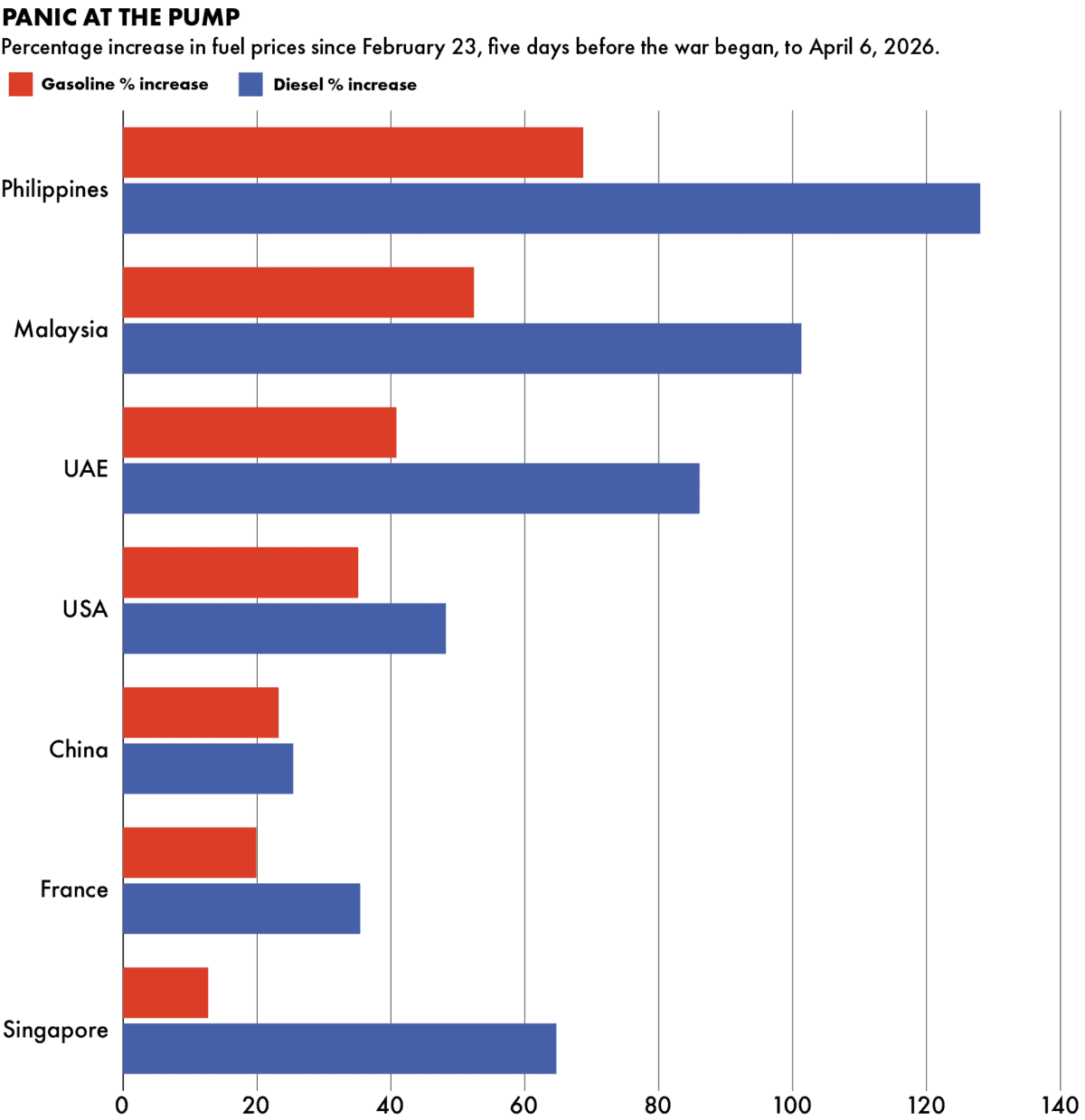
“To be dependent on Middle Eastern oil is a terrible geopolitical vulnerability,” says Vince Beiser, author of Power Metal: The Race for the Resources That Will Shape the Future. “Who wants to have one of your most important daily expenses determined by political and military events happening on the other side of the world?”
The EV picture is not all rosy, however. Costs of some crucial inputs used in the manufacturing process are going up due to the war, which could put pressure on automakers’ profit margins.
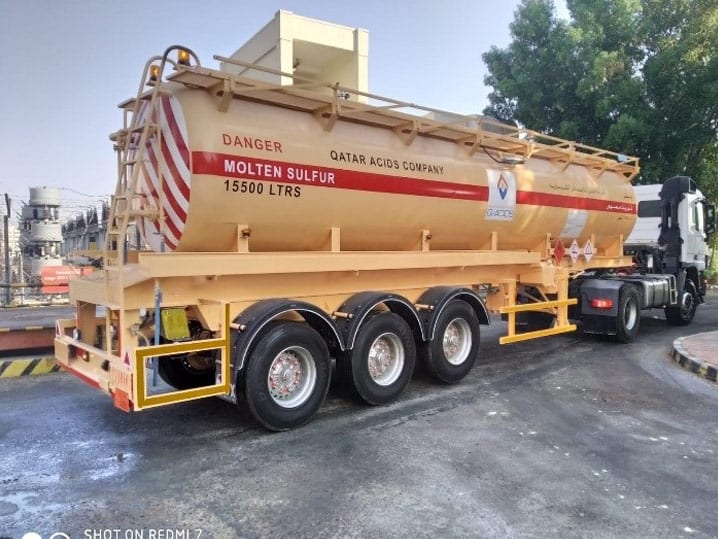
Take sulfur, which is used in processes to purify copper, and extract nickel, cobalt, and lithium, all materials used to make EV batteries and other components. About half of the world’s supply of seaborne sulfur is shipped through the Straits of Hormuz. Disruption to that route has sent the commodity’s price to a four-year high of $940 per tonne at the end of March.
China is in fact a major sulfur producer. But as prices rise, it may restrict sulfuric acid exports from May, according to a Bloomberg report — which would hit downstream buyers like Chile, which bought more than $40 million worth of sulfuric acid from China in 2024.
“The Iran war is a double-edged sword for the EV market,” says Beiser. “Even as it’s presumably getting people more interested in buying EVs, it’s also really snarling up the supply chain.”
Legacy auto markets and advanced economies are still the most profitable export destination for Chinese EVs. Europe is the largest importing region by dollar value, according to Ember Energy’s data.
Many countries have been making efforts to promote electric vehicles in recent years as a way to help meet their climate change goals. But they are also wary of becoming overly reliant on China, particularly if its low-cost, hi-tech cars eat into the market share of local firms.
One solution some countries have adopted is to institute carrot-and-stick policies to entice Chinese automakers to set up local manufacturing plants rather than flood their markets with China-made products.
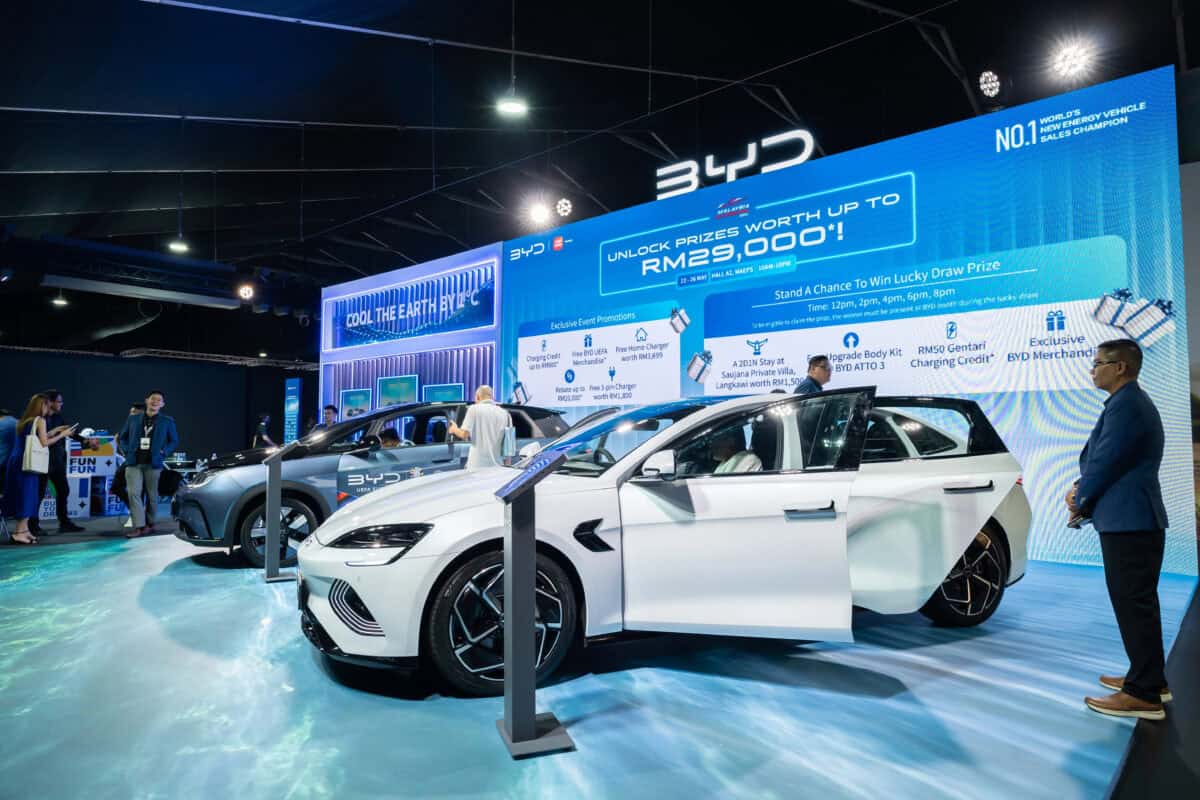
Take Malaysia, which has permitted BYD to set up a local factory in exchange for the carmaker exporting 80 percent of what it produces. The remaining 20 percent will be sold locally, according to the country’s trade ministry, with a minimum price of 100,000 ringgits ($25,300). Imported EVs have their price floor set two and a half times higher.
Europe, China’s biggest overseas EV market, is implementing similar rules. Guidelines released by the EU in January this year laid out options for Chinese exporters to set minimum sale prices for different car models in place of flat tariffs.
Mexico is on a similar path. It hit Chinese EV imports, among other products, with a fifty percent tariff at the end of last year. To avoid the tariffs, BYD, Geely, and Vietnamese EV maker Vinfast are bidding on a former Nissan plant in Mexico, Spanish outlet El Pais recently reported.

Savannah Billman is a Staff Writer for The Wire China based in NYC. She previously worked at the National Committee on U.S.-China Relations.