Western financiers are willing to chase short-term profits even if it means funding a repressive regime that has made no secret of its animosity toward the West.
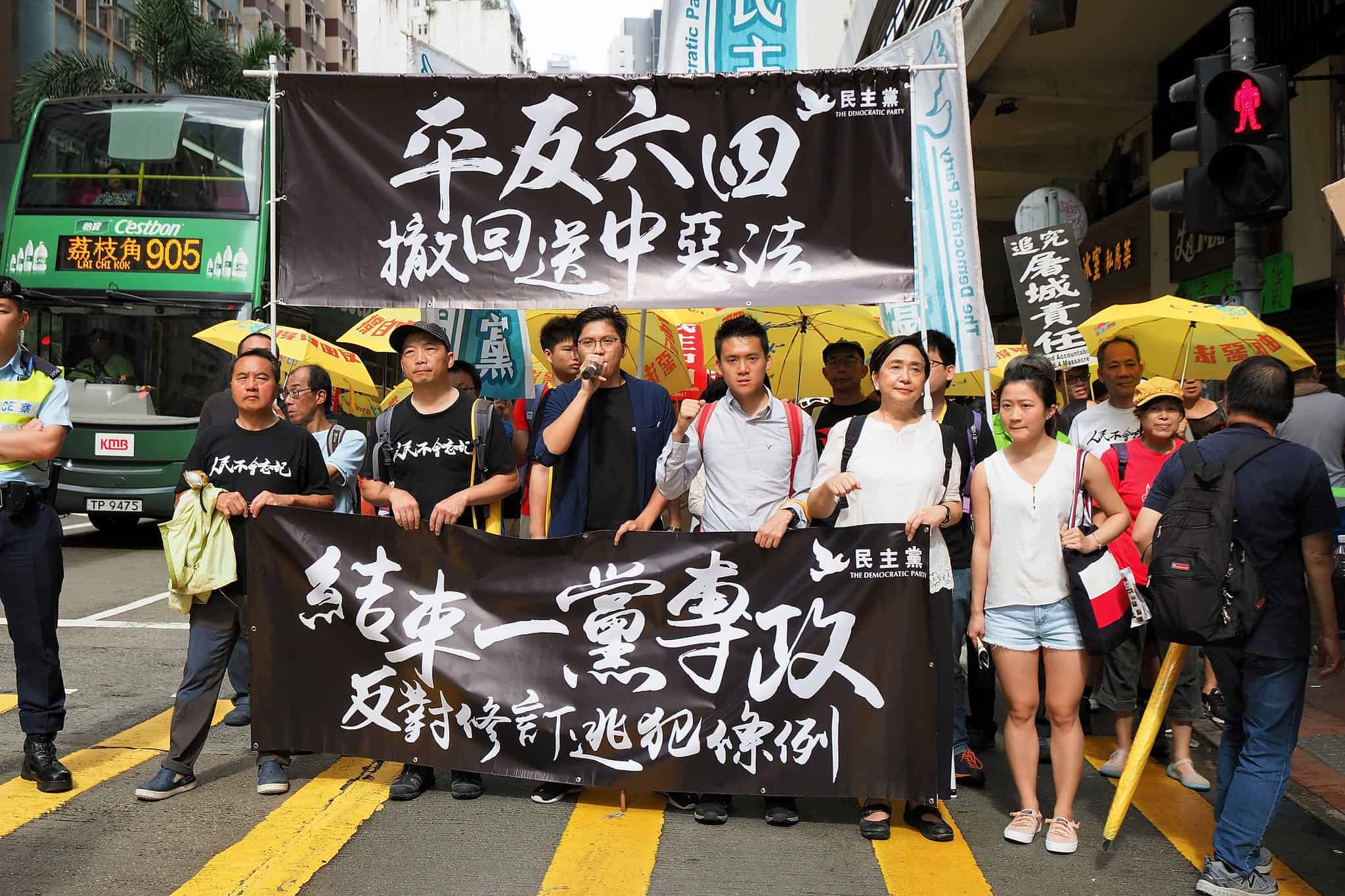
Protesters in Hong Kong march to the Liaison Office of the Central People's Government, May 26, 2019, to demand justice for the victims of the 1989 Tiananmen Square massacre. Credit: Etan Liam via Flickr
In early November, Wall Street’s big guns will head to Hong Kong for a global financial summit, dining at the Palace Museum (featuring Chinese imperial works on loan from Beijing) before meeting at the nearby Rosewood Hotel — one of the city’s swankiest. There, the top brass from Goldman Sachs, Morgan Stanley, J.P. Morgan, and another 100 financial firms will enjoy delicious food and breathtaking views as Hong Kong’s leaders pitch them on the profits to be made in the former Br
Exclusive longform investigative journalism, Q&As, news and analysis, and data on Chinese business elites and corporations. We publish China scoops you won't find anywhere else.
A weekly curated reading list on China from Andrew Peaple.
A daily roundup of China finance, business and economics headlines.
We offer discounts for groups, institutions and students. Go to our Subscriptions page for details.
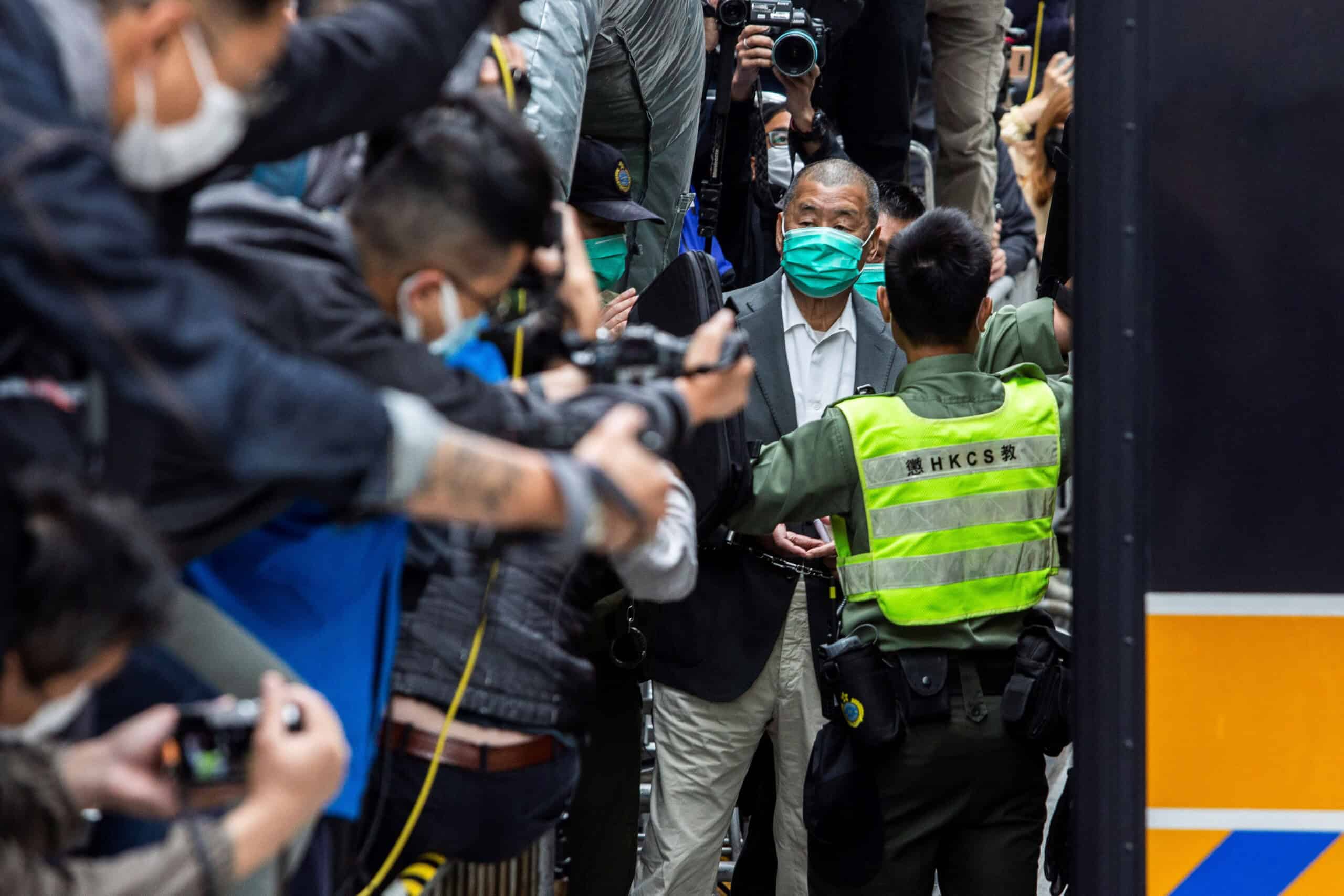
The recent conviction of Jimmy Lai, Hong Kong’s most famous dissident, on alleged national security offenses was the end of a process set in motion years ago by the Chinese Communist Party. Lai, who could have sought safety in another country, chose to stay and fight.
The journalist talks about the latest series of her podcast Face Off where she covers topics ranging from China’s nuclear build-up to robots to Gen Z’s woes.
An award-winning podcast about the world’s two superpowers, the two men in charge, and the vital issues that affect us all. Face-Off cuts through the noise for the real story, with essential historical context.
In this season, longtime foreign correspondent for The New York Times Jane Perlez and celebrated China historian Rana Mitter cover Xi at the negotiating table, Gen Z disillusionment, China’s military rise, Pacific tensions, tech advances, and soft power.
We use cookies to ensure that we give you the best experience on our website. If you continue to use this site we will assume that you are happy with it.OKPrivacy policy