In May this year, I found out how in today’s Hong Kong, comments from one’s past can be dug up and abruptly used against you.

For over ten years, I have taken part in a thrice-weekly Q and A on RTHK Radio, the city’s public service broadcaster, from my base in Washington, D.C. On a recent visit to Hong Kong, I noticed some young RTHK staffers whispering about the need to be careful about social media posts. Station management, said one, was scouring the web and terminating people whose comments were deemed supportive of Hong Kong’s pro-democracy protests in 2019. One young woman said she had deleted all her social media posts.
Then, on May 22 the head of English news and current affairs, Cecil Wong, phoned me to say I was being terminated. Asked for the reason, he replied, “I’m not at liberty to say.” There was no warning.
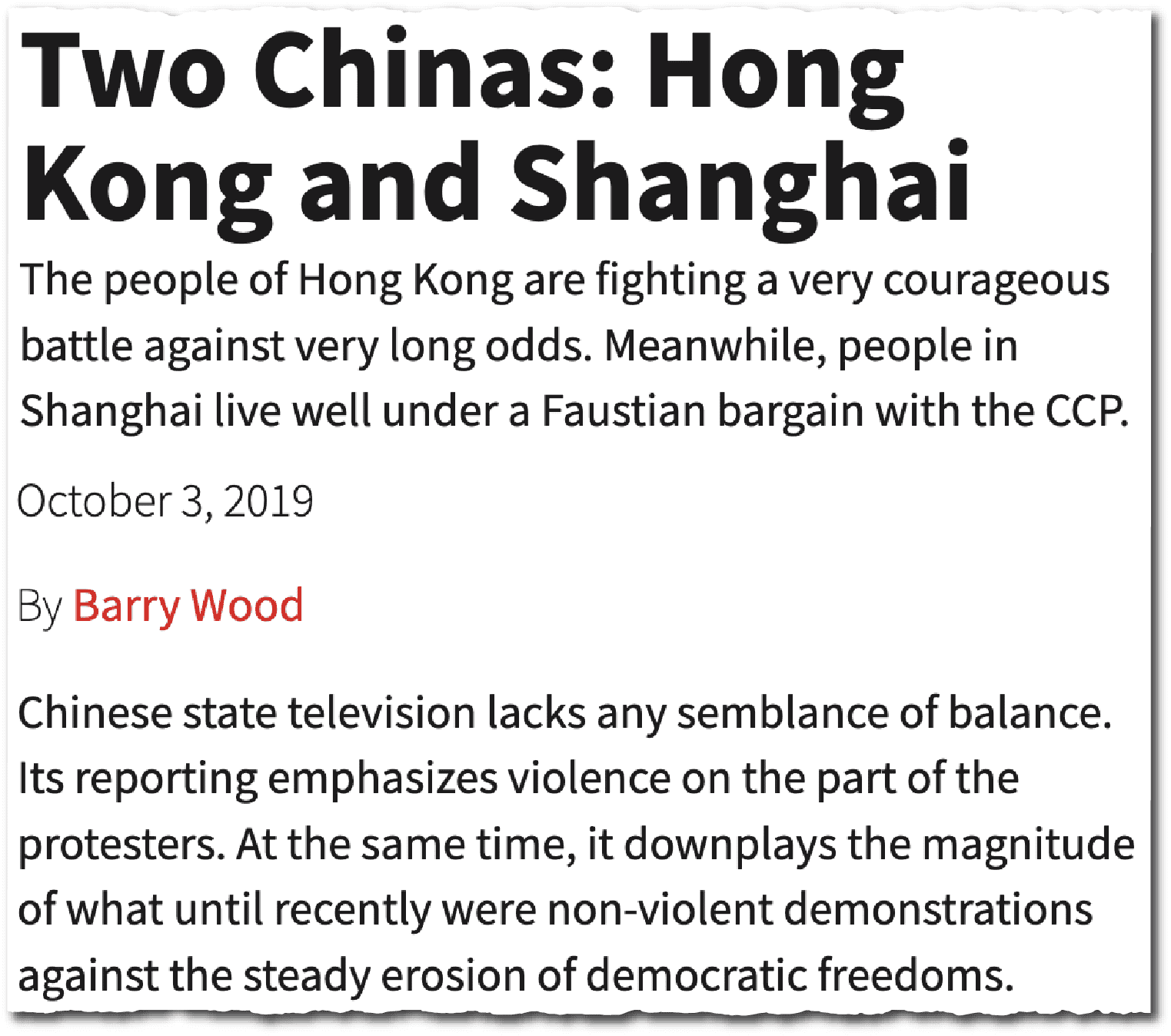
One astute observer suggested I search my name together with ‘Hong Kong protests’ online. There they were, my ‘incriminating’ six-year-old posts. One was an article reflecting on my July 2019 visit to both the mainland and Hong Kong where the pro-democracy protests were reaching a peak. “The people of Hong Kong are fighting a very courageous battle against very long odds,” the piece began. A second article spoke of the skewed news coverage of the protests I had observed watching television in Shanghai.
Other contract employees at RTHK have similarly been dismissed or reprimanded. Canadian host Andrew Work disappeared from the air in mid-April presumably for his involvement in the pro-democracy protests. Mandarin Shipping executive Tim Huxley was dropped as a regular guest presumably because he did not endorse the government line on CK Hutchison’s forced sale of Panama Canal ports to a U.S. hedge fund. A presenter on Hong Kong Today was temporarily taken off the air because she didn’t ask the right questions about the same issue.
RTHK declined to respond to several requests for comment on each of these incidents and the reasons for my own termination.
…Hong Kong’s government is caught in an unavoidable dilemma: having to comply with Beijing’s dictates while preserving remnants of the freedoms that make Hong Kong attractive.
Each of these moves by themselves may draw little attention: But they are part of the steady erosion of press freedom in Hong Kong. Of course, short of shutting things down and starting over, it’s a formidable task to transform free-media into government mouthpieces. Aside from some high-profile cases, such as the imprisonment of Apple News publisher Jimmy Lai, the city’s authorities are pursuing a gradualist approach to transformation.
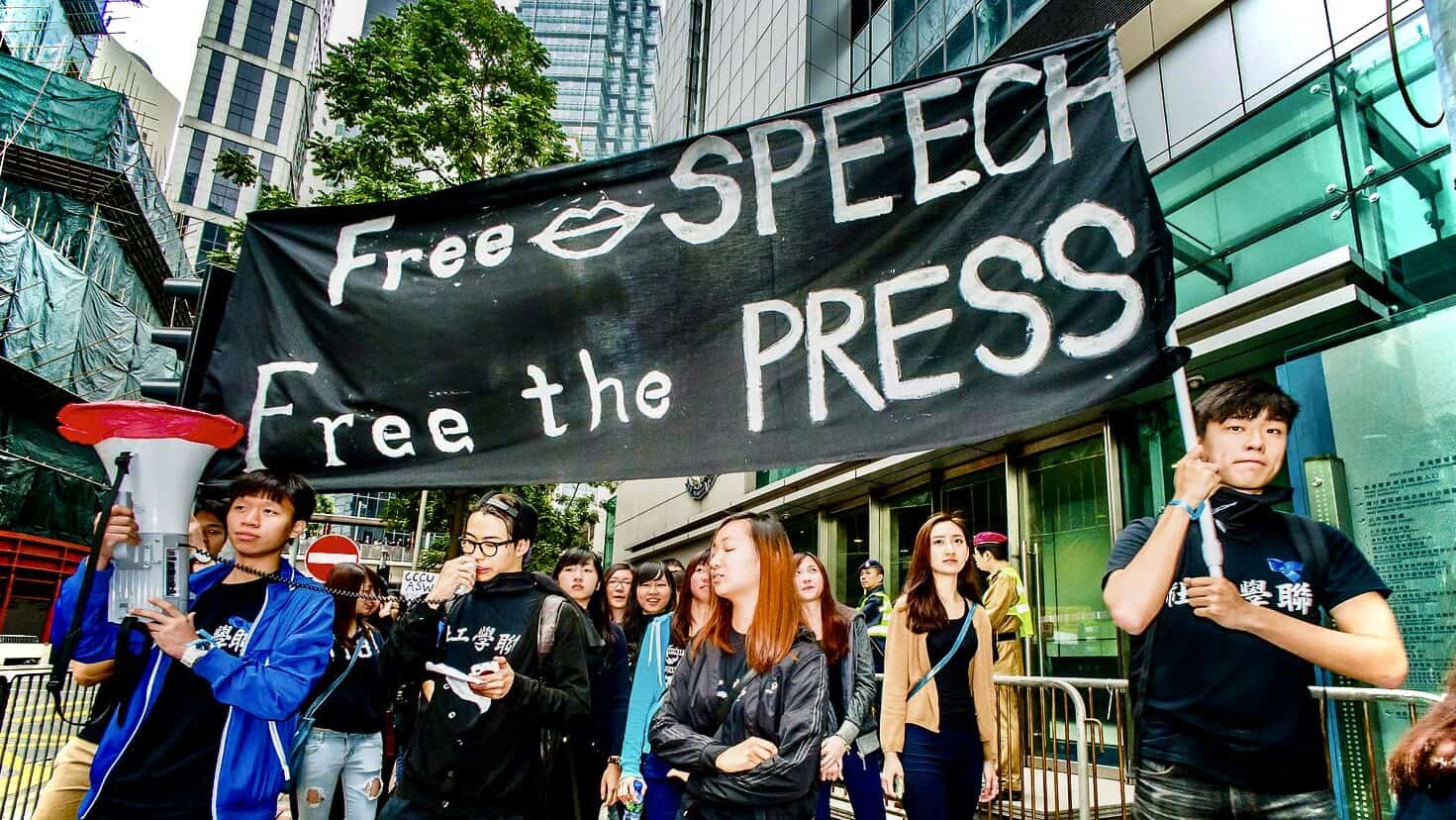
But Hong Kong’s government is caught in an unavoidable dilemma: having to comply with Beijing’s dictates while preserving remnants of the freedoms that make Hong Kong attractive. Determined to remain a global financial center, Hong Kong authorities can ill afford complete press censorship that could trigger a renewed exodus from the territory.
RTHK’s own decline in credibility began in 2020 with the imposition of the draconian National Security Law that criminalized dissent. In November of that year came a requirement that the Chinese national anthem be played on air daily. A ban on rebroadcasts of programmes from UK broadcaster the BBC took effect in February 2021 (RTHK was founded by the BBC in 1928, when Hong Kong was under British rule).
The station’s director of broadcasting, career civil servant and former deputy labor secretary Angelina Kwan, took office this January. She is promoting “patriotic journalism,” in which RTHK broadcasts follow a pro-Beijing narrative in line with national interests. Career employees must pledge allegiance to the Hong Kong government.
“It seems it’s not enough to be balanced and fair,” says Peter Lewis, former host of RTHK’s daily Money Talk program. “There’s only room now for pro-China voices…RTHK is being badly degraded.”
The radio station’s issues are part of a broader picture of a gradual rise in pressure on the media. Despite Hong Kong’s basic law, or de facto constitution, guaranteeing freedom of speech and freedom of the press, since 2020 ten media outlets have been closed and 900 Hong Kong journalists have lost their jobs, according to Reporters Without Borders.
The Hong Kong government’s gradualist approach on media transformation is likely to continue. Could that eventually mean the mainland’s great internet firewall reaching into Hong Kong with Google, Meta and other social media being banned?
Given the near total crackdown on opposition, few in Hong Kong are willing to criticize the erosion of press freedom. Bryan Curtis, the former Bloomberg radio host and RTHK presenter, laments, “there is no civil society left in Hong Kong.”
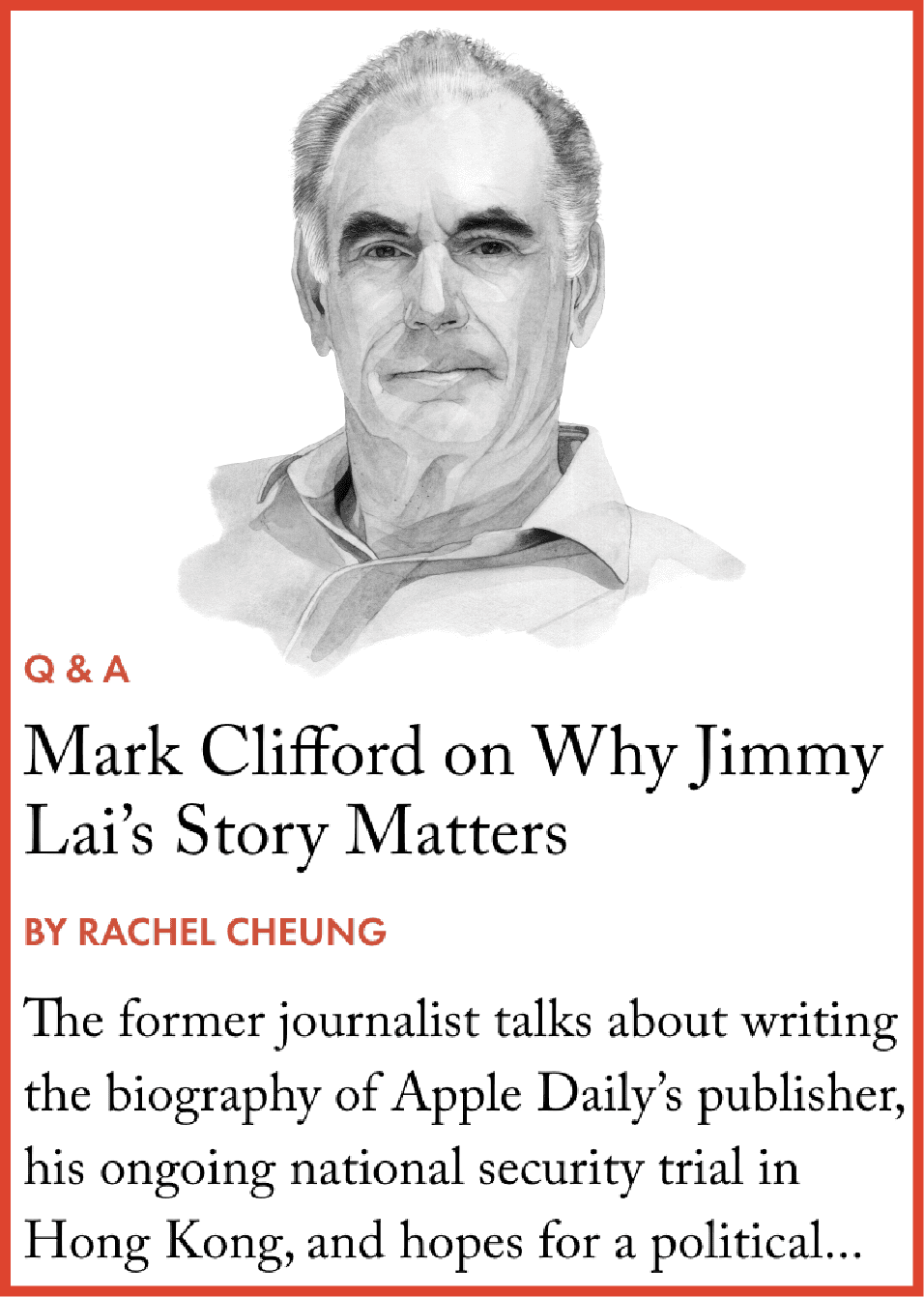
Lai, publisher of the now defunct Apple Daily, is the most prominent of the ten journalists currently imprisoned on charges related to the NSL. A leading figure in the pro-democracy protests, the 77-year-old was convicted of fraud and has been held mostly in solitary confinement since December 2020. His assets have been seized and he faces further prosecution even while in prison.
In September 2024, Chung Pui-kuen, the former chief editor of the defunct digital Stand News was sentenced to 21 months imprisonment. His colleague, former acting chief editor Patrick Lam, was sentenced to 11 months. The two were found guilty of conspiring to publish seditious material.
Beyond those high-profile cases, among the remaining independent news outlets in the territory, the digital Hong Kong Free Press has been subjected to repeated audits by the tax authorities. The South China Morning Post, owned by Alibaba and tycoon Jack Ma, has shifted to a more pro-Beijing editorial stance and thus far has been spared. Thomas Benson of Hong Kong Watch, the UK-registered human rights group, says Beijing is transforming Hong Kong “through the well-honed Chinese Communist Party techniques of manipulating personnel, rewarding loyalty and pushing out critical voices.”
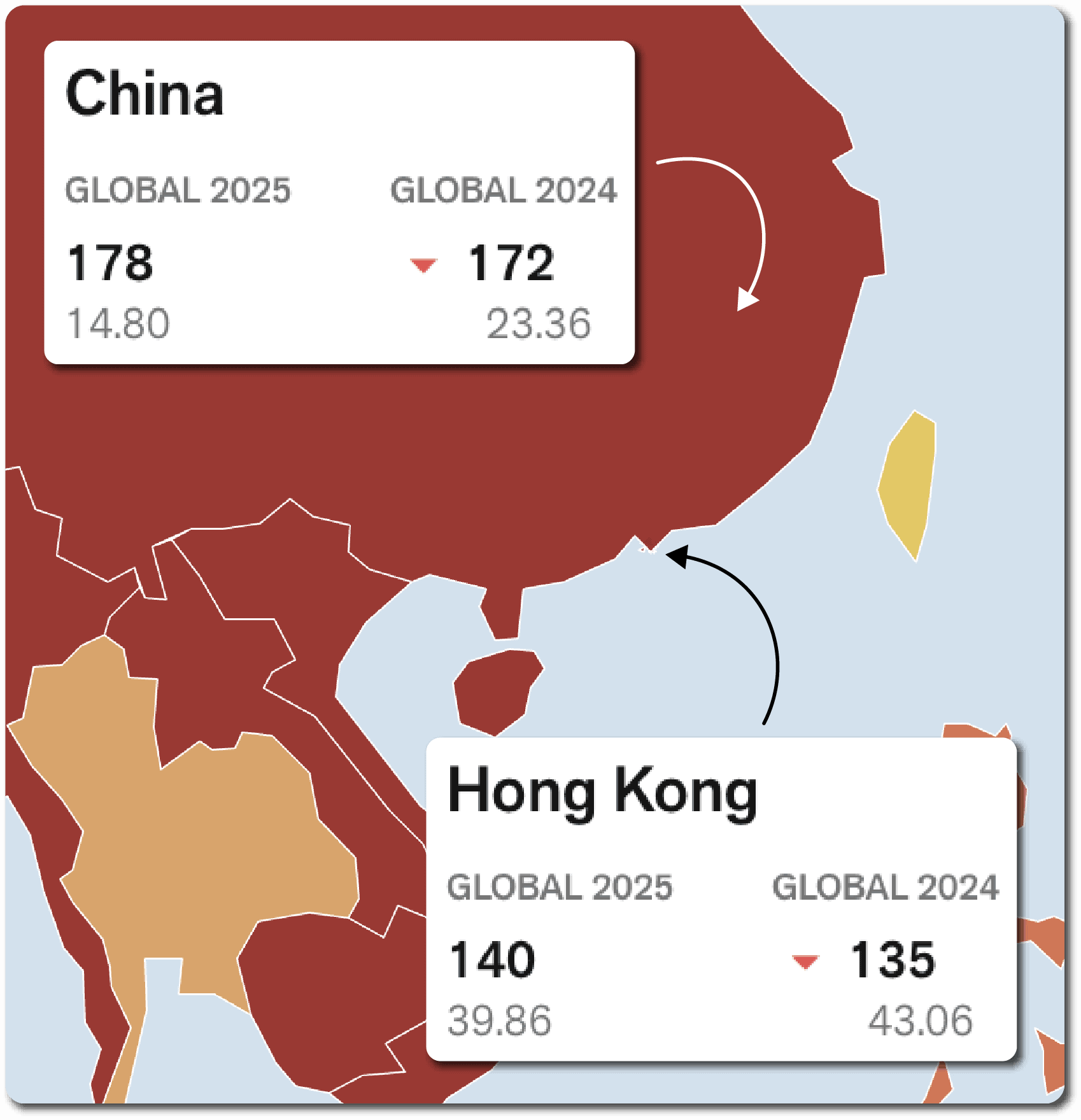
The 2025 index of world press freedom published by Reporters Without Borders says journalists are under severe threat in Hong Kong. Self-censorship is now pervasive in a territory that once ranked among the freest in the world. Press freedom has fallen precipitously and is near the bottom in the latest RWB ranking, to 140 out of 180 territories surveyed. By contrast in 2002 Hong Kong was ranked as the fourteenth most free. China in 2025 is ranked 178.
Mainland China’s position should come as no surprise. President Xi Jinping makes no secret of how Chinese journalists should operate. He has written, “news organizations and journalists all work for the party and the people, and they must be responsible to the party.”
The Hong Kong government’s gradualist approach on media transformation is likely to continue. Could that eventually mean the mainland’s great internet firewall reaching into Hong Kong with Google, Meta and other social media being banned? Could RTHK’s English language service be closed? All of these possibilities are now on the table — but if they come to pass, that would mean press freedom in the territory being finally extinguished.

Barry D. Wood is a journalist, author and educator based in Washington, D.C. He was the international economics correspondent for RTHK radio in Hong Kong and also writes the American Dispatch column.