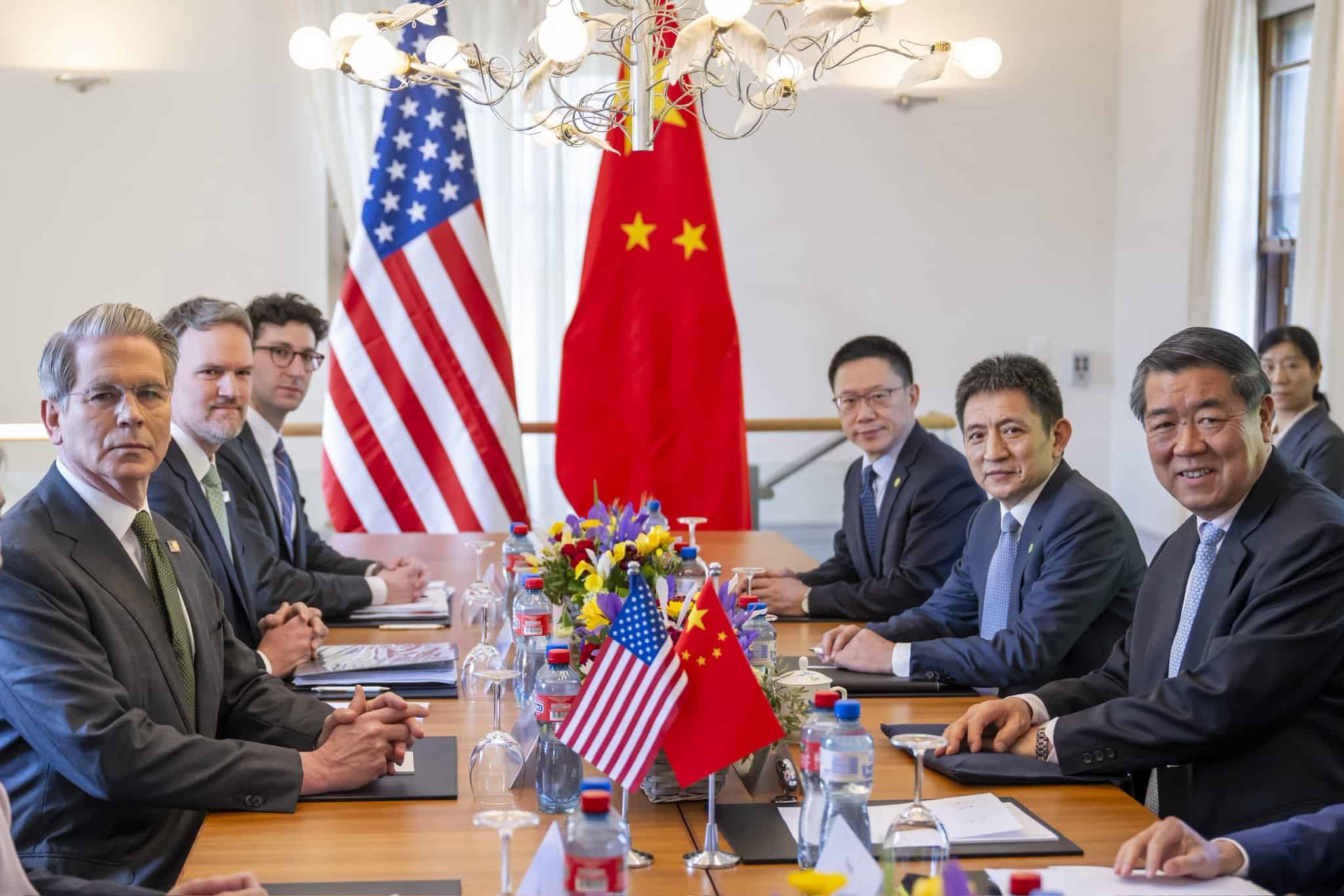
Donald Trump had a message for the world as American trade negotiators met their Chinese counterparts in Switzerland last weekend. “Many things discussed, much agreed to,” Trump wrote on social media on Saturday. “A total reset negotiated in a friendly, but constructive, manner.”

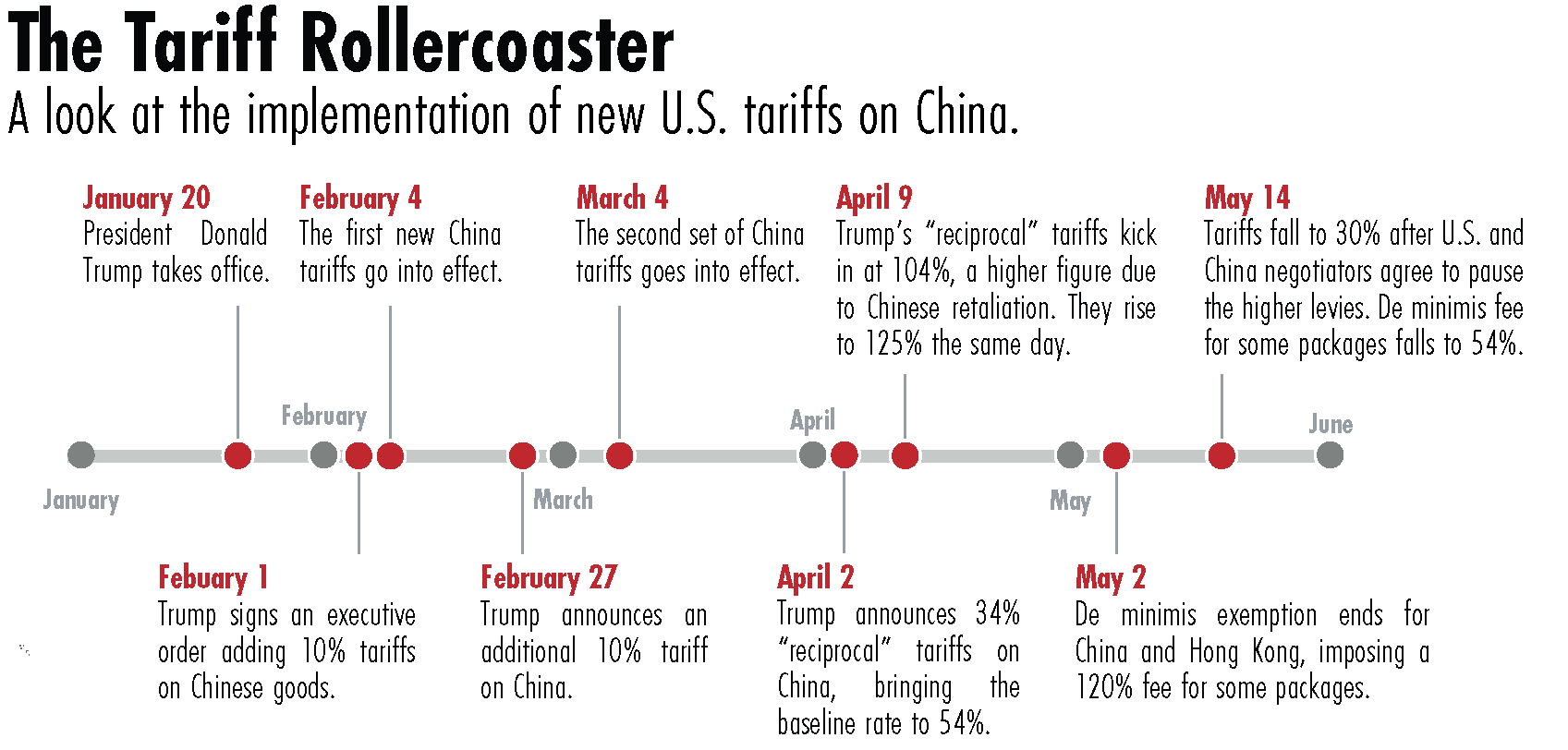
The president, it turned out, was hardly exaggerating. By Monday, the United States and China had agreed to drop their respective tariffs on each other by more than 100 percentage points. The baseline U.S. levy on Chinese goods is now around 30 percent; China’s on American imports is around 10 percent.
The temporary reductions — they are technically a 90-day pause — end an effective embargo on bilateral goods trade that the previous tariff level had imposed.
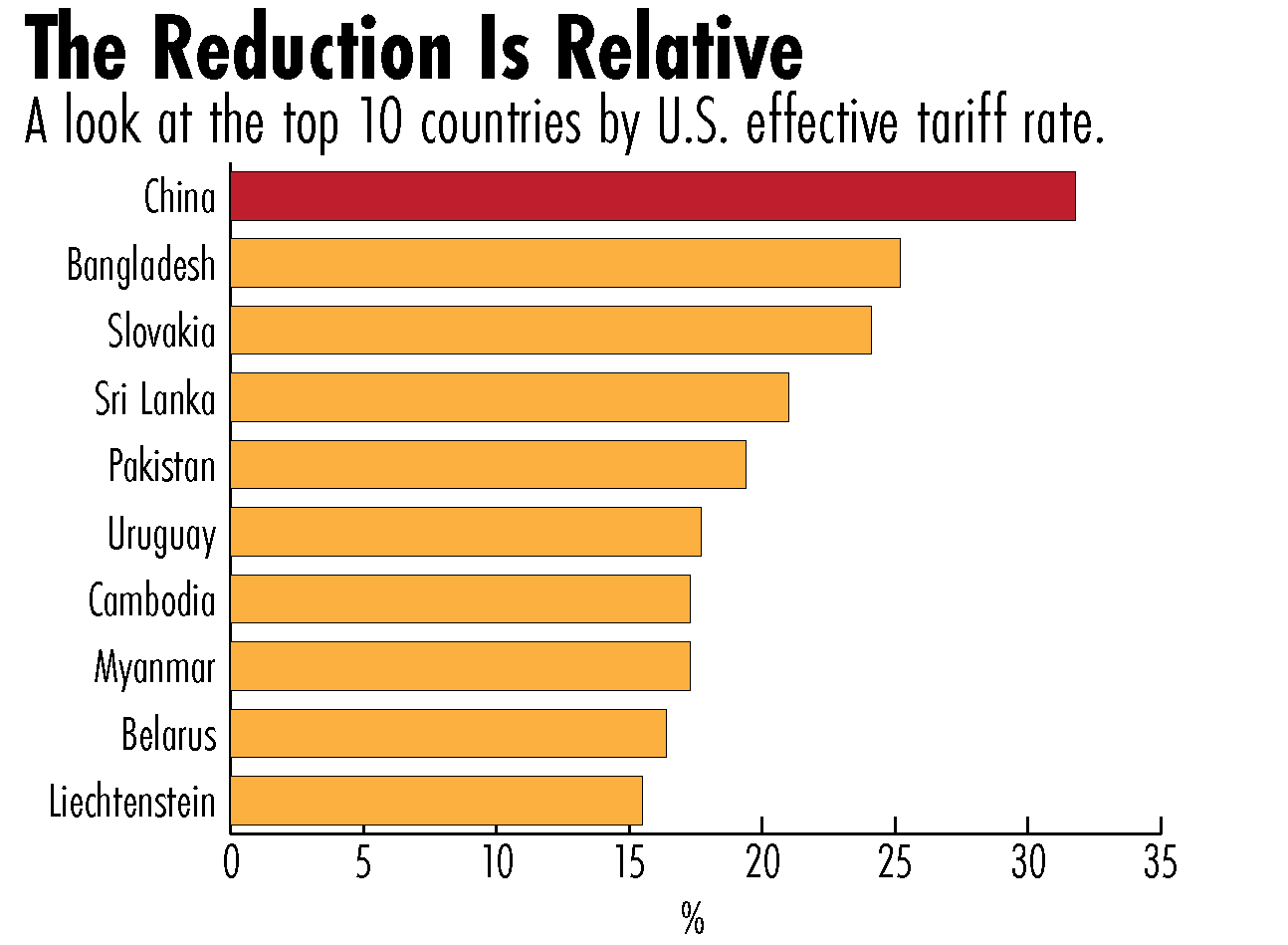
However, the U.S. consumer still faces the highest overall average tariff rate since before World War II, according to the Yale Budget Lab; no country faces higher rates than China.
“We are not back to where we started on January 1st,” says Mary Lovely, Anthony M. Solomon senior fellow at the Peterson Institute for International Economics. “Are [high tariffs] the new normal? There is a good chance they are.”
And while the tariff rate cut on Chinese goods this week is huge, the levy will still be prohibitive for some industries, Lovely notes. Some products remain subject to duties that stack on top of the baseline 30 percent rate, a result of separately imposed tariffs intended to protect specific American industries.
U.S.-based importers of Chinese aluminum, for example, will still be paying at least 50 percent of the good’s value in the form of tariffs. Products that previously entered the United States under the so-called de minimis exemption, which allowed goods worth under $800 to enter duty-free, also face a rate greater than 50 percent — or a $100 fee. Meanwhile, Trump has largely spared electronic goods like laptops from the whipsaw.

To be sure, the U.S. and China had imposed significant tariffs on each other before Trump took the trade war into high gear last month. Average U.S. tariffs on China and average Chinese tariffs on the U.S. each totaled 21 percent before Trump resumed office, according to Chad Bown, an economist at PIIE.
We are not back to where we started on January 1st. Are [high tariffs] the new normal? There is a good chance they are.
Mary Lovely, Anthony M. Solomon senior fellow at the Peterson Institute for International Economics
During his first four years as president, Trump imposed tariffs on more than $360 billion in Chinese goods, raising the average tariff rate on China from 3 percent in January 2018 to 19 percent in February 2020. President Joe Biden largely kept those tariffs in place while adding $18 billion of his own, raising the average rate to 21 percent by the time he left office. Altogether, these levies totaled about two-thirds of China’s exports to the U.S. Now, tariffs blanket almost all of them.

Estimates vary for the current effective U.S. rate on China, but they are generally above 30 percent.

Noah Berman is a staff writer for The Wire based in New York. He previously wrote about economics and technology at the Council on Foreign Relations. His work has appeared in the Boston Globe and PBS News. He graduated from Georgetown University.