If Chinese company listings on U.S. stock exchanges are soon to be a thing of the past, at least they are leaving with a good taste in the mouth.
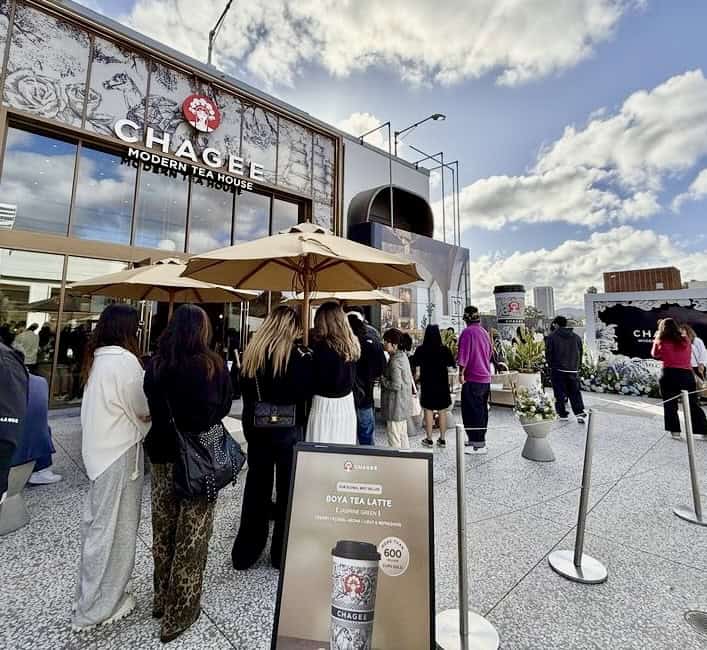
Chagee, a fast growing tea store chain, floated on the Nasdaq on April 17, raising some $411 million. Since then its shares have defied the gloom looming over American markets, rising by 10 percent and valuing the company at more than $6 billion. This week, the chain’s first U.S. store opened at a mall in Los Angeles.
The company’s market success reflects optimism about China’s efforts to boost consumer spending. “There are plenty of hedge funds that would take a flyer” on a Chinese consumer firm, says Andrew Collier, Senior Fellow at the Harvard Kennedy School’s Mossavar-Rahmani Center.
Chagee’s strong performance has also come despite warnings from the Trump administration that Chinese company IPOs in the U.S. could effectively be banned as economic relations between the two counties worsen. Treasury Secretary Scott Bessent last month said that a delisting of all Chinese stocks was “on the table.”
This week, The Wire takes a closer look at Chagee’s rise and its hopes of matching the global spread of mega-coffee chains like Starbucks.
Reading the Tea Leaves

Chagee opened its doors in 2017 as the passion project of its then 23-year-old founder, Zhang Junjie, an orphaned school dropout who had previously worked at a Taiwanese-style tea shop on the mainland, according to Chinese media.
At the time, China’s most popular tea chains often used powdered ingredients. By using real tea, Zhang believed he could create a premium product that would outcompete existing stores.
He opened the first Chagee store in Kunming, a so-called second tier city in China’s southern Yunnan province. The company priced its drinks above Mixue, a less expensive brand known for its dessert beverages, but below Heytea, a rival real-ingredients chain.

Zhang, now 30, read the tea leaves well. China’s market for freshly-made tea drinks nearly tripled between 2019 and 2024, according to an industry report Chagee commissioned for its IPO.
The industry has grown thanks to brands like Chagee making tea, long a staple beverage in China, “cool again” among millennial and Gen Z consumers, says Yaling Jiang, the founder of consultancy ApertureChina. “When people buy milk tea, they get a sense of normalcy, like they are still in the ‘consumption upgrade’ era,” she says.
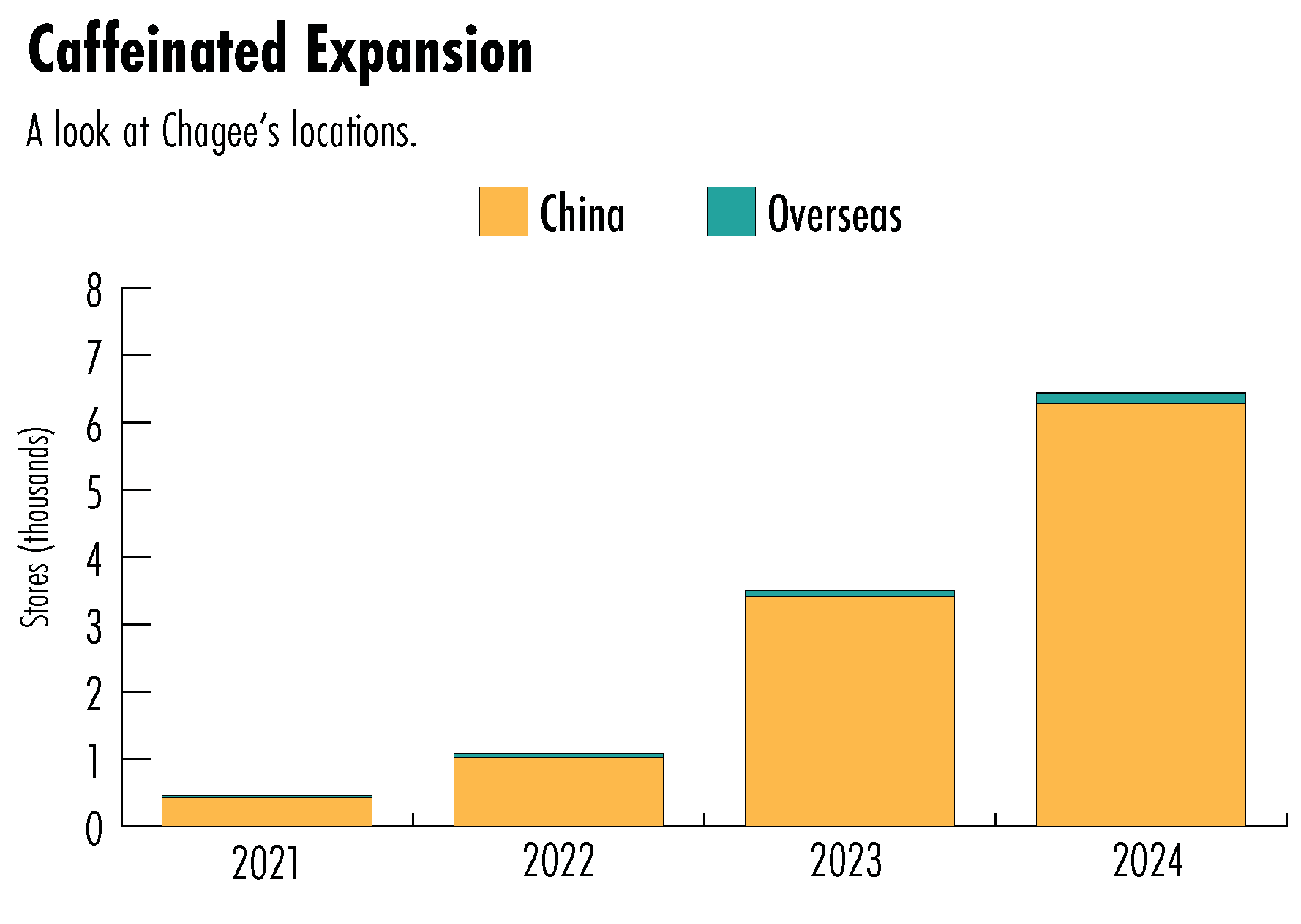
Chagee’s rapid growth has seen it open five stores a day on average for the past three years, according to its corporate filings. It had 14 times more outlets at the end of 2024 than three years earlier — though almost all of its 6,440 shops are still in China.
Riane Xie, a YouTube influencer, says Chagee stands out for its distinctive branding, which features traditional Chinese designs in blue and white. “It reminds me of old school Chinese porcelain,” she said.

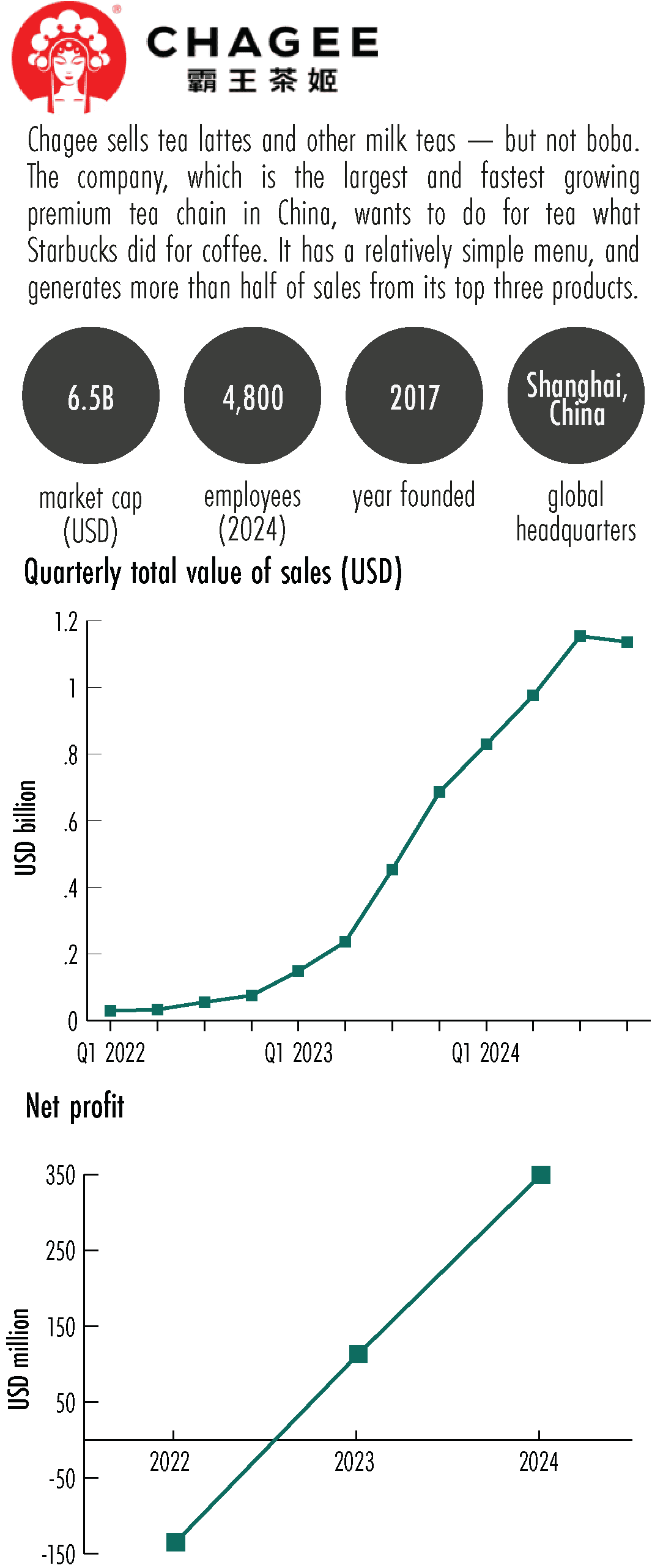
The company’s revenue has grown in kind with its physical footprint. It booked $1.7 billion in revenue in 2024, over 25 times more than in 2022. It has also become profitable, making $344.5 million in net income last year after recording a loss just two years earlier.
The consensus is that tea brands have reached a ceiling in China. That’s why almost all of them are exploring overseas markets.
Yaling Jiang, the founder of consultancy ApertureChina
Still, Chagee’s revenue growth is beginning to slow in China, where competition is fierce. In the final quarter of last year the company recorded its first quarterly decline in sales since its rapid expansion began. Average sales per location fell every quarter of 2024 after peaking in December 2023.
“The consensus is that tea brands have reached a ceiling in China,” Jiang says. “That’s why almost all of them are exploring overseas markets.”
Chagee says it will spend the IPO proceeds to expand at home and abroad, joining the likes of Mixue in going global. The company plans to grow its U.S. presence this year, beginning in Southern California, where Chagee has set up a regional headquarters. U.S. based stores will be company-owned, in contrast to the 94 percent of total stores that are franchised, said a person who was not authorized to speak publicly.
“The whole idea is that the U.S. market is going to be the next growth trajectory,” the person said. Rather than open stores in Chinatowns, Chagee will seek to “go mainstream” and “take people out of coffee shops.”
Chagee declined to comment.
The company’s success in the United States will depend on its ability to adapt to a market where coffee dominates, though analysts say U.S. consumers are looking for innovation. “Now is as good a time as any to bring new ideas to the market,” says David Henkes, an advisor to food and beverage companies at research firm Technomics.
Zhang, for his part, is not intimidated by the dominance of coffee shops. He has long said that he views Starbucks as his main competitor, and his company’s IPO made him a billionaire. At an event to celebrate International Tea Day in Shanghai last year, Zhang took the stage to announce a “small goal” to “fully surpass” the ubiquitous American brand.
It has a long way to go. Starbucks has more than 32,000 stores in 80 countries. Not to be outmatched, Chagee says it plans to open locations in 100.

Noah Berman is a staff writer for The Wire based in New York. He previously wrote about economics and technology at the Council on Foreign Relations. His work has appeared in the Boston Globe and PBS News. He graduated from Georgetown University.