
I have served in several high-level national security roles, including Acting Director of the Defense Intelligence Agency. From those leadership positions, I’ve witnessed firsthand how China systematically works to outpace American leadership in critical technologies. Let me be clear: we are losing the scientific arms race to our greatest adversary, and our response — both in defending our intellectual property (IP) and investing in new research — has been dangerously inadequate.
Xi Jinping inspects a brigade of the Chinese PLA Rocket Force and observes a training session, October 17, 2024. Credit: CGTN
Just two decades ago, China led in only three of 64 critical technologies; today, it dominates 57. In 2021, Beijing demonstrated its growing might by successfully testing and deploying a nuclear-capable hypersonic missile — threatening to alter the strategic balance in modern military technology. These achievements did not materialize overnight; they are the direct result of massive Chinese investment in scientific research, coupled with a ubiquitous campaign of IP theft, cyber-espionage, and forced technology transfers from U.S. companies.
China’s enhanced technological capabilities have benefitted from domestic investment leading to genuine scientific progress. The progress, however, has significantly accelerated through an aggressive “leapfrogging” strategy. Take, for example, the Chinese AI startup DeepSeek, which recently released R1, a large language model performing at a level comparable to America’s most advanced systems. Almost immediately, reports surfaced that DeepSeek had likely trained its model on stolen American data and IP. This is the playbook: Beijing bypasses the costly stages of basic research by siphoning off our breakthroughs.
A demonstration of DeepSeek’s R1 model. Credit: DeepSeek
Unfortunately, far too much of the U.S. conversation has focused only on protecting American IP — as if we can hold the line with defensive measures alone. While stopping IP theft is critical, we also need an offensive strategy that focuses on pioneering scientific research. Right now, we lack that comprehensive approach. Federal support for fundamental research has declined over the past decade, with the National Science Foundation (NSF) — our principal driver of basic innovation—not only facing an 8 percent budget cut in the last fiscal year but now pausing grantmaking and planning staff layoffs. Meanwhile, China doubled its budget for basic research and expanded overall R&D spending by 10 percent annually. The imbalance is stark: we are trying to shield our existing IP with one hand while allowing our research capabilities to wither with the other.
We don’t know which new ideas will form tomorrow’s strategic edge — that’s why basic research is vital. Yet any breakthrough is only as secure as our ability to protect it from espionage and theft.
Yet basic research is precisely where breakthroughs in artificial intelligence, quantum computing, advanced materials, and biotechnology begin. If we continue underfunding foundational science, we undermine both our economic leadership and our national defense. In short, we become more vulnerable to an adversary that is rapidly building its own organic capabilities and as ample evidence demonstrates, is more than willing to exploit our technology.
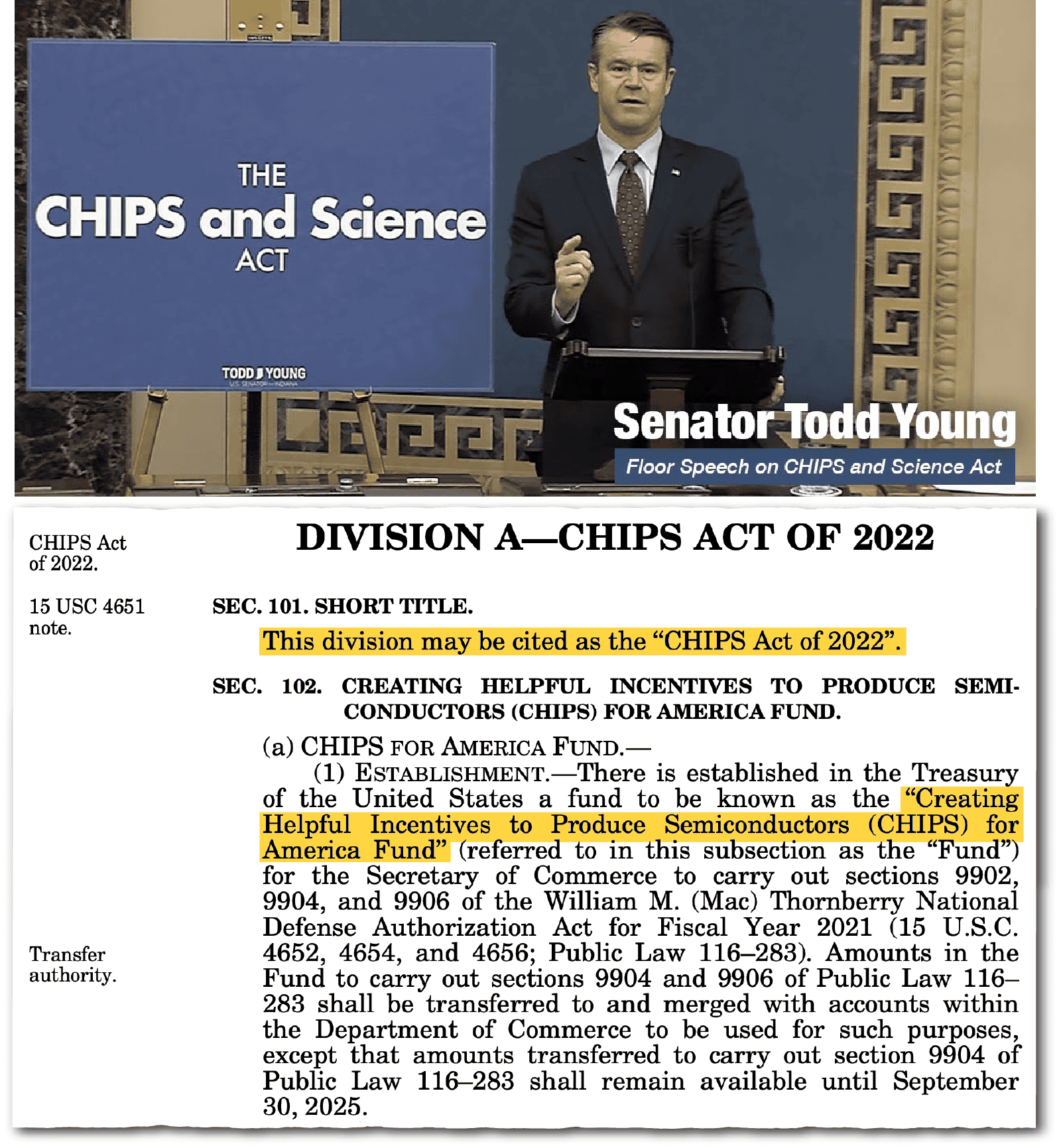
National security has always been tied to technological preeminence. After the Soviet Union launched Sputnik, we responded with the Apollo Program. When Nazi Germany pursued nuclear weapons, we initiated the Manhattan Project. Today, China is leveraging massive research investments accompanied by extensive stolen innovation know-how to replace the United States as the world’s leading military and economic power. The stakes could not be higher, and as Senator Todd Young of Indiana — a key architect of the CHIPS and Science Act — recently argued, we must proactively invest in R&D and critical and emerging technologies now, so that we can avoid future industrial crises that demand costly emergency interventions like the CHIPS Act.
The solution has two pillars, both equally important. First, Congress must restore the NSF budget to at least $16 billion in the final fiscal year 2025 appropriations and commit to sustained increases beyond that. Properly funding the NSF’s Technology, Innovation, and Partnerships (TIP) Directorate is essential to ensure breakthroughs originate here and translate into American-led products and weapons systems — not Chinese copies.
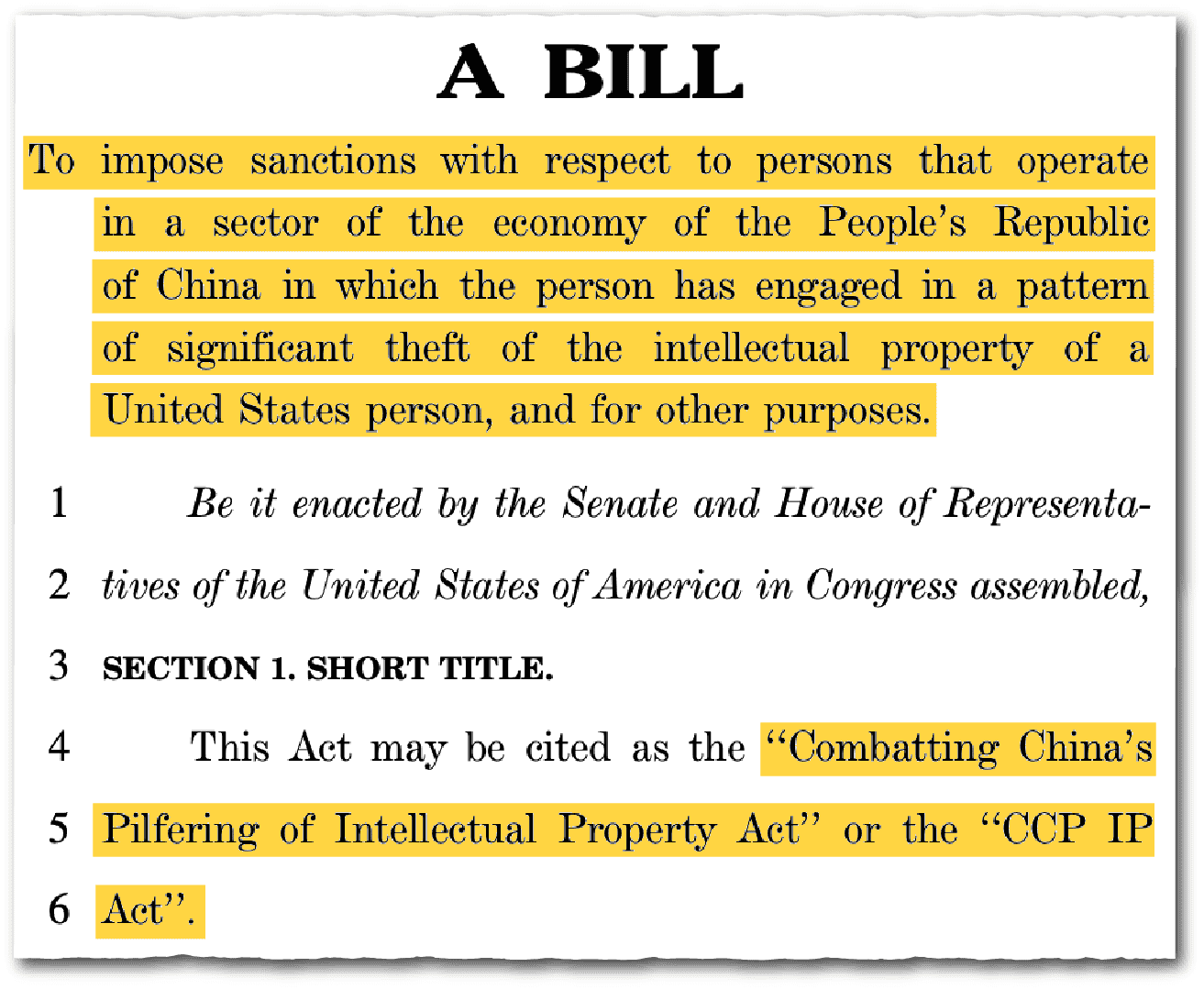
Second, we must strengthen our defenses against IP theft. That means enhanced counterintelligence efforts, stronger cybersecurity practices, and tighter export controls — particularly in critical sectors like AI and quantum computing. Protecting IP without investing in research, however, simply cements our current position; it does not move us ahead. Conversely, investing in research without addressing theft hands our adversaries a shortcut to the very technologies we are racing to pioneer. Both elements must work in tandem.
Consider artificial intelligence as a prime example of why these two pillars work in tandem. Neural networks that underpin modern AI were nurtured by NSF grants in the 1980s and 1990s, when such research seemed too speculative for private industry. That early investment now underlies everything from autonomous weapon systems to cybersecurity platforms. We don’t know which new ideas will form tomorrow’s strategic edge — that’s why basic research is vital. Yet any breakthrough is only as secure as our ability to protect it from espionage and theft.

This is not a partisan issue; it is a national security imperative. China’s success in critical technologies threatens our economic sovereignty, military readiness, and global standing. Slashing basic science funding while China surges ahead is a strategic miscalculation that will have lasting consequences. If we fail to both protect our IP and fund new research at scale, we risk ceding the 21st century to an authoritarian regime whose interests are fundamentally at odds with American values.
We’ve overcome existential threats before by mobilizing our nation’s resources and talents. Our competition with China demands the same scale of response — a robust, forward-looking strategy that protects the fruits of our ingenuity and drives new scientific frontiers.
The choice is stark: we can defend our IP and massively invest in R&D to outpace China, or we can stand by as it surpasses us, shaping the future of warfare and the global economy on its own terms. For those of us committed to safeguarding this nation, inaction is not an option. The time for half-measures is over. We must confront China’s IP theft while unleashing America’s full innovative power — our national security, and indeed our future, depends on it.

David Shedd is the Former Acting Director of the U.S. Defense Intelligence Agency and author of a forthcoming book about Chinese industrial espionage against the United States.