ManusAI this week became the latest little-known Chinese AI firm to emerge with surprisingly advanced capabilities. Yet whether or not its rise is truly another ‘DeepSeek moment,’ the two companies will soon have at least one thing in common: how easily anyone can see and use the technology behind their sudden success.
An example use case of the Manus AI agent.
“We’ll be open-sourcing quite a few good things in the near future,” ManusAI’s co-founder Ji Yichao wrote on X, after the company unveiled an AI agent that it says can perform online tasks better than OpenAI’s DeepResearch. “This wouldn’t be possible without the amazing open-source community,” Ji said in a demo video.
ManusAI is set to enter a Chinese open-source ecosystem whose numbers have swelled since DeepSeek launched its own open-source R1 model in January. Some of China’s most prominent tech giants, which previously only proffered closed proprietary models, are also joining in.
In February, Baidu said it would release an open-source version of its Ernie chatbot. A month later, Bytedance, whose popular Doubao model is closed-source, unveiled an open-source LLM training system. Meanwhile, one of the country’s leading AI startups, Zhipu AI, announced on WeChat that 2025 would be “the year of open source.”
Open-source technology originated in the field of software development, when it referred to software based on code that anyone could view, use and even redistribute. The idea behind it is that new technologies should be available to anyone, and not owned by any one company or individual — much as anyone can use the internet itself.

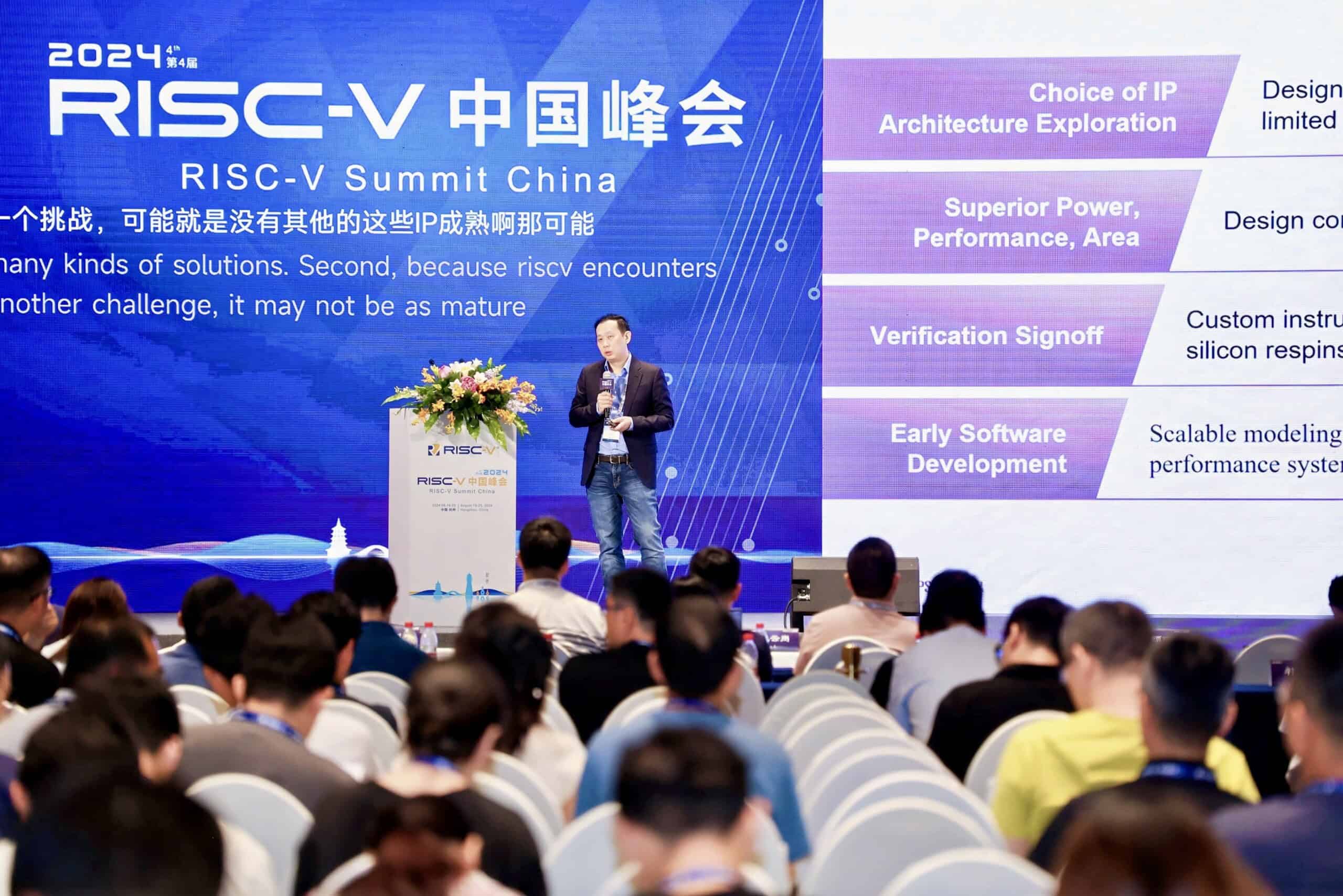
Today, the concept is often applied in fields such as AI and chip design — and in China, it is increasingly becoming a policy priority. For example, Beijing is preparing guidance that will encourage chipmaking companies to use the so-called RISC-V architecture, two unnamed sources told Reuters earlier this month. RISC-V is an open-source alternative to a technology that allows chip hardware and software to communicate, a vital area otherwise dominated by U.S. firm Intel and Japanese-owned Arm.
China has been pushing its companies toward open-source technologies for decades, notably in its efforts to develop computer operating systems. Factors such as the U.S.’s export controls on advanced semiconductors, alongside the fierce competition in areas like AI and chipmaking, have recently spurred Chinese companies to return to the open-source ethos with newfound fervor.
“If we had to start over, we would have gone open source on day one,” Yan Junjie, chief executive of Chinese AI unicorn Minimax, said recently.
China’s emergence as a leader in open-source technologies meanwhile underscores the challenge for American tech firms and policymakers seeking dominance in the high-tech arena. Experts offer several reasons for China’s open-source embrace, which contrasts with widely-held perceptions of Chinese corporate culture as being opaque and secretive.
“It makes sense that China would double down on open source to try to get these innovations that would come out of one AI lab to spill into the broader ecosystem,” says Sam Bresnick, a research fellow at the Georgetown University Center for Security and Emerging Technology. “You could then have positive feedback loops.”
Over the years, Chinese companies have benefited from taking a lot of open-source technology, legally and for free from the west. They don’t want to just be takers. They also want to be contributors to the ecosystem…
Kevin Xu, founder of technology fund Interconnected Capital
Open-source tech also offers Chinese companies a way to take advantage of global advances at low cost.
“Not using open source would mean they would need to start from scratch,” says Antonia Hmaidi, a senior analyst at the Mercator Institute for China Studies in Berlin. “It fits in together quite nicely with this idea that no one should own information.”

The United States and other countries have long accused China of stealing intellectual property, leading some to worry that open-source technologies are another way the country’s companies might unfairly leapfrog competitors. But building on top of open-source software created by others is not IP violation per se, says Kevin Xu, founder of technology fund Interconnected Capital.
“Intellectual property protection norms are very different in the open-source world,” he says. “There are different ways to license open-source technology that allows the end users to do whatever they want with the software without committing any IP infringement.”

China has used open-source technologies before. To try to break away from its dependence on high-cost Western software during the 1990s, the Chinese government funded efforts to replace Microsoft products with open-source alternatives, for instance.
Over the ensuing decades, Chinese companies, like their global peers, leaned more on their own proprietary technology. China’s first entrants into the AI race, including Baidu and ByteDance, typically used closed models, for example.
Attitudes started to change as the Biden administration ramped up efforts to restrict China’s tech sector with export controls on advanced chips. In response, several Chinese firms have adopted the RISC-V architecture as an alternative technology platform. Great Wall Motors, a leading independent Chinese automaker, last September announced plans to deploy its newly developed chips, built on RISC-V, across at least 2.5 million vehicles within five years, according to Chinese state media reports.
The organization behind the tech, RISC-V International, is a nonprofit based in Geneva, Switzerland. Half of its 24 fee-paying premium members — a group that includes Google and Nvidia — are Chinese companies.
“RISC-V is understood as a great opportunity because it is seen as a way to catch up on complicated chip architecture,” says Jean-Yves Larguier, a Shanghai-based semiconductor consultant.
Although RISC-V chips are currently less technologically advanced than Arm’s or Intel’s, they are growing in popularity. Worldwide, RISC-V chips have become the fastest growing category in the computer microchip market; according to data from research firm Global Market Insight, they already account for 13 percent of the global market.
China’s embrace of open-source technologies is not all driven by Washington and Beijing. China has the second-largest number of developers on GitHub, a platform for sharing open-source projects, even though China’s strict information restrictions have sometimes brought it into conflict with the open-source ethos.
We act like we’re not in a competition with China. Why do we think they wouldn’t exploit open-source?
Mark Montgomery, a retired U.S. Navy rear admiral who is now director of the Center on Cyber and Technology Innovation at the Foundation for Defense of Democracies
Seven Du, an internet programmer in the eastern Chinese city of Yantai who has been developing open-source projects since 2008, says the popularity of open-source is not government-driven.

“I think the government sees it as a mission,” he says. “But in reality, open source is not a mission, nor is it a political achievement. The purpose of open source is to let everyone feel the power of the community.”
Regardless of its causes, U.S. policymakers and tech firms must now confront China’s rapid gains in this increasingly popular technology. Particularly in lower-income countries, China’s open-source AI models — which often cost a fraction of their international competitors — can confer soft-power and diffusion advantages.
“China has staked out a position that it is a partner to the developing world and tries to paint the United States as this big power that pushes people around but doesn’t really care about developing countries,” says CSET’s Bresnick. “Open source really helps that narrative.”

Some in the U.S. say American companies should place more restrictions around their models or designs by keeping them proprietary, to avoid giving Chinese competitors a headstart.
“We act like we’re not in a competition with China,” says Mark Montgomery, a retired U.S. Navy rear admiral who is now director of the Center on Cyber and Technology Innovation at the Foundation for Defense of Democracies. “Why do we think they wouldn’t exploit open-source?”
Others say putting the kibosh on open-source technologies would have its own costs.
“I don’t think it is useful to start restricting what can be open-sourced, especially when we’re talking about these very fundamental technologies that are useful for many different things,” says Hmaidi of MERICS. “Of course China won’t be able to use it, but also all the other companies in Europe and in the U.S. won’t be able to use it, and open source has been one of the things that has made some technologies quite frictionless.”

Yi Liu is a New York-based former staff writer for The Wire. She previously worked at The New York Times and Beijing News. Her work has also appeared in China Project, ChinaFile and Initium Media.

Noah Berman is a staff writer for The Wire based in New York. He previously wrote about economics and technology at the Council on Foreign Relations. His work has appeared in the Boston Globe and PBS News. He graduated from Georgetown University.