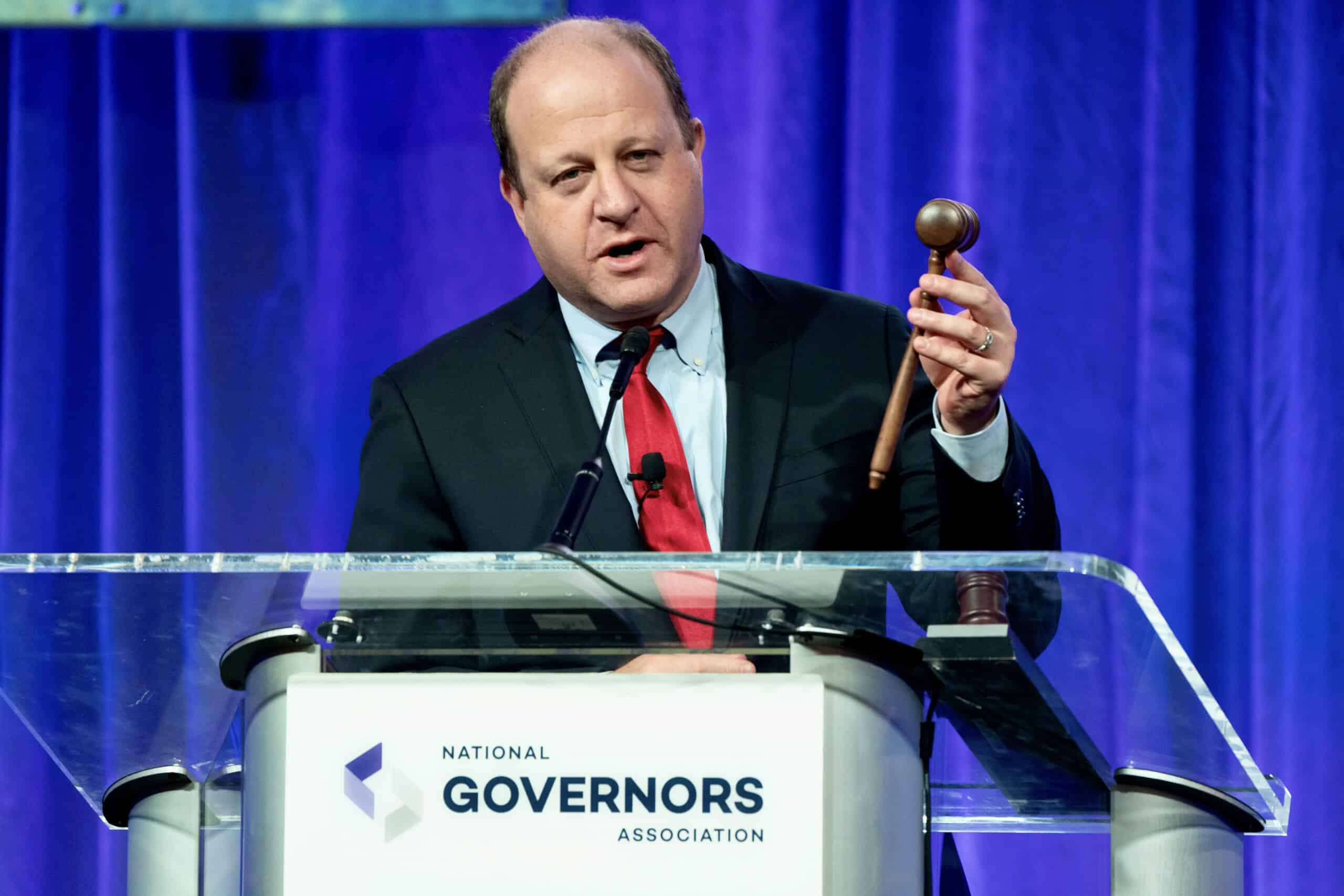
The Chinese Communist Party (CCP) isn’t just a problem for Washington — it’s a direct threat to state governments across America. Despite being on the frontlines of this new Cold War, however, most states have yet to implement the legislative and regulatory measures necessary to counter malign CCP activities. Beijing is stealing taxpayer-funded research from universities, targeting critical infrastructure supply chains, and using state pension funds to bankroll its military modernization and human rights abuses. It’s time for governors and state officials to wake up and take swift action to close these security gaps, ensuring their states do not become the weakest link in America’s national defense.
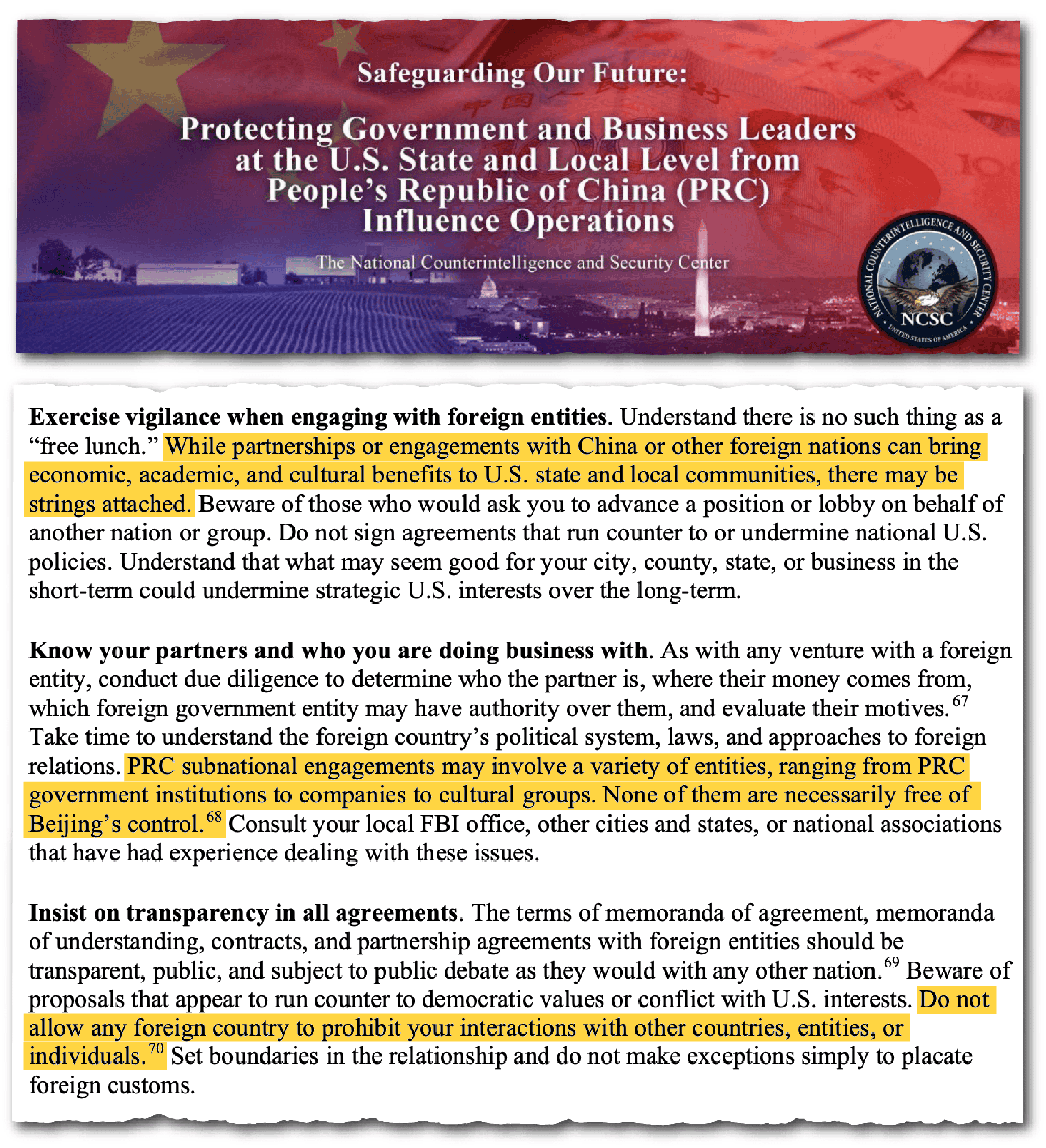
Beijing understands that state-level loopholes offer a backdoor into America’s economy and infrastructure. For decades, the CCP has weaponized supply chains and coerced companies and state governments to adopt pro-Beijing policies and legislation. These subnational efforts succeed largely because Beijing understands the legislative gaps between states and the federal government represent an exploitable security vulnerability. According to the U.S. Office of the Director of National Intelligence (ODNI), PRC companies and CCP officials “forge ties” with states in order to “exploit subnational relationships to influence U.S. policies and advance PRC geopolitical interests.” The ODNI has further warned that states should “conduct due diligence” on the companies and entities they engage with “to guard against potential foreign government exploitation.” Despite these warnings, most states have failed to implement even basic supply chain security measures.
Consider the disparate landscape of procurement and supply chain regulations between the federal government and states. The federal government has extensive regulations that prohibit agencies from contracting with PRC companies linked to the Chinese military, intelligence services, and human rights abuses. For example, the Federal Communication Commission’s “Covered List” and the so-called “Section 889 List” ban certain PRC telecommunications and surveillance equipment deemed to be a national security threat. More recent rules from the Department of Commerce restrict software and connected hardware. Yet, only about a third of U.S. states have enacted comparable state-level restrictions. This regulatory gap creates a critical supply chain vulnerability that Chinese military planners could exploit in the event of a conflict with the U.S.
The CCP isn’t waiting for U.S. states to get their act together. Every day, Beijing is finding new ways to infiltrate American industries, institutions, and supply chains. The question is: Will our state leaders do something about it?
PRC threats to U.S. states are not theoretical. In fact, recent incidents have demonstrated the PRC’s willingness to target critical infrastructure. In 2024, PRC state-sponsored actors conducted sophisticated attacks against water treatment facilities in multiple states. The FBI warned these attacks will enable the CCP to “physically wreak havoc on our critical infrastructure at a time of its choosing.” Alarmingly, most states and cities still allow agencies to spend taxpayer dollars to purchase blacklisted PRC telecommunications and surveillance equipment deemed to be a national security threat.
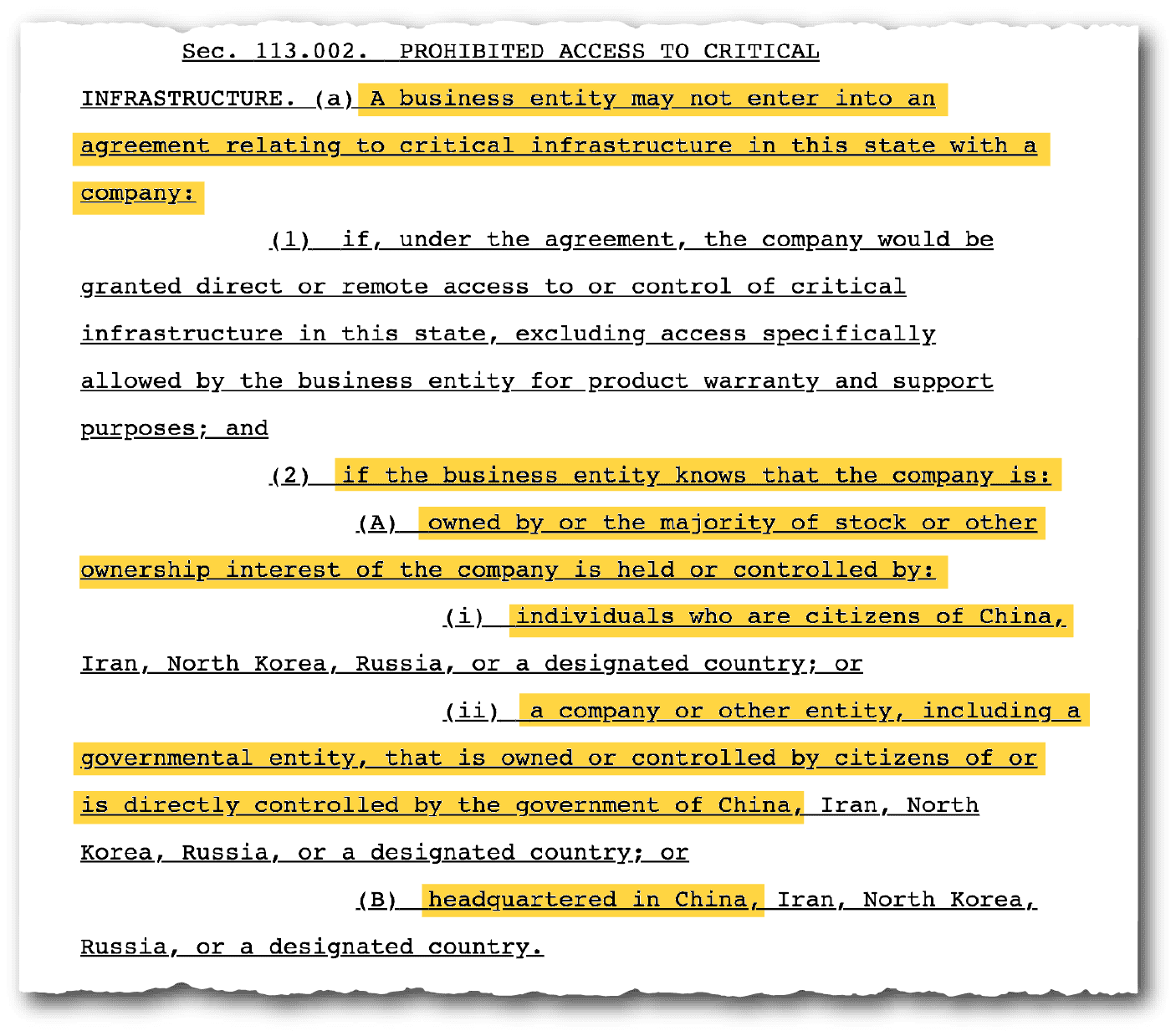
States must align their procurement policies with federal security standards to mitigate these risks. States collectively spend tens of billions of dollars annually on critical infrastructure, including electrical grids, water treatment facilities, and emergency services. Unless state governments establish and enforce procurement regulations banning PRC suppliers from these vital sectors, critical infrastructure remains exposed. Texas and Florida have set strong legislative benchmarks that other states should replicate to fortify their critical infrastructure.
State research institutions and universities have also become targets for PRC talent recruitment programs and illicit efforts to steal research, technology, and intellectual property. According to a 2024 Congressional report, “hundreds of millions of dollars in U.S. federal research funding” was stolen from state universities and research institutes by PRC actors. While federal research security laws are evolving, states must act independently to protect their R&D dollars and academic institutions. Legislation to remove academic partnerships, contracts, and funding with blacklisted PRC universities is an obvious first step to ensure state universities and taxpayer-funded research are protected.
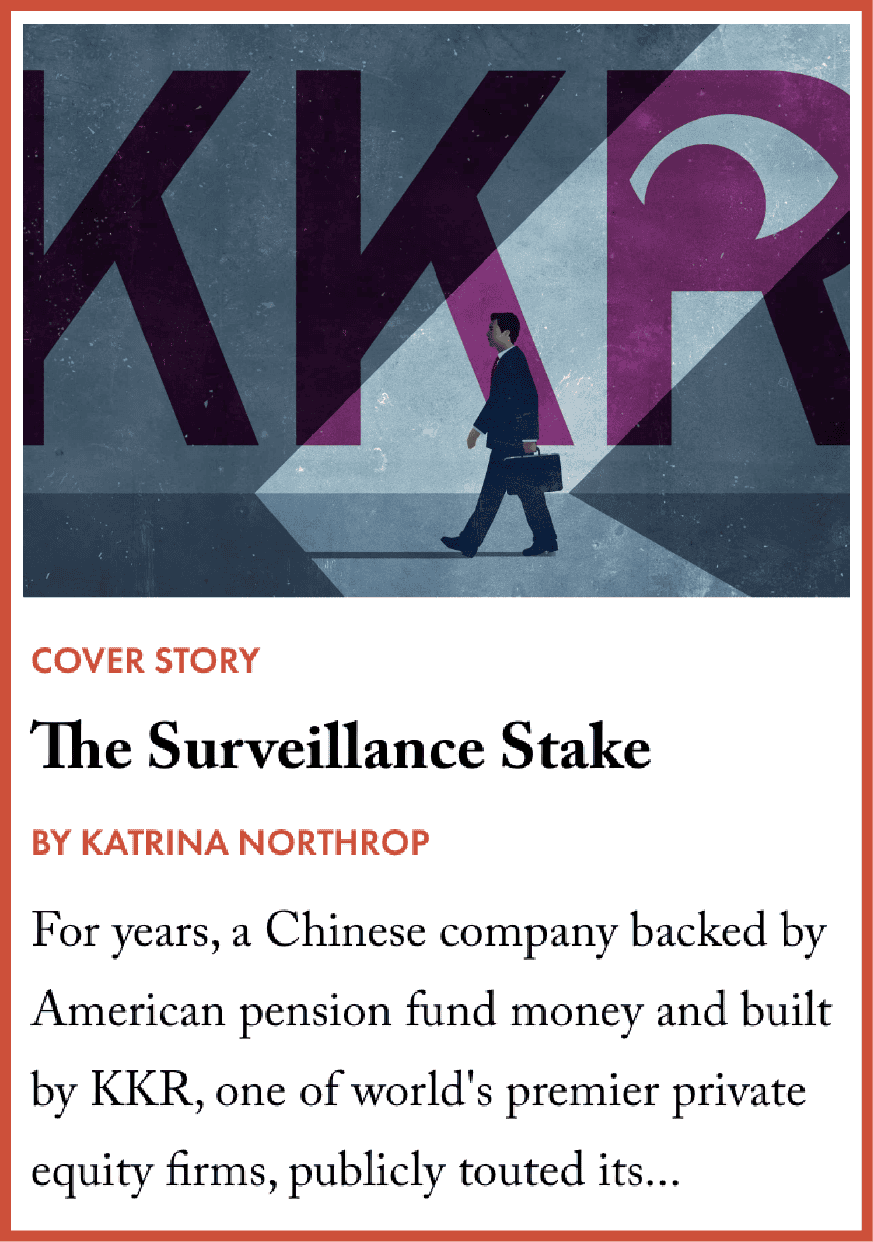
It’s not just infrastructure and research at risk, states must also scrutinize their public pension investments to ensure they do not finance PRC companies that violate human rights or support the Chinese military. Trillions of dollars in state pension funds — often contributed by teachers, first responders, and other public employees — are potentially exposed to Chinese companies linked to forced labor and military modernization. Continuing to invest in these entities not only poses significant moral and ethical concerns but also threatens long-term financial stability if U.S.-China tensions escalate and sanctions are imposed. By divesting from such companies, states can protect both the integrity of their pension systems and the values that American public servants work to uphold.
In the absence of immediate legislation, governors and other elected state officials should conduct tabletop exercises and war games to assess their vulnerabilities in a potential U.S.-PRC conflict. For example, state officials should discuss contingency plans if the PRC conducts cyber and supply chain attacks against local power companies, water treatment facilities, or other high-risk industries (e.g. oil pipelines, chemical plants, etc.). Chinese military planners have openly discussed these types of asymmetric attacks. The Select Committee on China has successfully conducted similar war games at the federal level, which directly influenced national security legislation. State officials can build on those lessons, tailoring strategies to their own jurisdictions. Willful ignorance is not a defense strategy—preparedness is.
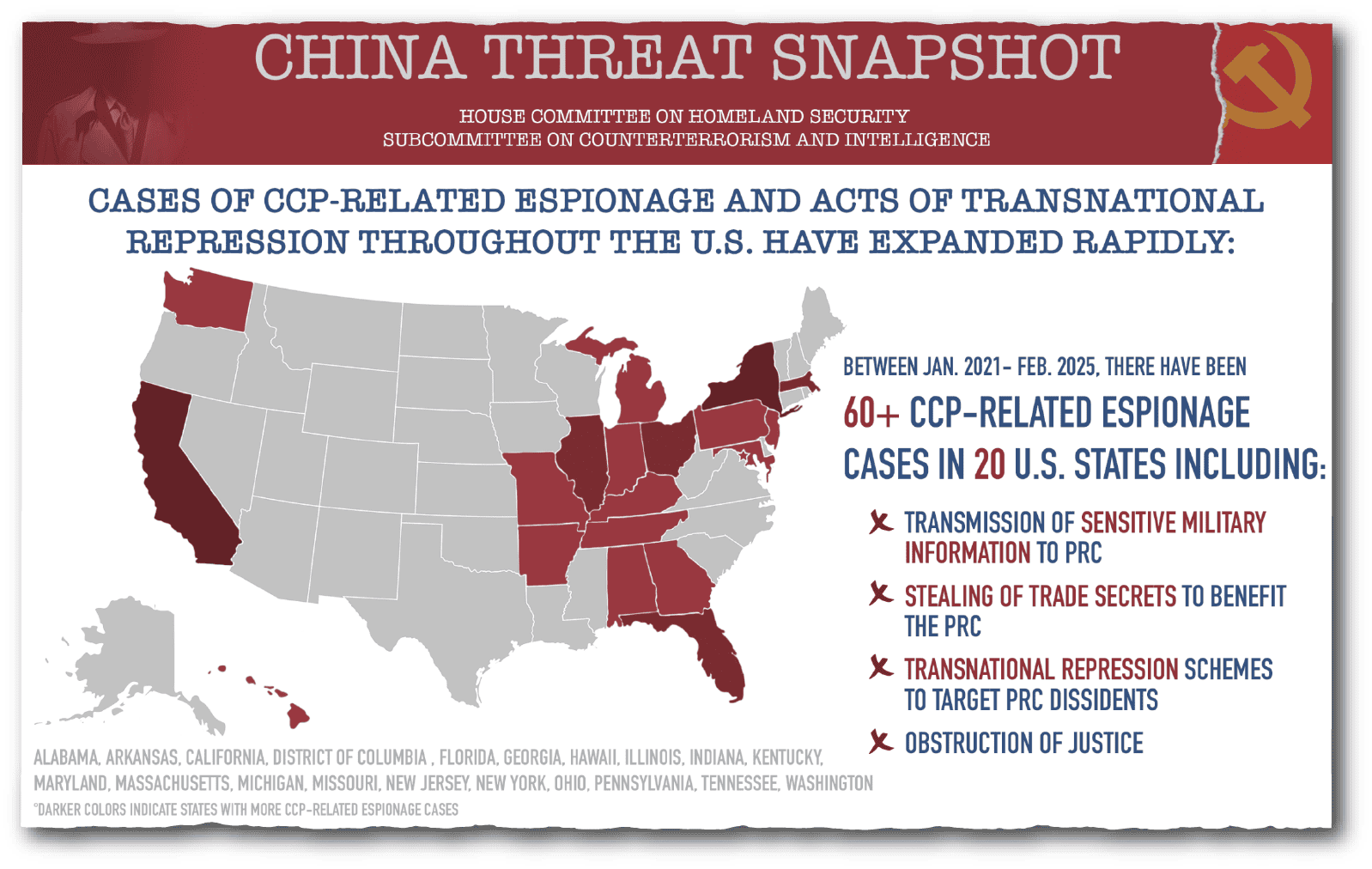
The CCP isn’t waiting for U.S. states to get their act together. Every day, Beijing is finding new ways to infiltrate American industries, institutions, and supply chains. The question is: Will our state leaders do something about it? Because if they don’t, they’ll be the ones explaining — to their voters, to their public employees, to their law enforcement and first responders — why they left the door open for Beijing. This isn’t just a federal issue. It’s a Main Street issue.
It’s time to shut Beijing’s backdoor into America — before it’s too late.

Kit Conklin is a nonresident senior fellow at the Atlantic Council’s GeoTech Center and a global executive who specializes in issues at the intersection of technology, commerce, and international security. He regularly speaks on China issues, data analytics, international finance, and emerging technologies. Additionally, Conklin is the Global Head of Risk and Compliance at Exiger.