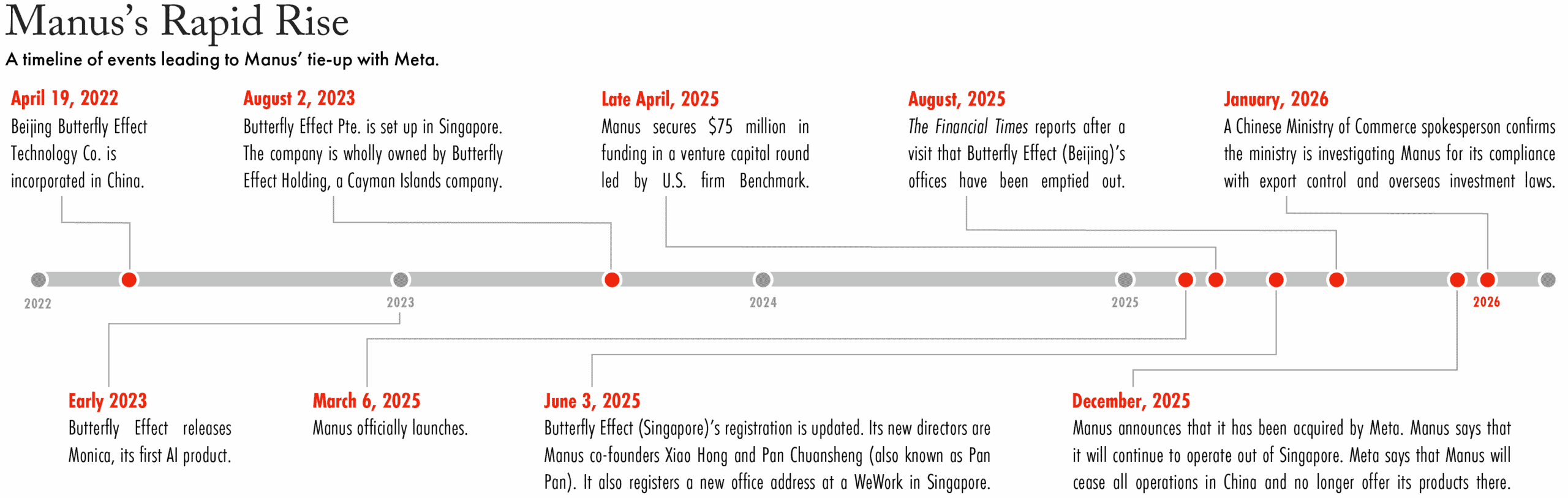
2025 was a banner year for Manus, the artificial intelligence company whose roots lie in China. In March, the debut of its AI agent, Manus AI, was hailed as a “second DeepSeek moment.” A month later, it landed a $75 million funding round led by U.S. venture capital firm Benchmark. By the end of the year, Meta had announced a multibillion dollar deal to join forces with the company.
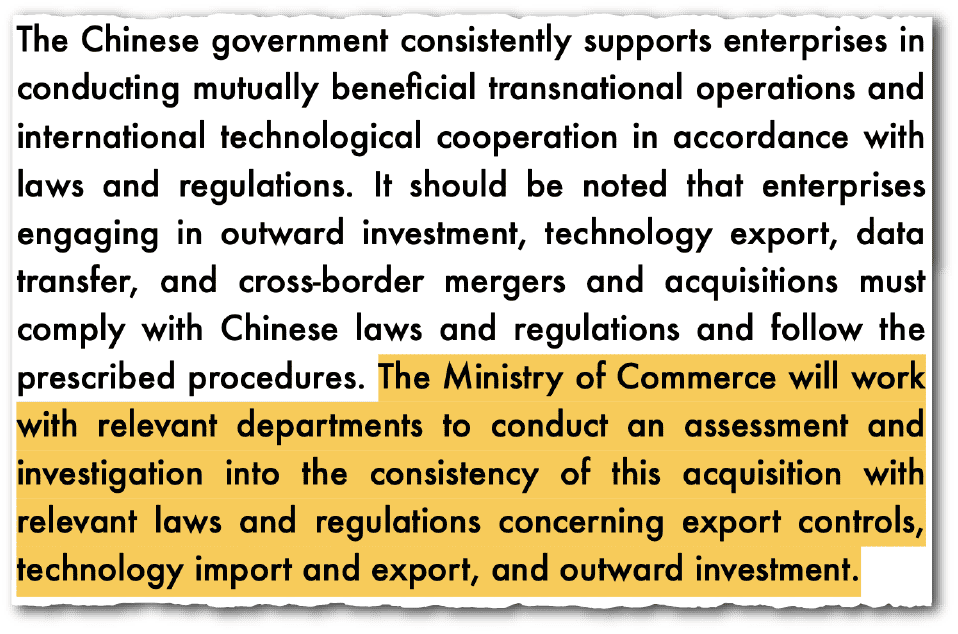
But after watching from the sidelines as Manus soared, Chinese regulators are now trying to reel it back in — even though the company relocated to Singapore last year and has pledged to sever its remaining ties to China as part of the Meta acquisition. The Chinese commerce ministry confirmed last Thursday that it is investigating Manus for its compliance with export control and overseas investment laws.
Beijing’s probe illustrates the difficulty Chinese AI companies like Manus face when they attempt to shed their ties to China in pursuit of more lucrative foreign markets and better funding opportunities.
But the episode also highlights a dilemma for the Chinese authorities: How to get the balance right between promoting Chinese technology internationally, and retaining some level of control over homegrown AI companies and founders.
“From Beijing’s perspective, the issue is not Meta per se, but whether transactions like this create precedents for the outward transfer of talent, agentic capabilities, or embedded know-how developed in China,” says Lizzi Lee, a fellow at the Asia Society Policy Institute’s Center for China Analysis.
MANUS’S GUIDING HAND
Manus, which takes its name from the Latin for hand, wowed the tech world in March last year when it launched its Manus AI “agent,” an autonomous digital worker that can perform complex tasks like looking up real-time prices for a product or buying a train ticket online.
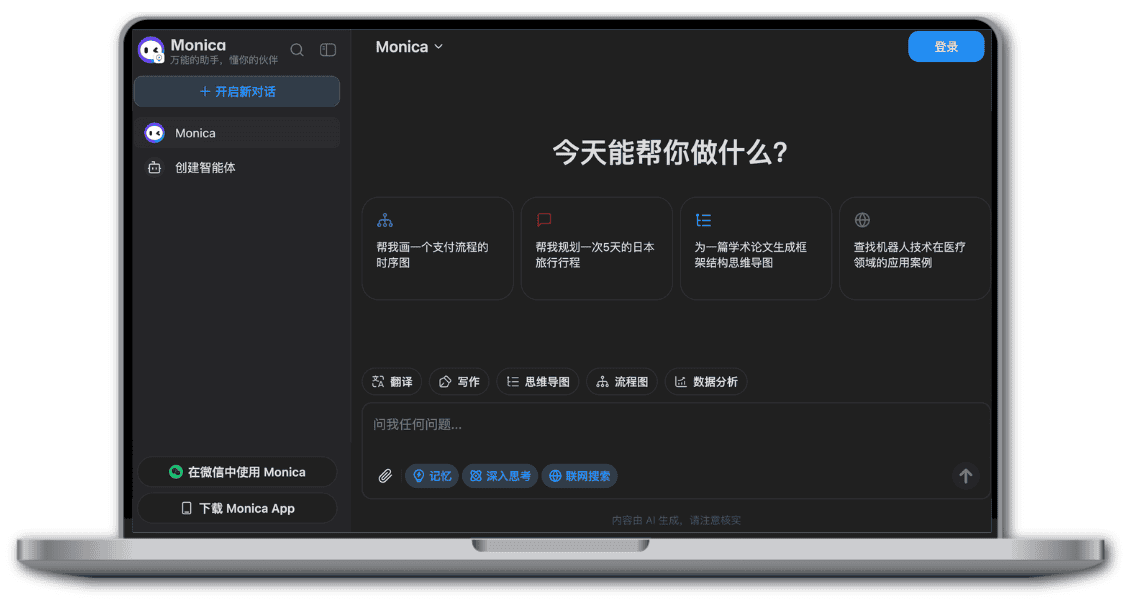
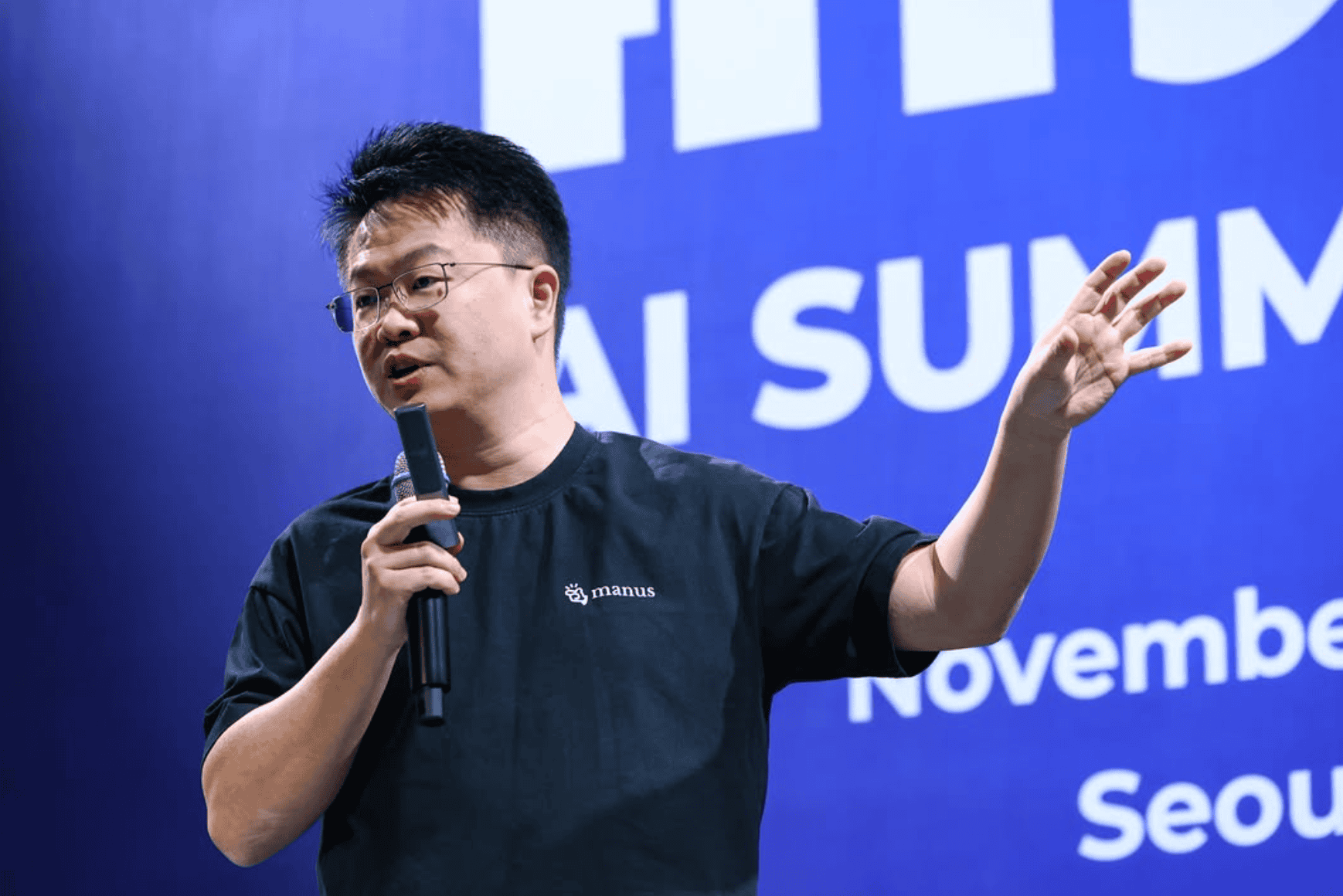
The company’s chief executive, Xiao Hong, is an entrepreneur who previously developed apps for the social media platform WeChat. His former company, Nightingale Technology, was backed by leading Chinese venture capital firms such as ZhenFund. In 2022, he founded Beijing Butterfly Effect Technology with offices in Beijing and Wuhan. The company’s first product, Monica, was an AI-powered browser extension that helps users with tasks like summarizing YouTube videos and PDFs.
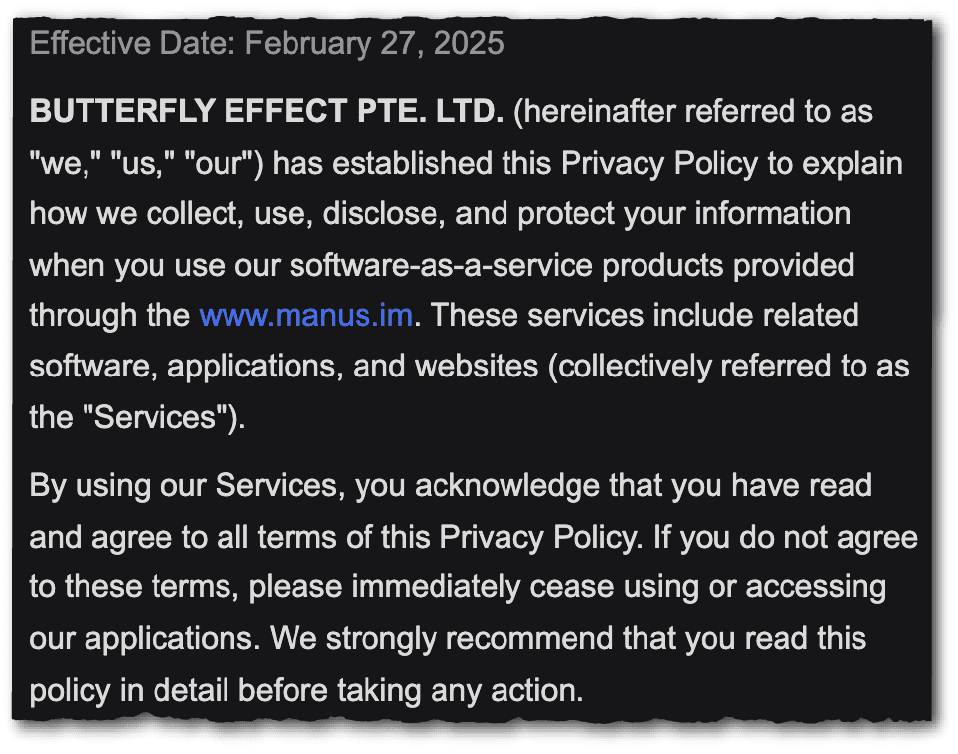
But Xiao and his co-founders had larger ambitions. Corporate records suggest that they planned a move to Singapore as early as 2023, when they set up a firm called Butterfly Effect Pte, which is in turn wholly owned by Butterfly Effect Holding, a Cayman Islands company.
Since Manus AI’s launch last March, the company’s privacy policy has said that the tool is a product of the Singapore entity. Soon after that debut, its executives embarked on a global roadshow, with stops in New York, San Francisco, Dubai, Singapore and London.
The tool is powered primarily by Claude, the large language model developed by U.S. AI firm Anthropic. Its willingness to supply Manus in recent months is one sign that U.S. firms have accepted that it is no longer a Chinese company: Anthropic describes China as an “adversarial nation” and restricts sales to Chinese companies regardless of where they are located.
For its part, Manus has turned down entreaties from Chinese authorities for meetings and investment. Xiao was quick to deny rumors in China last May of a potential investment by the Wuhan municipal government, for example.
An example use case of the Manus AI agent.
It has instead deepened its roots in Singapore. In June, two months after landing the Benchmark investment, the company changed its registered address in the city-state from a secretarial firm to a WeWork; in August, the Financial Times reported that the company’s offices in China were empty. The company’s Singapore registration documents, updated in June, show that Xiao has a foreign identification number associated with a long-term visa, and a residential address in the city.
The company’s bet on overseas markets, and its move to Singapore, have both seemingly paid off. In December, Manus said that its “annual recurring revenue,” a term that extrapolates subscription revenue over the course of a year, had reached $100 million. It also said it had 105 employees across Singapore, Tokyo, and Silicon Valley — with plans to open an office in Paris.
Yet though Manus’ website contains a banner saying: “Manus is now part of Meta,” several details around the Meta transaction remain unclear. To start with, neither Meta nor Manus has disclosed the size of the deal, though the Wall Street Journal has reported a price tag of more than $2 billion. Nor is it clear from which entity Meta purchased Manus.
What Manus shows is there are going to be firms that choose to defect and that their interests in operating at the cutting edge and also making money are greater than in the inherent fidelity of the Chinese state.
Chris McGuire, a former National Security official in the Biden administration
The deal could be a so-called ‘acquihire’ transaction, where companies pay top dollar for a target’s talent, but do not take a majority stake. Such deals have been gaining popularity in Silicon Valley. Last year Meta paid $14.3 billion to acquire 49 percent of start-up Scale AI. The firm’s founder, Alexandr Wang, then became Meta’s chief AI officer.
After the Meta acquisition, Manus said it would continue to sell and operate its product subscription service through its app and website, and carry on operating from Singapore. It is unclear, though, exactly what ties Manus and its executives retain to mainland China. As of this week, Monica.cn, the version of Monica developed by Beijing Butterfly Effect Technology, is still active.
Data from WireScreen meanwhile shows that Xiao remains the legal representative of Beijing Butterfly Effect Technology as well as its second largest shareholder.
Andy Stone, a spokesperson for Meta, said that Meta has previously announced that Manus will shutter its operations in China. It is unclear whether the recent Meta-Manus tie-up means that Meta now owns the Chinese entity, Beijing Butterfly Effect Technology, though Stone said Meta has announced it will be winding down Monica.cn. He did not offer a timeline for when it would do so.
Stone declined to comment further. Manus and Benchmark did not respond to requests for comment.
A WIN FOR WASHINGTON?
Few in U.S. corporate or government circles appear concerned about the haziness surrounding Manus’s remaining ties to China, and the possibility that Meta has acquired a Chinese entity as part of its deal with Manus.
Instead, several observers have framed Manus’s sale to Meta as a victory for Washington’s AI strategy and export controls. Since 2022 the U.S. has prohibited its chip companies from selling their most advanced chips to China. Last January, the United States also began implementing rules that restrict outbound investment in Chinese AI companies.
“There are two emerging ecosystems in artificial intelligence. Those are also diverging from one another,” says Chris McGuire, who helped design both policies as a National Security official in the Biden administration. “What Manus shows is there are going to be firms that choose to defect and that their interests in operating at the cutting edge and also making money are greater than in the inherent fidelity of the Chinese state.”
“We use restrictions, not just to slow down the Chinese but also to get their best and brightest people and companies to actually defect to our side,” he adds.
Some analysts in Beijing concur.
“Manus’ step-by-step divestment of its Chinese connections was undoubtedly driven by U.S. regulations restricting investment in China, [and the fact that] those restrictions could produce such an effect was not something I had anticipated,” Cui Fan, a professor at the University of International Business and Economics and MofCom advisor wrote in a January 3 article on WeChat.
The more China relies on potential sticks to keep companies in line with its political priorities, that has real risks for China’s efforts to build and support its own ecosystem.
Chris Miller, a professor at Tufts University and author of Chip War
Financial considerations could also have motivated Manus’s move. Compared to China, where venture capital funding is dwindling, it is easier for startups to raise money in the United States. The U.S. is also seen as a more profitable market, where companies can charge higher prices and fetch higher valuations.

“The fact that [Manus] chose to target the U.S. market shows that they believe that the product has more potential in the global market than if they were to build in China,” says Rita Liao, a former writer who now advises startups.
Xiao laid out the company’s calculations in a podcast last year. “Overseas users’ willingness to pay for software may be five times that of Chinese users, and payments can be denominated in U.S. dollars,” he said.
Anthropic’s decision to stop selling to majority-Chinese owned companies last year may have been another push factor for Manus. “If Manus had remained a Chinese company, its core product would have disappeared,” McGuire says.
Anthropic declined to comment. The U.S. Treasury Department did not respond to a request for comment.
BEIJING’S BALANCING ACT
Manus’s move to Singapore, and its acquisition by Meta, have meanwhile left Beijing with little option but to try to assert oversight of Manus by probing its activities prior to its departure from China.
“What Chinese regulators primarily need to examine is not whether technology owned by Manus’s entities in Singapore or the Cayman Islands is being transferred to U.S. entities, but rather when, in what manner, and which technologies Manus’s entities within China… have transferred to parties outside China,” Cui, the Mofcom advisor, wrote.
Another likely irritant for Beijing is Manus’s intention to cut off all future services in China. In recent years, China’s market regulator has conditioned approval of mergers and acquisitions on companies’ non-discrimination against Chinese users.
The Manus founders’ ties to China may provide the ministry with some leverage. For one, all are still Chinese citizens, according to Singapore registry documents.
But observers warn that squeezing Manus too hard could backfire against the Chinese authorities.
“Beijing confronts a tricky balance, because if it deters China-founded startups from expanding internationally, that’s a bad thing for the startup ecosystem,” says Chris Miller, a professor at Tufts University and author of Chip War. “The more China relies on potential sticks to keep companies in line with its political priorities, that has real risks for China’s efforts to build and support its own ecosystem.”

Noah Berman is a staff writer for The Wire based in New York. He previously wrote about economics and technology at the Council on Foreign Relations. His work has appeared in the Boston Globe and PBS News. He graduated from Georgetown University.

Eliot Chen is a Toronto-based staff writer at The Wire. Previously, he was a researcher at the Center for Strategic and International Studies’ Human Rights Initiative and MacroPolo. @eliotcxchen

Rachel Cheung is a staff writer for The Wire China based in Hong Kong. She previously worked at VICE World News and South China Morning Post, where she won a SOPA Award for Excellence in Arts and Culture Reporting. Her work has appeared in The Washington Post, Los Angeles Times, Columbia Journalism Review and The Atlantic, among other outlets.