Four years into a vicious price war, the Chinese electric vehicle industry has turned towards a new target.
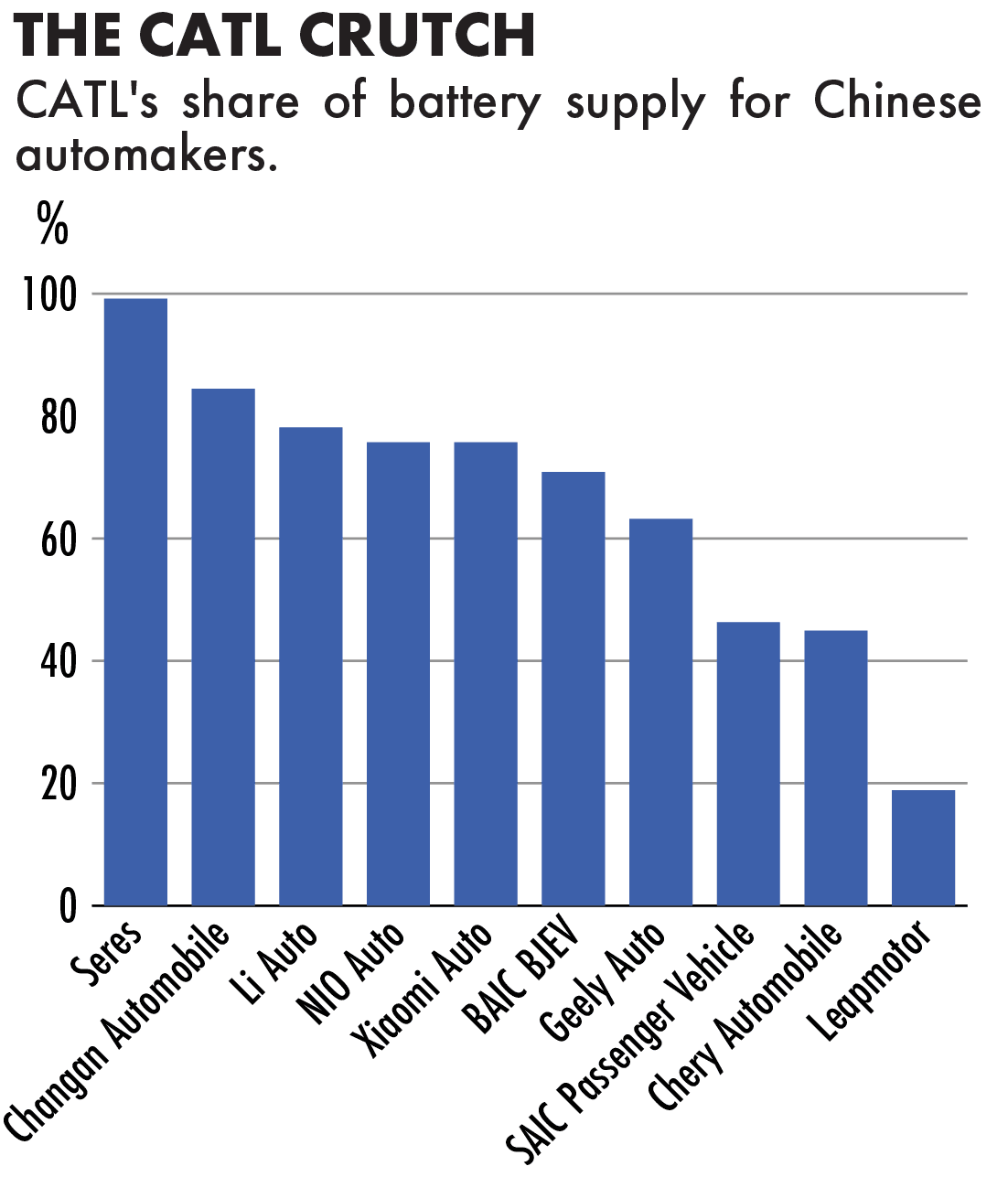
Contemporary Amperex Technology Co. (CATL) has long dominated the car battery market and absorbed much of the auto sector’s profits. But a growing number of Chinese carmakers are now seeking cheaper alternatives. From Li Auto to Xiaomi, companies are shifting towards lower-tier suppliers or designing their own batteries.
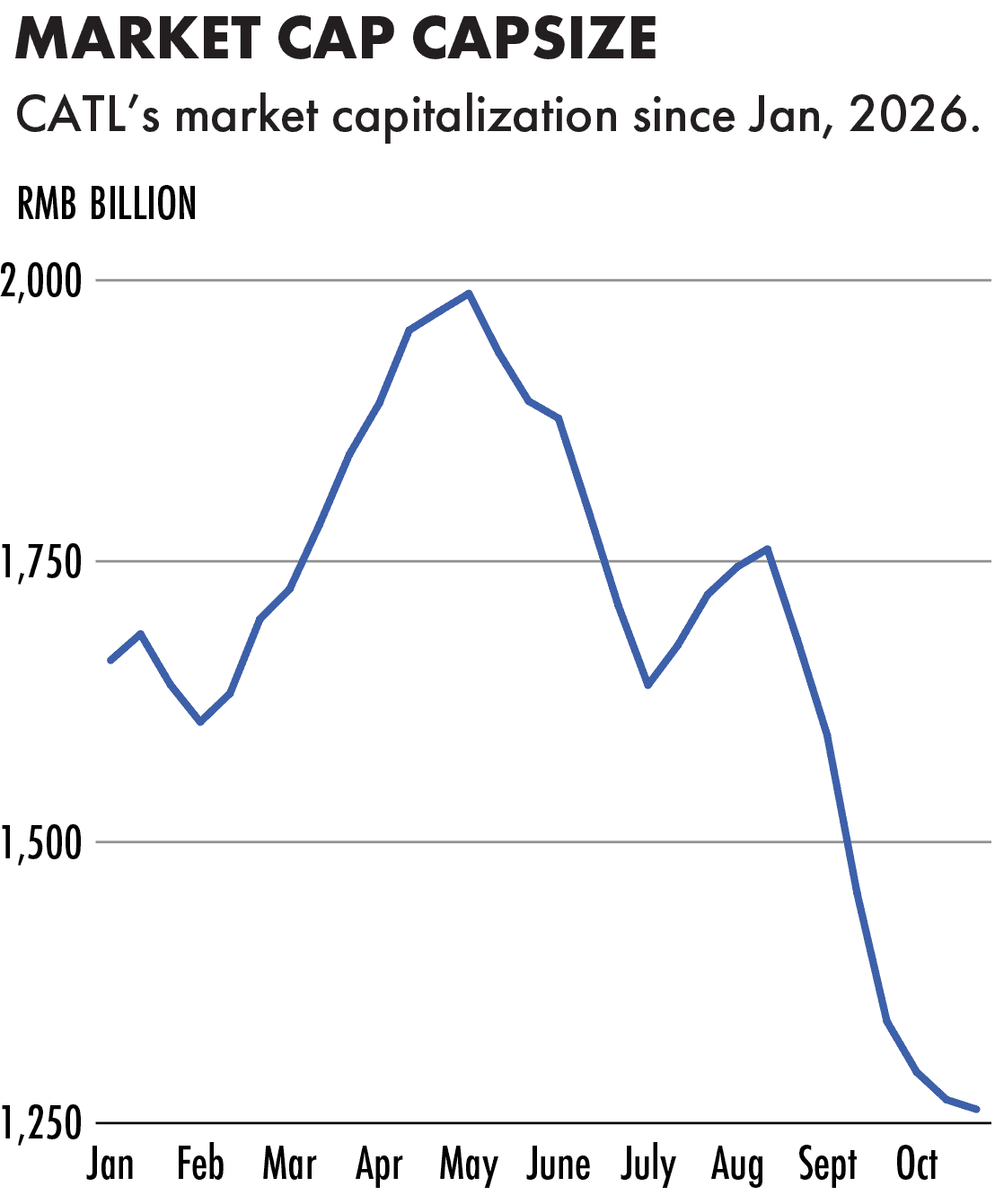
The trend, dubbed ‘de-CATLization’, has already sent CATL’s shares in Shenzhen down by 38 percent from their peak in May, wiping 750 billion yuan ($1 billion) off its market value.
Still, replacing the Ningde-based company’s batteries is easier said than done.
“It’s probably not very sustainable that while CATL is making a lot of money, other original equipment manufacturers are just making a very thin margin,” says Fengming Lu, a scholar at the Australian National University who has studied China’s EV industry. “But to what extent do those OEMs really have the expertise to develop battery cells? That still remains a question.”
Chinese EV makers are feeling the squeeze. Domestic sales have slumped this year amid the consumer slowdown. The Chinese government also lifted a decade-long exemption on the purchase of electric vehicles, reinstating a 5 percent tax rate. Meanwhile the cost of key inputs such as metals and memory chips has risen.
As a result, the sector’s razor-thin net profit margins have narrowed from 4.1 percent last year to 3.6 percent this year, according to Cui Dongshu, a senior official at the China Passenger Car Association. Some companies, including NIO and XPeng, have slipped back into the red in the first half of the year.
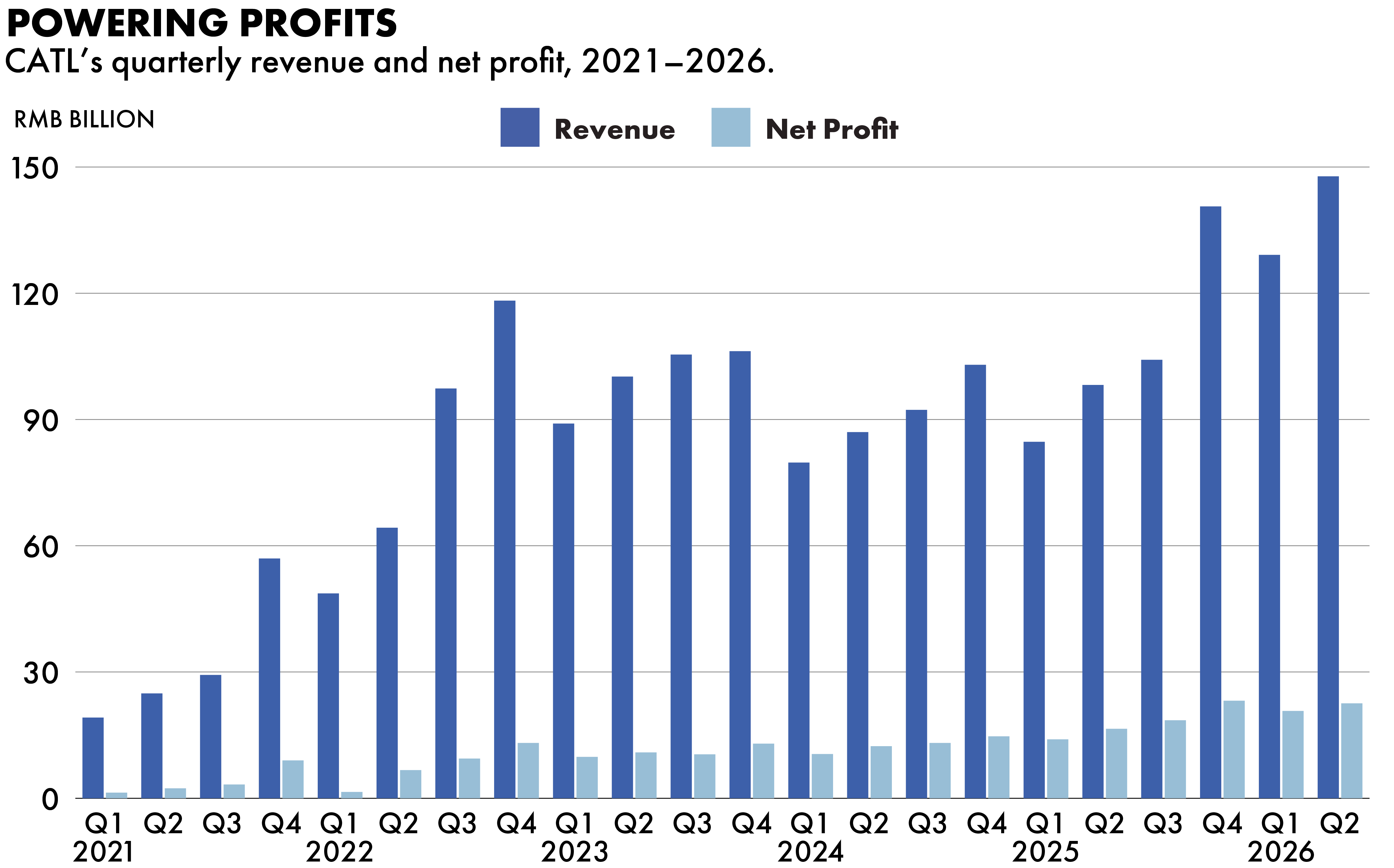
By comparison, CATL’s first-half profits reached 43 billion yuan ($6 billion), a 42 percent jump year-on-year. That exceeds the total profits of China’s top ten EV companies, including BYD and Geely, combined.
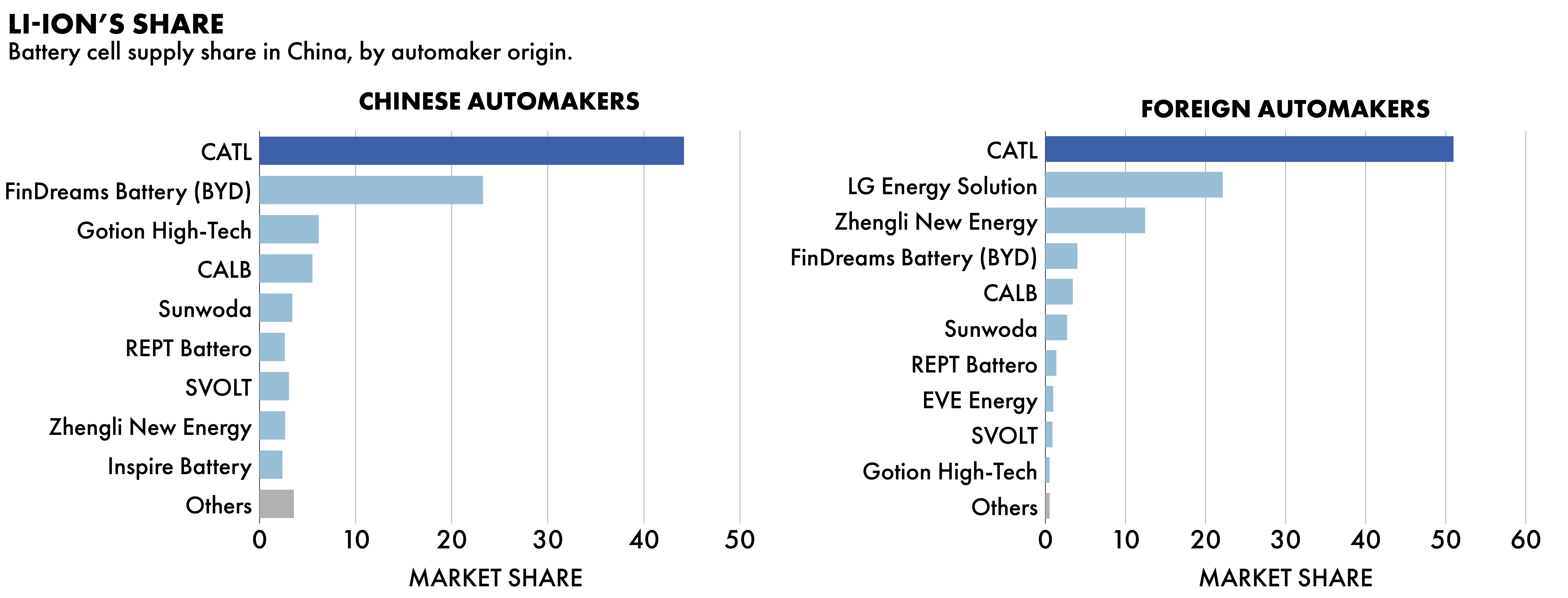
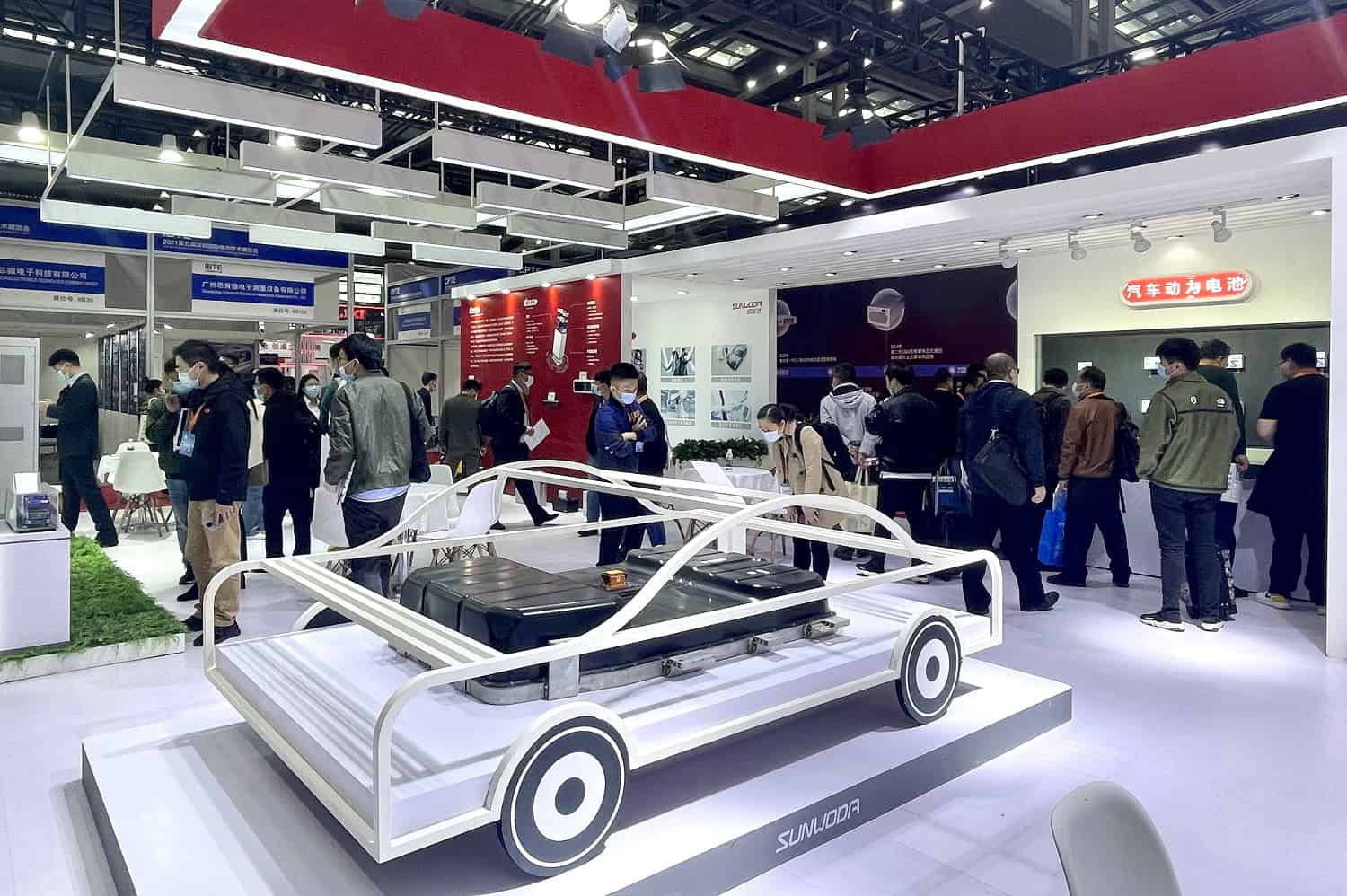
CATL’s grip on the global and domestic battery market underpins its earnings power. It commands 40 percent of the global EV market, according to latest figures by SNE Research, and an even higher share of the domestic one.
As early as 2023, Chinese leader Xi Jinping voiced concerns about CATL’s dominance, noting in a closed-door meeting with industry representatives that companies should “avoid marching ahead alone in an invincible fashion.” The year before, Zeng Qinghong, then chairman of automaker GAC, publicly complained that companies like his are “essentially working for CATL.”
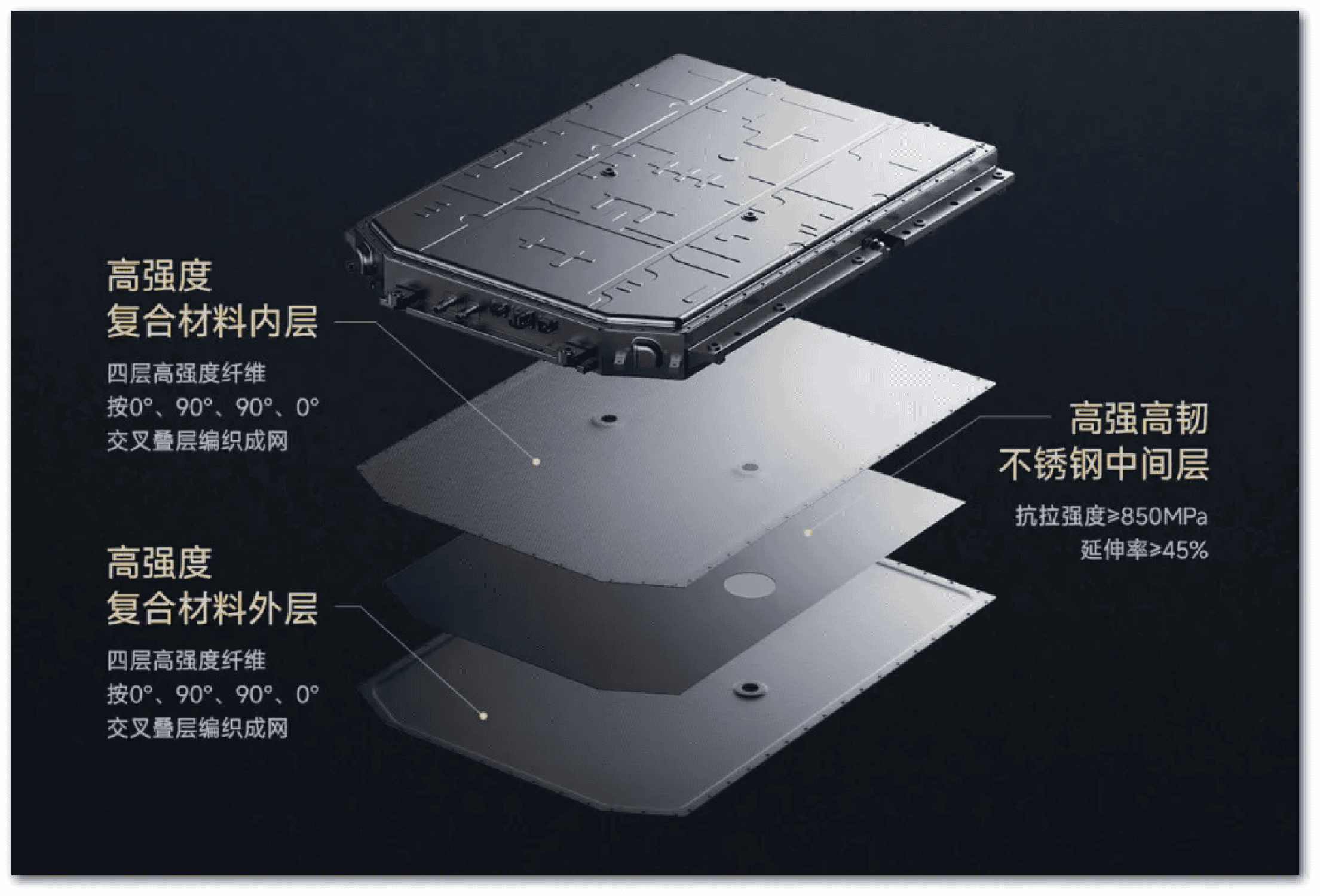
Now companies are shifting gear. Early last month, Xiaomi debuted Dragonscale, a battery it developed with the Shenzhen-based Sunwoda and China Aviation Lithium Battery (CALB), a partially state-owned company in Changzhou. Xiaomi has largely used CATL battery packs for its core models so far, but the company says its newest line of extended-range electric vehicles will be equipped with Dragonscale.
The same month, Beijing-based Li Auto — once CATL’s top customer — announced it is now developing its own power cells, battery packs and battery management system, and has tapped CALB and Sunwoda to produce them. The company increased its stake in Sunwoda’s EV battery unit last month with a 2.65 billion yuan ($390 million) investment.
[CATL] does everything now from lithium mining all the way through to BESS. They can either use their own material or leverage their dominant position to get cheaper deals on other materials. All of that makes them super cost competitive, which others can’t match.
Aaron Wade, a London-based battery expert
Similarly, Guangzhou-based XPeng announced last month that it will start developing its own battery packs, while continuing to source power cells from manufacturers such as Sunwoda and CALB. The latter replaced CATL as XPeng’s primary supplier in 2023. In June, Aito, a brand owned by Chongqing-based automaker Seres Group, added CALB and Hefei-based Gotion as its battery suppliers; previously it had relied exclusively on CATL.
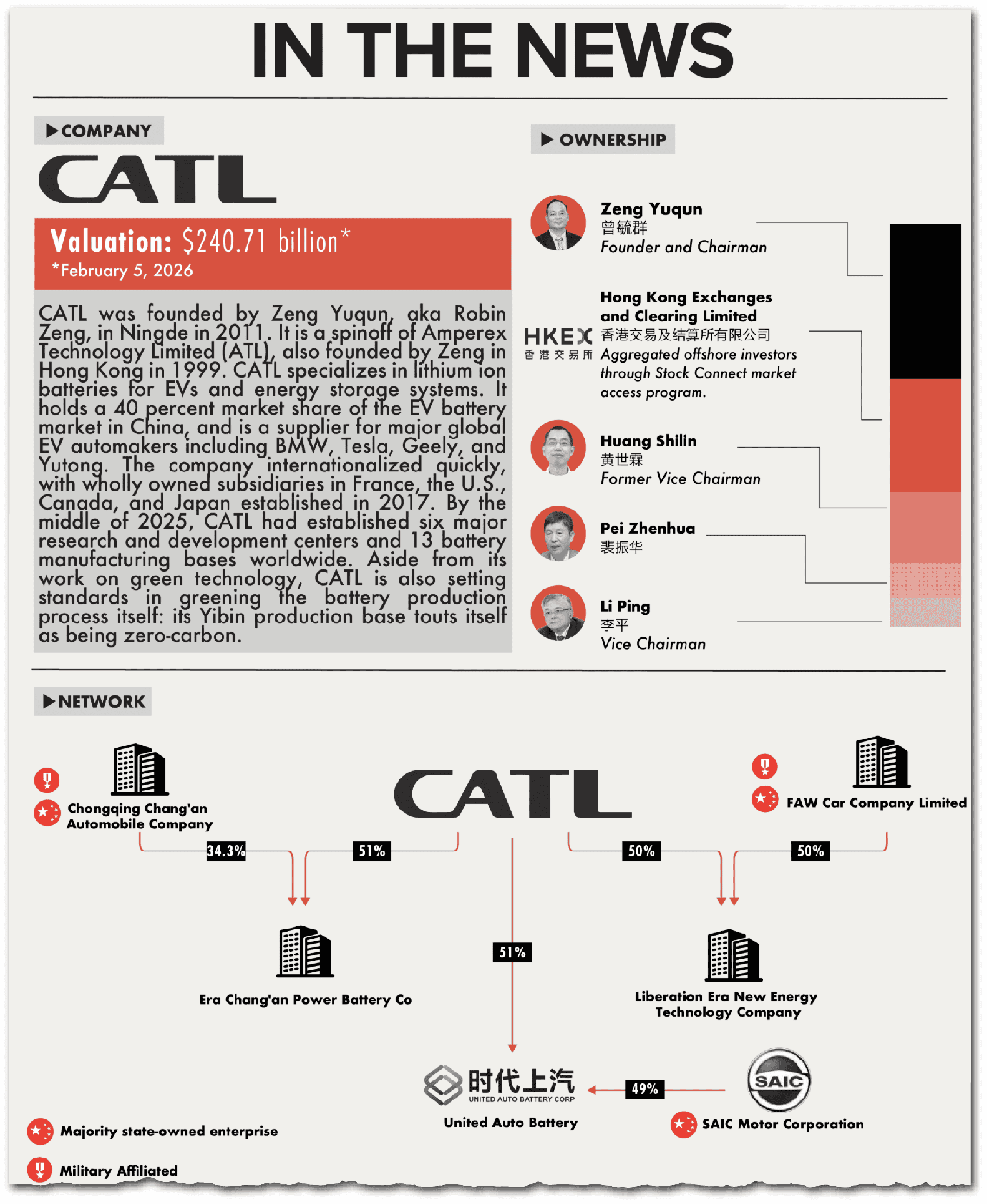
The shift taking place is partly driven by automakers’ need to cut costs. Batteries are the most expensive component of an electric car, accounting for up to 40 percent of their cost. Given its strong pricing power, CATL’s prices are typically around 10 to 15 percent more expensive than other brands, analysts say.
“It’s very hard for automakers to raise the retail price for EVs given weaker domestic demand this year,” says Ming Hsun Lee, head of Greater China autos & industrials research at BofA Global Research. “As a result, they are trying to source batteries from more suppliers to increase their bargaining power within the supply chain.”
Developing batteries is also a natural next step as automakers become more vertically integrated. BYD, for instance, has long enjoyed a major cost advantage as it produces its own batteries and also supplies them to other car brands.
“When the auto industry was still in its early stages, Chinese automakers sourced engines from traditional establishments, such as [Japan’s] Mitsubishi. Now most automakers make their engines in-house,” says Lei Xing, co-host and producer of the China EVs & More podcast. “The same analogy applies to batteries now.”
In a recent Weibo post, Li Auto founder Li Xiang claimed that its move to develop batteries is not aimed at CATL. Rather, it is hoping to improve user experience by designing customized batteries for its cars. “OEMs and tier-1 suppliers are never in a zero-sum game,” he wrote.
There are risks, however, particularly over safety. Last December, a Geely unit sued Sunwoda over defective battery cells that it said could overheat and catch fire; the same issue forced Zeekr, a brand owned by Geely, to recall nearly 40,000 units in March. Sunwoda paid 608 million yuan ($87.6 million) in compensation as part of a settlement with the Geely unit.
In July, a Xinhua investigation revealed widespread complaints over battery cells that leaked, swelled, and malfunctioned. Following the report, Guangzhou-based GAC Aion and its supplier CALB apologized and extended warranties for customers. The defects had affected over 230,000 cars.
“OEMs need to be very careful in choosing a partner among second tier suppliers,” Lu says. “Otherwise, it’ll be a coalition of the weak, which will lead nowhere.”
CATL’s reputation for quality products further complicates the situation for would-be competitors. A recent survey by NielsenIQ, an American market research firm, found that 37 percent of respondents in China said they would consider abandoning a purchase if the vehicle were not equipped with CATL batteries.
That result fits with CATL’s own messaging. “Just because you can make cars doesn’t mean you can make batteries,” said Ni Jun, chief manufacturing officer at CATL, at a company event last month.
In a written reply to The Wire China, CATL attributed its competitiveness to innovation in areas such as material, manufacturing, and business model. “Over the past decade, we have invested over $10 billion in R&D — far more than any other players in the battery industry,” a spokesperson wrote.
Meanwhile, CATL is also diversifying its revenue streams. The company generated nearly a third of its revenue from overseas in the first half of this year, double that of 2020.
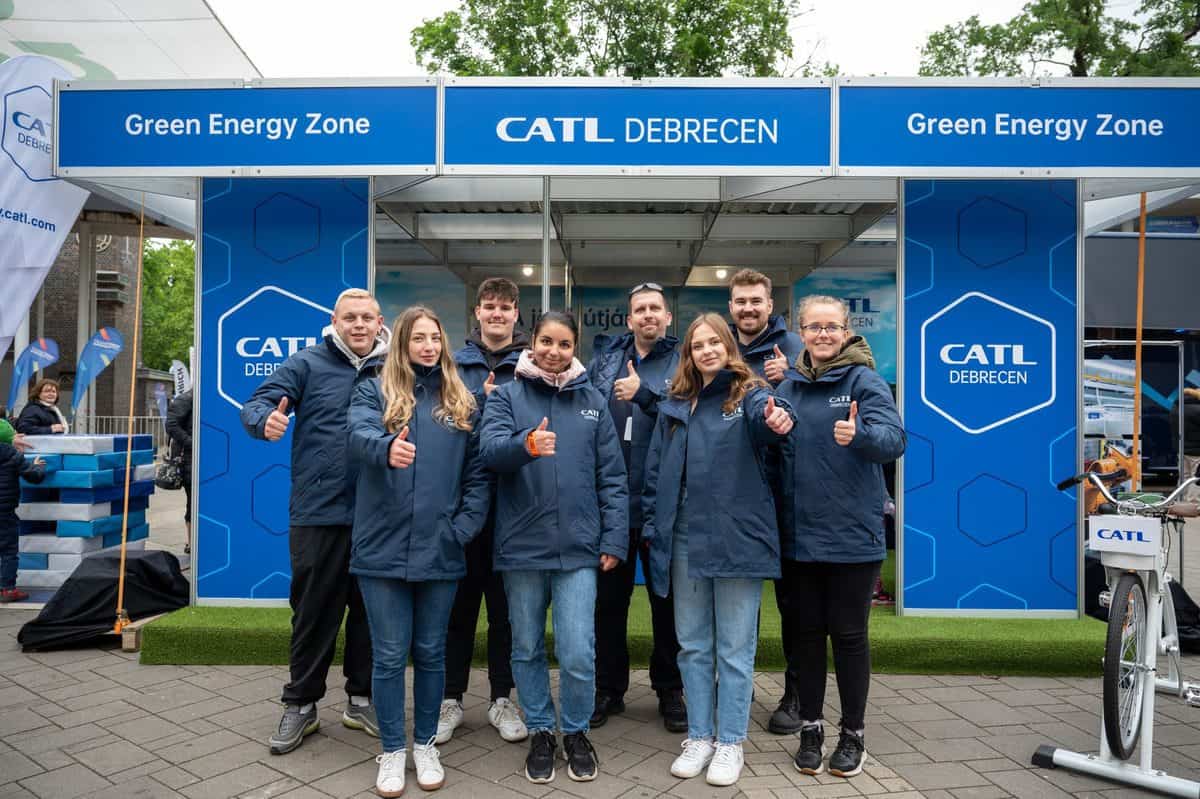
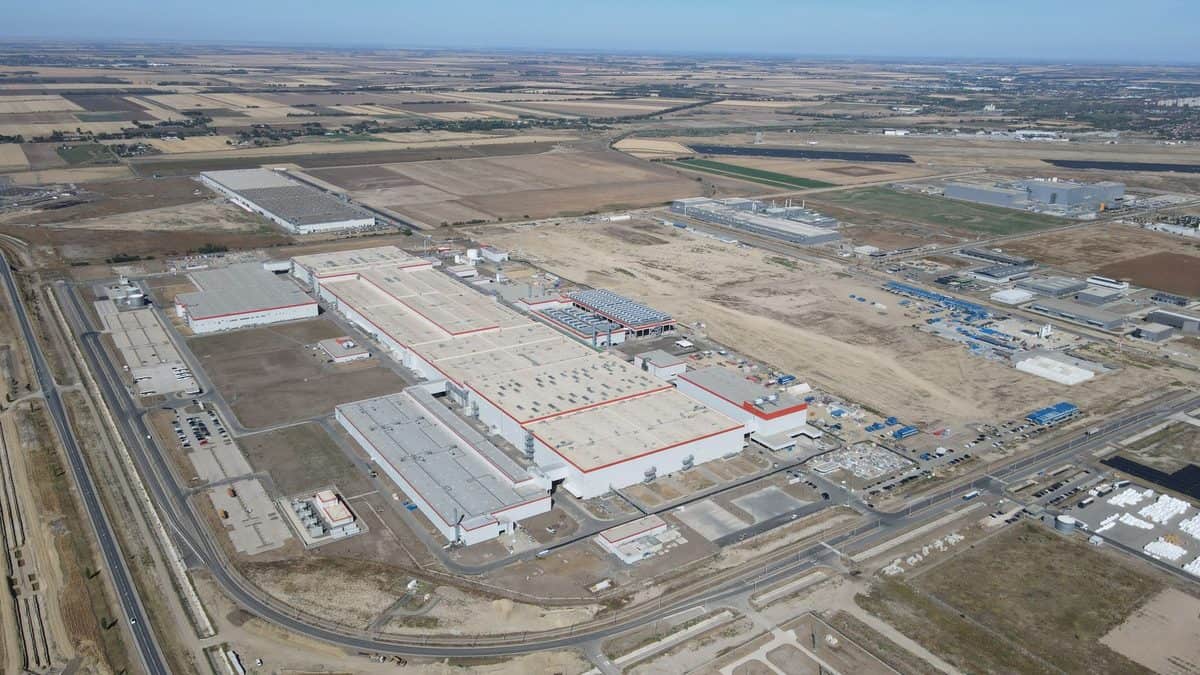
Left: Members of CATL’s Debrecen team. Right: CATL’s cell factory in Debrecen, Hungary. Trial production began September 22, 2026. Credit: CATL
In addition to a plant in Germany, CATL is building factories in Hungary and Indonesia, which could help the company capture more market share outside of China. It has also licensed its battery technology to U.S. automaker Ford despite pushback from U.S. government officials and lawmakers.
CATL has also expanded into battery energy storage systems (BESS) for power grids and renewable energy plants, a fast-growing segment of its business that accounted for one fifth of its revenue in the first half of this year.
“AI data centers, grid applications, renewable energy plants, they need a lot of battery infrastructure. The market is exploding,” says Xin Chen, a battery analyst from the data provider Benchmark Mineral Intelligence.
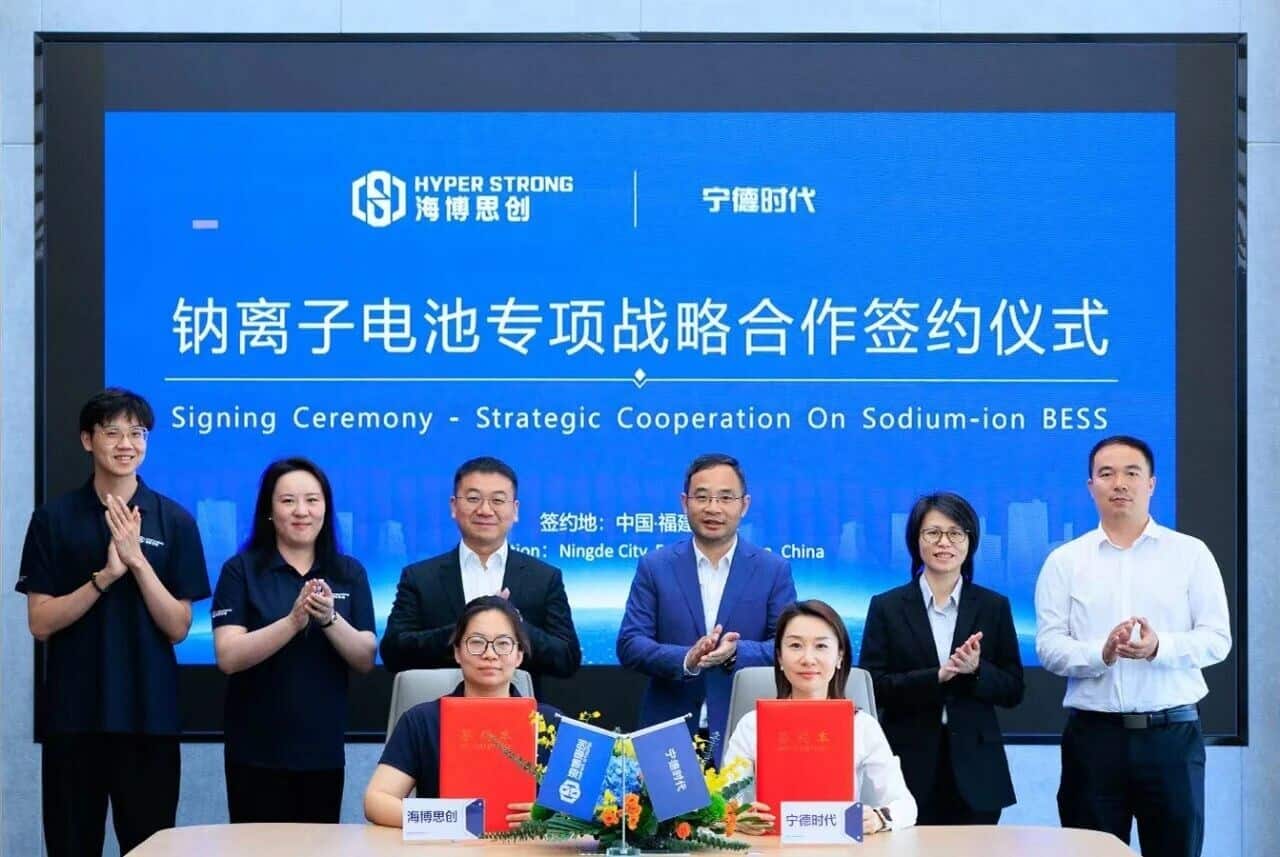
Global shipments of BESS cells doubled in the first half of the year and CATL ranked first globally with a 22 percent market share, Benchmark’s data shows. In April, CATL signed a major deal to supply 60GWh of sodium-ion batteries to HyperStrong, a Beijing-based company and a leading provider of energy storage systems.
“[CATL] does everything now from lithium mining all the way through to BESS. They can either use their own material or leverage their dominant position to get cheaper deals on other materials,” says Aaron Wade, a battery expert in London who recently visited CATL’s headquarters. “All of that makes them super cost competitive, which others can’t match.”
Rachel Cheung is a staff writer for The Wire China based in Hong Kong. She previously worked at VICE World News and South China Morning Post, where she won a SOPA Award for Excellence in Arts and Culture Reporting. Her work has appeared in The Washington Post, Los Angeles Times, Columbia Journalism Review and The Atlantic, among other outlets.