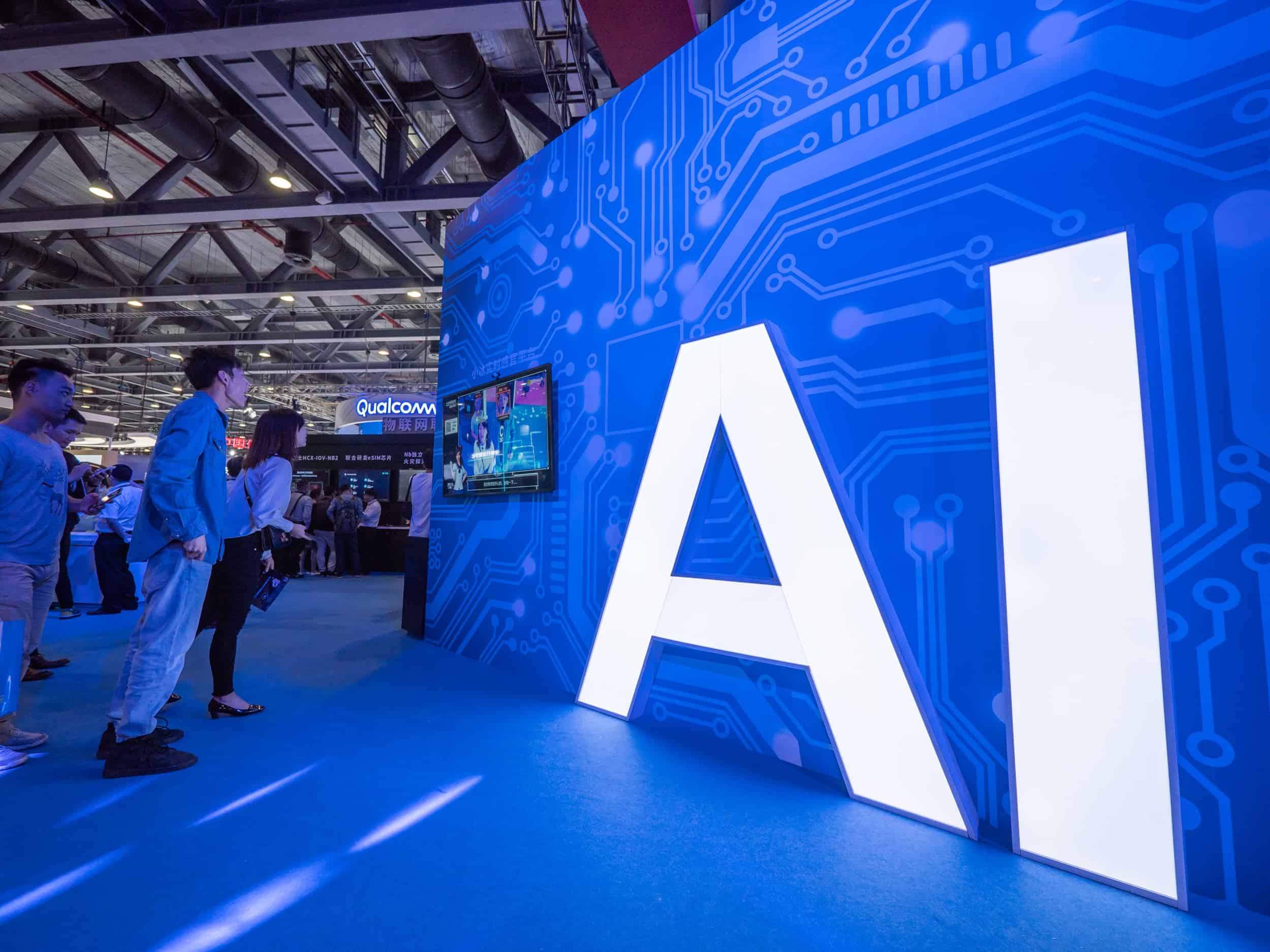
China’s generative AI industry is rapidly expanding and evolving, with many established tech platforms turning out new models, and new startups entering the fray — all while investors are still struggling to understand companies’ business models, use cases, and revenue generation prospects.
For now, the country’s generative AI industry remains in the early stages of development. Established and new AI players are seeking investment, as well as developing and fine tuning large language models (LLMs). End users are experimenting with different approaches to deploying applications.
As in the U.S. and other developed country markets, companies are eager to begin leveraging the benefits of LLMs in their business processes, but are reluctant to commit to a particular platform or company’s product, as it remains unclear which market leaders will emerge as the most durable. Some of the most dynamic AI companies in China are leveraging Western open-source LLMs such as Meta’s Llama-2, while the big tech platforms like Baidu are getting traction for their proprietary models in hot emerging areas like AI smartphones.

All this means that the next six to nine months will be a critical period for Chinese AI firms. Their models may start to compare more favorably with global leaders like OpenAI, Google, and Anthropic. Investments in the infrastructure cycle will near a point where new inputs will be required to keep pace with Western models. And we will see an increasing number of enterprise deployments attempting to solve real world problems and beginning to show productivity gains.
Right now, China’s AI development environment is still notably diffuse, with approximately 50 Chinese companies currently developing models. This stands in sharp contrast to the U.S., where a handful of very large, deep-pocketed players — platforms such as Google, Meta, and AWS, plus startups OpenAI, Anthropic, and Inflection — dominate the landscape. These players are all well-funded, enjoying massive resources and valuations, and are partnered with large ‘hyperscale’ cloud providers that provide preferential access to high speed computers that are optimized for training AI algorithms.

By contrast, China’s many AI players are struggling to find access to investment, computing power, and have relatively low valuations, as some investors remain skeptical about their ability to generate real revenue near term. This dispersion has caused some leaders in China’s big tech arena, like Baidu’s Robin Li, to question the need for so many models. Li has argued, for example, that China only needs two to three really good models to drive adoption of generative AI at the enterprise level.
The industry has not taken Li’s advice to heart, with new market entrants emerging frequently and rapidly. A new batch of AI startups pursuing LLM development — backed in most cases by large technology company investors and boasting around $1 billion valuations, and packed with engineers and developers with solid industry pedigrees — have also gained traction and investment rounds in the past six months. These include Baichuan AI, Moonshot AI, 01.AI, and Model Best. A handful of established domestic venture capital investors remain willing to continue investing in the sector — these include Sinovation, the ZhenFund, Shenzhen Venture Capital, Shunwei Capital, Redpoint China Ventures, and others, along with the investment arms of Alibaba and Alibaba Cloud, Tencent, Xiaomi, Ant Group, Meituan, and Kingsoft.
| COMPANY | Baichuan AI | Zhipu AI | MiniMax | Moonshot AI | ModelBest |
|---|---|---|---|---|---|
| INVESTORS | •Alibaba Group •Tencent •Xiaomi •Joy Capital •Legend Star •Shenzhen Venture Capital •Kingsoft Corporation •Tsinghua Holdings •Redpoint China Ventures •Shunwei Capital •INCE Capital Partners •MOOC-CN Investment |
•Alibaba Cloud Computing •Tencent Investment •Ant Group •Xiaomi •Meituan •Qiming Venture Partners •Tsinghua Holdings Capital •Legend Capital •Kingsoft •TAL Education Group •Boss Zhipin •Creation Capital (Qichen) •Fortune Capital •Jiangmen Ventures |
•Tencent •MiHoYo •Yunqi Partners •Future Capital •Discovery Fund •GL Ventures |
•Meituan Longzhu •Alibaba •Sinovation Ventures •Ant Group |
•Zhipu AI •Zhihu •HongShan •ZhenFund |
| INVESTMENT | •$50 million (Apr 2023) •$285 million (May 2023) •$15 million (Oct 2023) |
•$15.44 million (Sept 2021) •$38.91 million (Apr 2022) •$342 million (2023) |
$250 million (Jan 2023) | $300 million (June 2023) | $300 million (June 2023) |
| VALUATION | $1 billion | $1 billion | $1.2 billion | $300 million | $300 million |
While the revenue potential for such firms is still unproven, enterprise adoption has already begun. Companies such as Baidu are beginning to report earnings they claim are directly derived from generative AI applications. Competition for the enterprise market remains heavy, with Baidu competitors Alibaba, Huawei, and ByteDance pushing into this space, offering discounts to attract enterprise users. But as in Western markets, China is unlikely to see one or two models emerge as dominant; instead, enterprises are likely to continue to test multiple models from different companies, remaining unwilling to get locked into one company’s products.
China’s AI startups in 2024 will continue to struggle with access to computing power, particularly given the changing cost of cloud services due to tightening U.S. controls on advanced GPU exports to the country.
As Chinese AI companies seek profitability, they face two critical stumbling blocks: The regulatory environment, and access to computing power. While China’s cyberspace regulators initially imposed heavy regulation on the sector, the regulatory churn has settled down, with the Cyberspace Administration of China (CAC) issuing approvals for the release of more than 40 LLMs over the past six months. There is no formal list of all licensed models yet, but CAC has issued some written approvals for public-facing LLMs, including for all of the leading platforms and some of the major startups, like Kaifu Lee’s 01.AI. Confusion around the issue of which LLMs are licensed is likely to continue, as CAC figures out what it wants in terms of a long term licensing regime, including for foreign-origin LLMs.
Overview of AI Development Efforts by Selected Chinese Smartphone Producers
| SMARTPHONE PRODUCER | LLM DEVELOPERS | AI MODEL | SMARTPHONE MODEL | ANNOUNCED |
|---|---|---|---|---|
| Lenovo (Motorola) | Baidu | Ernie LLM | Not Disclosed | February 2024 |
| Xiaomi | Xiaomi | •Xiao Ai •MiLM-6B (Xiaomi) |
August 2023 | |
| OPPO | OPPO | AndesGPT | •Reno11 (Q2 2024) •Find X7-series |
February 2024 |
| Vivo | •SenseTime •Vivo |
•SenseMe (SensePhoto Smartphone Photo Processing Software) •BlueLM-7B (Vivo) |
X100 | BlueLM: November 2023 |
| Huawei | Huawei | Celia/Xiao Yi (Pangu 3.0) | •Huawei Mate 30 (Pro) •Huawei Mate 40 (Pro) •Huawei Nova 7 |
August 2023 |
| Honor | QualComm | MagicLM (Honor and QualComm) | Magic 6 | October 2023 |
| Samsung | Baidu | Ernie LLM | Galaxy S24 | January 2024 |
In addition to clearing regulatory hurdles, over the next six months in particular, Chinese generative AI companies will need to determine how to maintain access to a reliable source of advanced graphics processing units (GPUs) for training frontier AI models. U.S. officials tightened rules around the export of advanced GPUs in October 2023, and Commerce Secretary Gina Raimondo in December for the first time explicitly stated that the purpose of the controls included slowing Chinese companies down.

The attempts of U.S. GPU leader Nvidia, along with other players Intel and AMD, to design compliant GPUs for the China market have run into some challenges. The downgraded performance of Nvidia’s new GPUs are significant enough that Chinese domestic tech giant Huawei’s Ascend 9XX series of data center chips, which include a GPU, are now outperforming the Nvidia offerings on some benchmarks, making major Chinese players less interested in purchasing the Nvidia China-specific products. Domestic demand for Huawei’s chips is reportedly huge, but the firm faces challenges ramping up production at China’s leading chipmaker SMIC.
WHERE DO WE GO FROM HERE?
Chinese firms clearly face hurdles in catching up with their western competitors. In early April Alibaba co-founder Joe Tsai put a fine point on it, asserting that Chinese AI companies were two years behind their U.S. rivals. One of the primary factors cited by Tsai was access to advanced hardware for training.

China’s AI startups in 2024 will continue to struggle with access to computing power, particularly given the changing cost of cloud services due to tightening U.S. controls on advanced GPU exports to the country. Indeed, rapidly fluctuating computing power rates in China have made it difficult for AI firms to plot a steady course for development. By one estimate, the contract price that LLM startups are paying to cloud service providers has increased by 50 percent since last summer.
Moonshot’s founder Yang Zhilin has noted that for a significant period of time, the price of access to GPUs was fluctuating every day. “The price keeps changing, and the strategy must also keep changing. There are many differences between what channel to choose, buy or rent.”
It is likely that the large hyperscalers like Alibaba, Baidu, Tencent and others are reserving compute access for their own LLM development and for companies that they are heavily invested in, such as MiniMax and Moonshot for Alibaba.

Chinese companies developing LLM models, as well as Chinese government officials eager to promote the competitive position of Chinese firms in the generative AI space, will continue to look to the U.S. and LLM leaders such as OpenAI, Google, Anthropic, and Meta for reference points in assessing domestic progress and innovation in the sector. With an initial and comprehensive set of regulations now in place around generative AI (see for example Matt Sheehan’s summary of this here) Chinese regulators appear more focused on enabling companies in the sector to succeed and compete with western peers.
This is happening on multiple fronts, from national compute capabilities development — as we detailed here — to releasing datasets that could be used to train new multi-modal models. The importance of the national compute issue was highlighted again in late March, when the director of the National Data Administration, Liu Liehong, weighed in on the importance of the National Unified Computer Power Network (NUPCN) for AI in an unusual commentary in the Party’s top theoretical journal Qiushi. Liu stressed the importance of the NUPCN for China’s ability to maintain competitiveness in AI by boosting the country’s overall capacity to support compute-heavy application development.

Finally, the 2024 Government Work Report released during the March meeting of the National People’s Congress hinted at the imminent launch of a new policy initiative designed to boost Chinese company competitiveness in AI, called the “AI Plus” initiative, which could be similar to the “Internet Plus” initiative launched in 2015. Internet Plus included separate plans to boost the digital footprint of industries including healthcare, education, and manufacturing. The AI Plus initiative could be designed to do something similar, with the government providing some support for upgrades to traditional industries through leveraging access to AI platforms.
Given the experience of Internet Plus, which benefited big tech platforms, it is likely that the AI Plus initiative could benefit semiconductor firms and data centers, as well as AI developers that can align their priorities with the new initiative. The year 2024 will be a critical one for the AI sector in China, on many fronts.
This article is an edited extract of a forthcoming report from CSIS.

Paul Triolo is Senior Vice President for China and Technology Policy Lead at Albright Stonebridge Group. DGA Albright Stonebridge Group works with a variety of companies in many sectors, including healthcare, fashion, agriculture, and technology. The firm advises companies across the technology stack, including working with semiconductor firms, consumer electronics companies, social media companies, firms part of the Al supply chain, and firms in key verticals deploying Al cross their business operations. Mr. Triolo has been writing regularly on technology policy related issues, including export controls, since 2016.

Kendra Schaefer is Head of Tech Policy Research at Trivium China.
With a contribution from Munir Jaber, AI and Tech Policy Consultant, Albright Stonebridge Group.