Why Beijing May Favor a “Slow and Steady” Rise For its Currency
Goldman Sachs economists argue that by allowing the renminbi to appreciate by 3-5 percent a year, Beijing can reconcile seemingly contradictory policy goals.
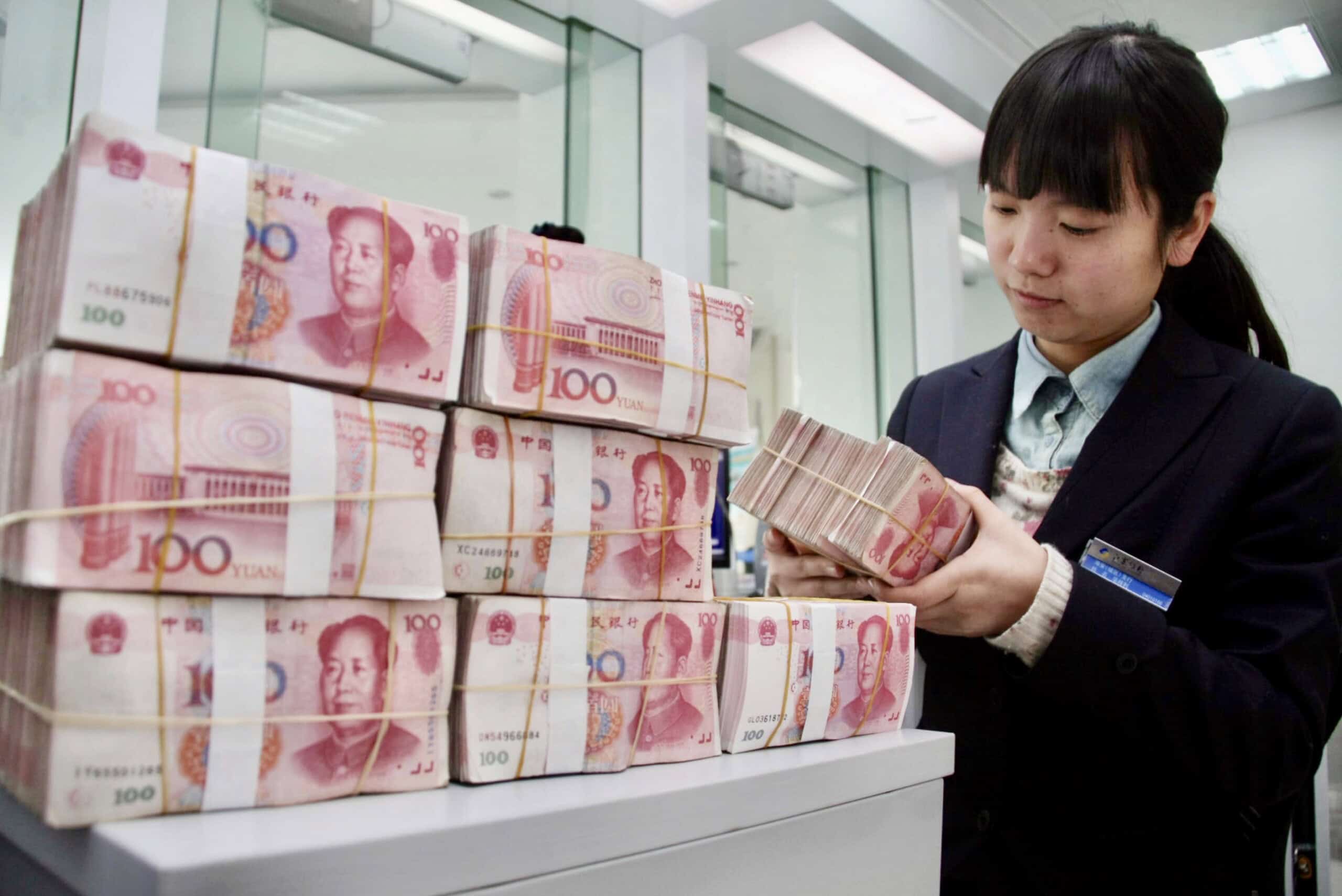
A clerk counts bills at a bank in Nantong, Jiangsu, China. Credit: IC Photo via Depositphotos
China’s manufacturing and export success is provoking growing anxiety among its trading partners. Amid the largest trade surplus in world history — likely over $1.2 trillion this year — calls for Chinese policymakers to ‘rebalance’ the economy towards domestic demand are growing louder. With goods imports from China surging, global policymakers are considering, or have enacted, various forms of trade protection. More recently, there has been increased interest in proposals for Chi
Exclusive longform investigative journalism, Q&As, news and analysis, and data on Chinese business elites and corporations. We publish China scoops you won't find anywhere else.
A weekly curated reading list on China from Andrew Peaple.
A daily roundup of China finance, business and economics headlines.
We offer discounts for groups, institutions and students. Go to our Subscriptions page for details.
The U.S. and EU are restricting Chinese inverters over cybersecurity and supply-chain concerns, but replacing them may create new challenges for the renewable-energy industry.
The former Trump official argues that the president’s approach to China is working, and explains why time is on the American side as the U.S. and China continue to move apart.
Corporate Risk Intelligence for National Security, Compliance & Due Diligence
We use cookies to ensure that we give you the best experience on our website. If you continue to use this site we will assume that you are happy with it.