Shein may have become an online clothing behemoth in a few short years. But the details revealed in the prospectus for its upcoming listing in Hong Kong suggest the company may be starting to lose its shine.
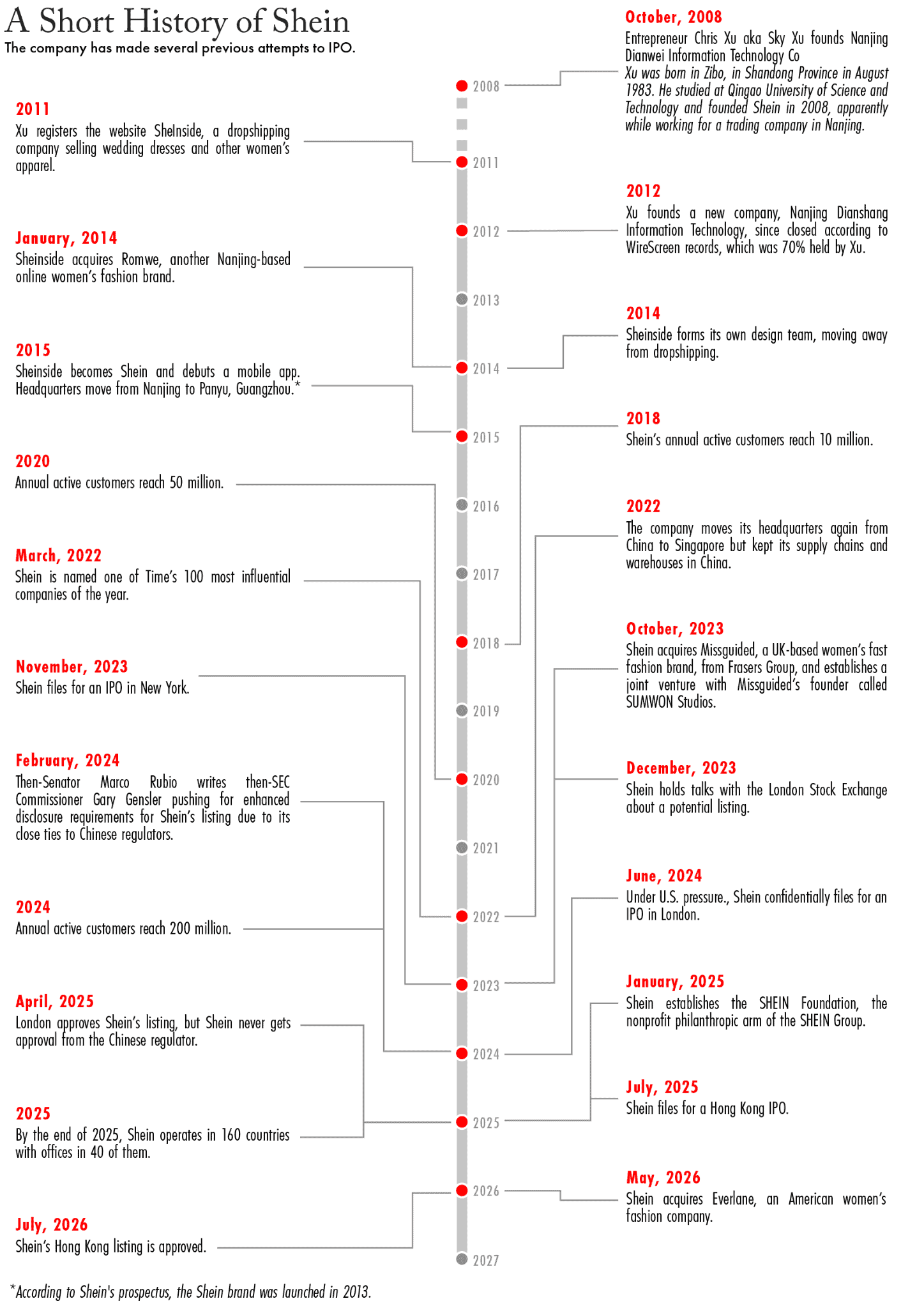
Shein rose to global prominence by exporting clothing at prices cheap enough to avoid tariffs, helping it to garner millions of customers in the West. But U.S. officials have also scrutinized the company over its China ties, derailing its initial attempt to list on the New York Stock Exchange in 2023. Chinese regulators quashed a later effort to list in London, while the trade war launched by President Trump has also hit the company
So while Shein is still the world’s largest online fashion retailer — and has branched out into selling non-clothing items and third-party brands too — the figures in the prospectus show its expansion has slowed.
“The headline figure is that they have stopped growing,” says Juozas Kaziukėnas, a technology analyst who focuses on e-commerce. “If they were going public two years ago or even a year ago, the story would look a lot more positive than it looks now.”
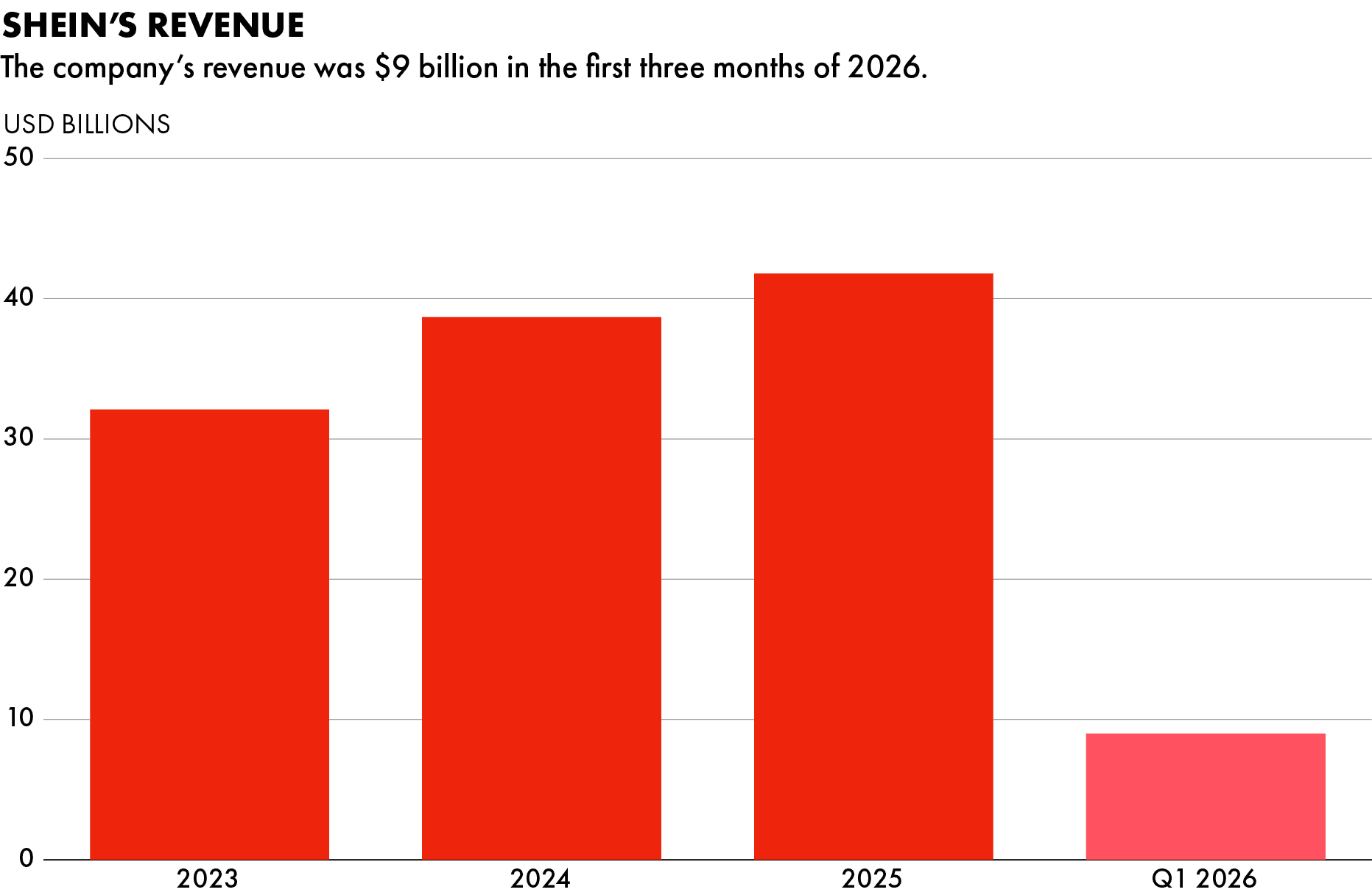
Two-thirds of Shein’s revenue now comes from the United States and Europe, according to its prospectus. But its stagnation in the U.S. has dented its rate of progress: its overall revenue still grew by 8 percent year-on-year in 2025, but that was less than half the 19 percent annual growth rate in 2024.
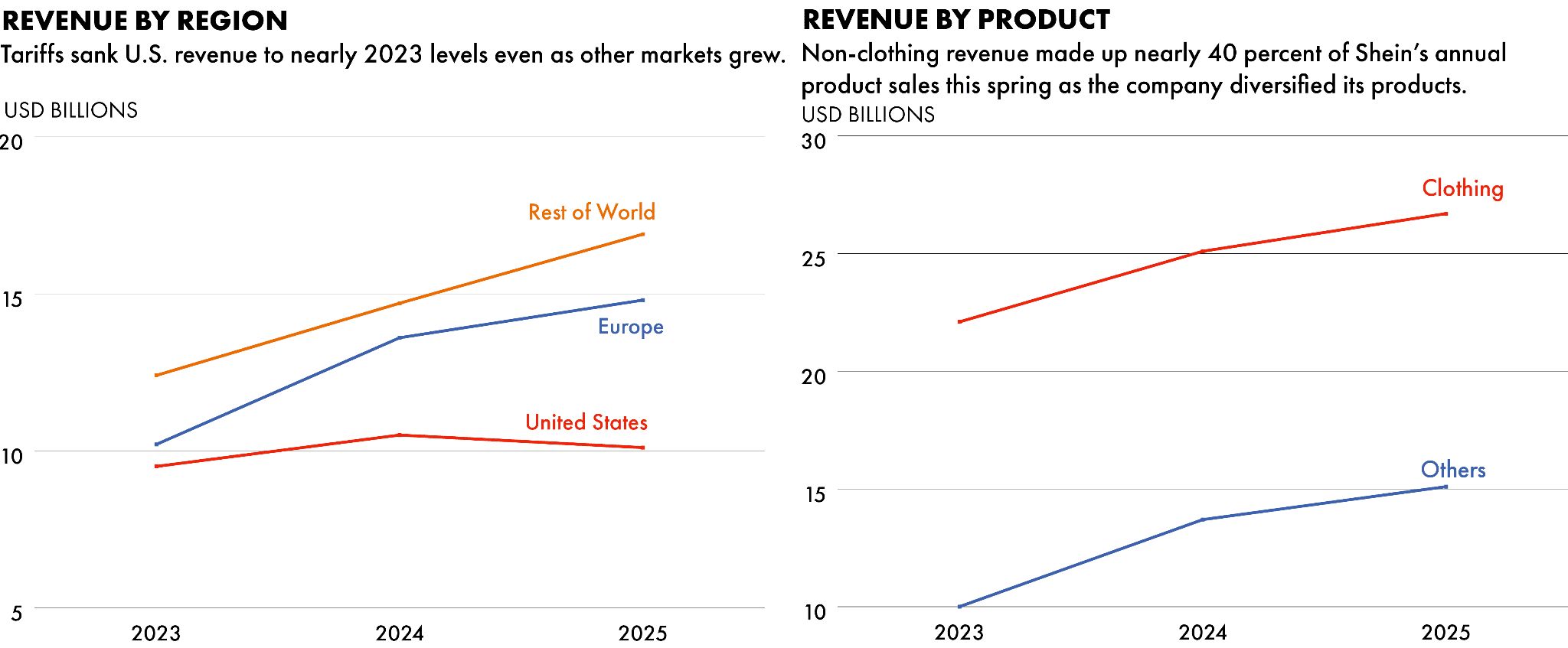
Alongside slowing revenue growth, Shein has seen its costs rise sharply. Nearly half of its expenses in the first quarter of 2026 were spent on fulfilling customer orders: Its annual ‘fulfillment costs’ rose by $6 billion between 2023 and 2025.
Higher tariffs and the U.S. government’s 2025 decision to end the so-called ‘de minimis exemption’ from tariffs for low-value packages have been a big driver of Shein’s higher costs. The same situation could soon hit its European customer base: from July 1, the EU began implementing a 3 euro sales tax on low-value shipments.
Shein could still grow in the rest of the world where its products are not heavily taxed, which Kaziukėnas calls the company’s “saving grace.”
“The golden age of the market opportunity was a few years back, and now market conditions are becoming increasingly hostile for all these kinds of direct-from-China retailers,” he says.
Despite Shein’s efforts to diversify its supply chains and host third-party sellers on its marketplace, the bulk of its products still come from Chinese warehouses.
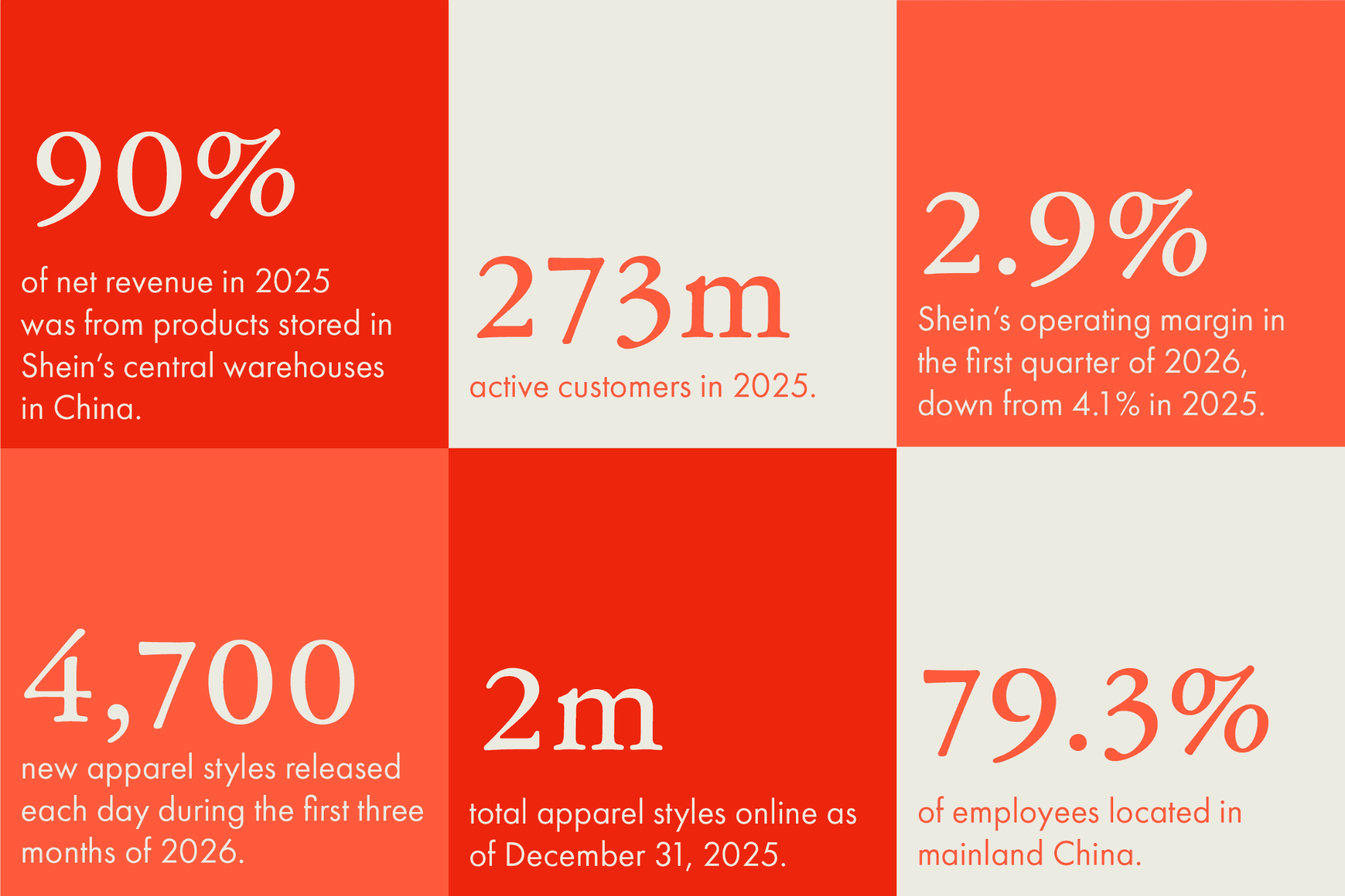
Shein’s slowing growth suggests it could struggle to achieve the $40-50 billion valuation that reports suggest it is seeking in its IPO. Indeed, the company’s valuation has been in decline since it was valued at nearly $100 billion in a 2022 funding round.
| Series | Year | Valuation |
|---|---|---|
| A | 2014 | $53 million |
| B | 2016 | $169 million (1.1 billion RMB) |
| C | 2018 | $2.4 billion |
| C+ | 2020 | $5 billion |
| Pre-D | 2022 | $60.5 billion |
| D | 2022 | $98.2 billion |
| D+ | 2023 | $64 billion |
Source: Shein
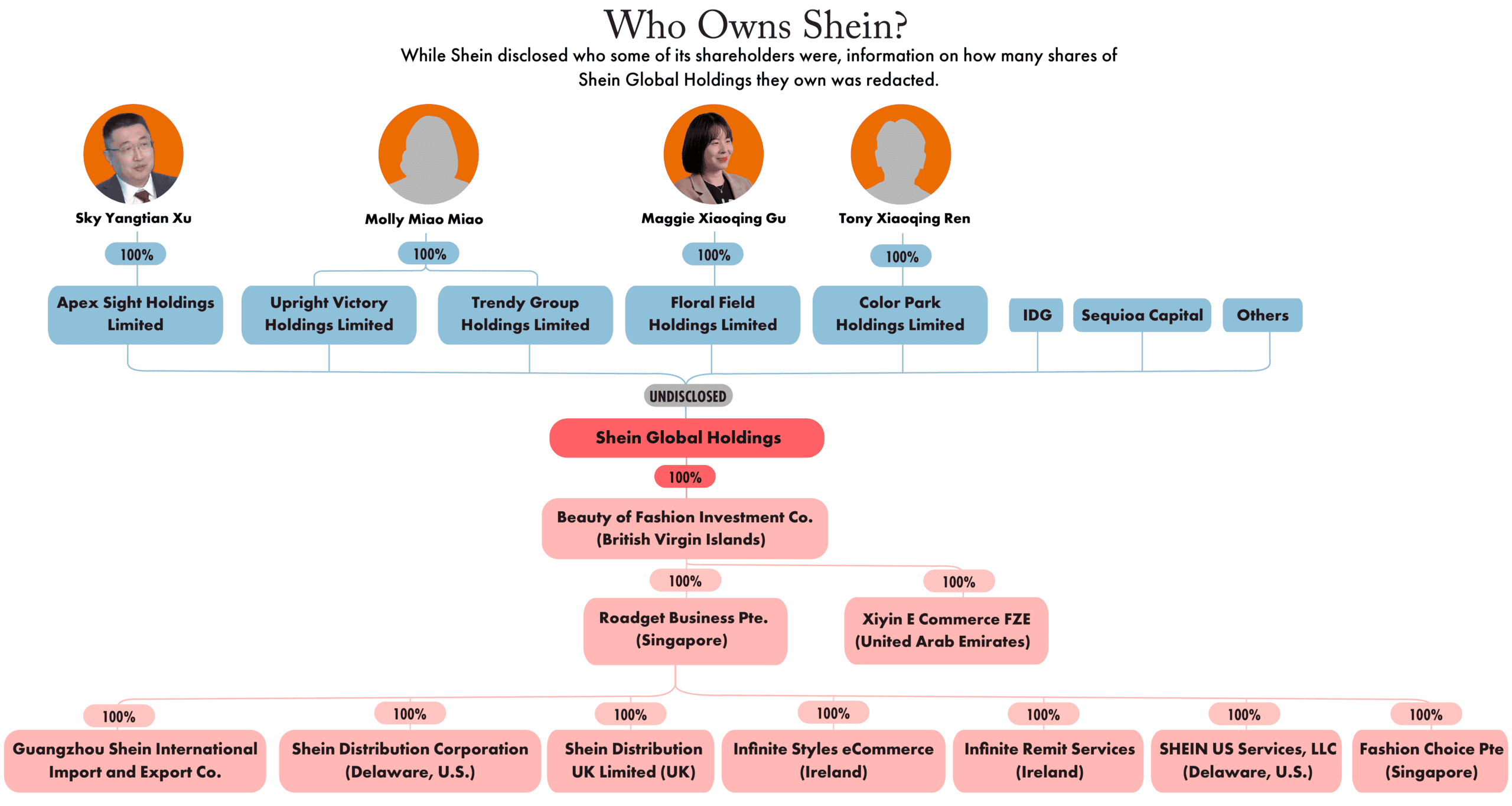
Shein’s IPO prospectus also revealed details about the company’s structure. Shein’s founder, reclusive billionaire Sky Xu, had a net worth of $5.95 billion in 2025, according to Forbes, down from its peak of $11 billion in 2024. His first-ever public appearance was at the High Quality Development Conference in Guangzhou earlier this year.
The size of his ownership in SHEIN Global Holdings is withheld in the prospectus, along with the share held by the other three founding members and other investors.

Savannah Billman is a Staff Writer for The Wire China based in NYC. She previously worked at the National Committee on U.S.-China Relations.