China’s announcement during last month’s ‘Two Sessions’ meetings of a new data ministry grabbed international headlines, but domestically another decision kicked up a stir: Beijing’s announcement of a 5 percent cut in the size of the central government’s workforce.
Government ministries and state-owned enterprises (SOEs) have long been the country’s biggest employers. In recent years, young Chinese have coveted government jobs, viewing them as more stable and less grueling than those in the private sector.
This week, The Wire looks at China’s largest employers: who they are, how they’ve changed, and how the largest state and privately-owned companies compare.
THE BIGGEST EMPLOYERS
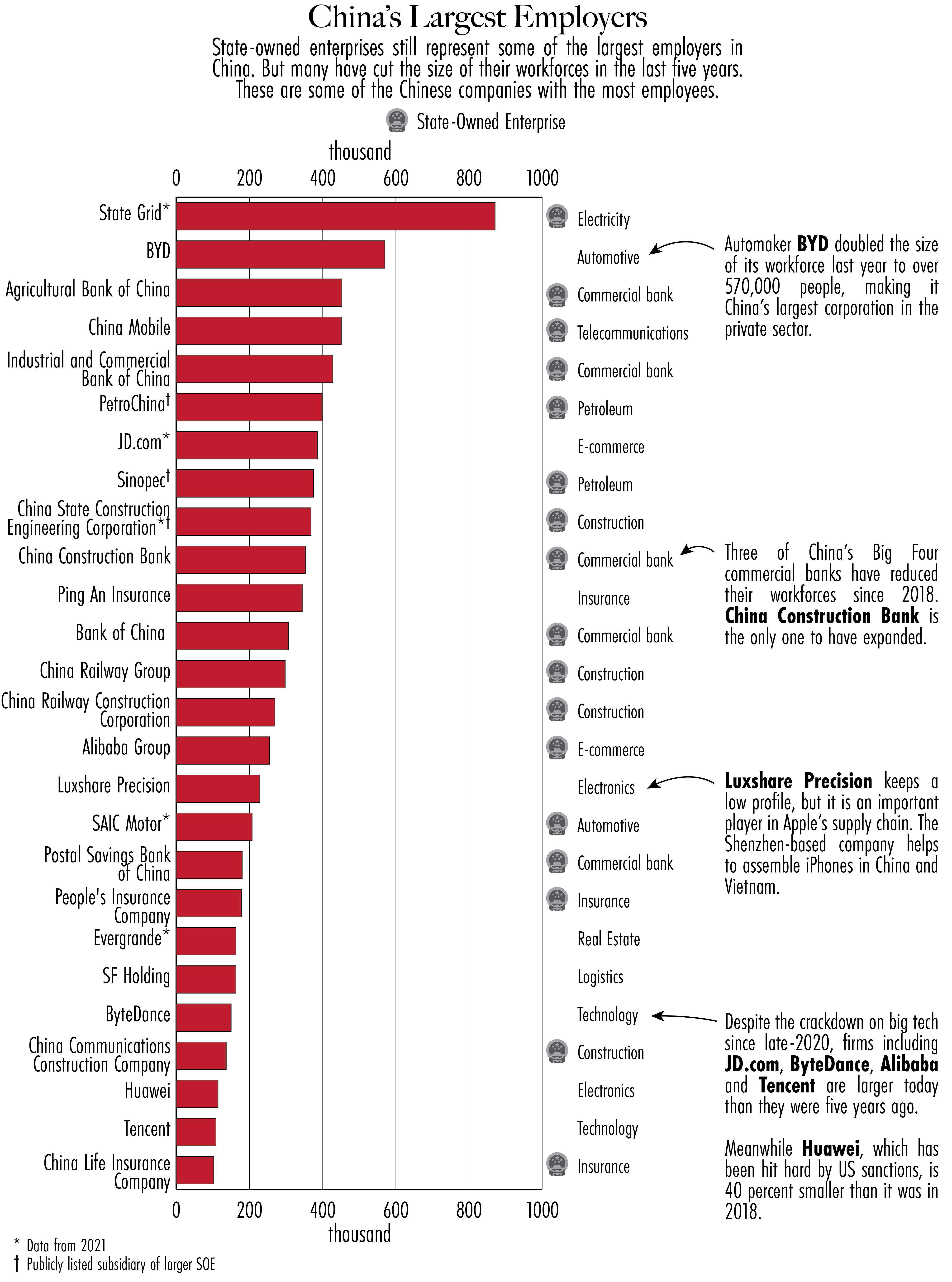
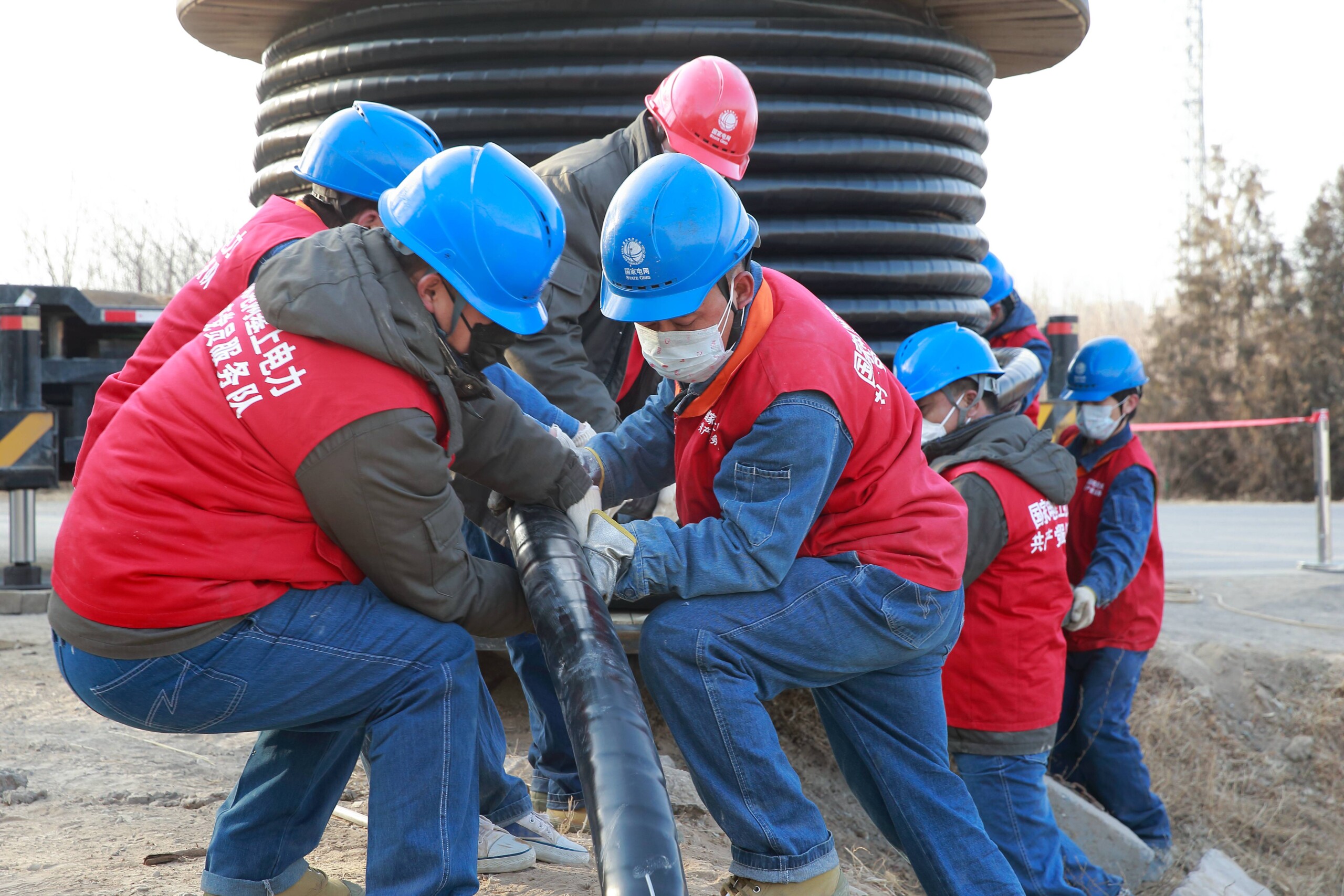
Data on how many people China’s different SOEs employ isn’t always readily disclosed. But the financial statements of publicly listed subsidiaries provide a partial picture. The giant oil and gas SOE China National Petroleum Corporation (CNPC), for example, doesn’t disclose how many employees it has, but its major subsidiary PetroChina, which is publicly listed, reported 398,440 in 2022.
Many of China’s largest SOEs have been shrinking their workforces for years. PetroChina and Sinopec, for example, are on average 14 percent smaller than they were five years ago, having jointly shed more than 126,000 jobs (equivalent to Huawei’s manpower). Three of China’s Big Four banks — Bank of China, ICBC and Agricultural Bank — are on average 3.5 percent smaller than in 2018.
On the list of China’s largest employers, it is private firms that have moved up the most in recent years. Despite its troubles since 2020, Alibaba Group has doubled the size of its workforce over the same period. JD.com, the e-commerce giant, and technology and gaming behemoth Tencent are both roughly twice as large today as they were in 2018.
| Losers | Five-year change | Percentage change | Gainers | Five-year change | Percentage change |
|---|---|---|---|---|---|
| PetroChina† | -77,783 | -16% | BYD | +353,162 | 163% |
| Huawei | -74,000 | -39% | JD.com* | +206,430 | 115% |
| Sinopec† | -48,752 | -12% | China State Construction Engineering Corporation† | +189,400 | 106% |
| State Grid Corporation of China* | -42,401 | -5% | Alibaba Group | +188,520 | 284% |
| Ping An Insurance | -32,677 | -9% | Luxshare Precision | +149,800 | 191% |
Data: Company annual reports
But the company that stands out for its explosive growth in manpower is BYD, the Chinese automaker cashing in on China’s electric vehicle wave. After maintaining a roughly constant labor force for years, BYD doubled its workforce between 2021 and 2022. With 570,000 employees today, BYD has hired more people than Alibaba, Tencent and ByteDance combined. Three quarters of those employees work on the company’s production lines.
HOW CHINESE COMPANIES MATCH UP TO THE U.S.
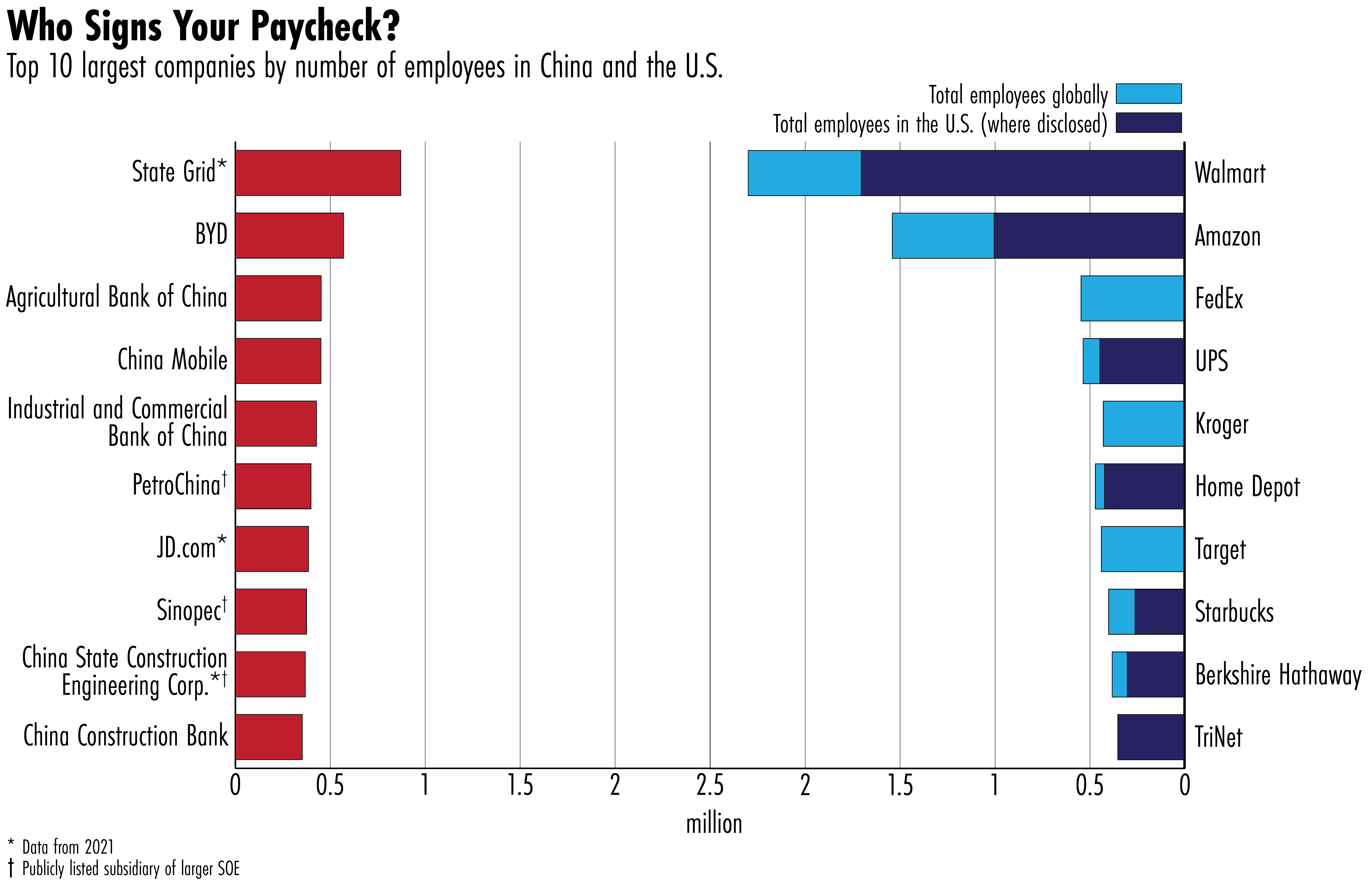
Big box stores dominate the list of largest employers in the U.S. Holding the number one spot by a wide margin is Walmart, with more than 1.7 million U.S.-based ‘associates,’ followed by Amazon, which reports roughly 1 million U.S. full and part-time employees. Other major hirers include retailers Kroger, Home Depot, Target and Starbucks.
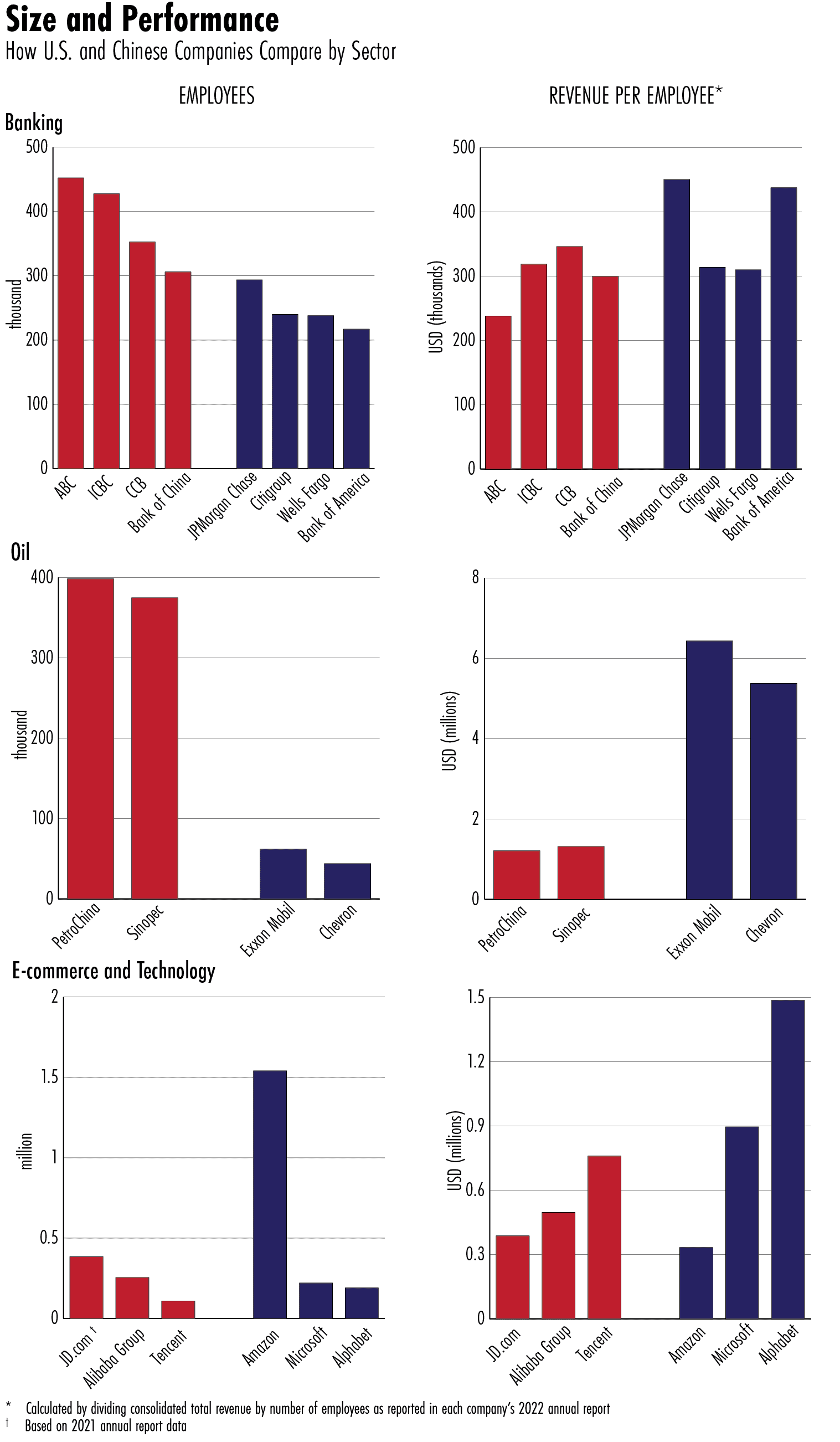
Whereas SOEs tied to heavy industry and banking dominate China’s list, equivalent firms in the U.S. don’t hire on the same scale. Sinopec and PetroChina each have more than 350,000 people on their payrolls; meanwhile, Exxon Mobil and Chevron are about 85 percent smaller, with approximately 62,000 and 44,000 employees, respectively.
The difference in manpower between China and the U.S.’ largest banks is less stark but still wide: with about 470,000 employees, Agricultural Bank of China has about 60 percent more staff than JPMorgan Chase, America’s largest bank.

Eliot Chen is a Toronto-based staff writer at The Wire. Previously, he was a researcher at the Center for Strategic and International Studies’ Human Rights Initiative and MacroPolo. @eliotcxchen