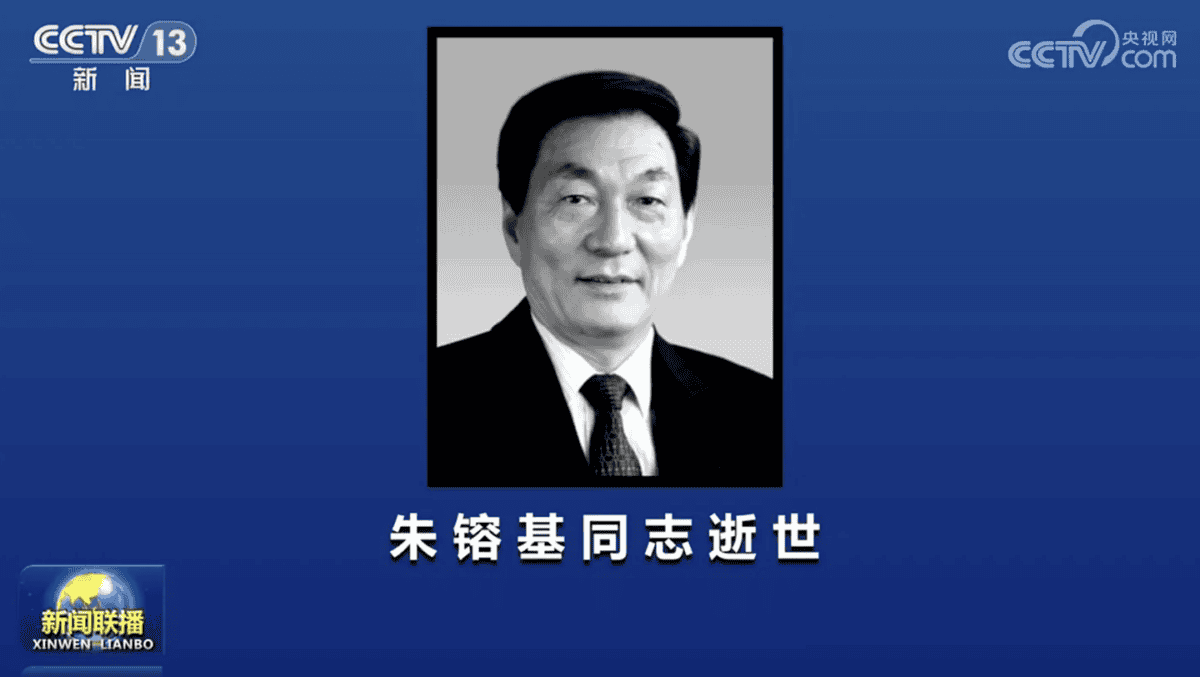
Hello on this day after the death of Zhu Rongji.
They don’t make Chinese premiers like Zhu Rongji anymore. In an interview with the Wall Street Journal in 1999, Zhu was asked about the famous “Tank Man” photo, which captured a man standing in front of a line of tanks shortly after the People’s Liberation Army violently suppressed the Spring 1989 student protests in Beijing. The lead tank stopped and then tried to maneuver around Tank Man, who was finally persuaded by a passerby to run away. It was the start of a memorable exchange:
WSJ: One of the main images Americans would have of China, and perhaps one of the lasting images of the latter part of our century, is that photograph of that young man standing in front of a tank near Tiananmen Square in 1989. In retrospect, can I ask you what you think of that man? Was he being brave? Was he being foolish? Was he misguided?
Zhu: … There’s another photograph that left a deep impression on me. It’s a photo of a young naked girl in Vietnam, in a bombed area, running on a road … [Zhu is referring to this infamous Vietnam War image of a young girl burned by napalm.]
WSJ: Oh yes, the napalm …
This week’s briefing remembers “The Great Premier” (as Xi’s former economics tsar, Liu He, and many others referred to him) and his less illustrious successors, and highlights some of the more interesting items published after his passing.
Thanks for reading What We’re Reading!
Tom Mitchell
Features Editor
tom.mitchell@thewire.media
The One to Read
Zhu is the third most important Chinese political figure of the post Mao era, after Deng Xiaoping and Xi Jinping. History and popular culture have been kind to Jiang Zemin, Zhu’s senior political partner when they were paired as president and premier respectively from 1998 to 2003. But ultimately Jiang’s greatest accomplishment was to stand back and let Zhu do his thing in a genuine chairman and chief executive officer partnership.
By contrast their successors, President Hu Jintao and Premier Wen Jiabao, were weak. As illustrated in Desmond Shum’s astonishing memoir, Red Roulette, Wen could not exercise authority over his own family let alone the world’s most populous country. As for Xi’s Premier, Li Keqiang, he was either happy to be a non-entity passing time in Xi’s shadow or didn’t have the guts to challenge him.
Zhu’s passing reminded me of an exchange I had in February of 2016 when I was Beijing Bureau Chief for the Financial Times. The annual session of the National People’s Congress was looming and two of my minders at the foreign ministry called me to a meeting. They wanted to know if the FT would like to ask a question at Li’s annual NPC press conference and if so, what would it be?
The foreign ministry’s perennial effort to choreograph the premier’s NPC presser was annoying, but I didn’t mind telling them the obvious. Beginning in August 2015, a series of bad policy errors had roiled China’s stock markets and currency, and foreign reserves were draining away at the rate of $100 billion a month. I told them my bosses back in London would probably fire me if I didn’t ask about all that.
I also couldn’t help needling them a bit. Why did they need to know the question anyway? Can’t China’s top leaders think on their feet at a press conference just as so many Americans and British politicians can?
Well you see, they said, of course we trust the FT but we can’t trust the American newspapers — especially the New York Times.
Why not, I asked. What question are you worried the NYT would ask if handed the microphone?
They hesitated and glanced at each other. Then the more senior of the two said: “They would probably ask: ‘Premier Li, is it true you are the weakest premier in the history of the People’s Republic of China?’”
And thus it was, at that still relatively early moment in Xi’s rule, that I realised Li was in fact the weakest premier in the history of the People’s Republic.
The FT was not invited to ask a question at that year’s NPC press conference.
As for Li Keqiang’s successor, Li Qiang, the premier’s annual NPC press conference was cancelled entirely after he took office, completing the downgrade of the position from an activist CEO in the mould of Zhu to something more akin to Xi’s executive assistant.
Below is a list of recommended reading and viewing about Zhu:
Best epitaph: “A conservative with a liberal vibe”, from the Youshu/China Substack. Includes a video of Zhu speaking to Chinese university students and also in front of his political peers in Shanghai in 1987.
Zhu was hated too: A reminder that not all the changes Zhu presided over were welcomed by all Chinese people. From China Unofficial Archives @MinjianArchives, a local official’s telling memoir remembered.
Not possible in Xi’s China: Zhu being interviewed at length by Japanese television in front of a studio audience.
And finally: A gushing memory from Bo Xilai’s son, Bo Guagua.
Also Noteworthy
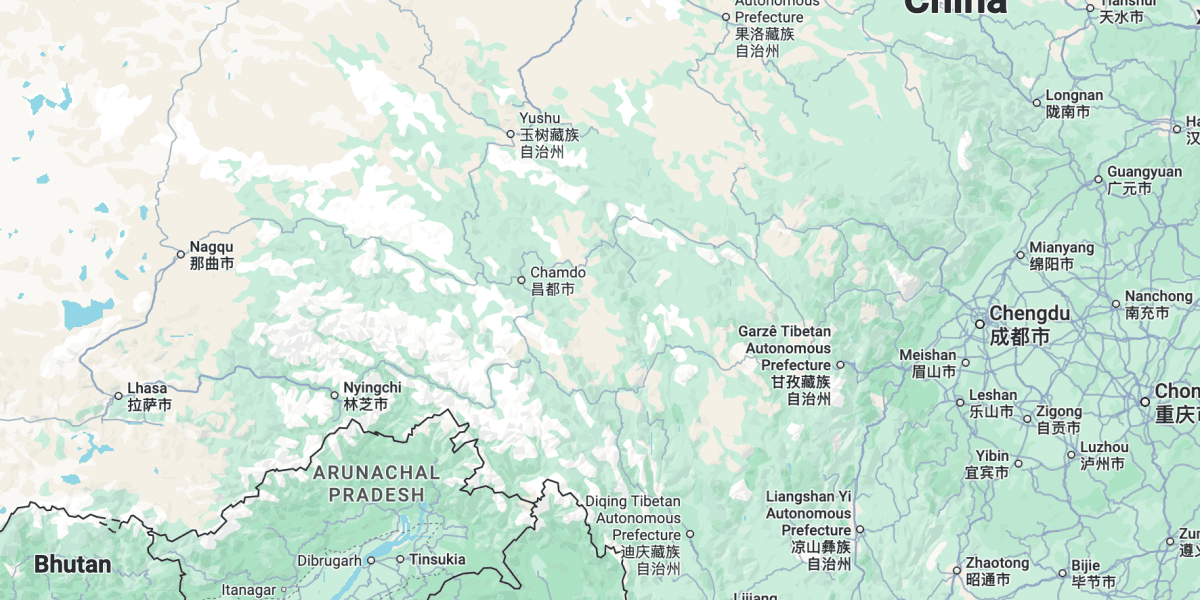
Things are hotting up again on the Sino-Indian frontier. And as usual when the world’s two most populous countries start butting heads in the Himalayas, India’s media leaps into action while north of the border it’s nothing but crickets and nothing-to-see-here assurances from China’s foreign ministry.
Watch this space.

From the canine history of Hong Kong to a revisionist history of the Great Leap Forward, China Books Review recommends five new China books to add to your list.
We’re always looking for ways to improve our publication and its coverage, let us know what you think at contact@thewire.media.