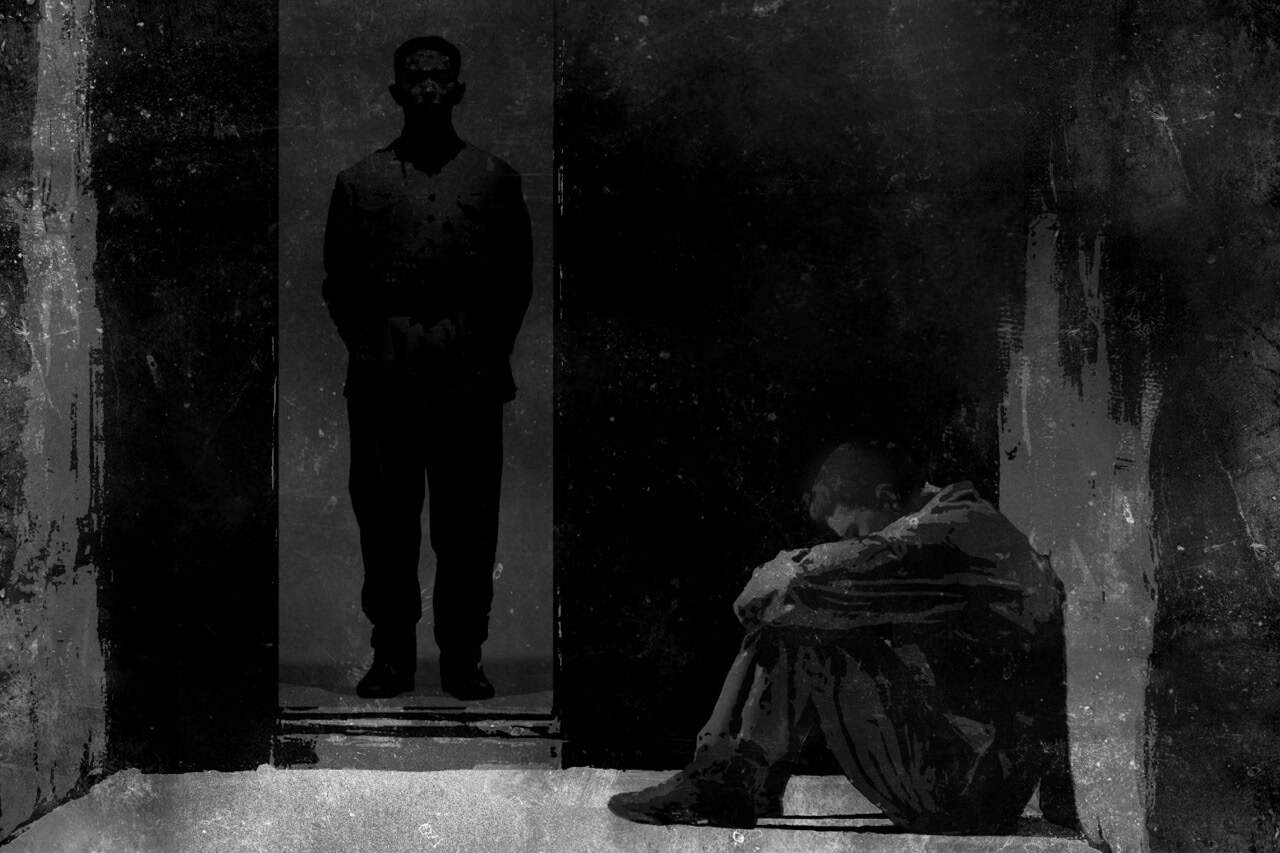
China’s secret police have detained you.
The ordeal begins with a surprise raid by security officers. They accuse you of crimes, restrain you and shove you into a vehicle. You are hooded or blindfolded, handcuffed, abducted to a secret location, locked in a padded cell, and threatened with severe punishment for “harming China”. Meanwhile, your home and office are searched.
If you are a critic of the regime who has lived with the perennial anxiety that it might one day move against you, this can be a moment of strange relief: your worst-case scenario has unfolded. If you thought you understood the rules and could count on official connections or the reasonableness of the authorities, you experience the shock of illusions dispelled and trust betrayed.
You struggle to adjust to solitary confinement and sensory deprivation. The room has only a hard bunk; you have only a few articles of clothing and basic toiletries. There are no mirrors — not even the reassurance of seeing your own face. Most maddeningly, you cannot go out. Your universe is now measured in a few square feet.
The plainclothes Public Security or State Security officers holding you won’t inform anyone of your location or conditions. The law entitles you to retain and consult a lawyer. But in state security cases, it also empowers your jailers to deny access to counsel, which they are sure to do, at least until they have finished questioning you and building their case, which could take a year.
Disconnected from loved ones and friends, from the world, from your own identity, you experience a chill of isolation and a longing for connection. From now on, your only human relationships are with your captors. Human rights lawyer Sui Muqing speaks for many when he recalls that “the pain of missing my family was the worst suffering.”
What cinematic depictions of torture achieve through shock and spectacle, RSDL accomplishes through comprehensiveness and duration. By law it can last up to six months, usually followed by years of detention and prison. The scars it inflicts last much longer.
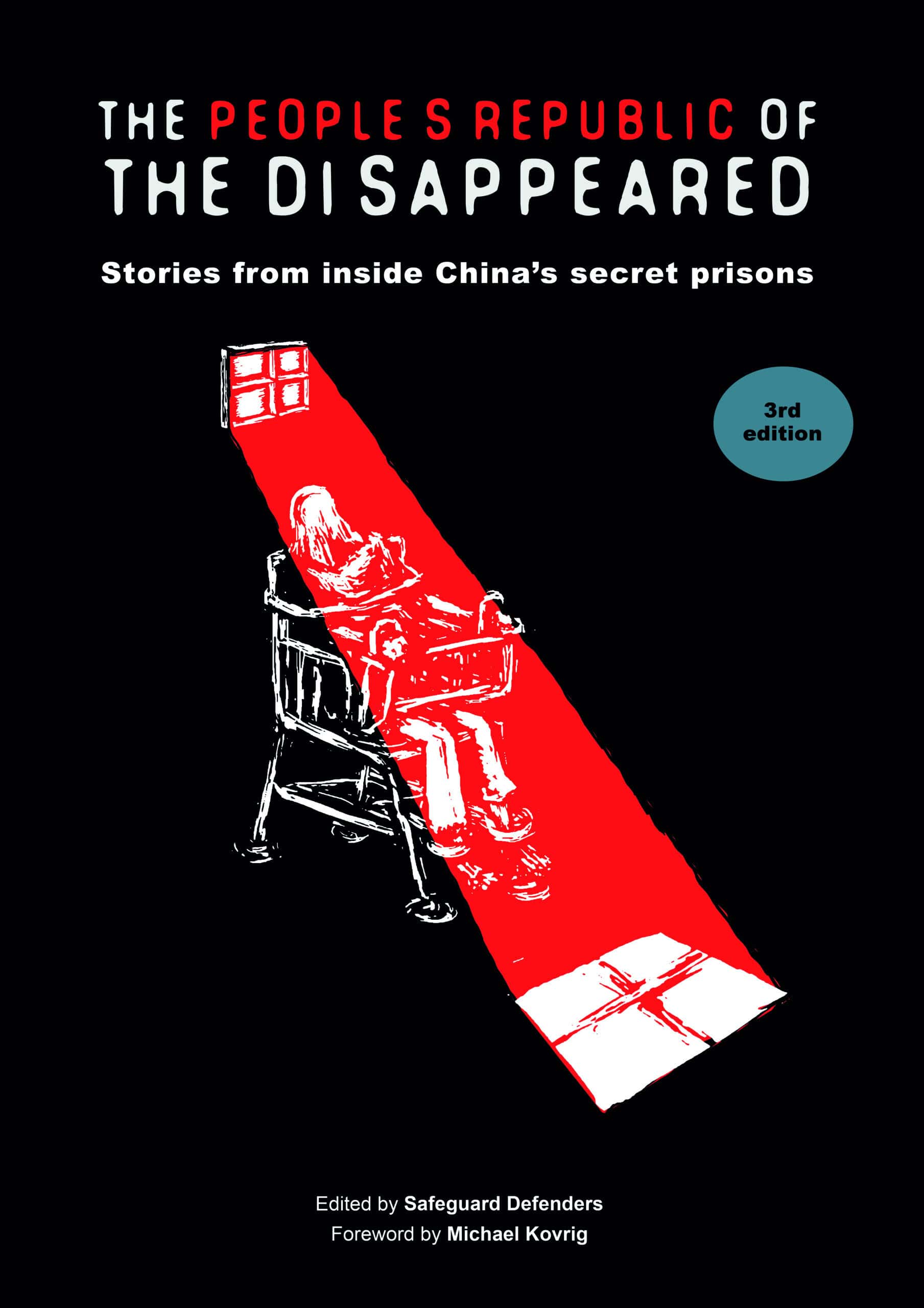
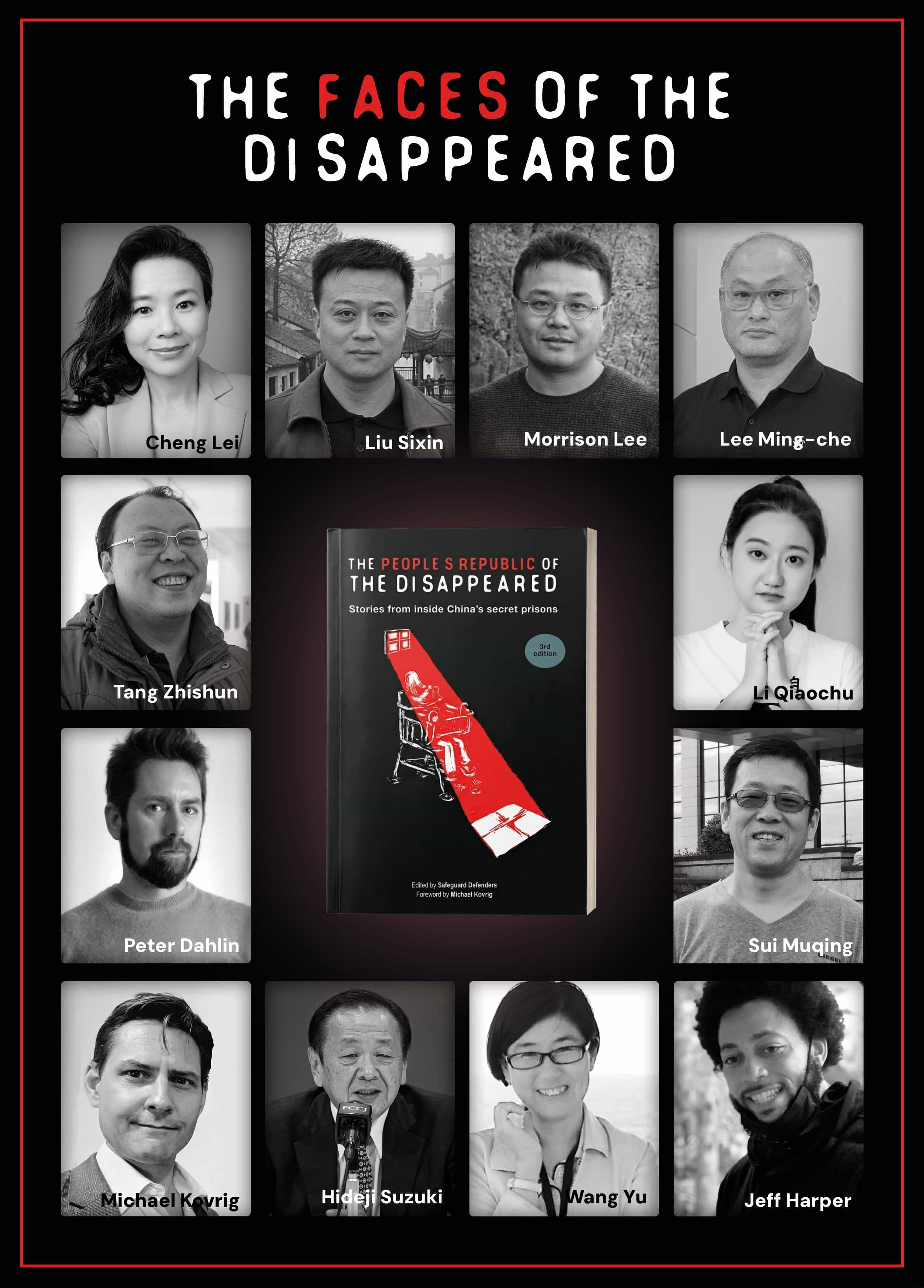
That soul-crushing experience is the subject of the latest edition of People’s Republic of the Disappeared, a new book published by the human rights NGO Safeguard Defenders. This third edition collects new first-person accounts of both PRC and foreign citizens abducted by the Chinese Communist Party’s security apparatus under a sinister procedure it calls zhiding jusuo jianshi juzhu 指定居所监视居住 or zhiju 指居 for short. The official English translation is “Residential Surveillance at a Designated Location” (RSDL), a bland bureaucratic mouthful that deliberately masks pre-arrest detention in a secret facility where your tormentors subject you to appalling abuse and your only right is to obey.
In writing this book’s foreword I wanted to reflect the suffering and survival of others, rather than relating my own experience as a political hostage from 2018–2021.
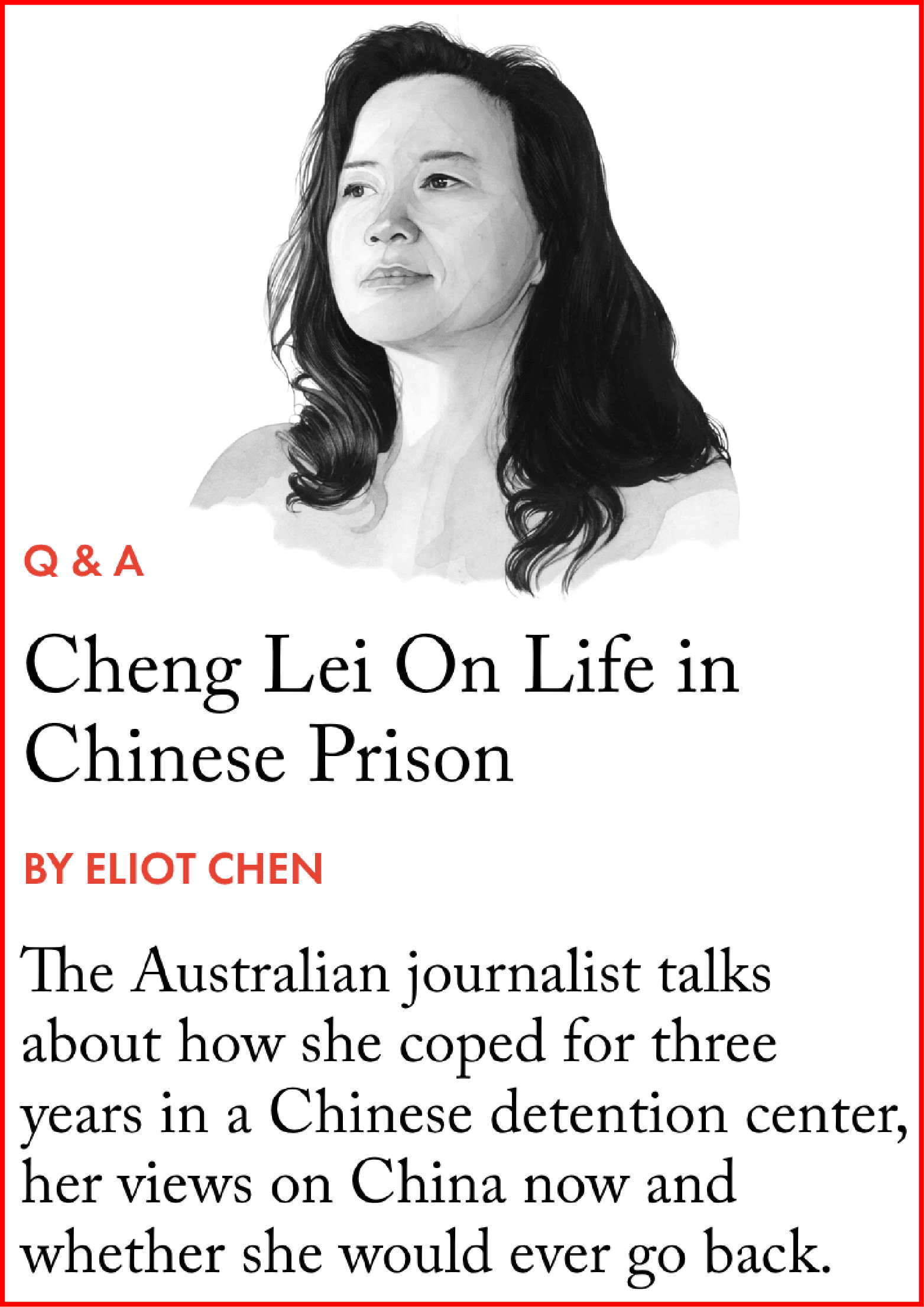
I analyzed its ten essays and several more from the two previous editions, as well as stories of prisoners from the PRC’s early decades to the present. I also read the recent memoir of Cheng Lei, the Australian broadcast journalist whose stint as a CGTN news anchor was abruptly terminated by Ministry of State Security agents in 2020. They detained her in retaliation against Australian policies that had enraged their Communist Party masters. Together, these accounts reveal an enduring core curriculum of fear, coercive interrogation, thought remolding and forced submission to the power of the Party-state.
Through its control of all four dimensions in RSDL, especially time, the state becomes the sole point of reference. Blackout curtains cover the windows. With no clocks, no daylight and constant artificial light, circadian rhythms come unanchored. At least for the initial months, there will be nothing to read and no correspondence with the outside world beyond 30-minute consular meetings if you’re a foreign citizen. Monotony turns hours into eternity.
Humans are wired to avoid uncertainty, but in RSDL the unpredictable becomes the only certainty. You don’t know where you are, how long you will be there, what they will do next, or whether you will survive with your sanity intact. What cinematic depictions of torture achieve through shock and spectacle, RSDL accomplishes through comprehensiveness and duration. By law it can last up to six months, usually followed by years of detention and prison. The scars it inflicts last much longer.
Solitary confinement feels like a kind of social death that dissolves your identity and ability to make sense of a world that has apparently forgotten you. “If they just dug a hole and threw me into it, maybe no one would even know,” recalls women’s rights activist Li Qiaochu. With no social contact, anxiety overwhelms your ability to self-regulate. United Nations standards prohibit solitary confinement over more than fifteen consecutive days, beyond which it can amount to torture, according to the UN’s special rapporteur on the subject. Other UN experts deem RSDL an enforced disappearance and call for its end. Your jailers do not care.
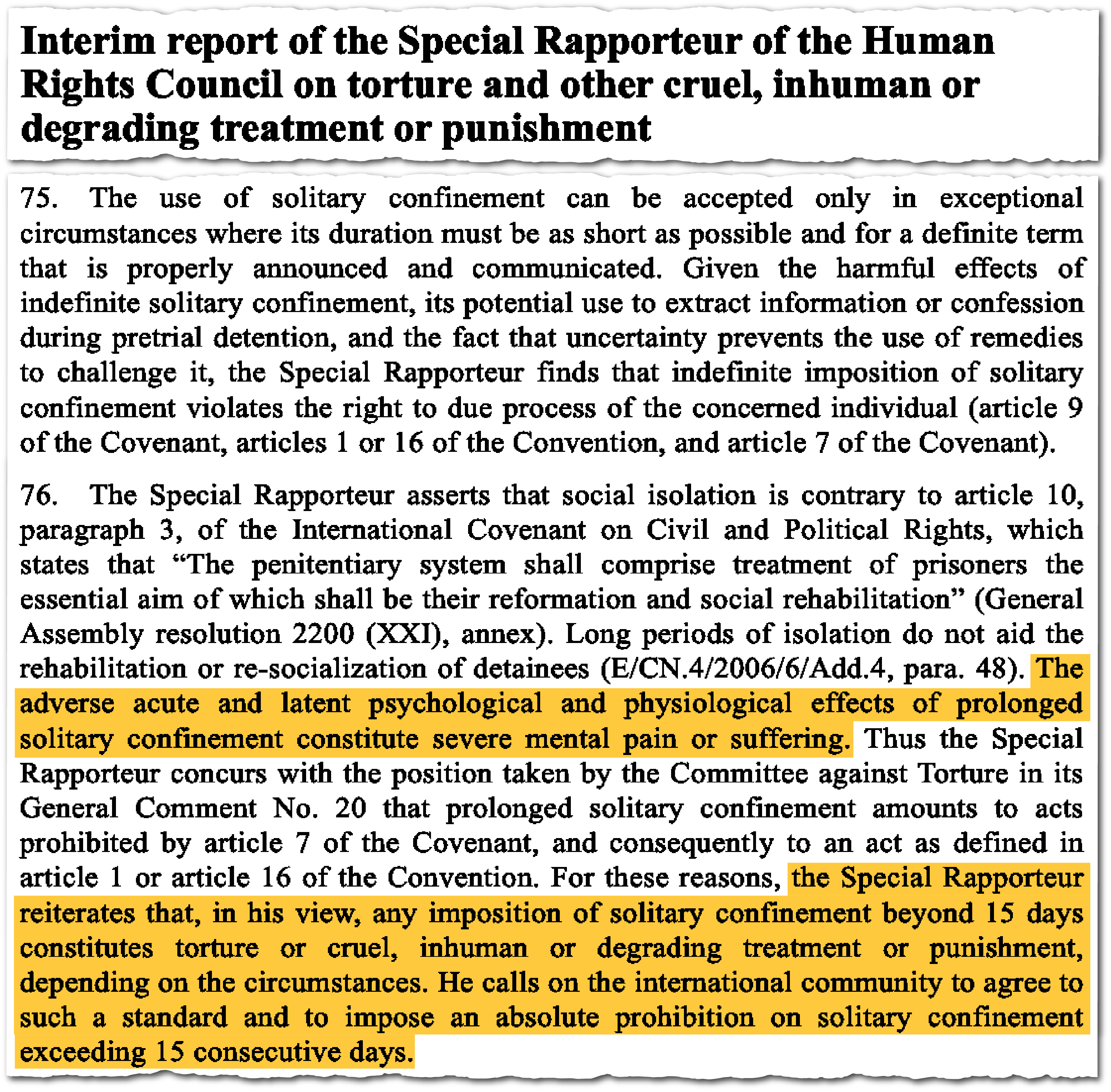
Surveillance and control are absolute. Escape and privacy are impossible. Cameras track your every gesture, as do the two guards who are always in the cell with you. They watch you sleep, shower and use the toilet. They may stand or sit beside you, encroaching on your personal space. They communicate only to give orders or fetch necessities. Adding to the humiliation, even your most basic acts and needs require their permission. Bathing is a privilege, not a right. You learn to handwash your clothes in a basin and wipe your cell clean.
The guards restrict your position and posture, forcing you to sit for hours in an interrogation chair, or on your bunk; to stand all day, or only sleep in certain positions, hands always visible. Your body stiffens, aches and grows weak from immobility and inadequate nutrition. Physical deterioration ensues. As muscles atrophy, the will follows.
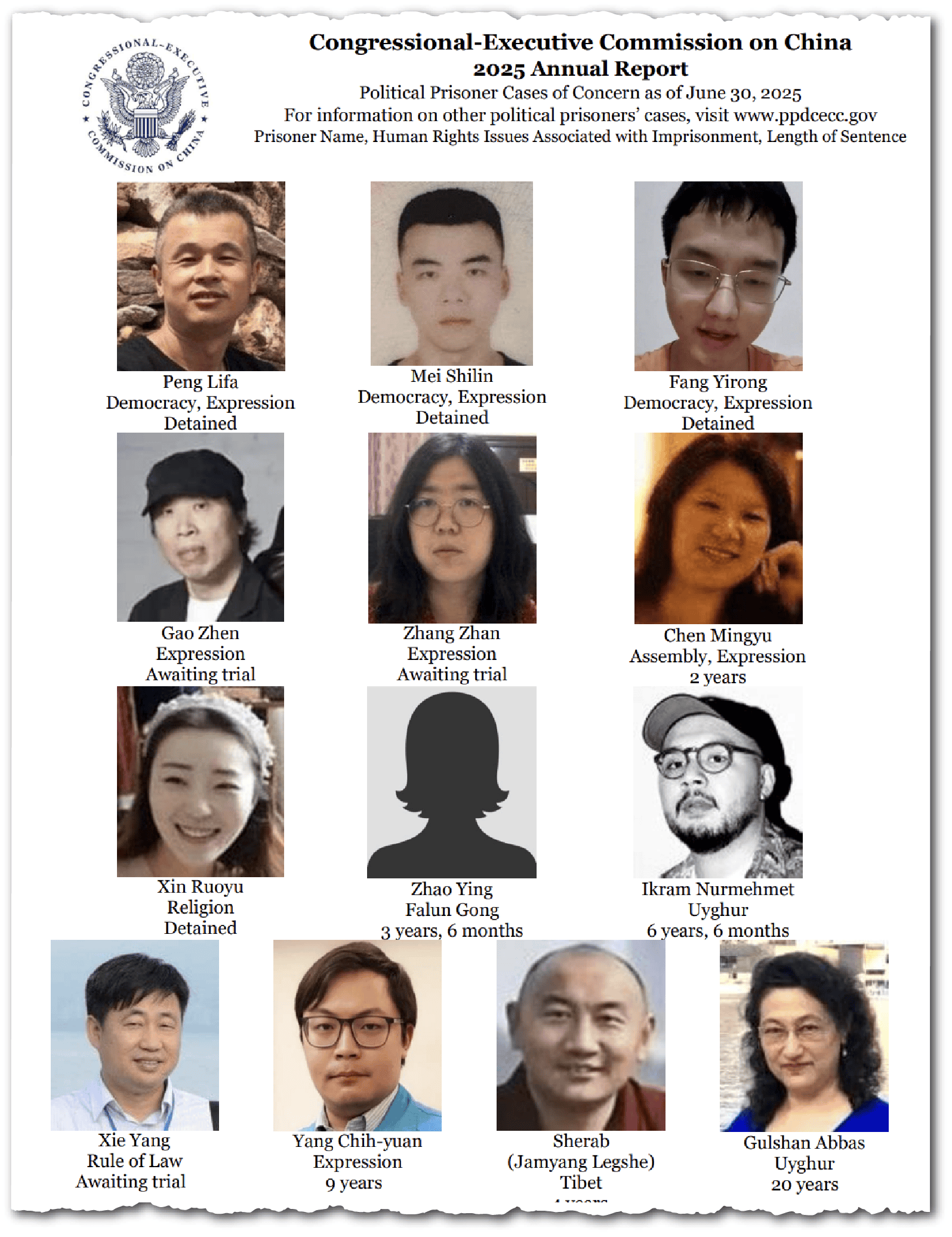
If your case has drawn outside pressure and attention, they may not actively escalate your suffering further, instead counting on time to grind you down. For the less fortunate, more aggressive torture tactics can include vicious beatings and relentless verbal abuse. You might be forced, as Xie Yang was, to sit for hours at a time on a high stool, legs dangling, not reaching the ground, pressure swelling the legs and causing excruciating pain.
A common tactic is to create a prisoner’s dilemma by warning (perhaps falsely) that others who know you have already confessed and incriminated you. Fear and shame become viruses you are exposed to daily, until your mental immune system collapses.
If that proves insufficient to force your compliance, officials may deprive you of sleep for days, as they did to several of these writers. Sleep deprivation is insidiously debilitating: it impairs reasoning, judgement, inhibition, memory and attention, and can induce hallucinations, delusions and paranoia. It also increases sensitivity to pain and disrupts hormones and the immune system. The world becomes incoherent, false memories arise, and you become compliant, emotionally dependent, easily suggestible, and unable to evaluate consequences. Like hunger and immobility, lack of sleep erodes your will to resist without leaving physical evidence.
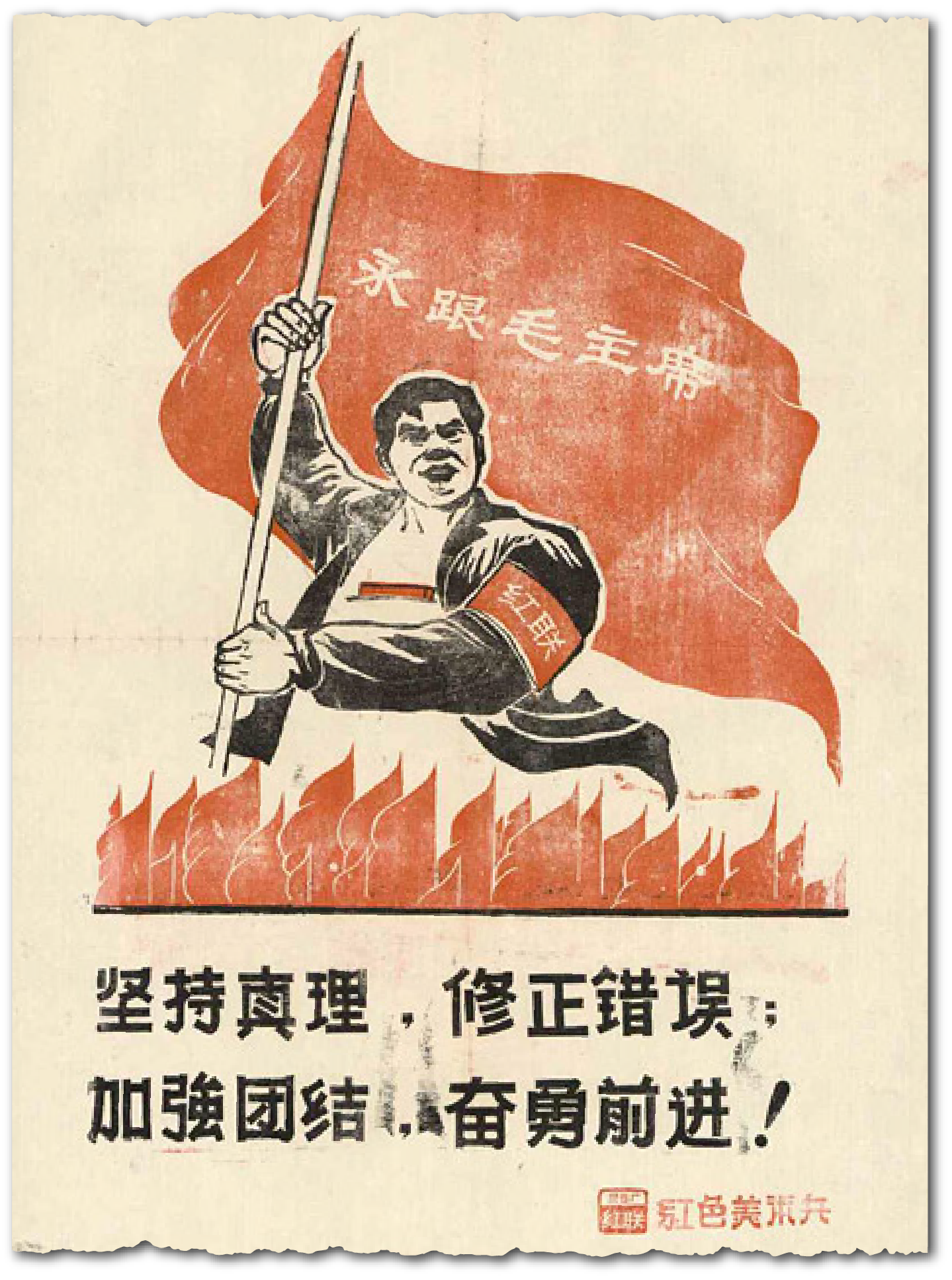
These stress and torture tactics soften you up for hundreds of hours of interrogation. Your case officers combine questioning methods from Chinese police procedures with thought reform and political loyalty techniques that date back to the Communist Party’s even more vicious early decades. Endless gaslighting narratives invert reality, casting you as the wrongdoer and these thugs as agents of righteous authority. They question not only your actions and motives, but your worldview, through relentless repetition compelling you to revise it to match their manufactured one. RSDL thus becomes a form of forced labor in which your daily toil is to answer your masters while they try to humiliate you into begging for mercy. From now on, as Li Qiaochu writes, “living is just being ceaselessly interrogated.”
In this war of psychological attrition, the officers meticulously go through the file they surely have on you for anything they might distort to incriminate you. A stray text message, your WeChat contacts, a business card, an email … anything they can access. Through hour after hour of circuitous questioning, they lie to you, twist your words, try to trick you into incriminating others, and incessantly harp on the slightest inconsistency. A common tactic is to create a prisoner’s dilemma by warning (perhaps falsely) that others who know you have already confessed and incriminated you. Fear and shame become viruses you are exposed to daily, until your mental immune system collapses.
Interrogations cycle between pressure and rapport, cruelty and kindness. They manipulate you with circular reasoning such as, “if you didn’t do anything against the law, then why are you here?” Through endless repetitions of this Kafkaesque logic, their premise justifies itself through familiarity, while your truth is rendered meaningless. RSDL authenticates itself within its own closed system.
The shifts from questioning to isolation and back are jarring. Loneliness makes you yearn for interaction and more willing to comply to maintain it — even with your tormentors. Cooperating may earn small privileges: books to read, movement, better food, and hints that you can hasten the process and lighten your sentence through compliance. By turning basic rights into special favors, they create feedback loops of learned helplessness that condition your brain’s reward centers to crave obedience as a means of survival.
Fail to comply and the interrogators could remind you of the pain your disappearance is causing your loved ones, stoke fears that defiance means never seeing them again, or even threaten to harm them as well. The mental anguish can break the strongest of wills. As Taiwanese human rights advocate Lee Ming-Che recounts, “the officers exploited my mental fragility with calculated threats and promises, preying on my desperation.”
Psychologically and biochemically, RSDL shakes the three foundational conditions of human wellbeing: agency (autonomous control over your own mind, body and actions); stability and predictability; and connection — the social ties through which we regulate our emotions.
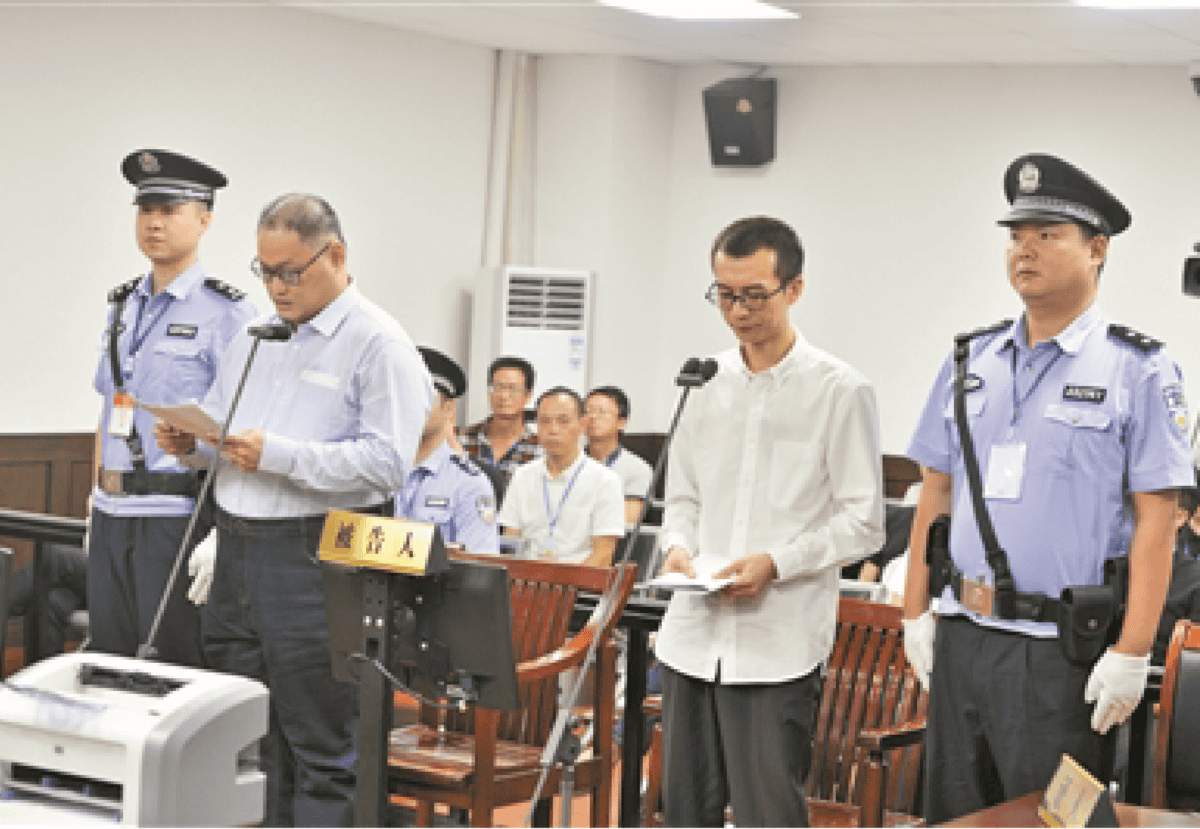
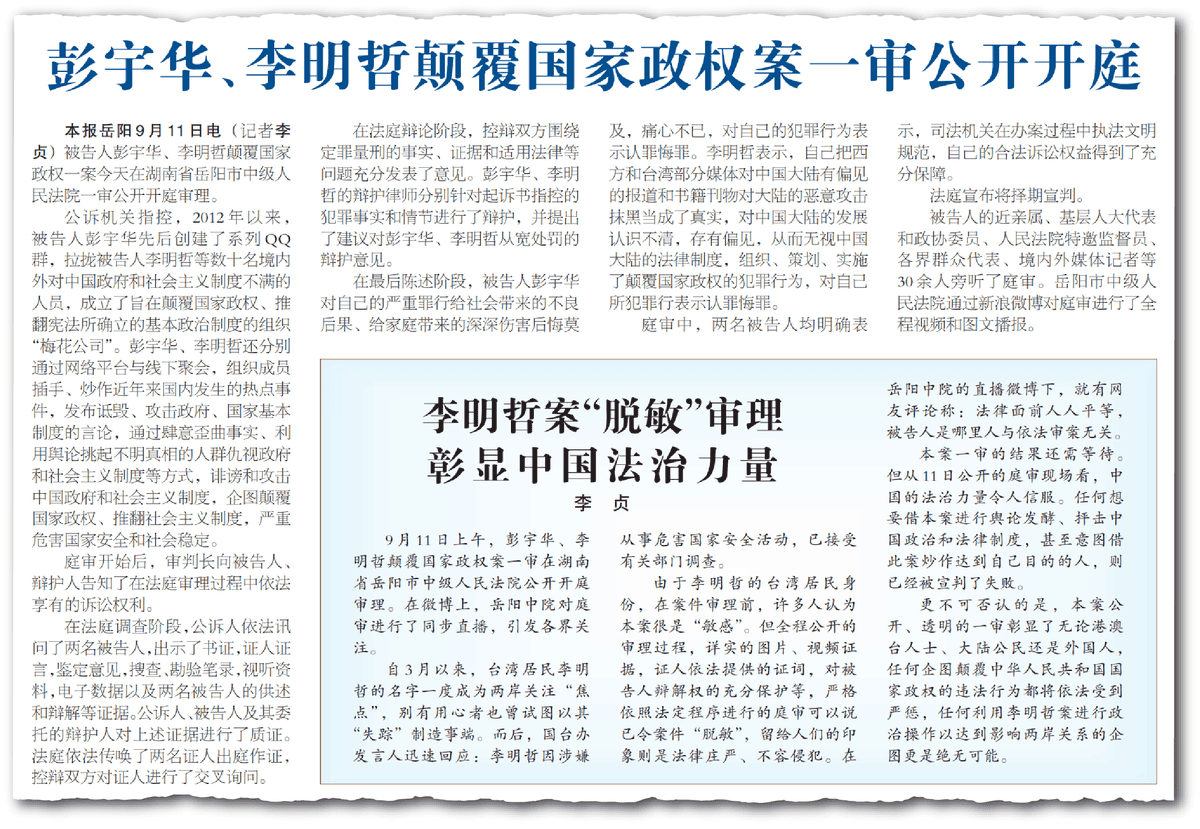
Left: Lee Ming-che (left) and Peng Yuhua (right) on trial in the Intermediate People’s Court of Yueyang City, Hunan, September 11, 2017. Right: A People’s Daily article about Peng Yuhua and Lee Ming-che’s trial.
Remove any one of them and you experience neurochemical dysfunction. Strip away all three under non-stop stress, without any human contact to help you return to equilibrium, and it becomes nearly impossible to feel calm or safe. You oscillate between boredom and anxiety, spiraling into overthinking and depressive rumination. Stress hormones such as cortisol flood your body, your nervous system hums with fear, your amygdala signals hypervigilance and the anticipation of harm. This cognitive overload can lead to catastrophizing thoughts, emotional dysregulation, disconnection from meaning, disorientation, and persistent muscular and cardiovascular strain, perhaps manifesting as pain in the chest and numbness in your limbs, as Cheng Lei reports.
The Party-state’s further objectives are imposing discipline and penitence while behaviorally conditioning you into a docile citizen or deferential foreigner. In this way, it consummates political power by compelling you to submit until you voluntarily regurgitate its narrative.
This is how RSDL inflicts psychological and physical deterioration and near or total mental breakdowns. As your coping mechanisms collapse from exhaustion, the last residue of inner autonomy is wiped away. Your captive body becomes an instrument through which the state security organs virtually control your decision-making. Alone, powerless, humiliated, denied your intrinsic dignity, you begin to doubt your own humanity. The cells are padded because at some point nearly everyone’s mind begins to break down. The pain is too much to bear and you can see no end to it. Death would offer a yearned-for release, but even that choice is taken from you. With no way to die, you can only endure.
The only escape from this doom loop is confession. That’s when your captors offer a poisoned chalice of relief that embodies the old Soviet line, “show me the person, and I’ll show you the crime.”
A grudging acknowledgement of their concocted “facts” is insufficient. You must be an active participant in your own ritualized moral debasement. Write a statement that conveys your repentance, self-criticism and confession to crimes. Revise it. Revise it again. Keep rewriting it until they deem the groveling adequately abject, and the admitted crimes sufficiently severe to justify the sentence the state will assign you. At a procedural level, this usefully records your admission of guilt and validates whatever “evidence” the investigators have gathered. This sham legitimacy makes the rest of the process go more smoothly: quicker trials, fewer appeals, less risk of political embarrassment.
The Party-state’s further objectives are imposing discipline and penitence while behaviorally conditioning you into a docile citizen or deferential foreigner. In this way, it consummates political power by compelling you to submit until you voluntarily regurgitate its narrative. Whether the confession is objectively true or not is irrelevant. It must at least appear sincere, because your performative acceptance validates the Party-state’s monopoly on truth and shows your thinking has been rectified.

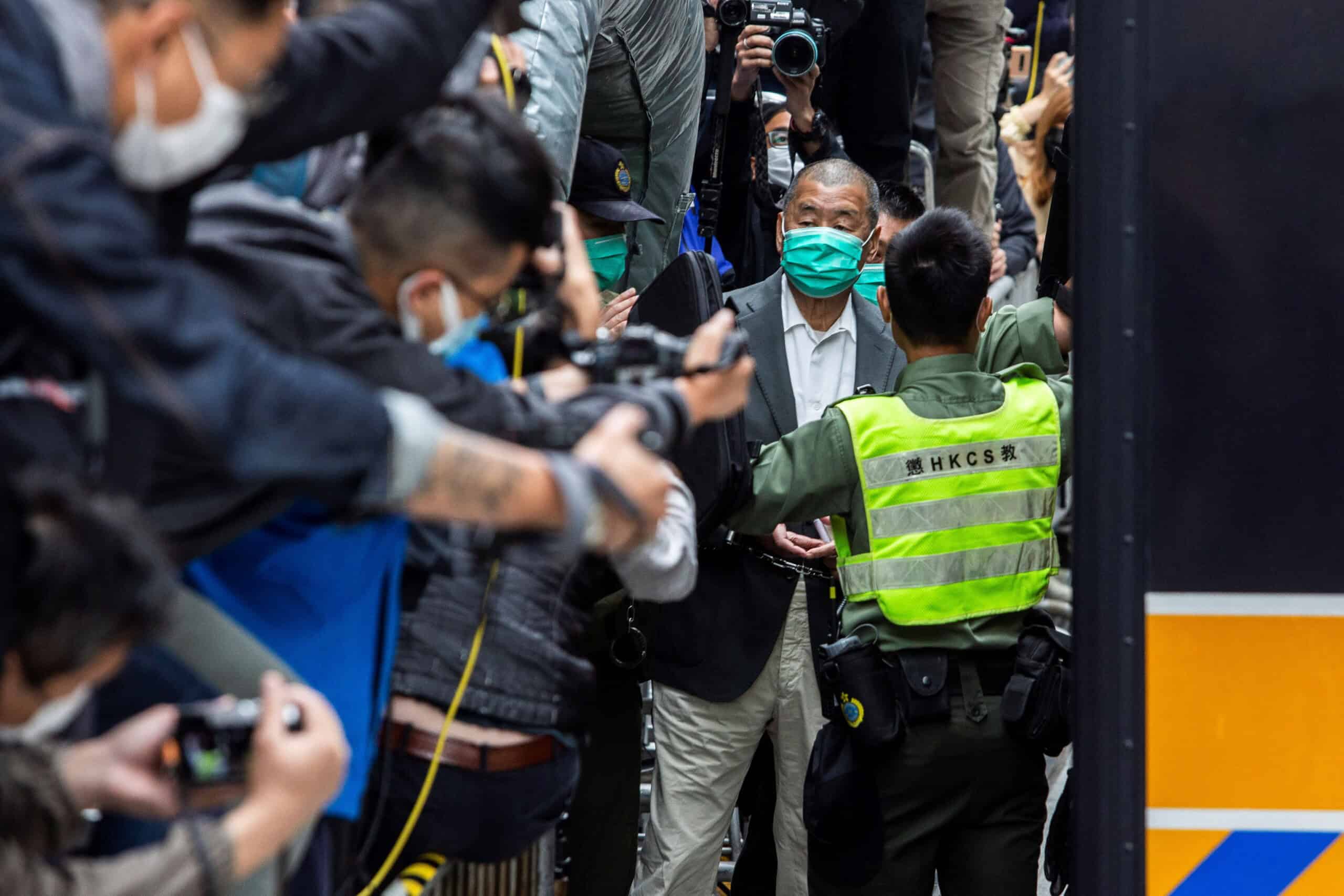
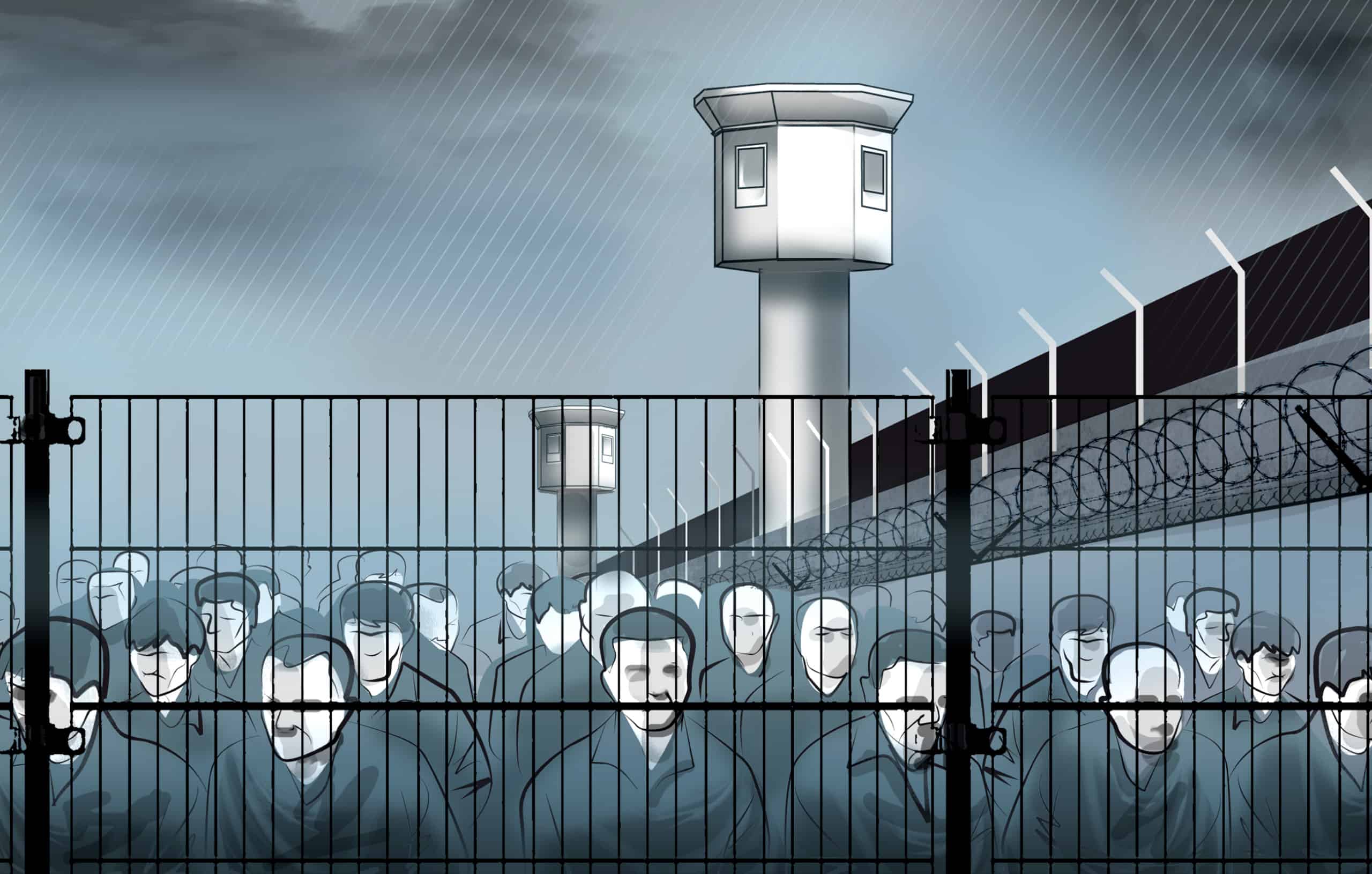
If you do confess, expect your accusers to make a video recording so they have the option of televising it, publicizing your humiliation, demeaning your status while legitimizing their own. Then they leave you to ruminate on your shame from being so debased, from having, in most cases, given in to their coercion. In your desperate struggle to reduce your own suffering, did you bring potential harm to others? Sit with that, too. Now you may be formally arrested, charged and transferred to a detention centre. A second, official process of interrogations will grind through the same material. At least RSDL is over.
The stories in People’s Republic of the Disappeared show, however, how that is not the end, that there can be life after RSDL. While deeply moving and often painful, they are also testaments of survival, stoicism and the strength of the human spirit. In telling them, these former detainees have reclaimed the very dignity the regime sought to take from them.
RSDL relies on secrecy and denial. It is essential to lift that bureaucratic cloak systematically, credibly and repeatedly. Hence this book. We must make each RSDL case morally compelling and legally legible, and name and target it explicitly in bilateral and multilateral dialogues. Precision matters: practices that are repeatedly and specifically identified become harder to deny, normalize or rhetorically deflect. Over time this will expose RSDL to universal jurisdiction statutes, civil litigation in foreign courts, and future transitional justice mechanisms.
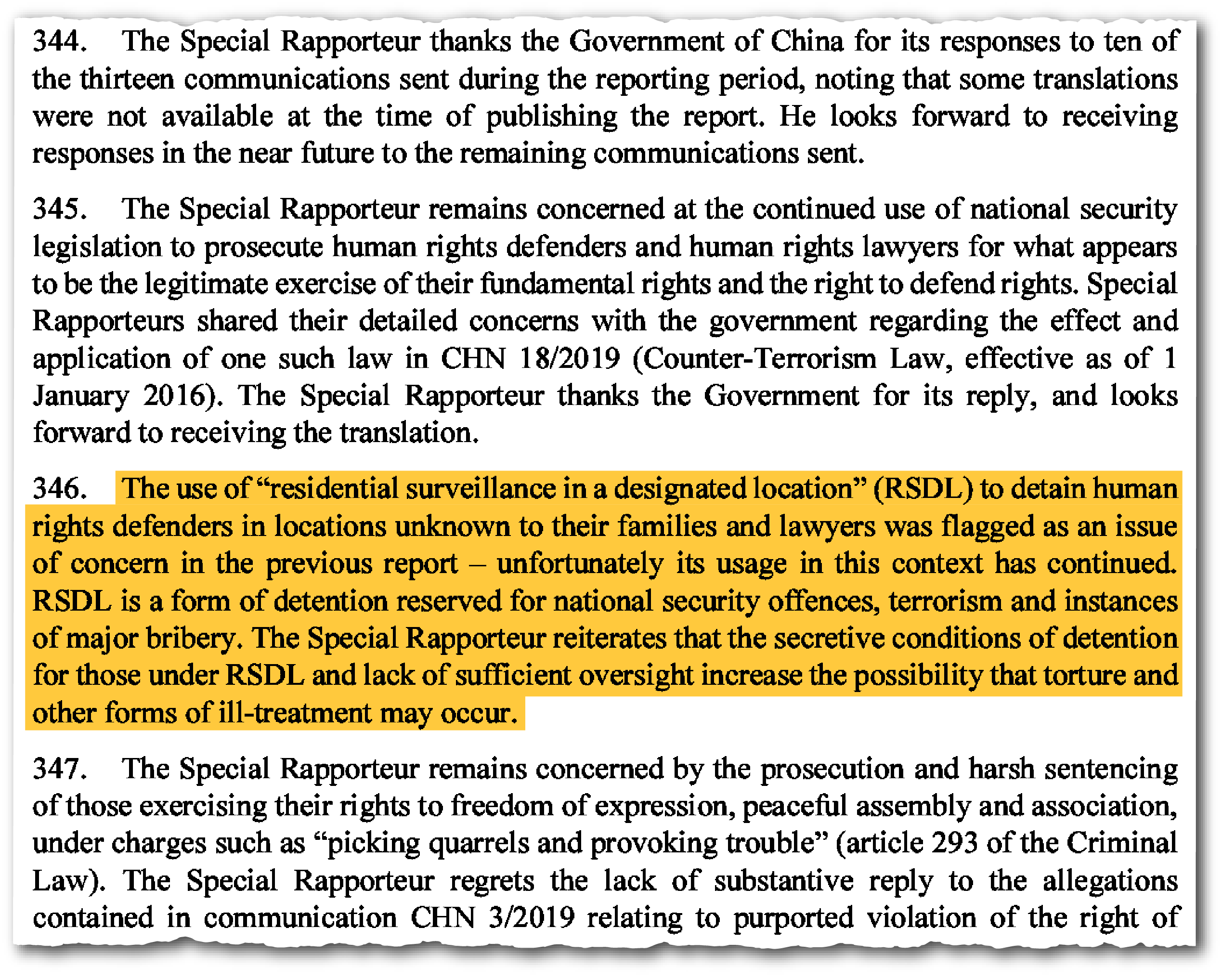
Governments can impose targeted sanctions on the state organs and officials conducting RSDL. UN special rapporteurs and NGOs should focus persistently on these violations and condition China’s leadership of UN human rights bodies on ending RSDL and all other forms of confinement and torture that violate international norms. Other countries’ security, judicial and law-enforcement agencies should condition cooperation, extradition treaties and judicial assistance on the verifiable end of RSDL. Authoritarian states need to sustain illusions of legitimacy and will curtail egregious practices when the latter sufficiently threaten the former.
Inducing change within China is hard, but foreign governments and citizens can still help by funding documentation efforts and supporting victims and advocates. We can advocate for current wrongful detainees, whose numbers now include American citizens Youlin Chen and Min Zin, and Czech national Aleš K. We can ensure asylum systems recognize RSDL as a form of enforced disappearance and torture and protect former detainees and witnesses once they are outside China. And we can prepare for the day when there is a reckoning.
Adapted from the foreword to People’s Republic of the Disappeared (3rd Edition), available on October 28 from Safeguard Defenders.

Michael Kovrig edits Strategic Narratives on Substack. He is Chief Executive of research firm Kovrig Group and Co-Founder of the Centre for Strategic Statecraft. A former diplomat, he lived in China from 2014–2021 and is writing a book on geopolitics. LinkedIn, @MichaelKovrig, @kovrig.bsky.social.