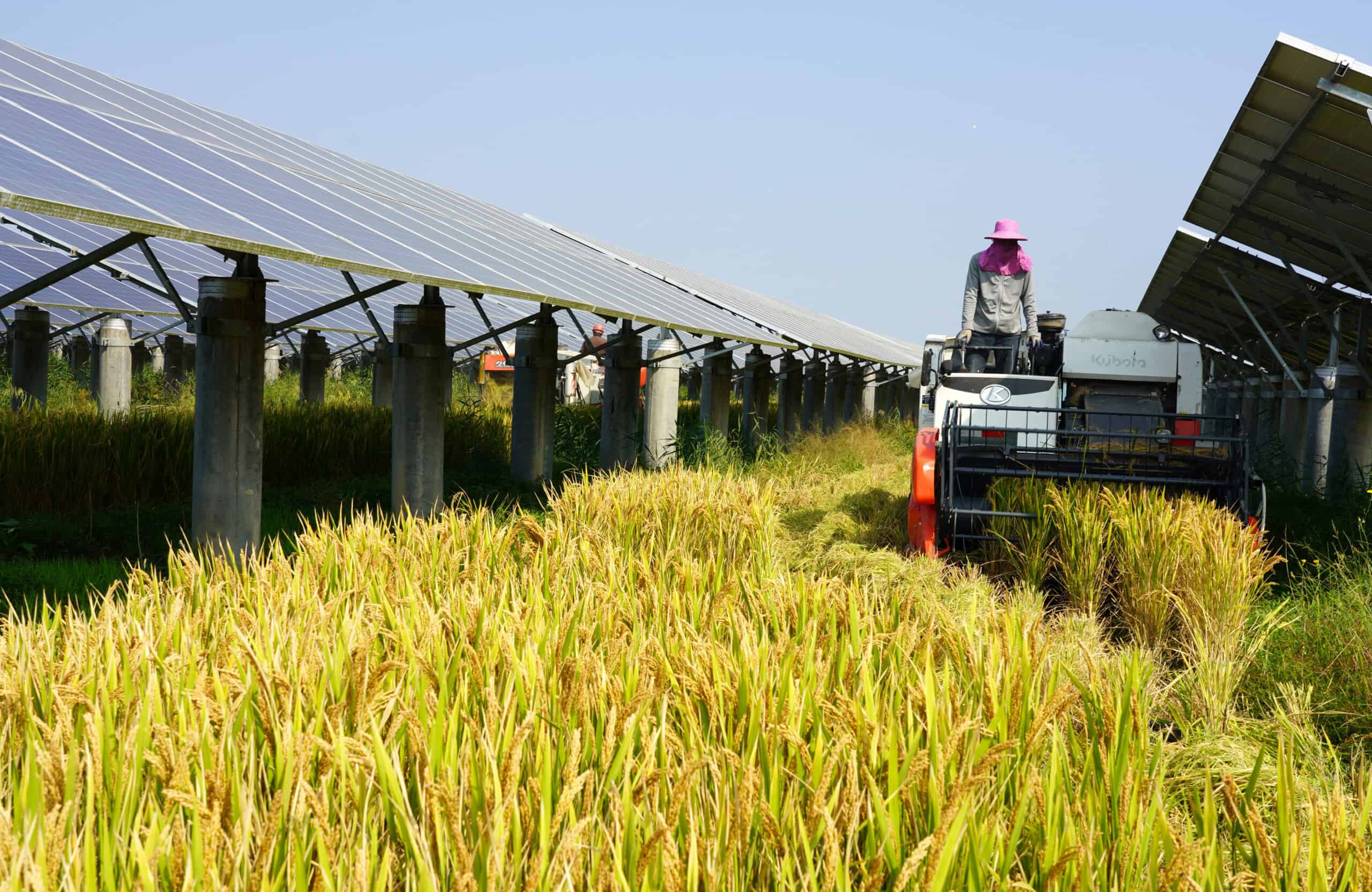
China needs land for crops and solar energy installations. Rather than compete against each other, farmers and green energy companies are realizing that they can cooperate by using one piece of land for both purposes. They are also now exporting their newfound dual land-use expertise around the world.
A farmer drives a mini combine harvester to reap rice under solar panels at an agrivoltaic farm in Yueqing, Wenzhou City, Zhejiang Province, China, October 18, 2023. Credit: Cai Kuanyuan/VCG via Getty Images
When Chen Zuxuan began asking crayfish farmers in Hubei province to let a state-owned energy company build solar panels over their ponds, he had to persuade them of two things. First, the panels would not harm the crayfish. And second, the setup could make their businesses more profitable.
Chen, who owns a local aquaculture technology company, began a demonstration project with China Energy Investment Corporation in 2022. The site covers about 300 mu (20 hectares) in the city of Hanchuan. Ove
Exclusive longform investigative journalism, Q&As, news and analysis, and data on Chinese business elites and corporations. We publish China scoops you won't find anywhere else.
A weekly curated reading list on China from Andrew Peaple.
A daily roundup of China finance, business and economics headlines.
We offer discounts for groups, institutions and students. Go to our Subscriptions page for details.
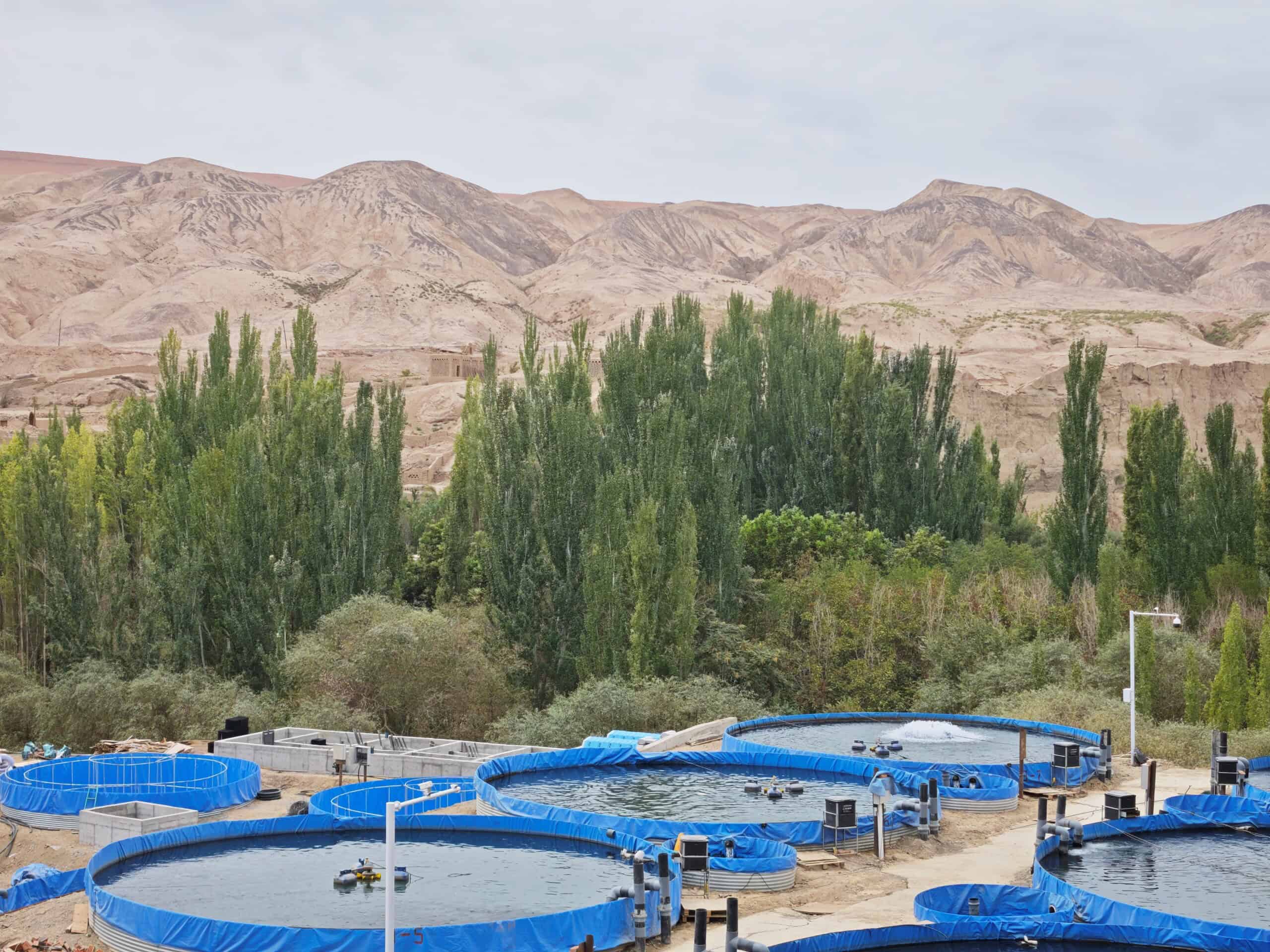
Fish farming in Xinjiang is being sold as proof that technology can overcome geography. The reality is more complicated: a desert seafood boom built on political control, imported feed and a food system that masks its real burdens.
We use cookies to ensure that we give you the best experience on our website. If you continue to use this site we will assume that you are happy with it.