The 2008 Beijing Olympics were packed with made-for-TV moments. Jamaican sprinter Usain Bolt set three world records, often smiling as he crossed the finish line. Michael Phelps, the American swimming superstar, won an improbable eight gold medals. And the opening ceremony, held in the Bird’s Nest Stadium, dazzled an international audience with thousands of drummers and fireworks lighting up the night sky.
Such images helped forge a narrative of the Beijing games as a successful “coming out” party for first-time host China. For U.S. broadcaster NBCUniversal [NBC], meanwhile, it added up to a ratings bonanza. Over sixteen days, 211 million viewers tuned into its coverage, making it the most watched television event ever in the United States.
In less than two weeks, the Olympics will return to Beijing for the 2022 Winter games. But with China facing a new Covid surge caused by the Omicron variant and ten countries — including the U.S. — staging a diplomatic boycott of the games on account of China’s human rights abuses, the odds of another ratings smash hit seem low.
Instead, with significant business interests in China, NBC is facing tough choices about how to cover the Olympic host country — making it the latest major American company struggling to thread the needle on how to engage with China.
“It is going to be difficult for them [NBC],” says Andrew Zimbalist, an expert on the economics of the Olympics and a professor at Smith College. “They have a tightrope to walk. They can’t afford to piss off the Chinese. On the other hand, they want to portray to the U.S. audiences that they are reliable.”
The financial stakes for NBC and its owner Comcast are considerable. In 2014, NBC paid $7.7 billion for the exclusive U.S. rights to air all Olympic Games between 2022 and 2032, a year before Beijing won its second hosting bid.
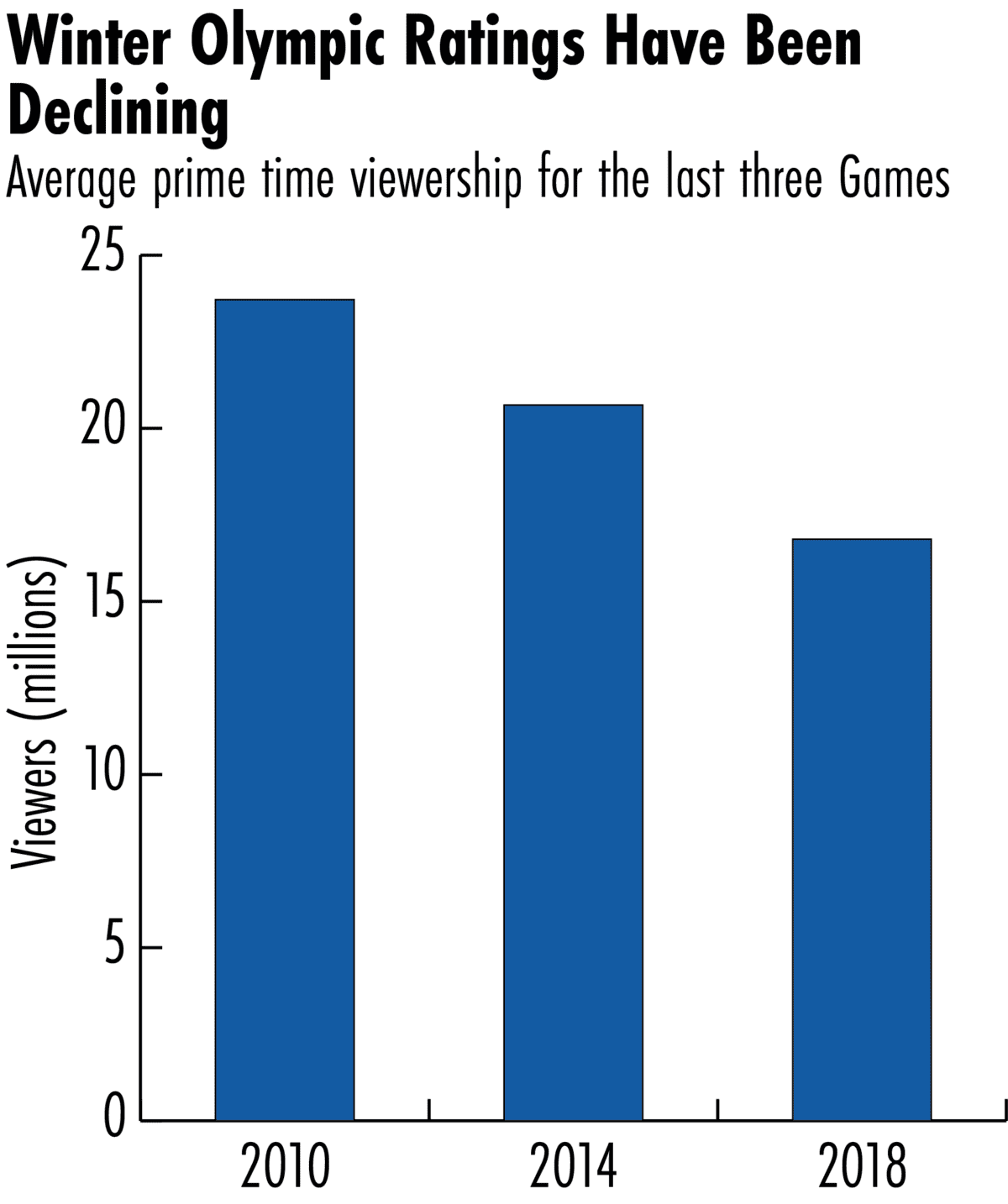
Yet even before factoring in the unfriendly geopolitical backdrop, NBC faces a considerable challenge in finding a large audience for the upcoming games, partly because of the ongoing pandemic. Ratings for the Tokyo Olympics last summer were down 42 percent from the 2016 Games and many analysts are worried that viewers won’t tune in to another event being held with nearly zero spectators in the stands and strict Covid protocols for the media and athletes alike. On Wednesday, NBC Sports said that the network would not send any of announcing teams to Beijing, citing Covid concerns, according to National Public Radio.
“Their [NBC’s] objective is to drive eyeballs and make sure their advertisers are happy,” says Rick Burton, a professor of sport management at Syracuse University who was the chief marketing officer for the U.S. Olympic Committee at the 2008 Games.
But with relations between the U.S. and China at their lowest ebb for decades, there is already political pressure on NBC to cover some of the issues that have proved contentious between the two sides.
In December, two U.S. lawmakers, Senator Jeffrey Merkley, an Oregon Democrat, and Representative James McGovern, a Massachusetts Democrat, sent a letter to NBC urging the company to commit to cover issues like Uyghur repression in Xinjiang and the crackdown in Hong Kong. “We urge your organization,” the letter read, “to not legitimize the Chinese government’s attempts to use the Olympics, once again, to sportswash the poor treatment of ethnic minorities, civil society activists, and political dissidents in Xinjiang, Hong Kong, Tibet and abroad.” In the run up to the Games, the Chinese authorities have tightened control by detaining two prominent human rights activists, according to a report in The Wall Street Journal.
NBC will also face scrutiny from those who say it has a journalistic duty to cover more than just the sports, at a time when many foreign journalists have been kicked out of China.
“They should do what journalists are supposed to do,” says Yaqiu Wang, a senior China researcher at Human Rights Watch. “Not only cover what is happening in the stadium, they should talk to normal people to provide a more whole picture.”
NBC has said that covering the sports aspect of the Olympics will be its priority, although it’s clearly aware of the broader issues surrounding these particular Games. The broadcaster has drafted Andrew Browne, the editorial director of Bloomberg New Economy Forum and former Wall Street Journal China editor, and Jing Tsu, a professor of East Asian languages and literature at Yale University, to provide the coverage with broader insight.
“We are going to be focusing on telling the stories of Team USA and covering the competition,” Molly Solomon, the president of NBC Olympics Production, said in a media presentation this week. “But the world, as we all know, is a really complicated place right now and we understand that there are some difficult issues regarding the host nation. So our coverage will provide perspective on China’s place in the world and the geopolitical context in which these games are being held.”
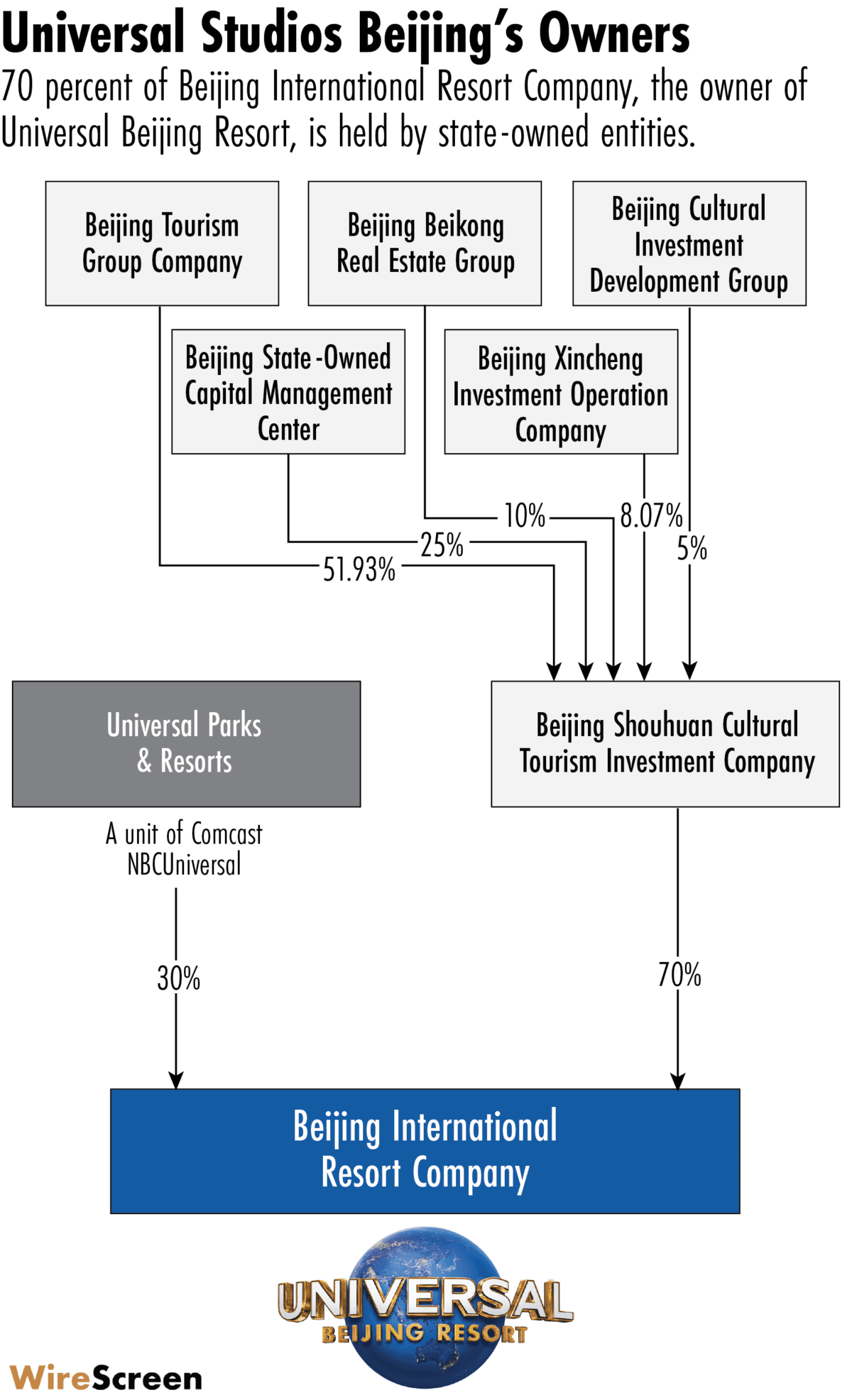
What that means in practice will also be watched closely by the authorities in China. NBC’s considerable business interests there include the Universal Beijing Resort, which is 70 percent owned by Beijing Shouhuan Cultural Tourism Investment Co., a state-owned firm: The park opened last September. NBC also has a content streaming deal that it brokered in 2017 with Youku, a Chinese streaming service owned by Alibaba.
In a Comcast earnings call that year, Stephen B. Burke, the then CEO of NBC said, “China, we think, is a very, very big opportunity for our company. We made virtually no money in China five years ago,” he said. “When that park [Universal Beijing] opens, I think, as a company, it’s not unrealistic to assume we’re going to make well over $1 billion in revenue.”
A test of NBC’s priorities could come if an athlete decides to make a controversial political statement or gesture in Beijing. The Chinese government, always sensitive to criticism, has recently faced such controversy internally, after local tennis star Peng Shuai accused a former senior leader of sexual assault in a social media post. Within minutes, her comments had been censored and she temporarily disappeared from public view.
This week, a Chinese Olympic official, according to Reuters, warned that “any behavior or speech that is against the Olympic spirit, especially against the Chinese laws and regulations, are also subject to certain punishment.” According to IOC rules, athletes are not allowed to protest or make political statements during competition, in the Olympic village, or during the opening and closing ceremonies, but they can freely make statements to the media during interviews or prior to the competition.
“We plan to have reporters at all Olympic venues, so if something happens, we will have our own cameras on site,” NBC’s Solomon said during the press conference.
Jules Boykoff, who studies the politics of the Olympics at Pacific University in Oregon, says that while broadcasters often steer clear of controversy at the Games, it may prove more difficult this time. “If past coverage of the Olympics is any indication, political intrigue will be left on the cutting room floor,” Boykoff says. “They try to remain as apolitical as possible to not offend any customers. But the politics in Beijing are left right and center.”
“If past coverage of the Olympics is any indication, political intrigue will be left on the cutting room floor… they try to remain as apolitical as possible to not offend any customers.”
Jules Boykoff, Professor of Politics & Government Department Chair at Pacific University in Oregon.
NBC is not the only company which may be holding its breath in the coming weeks. Olympic advertisers and sponsors, which include Coca-Cola, Airbnb and Visa, are already facing an unusually tricky Games due to the diplomatic boycott from countries like the U.S., U.K., and Canada. “No one wants to be the poster child for unpatriotic or undiplomatic actions,” says Mark DiMassimo, the founder of ad firm DiMassimo Goldstein, adding that many have opted for more evergreen content instead of Olympic specific advertisements. “They would like to hide, but they have to advertise. That is their conundrum.”
Ultimately, NBC is likely to take the path of least resistance, says Terrence Burns, an Olympic brand consultant who was the lead marketing strategist for Beijing’s 2008 bid. “NBC has a $7 billion investment in the Olympic games and it wouldn’t be in their best interest to inflame anyone. At the end of the day, it is a business.”

Katrina Northrop is a journalist based in Washington D.C. Her work has been published in The New York Times, The Atlantic, The Providence Journal, and SupChina. @NorthropKatrina