Last month, the United States placed sanctions on a Chinese oil refinery and dozens of ships involved in purchasing Iranian oil, a move designed to cut a financial lifeline for a vital Iranian industry.
In response, Beijing simply directed its companies to ignore the sanctions and carry on.
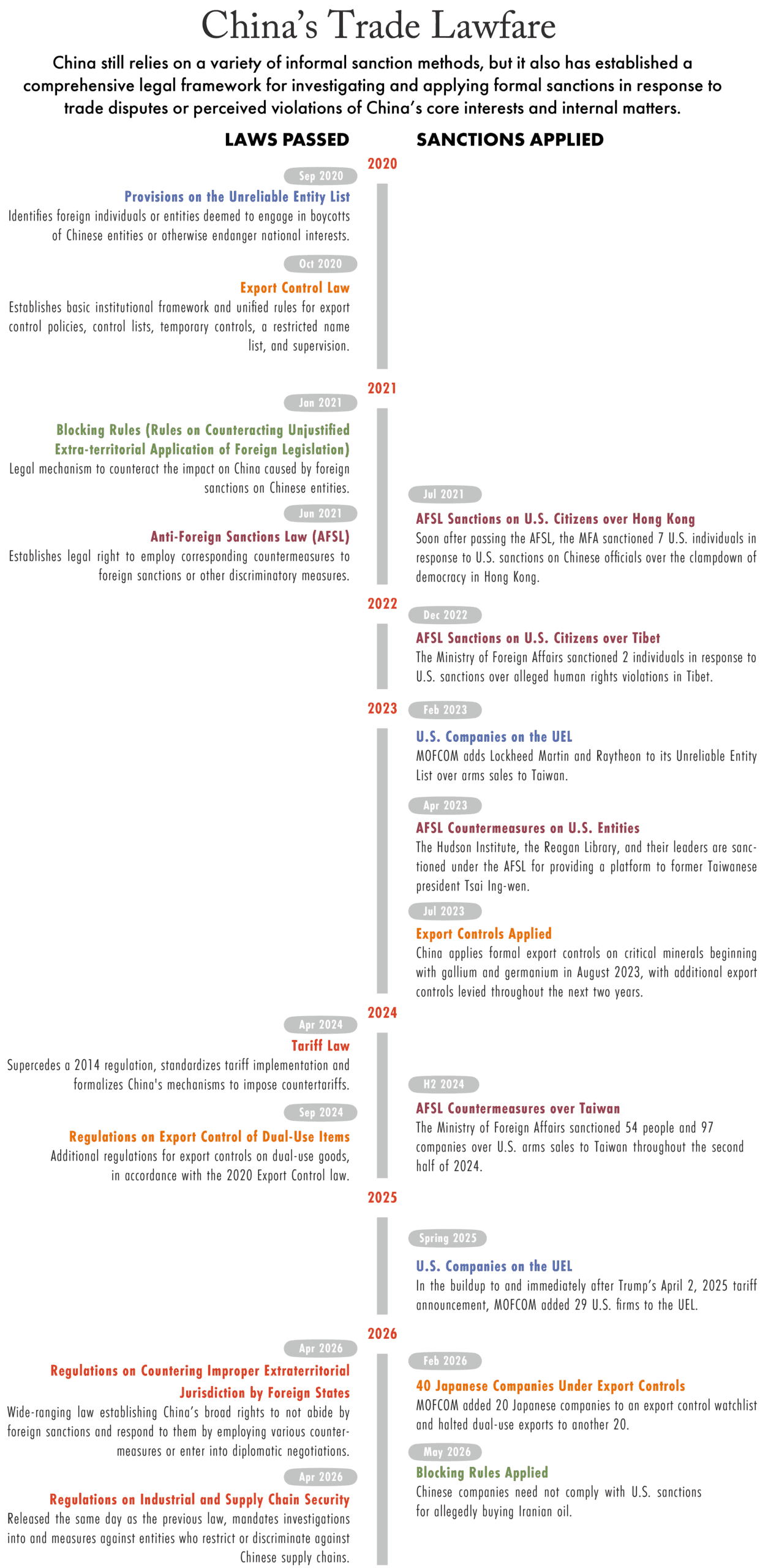
The incident marked the Chinese government’s first use of a 2021 law known as the Blocking Rule, intended to counter what it sees as unjustified sanctions on Chinese entities. It is one of eight major new regulations passed since 2020 aimed at establishing China as a state able to use — and withstand — sanctions in its own right, in a similar way to Western countries.
The new regulations have formalized China’s previously patchwork approach of using informal sanctions to try to get its way, by establishing investigatory tools and delineating penalties for crossing Beijing’s red lines.
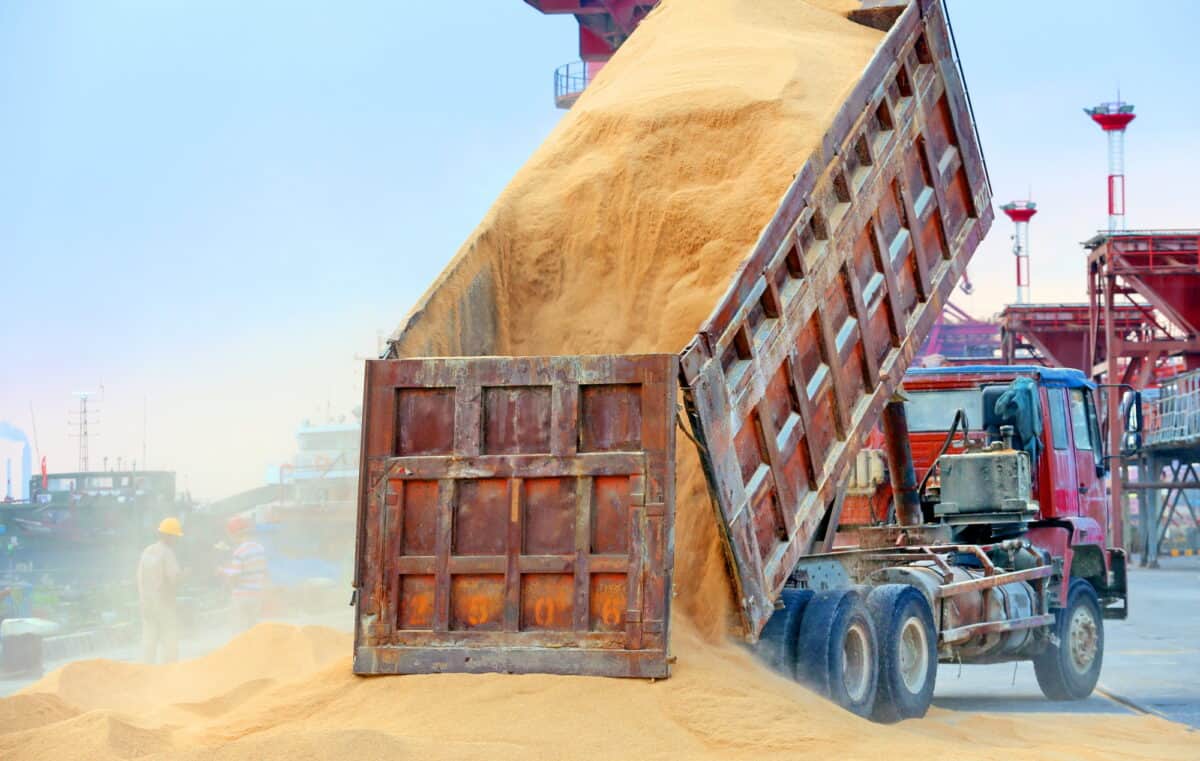
China — and the world — tasted the efficacy of these tools last October, when it imposed export controls on critical minerals, a move that pushed Washington to negotiate a one-year pause in the trade war. Alongside export control laws and the Blocking Rule, Beijing also now wields its own version of an entity list, laws on dual-use goods, anti-sanction enforcement measures, and supply chain management mechanisms.
“China wants to show that it’s drawing that red line very clearly against the United States as a hegemon or disruptor of the status quo,” says Audrye Wong, a nonresident senior fellow at the Washington DC-based American Enterprise Institute.
In addition to extracting concrete concessions from the United States, the new sanctions allow Beijing to signal to domestic and foreign observers that it can now successfully defend its interests against powerful detractors. “The benefits of using these formal sanctions are clear,” Wong adds.
In the past, China frequently employed informal sanctions against entities it alleged had violated its economic interests or meddled in its internal affairs.
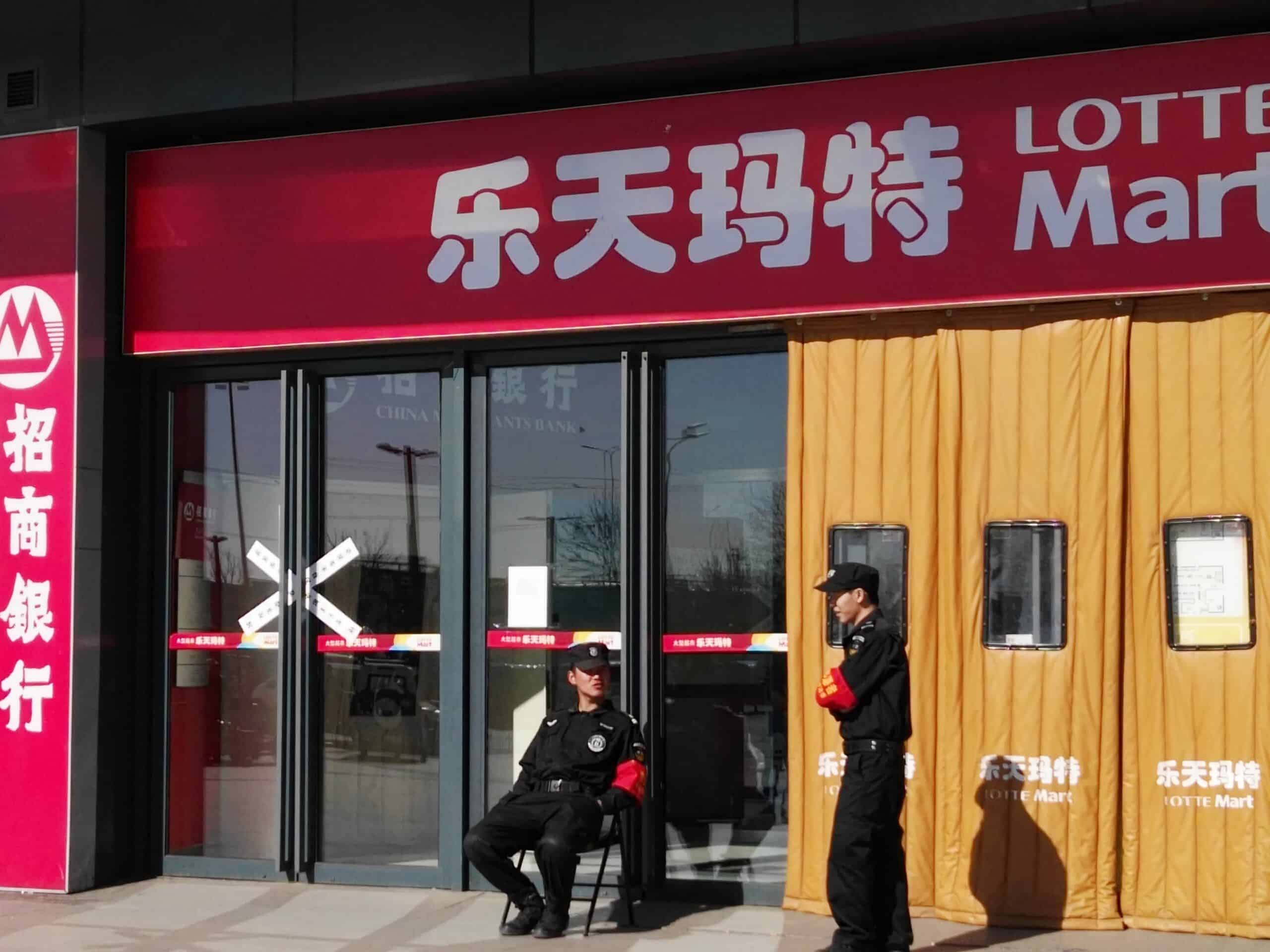
For example, after South Korea deployed a U.S.-made Terminal High Altitude Area Defense (THAAD) antimissile battery in July 2016, Beijing canceled several events featuring Korean actors and broadcast rights for some Korean TV shows. The government also banned the import of certain Korean products, citing safety concerns.
Beijing typically justified such informal measures citing laws unrelated to the triggering event — if it stated their legal backing at all — rendering them difficult to evaluate or counter.
However, China flipped the script three years ago. Since 2023, formal sanctions have comprised the majority of China’s external economic measures, according to research co-authored by Wong and published in global security affairs journal The Washington Quarterly last fall.
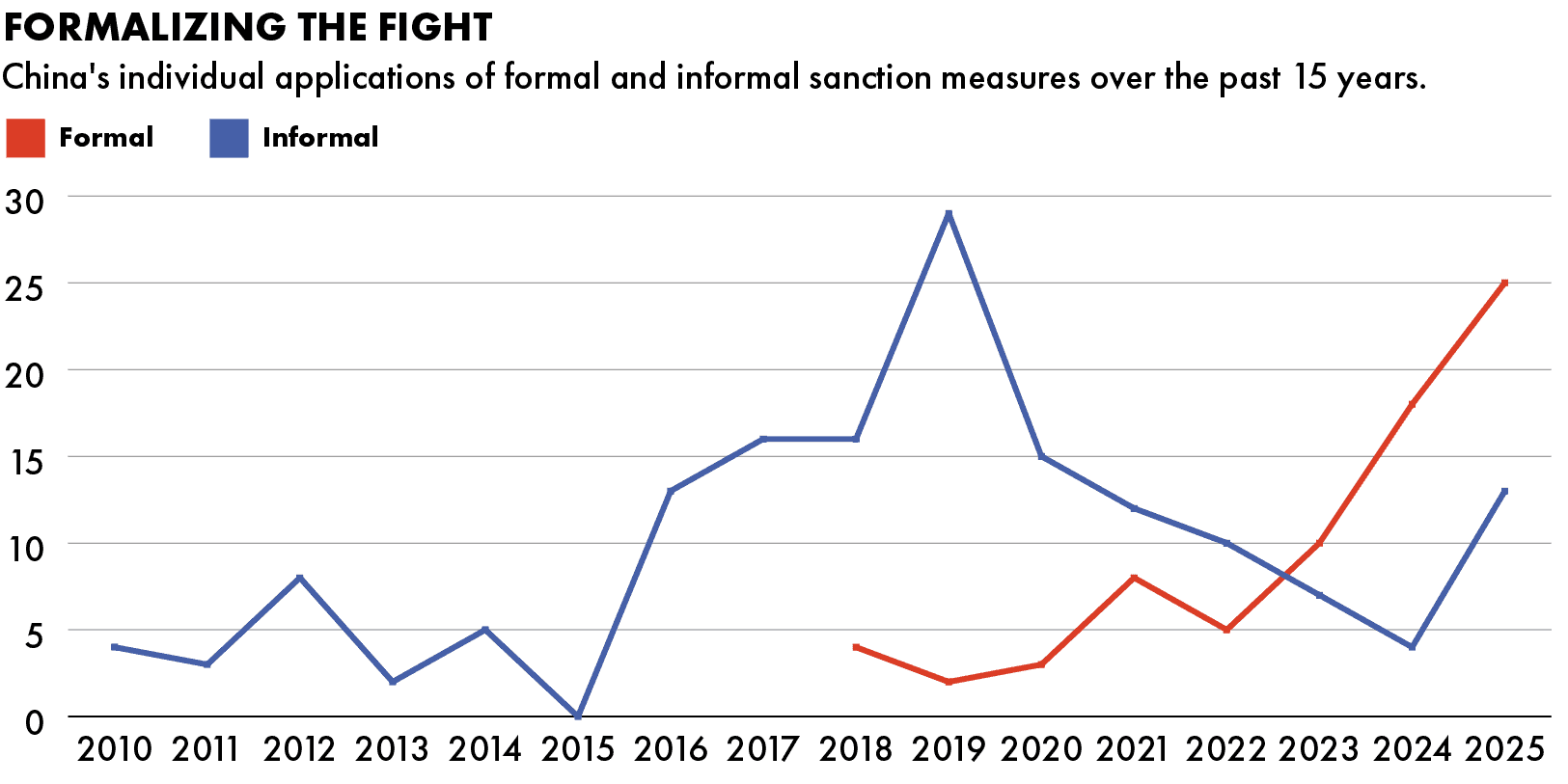
Assessing the success of China’s informal sanctions regime is difficult, says Wong. Beijing’s pressure campaign on South Korea did not deter it from installing the THAAD system after all.
“The Chinese government likes to maintain plausible deniability [as part of its strategic logic in using sanctions],” she says. “But as we’ve seen in recent years, China is centralizing and coordinating a lot of these sanctions measures.”
Beijing’s increased preference for formal sanctions reflects its confidence in employing the eight new regulations passed since 2020, which have strengthened its legal ability to lay on targeted economic pressure and counter Washington’s own sanctions machine.
The laws also highlight the bureaucracy forming around China’s counter-sanction and safeguarding efforts. Two laws passed in 2020 — the Unreliable Entity List (UEL) and Export Control Law — mandate the state identify and track entities deemed to act against China’s national interests. The supply chain regulations China’s State Council promulgated in early April require the creation of ‘early warning systems’ to notify the government of risks to industrial and supply chains.
Yet old habits die hard. Alongside increasingly biting formal measures, Beijing continues to employ informal measures as an additional means of economic pressure.
During the first few months of Trump’s second term, Beijing deployed a mix of same-day countermeasures each time the White House announced new tariffs on China.
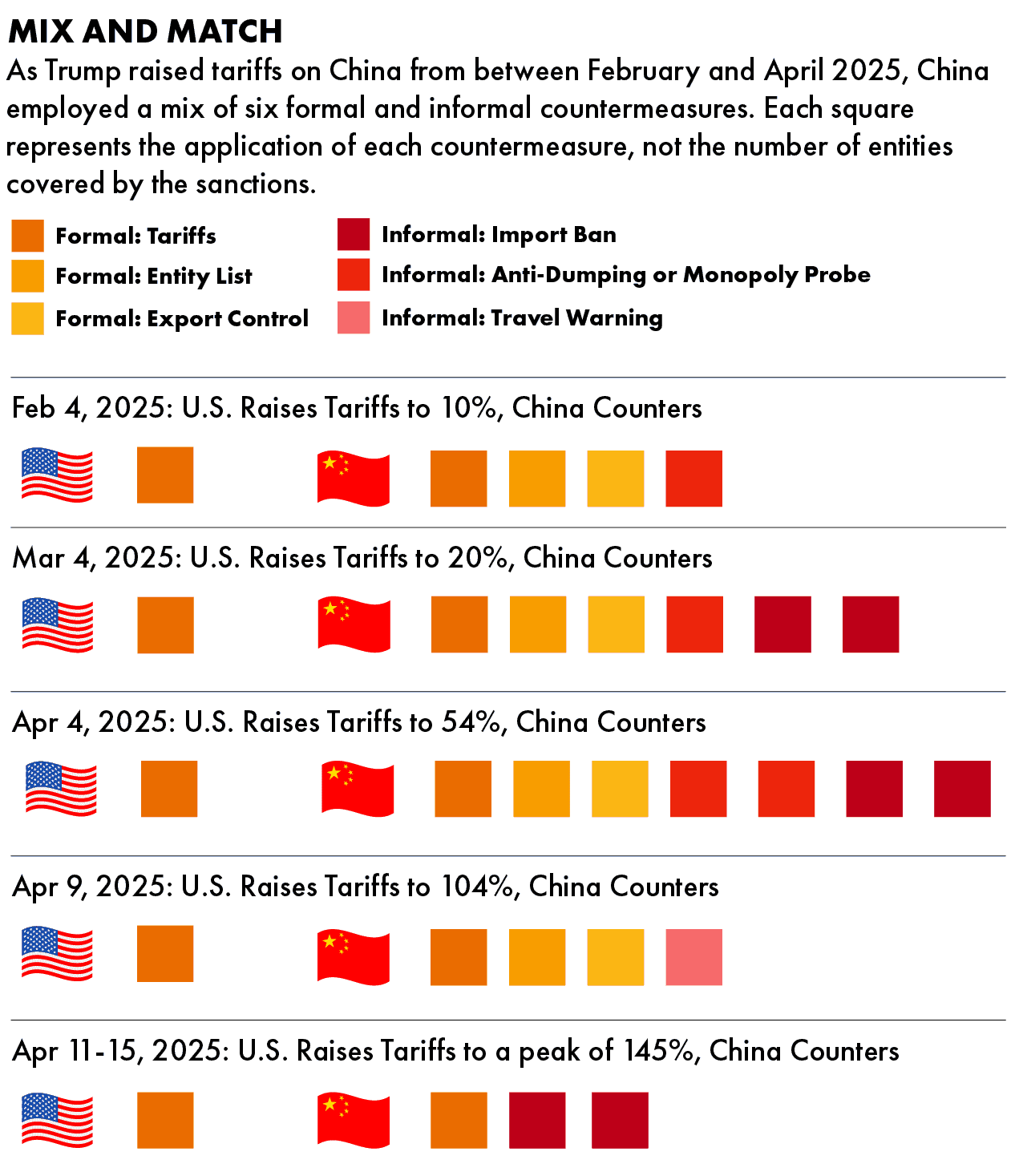
Another commonly used law, the Anti-Foreign Sanctions Law, gives China’s lawmakers a broad remit to employ countermeasures against those who it claims have ‘interfered in its internal affairs’. The month after the AFSL took effect in June 2021, Beijing used it to sanction 7 U.S. individuals in response to a Biden administration warning about the safety of doing business in Hong Kong.
If you want to weaponize things, that’s going to undermine growth or undermine interest in the Chinese market. But China is trying to have its cake and eat it.
Audrye Wong, a nonresident senior fellow at the Washington DC-based American Enterprise Institute
Perceived interference in China’s territory is a major trigger for AFSL sanctions or inclusion on the UEL. The 330 sanctions China levied against individuals, organizations, and companies between 2019 and 2026 were all related to provocations involving Xinjiang, Hong Kong, Tibet, or Taiwan, according to data compiled by open-source database Open Sanctions.
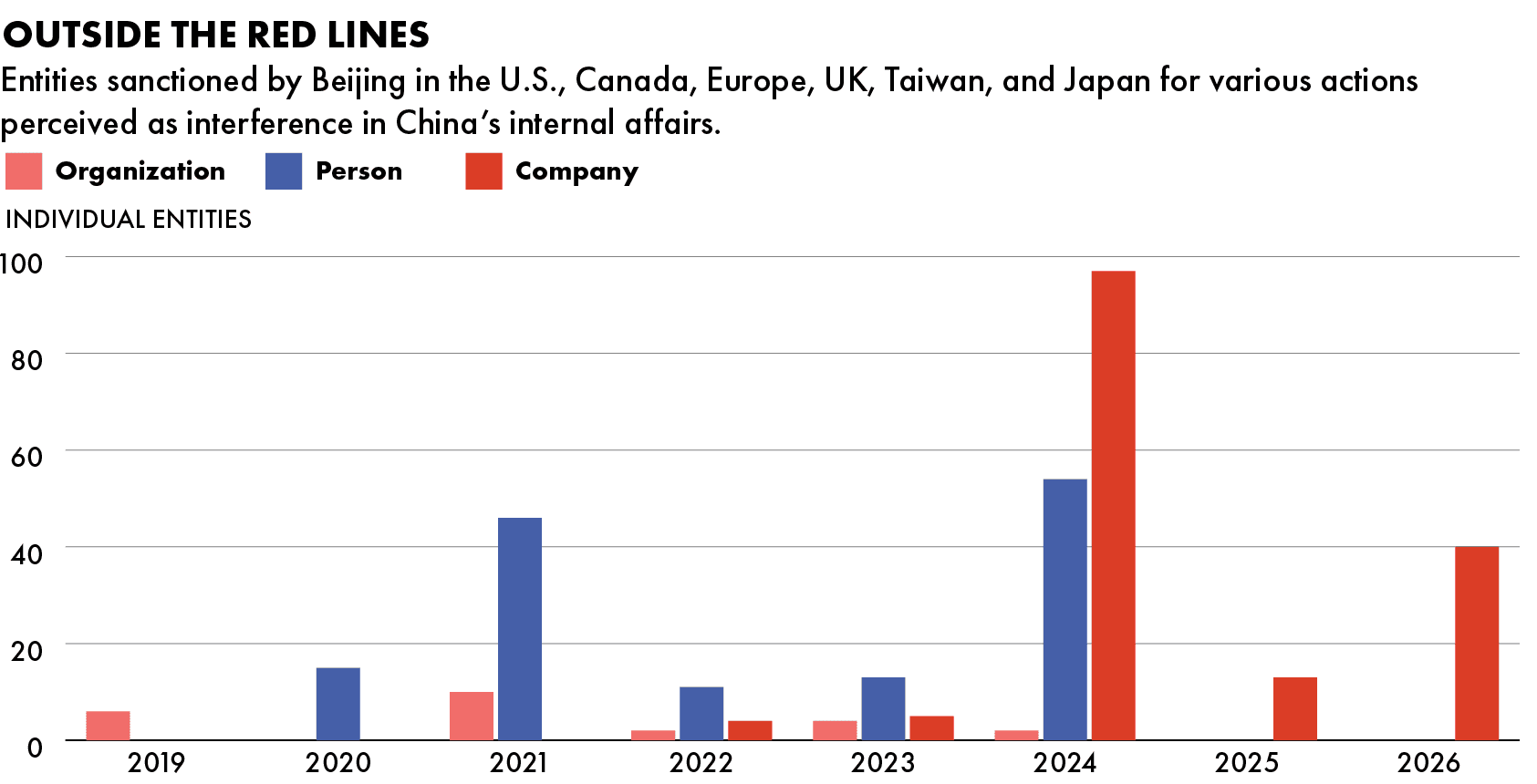
Events such as defense companies selling arms to Taiwan regularly trigger formal sanctions against those involved — with explicit legal backing from the AFSL, unlike previous decades.
Even companies with no connection to arms sales or human rights work risk being caught between complying with U.S. sanctions and violating China’s Blocking Rule. Suspending regular trade with China-based supply chains or collecting industrial data may trigger the new Supply Chain Regulations.
“If you want to weaponize things, that’s going to undermine growth or undermine interest in the Chinese market,” says Wong. “But China is trying to have its cake and eat it.”

Savannah Billman is a Staff Writer for The Wire China based in NYC. She previously worked at the National Committee on U.S.-China Relations.