Ask any expert on U.S.-China relations where opportunities for the two rivals to work together still lie, and they will usually give the same answer: combating the threat of climate change. Yet one recent major development shows how competition between the world’s two largest economies is set to be as much of a factor as cooperation in the fight to temper global warming.
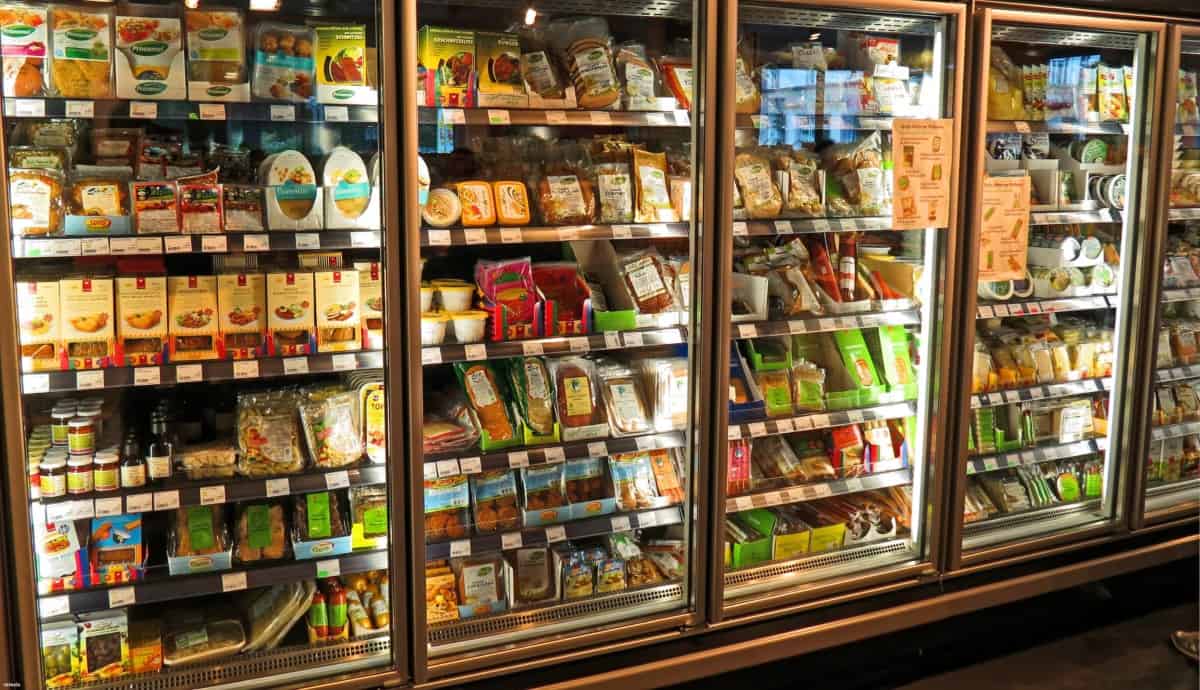
Last month, China formally ratified the Kigali Amendment, an international treaty that aims to phase down the use of hydrofluorocarbons (HFCs) — a super-pollutant used in air conditioners, refrigerators, and foam insulation that traps thousands of times more heat in the atmosphere than carbon dioxide. If the accord is fully implemented globally, it may prevent up to 0.5 degrees Celsius of global warming by 2100, experts estimate.
As the world’s largest producer of HFCs, China’s ratification alone should lead to a significant reduction in emissions. Beijing has come late to signing up: though it indicated it would ratify the Kigali deal in 2016, when it was first adopted, by waiting until this year it is now the 122nd country to do so.
China may be late, but it is still ahead of the United States. The Biden administration is preparing to send the treaty to the Senate for confirmation, and has also recently passed domestic legislation — entitled the AIM Act — which will have a significant impact on curbing the use of HFCs. But while the Kigali deal enjoys bipartisan support in the Senate, it still needs a two-thirds majority to pass, and so could yet fall victim to Washington’s polarized politics.
Experts say the timing of China’s ratification, ahead of the U.S., was clearly designed to portray itself as a responsible global leader on climate change — a reputation it is keen to burnish in the run up to the next COP, the major United Nations climate meeting which will take place in Glasgow in November.
“Here China has the ability to say: we did this and the U.S. hasn’t done this yet. There is that type of competition going on,” says Stephen Yurek, the CEO of Air-Conditioning, Heating, and Refrigeration Institute (AHRI), an Arlington, Virginia-based trade association. “They could hold back on ratifying it until a moment when they could use this for political aims, and they did that.”
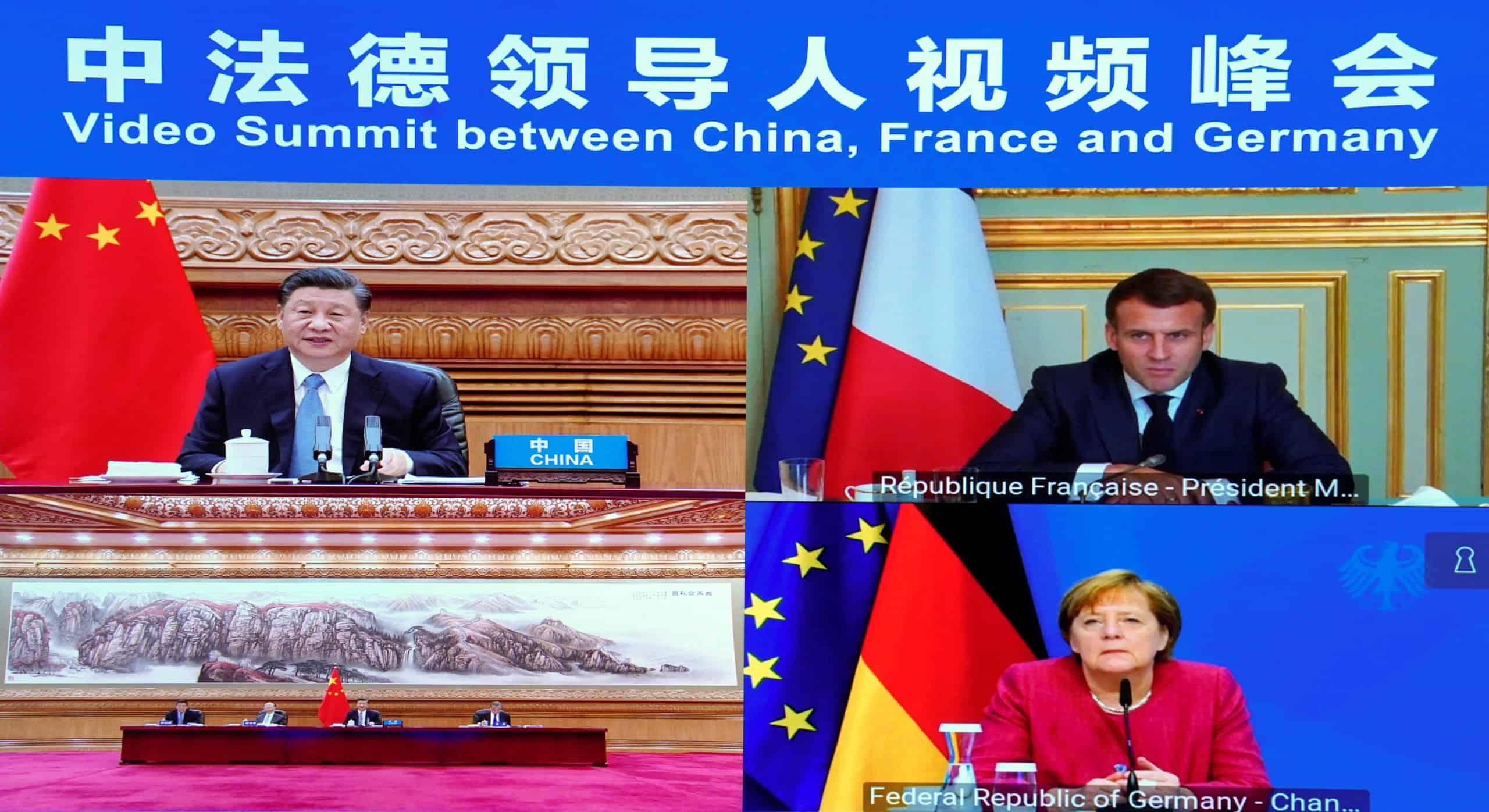
In case the message wasn’t clear enough, China announced it would ratify the Kigali amendment on April 16th, the day before John Kerry and Xie Zhenhua, the U.S. and China’s chief climate negotiators, released a joint statement from their first summit meeting since the Biden administration took office. Instead of announcing the move alongside the U.S., Chinese leader Xi Jinping announced the ratification from Beijing, during a video summit with France and Germany — although the following day, in the statement, both the U.S. and China at least reaffirmed their desire to implement the phase down of HFCs.
“From a diplomatic point of view, this was interesting. Even when China decided to do something [on climate change], it chose not to announce it first with the U.S.,” says Li Shuo, policy director for Greenpeace China. “China went ahead, and while the U.S. is making policies that put them in compliance, it has not ratified [the Kigali amendment]. And ratification matters, diplomatically and politically. This only harms the U.S. credibility when the U.S. brings a list of demands to China on climate.”
In recent months, there has been a fierce debate about whether the U.S. should scale back geopolitical conflict with China over issues like detention camps in Xinjiang, in favor of collaborating with China on climate change. Over 40 progressive groups, including 350 Action and MoveOn, wrote a joint letter to President Biden in early July, encouraging him to “to eschew the dominant antagonistic approach to U.S.-China relations” in order “to address the existential threat that is the climate crisis.” The example of the Kigali treaty suggests that for China, competition — rather than cooperation — may be as much of a spur to action.
Some analysts argue the Kigali amendment is still a good example of U.S.-China cooperation. Thom Woodroofe, a senior advisor on multilateral affairs at the Asia Society Policy Institute, notes that the Sunnylands summit in 2013 between former President Obama and Xi Jinping originally paved the way for the deal.
“We attribute the kernel of success for Kigali to Sunnylands, which was the first time they really agreed on the need to act on HFCs,” Woodroofe says. “That is important today because even though there may be showmanship around this and China is acting on this not at the behest of the U.S., there is also a good faith signal. This is something we have a history talking about bilaterally and China is going to go forward.”
Chinese companies in the refrigeration industry could benefit from the Kigali deal. In order for countries to comply with Kigali, HFCs need to be replaced with less polluting alternatives. China’s big appliance makers, such as Midea Group, Gree Electric Appliances and Haier Group, have been supplying countries with higher HFC standards for some time, giving them the technological know-how to make the transition.
“Chinese industry is well placed to provide the tech solutions that are required,” says Ray Gluckman, a refrigeration and energy-efficiency consultant. “They have already been doing this because they have supplied Europe for a while. So they have the capability to supply domestically as well.”
One big issue for the Chinese government will be enforcement. In the past, even after certain super pollutants have been outlawed in China, illegal production has continued. For example, in 2018, emissions of CFC-11, another super pollutant that has long been outlawed in China, were traced back to factories in Shandong province.
“At the industry level, consistent and constant monitoring is needed in order to maintain compliance,” says Xiaopu Sun, Senior China Counsel at the Institute for Governance and Sustainable Development (IGSD), a think tank with offices in Washington, D.C., and Paris, France. “At the global level, a strengthened and expanded atmospheric emissions monitoring network is needed to track down unexpected emissions in a timely way.”
Still, for those who have been involved with Kigali since the beginning, the fact that China is finally signing on is a huge step. Some 60 percent of the world’s refrigerators and 80 percent of the world’s room ACs were produced in China in 2019, according to Chinese government statistics. Many hope that it will push other major countries, like Brazil and India, to ratify.
“This is a workhorse treaty that the parties have learned to not just live with, but also to maximize its benefits. And this not only has a climate impact, it also takes industry and jobs into account,” says Durwood Zaelke, the co-founder of IGSD. “The fact that China has signed on will only enhance the climate impact.”

Katrina Northrop is a journalist based in New York. Her work has been published in The New York Times, The Atlantic, The Providence Journal, and SupChina. @NorthropKatrina