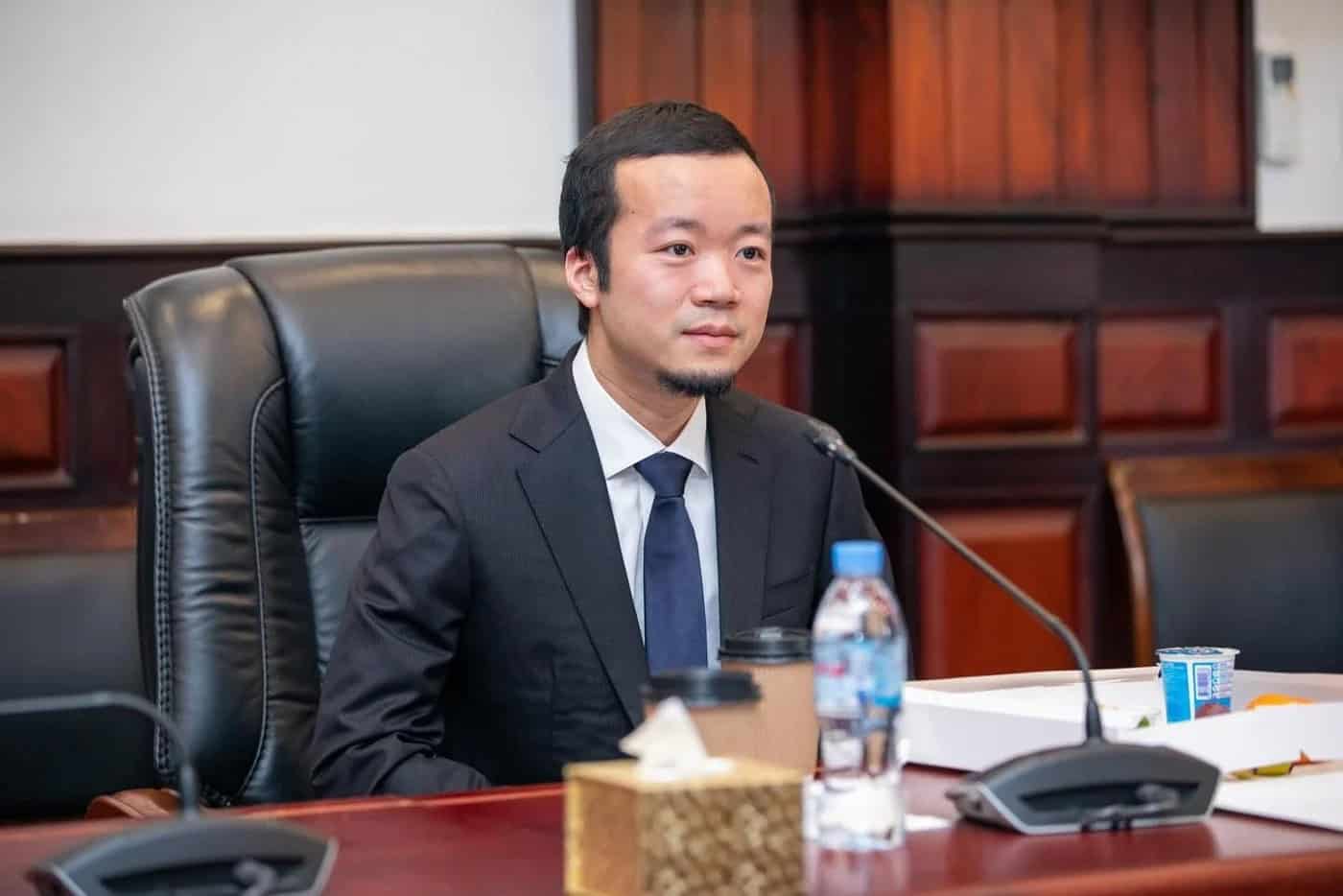
Before Chen Zhi became a Cambodian tycoon, he owned a venture capital firm in the country where he was born: China.
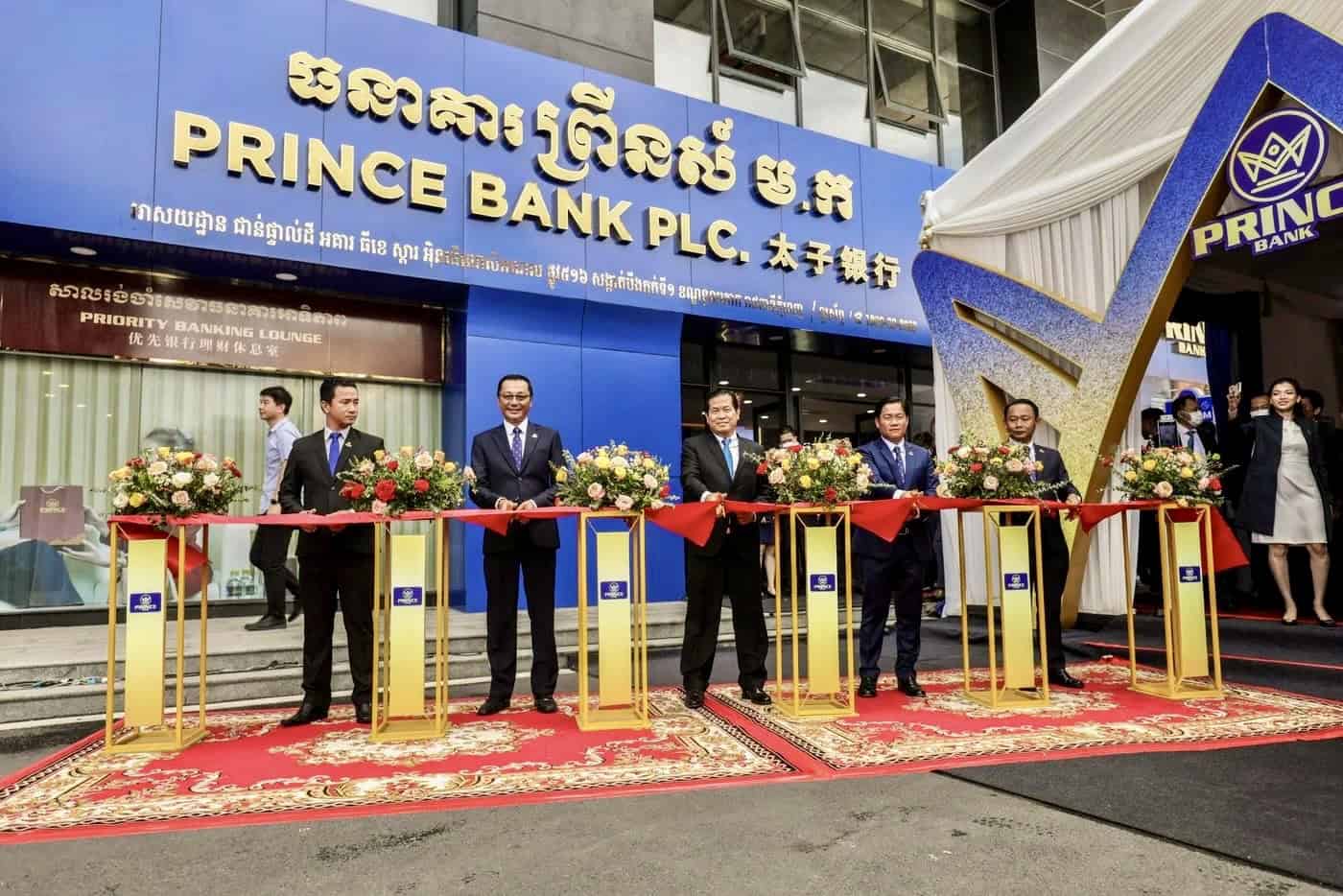
Born in Fujian Province in 1987, Chen moved to Cambodia in his early 20s, when the country was experiencing a Chinese investment-led property boom. In 2015, he founded the Prince Group, which would grow into a conglomerate with interests spanning real estate, banks, casinos — and, U.S. and UK officials allege, industrialized scamming.
On October 14, the U.S. designated Prince Group a transnational criminal organization. The Department of Justice indicted Chen and seized bitcoin currently worth around $14 billion. Prosecutors alleged the proceeds came from fraud and money laundering, and that the Prince Group trafficked migrants to Cambodia to work in scamming compounds. The UK confiscated another $150 million in London property from the conglomerate’s network.
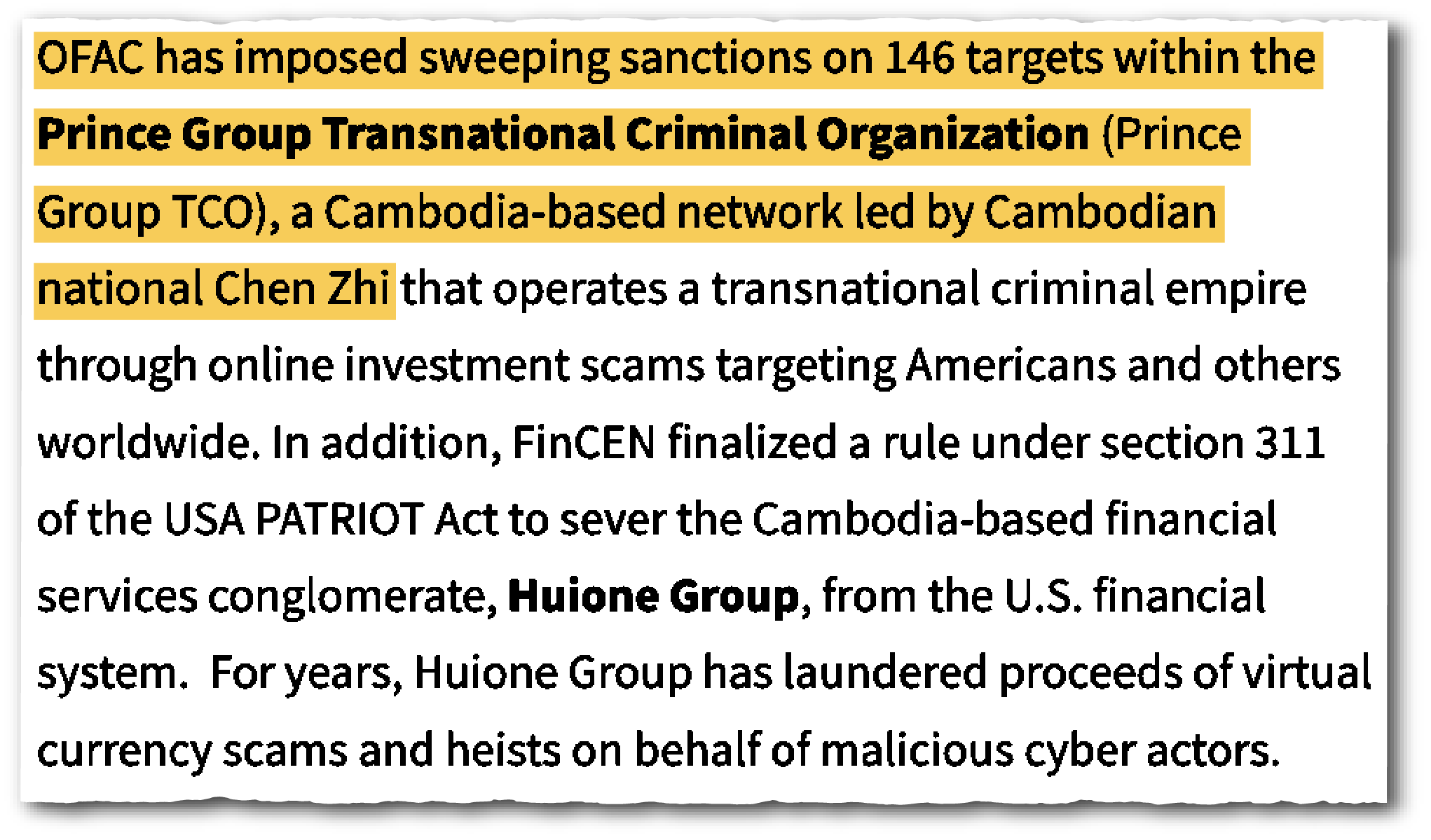
In addition, the U.S. Treasury Department sanctioned Chen and 145 other people and companies it said were associated with Prince Group. It alleged that the conglomerate had invested illicit profits through shell companies in the British Virgin Islands, Cayman Islands, Hong Kong, Singapore and Taiwan. On October 30, Singapore used the information revealed by the U.S. and UK to seize more than $115 million, as well as a yacht and 11 cars, from Chen and his associates.
The DOJ indicted Chen in absentia; his whereabouts are unknown.
The indictment and seizures came shortly before President Donald Trump traveled to Malaysia for an Association of Southeast Asian Nations Summit, where he met Cambodian Prime Minister Hun Manet. Trump presided over a peace agreement that he had helped broker between Cambodia and Thailand, which engaged in a series of deadly border clashes in late July. On October 26, the U.S. and Cambodia signed a trade deal and agreed to “expand cooperation” on combating transnational crime; Hun Manet nominated Trump for the Nobel Peace Prize.
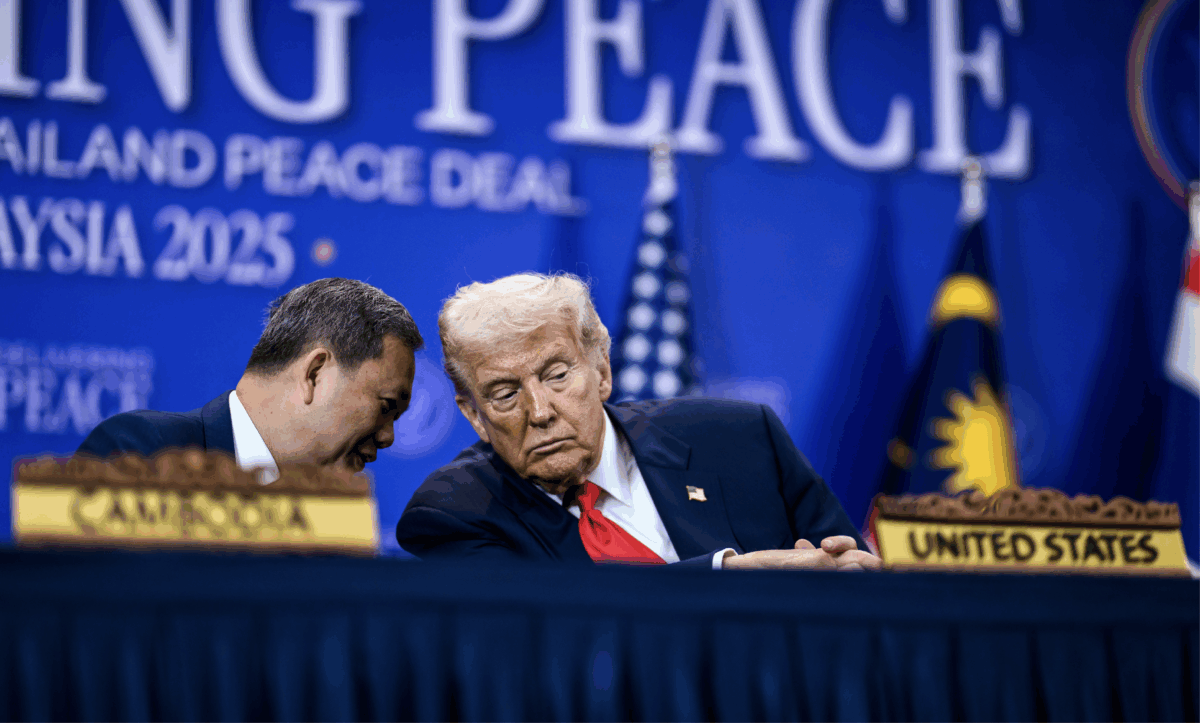
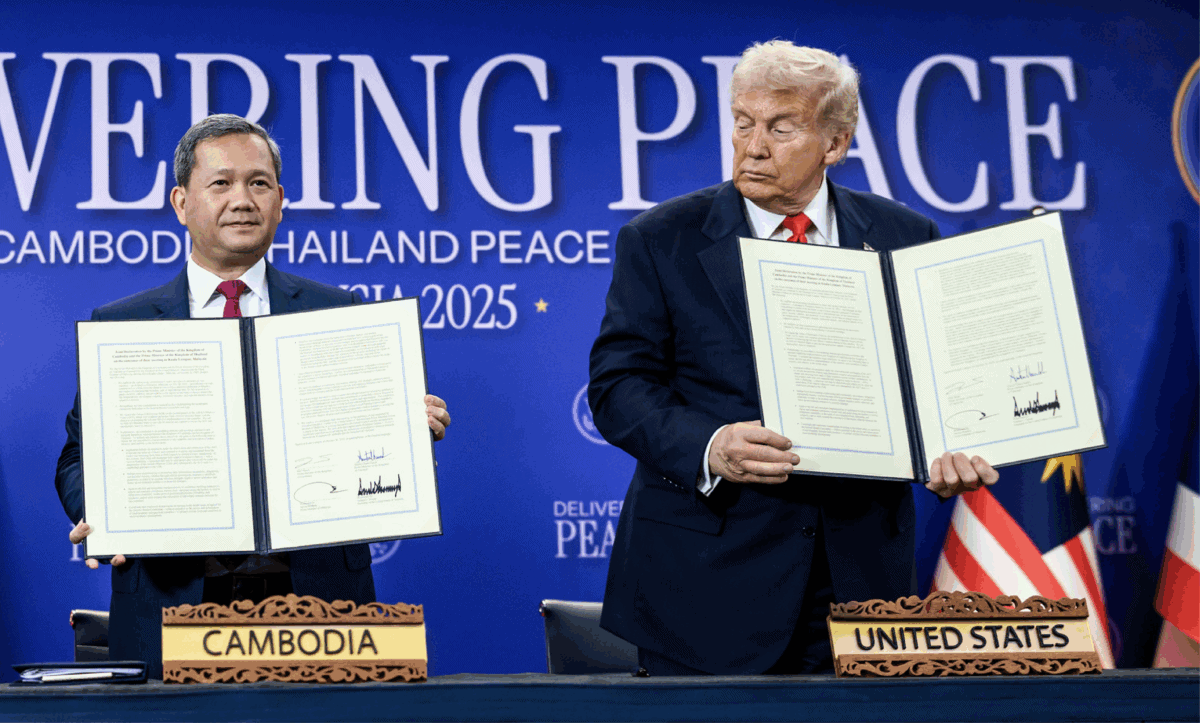
President Donald Trump speaks with Cambodian Prime Minister Hun Manet (left), and holds up the Kuala Lumpur Accord (right), October 26, 2025, at the ASEAN Summit, Malaysia. Credit: White House via Flickr
After attending the ASEAN summit, President Trump traveled to Japan and then South Korea, where he met with Chinese President Xi Jinping for high-stakes trade talks.
The U.S. took no action against Chen’s China-based venture capital firm.

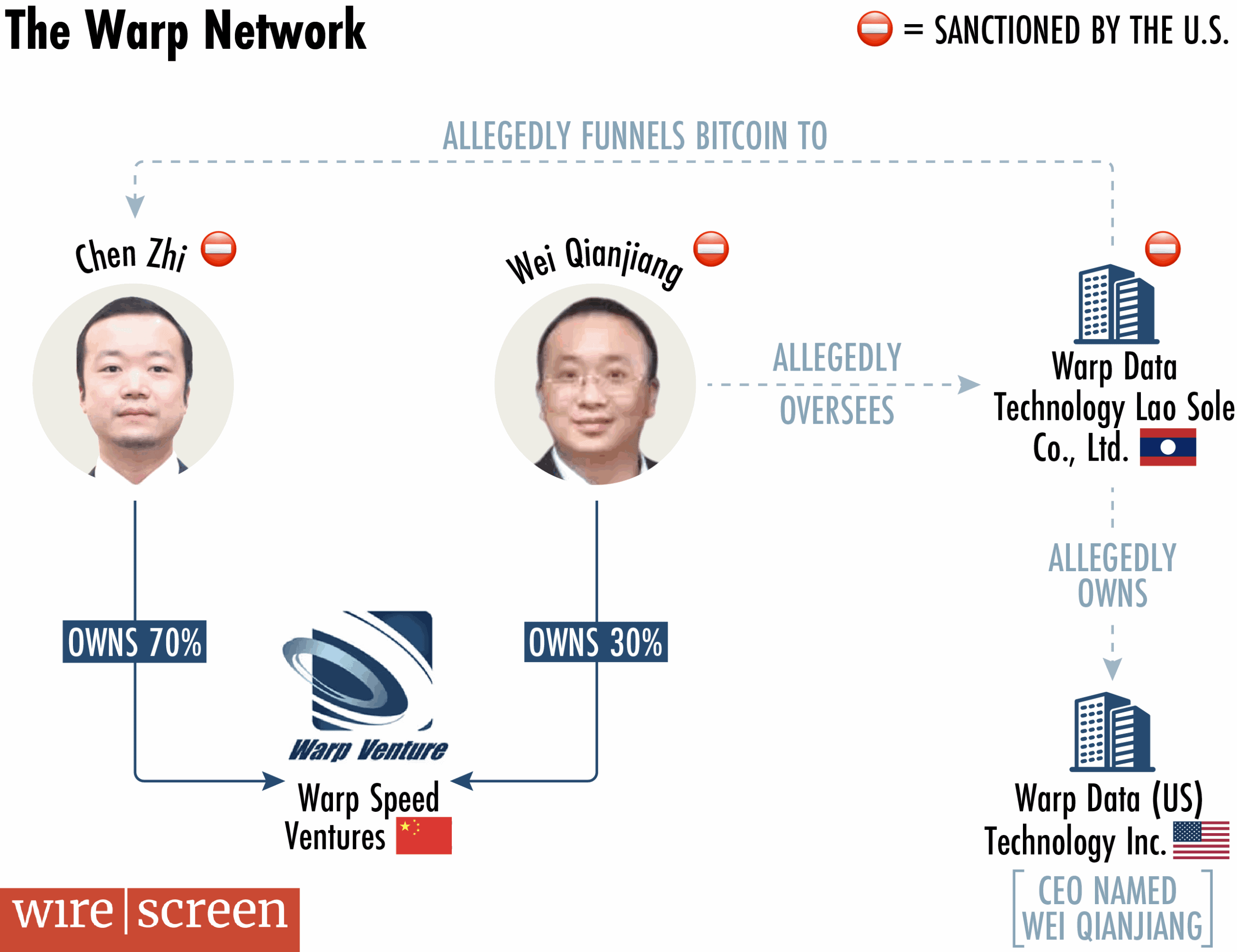
The same year Chen founded the Prince Group, he acquired a 70 percent stake in Chongqing-based Warp Speed Ventures, according to WireScreen. Wei Qianjiang, the firm’s managing partner and an alleged Prince Group associate, owned the other 30 percent.
Chen and Wei’s ownership of Warp Speed Ventures raises questions of whether the globe-spanning Prince Group network moved money through mainland China.
“Prince clearly has financial connections to China,” says Jack Adamović Davies, an investigative reporter who has written extensively on Prince Group for Radio Free Asia.
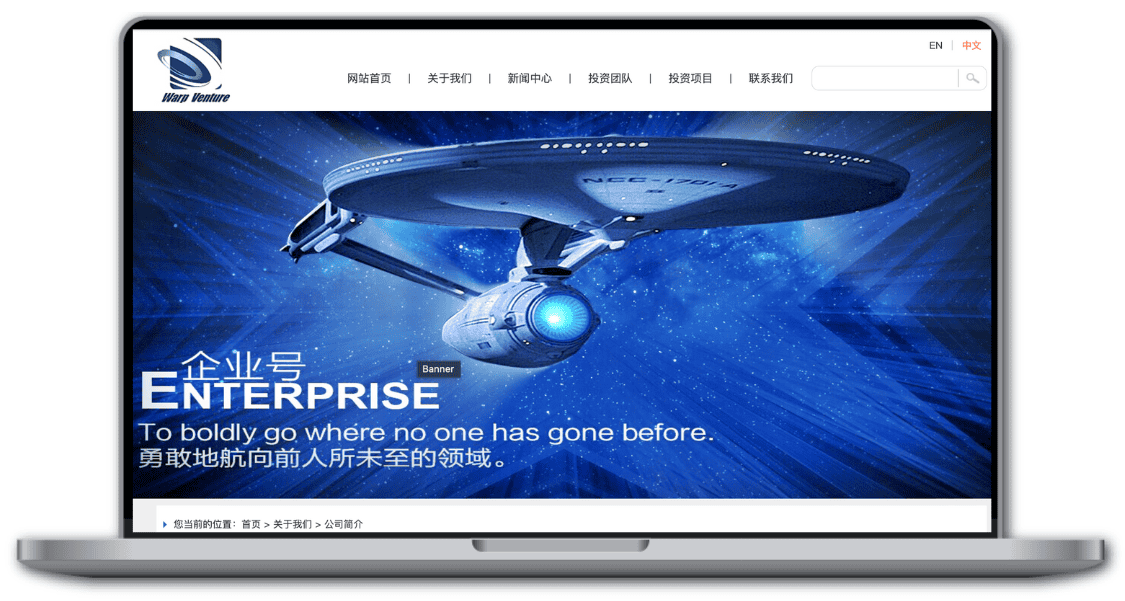
In February 2016, Warp Speed Ventures registered its first fund and began investing in tech companies. WireScreen data shows that it blended state and private capital, selling an 11 percent beneficial stake to the Chongqing Liangjiang New Area Administration Committee, a local government body. Many of its portfolio companies developed smartphone games.
Two years later, Warp Speed Ventures established another fund that attracted far fewer investors. A woman named Li Caiyun is the sole individual shareholder, WireScreen shows. Chen was once married to a woman with the same name, according to media reports.
Prince had some reason to scale down their business activities in mainland China at the exact same time that Chinese authorities were investigating them. It suggests that there is a serious chance that Chinese authorities’ pursuit of the Prince Group wasn’t just cosmetic.
Jack Adamović Davies, an investigative reporter
In 2019, Warp Speed Ventures said on its website that it was managing billions in Chinese yuan and U.S. dollar-denominated assets.
Then Chen and Prince Group attracted the attention of Chinese authorities.
In 2020, the Beijing Municipal Public Security Bureau formed a task force to investigate allegations Prince Group was running an illegal online gambling operation, according to a report last year by Radio Free Asia, which cited court records.
Warp Speed Ventures stopped posting on Chinese social media app WeChat the same year. The firm’s account was deleted last weekend. The Asset Management Association of China, a regulator, revoked Warp Speed Ventures’ fund manager qualifications in 2022.
“Prince had some reason to scale down their business activities in mainland China at the exact same time that Chinese authorities were investigating them,” says Davies. “It suggests that there is a serious chance that Chinese authorities’ pursuit of the Prince Group wasn’t just cosmetic.”
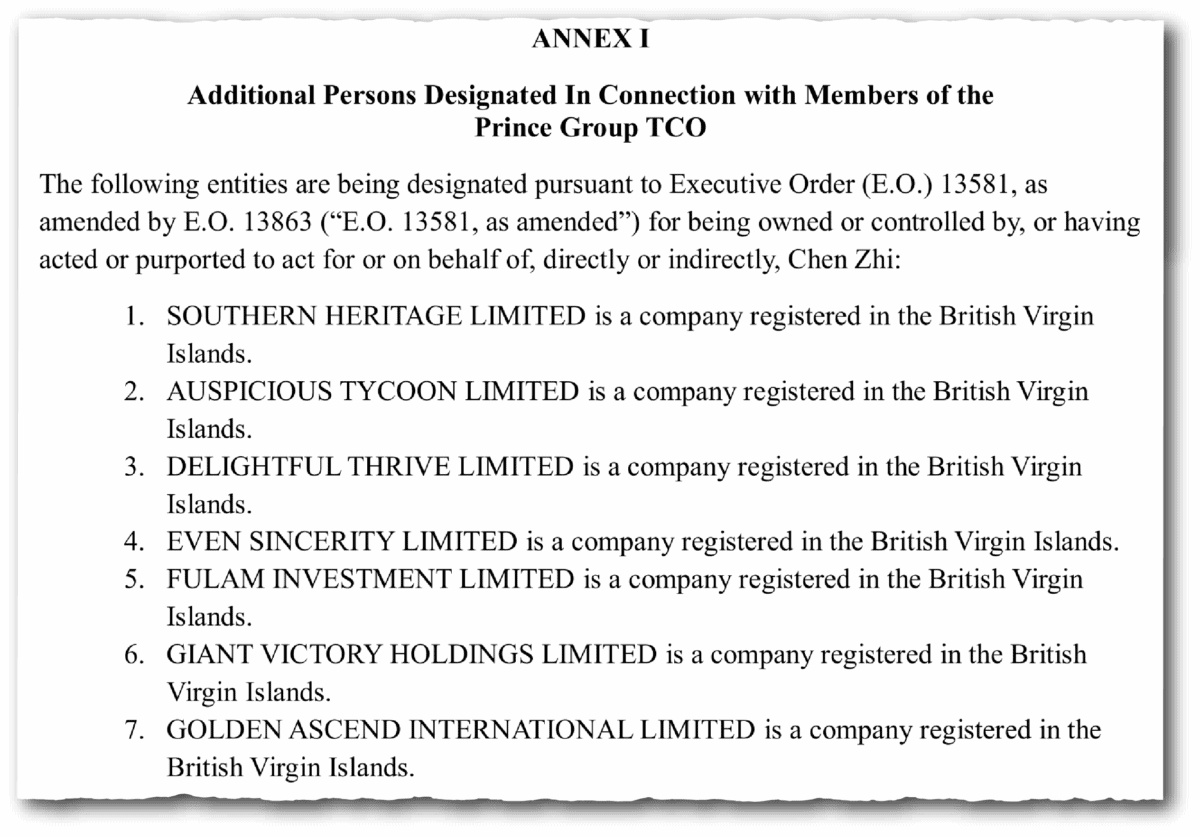
Warp Speed Ventures’ current status is unclear. Its website is now defunct — the most recent archived version is from 2020. According to Pitchbook, two of its funds have been liquidated.
American officials did not sanction Warp Speed Ventures or any other entity in mainland China.
Warp Speed Ventures did not respond to emailed requests for comment. Chen and Wei could not be reached for comment.
The U.S. Treasury Department did not respond to a request for comment on whether it had been aware of Warp Speed Ventures when it targeted Chen and the Prince Group. A spokesperson for the U.S. Attorney’s Office for the Eastern District of New York, which is prosecuting Chen, declined to comment.
MIXED SIGNALS
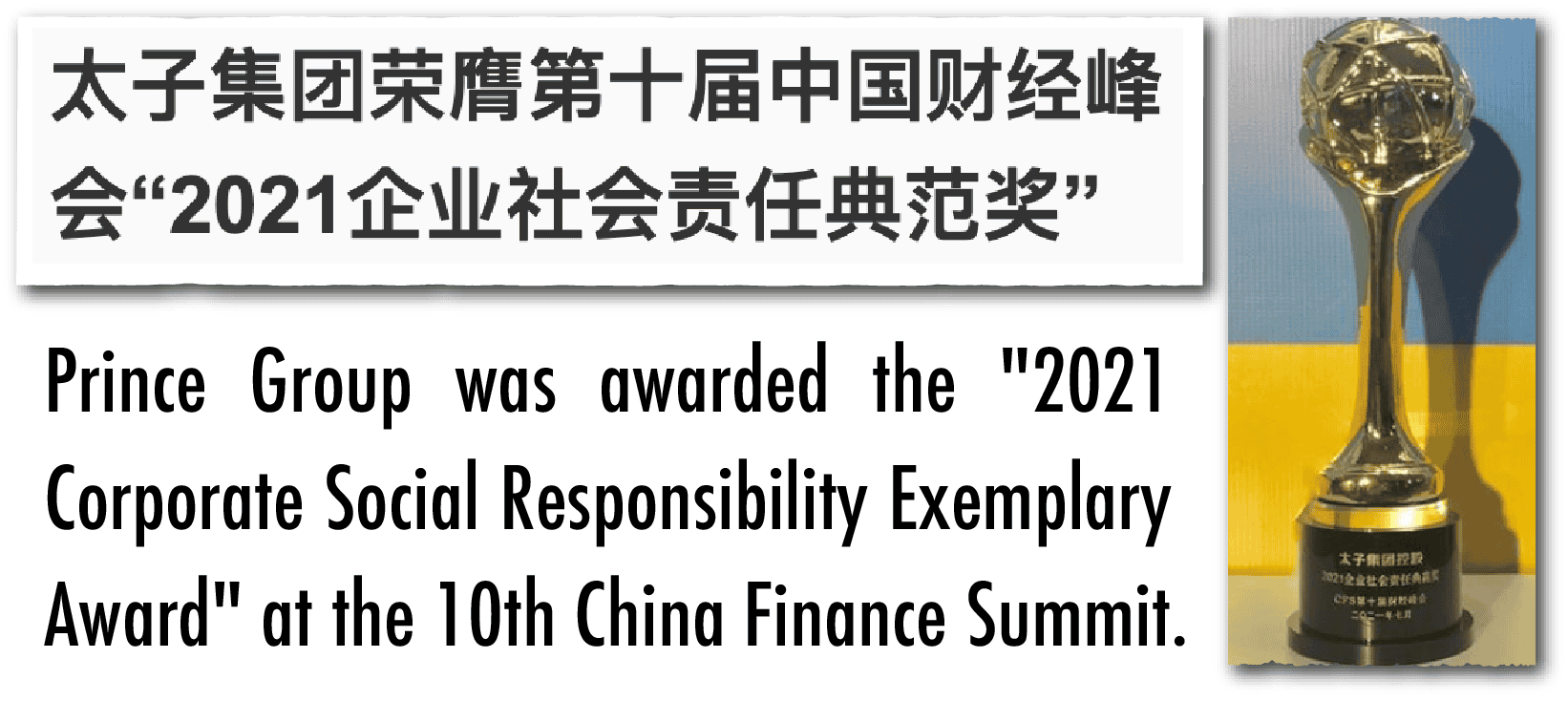
Even as Chinese law enforcement began to target people associated with the Prince Group, the conglomerate maintained some ties to the mainland business world.
In 2021 it received a social responsibility award at a Shanghai financial summit, according to an archived version of the summit’s website. (The conference’s site has since removed the information, and its organizer did not respond to an emailed request for comment.)
Gregory Poling, senior fellow at the Center for Strategic and International Studies in Washington, says Beijing and local governments in China initially tolerated offshore organized crime involving Chinese citizens because it happened abroad.
The rise of the global scamming industry after the Covid-19 pandemic changed that. In 2022, Wangcang, a county in Sichuan Province, announced that it had charged 45 people for working with the Prince Group to establish an online gambling company targeting Chinese citizens. Several other courts in China, where gambling is illegal, have charged Chinese nationals for their involvement with gambling rings in Cambodia.
“Once it began hitting the wallets of normal Chinese citizens, it became a problem that Beijing had to deal with,” Poling says. “A lot of the Chinese criminal actors in Cambodia, Lao[s] and Myanmar have decided that they’re not going to shut down operations. They’re just going to stop going after Chinese victims … And China doesn’t really mind that.”
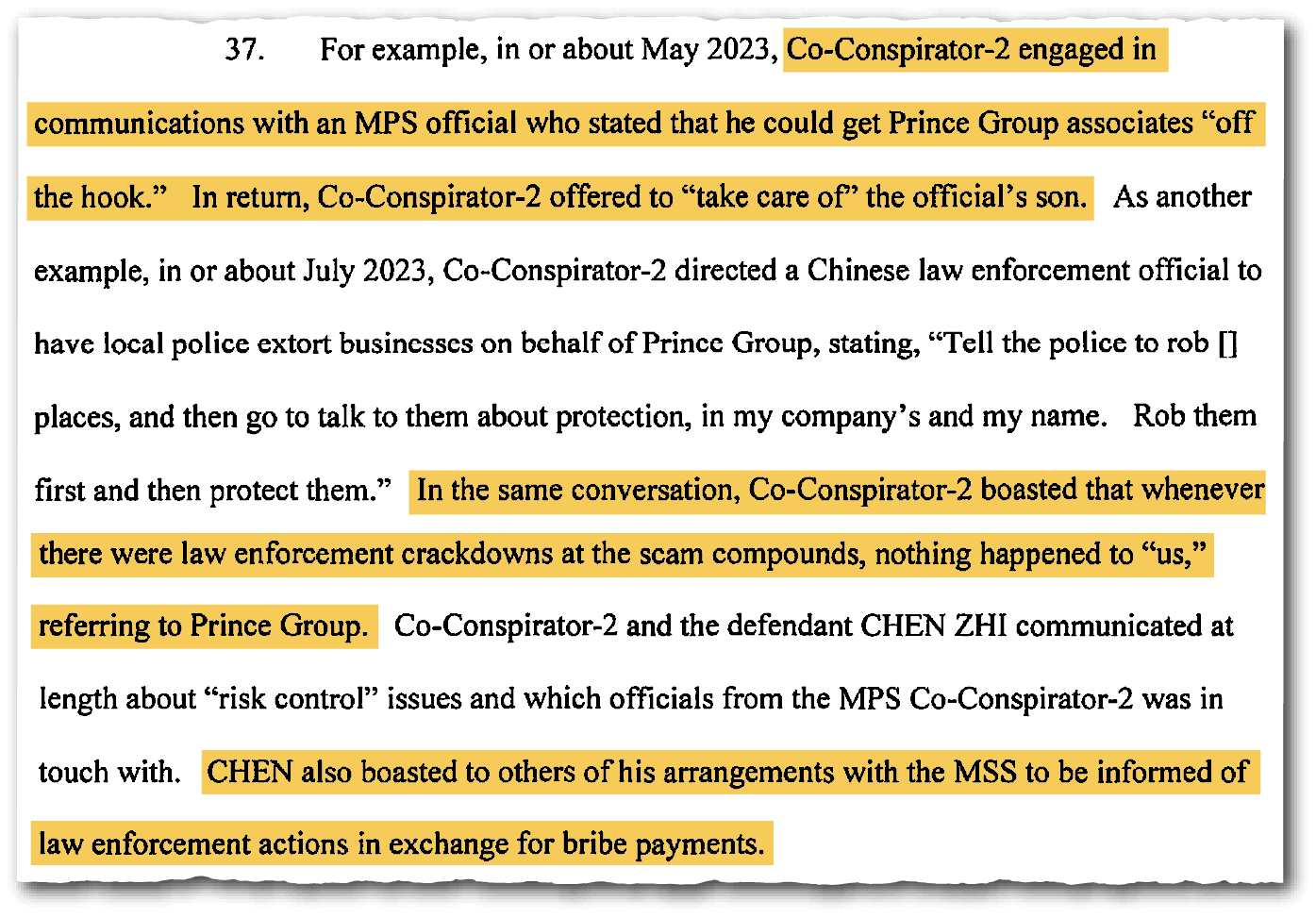
U.S. prosecutors allege that Chen and his colleagues bribed Chinese law enforcement officials for protection. In May 2023, according to the DOJ indictment, a Chinese Ministry of Public Security official said that he could get Prince Group associates “off the hook” if an executive associated with the conglomerate would “take care of” the official’s son.
Liu Pengyu, a spokesperson for the Chinese Embassy in Washington, said in a statement that he was “not familiar” with the situation but that China opposes “groundless smears and accusations.”
China’s response to the rise of Cambodia’s scam networks has been “selective and calibrated,” says Neil Loughlin, a professor at City St George’s, University of London who studies Chinese investment and transnational crime in Southeast Asia. He notes that Beijing has an interest in protecting its citizens, but that “China is unlikely to back measures that implicate allied regimes or extend Western law enforcement into its sphere of influence.”
CAMBODIAN ROYALTY, CUBAN CIGARS
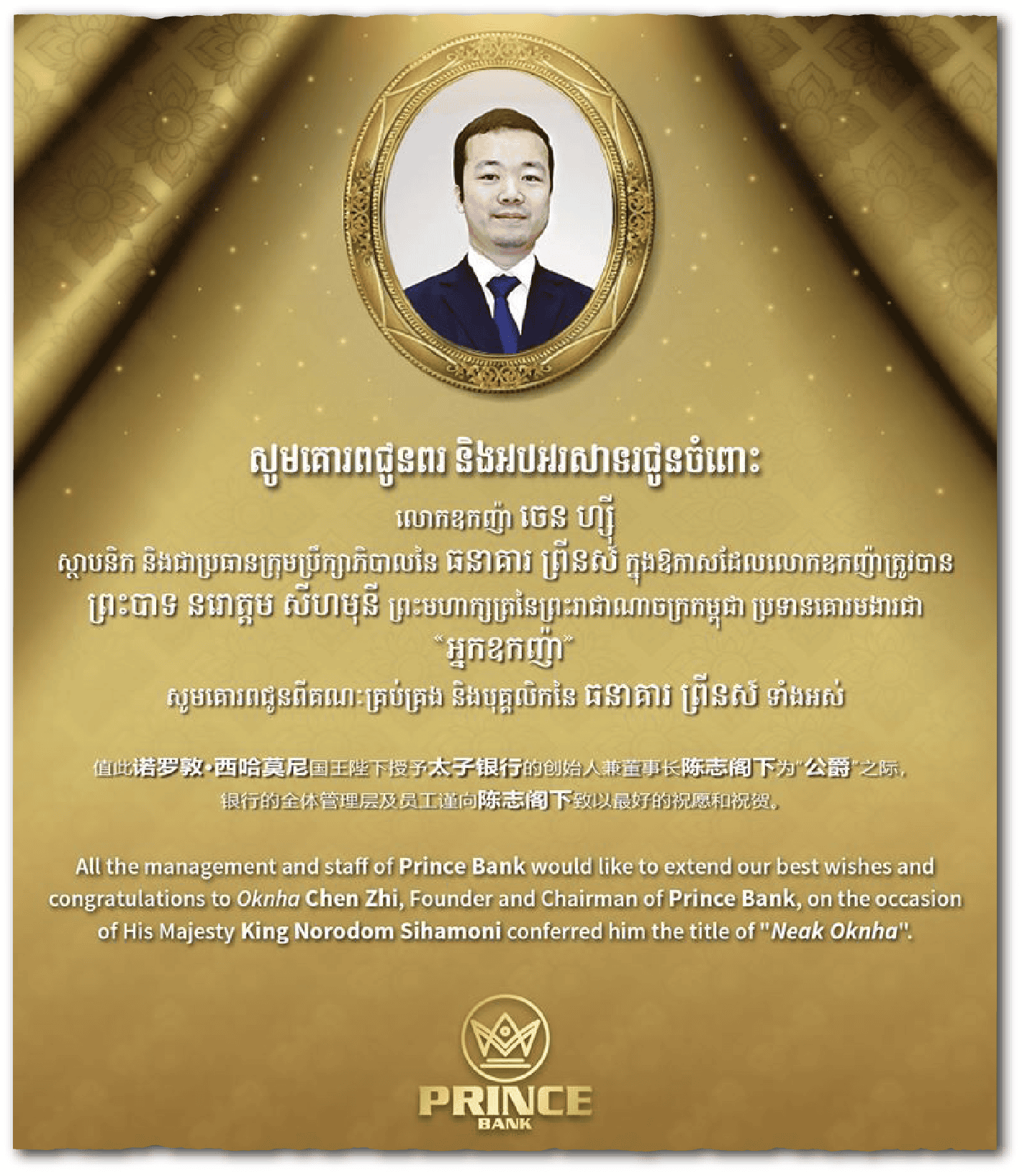
As Chen Zhi expanded his corporate empire, he sought legitimacy from Cambodia’s ruling elite. In 2020 Cambodia’s king awarded him the title of “neak oknha” — an honorific bestowed in exchange for a donation to the government. He later became an advisor to Cambodian leader Hun Sen and his son Hun Manet, the prime minister and a graduate of the U.S. Military Academy at West Point.
Chen traveled with Hun Sen to Cuba in 2022, according to a Cuban government press release, and acquired a quarter of Cuba’s national cigar company, Swedish outlet Cigarrklubben reported, citing corporate records reviewed by local authorities.
U.S. officials say Prince Group was also running at least ten scam centers that engaged in human trafficking and forced labor.
The Cambodian government functions effectively as a giant cartel. You don’t get 50 percent of GDP being provided by illicit activity without an enormous and well-known network of criminal actors with connections all the way to the top.
Gregory Poling, senior fellow at the Center for Strategic and International Studies in Washington
The United Nations Office on Drugs and Crime estimates scam compounds in Southeast Asia generate almost $40 billion in annual profit. “Chen could be considered one of the biggest figures in Southeast Asia’s cybercrime and transnational fraud industries,” says Jacob Sims, a visiting fellow at Harvard University’s Asia Center who studies transnational crime in the region. “Cambodia is the epicenter.”
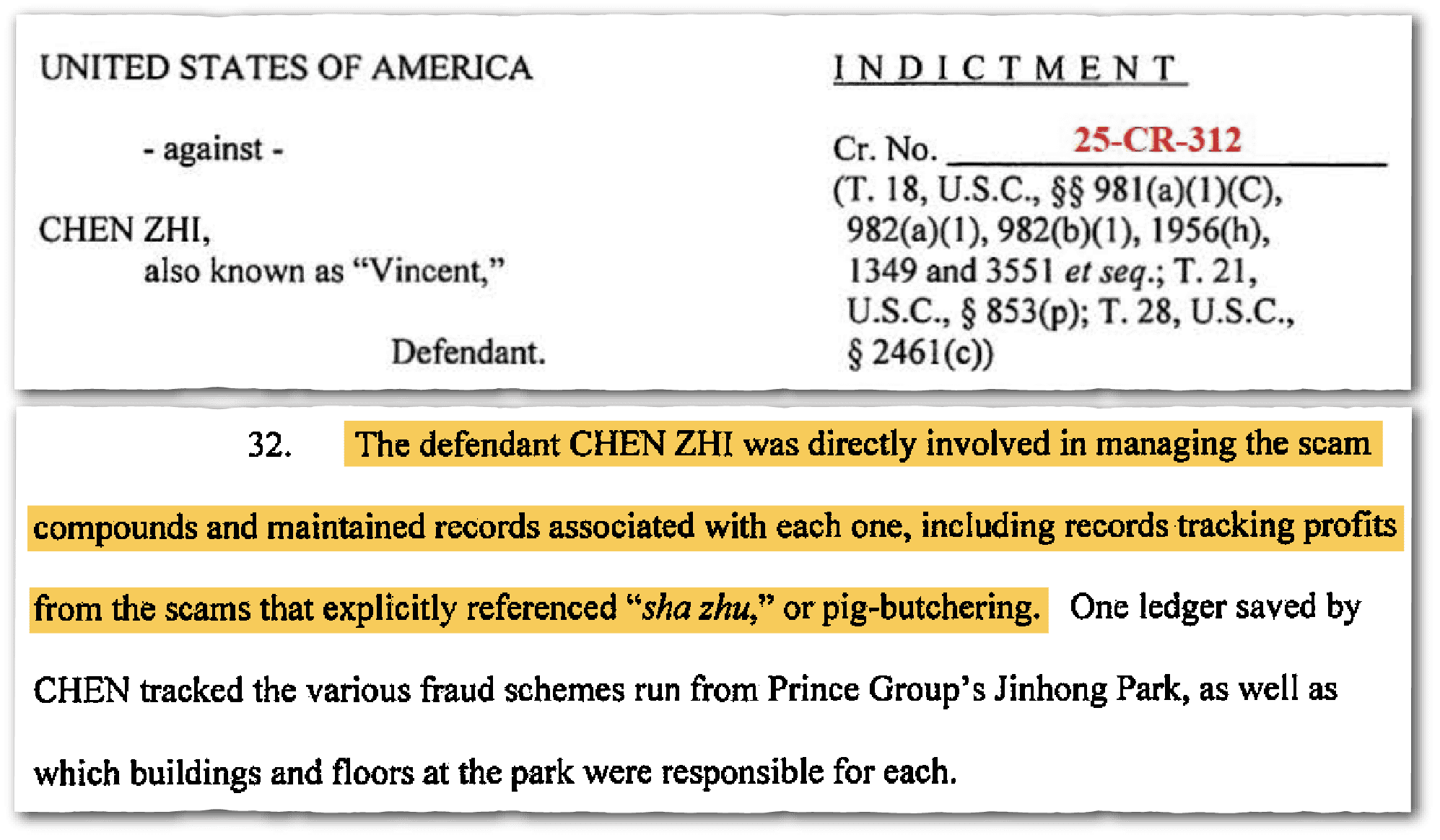
The DOJ indictment against Chen alleges that one of his most lucrative scams was “pig-butchering,” which involves gaining a target’s trust before convincing them to invest in a fraudulent cryptocurrency scheme. Americans alone lost $5.8 billion to cryptocurrency investment fraud last year, according to the Federal Bureau of Investigation. In 2022, U.S. prosecutors say, a Prince Group associate bragged that pig-butchering and related scams could bring in more than $30 million daily.
Prince Group did not respond to a request for comment. Its longtime spokesman, Gabriel Tan, left the company last month, according to LinkedIn. In posts it has since deleted from its website, the company denied that it engages in money laundering or illegal activities. Prince Bank, a division of the company, said in a statement that it will fight its inclusion on the U.S. sanctions list and that it operates in accordance with Cambodian law.
Poling, at CSIS, says it is likely that senior Cambodian officials knew Chen and Prince were running scam centers. The DOJ indictment alleges that Chen kept a ledger showing that one of his associates bought a $3 million yacht for a senior foreign government official. The Global Initiative Against Transnational Organized Crime estimates that Cambodia’s scam industry generates the annual equivalent of half of the country’s economy.
“The Cambodian government functions effectively as a giant cartel,” Poling says. “You don’t get 50 percent of GDP being provided by illicit activity without an enormous and well-known network of criminal actors with connections all the way to the top.”
Cambodia’s interior ministry did not respond to a request for comment. It has previously said that the Cambodian government does not accuse Chen or Prince Group of any wrongdoing.

By 2023, Chen’s business partner Wei had also moved to Southeast Asia. An article posted that year on the website of Hun Sen’s Cambodian People’s Party showed him meeting with Thong Khon, then Cambodia’s tourism minister, in Phnom Penh. The article described Wei as the head of a Lao real estate company and president of the Cambodian tourism ministry’s representative office in Laos.
The U.S. Treasury Department identified Wei as a Cambodian citizen who also runs Laos-based Warp Data Technology Lao Sole Co. The DOJ said the firm was a bitcoin-mining operation that laundered money for Chen.
FROM CHONGQING TO TEXAS
Warp Data has a subsidiary in Texas, according to the DOJ indictment.
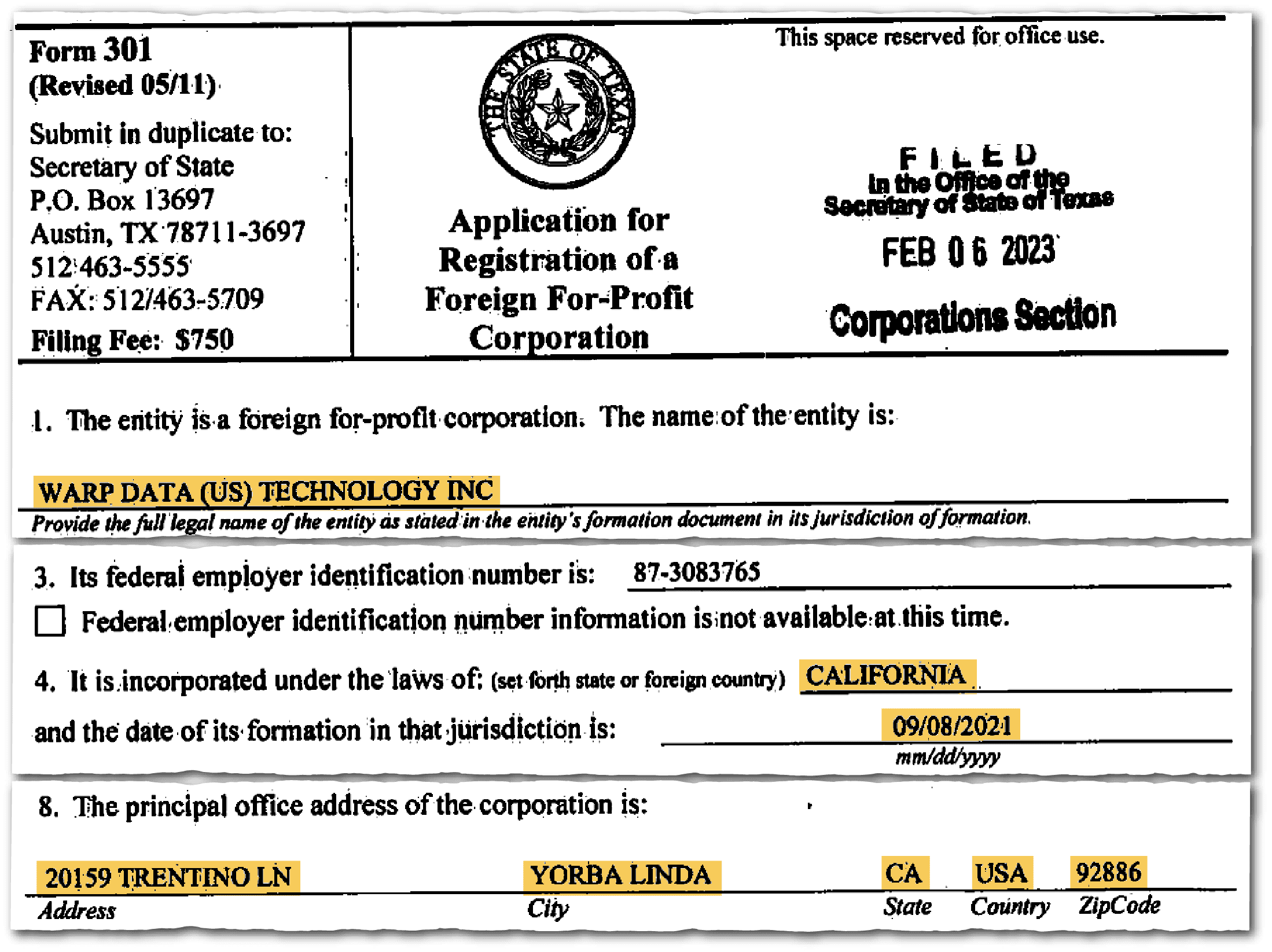
Texas public records show a foreign company called Warp Data (US) Technology was incorporated in California in 2021 and opened an office in Houston two years later. California records filed last year show that it lists its address at an Irvine home purchased in 2018 for $1.6 million — and that its chief executive is named Wei Qianjiang.
The extent of these U.S. operations is unclear. A resident living on the same block as the Irvine home said the address is a rental property that changes tenants often.
The Warp Data (US) Technology website is no longer active; an archived version from February describes it as a company offering “first-class, professional investment services for society.”
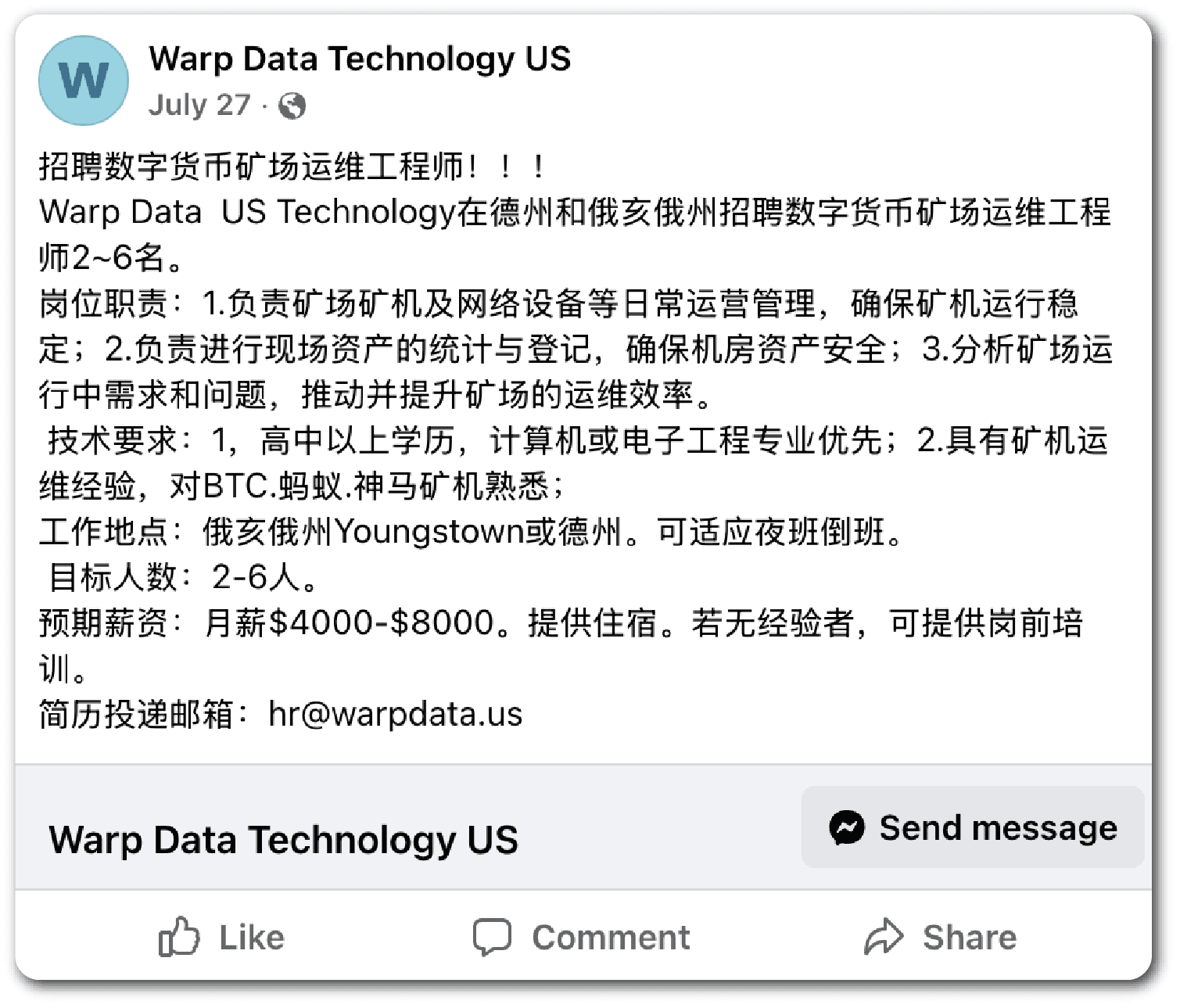
Last month a Facebook page for Warp Data Technology US — which linked to the Warp U.S. website — posted Chinese-language job advertisements for cryptocurrency engineers. In July it posted an ad for engineering positions in Texas or Youngstown, Ohio paying $4,000-$8,000 a month.
Warp U.S. shares a phone number and office address in Houston with Orca Ventures Fund, which describes itself as a “pioneering private equity firm” focused on high-tech investments in the U.S., China, and Southeast Asia, according to their websites and corporate registration documents.
The U.S. targeted Warp Data Technology Lao Sole Co but it did not directly sanction Warp Data (US) Technology.
It is more difficult for the Treasury Department to sanction people and companies in the U.S. than abroad because they are afforded greater legal protections. However, U.S. sanctions generally block all of the property that their targets own, including stakes in other firms.
If the Laos firm wholly owns its alleged U.S. subsidiary, Warp Data (US) Technology would be banned from buying almost anything in the U.S. unless the Treasury Department specifically authorizes it.
Blocked companies cannot do business in the U.S. without permission from the Treasury Department. “Even getting a plumber would violate U.S. law if you did not have a specific license,” says Michael Parker, a former DOJ prosecutor.
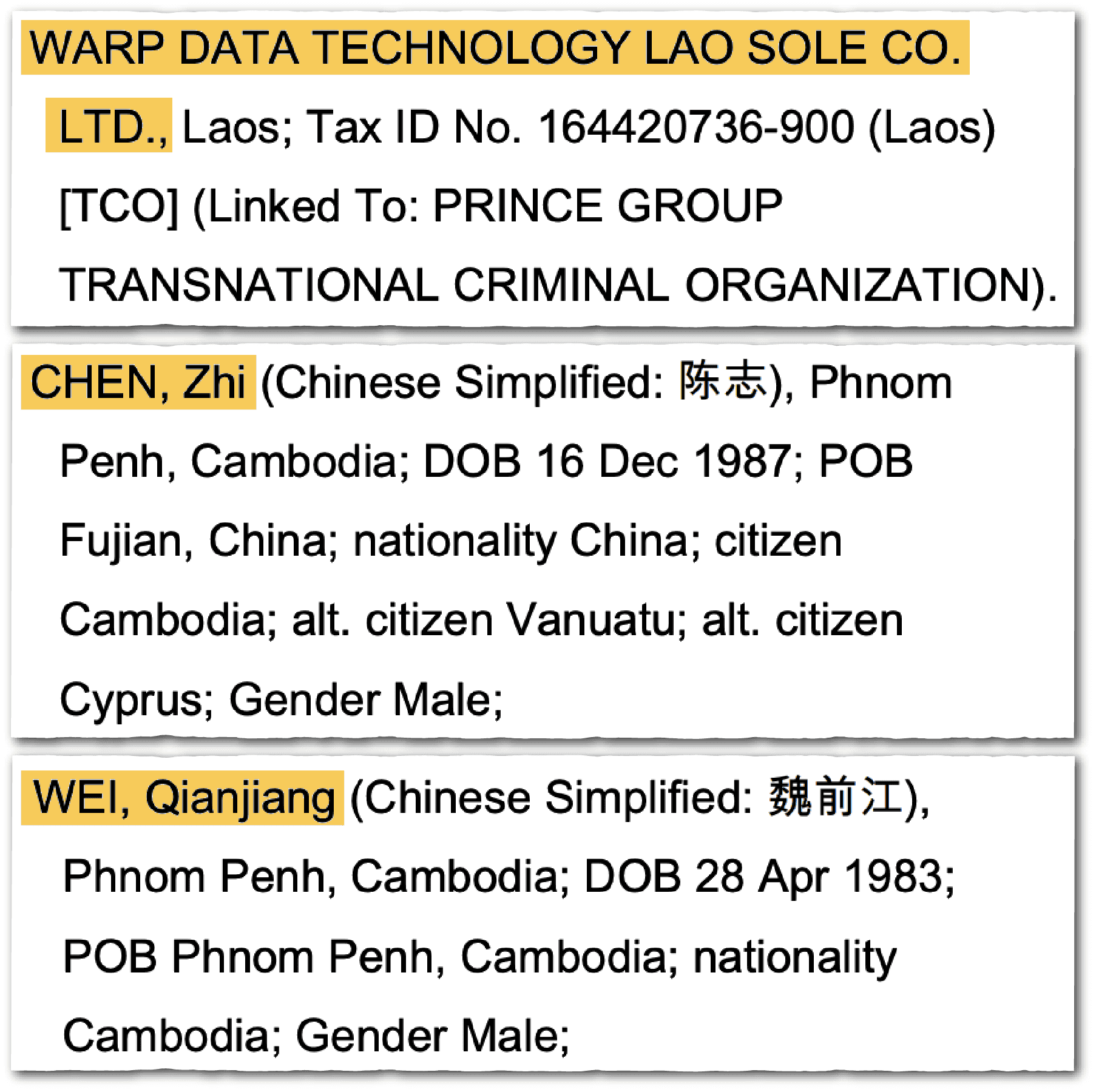
If the Laos firm wholly owns its alleged U.S. subsidiary, Warp Data (US) Technology would be banned from buying almost anything in the U.S. unless the Treasury Department specifically authorizes it. One exception would be for a lawyer’s time, and even that has conditions. Corporate records do not show the firm’s ownership.
Penalties for violating sanctions can range from hundreds of thousands of dollars to hundreds of millions. In June, the Treasury Department fined a San Francisco-based venture capital firm $216 million for violating sanctions on Russia.
Even if it is not sanctioned, Orca Ventures Fund’s shared phone number and office address with Warp Data (US) Technology could raise red flags for investors and banks.
Orca Ventures Fund did not respond to an emailed request for comment. Warp Data (US) Technology could not be contacted via the email address listed on its job ads.
A person who picked up when The Wire called Orca and Warp Data’s shared phone number said “wrong number” and hung up.

Noah Berman is a staff writer for The Wire based in New York. He previously wrote about economics and technology at the Council on Foreign Relations. His work has appeared in the Boston Globe and PBS News. He graduated from Georgetown University.