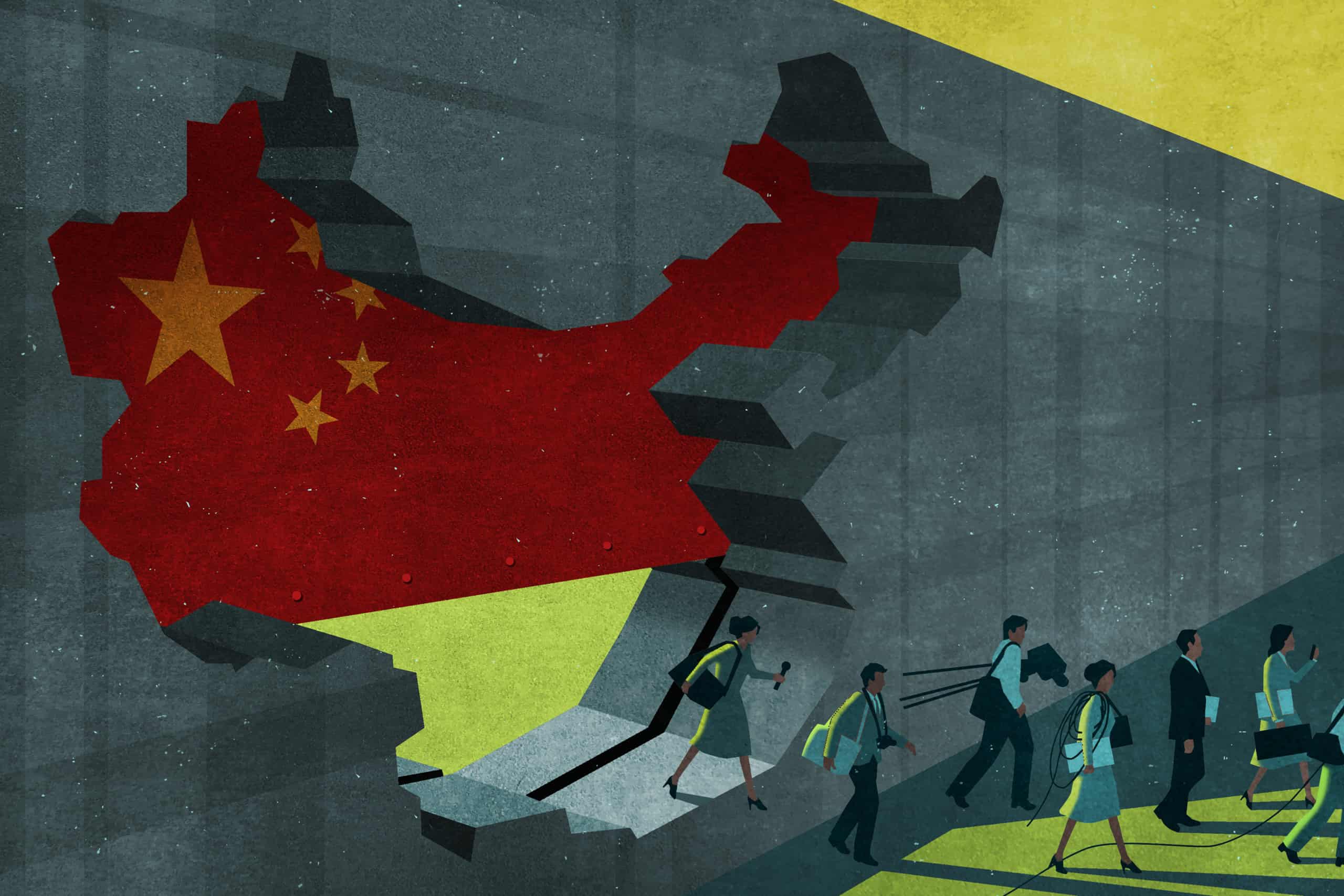
The door is closing on what some have called the golden age of reporting on China — and the whole world will be forced to deal with the consequences.
Illustration by Sam Ward
Last December, when Alice Su touched down in Xinjiang, in northwest China, she was immediately picked off her flight by the police.
Su wasn’t exactly surprised. As the Beijing bureau chief for the Los Angeles Times, she was used to having government minders harass her as part of the Chinese Communist Party’s attempts to blunt foreign reporting. Su certainly expected it in Xinjiang, where she aimed to report on the Party’s mass detention and surveillance of Uighurs, an ethnic minor
Exclusive longform investigative journalism, Q&As, news and analysis, and data on Chinese business elites and corporations. We publish China scoops you won't find anywhere else.
A weekly curated reading list on China from Andrew Peaple.
A daily roundup of China finance, business and economics headlines.
We offer discounts for groups, institutions and students. Go to our Subscriptions page for details.
A former Google software engineer has been convicted of trade secrets theft and economic espionage in connection with his efforts to launch a start-up in his native China. The Wire China sat in on Ding Linwei’s trial in San Francisco.
The world's biggest battery manufacturer is pushing the limits of battery tech and supplies carmakers around the world — but a path further into the U.S. is far from certain.
Now on podcast platforms everywhere, The Wire China hits the airwaves to take you behind the scenes of the stories we cover each week. We are dedicated to understanding and explaining one of the biggest stories of our time: China’s economic rise and its influence on the world.
We use cookies to ensure that we give you the best experience on our website. If you continue to use this site we will assume that you are happy with it.OKPrivacy policy