Geremie Barmé is an Australian sinologist, historian and author. He formerly led the Australian Centre on China in the World and was a Chair Professor of Chinese History at The Australian National University. His celebrated documentary The Gate of Heavenly Peace (1995) documents the Beijing massacre of 1989. He currently lives in rural New Zealand and publishes China Heritage, an online journal.
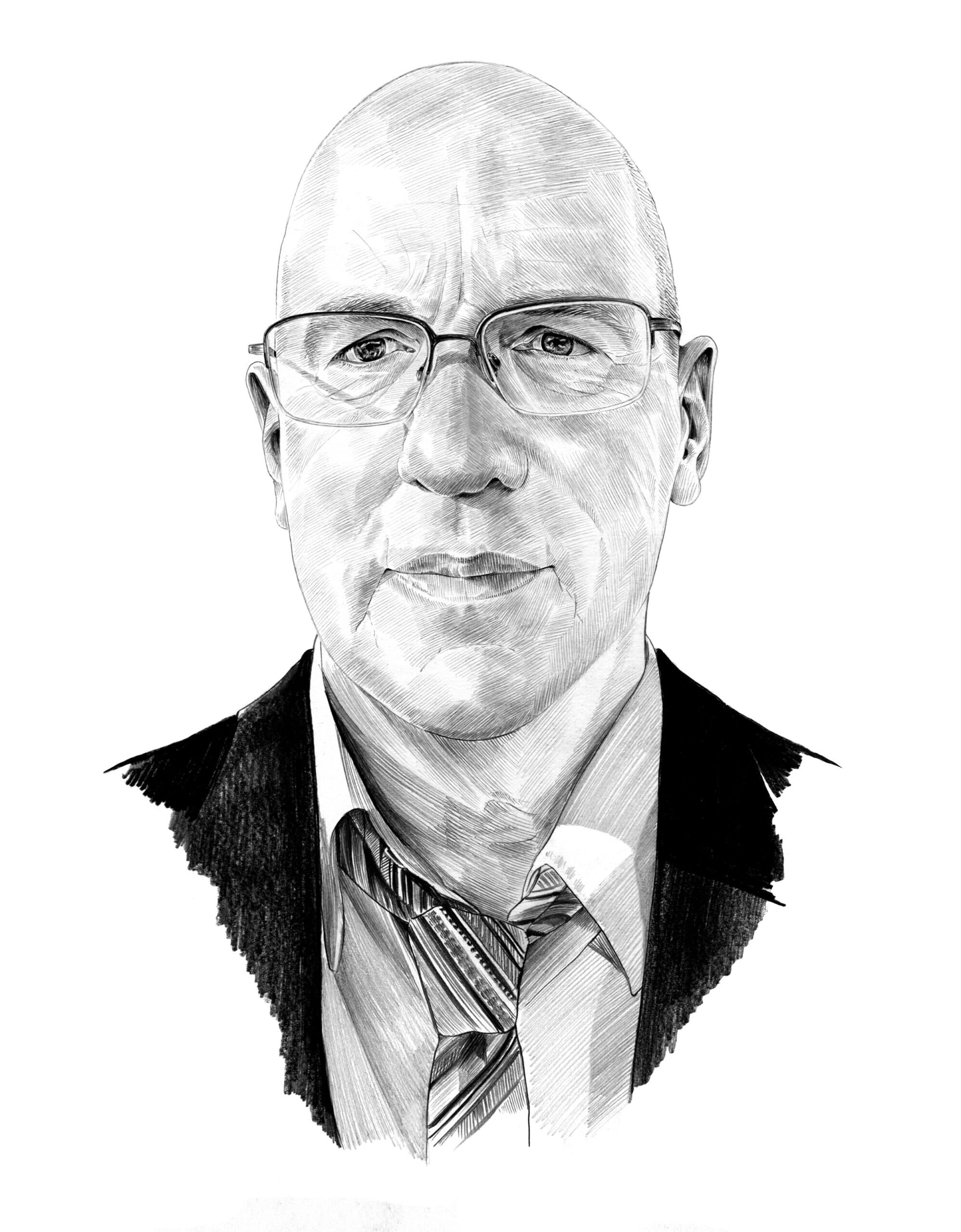
Illustration by Lauren Crow
Q: What first brought you to China?
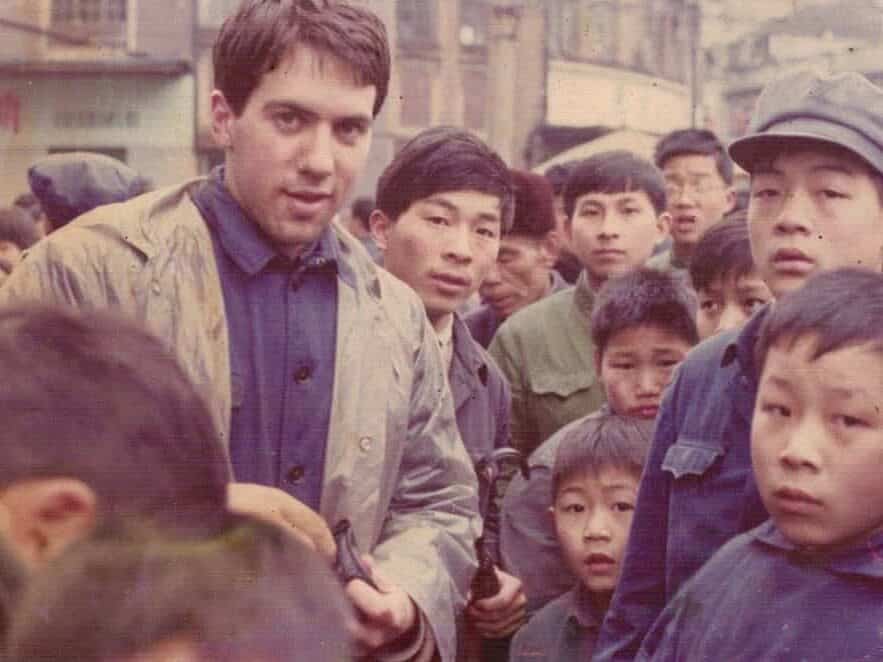
A: I arrived in October 1974 on an Australian government student exchange scholarship. I was twenty years old. I’d been studying Chinese in Canberra at the Australian National University. One of my teachers was (I later learned) a famous figure, Pierre Ryckmans, whose pen name was Simon Leys. He had encouraged me to apply for the scholarship; Australia and China had recognized each other back in late ’72 when a new center-left Labor government had come into power. I had a three-year stint in China. First, two months in Beijing, then, after they realised that my spoken Chinese was okay, I was sent off to Shanghai where I studied at Fudan University.
After I finished a course there I applied to go to a university that had just opened up to foreign students in the northeast of China, in Shenyang, Liaoning Province. At the time the province was the home of a so-called “educational revolution” and I thought that sounded interesting. I studied there for two years. It was really the tail-end of Maoist-run universities. My classmates were former Red Guards who had participated in the Cultural Revolution. They were called worker-peasant-soldier students and had been recommended by their local work units to study at university because they were politically reliable.
How does this introduction to China, in the revolutionary tumult of the late Mao era, impact your China analysis now?
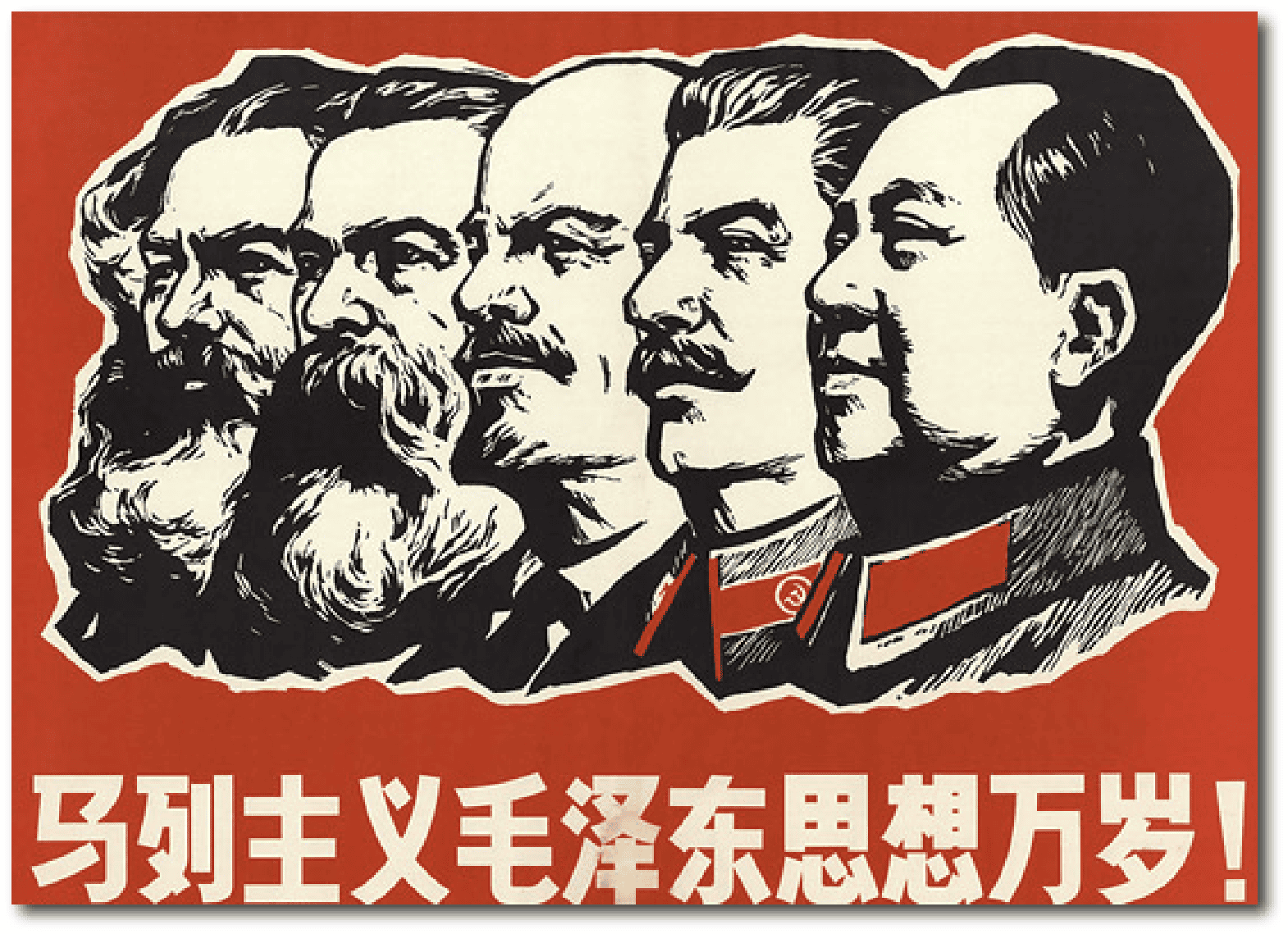
I’ll share a story. In early ’75 the Central Committee launched yet another political movement, one that has been nearly completely forgotten, although for me it remains one of the most revealing moments of that tumultuous era. It was called ‘The Movement to Study the 33 Quotations from Marx, Engels, Lenin, Stalin and Chairman Mao Concerning Bourgeois Rights’. The concept of ‘bourgeois rights’ [资产阶级法权] was at the core of the Cultural Revolution, the core of the Great Leap Forward, and the core idea that really continues to obsess Xi Jinping and colleagues today. This politburo are all ex-Red Guard generation people. The present Chinese government is the last gasp of the Cultural Revolution era.
Basically, this movement maintained that the only way that the revolution could continue without sliding into revisionism was to continue to attack those ideas, behaviors and structures in society that bred concepts of ownership and individualism. Material benefits like wage differentials for workers, the unequal point system for farm labourers, the privilege system of the Party nomenclature and so on constantly generated bourgeois ideas and behaviours that by their very nature made a more egalitarian, pre-communist society impossible. It was argued that if the Party did not reduce, and ultimately eliminate, these ‘rights’ and rid society of both the material base as well as the ideological support for private property, then the revolution would inevitably be overturned and there would be a return to some form of capitalist consumerist paradigm. Guess what? They were right!
There’s an incredible continuing effervescents of literature and poetry, the attempts of younger people to pursue gender-related debate and the diversification of civil society. All of that continues despite the Party’s repression… It’s a variegated landscape. This is what China is: a swerve to the left, a swerve to the right.
Anyway, we poor students battled our way through the thicket of prose in all of the relevant documents. Our teachers, in keeping with Party practice, wanted to be able to report to their superiors how their ‘foreign friends’ were responding to the movement. So we told them, “You travel in private vehicles when you should all travel by bus. You all have special apartments and special food and other privileges — they are ‘bourgeois rights’ and you should get rid of all of that.” Of course they took notes of our comments. A few days later, having gone back up to the university Party committee (one that at the time was called a Revolutionary Committee), they now returned and spent half a day denouncing us for incorrect and erroneous ideas, our ignorance about the complex needs of the revolution. That was my introduction to Maoist-style politics: study all the documents, share your views in keeping with the Party policies to criticize and self-criticize, have open exchanges with the Party authorities — and then immediately be subjected to denunciation and vilification. Fortunately, as foreigners, we weren’t punished.
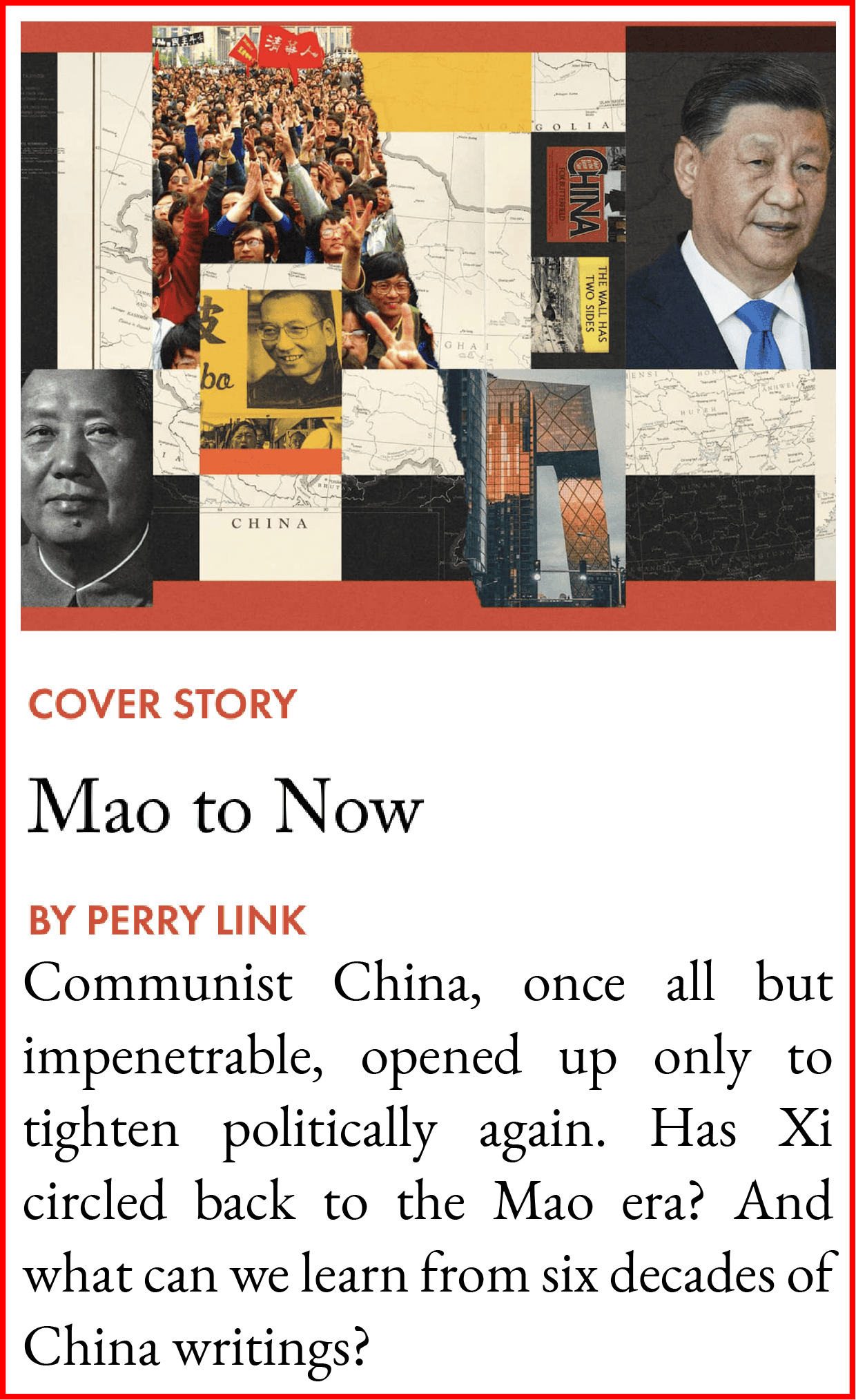
Apart from that, learning to appreciate the actual mechanics of that type of movement, the language of Maoism, the way it categorized the world, the hierarchical way that the Party organized meaning and life and one’s political and social position, were all things that profoundly influenced my understanding of China. I came to appreciate that what is now commonly referred to as the Chinese ‘party-state’ is an empire of hierarchy, language, control and the distinct policing of the inside-and-outside dynamics of society. My understanding of such things is deeply informed by those early experiences and it underpins my view that state authoritarianism aside, Chinese remains a ‘semi-feudal’ society. Over the next 20 years, seeing the collapse of Maoism after Mao’s death and then in the ’80s the revivification of Maoist paradigms along with the reformist ethos of economic change — those early experiences and study of Mao Thought have had an incredible influence on my life.
And you were there when the Great Helmsman perished. What was that like?
Mao died September 9, 1976. We all watched the funeral with classmates and teachers on the sole TV set in our dorm. The next month, the foreign students at our university were slated to go and work in an apple-producing commune in Jinxian county, near Dalian — every term, we either worked in a factory or in a commune to engage in agricultural production as part of a policy called ‘open-door education’. It was fantastic, in no small part because we were able to meet normal workers and peasants, something our cadre minders were wary of but that made life in the drab era of Maoism uplifting. We were working in the orchards when in early October there was an ongoing movement of airplanes overhead, so we immediately knew that something was going on. Central People’s Radio began broadcasting editorials about plots and dark goings-on. Our little gang of foreign students had a shortwave radio so we were able to listen to Radio Australia, one of the first international outlets to report on the arrest of what would later be called the ‘Gang of Four’ [hard left individuals that included Mao’s widow Jiang Qing]. We told our teachers about what we’d heard and they immediately locked us in our dorms for a couple of days while they sent people off to Shenyang to find out what was happening, according to official Party messaging, that is.
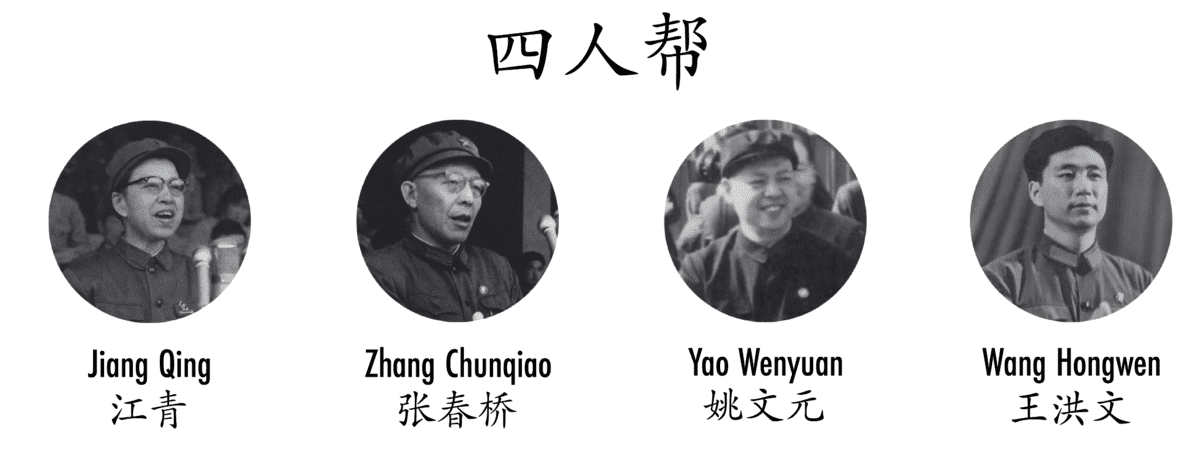
State media soon announced that the Gang of Four had been “crushed in one fell swoop” and our group was bussed off to Dalian to participate in a mass rally celebrating this great victory under the “wise leader” Hua Guofeng.
What is the “Other China” that you refer to in your work?
| BIO AT A GLANCE | |
|---|---|
| AGE | 72 |
| BIRTHPLACE | Sydney, Australia |
Shortly after all of this, I went down to Beijing. Over the summer I’d been introduced by a British friend to a husband and wife team, Yang Xianyi and Gladys Yang. They were among famous English-language translators of Chinese literature. I’d read their work since my late teens and knew of them by reputation. I got in touch with them by letter and they replied. I went to see them: it was the beginning of what became, for years, an incredibly important part of my life.
Xianyi and Gladys had only a few years earlier been released from jail. Xianyi had been in a normal penitentiary, jailed in 1967. Gladys had been locked up in the Qincheng political prisoners’ jail outside Beijing in solitary confinement. They immediately introduced me to a circle of friends they’d made in Chongqing during the war. They hadn’t been able to get together as a group since the ’50s — they were literary and cultural figures known as The Layabouts’ Lodge. They had a boisterous party with this gaggle of cultural luminaries in their apartment, they were all in their late 50s or 60s. I was a callow youth of 22. My Chinese was okay and I was interested in culture and as soon as they learned that my teacher was Simon Leys, whom they’d all heard of as being one of the only foreigners who had criticized the Cultural Revolution, I was immediately embraced as a “fellow-traveller”, in the best sense of the word.
| MISCELLANEA | |
|---|---|
| FAVORITE BOOK | Cultural Amnesia: Notes in the Margin of My Time by Clive James |
| FAVORITE FILM | Brazil (1985), directed by Terry Gilliam |
| FAVORITE MUSIC | Leonard Cohen |
| MOST ADMIRED | Xu Zhangrun 許章潤 |
So, there I was, in a Chinese apartment — what would have been a no-go zone until a few weeks earlier — taking part in an extraordinary gathering of men and women who were still formally regarded by the state as counter-revolutionaries. Once taken into their confidence through The Layabouts’ Lodge, I was inducted into a world of calligraphers, musicians, writers, theater directors, performers and translators. They were part of the Chinese world — patriotic Chinese — but all of them had been denounced in the ’50s and ’60s, and some of them treated incredibly badly, even physically tortured. A few had even been sent off to long-term labor reform in the northeast. Through them, they introduced me to other like-minded people and I began to meet an alternative China that had been silenced, disappeared or, in some cases, jailed for decades.
I eventually started referring to my experience as being one with the “other China”: a world that is irrepressible, vocal, creative, and despite everything, somewhat upbeat, always optimistic. It’s a world based on individual creativity, kindness, fun and zaniness. That’s the world I began to engage with and appreciate, while also being completely aware of the Communist Party state overculture which dominated and controlled; but also often fed off the same energy among this underbelly of creative people. My beloved friends of The Layabouts’ Lodge all passed away long ago. I not only treasure their spirit, but I see it everywhere in China today, regardless of Xi Jinping, that dreary killjoy.
You moved to Hong Kong in 1977 to work as an editor and translator. Did you keep in touch?
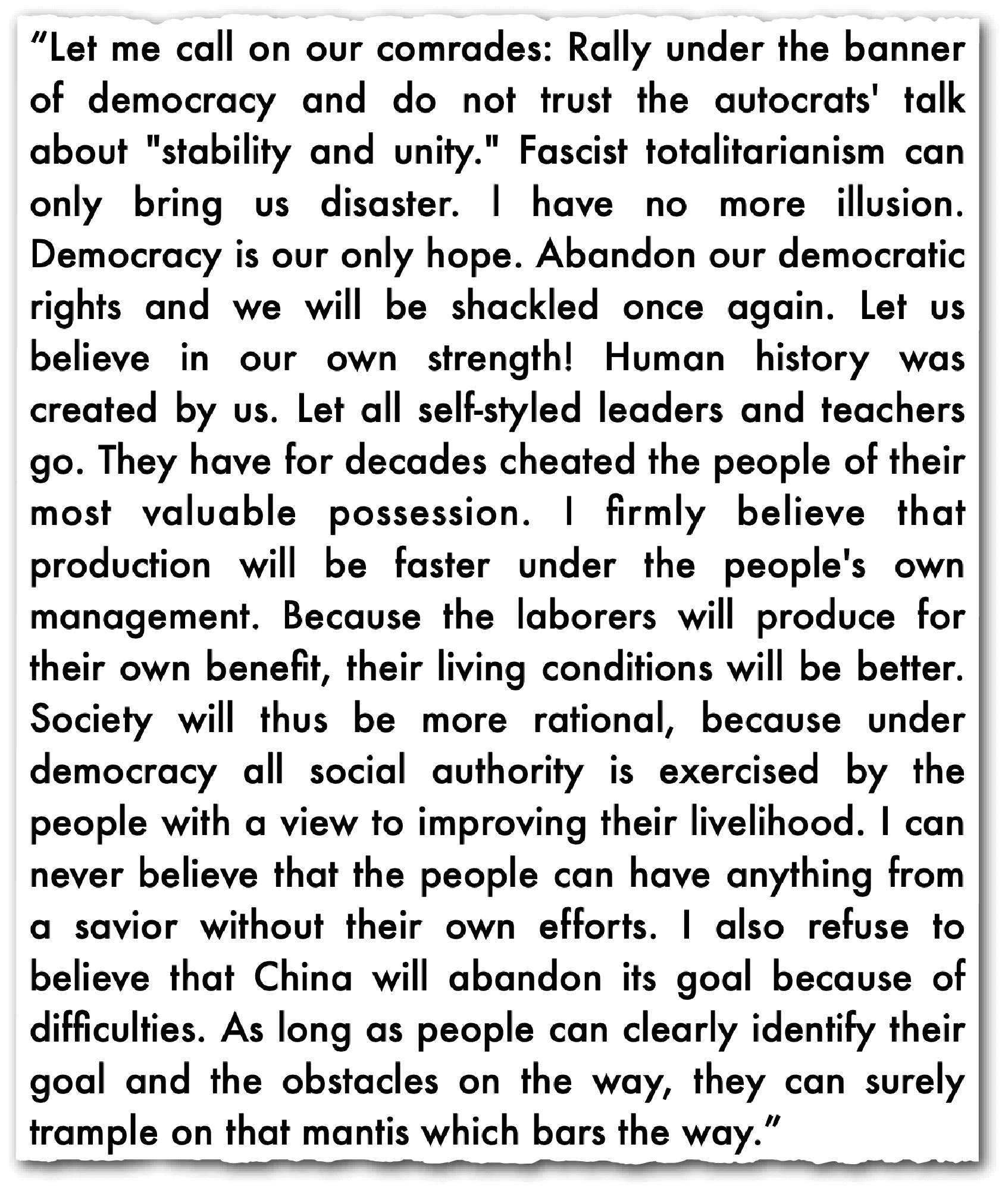
Yes, because I could travel up to Beijing very frequently. Then in ’78, the Democracy Wall movement broke out. There was a period in ’78–’79 when people began posting big-character posters on a wall at Xidan in the center of Beijing. Many of the posters demanded redress to injustices but many were also works of literature, poetry and fiction. At the same time, many younger people posting things were also producing unofficial journals and I’d go up to Beijing, copy down things and tell my older friends about them — they weren’t all that mobile since, back then, everyone had to rely on the creaky bus system to get around or hope that upon occasion their work unit might assign an official vehicle. It was an incredibly exciting, extraordinary period. Among the things I read on the Democracy Wall was Wei Jingsheng’s famous big-character poster calling for a fifth modernization: democracy. He was arrested shortly thereafter and eventually sentenced to 15 years in jail.
When the journalist Linda Jaivin and I got married in Beijing — Linda was the correspondent for Asiaweek — in July 1986, our friends from The Laybouts’ Lodge led the celebrations.
What is your sense of the Other China today — has it persisted since you first encountered that world in the ’70s?
It flourishes in so many disparate ways. We see the independent filmmakers who do their best to both collaborate with authorities and continue making films. There’s an incredible continuing effervescents of literature and poetry, the attempts of younger people to pursue gender-related debate and the diversification of civil society. All of that continues despite the Party’s repression — although the Party, depending on its whims and needs, also often allows room for these developments. It’s a variegated landscape. This is what China is: a swerve to the left, a swerve to the right.
And now we’ve swerved into the Xi era.
Xi Jinping has been more successful in clamping down on these things than any other post-Mao Communist era leader. In early 2013, shortly after he came into power, Xi declared that: we must not allow the second 30-year period — the reform era from ’78 to 2008 — to overwhelm and negate the first 30 years — ’49 to ’78, that is the Mao era.
After Xi and his generation of Red-guard-era leaders have passed from the scene — it might be decades away! — people will have to undo so many of these restrictive, narrow-minded policies, ones that put the Party above civil society, above the individual, above personal pursuit and happiness.
During his reign from 2013, he has consistently, in social, political and cultural policy, tried to balance the first and second periods and create an accommodation between the Maoist past and the reformist present.
Some commentators, both Chinese and international, have pegged this as a return to the Cultural Revolution, but it’s far from being that simple or crude. What he and his colleagues are trying to do is reconcile what is, in many regards, the irreconcilable: to adjudicate between authoritarian top-down control and innovative economic reformist commercialization. It’s been an extraordinary balancing act and relatively speaking it has been quite successful.
The social cost of this success, however, is devastating: social repression, violence toward minorities and marginalized groups and the restrictions on people’s legitimate civic aspirations to have a say in their lives. But if one speaks of China’s grand project to become wealthy and powerful, it has been quite a successful 10 or 15 years. I daresay Xi Jinping will be making exactly this case to his comrades next year as he navigates his way to yet another term in power. I have long said that, since the 2018 revision of the constitution, Xi effectively enjoys “terminal tenure”.
When did you first learn of Xi Jinping?
I first became aware of Xi Jinping in 1983. Actually, I first came across his father in 1981. I was visiting Cao Yu, the noted veteran playwright, in the elite army hospital with my friend Lingzi, the daughter of Ye Jianying, when Xi Zhongxun popped in to say hello. I followed his son’s adventures as an agent of reform in Fujian after that. In ’83, Xi Jinping was among those internally singled out as part of a group known as the “Third Echelon” — a disparate group of young Party cadres. They were identified in 1983–84 by the Party’s Central Organization Department as potential future leaders at some level, provincial or higher. No one had any idea how far any of them would go. The key to their success was lineage and political reliability. At the time, some of them were thought of as being able to resolve, finally, the problem of “revolutionary successors”, a decades-old issue that had underpinned the Cultural Revolution.
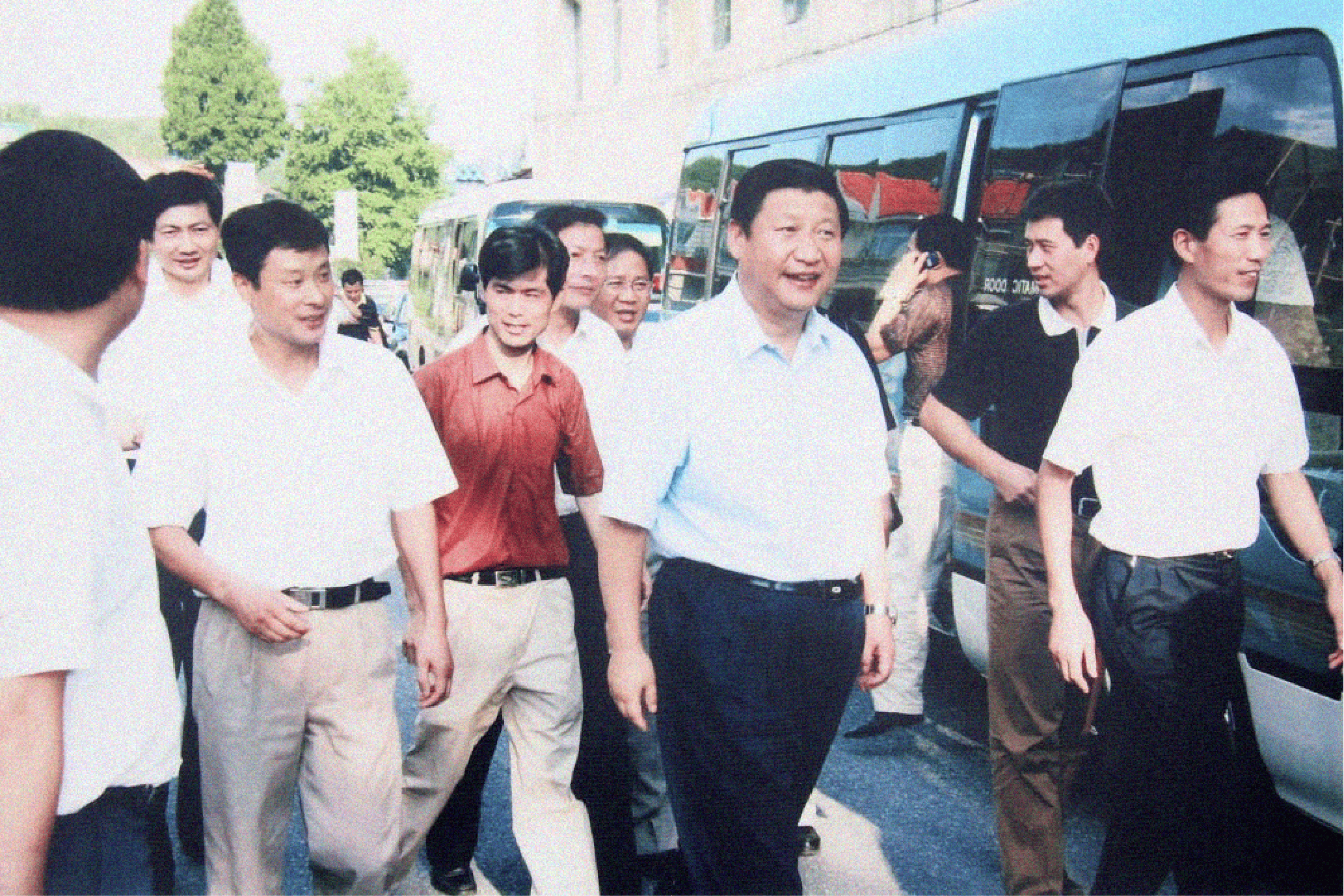
Then in 2001–2002, Xi Jinping became the provincial governor and party secretary of Zhejiang Province. I’d been visiting the provincial capital of Hangzhou — it’s where I’ve done a lot of my research since the ’80s and I have close friends there. During my visits I regularly read the local press and, shortly after Xi was appointed, the main daily started publishing essays by him. Reading them, I thought, “Oh my god, this guy is so damn boring. Such a party hardliner.”
Then in 2008, as a member of the Politburo he was put in charge of Olympic security and he introduced a policy that immediately took me right back to the Cultural Revolution. Xi declared that to maintain wide-ranging social stability and security during the Olympic year, the authorities — local committees, police, paramilitary groups — would revive aspects of what was long ago called the Maple Bridge Experience. I’d first come across that term during the Cultural Revolution, actually by spotting faded slogans on the walls in people’s communes. Maple Bridge was a form of social policing that relied on networks of informants, vigilantes and the front line “organs of the people’s dictatorship”. When Xi Jinping was in charge of Zhejiang, he’d been lobbied by local cadres to revive that long-abandoned form of social control: constant surveillance by the cadres and police of problematic individuals — a network of control and surveillance. They were successful in doing so and now in Maple Bridge Township, Zhuji city, Zhejiang, there is even a grand Maple Bridge Exhibition Hall.
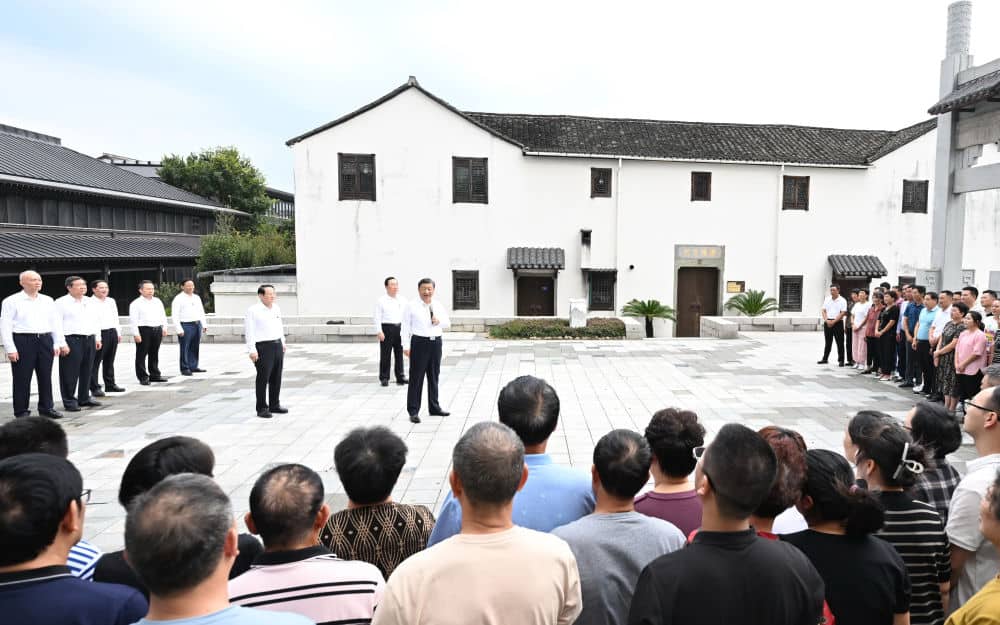
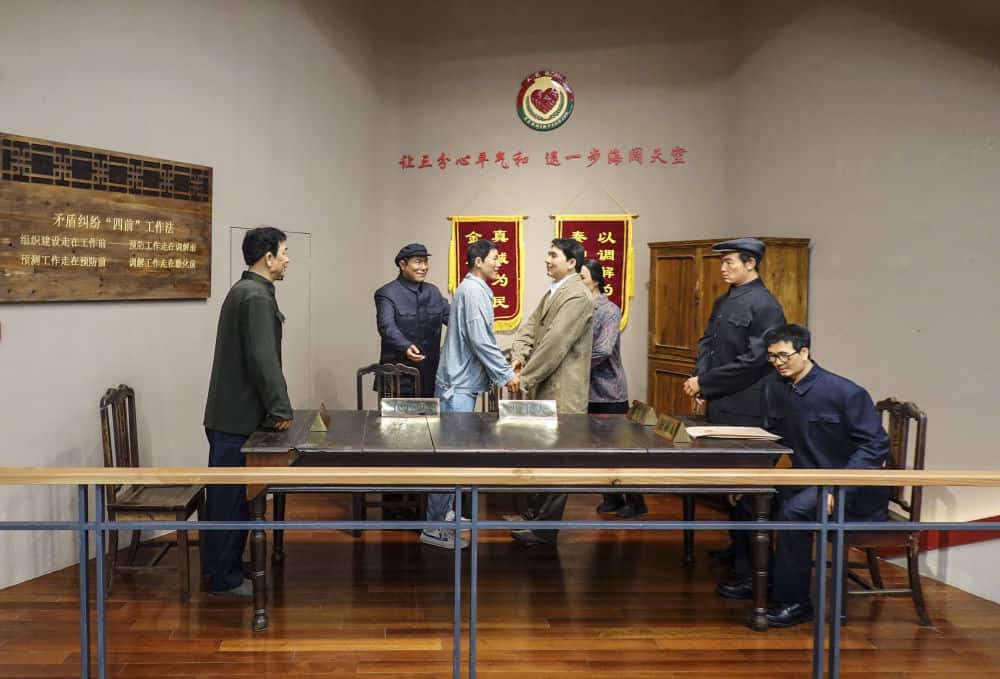
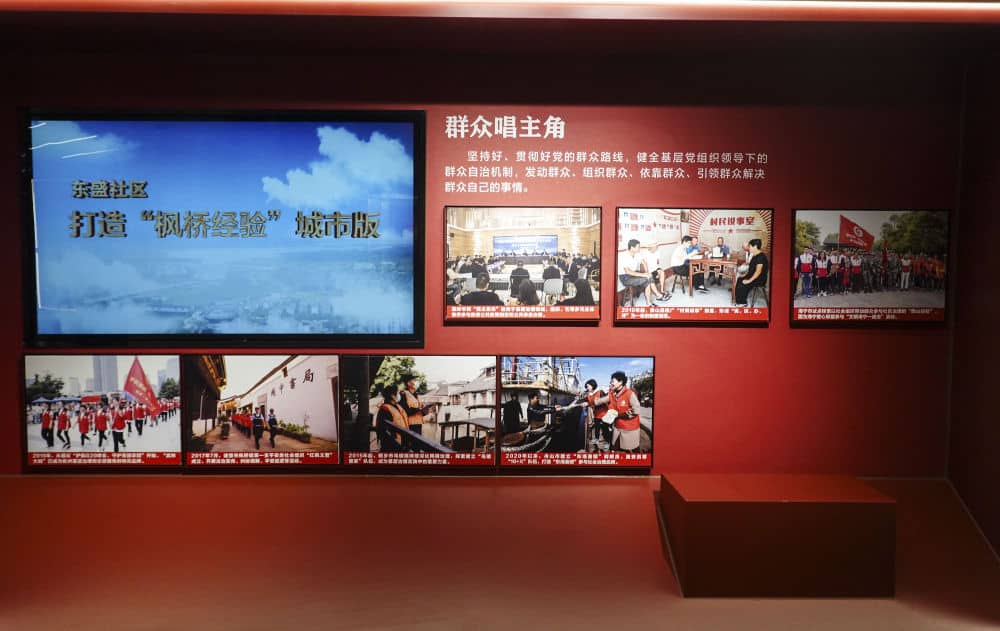
On September 20, 2023, Xi Jinping visited the Maple Bridge Exhibition Hall in Zhuji, Zhejiang. Credit: Xinhua
Xi also made a number of secret internal speeches during the 2008 Olympic Torch Relay which friends of mine leaked to me that were very hardline. At the time, I thought, “If this guy gets into power, China is going to revive a lot of Maoist cultural behavior and politics.” Then, in March 2011, his colleague Vice-Premier Wu Bangguo gave a speech in which he denounced the “Five Don’ts”: we will not do democracy, we will not do press freedom and so on. It became clear that if these people dominated the next round of party leadership contestation, they would be really hardline and anti-Western.
What is Xi’s “empire of tedium?”
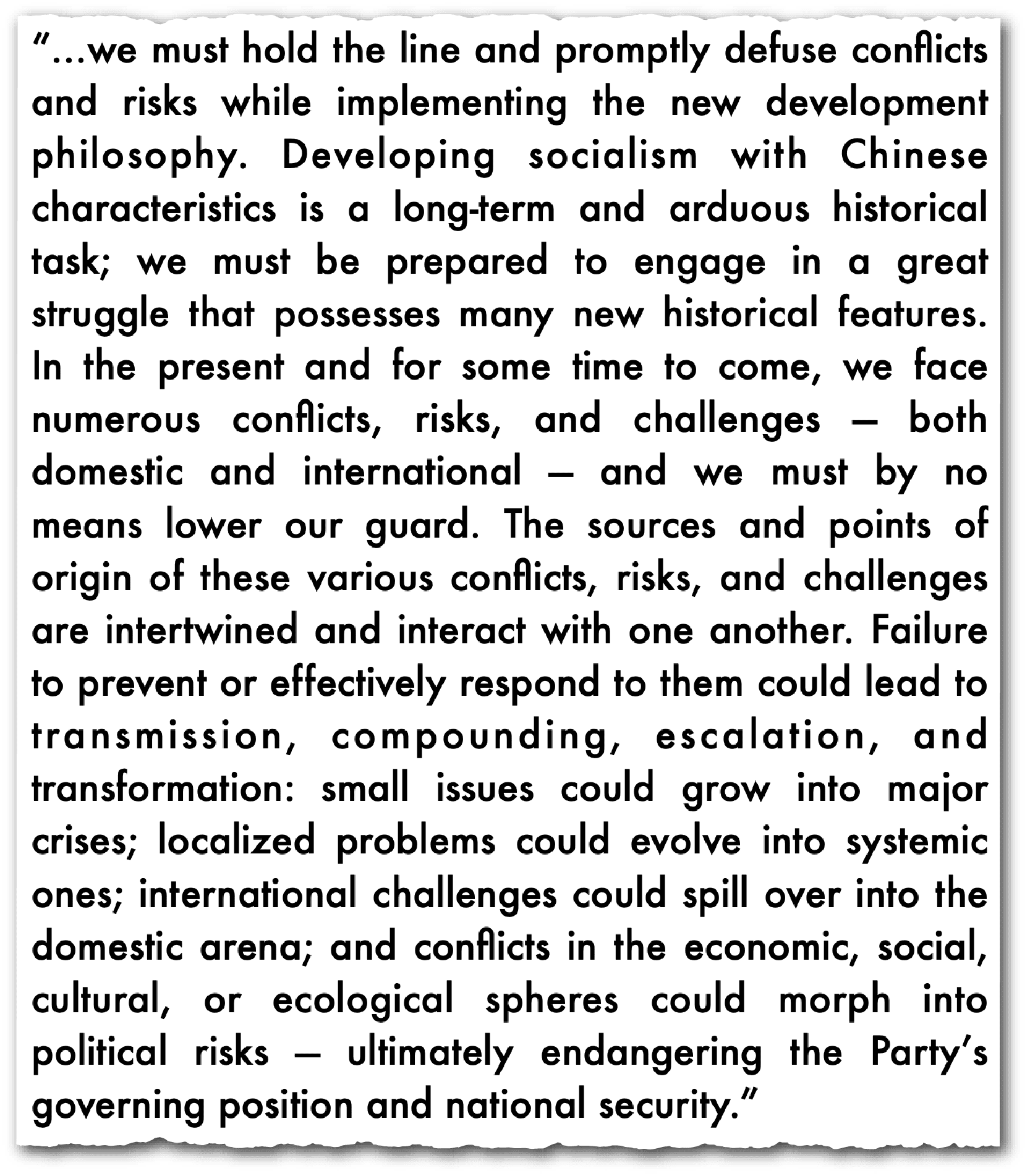
Very soon after he came to power, Xi gave a slew of “important speeches” while also having himself appointed chair of a number of key new guiding committees. At the time, I said that as Party head he was effectively carrying out a coup against the state, an “auto-golpe”. That’s when I started calling him the “Chairman of Everything”.
As his policies unfolded — legal reform, media control, dreadful cultural policies and so on — I thought to myself, “Oh god, how unbearably boring. We collectively, all our Chinese friends, are going to have to revisit all these things that everybody thought the country had grown out of.” So many people thought the country was evolving — despite the corruption, despite the civil disturbances — and that the system itself might evolve beyond strict one-party control. From 1989, I myself never believed that would be the case.
As somebody who had lived through the party’s dismantling of so much of the dead weight of Maoist ideological baggage, I could now see aspects of it being reintroduced under Xi Jinping: strict censorship of the media, control of the courts, educational reforms, the remilitarization of society. In 2016, Xi Jinping even revived the dreadful Mao slogan that “east, south, west, north, centre, the Communist Party rules everything” and he came up with a new one: “the media has only one surname and that surname is ‘The Party’.” I thought, “Heavens but all of this command and control stuff is incredibly tedious.” I was also of the opinion that, no matter how much he and his colleagues pursue these policies, the economic changes in China, the social maturation of China as a nation, will inevitably lead beyond the narrow and stifling confines of such an approach. After Xi and his generation of Red-guard-era leaders have passed from the scene — it might be decades away! — people will have to undo so many of these restrictive, narrow-minded policies, ones that put the Party above civil society, above the individual, above personal pursuit and happiness.
…by flying in the face of the extraordinary efforts made by his predecessors to rid China of capricious one-man rule, [Xi Jinping] has insinuated the practices of the past into the twenty-first-century. He has potentially condemned the country to repeat the very cycles of history from which the Communists boast that they have broken free.
[But] it’s going to be incredibly tedious for people to have to go back to where they were in the ’80s — all these hard-fought battles to get rid of one-man leadership, to increase collective leadership, to ensure limited terms for party leaders, to encourage internal Party democracy. These are all things that Xi Jinping has overturned. It’s tedious because, having lived through the 70s, 80s and 90s in the Chinese world, with so many colleagues, friends and other, I thought, “All of this stuff will have to be relitigated, debated and overturned.” Otherwise, what can people expect? In The Threnody of Tedium, I quoted George Orwell’s Nineteen Eighty-Four: “If you want a picture of the future, imagine a boot stamping on a human face — for ever.” To which I added “Under Pax Xinensis it is likely that the boot of power will be AI-designed footwear crafted from high-end materials and labour-farm leather. These luxury items will be promoted both by Chinese and fellow-traveller influencers and will be available for frictionless online purchase as well as international delivery.”
How secure is Xi within the party today?
There are people who spend all their time devoted to this question. I have no idea, really. All I know is that because of the nature of Xi Jinping’s leadership, the nation’s energies will have to be devoted to ensuring his continued role as party-state-army leader. He will do everything required to ensure that. People in the media always talk about Xi being the most powerful man since Mao Zedong, which I regard as ridiculous — of course he’s much more powerful than Mao ever was. He has more titles than the Qianlong Emperor. In terms of actual practical governmental control and power, he actually has a handpicked Politburo, Military Commission and State Council. But as can be observed, he is constantly having to hand-pick and repick his military men. Nonetheless, in formal terms, all the levers of power are in his pudgy hands.
Yet, if he had the kind of absolute power enjoyed by Stalin, presumably things wouldn’t be so friable. There obviously are very powerful provincial and military figures who, if they can’t challenge him, nonetheless have to be courted and kept happy. In his day Mao was constantly travelling around China to meet with his military leaders to gauge their reliability. Of course, Caesar can’t trust the praetorian guard. China watchers try to work these things out but there’s just not enough information to really know. People talk about factions and groupings but one of the things Xi Jinping did when he got into power in 2013 was to make it impossible to know how any factions really work. He formally banned factional activity and, from July 2019, his myrmidons effectively shut down the independent media and publishing industry of Hong which, from 1949, had offered an essential outlet for rumors, gossip and speculation originating in Beijing. There were also the purges of various people involved with factional activity, on top of which the Party passed strict disciplinary regulations that made it illegal for older cadres to comment on any central party policy.
The distaste I have for Xi Jinping very much relates to the fact that by flying in the face of the extraordinary efforts made by his predecessors to rid China of capricious one-man rule, he has insinuated the practices of the past into the twenty-first-century. He has potentially condemned the country to repeat the very cycles of history from which the Communists boast that they have broken free.
Following China from the outside now, what is your media diet?
I read the People’s Daily on and off, though there is a wonderful scholar, Manoj Kewalramani, who does a fantastic People’s Daily update every day. David Bandurski’s China Media Project is excellent. When it comes to things AI-related, Afra Wang in Silicon Valley is great, as are Jasmine Sun and Yiling Liu. Yaqi Li, an IR scholar based in Singapore, is a thoughtful and engaging new voice and there’s a musician from Shanghai who lived in Hong Kong for some years and is now in London called Yinfi who produces very thoughtful YouTube commentaries on Chinese issues. One of my all-time favorite commentators is Liang Hongda, who has a YouTube channel. Originally from Harbin, Liang seems to be based in America now. Another engaging YouTuber is Wang Jian, formerly of Phoenix TV, who does an excellent daily commentary on politics. There are a number of other important Chinese analysts and I’m a great fan of Li Yuan’s Bumingbai podcast and her frequent guest, Jianying Zha. And then at the Asia Society, Jeremy Goldkorn produces Hai, a round-up of recent cultural events. It’s worth following, too.
Are you optimistic about the future of China?
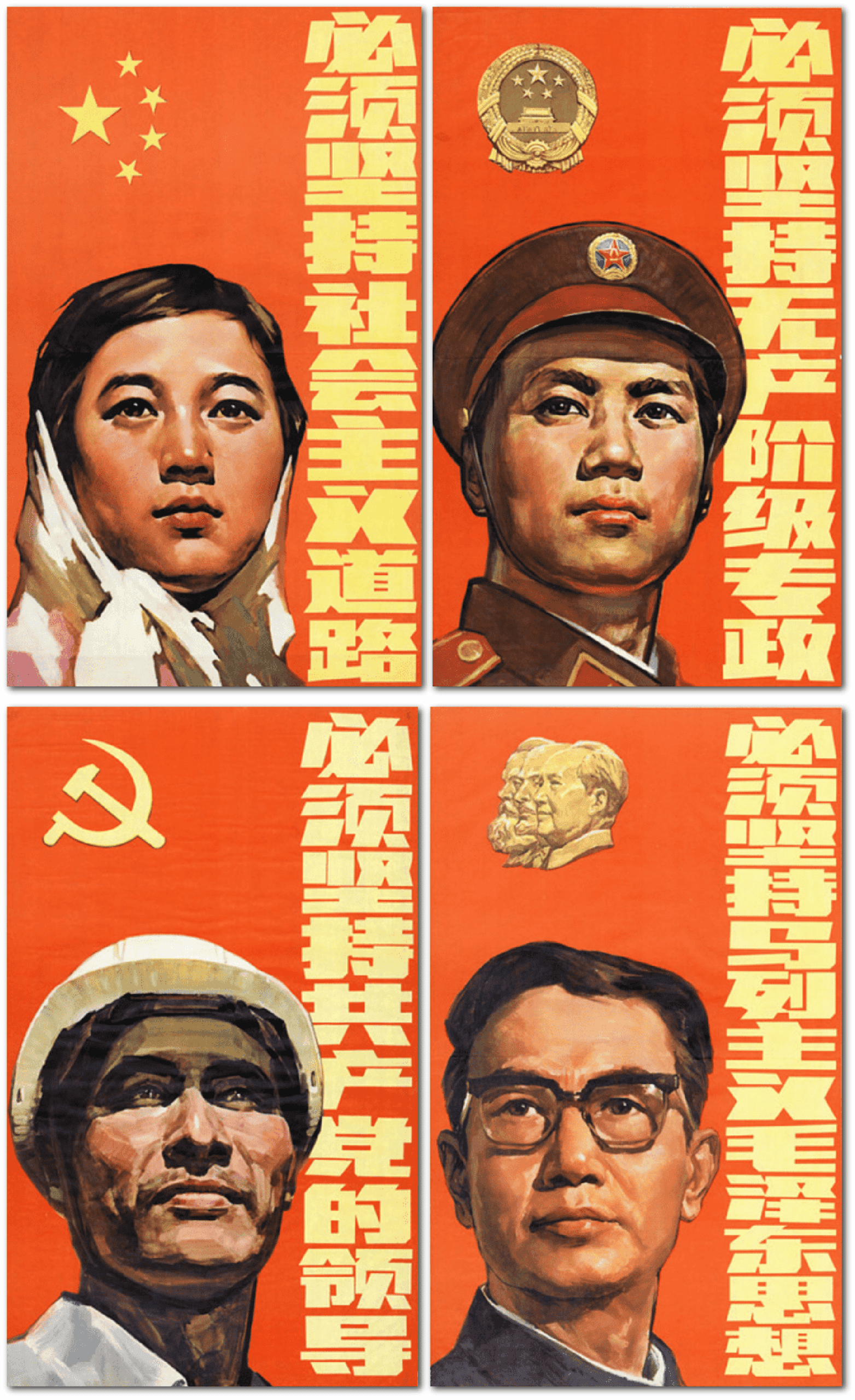
If you take the Chinese Communist Party seriously, it’s hard to be optimistic about it turning into something that it’s not. In March 1979, three things happened that had a huge impact on my way of thinking about things. Wei Jingsheng, an activist who called for a ‘Fifth Modernisation’, that is democracy, was detained and eventually jailed for 15 years. In essence, he had dared to challenge Deng Xiaoping and the Party directly. The second was that Deng Xiaoping met with the Governor MacLehose of Hong Kong to discuss what would become the Sino-British negotiations over the future of Hong Kong. At the time, I was working at a Chinese-language magazine in the British colony that was very much involved in those debates. We all felt Hong Kong would eventually be completely screwed over, treated like Tibet following the 17-point agreement of 1951, no matter how long it might take. After all, the Communists had made numerous false promises about creating a modern democratic nation during the Civil War of 1946-49 only to renege on the lot in the early 1950s. And third, Deng Xiaoping announced the Four Cardinal Principles which effectively limited any hope for substantive political evolution in China under the Party.
From then on, except for a few moments where I’ve been a tad more upbeat, I’ve never been particularly “hopeful” in the western sense. That’s why for decades I’ve advocated what I call “New Sinology”, an approach that can equip one with the wherewithal to better appreciate the warp and weft of things Chinese. I’ve always thought of the party’s ongoing autocratic rule just as a given. China’s impressive prosperity is something to be celebrated, in no small part because many of my friends are immeasurably better off. However, other friends suffer because of the academic, intellectual and cultural strictures of Xi Jinping’s dolorous rule. And, as for the realization of democracy and an open society in a Chinese environment, that has happened, in Taiwan. It is an affront to the Communists and the lie that Chinese people and their traditions make democratic life unviable. Ideologically, and in practical political terms, Taiwan is an existential threat to Beijing. That’s why the Communist party-state and those under the influence of its kool-aid are determined to see it snuffed out.

Brent Crane is a journalist based in San Diego. His work has been featured in The New Yorker, The New York Times, The Economist and elsewhere. @bcamcrane