China’s U-Turn on Fintech Firms Hasn’t Slowed Them Down
But state-owned banks still have more control than it seems.
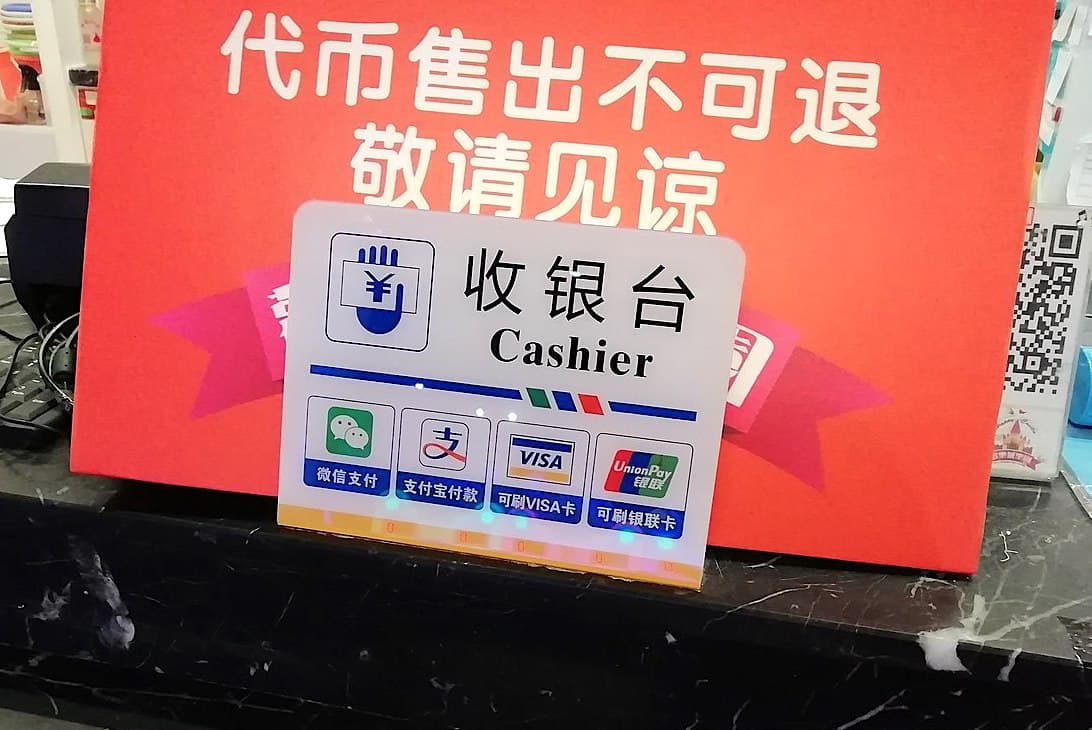
WeChat Pay, Alipay and UnionPay signs in a store in Suzhou. Credit: Shwangtianyuan, Creative Commons
For a brief window from 2013 to 2016, China’s government encouraged its private tech firms to enter finance and take on outdated state-owned banks. The People’s Bank of China (PBOC), one of the world’s largest central banks, bet that competition would force incumbents to modernize. That opening led to a golden age of financial innovation — and what could be the world’s largest initial public offering.
On Tuesday [Aug 25], Ant Group, the financial technology, or “fintech,” giant
Exclusive longform investigative journalism, Q&As, news and analysis, and data on Chinese business elites and corporations. We publish China scoops you won't find anywhere else.
A weekly curated reading list on China from Andrew Peaple.
A daily roundup of China finance, business and economics headlines.
We offer discounts for groups, institutions and students. Go to our Subscriptions page for details.
Not content to run the world’s second most powerful country for a decade, Xi Jinping set about changing everything everywhere all at once. In an excerpt from their new book, Steve Tsang and Olivia Cheung examine how Xi seized personal control of China’s foreign policy apparatuses.
The academic talks about whether China’s experience shows there can be such a thing as ‘good environmental authoritarianism’, and what the U.S. could learn from its approach to green policy.
Corporate Risk Intelligence for National Security, Compliance & Due Diligence
We use cookies to ensure that we give you the best experience on our website. If you continue to use this site we will assume that you are happy with it.