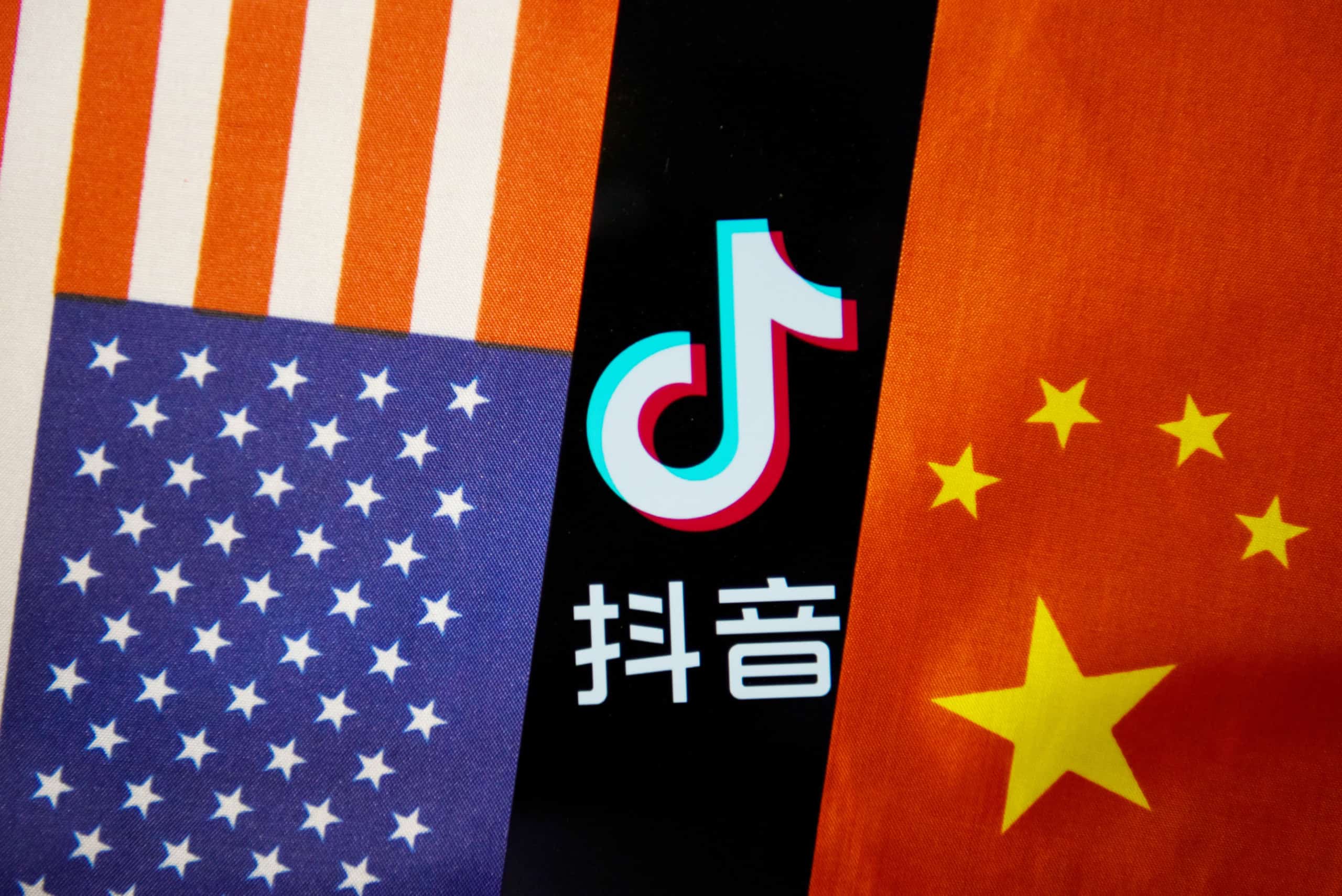
On August 5, 2020, Secretary of State Mike Pompeo delivered a eulogy for the global internet. He didn’t call it that, of course; instead, in his weekly presentation to the media at the State Department, he celebrated the launch of an expanded effort, called the Clean Network initiative, “to keep Americans’ data safe from untrusted vendors.”
In addition to efforts aimed at cutting off Chinese telecommunications companies like Huawei — which is already barred from doing business in the U.S. — Pompeo announced the Clean Store initiative, a new name for the Trump administration’s recent war against TikTok, the Chinese video sharing app that is hugely popular among teenagers in the United States.
“We want to see untrusted Chinese apps removed from U.S. app stores,” Pompeo said from his podium. “With parent companies based in China, apps like TikTok, WeChat and others are significant threats to the personal data of American citizens, not to mention tools for CCP content censorship.”
The line of argument was not new. Since October of last year, when Sen. Marco Rubio (R-FL) requested that the U.S. government conduct a formal national security review of TikTok, there have been bipartisan calls for action. Sen. Tom Cotton (R-AR) has said the app steals data like “a Trojan horse on your phone,” and just last week, the Senate passed a bipartisan bill to ban federal employees from downloading TikTok on government-issued devices.

Credit: U.S. State Department, YouTube screenshot
The day after Pompeo’s Clean Network announcement, President Trump issued a tricky ultimatum to ByteDance, TikTok’s Chinese parent company: find a company to take over TikTok’s U.S. operations by September 20th, or leave the country altogether. In an executive order, Trump asserted that TikTok’s data collection on American users could potentially allow “China to track the locations of Federal employees and contractors, build dossiers of personal information for blackmail, and conduct corporate espionage.”
Now, ByteDance is scrambling to make a deal to sell its U.S., Canadian, New Zealand, and Australian interests, for as much as $50 billion. Microsoft, Twitter and Apple are rumored to be interested in the three-year-old video sharing app, which surpassed 2 billion worldwide downloads this spring, according to the app analytics firm Sensor Tower, largely because of its ability to keep users engaged by feeding them a steady stream of short videos, mostly irreverent memes or dance challenges.
But Microsoft and the other suitors likely recognize that TikTok represents something more as well: the first truly global internet phenomenon — a platform that teenagers from China (where it’s called Douyin) to the United States and everywhere in between have used and fallen in love with. With major U.S. social media apps blocked by China’s infamous firewall, TikTok’s ByteDance has succeeded where internet companies like Facebook and Google have been thwarted. And, perhaps most surprising given the political rhetoric, it did so with a lot of American help.

Credit: TikTok screenshot
ByteDance is owned, in large part, by American and Japanese investors, including the endowment funds of major American universities, which stand to make a fortune on any sale, according to The Wire’s review of documents. It is, in many ways, an American-backed company. One of the earliest investors in ByteDance was SIG China, a division of Susquehanna International Group, a trading and investment firm based in the Philadelphia area that seeded the startup. Later, as ByteDance’s news and music apps began to flourish, other global firms jumped in, including Sequoia Capital, the giant buyout firm KKR, Softbank, General Atlantic Partners, and Hillhouse Capital, a huge firm that grew out of Yale University.
Taken together, ByteDance represents a new breed of Chinese company: headquartered in China, backed by a fusion of global capital and linked to an offshore entity in the Cayman Islands, and successful all around the world largely because it offers something truly unique.
In other words, it is no Huawei.
While Huawei was founded by a former PLA military officer, financed and subsidized by the state, and accused of intellectual property theft from T-Mobile and Cisco, ByteDance was built into a unique global powerhouse by a serial entrepreneur with access to American capital.
“There’s a big difference between homegrown companies like Huawei and foreign-invested companies like ByteDance,” says Peter Hsieh, a partner at Acorn Pacific Ventures. “Business behavior between people who have been exposed to Western business culture is very different.”
But with Pompeo’s call for “all freedom-loving nations and companies to join the Clean Network” and the White House worried that any company that operates in China is at the mercy of the Chinese Communist Party, ByteDance may be an early test of how decoupling — a growing push to separate and divide the business and economic interests of the U.S. and China — is going to play out, not just for global supply chains but for companies that are a complex meld of American and Chinese interests.
If a deal is reached, Microsoft or Twitter (which appear to be frontrunners) would effectively be buying out stakes held by a consortium of American, Japanese, and Chinese investors, and dividing up a company that has captured the imagination of young people on multiple continents. A sale would mean that many of TikTok’s major American investors would cash out of part of their stake in the company — reaping one of the biggest returns in the history of investing — and yet still retain a stake in the Chinese parent company, headquartered in Beijing.

Global investors have cashed in like this before with Chinese tech startups. Beijing may have blocked American internet companies from operating in China, but it has allowed global investors to finance its tech startups, typically through offshore holdings in tax havens.
Alibaba, for example, was seeded in 1999 by Goldman Sachs and in 2000 by Softbank, and then five years after that by Yahoo, through offshore structures that gave global investors, at one point, a 70 percent stake in China’s most successful startup — which is now a $700 billion colossus listed on the New York and Hong Kong stock exchanges. And China’s other tech titan — Tencent — got early funding from Naspers, a South African e-commerce company that remains its biggest shareholder to this day, holding 31 percent, according to Tencent’s 2019 annual report. (“Pony Ma” Huateng, the co-founder, holds about 9 percent.)
But what is unusual about ByteDance, analysts say, is how rapidly it grew into a global — not just Chinese — phenomenon, aided in part by its acquisition of a music app popular with American teenagers, Musical.ly (a Shanghai-based firm that catered to international audiences), and its ability to strike deals with entertainers and music labels.
While its American investors cheered and even helped facilitate these decisions, its American rivals, like Facebook, began lobbying Washington to investigate the Chinese startup, a company whose improbable rise may have begun with a decision in the U.S. to wire startup capital to an account in the Cayman Islands.
THE RISE OF A GLOBAL PHENOMENON
People who work at ByteDance like to say it had global ambitions from the outset, since its founder selected the company’s English name first, “ByteDance” — an allusion to rearranging bytes, or bits of code, and making them dance.
The company was founded in a small apartment in Beijing in 2012 by Zhang Yiming, a soft-spoken, 29-year-old coder who had worked briefly at Microsoft, and then bounced around in the world of startups. Despite having no journalism or news experience, one of Zhang’s first projects at ByteDance was a mobile news app called Toutiao, or “Today’s Headlines.”
Raising money to set up Toutiao wasn’t easy. Investors were skeptical of its business model. The news business doesn’t sound promising in any country, let alone one in which the media is censored and state-controlled. Zhang had no intention of hiring reporters or editors or managing a newsroom. Instead, the company’s algorithm would select and recommend articles from online news outlets and pipe them to mobile phone users across China. Toutiao’s slogan was simple: “The news that understands you best.”
He raised $5 million from investors to build Toutiao, and the app went live in August 2012, becoming a smash hit almost immediately. Millions downloaded the app, and its popularity generated buzz online and in financial circles, which spurred the development of other mobile apps and allowed the company to move into the more lucrative world of music and entertainment.

Credit: Imaginechina via AP Images
In 2016, the company released a short video app — initially called A.me, and then quickly rebranded as Douyin (pronounced Doe-yeen). The app featured snappy videos uploaded by users, often 15 seconds long, and relied on the company’s homegrown artificial intelligence–powered recommendation feed to suggest fun and foolish videos, tailored to people’s unique interests.
Douyin was far more popular than Toutiao. Within a year of its release in China, Douyin surpassed 100 million downloads.
With user engagement soaring, capital began pouring into an offshore account the company had set up for global investors, in the Cayman Islands.1For regulatory reasons, many of China’s tech startups register offshore to accept foreign funding; which also makes it easier for global investors to cash out of their stakes, since China has strict capital controls. Between 2015 and 2019, Zhang raised about $7.5 billion from heavyweight firms like Sequoia Capital, KKR, Hillhouse Capital, Masayoshi Son’s $100 billion Softbank Vision Fund, and funds controlled by Yuri Milner, the Israeli-Russian billionaire who invested in Facebook and Twitter, according to Pitchbook, which tracks venture investments. Altogether, about a dozen U.S. affiliated firms have bought stakes in ByteDance.

Credit: Stefen Chow/Fortune Global Forum, Creative Commons
But some of China’s best-known venture capital investors still express regret for having failed to recognize the company’s early promise, and missing its angel round in 2012. At a Beijing investment conference in 2017, Neil Shen of Sequoia Capital and Xu Xiaoping of the ZhenFund joked about their ByteDance angel investing round regrets, only to have Zhou Hongyi, a well-known entrepreneur and technology company investor, explain his own unfortunate decision.
“My situation is even worse,” he told the conference, eliciting laughter. “I invested in [ByteDance] in the early stage, but then I cashed out soon afterward, at a low valuation!”2At the time, ByteDance was valued by investors at about $20 billion. Today, according to the most recent fundraising round, the company is believed to be worth more than $100 billion.
Of course, there were some early stumbles at ByteDance. While Zhang is considered low-key and analytical, his startup developed a reputation for being brash, and pushing the limits with outrageous tactics and content. Early on, for example, it was repeatedly punished by the Chinese government for violating censorship rules and distributing pornography. Zhang was even forced to issue a stark self-criticism for promoting content that was at odds with “core socialist values,” a catchphrase for the Communist Party’s vision of China. (Its joke-sharing app Neihan Duanzi was banned in 2018.) Also, the company’s aggressive courtship of users led to clashes with the country’s incumbent internet goliaths — Alibaba and Tencent — over use of their online platforms. (Tencent banned content shared from ByteDance apps in 2018.)
Still, the company grew spectacularly, from about 50 employees in 2013 to more than 10,000 by 2017.3Today, the company has 60,000 employees, and a U.S. headquarters in Culver City, Calif. Then Zhang did the unthinkable: he began plotting a course to expand overseas, something no other Chinese internet or social media company, indeed few Chinese companies at all — had been able to do before, with products conceived and developed in China.
Its entry into the U.S. market in 2017 was as stealthy as it was spectacular. ByteDance used a series of acquisitions to set the stage for the American release of TikTok. It first bought Flipagram, a Los Angeles based story-telling app, and then acquired Shanghai-based Musical.ly, a lip-synching video app that had gained a huge American following among teenagers. ByteDance also partnered with Cheetah Mobile, a Chinese mobile security company that owned a live streaming video platform called Live.me, which was operating in the U.S.
By then, it was clear to anyone who had followed the company’s rise that ByteDance was a consumer-driven artificial intelligence, or A.I., company. It has sophisticated algorithms that help decide what each user sees on their device. When a user engages with content on a ByteDance app, by commenting on a video or reading a news article, the company uses that behavior to understand their tastes and appetite, and predict what they might like to see next.
Users say ByteDance’s recommendation system knows what they want better than they do, and it has been compared to Harry Potter’s Sorting Hat. While effective for hooking users, experts say the algorithm is the result of a confluence of factors — access to a huge amount of data, technologic prowess to interpret and categorize videos, and a platform that creators are eager to use, which in turn, provides the company with even more data — not necessarily revolutionary A.I. capabilities.
“It’s not like they have a car when everyone else has a horse,” Rui Ma, co-host of podcast Tech Buzz China and a consultant now working on a book about ByteDance, says of the company’s algorithm. “It’s more like they have a BMW and others have a Camry.”
In 2016, to bolster this approach, ByteDance set up an A.I. lab in Beijing, where many of the country’s fast-growing startups develop, in the shadow of city’s two elite universities, Tsinghua University and Peking University. The company’s leaders view back-end coding, and the powerful algorithms that create recommendation feeds as the company’s secret weapon — its secret sauce.
Sangeet Paul Choudary, an Entrepreneur-in-residence at INSEAD Business School and the author of Platform Revolution: How Networked Markets Are Transforming the Economy – and How to Make Them Work for You (2016), says TikTok has been able to train data supplied by the app’s users to improve the algorithm.
“The reason TikTok is so successful is that instead of having to work with existing content that wouldn’t be optimized, it forces optimization for training” through dance challenges and other programs that “force users to be very focused on what they’re doing,” Choudary says. “They used pose alignment cues and other triggers to get their user base to create better training data, and that allowed them to improve their computer vision capabilities. Getting users to constantly provide better training sets with such cues, that’s something nobody else has done before.”

Credit: Charlie Fong
And so in late 2017, after testing and training its system on hundreds of millions of users in China, ByteDance released TikTok in the U.S. and saw spectacular growth from the outset — making it one of the biggest internet sensations of 2018 and 2019. It took off with the huge initial following of teenagers that it had acquired as followers through its purchase of Musical.ly, but also by spending heavily to buy ads on America’s dominant social media sites: Facebook, Instagram and Snapchat, according to a report in The Wall Street Journal.
And it isn’t just Americans who are being swept away by TikTok. The video app quickly spread to more than 100 countries, and has amassed huge followings in Japan, India, Brazil, Russia and Turkey. What Facebook became for college students in the early 2000s, TikTok has now become for kids in American middle schools and high schools — worrying not just the White House, but America’s leading social media giants, like Facebook.
“This is a company that grew up in a mobile-first environment,” Clay Shirky, the vice provost of education technologies at New York University and an expert on Chinese tech startups, says of ByteDance’s focus on mobile platforms rather than PC. “And it comes from a company that was not only good at viral but was good at finding things that were innocuous. These were really silly videos.”
THE TIKTOK ENDGAME

Credit: TikTok screenshot
But what made American investors fall in love with TikTok terrified American politicians. Like a meteor, the internet’s first truly global phenomenon burned bright and fast before getting torn up. The app’s magic algorithm is perceived to have the power to cater to, and therefore possibly manipulate, a massive online audience — at a time when the U.S. is still coming to grips with alleged Russian interference and online manipulation in the 2016 presidential election. Even though the platform is known for doling out fluffy, short videos, critics wonder whether its technology could be used for darker means.
An unlikely coalition of privacy and human rights groups, rival tech firms and conservative Washington politicians are pressing for American courts and the federal government to restrict, expel or even sever TikTok from its parent company in Beijing.
They worry about an app that has been accused of censoring speech or political content on its app, at the behest of Beijing. (ByteDance has consistently denied that it follows Beijing orders on censorship outside of China.) They also fear the app might be violating privacy laws that project children, and collecting data on Americans, shipping streams of data about ordinary families and perhaps even U.S. government officials back to China, or that the Chinese government might be tapping into a seemingly innocuous entertainment app to influence public opinion or an election.
“That data can then be used to help inform the party-state on how to frame their propaganda for foreign audiences, [and] it could also feed into other datasets that have been acquired by state-backed hackers to create a more vivid picture of the U.S. population,” says Fergus Ryan, an analyst working with the International Cyber Policy Centre, at the Australian Strategic Policy Institute.
For its part, ByteDance insists it doesn’t send the data it collects in the U.S. back to China, but stores it on servers in Virginia and Singapore. The company has tried to allay concerns in the U.S. by hiring American managers and announcing plans to set up a “transparency center” in Los Angeles. And in May, ByteDance hired Kevin Mayer, a Disney executive, as its chief operating officer and then named him chief executive of TikTok.
There are technical solutions, analysts say, that might have allowed ByteDance to retain an ownership stake in the U.S. operation while preventing sensitive data from being sent back to China. There are also skeptics who doubt TikTok poses a serious risk to the U.S. “The censorship is more concerning than the data security,” says Paul Triolo, an analyst at the Eurasia Group. “It’s a stretch to call it a national security threat.”
Claude Barfield, a resident scholar at the American Enterprise Institute and an expert on trade, digital privacy and cybersecurity, agrees. “The national security risk is there, but it is fairly remote. It’s not as big of an issue as Huawei.”
But experts agree that there’s almost nothing ByteDance executives can do to convince the Trump administration and conservative politicians that the company is not a national security risk. The reason: any company headquartered in China — whether privately-owned or state-controlled — is ultimately answerable to the Chinese Communist Party. And so if ByteDance executives are asked to turn over data or technology, they have no ability to resist.
“It’s largely China’s fault that we’re suspicious of any tech that they make,” says James V. Feinerman, a professor of Asian legal studies at the Georgetown University Law Center. “There was a broad trend of privatization over 30 or 40 years, but that was rolled back starting with [former president] Hu Jintao. The state began to consolidate power over private enterprises and increased the state’s role. So now, it’s really hard to trust that a company like ByteDance could remain independent, if the government wanted to interfere.”
Now, it’s really hard to trust that a company like ByteDance could remain independent, if the government wanted to interfere.
James Feinerman, professor of Asian legal studies at the Georgetown University Law Center
What about ByteDance’s deep-pocketed American backers and the growing legion of lobbyists the company has hired? In the first quarter of this year, for instance, ByteDance spent more than $300,000 on lobbying and hired nearly 30 Washington lobbyists, according to Open Secrets, which is part of The Center for Responsive Politics, a non-profit, nonpartisan research group based in Washington, D.C. The Chinese startup also has significant financing and support from some of the world’s biggest investment banks and venture capital firms. Aren’t they capable of lobbying Washington or finding a solution to TikTok’s American woes?
Highly unlikely, analysts say, because the Trump administration, the national intelligence community and Republican members of Congress are now engaged in a full-scale assault on Beijing and any technology firm that might aid the Chinese state or give it an edge.
ByteDance’s American supporters may also worry about coming to the defense of a Chinese company at a time when relations between the U.S. and China have grown increasingly toxic. Any perception of supporting ByteDance could be viewed as unpatriotic, or lead to accusations of being in China’s camp, or acting on behalf of the Communist Party.
ByteDance’s woes are also compounded by hostility from its American rivals, including Facebook, which have been working behind the scenes to portray the company as irresponsible or dangerous, even though many of America’s internet giants have a poor track record on privacy and data handling. Part of the motivation is to slow TikTok, an incredibly addictive and popular app that is challenging their dominance of the social media sphere.
Decoupling, in other words, is well under way. The U.S. and China have each erected barriers that prevent the other nation’s technology firms from operating freely in their market. Meanwhile, the F.B.I. is scouring college campuses, searching for evidence of espionage involving Chinese nationals or the state — alarming not just America’s leading universities, scientists and tech entrepreneurs but also high-powered venture capital and private equity firms, the financial backers that have, for much of the past decade, built bridges between Silicon Valley and Chinese startups, like ByteDance.
On Friday, President Trump announced that ByteDance has 90 days to sell its American operations of TikTok for national security reasons, making TikTok and its many U.S. investors the corporate nail in the global internet’s coffin.
“This is going to be the first of many,” says Gary Rieschel, a founding managing partner at Qiming Venture Partners, which for a time held a stake in ByteDance through its investment in Musical.ly. “You cannot have a nation of China’s size and ambition, with hard-working people and technological skill and not end up creating companies that are among the best companies in their category. And so TikTok is just an example of what we’re going to be seeing a lot more of; and we’re going to have to find a way to deal with it.”
Hannah Reale contributed reporting.

Eli Binder is a New York-based staff writer for The Wire. He previously worked at The Wall Street Journal, in Hong Kong and Singapore, as an Overseas Press Club Foundation fellow. @ebinder21

Katrina Northrop is a journalist based in New York. Her work has been published in The New York Times, The Atlantic, The Providence Journal, and SupChina. @NorthropKatrina