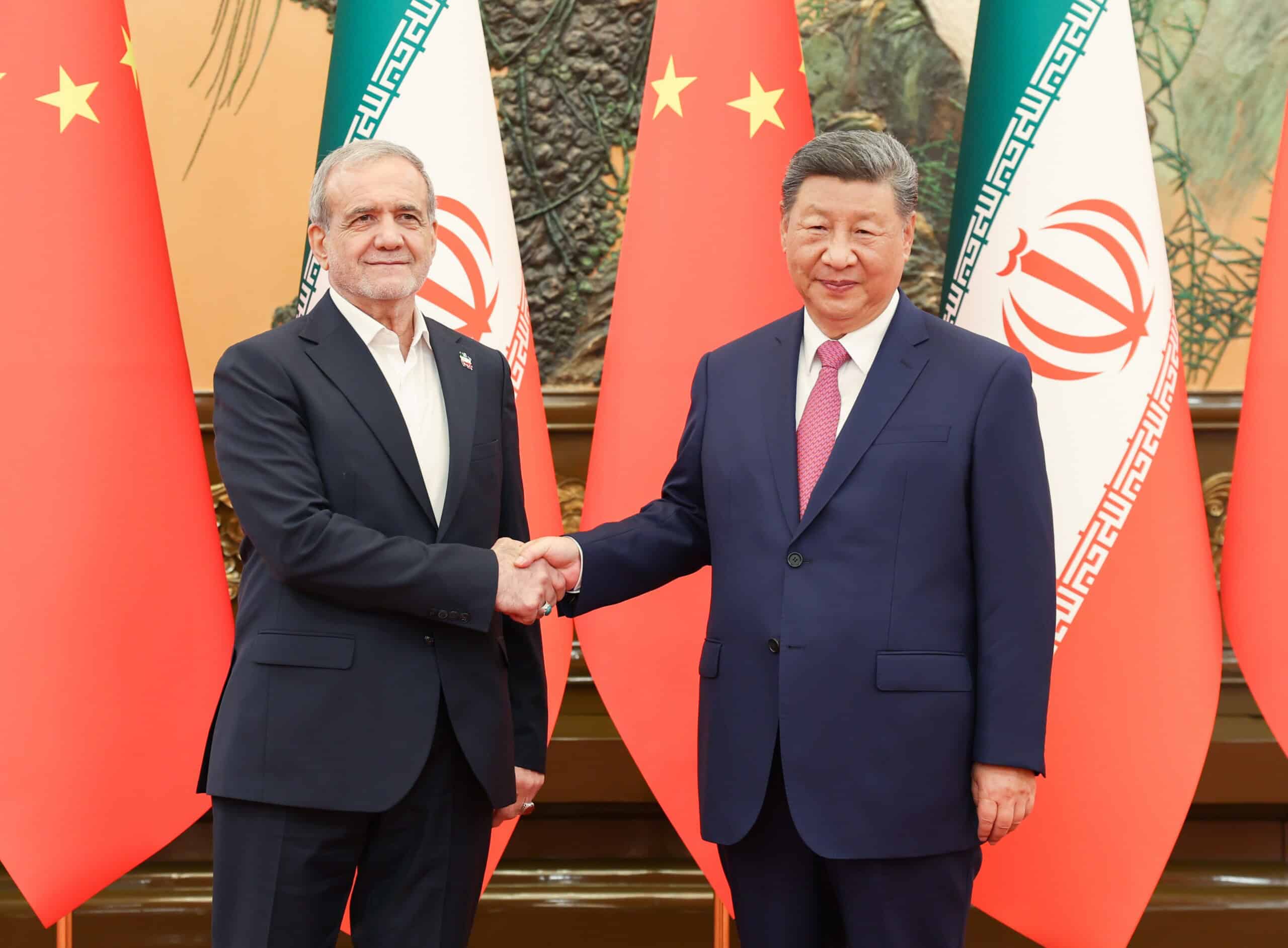
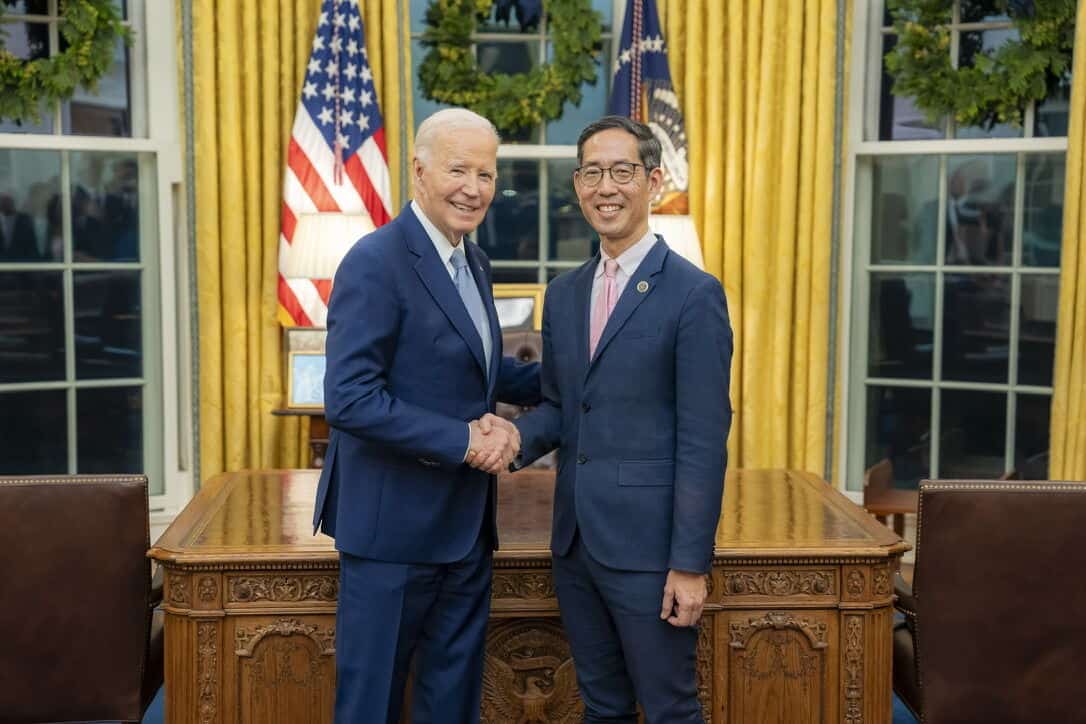
As the principal Deputy Director at the White House Office of Science and Technology Policy (OSTP), Kei Koizumi was a key architect of the 2022 Chips and Science Act, an ambitious effort to rebuild semiconductor manufacturing in the United States. During his tenure, Koizumi — who was also a Special Assistant to President Joe Biden — negotiated renewal of the Science and Technology Agreement (STA) with China, one of the few enduring partnerships between the two countries.
In an interview with The Wire China in Washington, he discussed the Trump administration’s AI export policy, Nvidia’s influence in the White House and the road ahead for the U.S.-China tech competition.

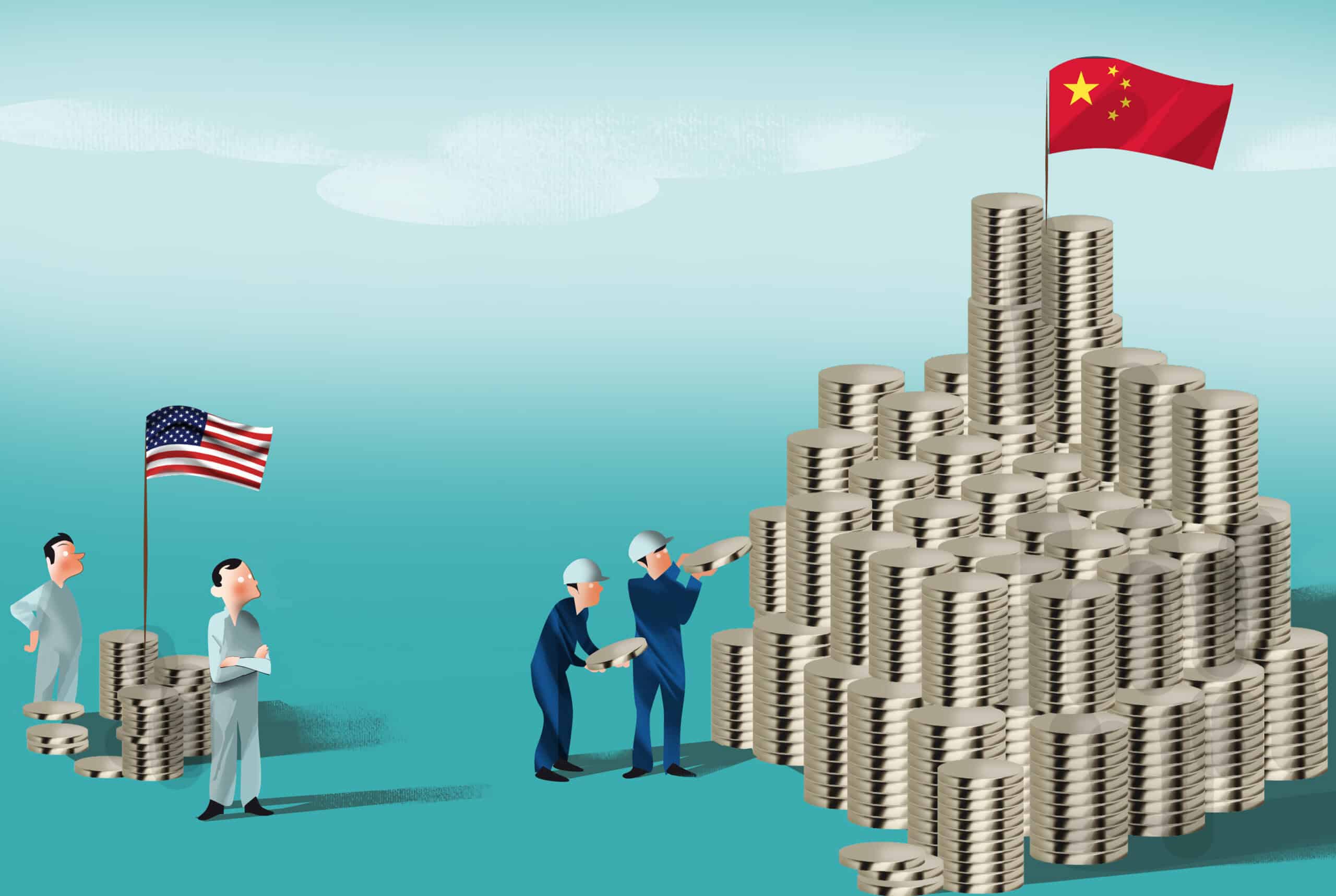
Illustration by Lauren Crow
Q: How do you assess the implementation of the CHIPS and Science Act under the current administration, which has sought to renegotiate parts of it? And how is it different from the Biden administration’s approach?
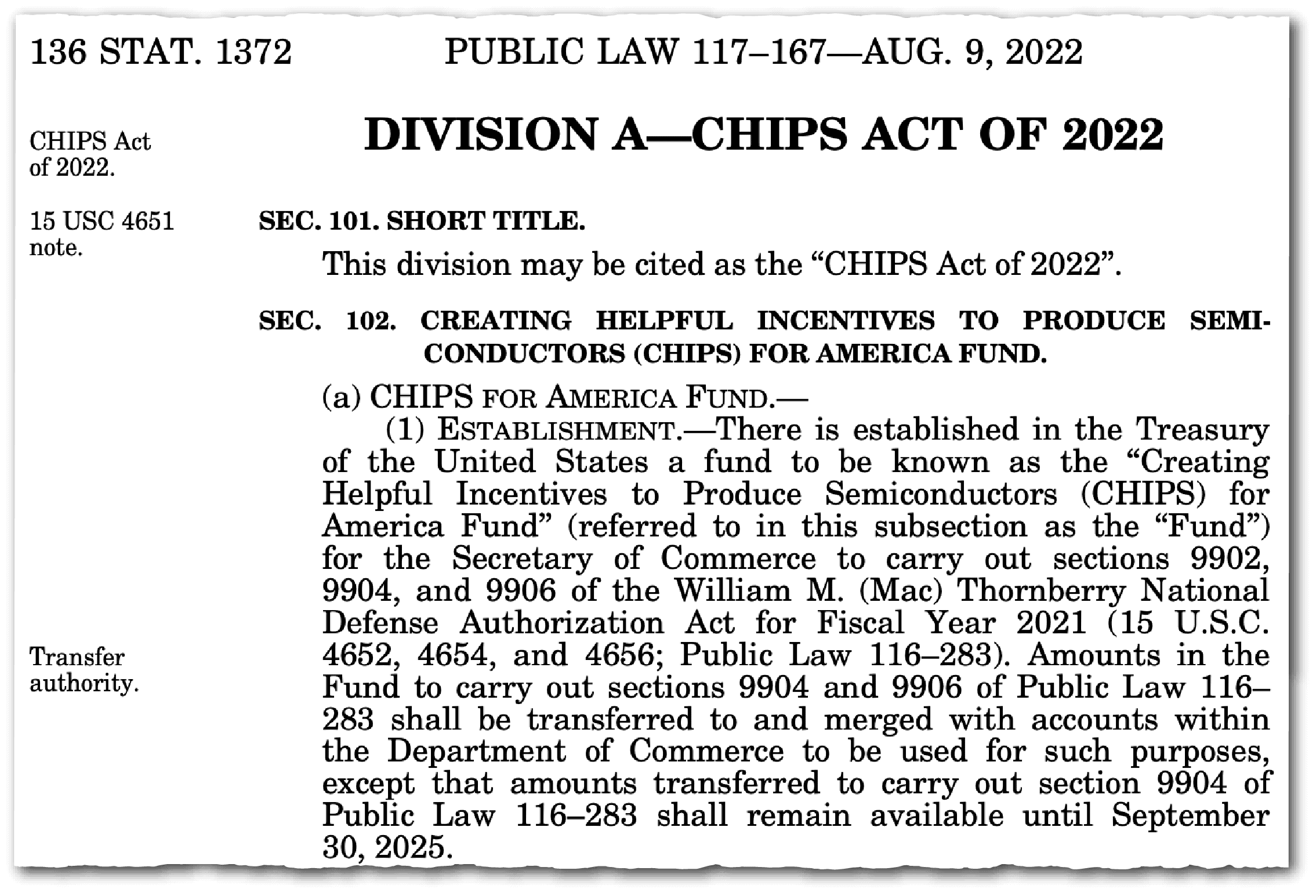
A: I’m proud of the CHIPS part of the act. It was implemented pretty rapidly by the Biden administration. We had to establish many new policy structures to distribute the manufacturing subsidies, set up the National Semiconductor Technology Center (NSTC) to fund cutting-edge semiconductor research, and also instigate the workforce training programs that would be necessary for a domestic workforce.
I’m distressed at some of the modifications and cancelations of this administration, which, frankly, I did not expect. This administration has not repealed the Chips and Science Act, nor tried to repeal it. But they have definitely undercut a lot of its promise.
As for the Science part of the legislation, it authorized the creation of a new Directorate at the National Science Foundation called the Technology, Innovation and Partnerships (TIP) which attempted to create new programs to expand research capacity across the nation. We got off to a good start, but this administration has proposed substantial cuts to research funding. Those authorized programs are not going so well, and that’s been distressing to me. This past year has been tumultuous.
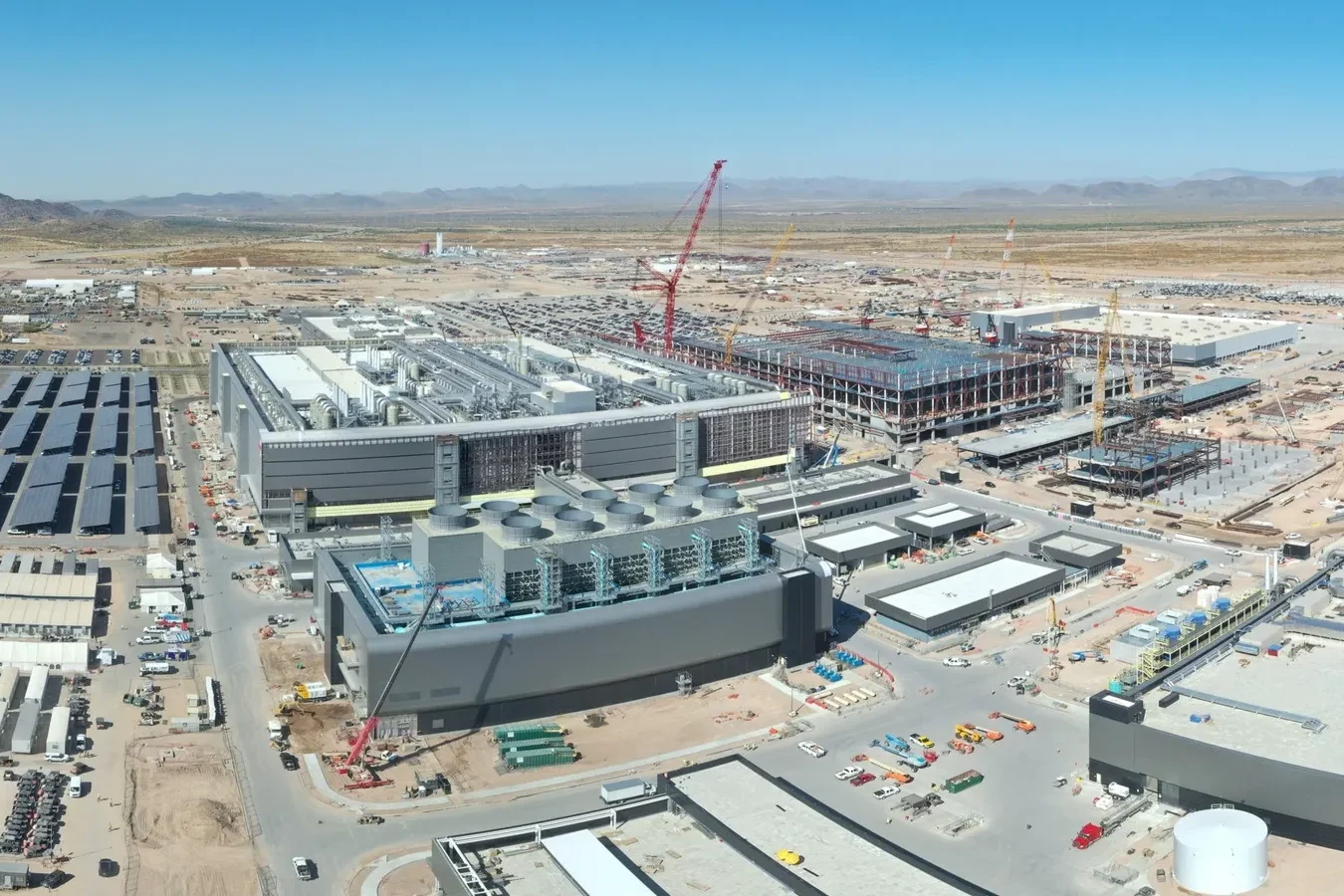
One of the flagship projects of the CHIPS and Science Act is Taiwanese chipmaker TSMC’s manufacturing complex in Arizona. While it has made some progress, it has also highlighted the challenges of establishing high-tech manufacturing in the U.S., including talent shortages, local permitting hurdles, and a limited supporting ecosystem. What’s your assessment?
Having a law is just the starting line, it’s not the finish line. The implementation takes work, adjustment, and flexibility. I do worry that this administration is not committed to implementing the CHIPS and Science Act well. It is not as committed to solving problems as they come up. We anticipated some of those problems. We recognized that workforce development was going to be a challenge. In the legislation, we tried to introduce workforce programs.
The real impact of that legislation is going to be in the ongoing flexible implementation. I do worry that this experiment is not going to go well because the federal government has taken its eye off that ball.
Is it possible for the U.S. to compete with China on science and technology in the long run when the two domestic American parties seem to be taking such different approaches?
What companies have told me is that the United States is not known for being committed and a long-term partner in industrial policy. So there are challenges. This congressional cycle of every two years, and the presidential cycle of every four years is not conducive to long-term planning. There are some areas in which there’s been sustained national effort like military technologies. In those technologies, U.S. companies do just fine.
The question is, in areas like semiconductors, is there a sustained national commitment? So far, the answer is no. Even with the CHIPS and Science Act, that vision is only three and a half years old. It was a policy experiment to begin with, but now it’s being quickly replaced by a different policy experiment, and that makes planning very difficult for companies, whether they are American companies or Taiwanese companies.
What’s your analysis of the U.S.’s turn towards greater government intervention in business and markets — whether it was the Biden administration with the CHIPS Act, or Trump taking a cut from Nvidia chip sales. Does this signify a loss of faith in free markets?
| BIO AT A GLANCE | |
|---|---|
| AGE | 57 |
| BIRTHPLACE | Providence, Rhode Island, USA |
When the CHIPS Act was being debated, it was the first time in my 30 years in Washington that people were explicitly talking about a civilian industrial policy. After it was signed into law, I’ll admit that even the President and others were saying that this is an industrial policy; and that for the first time in probably 30 years, the U.S. government was attempting to do industrial policy of a type that nations such as Japan, China and Korea had been doing all along.
So for us as policymakers, it was an experiment. It was motivated by a recognition that for semiconductors and leading edge chips, it was a national security imperative to sustain some domestic manufacturing capability. High-value chips are an important part of a nation’s industrial portfolio and supply chains. That was the rationale for trying it, and there was a lot of pressure to do it well.
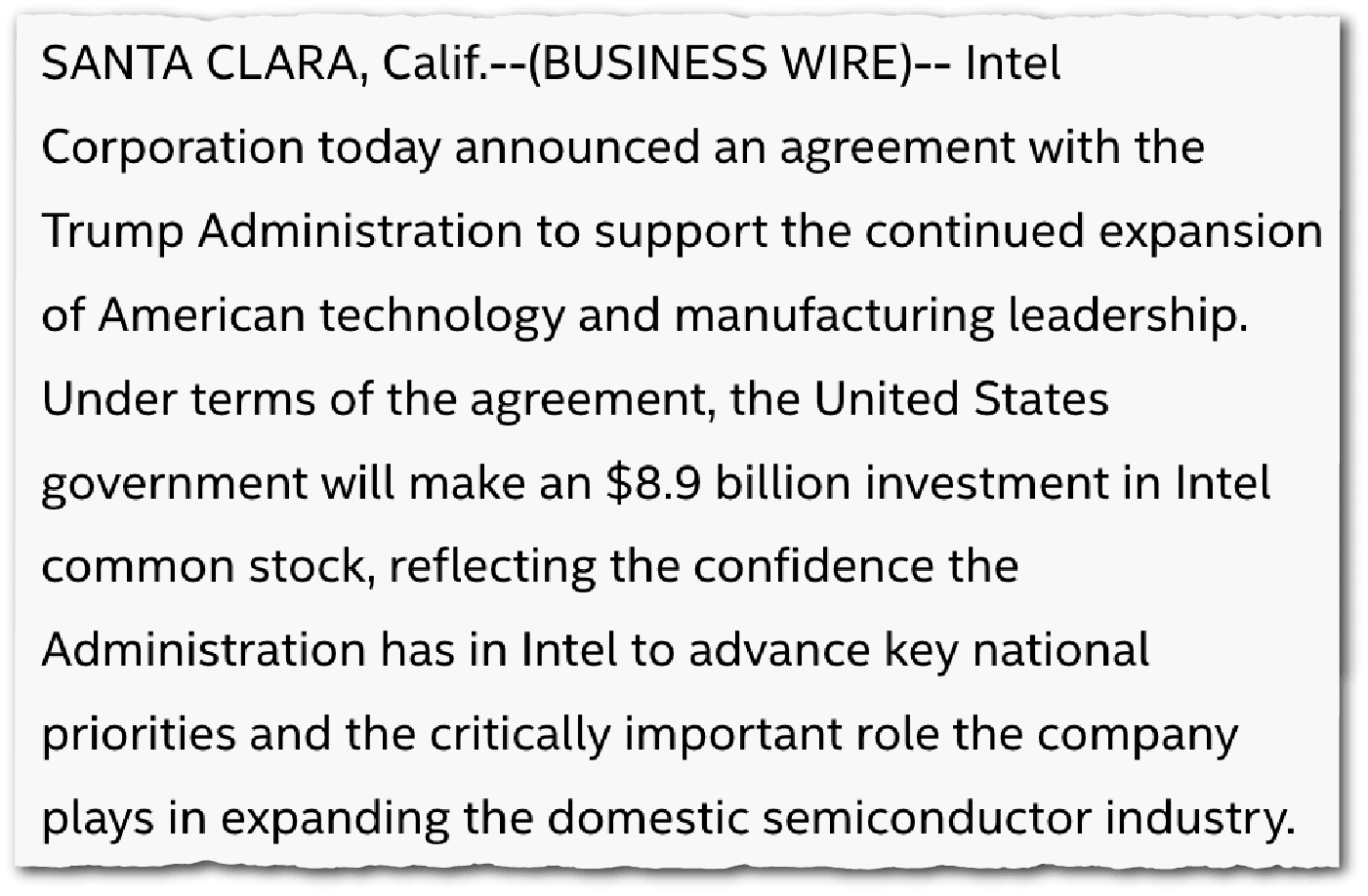
I would argue that the Trump administration is trying an unprecedented version of that industrial policy. I am surprised that the administration has taken an equity stake in Intel. It is highly unusual for the U.S. government to take an equity stake in a company: such actions stand out in history, such as with the Chrysler bailout. Only in extreme circumstances does the U.S. government actually take ownership or partial ownership of major companies. But now that appears to be a policy tool in the toolkit.
Do you agree with the Trump’s administration’s approach of buying stakes in private companies?
I don’t agree with it. It’s kind of un-American to have state-owned enterprises. Because now they are partially state-owned enterprises.
The disadvantage for the U.S. is China’s unified central government. We call it military-civil fusion, but it’s also a government-military-civil fusion. That single mindedness of purpose is a Chinese advantage.
If we see China’s example, state-owned enterprises have not been particularly innovative or value-adding. They lag behind some of the private sector companies. I’m wary of that. The United States has in the past chosen not to pursue state ownership even in sectors related to national security. For better or for worse, our military contractors and companies are private companies. They may sell exclusively to the Defense Department, but they are private companies with private boards and shareholders, etc. That has served the United States pretty well.
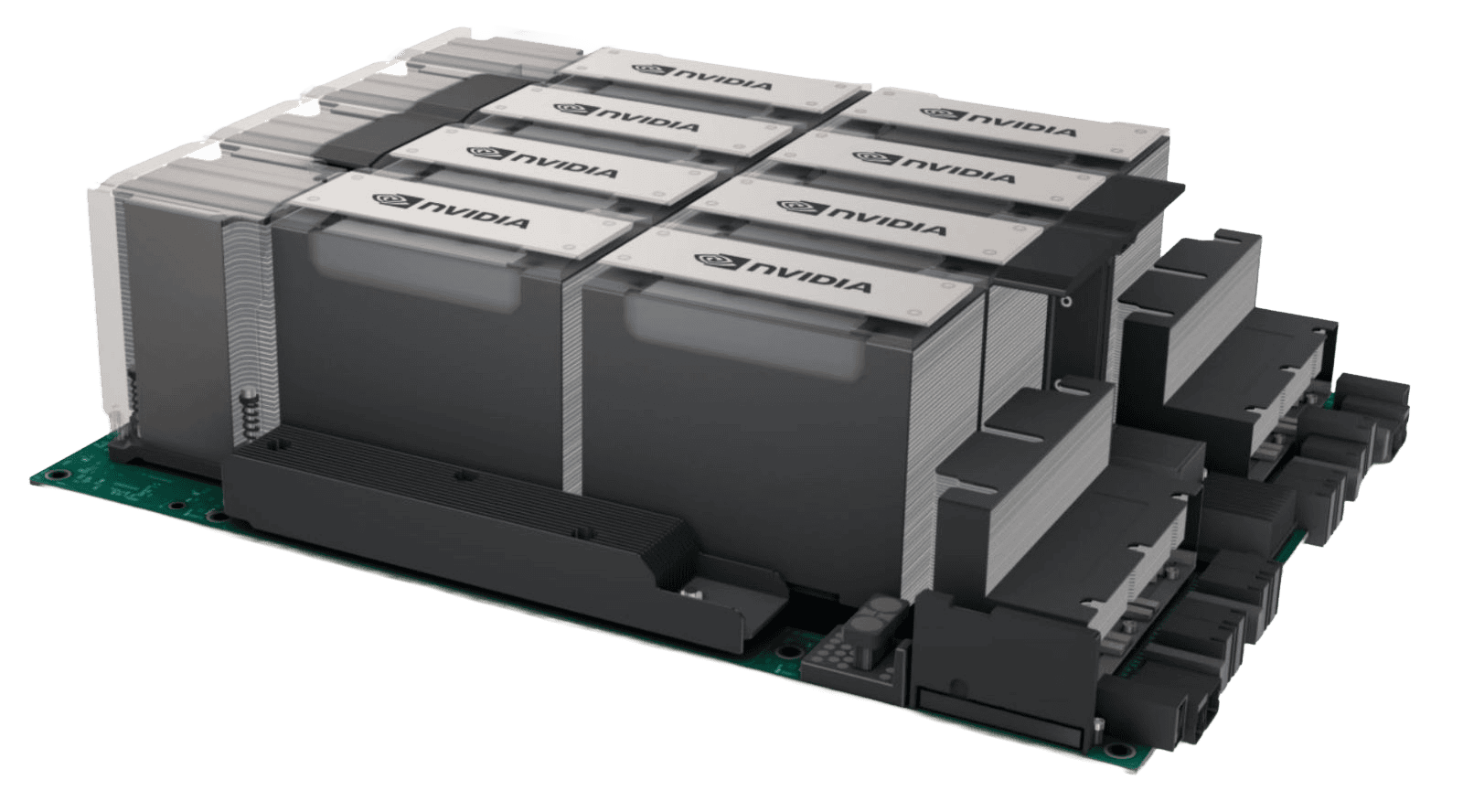
The Trump administration has taken several recent steps on advanced semiconductors involving China, including allowing Nvidia to export H200 AI chips, and delaying additional tariffs following the Section 301 investigations into the Chinese chip industry. How do you assess this apparent shift in approach?
It’s an abdication of responsibility for national security. Our entire export control system is designed to have reasonable and intelligent case-by-case assessment of technologies for exports. The Trump administration has waived that. It might end up being the right decision, but they did not go through the process to actually determine and provide evidence that it is the right decision.
That’s one of the reasons that the Biden administration’s actions on AI chips took some time. For example, the Diffusion Rule was implemented at the end of the term. Because these assessments do take some time, information and intelligence. It’s clear that there are differences in governing philosophy.
| MISCELLANEA | |
|---|---|
| FAVORITE BOOK | Hamnet by Maggie O’Farrell |
| FAVORITE FILM | My Beautiful Laundrette |
| FAVORITE MUSICIAN | Madonna |
The central argument made by Trump officials, including AI czar David Sacks, and echoed by Nvidia CEO Jensen Huang, is that Biden-era export controls failed to slow China’s semiconductor advances. They argue the better strategy is to keep China reliant on the U.S. AI tech stack. Do you find that argument credible?
It’s a legitimate alternate view. That may actually be true. But there are national security concerns related to the use of advanced AI chips.
These AI chips are commercial products. It’s legitimate to say that U.S. AI companies should be in the lead and the government should be clearing the obstacles for American companies to become dominant suppliers of the tech stack. But we also have to think about the U.S. military, the Chinese military, and security uses of these AI chips. So I do worry, and I don’t detect that the administration has made that kind of balancing of economic and national security implications.
In your view, what are the short-and medium-term implications of H200 chip exports to China?
Imagine a Chinese military with the world’s leading AI capabilities in military and related technologies. They could outfight the U.S. military without firing a shot.
We all claim, both Republicans and Democrats, that China is a national security threat. Do you want a national security threat that has the best available AI military technologies?
Also, imagine that Chinese companies, with access to the latest AI chips, may have the best generative AI. They may have all of the data and chatbots which can influence children’s behavior and political behavior. That’s the world that we are contemplating.
Nvidia CEO Jensen Huang successfully persuaded the Trump administration to allow advanced chip exports to China in exchange for a 25 percent revenue share for the government. When you were at the White House, did Huang reach out to the Biden administration on easing export controls on China?
While I was there, I never met him. But certainly Nvidia was around. So, we had Nvidia’s vice-president [William Dally] on our President’s Council of Advisors on Science and Technology (PCAST) and Nvidia representatives were all over the White House, the Commerce Department, etc. That’s part of normal behavior.
Companies are always an important input. It’s important to know what the U.S. and foreign companies are thinking. We also wanted to hear from citizens, civil society, and other groups who all had interest in the fate of AI-enabled technologies.
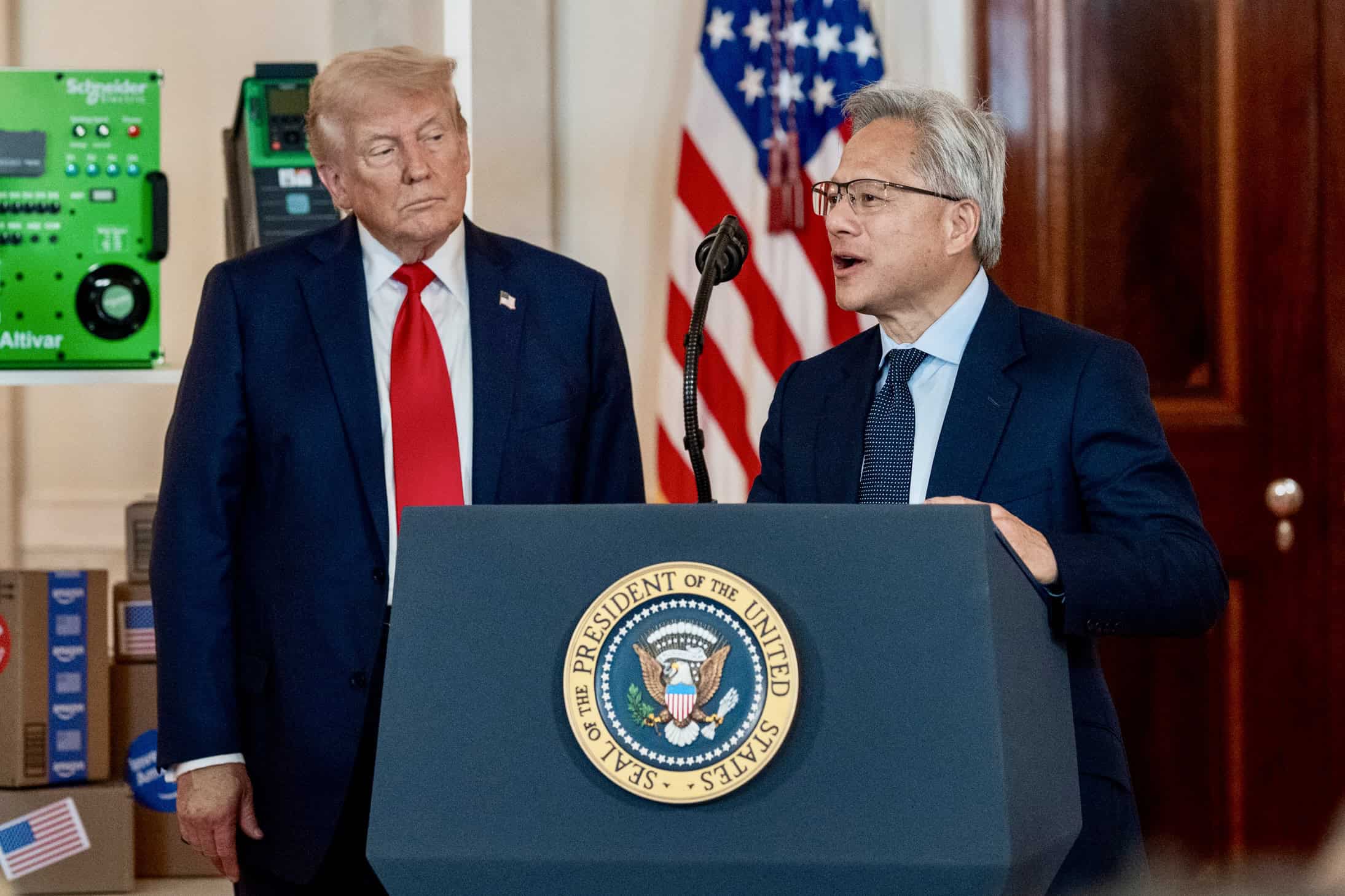
What’s unusual now is Jensen Huang frequently going to the White House this year, and donating to the White House ballroom. That is money well spent. I think he correctly diagnosed the maximum influence that he could get with President Trump.
And do you believe there were enough guardrails in the Biden administration to curb the influence of private firms?
Those guardrails existed until last year. They existed even during the first Trump administration. This is fairly unprecedented. It has become a crony capitalist economy in a very short amount of time. It is shocking, very unusual and very disturbing, in terms of U.S. history, to have this kind of single company influence. It is turning the United States government into an instrument to enhance companies and their global economic prospects.
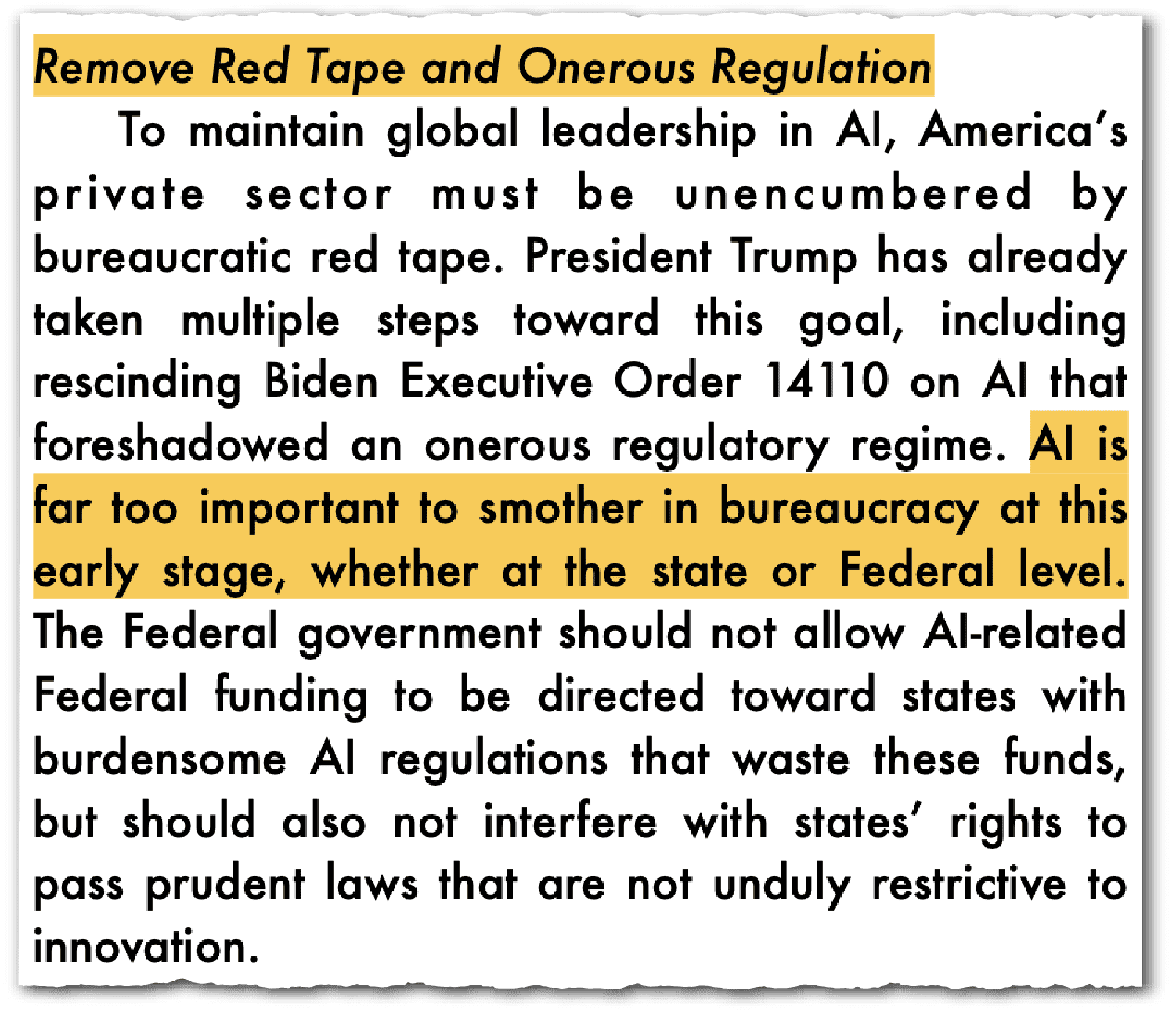
What’s your take on the Trump administration’s AI Action Plan, which seeks to export the U.S. AI tech stack to meet global demand? Is there a risk that these stacks could reach Chinese companies in third countries, even if direct exports to China remain restricted?
All that is possible because the AI Action Plan essentially says that we are lifting any restrictions, restraints, and guardrails on U.S. AI companies. The government will be directing its resources to help its AI companies achieve global dominance.
There is a danger that could backfire. U.S. companies could gain dominance by selling stacks, chips, technologies, software to Chinese companies, but that could equip them to eventually outcompete U.S. firms.
In the race for AI dominance, what are the United States’ key advantages over China, and in which areas does it face relative disadvantages?
The U.S. has all its traditional advantages. Silicon Valley is a force. It is not just the tech companies, it has the entire ecosystem for making financial bets on new technologies and new companies.
Other nations, including China, have tried to replicate that, but they have not been able to. So that’s an enduring advantage. Another is the U.S. government’s decades-long investments in fundamental research on AI and other enabling technologies.
Proximity is power in research, and having that research performed in the United States by researchers means that this ecosystem has a head start. That advantage is now in danger because Chinese fundamental AI research is rapidly catching up with, if not surpassing U.S. research.
We also have a thriving industrial sector in AI. We do have powerful global companies that are innovating to take AI use into new directions.
The disadvantage for the U.S. is China’s unified central government. We call it military-civil fusion, but it’s also a government-military-civil fusion. That single mindedness of purpose is a Chinese advantage.
Also, they recognized the U.S.’s lead in government-sponsored research and have dramatically increased its own AI investments and it has paid off. China is a world leader in AI research, and that translates into AI-enabled technologies. It’s hard not to admire the unity of purpose.
According to the latest Australian Strategic Policy Institute Critical Technology Tracker, China now leads in 66 of 74 critical tech categories, while the U.S. leads in only eight. Coupled with recent federal funding cuts to universities and research institutions, is the U.S. at risk of losing its tech pre-eminence?
China is leading in many of these creative technologies. The United States does not need to be the unquestioned leader in every technology area. It needs to be preeminent or among the leaders in nearly all of them, so that we can participate meaningfully and benefit from a global research community.
As long as it remains a relatively open global research system in which nations continue to advance their capabilities, then the United States doesn’t need to be number one. But it needs to be in the circle of the leaders, and that is definitely endangered if the federal government stops investing or cuts back investing in research in key technologies. That’s the danger that we’ve been warning about over the past year.
The damage could be lasting. If our research strength is undermined or it disappears, then venture capital and the industrial ecosystem will not be able to carry U.S. leadership forward.
Leading China analyst Dan Wang recently wrote that the U.S. tends to systematically underrate China’s industrial progress, viewing it as a country capable of scaling but less likely to innovate. Do you agree?
It’s been a mistake the United States has made continually with Japan, Korea, Taiwan and definitely with China. Maybe it’s the lingering American exceptionalism view. It’s a mental shortcut to assume that other nations can’t be as innovative or as creative as the United States.
There’s nothing inherent in innovation that matches with chaotic democratic systems because it is possible to direct, to assist and foster innovation.
That’s the entire point of industrial policy. Governments can assist in innovation. In the U.S., we have done that in military technologies. The Chinese government has taken that understanding and applied it to civilian sectors as well. You can create innovative companies. There are plenty of them in China, and they can be both private, but also government-controlled and government-assisted. They can be innovative yet still work in concert with other companies and the government toward national purposes. All that is possible, and it’s happening.
You were involved in renewing the 1979 U.S.-China Science and Technology Agreement (STA) in the final days of the Biden administration. The agreement has provided a framework for scientific cooperation in sectors like health and agriculture. Do you think the pact can survive the securitization of science and tech policies on both sides?
The STA was important for the Biden administration to conclude before the end of the administration.
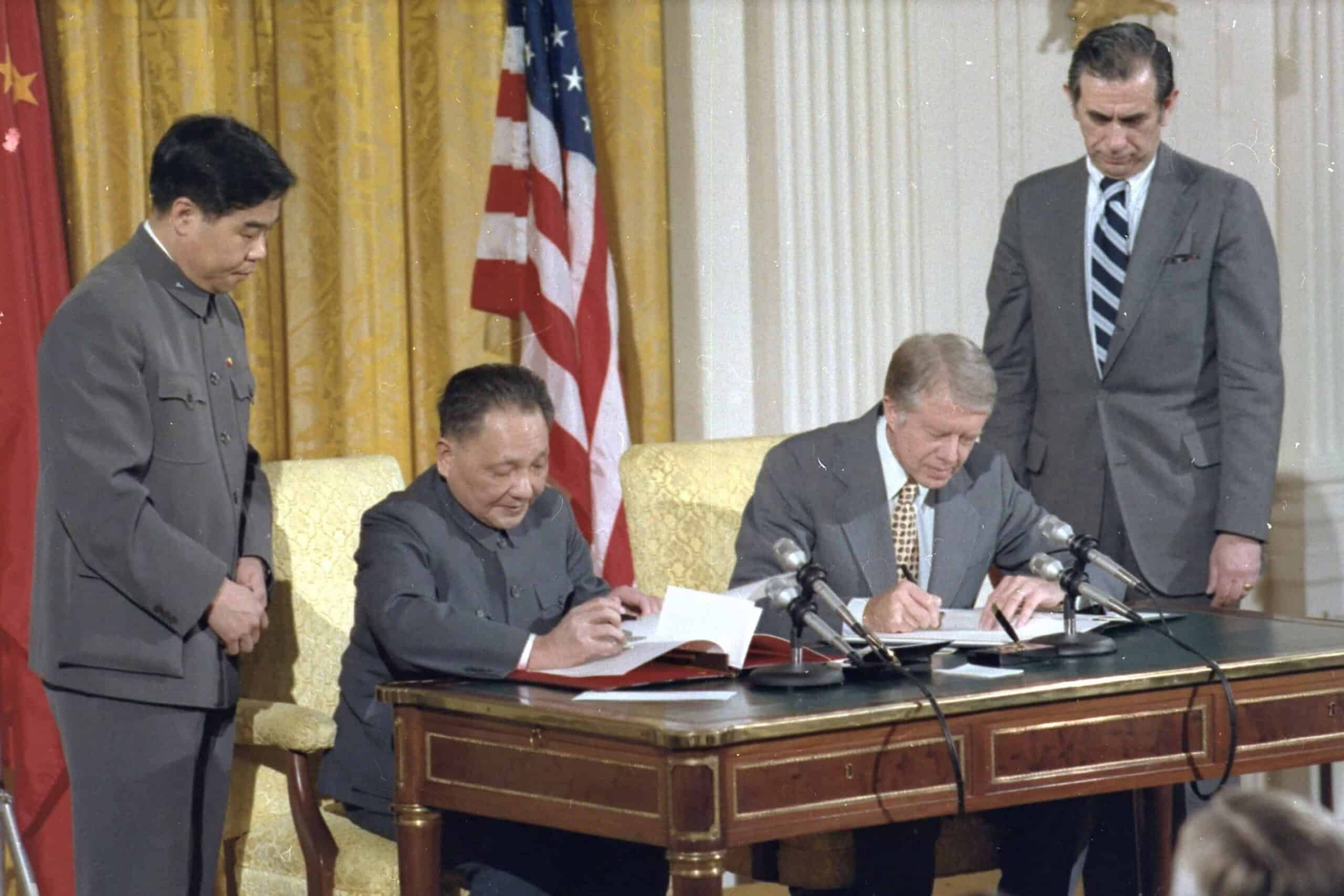
Over the last few decades, among all of the research collaborations around the world, U.S. and Chinese researchers are the number one collaborative pair. Chinese researchers are among the best in the world in many fields. U.S. researchers remain up there. Even though the STA only applies to government-to-government collaborations, this was an important statement that in many areas, we want U.S. and Chinese researchers to be able to collaborate.
That is how we sustain U.S. leadership in science, technology and innovation. I hope that symbolic value of the STA remains, and it continues to provide the backing for our researchers to collaborate with proper security considerations.
Dominance for the U.S. should not be the end goal of Science and Technology policy. Our end goal should be to make sure that U.S. interests are dominant. Company interests and U.S. interests are not the same thing.
There may be areas where it is not wise for U.S. and Chinese researchers to collaborate. There’s a high burden of proof for an AI research partnership. But overall, the presumption should be that U.S. researchers should be able to collaborate with the best researchers from around the world.
If you were advising the Trump administration on AI and broader science and technology strategy, what would be your top priority?
One, if we are united in seeking U.S. leadership in the technology of today, and of the future, we have to keep investing in research. It has worked for us for 80 years. It’s still the solution. Please stop with these proposed 50 percent cuts to the National Science Foundation.
Two, when it comes to AI and other advanced technologies, guardrails is not a bad word. Guardrails enable a driver to go faster because they feel safer.
Dominance for the U.S. should not be the end goal of Science and Technology policy. Our end goal should be to make sure that U.S. interests are dominant. Company interests and U.S. interests are not the same thing.

Nayan Seth is a Washington, D.C.-based multimedia journalist and policy research analyst with previous professional experience in China and India.