For the second time this year, an oil-rich country with strong ties to China is in the crosshairs of the U.S. military. With Iran, China’s ties go beyond oil and gas into some murky and controversial areas that have caused it problems both with the U.S. and the government in Tehran.
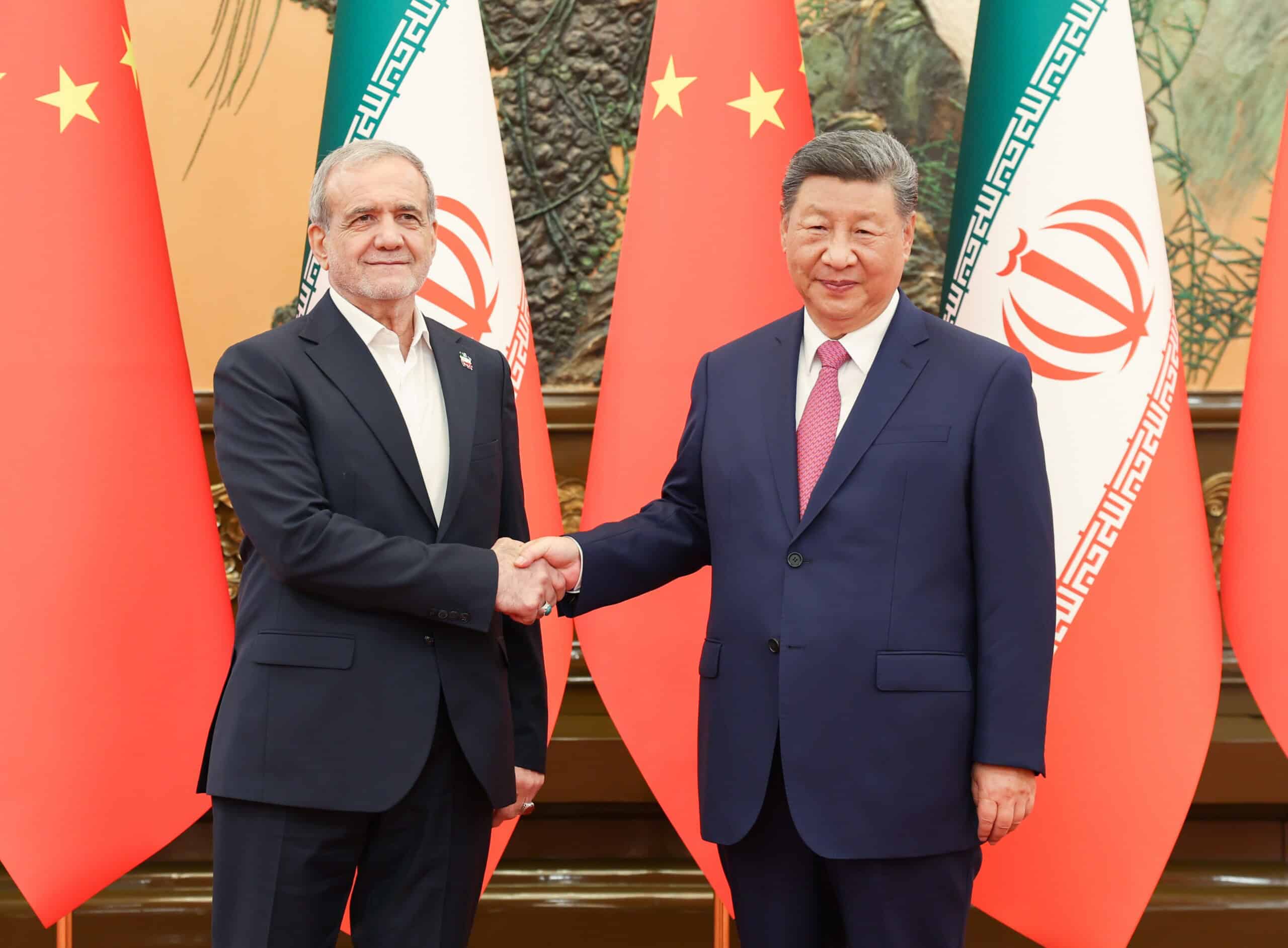
As well as being the biggest importer of Iranian crude China has investments in the Islamic Republic, largely made before the pandemic and driven by the Belt and Road Initiative. The two countries also signed a major partnership agreement in 2021 outlining areas of ideological alignment on security and sovereignty, in which China pledged $400 billion in future investment.
Iran is also a member of international forums where China plays a leading role, such as the Shanghai Cooperation Organization and BRICS.
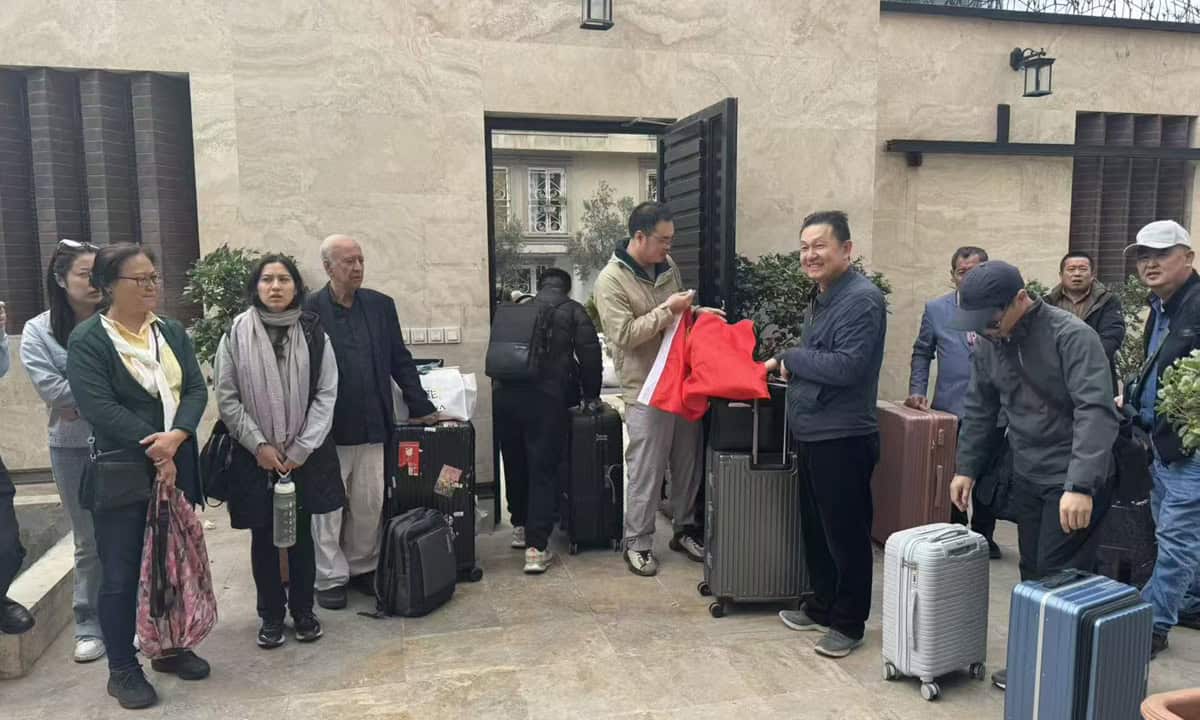
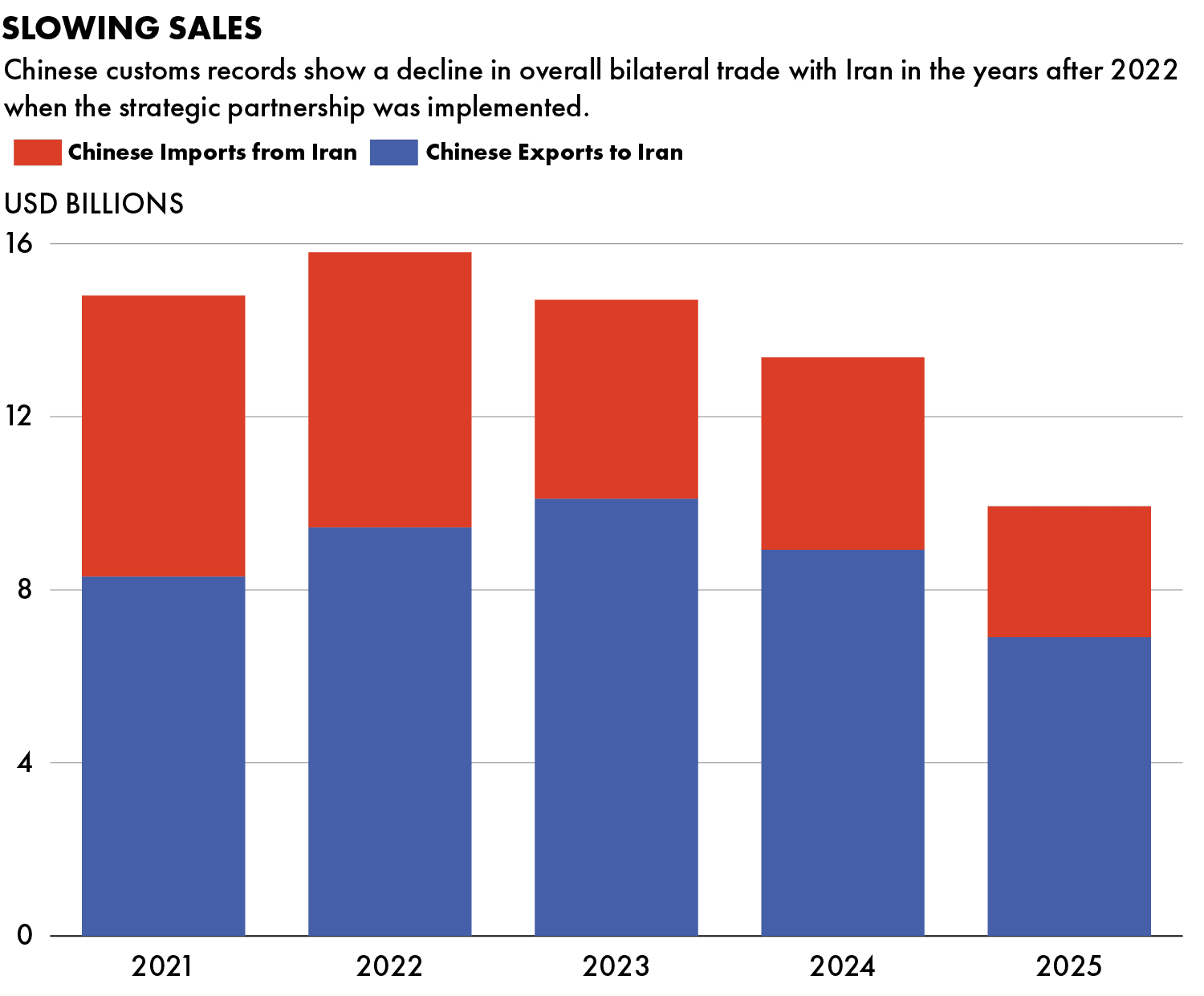
But the relationship has also been narrowing as Iran has become more unstable. Bilateral trade decreased by 25 percent last year, based on data from China’s customs agency. The Chinese population in Iran is small, and declining too: Chinese state media reported on March 3 that over 3,000 citizens had been evacuated from Iran since late last year, with only around 200 remaining.
“Iran has demonstrated that it is a source of instability for the region, and instability is not what the Chinese government and Chinese firms operating in the region would like to see,” says Robert Mogielnicki, who runs PoliSphere Advisory, an EMEA-focused investment and geopolitical advisory firm.
“This position for the Chinese has been some time in the making because I don’t think they’ve had a very clearly crafted and coherent Middle East strategy for some time,” he adds.
Experts say rather than investing, China is shifting involvement to advising and standard-sharing, especially around communication technology and surveillance.
“[The Iran-China partnership] is far more fundamental than just focusing on what piece of technology was deployed at what time, but on the overall ideology, the overall normative approach to the use of technology, to centralize control and perfect this digital authoritarianism as a means of governance,” says Michael Caster, Asia digital program manager at Article 19, a UK-based organization defending free expression.
PROMISES UNKEPT
On paper, the 25-year comprehensive strategic partnership agreement between Iran and China — signed in 2021 and effective from 2022 — is a symbol of close ties. While the full text has not been released by either party, the agreement covers some $400 billion of Chinese investments into Iran’s oil, gas, transport, and manufacturing sectors; financial privileges for Chinese firms; and deepening military cooperation.
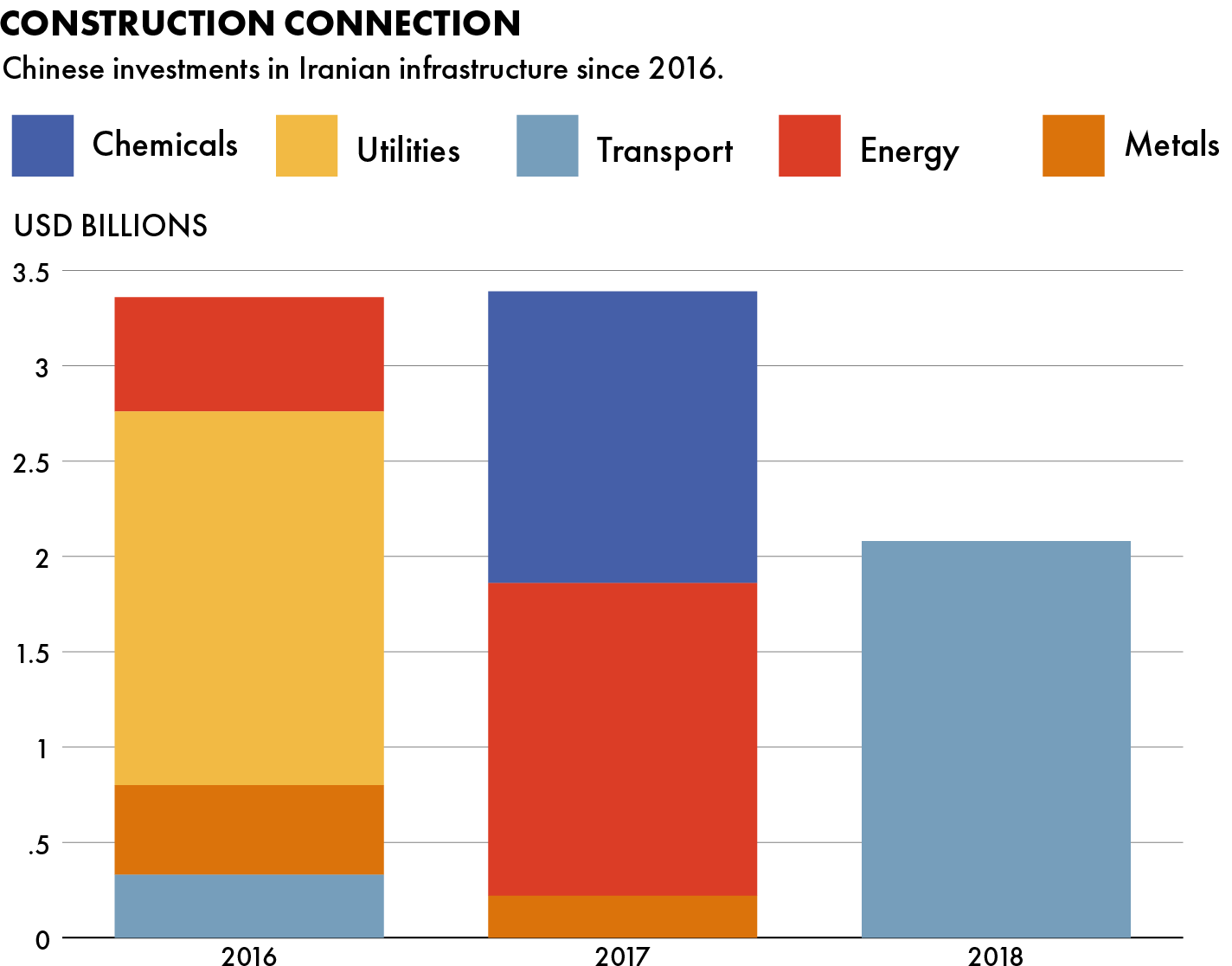
In practice, China has only invested about $9 billion in Iran over the last ten years and nothing since 2018, according to data from the American Enterprise Institute, which tracks investments in the country. It’s evidence that there’s been more rhetorical bluster around its relationship with Iran than realized commitments, says Mogielnicki.
“Beijing has been very effective at playing the role of proactive engagement with Iran, but hasn’t really backed up a lot of the talk with concrete initiatives on the ground,” he says.
HAOKUN CONTROVERSY
One company, Beijing-based Haokun Energy, illustrates the issues around Sino-Iranian ties, and how Chinese interests can attract criticism both from the U.S. and Iran. The energy and commodity trader says on its website it is committed to integrating the “red gene” of the Chinese Communist Party into its operations, and working in tangent with Party objectives.
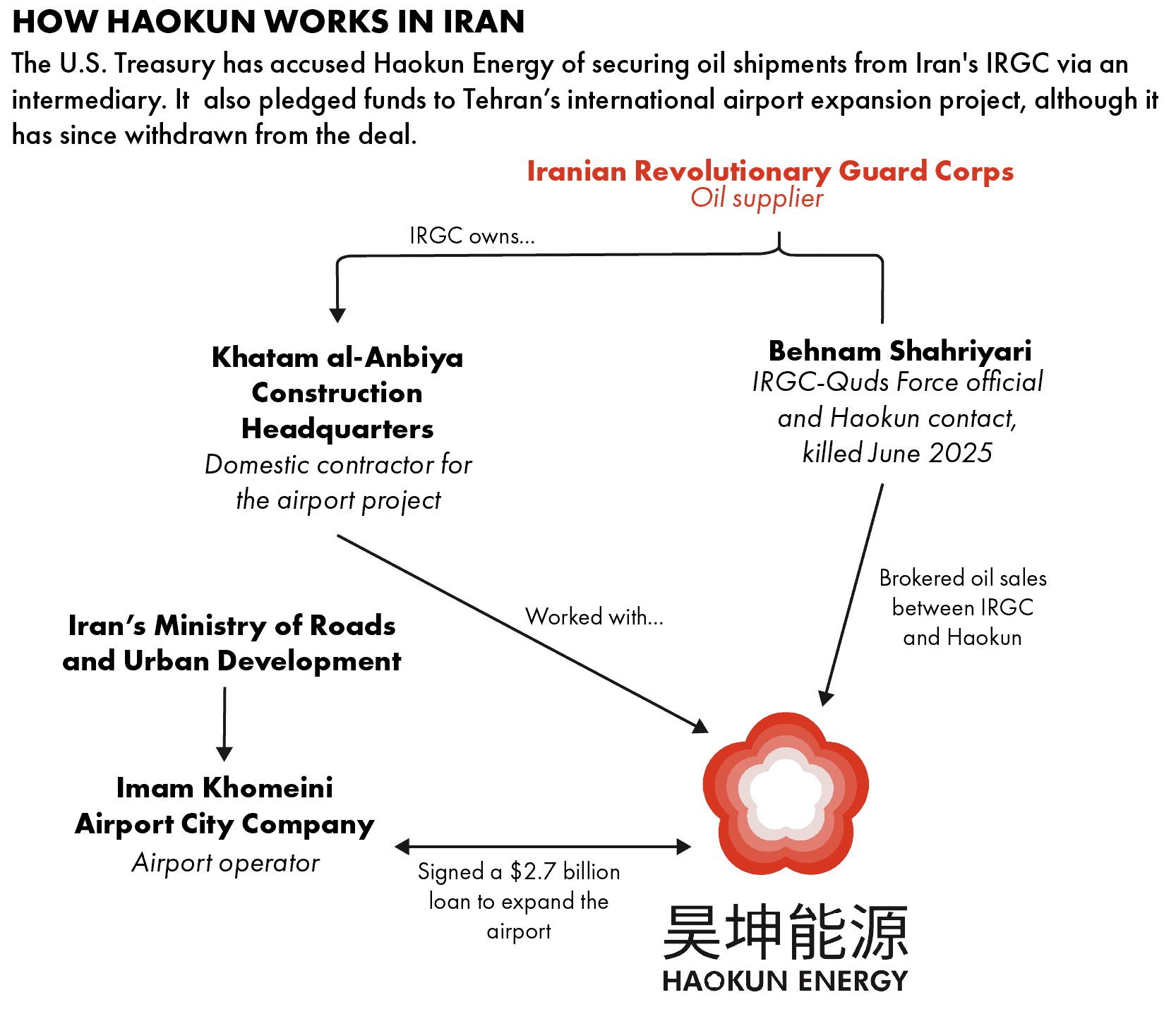
It landed in trouble with the United States in 2022, which sanctioned the company over its involvement in an alleged Iranian oil smuggling and money laundering operation led by the Islamic Revolutionary Guard Corp. The Treasury department said the proceeds from sales to Haokun helped fund both the IRGC, which plays a prominent role in running Iran, and the U.S.-designated terrorist group Hizballah.
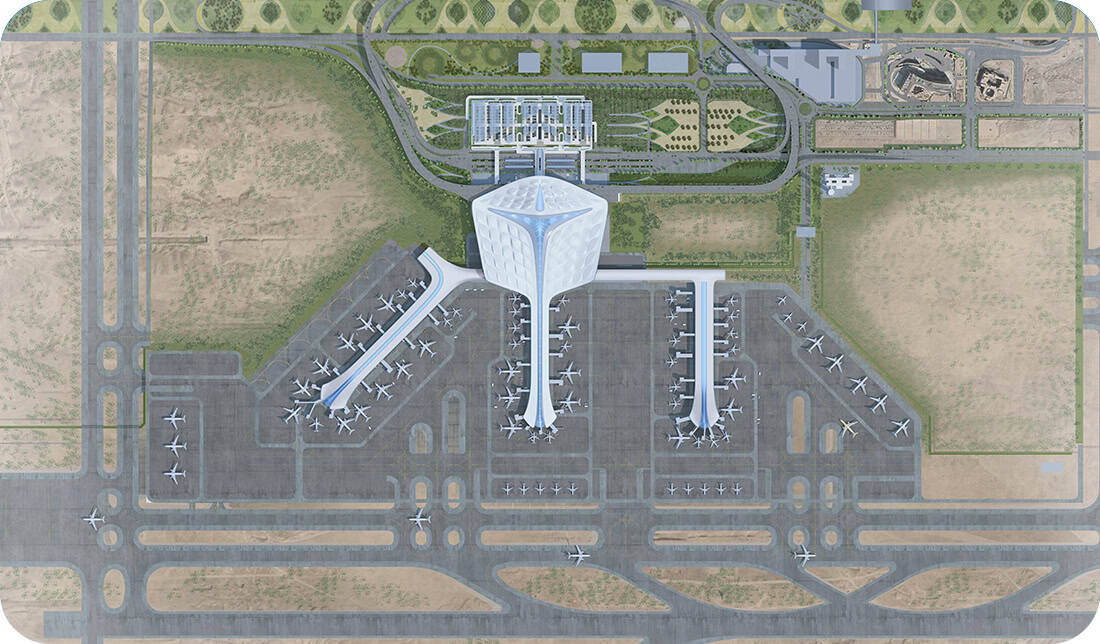
Haokun’s relationship with Iran hasn’t been smooth either. In 2023, it agreed to an oil-backed 2.5 billion euro ($2.7 billion) loan for the expansion of Tehran’s Imam Khomeini International Airport, according to a report by AidData, which tracks Chinese overseas loans and grants. Haokun’s local contracting partner was Khatam al-Anbiya Construction Headquarters — an Iranian engineering firm controlled by the IRGC, AidData shows. But after the first first loan disbursement of 500 million euros ($549 million) was received, Haokun abandoned the project, though the exact reason why is not clear.
Iranian media has also reported that as part of a payment for oil from the country, last spring Haokun sold two Airbus A330 aircraft previously used by Hong Kong Airlines to Iran Air for $116 million — far in excess of the planes’ $60 million market value. Haokun could not be reached for comment.
LEARNING IN CYBERSPACE
One area where Chinese companies have had strong commercial relationships is with Iran’s communications and internet providers, helping to build systems that resemble China’s own controlled environment.
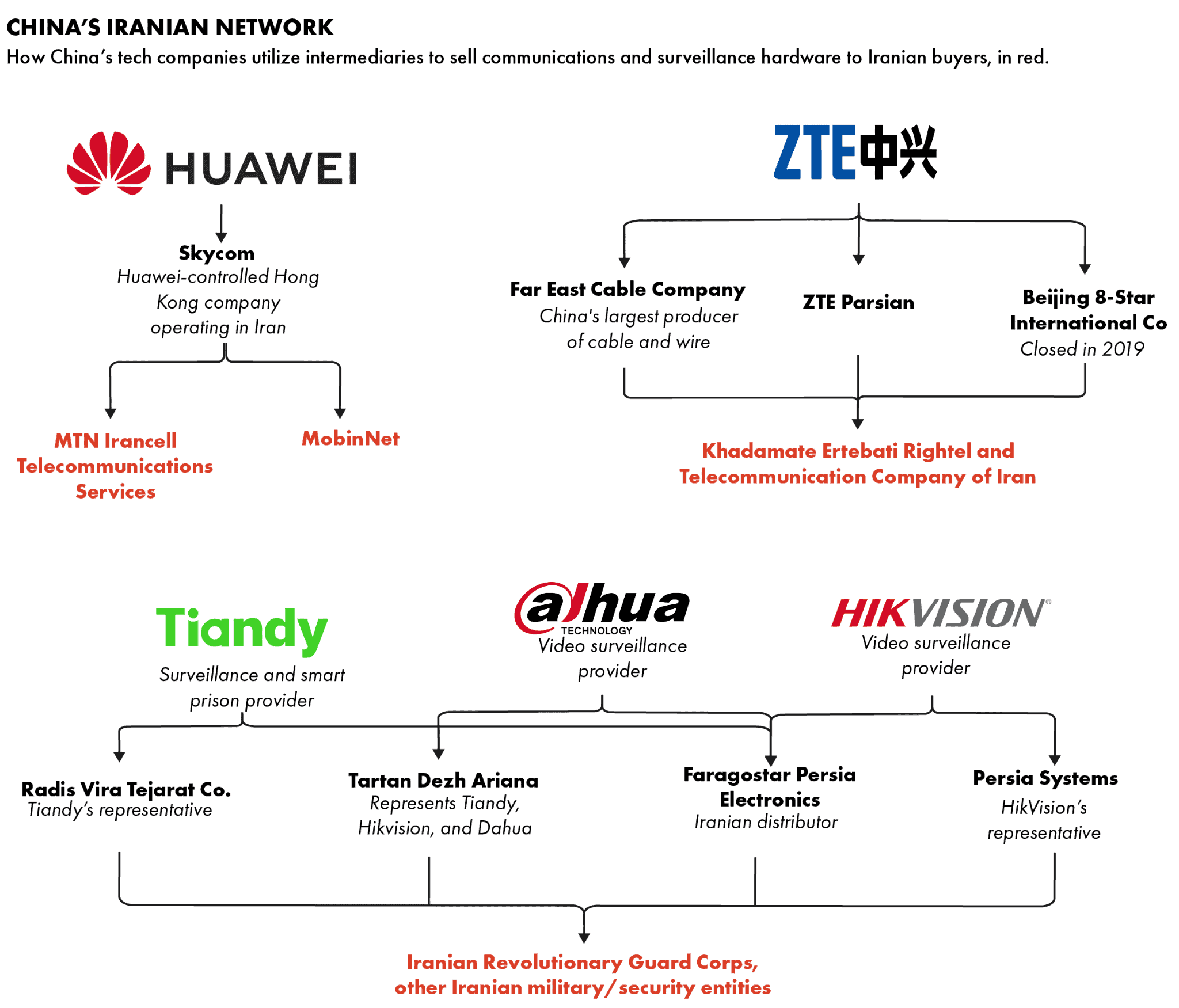
Iran’s connections to Chinese telecom firms began in 2010, when ZTE contracted with the Telecommunication Company of Iran to sell surveillance technology. Around the same time, Huawei began selling their network security technology to Iran.
Again, those links have proved problematic with Washington. In 2017, ZTE pleaded guilty in a Texas court and agreed to pay the U.S. government nearly $900 million for illegally shipping U.S.-origin products to Iran. Huawei’s involvement in Iran triggered a diplomatic crisis for China: In 2018, Canada arrested Huawei executive Meng Wanzhou, who had been charged by the United States over fraud and Huawei’s violations of sanctions on Iran. In response, China arbitrarily detained two uninvolved Canadian citizens for over 1,000 days.
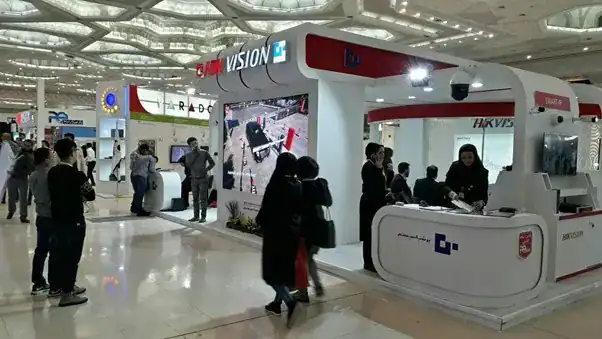
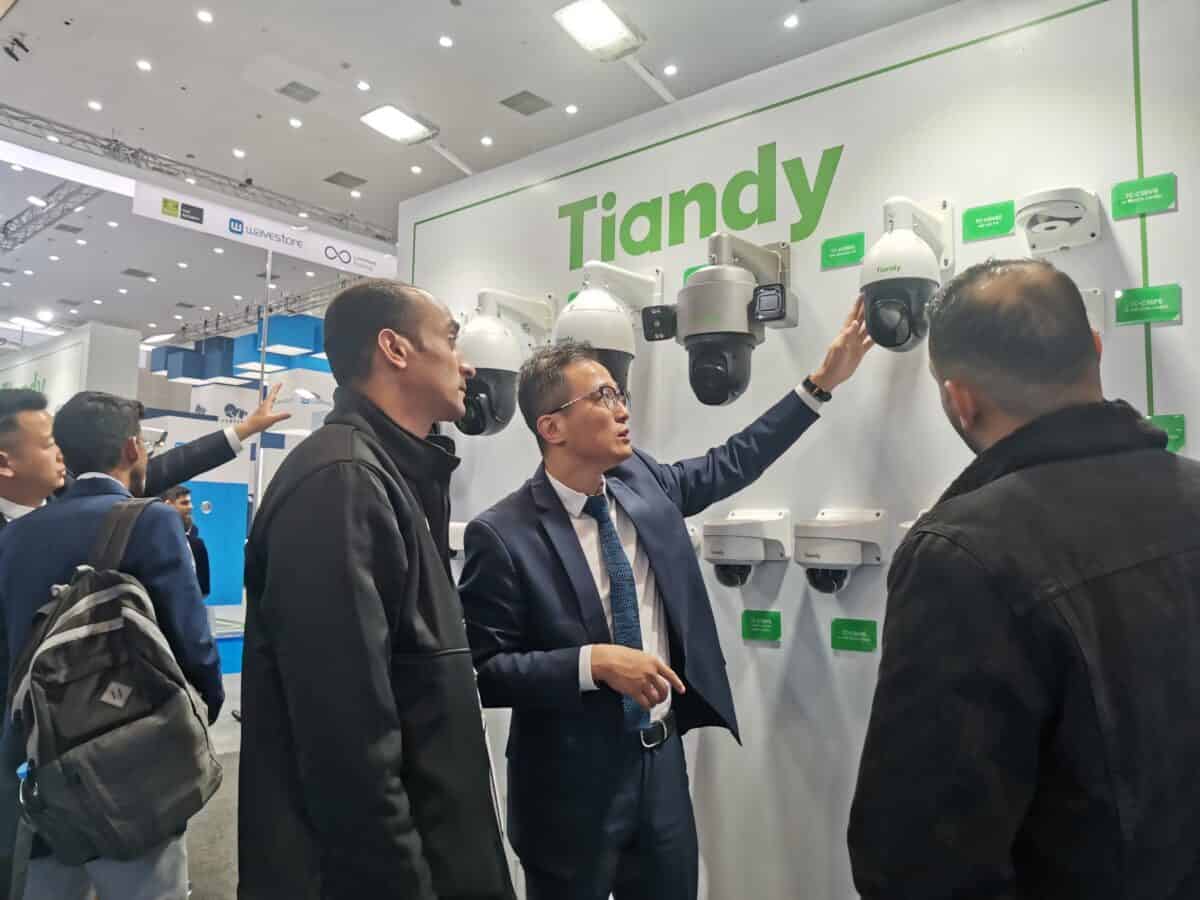
Other Chinese companies including HikVision, Dahua, and Tiandy Technologies have been involved in Iran since 2010, selling surveillance technology to the IRGC and other military and security entities via local intermediaries, according to a recent report by Article 19. These three companies, along with Huawei and ZTE, are all sanctioned by the U.S. government.
The connections go beyond tech sales. The Article 19 report also demonstrates how Iran’s control over the internet is closely modeled on China’s regime.
Tehran has also openly embraced China’s Beidou satellite positioning system as a replacement for the U.S. government-led GPS, having gained access to Beidou military-grade satellite signals in 2021. Connecting to Beidou can allow Tehran to circumvent jammed GPS signals during wartime and exercise increased control over domestic communications.
Sanctions have not stopped China from selling its tech to Iran, but the exact products being sold today are difficult to verify. Chinese firms’ involvement may have also shifted to providing training in cybersecurity or network management, says Caster.
“There’s a documented history of exchange that has shaped the infrastructure, governance and the institutions of how Iran has approached information control in the digital domain that aligns with China’s digital authoritarian model,” he says.

Savannah Billman is a Staff Writer for The Wire China based in NYC. She previously worked at the National Committee on U.S.-China Relations.