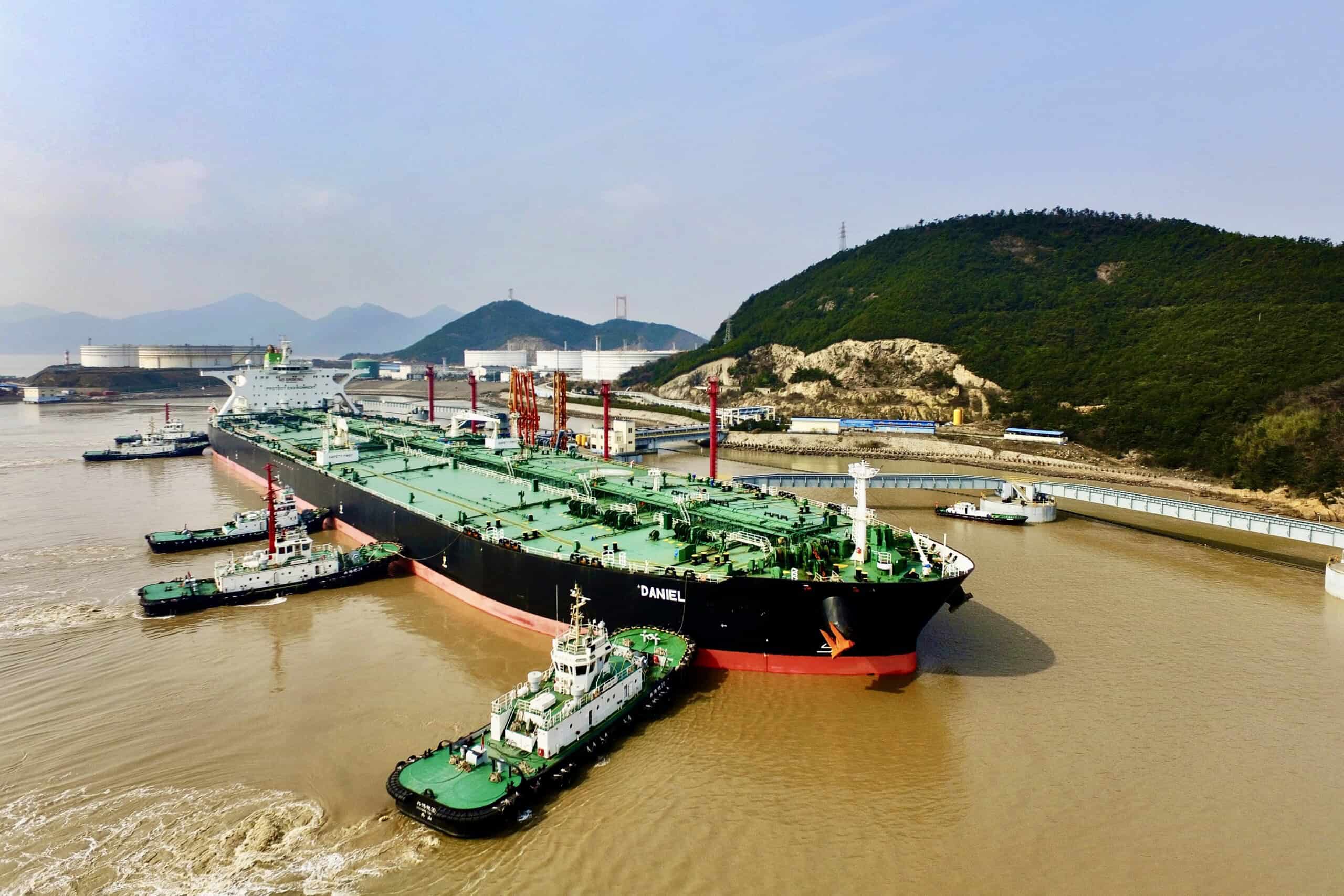
The conflict between Israel and Iran has already led to a sharp rise in global oil prices. Chinese refineries, long used to cheap Iranian crude supplies, are unlikely to escape the pain.
China and Iran’s economic ties have grown closer in recent years, particularly since the two countries signed a 25-year comprehensive cooperation plan in 2021 — China is now Iran’s top trading partner, according to the Observatory of Economic Complexity, which monitors global commerce. Total China-Iran trade nearly doubled from 2020 to 2022, and has consistently accounted for around 30 percent of Iran’s global trade since 2019.

Oil is central to the bilateral trade relationship, accounting for over half of Iranian exports to China. Thanks to U.S. sanctions imposed in 2018, many other countries are unwilling to buy crude from Iran: In turn, the Islamic Republic sends 100 percent of its oil exports to China, bringing in $43.3 billion of revenue in 2024 according to Homayoun Falakshahi, lead crude oil analyst at Kpler.

Iranian oil matters for China, too. A large proportion of its oil imports from there come via Malaysia, which in 2024 ranked third among China’s oil suppliers. Chinese refineries receive Iranian oil through backdoor channels that help to obscure its origin, according to market analytics firm Kpler.

Iran has been the subject of U.S.-imposed trade sanctions since the late 1970s, often in protest at its nuclear ambitions. In 2018, President Trump withdrew from the Joint Cooperation Plan of Action (JCPOA) — which had offered U.S. sanction relief in exchange for limits on Iran’s nuclear program — and reinstated sanctions on Iranian oil. In response, Iranian oil production fell sharply but rebounded to pre-sanctions levels by 2023 according to an Energy Institute report.
This recovery has been driven by demand from so-called “teapot” refineries in China: small, privately owned firms concentrated in Shandong Province on the east coast. They have emerged as the primary buyers of discounted Iranian crude, while Chinese state-owned enterprises have largely stepped back. Few refineries elsewhere want sanctioned Iranian crude, leading sellers to offer steep discounts to these Chinese teapots.
“China’s SOEs generally avoid handling sanctioned oil (i.e. Iranian or Venezuelan crude) out of concern over potential U.S. sanctions, regardless of the declared origin on shipping documents,” says Muyu Xu, senior crude oil analyst at Kpler.
In recent weeks, Iran has been rushing to offload more crude while it still can — offering steeper discounts amid higher global prices. But it is unclear whether the teapots have the capacity or desire to take it on. Since early 2024 the advantage offered by cheap Iranian crude has narrowed compared to non-sanctioned alternatives — squeezing the teapots’ already thin profit margins.

It is difficult to model exactly how reliant the teapot refineries are on Iranian oil.
“Oil traders are extremely cautious when dealing in this space — often using shell companies and coded references for key details — which makes it difficult to identify the actual cargo owners or end buyers,” says Xu. Tracking cargo once it lands inside China is also a major challenge.
According to Kpler data, 31 percent of Shandong’s total global oil imports (3.44 million barrels per day) come from Iran. Since Chinese SOEs avoid Iranian oil, it’s likely the vast majority of those barrels are headed for the “teapot” refineries.
If [the oil trade] continues to be a source of currency for the [Iranian] regime, then I think we will continue to see a focus on the teapot refineries and the activities of actors around them.
Matt Zweig, Senior Director of Policy at FDD Action
China’s teapots differ from SOEs in several key ways. Teapots maintain “a relatively low profile because they are the only ones that buy Iranian crude and have no other overseas activity,” says Philip Andrews-Speed, Senior Research Fellow at the Oxford Institute for Energy Studies’ China Energy Programme. They have “leeway — to a certain extent — to ignore [U.S.-imposed] sanctions,” he adds.
The U.S. government has taken notice of teapot refineries circumventing existing restrictions on Iranian oil and has sanctioned three of them since March.
All three — Shandong Shouguang Luqing Petrochemical Co., Shandong Shengxing Chemical Co., and Hebei Xinhai Chemical Group Co. — were identified by the U.S. Department of Treasury’s Office of Foreign Assets Control (OFAC) for facilitating Iranian oil shipments via shadow fleet vessels, commercial oil tankers that operate covertly by disabling tracking systems and using deceptive practices like falsified paperwork and ship-to-ship transfers.
The sanctions target every link of the supply chain that supports the teapots’ operations, from the major Iranian oil producers and regional exporters in Iran and the UAE, to the vessels transporting the crude and their owners, to Chinese port terminal operators, and finally the Chinese refineries themselves.

Matt Zweig, Senior Director of Policy at FDD Action, compares targeting the shadow fleet to “playing whack-a-mole.”
He feels the impact of sanctions is uncertain: “Is it going to completely shut the [China-Iran] oil trade down? I’m not so sure. But what it will do is significantly raise the costs of doing business with respect to the oil trade.”
As for the future, Zweig says, “If [the oil trade] continues to be a source of currency for the [Iranian] regime, then I think we will continue to see a focus on the teapot refineries and the activities of actors around them.”

Dean Minello was a summer staff writer for The Wire based in New York. He is a junior at Princeton University studying Public & International Affairs with a minor in East Asian Studies, and does research at Princeton’s Center for Contemporary China. Proficient in Mandarin, Dean is interested in authoritarian politics, human rights, and U.S.-China relations.