While the Trump administration has been dominating the media agenda over Ukraine and the Middle East, lining up presidential decrees across the board and shaking up the U.S. government, China has had every reason to rub its hands.
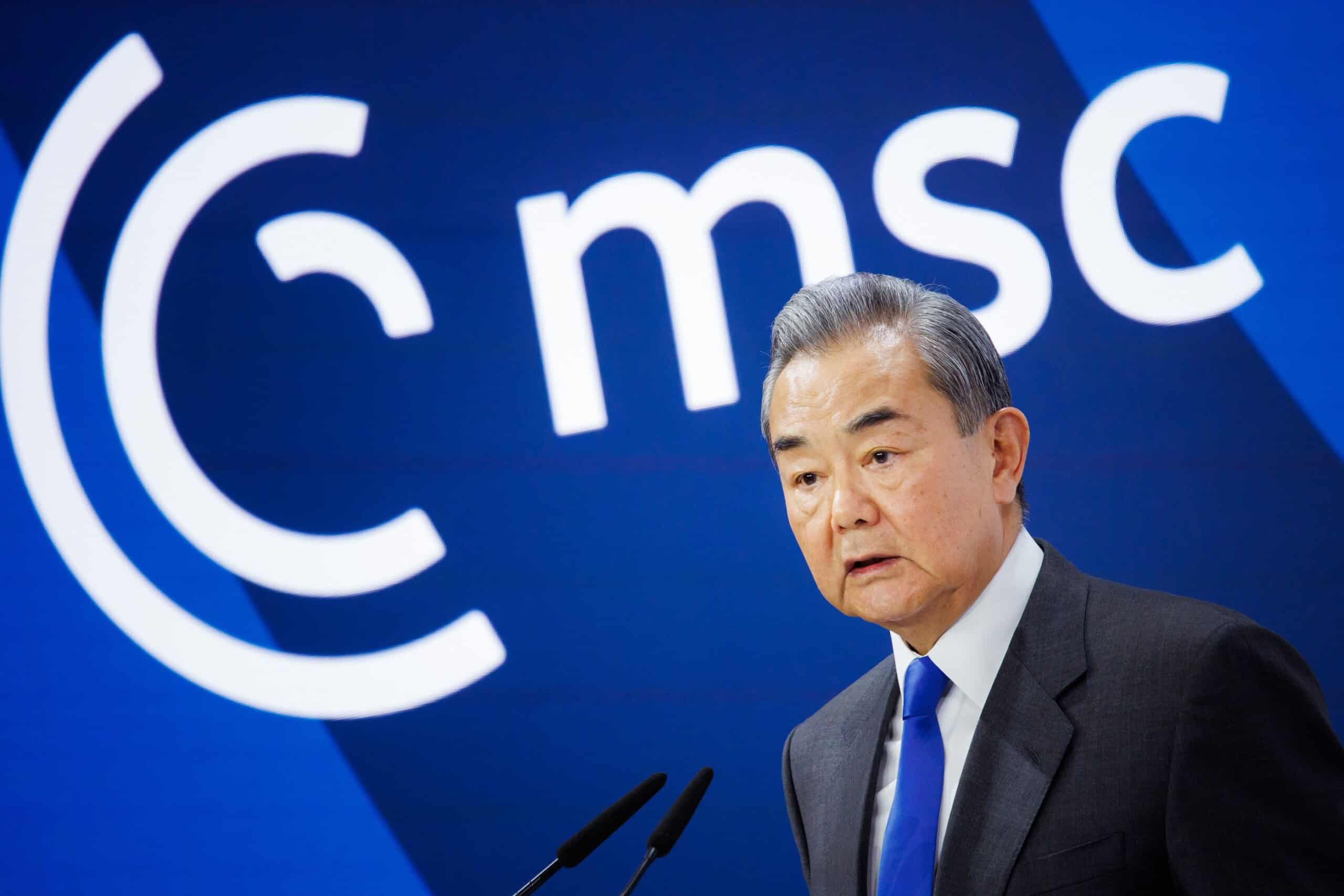
Last month Chinese Foreign Minister Wang Yi addressed the 61rst Munich Security Conference with the following message to the Europeans: “China has always seen in Europe an important pole in the multipolar world. The two sides are partners, not rivals. This year marks the 50th anniversary of China-EU diplomatic relations. Taking this opportunity, China is willing to work with the European side to deepen strategic communication and mutually beneficial cooperation, and steer the world to a bright future of peace, security, prosperity and progress”.
Such language could hardly be more different from that employed by U.S. Vice President JD Vance, whose vocal attacks over European democracy shocked Munich participants — and beyond.
By and large, China understands Europe’s ambiguous transatlantic relations and ambivalence towards Donald Trump and his America First mantra. Just like in early 2017 when Trump was first elected, Beijing is activating its networks (including retired politicians) to remind Europeans of the benefits of multilateralism and globalization. At the United Nations, where it holds a permanent seat at the Security Council, and other international forums, China is using all possible means to grab the chance provided by Trump’s reckless activity. Through its “Global Security Initiative”, it promotes security, development and respect for other nations. Lately, Beijing has also caught the “window of opportunity for peace” in Ukraine, as Minister Wang underlined during a G20 meeting in South Africa, on February 20.
However, Europeans are not about to forget Xi Jinping’s massive support for Vladimir Putin’s war against Ukraine over the past three years, the delivery of dual technologies to Russia, the increased Sino-Russian trade or the strong declarations by President Xi Jinping towards his “partner without limits”. The EU is hardly in a mood to compromise on trade issues and on China’s ambition to increase exports of electric vehicles, batteries, solar panels and other consumer products onto the European market. China may need exports to support its faltering economy, but the reverse is also true, and tariffs imposed on French liquors over the past few months, for example, have caused a lot of concern locally.
Granted, China is a vital trading partner to the EU… However, the way the EU manages that bilateral relationship will be a determining factor of the bloc’s future economic prosperity.
European officials remain doubtful of China’s intentions. There is “room to engage constructively with China – and find solutions in our mutual interest” European Commission president Ursula von der Leyden said in a speech at the World Economic Forum in Davos. But in the same statement, she also addressed “growing trade imbalances” and the need to continue to “de-risk” the European economy from China. Granted, China is a vital trading partner to the EU — accounting for around 9 percent of its goods exports, but also more than 20 percent of the EU’s goods imports. However, the way the EU manages that bilateral relationship will be a determining factor of the bloc’s future economic prosperity.
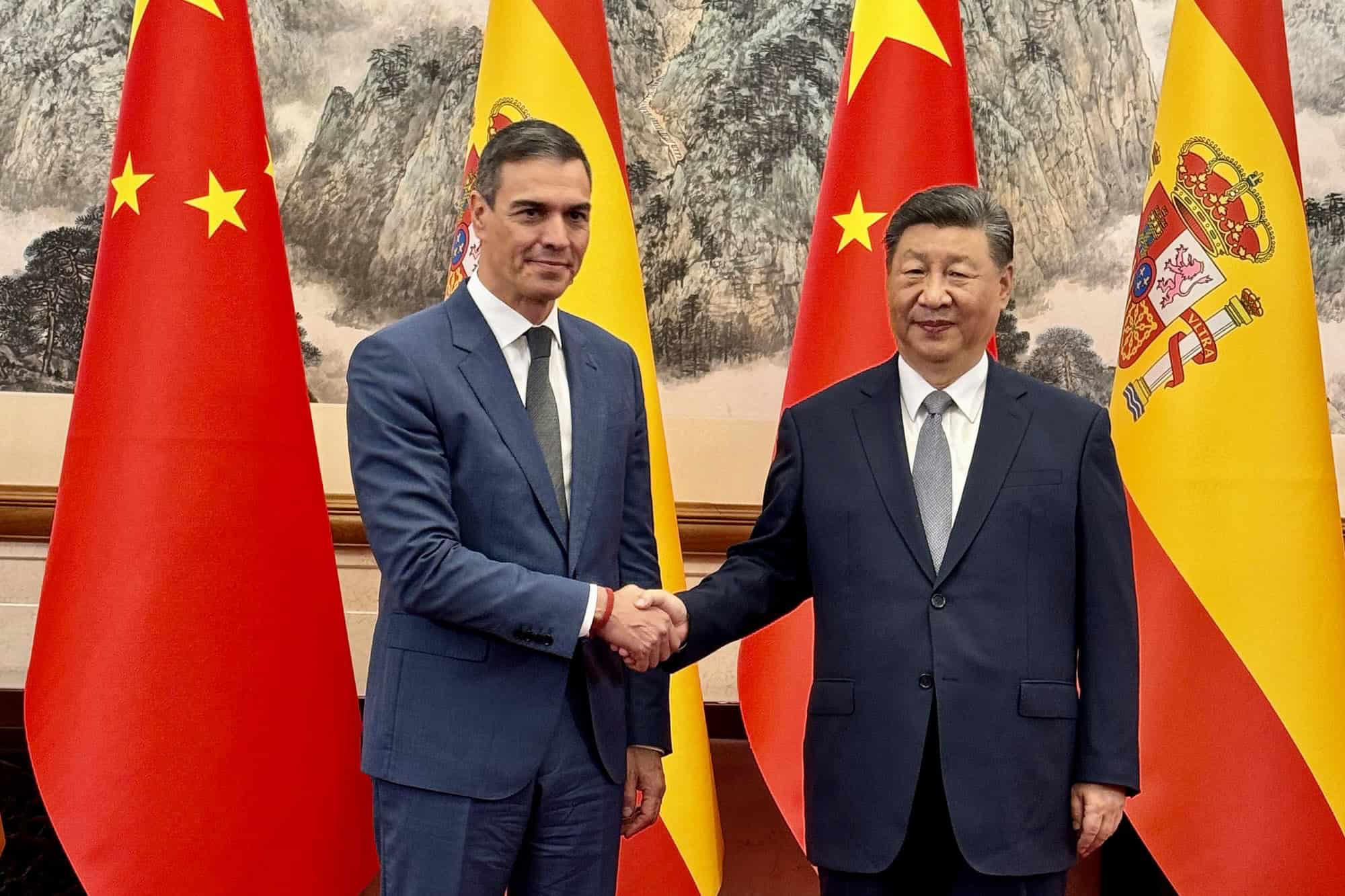
A handful of European national politicians have softly suggested a closer dialogue with China. “Europe must take its own decisions, on its own. And we have to decide when China can be a partner and when China is a competitor” Spanish Foreign Minister José Manuel Albares said recently. Spain is one of the countries Beijing has identified for a prospective electric vehicle factory investment, while the European Commission has recently imposed tariffs on most Chinese EV imports. Spain is also trying to increase its stock of meat exports to China.
As for Hungarian prime minister Viktor Orban’s government, it never misses an opportunity to stand out from the EU’s mainstream external policy. “Breaking the world into blocs is against our interests. And connectivity, interconnectivy, global economic cooperation based on mutual respect is in our interest. And we are working with China in this regard” insisted its Foreign Minister Péter Szijjártó following a recent meeting with Wang Yi.
Despite recent goodwill, there have also been ambivalent messages from China including the appointment of Lu Shaye as Special Envoy to the EU. Lu was China’s ambassador to France for five years until 2024, and grabbed headlines for criticizing the French medical system during the pandemic and debating historical facts with regard to certain Eastern European states, formerly members of the Soviet empire, but which were granted membership to the EU in 2004.
The EU and China may be celebrating this year half a century of diplomatic relations, and the continuation of multiple “dialogues”, the relationship took a clear hit in the late 2010s after Brussels officially described Beijing as a “systemic rival” (as well as a “partner” and an “economic competitor”). The Covid-19 period was extremely damaging to the bilateral relationship and China’s image across the European public opinion suffered badly. In other words, we are far from “business as usual” between the two sides.
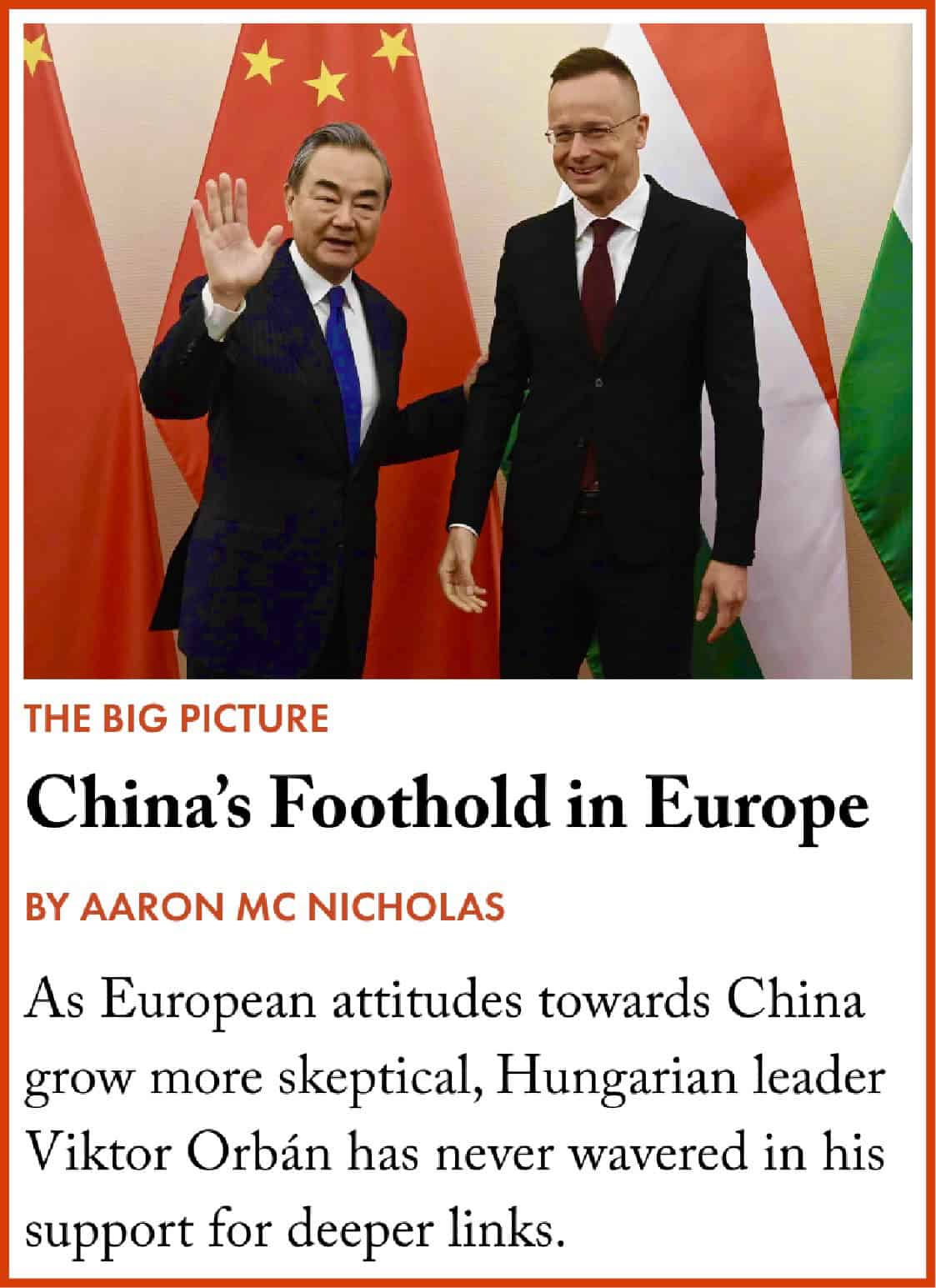
China may have the ambition to offer an alternative to the United States as a strong partner to the EU, but Europeans should be wary. Northern and Eastern member-states still rely massively on NATO for their national security. The U.S. is a major foreign investor across the EU (and vice versa). The concept of an autonomous European defense policy — long advocated by France with only a handful of followers — is finally taking off thanks to the devastating Ukraine war and the Russian threats which have been accelerating since 2022. Trump’s abrasive style and his vice president’s recent verbal attacks may be pushing Europeans to look in other directions including China’s.
But Beijing has different interests and stakes. It wants to make sure Europeans split from the U.S. – should a military crisis emerge in East Asia or in the Pacific, or elsewhere. For their part, European countries, including the UK, would be better off urgently building a policy of defense and investment in key technologies in order to protect themselves from a threatening “G2” between Xi and Trump — not forgetting Putin as the disrupter-in-chief.

Philippe Le Corre is a Senior Fellow at the Asia Society Policy Institute (Centre for China Analysis), and a Professor at the ESSEC Business School.