The clock is ticking. Ahead of last week’s summit of EU leaders, the eleven national heads of the center-right European People’s Party (EPP) had issued a call to “stop naivety towards the long-term ambitions of China”, and boost the continent’s trade defense toolbox.
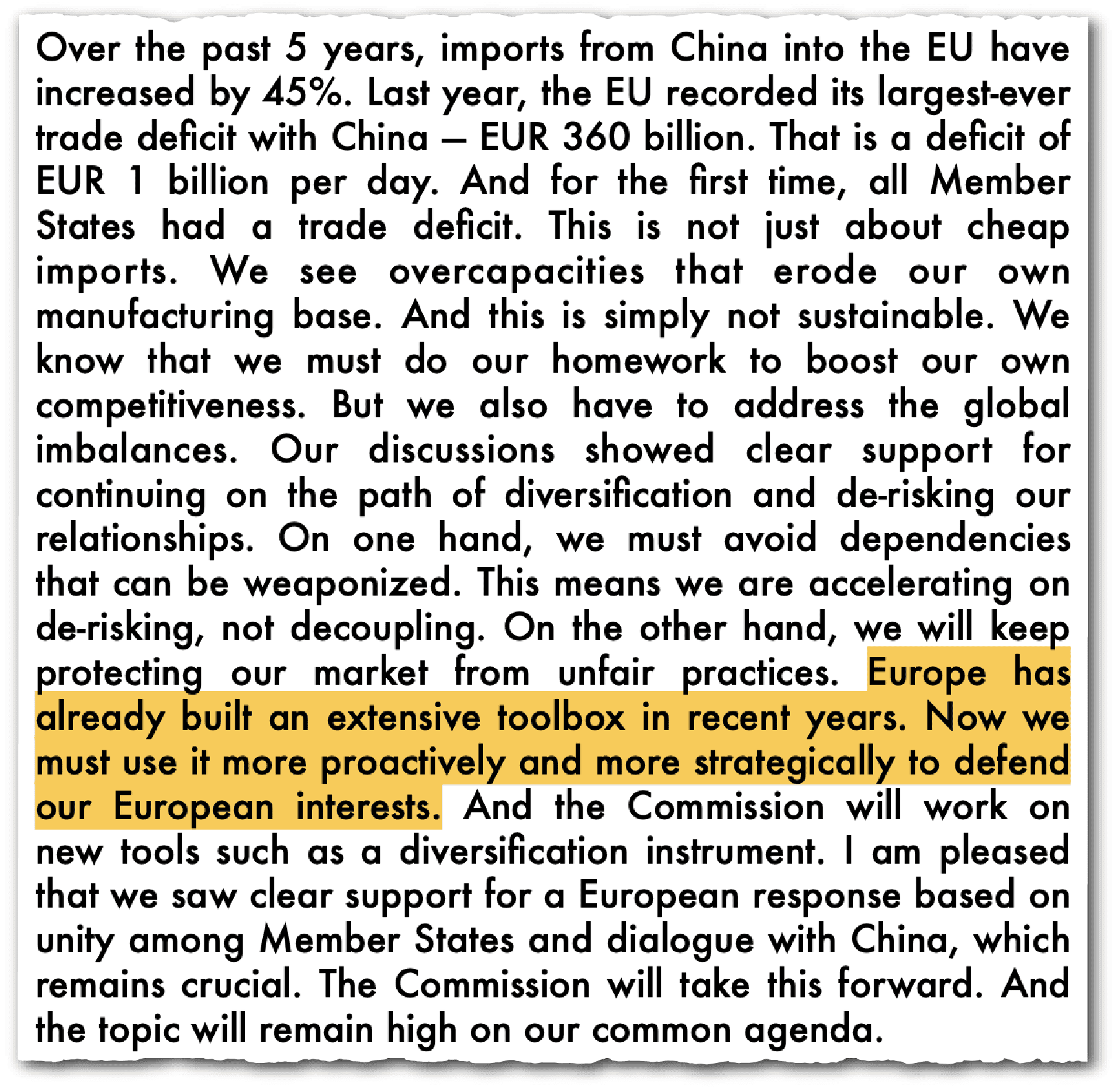
Even so, the EU’s 27 leaders ended up “again talking about the same thing” that their trade ministers had discussed at their summit in November, as one official reportedly observed — the need to do something about China’s export flood that is threatening European industry on its home turf, without any agreement on exactly what that might be.
At their mid-June European Council, EU leaders did support the European Commission in strengthening its “toolbox” of existing trade-defense measures, such as anti-dumping and anti-subsidy measures. But in deferring to take any concrete steps targeting the China challenge, they once again chose preparation over confrontation. The EU leaders are now expected to pick up the discussion at the European Council summit in October.
The problem is that the longer the EU continues to delay, the stronger China’s economic defenses will become, and the more industrial capacity Europe will lose to the “China Shock 2.0”. What happens in the next few months will be critical.
First, if more nationalistic and Eurosceptic politicians take power in member states, as is currently widely expected in Brussels, the EU will find agreeing on shared measures and collective actions even harder than it already is.
The most immediate and consequential deadline is France’s April 2027 presidential election. Under Emmanuel Macron, Paris has been a driving force behind a more assertive EU China policy, from supporting tariffs on China-made electric vehicles to pressing for stronger economic-security tools. For example, France, Italy, the Netherlands and Lithuania at the end of May submitted a joint discussion paper.
With polls pointing to the possibility of a victory by the far-right Rassemblement National (RN), France’s role as an advocate for collective action on China could fade. The RN’s likely presidential candidate, Jordan Bardella, has supported de-risking and trade defense measures to deal with China as a member of the European Parliament.
But he has also called the EU “completely obsolete”, signaling that he is likely to favor national over European solutions. This possibility has already led European capitals to recognize the need to agree on the next EU budget by the end of 2026. They should now apply the same urgency to China policy. Looming elections in Italy, Spain and Poland also look set to weaken the appetite of those countries for bold EU initiatives.
Failing to respond to the flood of China’s exports could also end up strengthening Europe’s populist parties. Some estimates suggest that the EU is losing around 500 manufacturing jobs a day as Chinese imports put pressure on Europe’s higher-value sectors. Several studies have linked such manufacturing decline, unemployment and economic slow-down to increased support for populist and Eurosceptic parties. Delaying action could make finding a common EU response to China even harder as 2027 progresses.
European leaders are right to weigh China policy carefully. But they have raised concerns about China’s overcapacity since at least 2020 and cannot any more rely on a Beijing that is very comfortable with the status quo to negotiate without Europe first showing its willingness to take a stand.
Second, Europe’s current preference for delaying confrontation by taking more time to prepare a tougher China policy must be weighed against the speed of Beijing’s own preparations. China is using the time to reduce its exposure to potential economic pressure from abroad, reducing areas of vulnerability and devising policy tools to pressure foreign governments and companies.
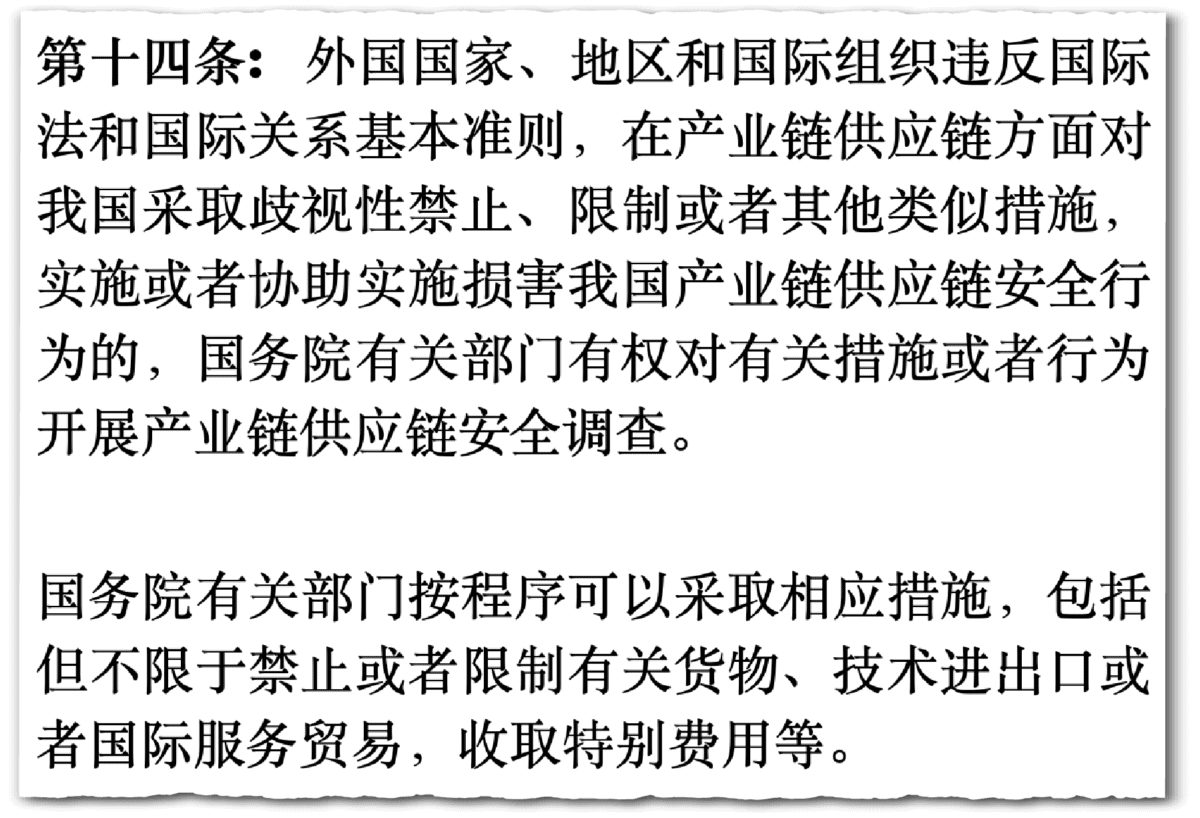
Beijing is not standing still while the EU vacillates — it is readying itself to take countermeasures faster than Europe is implementing its own measures.
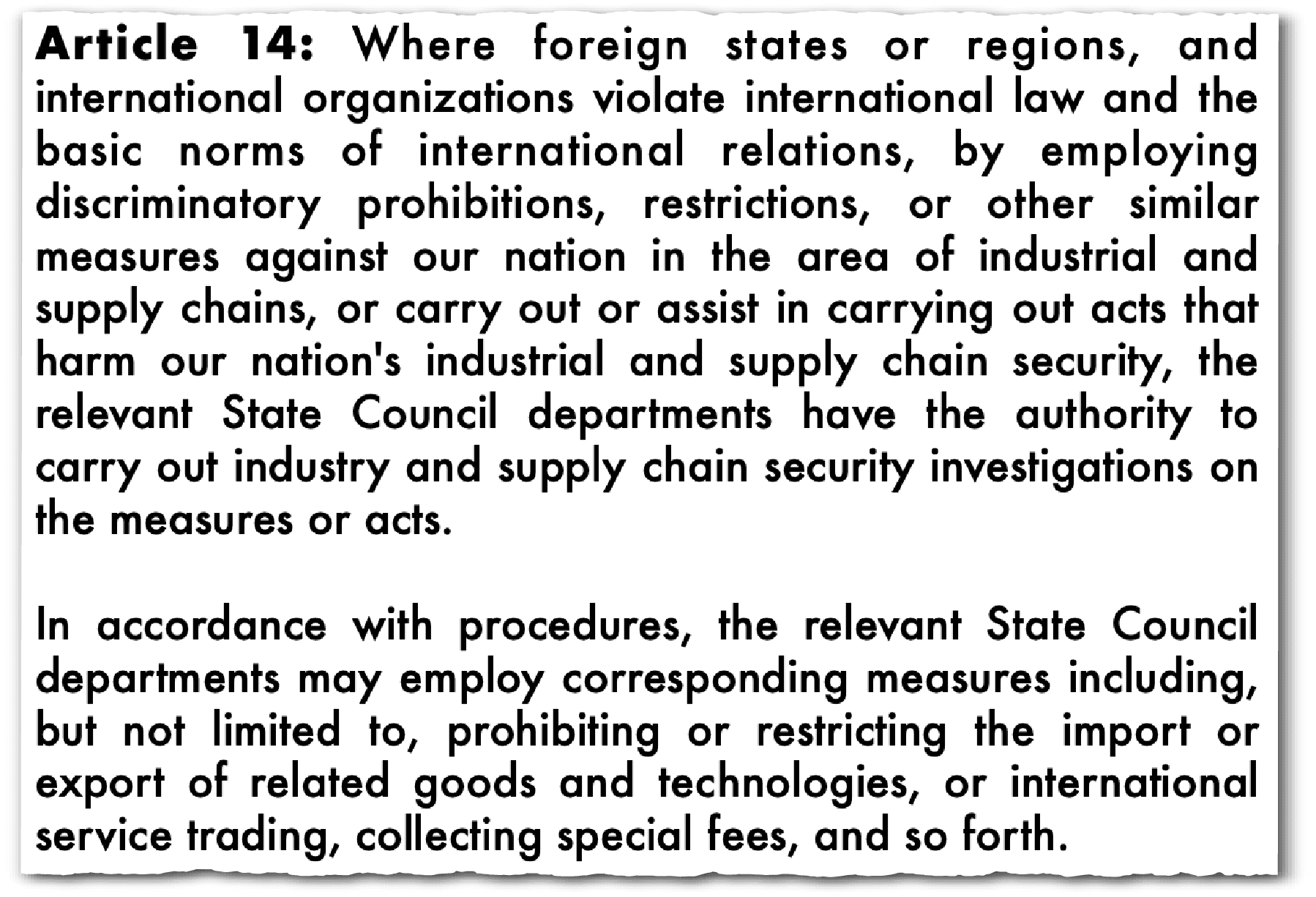
In May, it adopted regulations 834, 835 and 837 to better protect Chinese supply chains, counter extraterritorial measures against its companies, and monitor outbound investments. It is also working to reduce its dependencies.
Huawei’s reported expansion of advanced chip production is a sign that China is becoming less vulnerable to Western technology restrictions, potentially eroding the leverage Europe derives from Dutch company ASML’s dominance in chip making equipment. At the same time, Beijing is gaining a better picture of Europe’s vulnerabilities. Its rare-earth export-licensing regime, for example, requires European companies to provide details about their operations, customers and supply chains.
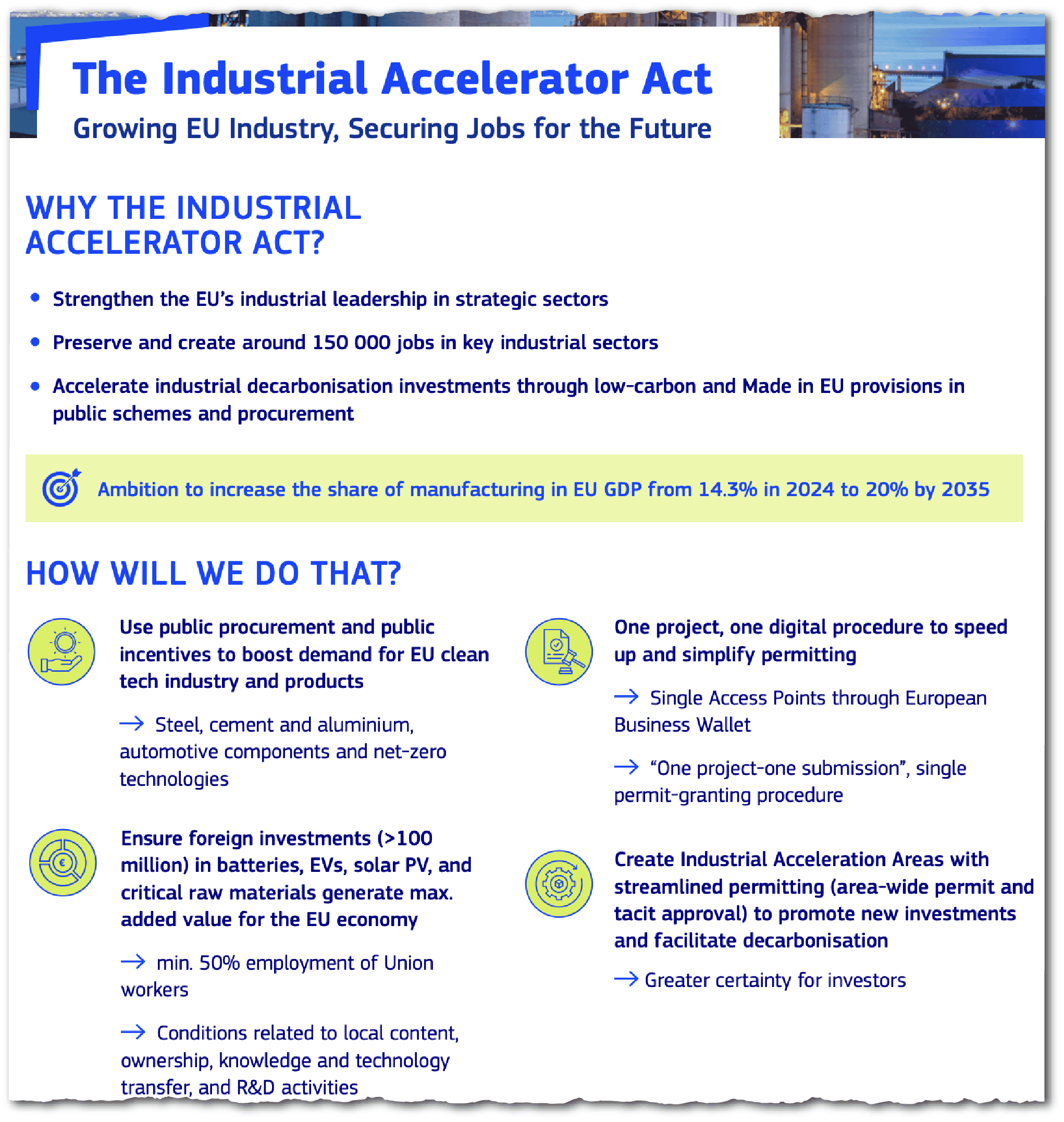
Thirdly, EU leaders should draw confidence from the fact that their discussions about adding new tools to Brussels’ trade-defense toolbox have drawn a sharp response from Beijing. This is because current EU trade-defense tools are designed to tackle specific cases of unfair trade, whereas the new proposals aim to address the wider impact of China’s export-led economic model. The draft Industrial Accelerator Act (IAA), for example, contains “Buy European” provisions; the proposed revision of the Cybersecurity Act could restrict market access for Chinese high-risk technology companies; and a possible “diversification instrument” would require companies to reduce excessive dependence on foreign markets.
The Chinese Ministry of Commerce has sent written objections to the Commission and member states, calling the IAA “a serious investment barrier” and demanding that the Cybersecurity Act’s definition of ”high-risk suppliers” be changed or dropped. It is also lobbying European business groups and planning an EU visit by Commerce Minister Wang Wentao.
The fact that China is clearly taking notice shows that the EU has meaningful leverage on this front. EU leaders should now make sure that these new tools quickly reach Brussels’ toolbox.
European leaders are right to weigh China policy carefully. But they have raised concerns about China’s overcapacity since at least 2020 and cannot any more rely on a Beijing that is very comfortable with the status quo to negotiate without Europe first showing its willingness to take a stand.
The June European Council should have been a starting point in communicating to Beijing that Europe is ready to defend its economic base and use the leverage of the single market. The longer the EU waits, the narrower its options — and the higher the eventual price. The clock is ticking for the EU. But Beijing should realize that time is not necessarily on its side, either.

Grzegorz Stec is an analyst at the Mercator Institute for China Studies (MERICS), whose research focuses on EU-China relations, including their institutional framework, strategic discourse deployed by the two sides and the EU’s common foreign policy building efforts.